Tag:

Autumn

Moq.

Bhutan2012 836
Bhutan Tongsa 2100m, October

Description

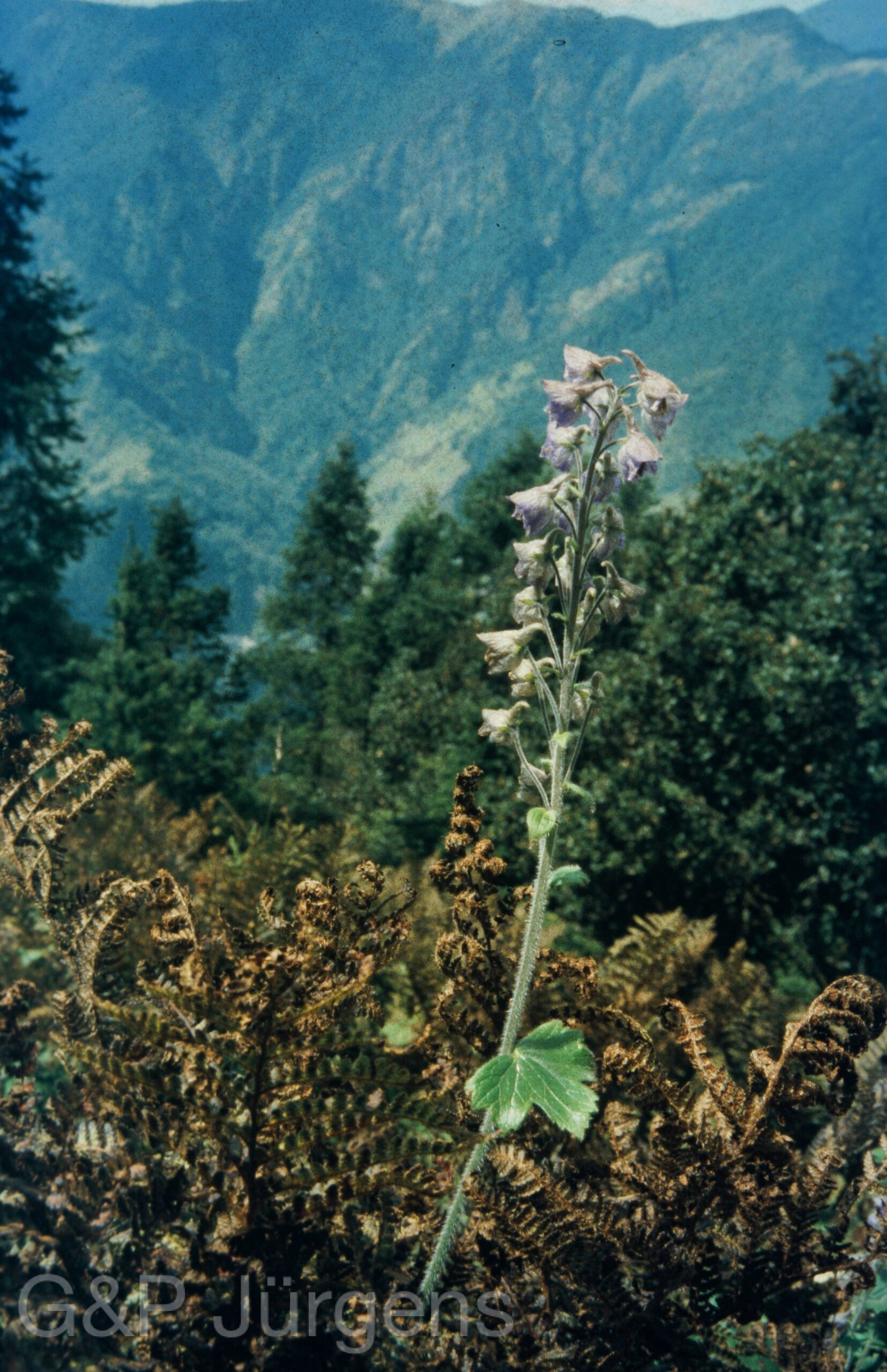
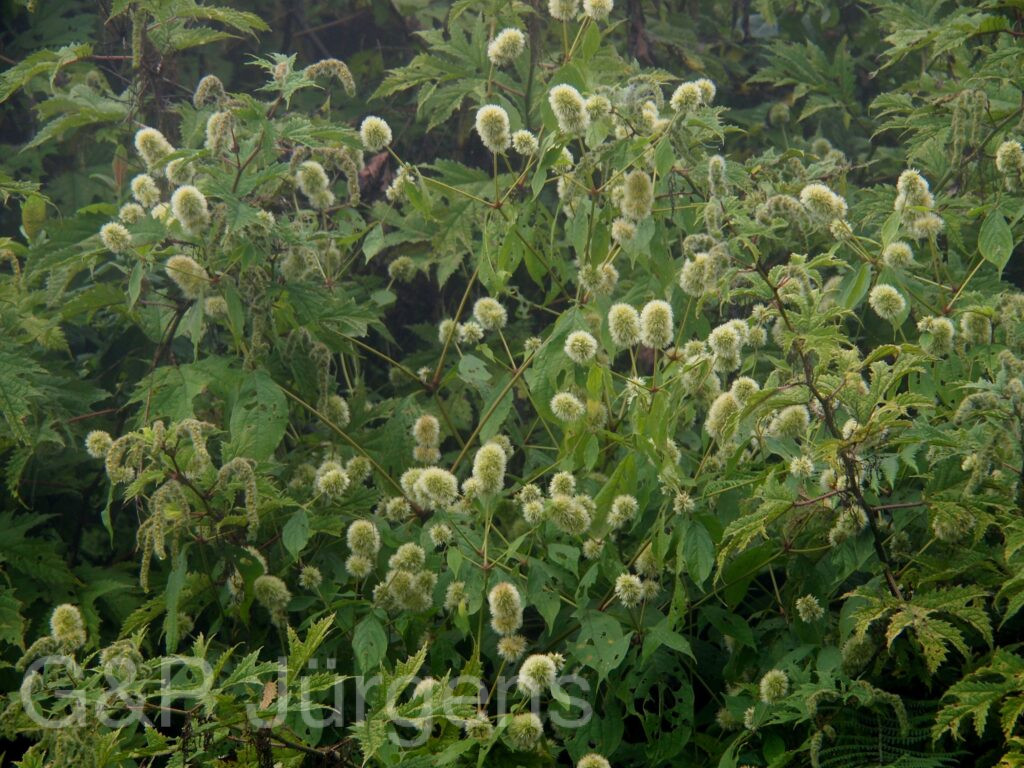
Cyathula capitata Moq. is a robust perennial herb of the amaranth family distributed through the Himalaya and the mountains of southwestern China. GBIF records place it in China, Nepal, India and Bhutan, confirming a Sino-Himalayan range, with an outlying Italian record reflecting cultivated or naturalised material. It grows in forest margins, shrubby clearings, grassy slopes and along trails and streamsides in the temperate zone, generally between about 1,500 and 2,800 m. The plant photographed at Tongsa (Trongsa) in central Bhutan at 2,100 m in October illustrates its late-season fruiting on humid montane slopes.

The species is an erect, branching herb up to 1 m or more tall with angular, pubescent stems swollen at the nodes. The leaves are opposite, broadly elliptic to obovate, acuminate, entire and softly hairy. The small flowers are aggregated into dense, globose, capitate heads borne on long peduncles; each head contains both fertile flowers and sterile flowers modified into hooked, recurved bristles. The membranous tepals subtend a single-seeded utricle, and the indurated hooked bracteoles of the head function in epizoochorous dispersal, attaching to animal fur.

Cyathula is allied to Achyranthes and Pupalia within the Amaranthaceae, distinguished by its globose flower heads with hooked sterile bristles. C. capitata is used in traditional medicine in parts of its range, where the roots serve as a substitute for those of Achyranthes. It is widespread within suitable montane habitat and is not regarded as threatened.

Author: Moq. · Sources: POWO (Kew), GBIF, Flora of China Vol. 5, Flora of Bhutan Vol. 1, Townsend: Amaranthaceae in Flora of Tropical East Africa
Moq.

Garw 2005 206 ergebnis ergebnis
India Garhwal Pana 2800m, September

Description

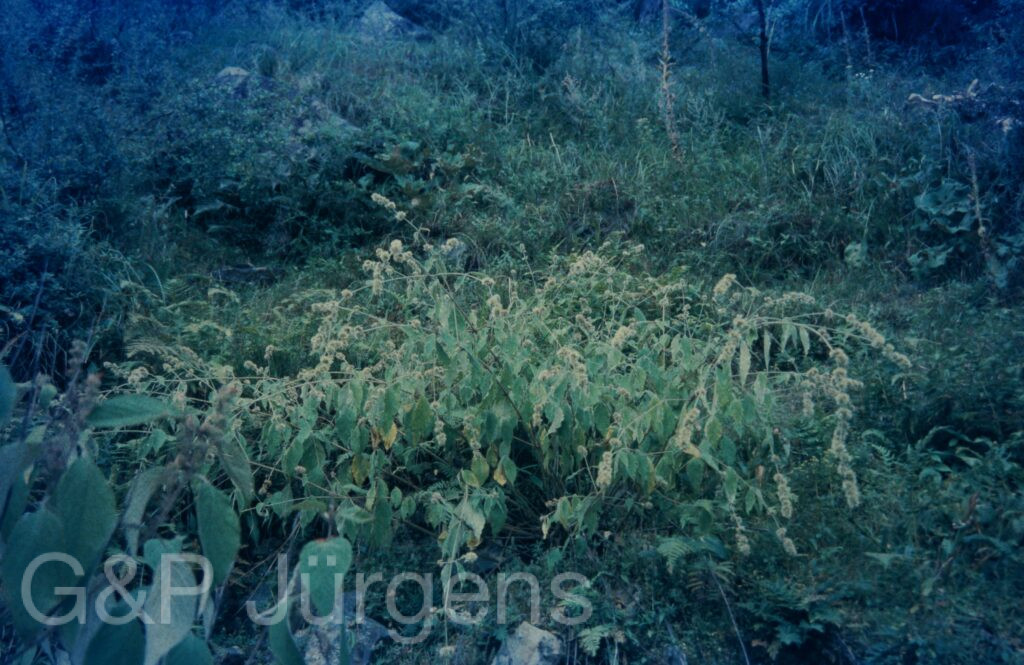
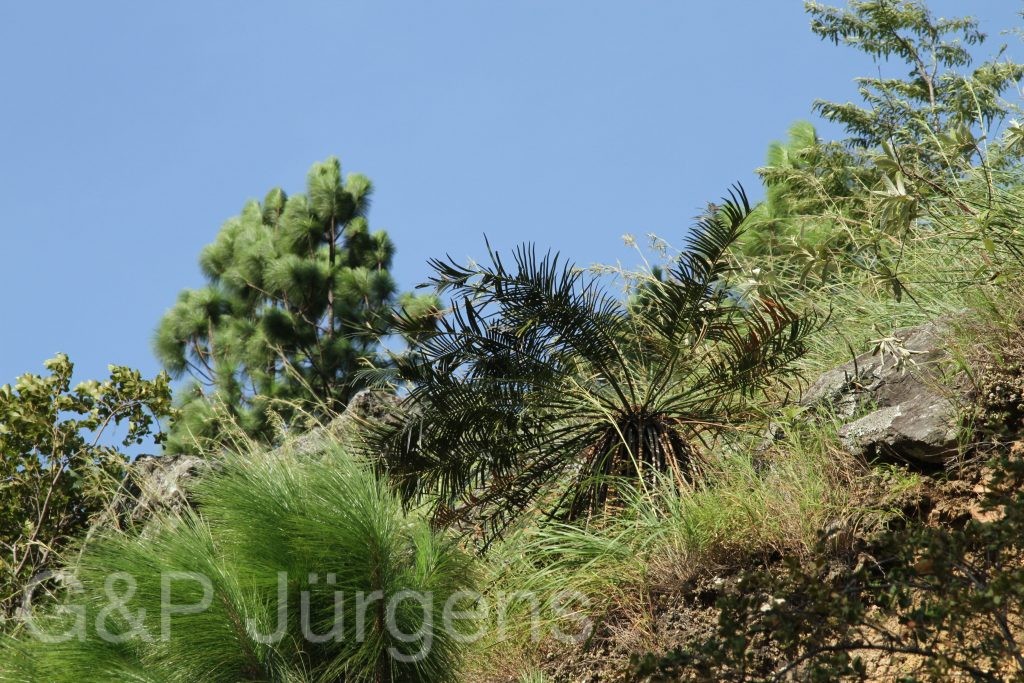
Cyathula tomentosa is a coarse perennial herb of the Himalaya, Sino-Himalaya and parts of tropical Africa, recorded from Nepal, NW and NE India, Bhutan, southern China and Myanmar, with disjunct records from New Guinea and Rwanda; GBIF holds 238 occurrences. It grows on forest margins, shrubby slopes, roadsides, clearings and other disturbed, semi-shaded ground in the temperate and subtropical zone. The collection from Pana in Garhwal, India, at about 2,800 m in September corresponds to its late-summer to autumn fruiting in mid-montane forest country.

It is an erect to ascending, much-branched herb up to about 1–1.5 m tall, with quadrangular, densely white-tomentose stems. The leaves are opposite, ovate to elliptic, 4–12 cm long, acuminate, with a soft woolly indumentum, especially beneath. The inflorescence is a long, interrupted, spike-like thyrse of dense glomerules, each cluster comprising a central fertile flower surrounded by modified sterile flowers whose perianth segments and bracteoles are produced into hooked, hardened spines. The perianth of the fertile flower is membranous; the fruit is a small utricle enclosed within the indurated, burr-like cluster.

The species belongs to Cyathula (Amaranthaceae, subfamily Amaranthoideae), allied to Achyranthes and Pupalia, the genus being distinguished by its glomerules of hooked sterile flowers. GBIF treats the name as accepted. The barbed fruiting clusters are an effective epizoochorous dispersal mechanism, attaching to fur and clothing, which accounts for the plant's affinity for disturbed and trackside habitats. It is widespread and of no conservation concern.

Author: Moq. · Sources: POWO (Kew), Flora of China Vol. 5, Flora of Bhutan Vol. 1, GBIF, Townsend: Amaranthaceae in Flora of Tropical East Africa (1985)
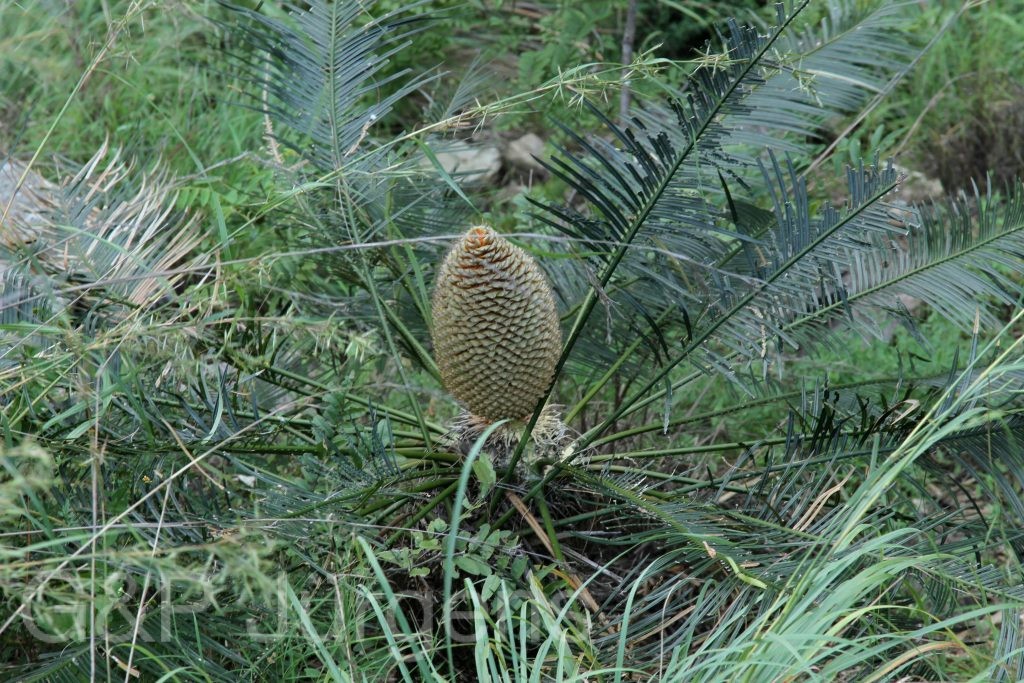
Cycas pectinata

by GP Jürgens

Buch.-Ham.

Bhutan2012 1055
Bhutan Koma-Chu-Valley 900m, October
Bhutan2012 1057
Bhutan Koma-Chu-Valley 900m, October

Description

Cycas pectinata is a large arborescent cycad of the eastern Himalayan foothills and Indochina, recorded by GBIF from Thailand, India, Vietnam, China, Bhutan, Nepal, Myanmar and Bangladesh, among others, across about 318 georeferenced occurrences. It inhabits warm subtropical to tropical situations, growing on hill slopes, in open dry forest, on limestone outcrops, in scrub and along forest margins, generally at low elevations. The photographed plant from the Koma-Chu valley in southern Bhutan at about 900 m in October typifies its occurrence in the warm inner valleys of the foothill zone, where it tolerates seasonally dry, well-drained and often rocky substrates exposed to strong sunlight.

The plant develops a stout, columnar, unbranched trunk that may reach several metres in height, crowned by a rosette of large, once-pinnate, dark green leaves with numerous narrow, rigid, spine-tipped leaflets and a spiny petiole base. Like all cycads it is strictly dioecious. The male plants produce a large solitary terminal pollen cone, ovoid to cylindrical and yellow to orange-brown; the female plants bear loose, open clusters of megasporophylls rather than a closed cone, each megasporophyll with a pectinate (comb-like, hence pectinata) lateral fringe of teeth and bearing ovules along its margins. The large seeds are drupe-like, ovoid and become orange-brown to reddish at maturity.

Cycas pectinata is one of the most widely distributed Asian species of Cycas, the sole genus of the ancient family Cycadaceae, a lineage of gymnosperms of considerable evolutionary antiquity that reproduces through motile, swimming sperm and relies on insect (weevil and beetle) pollination. The species is of high conservation interest: like cycads generally it is listed on CITES Appendix II, and wild populations are depleted by over-collection for ornament and religious use, seed and starch harvesting, and habitat loss, so that the species is regarded as threatened across much of its range despite its broad distribution.

Author: Buch.-Ham. · Sources: POWO (Kew), GBIF, Flora of China Vol. 4, Flora of Bhutan Vol. 1, Flora of Nepal, Flora of Pakistan, Hill & Lindstrom: revision of the Cycas pectinata complex (and The Cycad Pages)

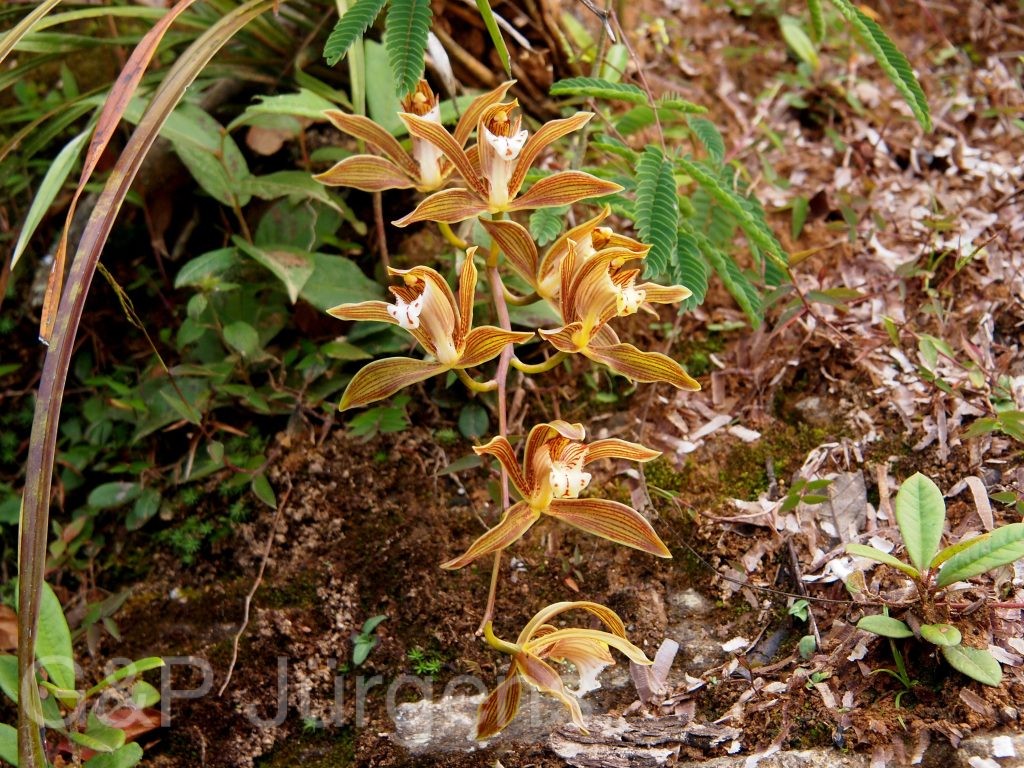
Paxton

Bhutan2015 603
Bhutan Gasa 2200m, October

Description

Cymbidium devonianum is an epiphytic orchid of the Himalaya and northern Indochina, native to India, Nepal, Bhutan, Myanmar, China, Thailand and Vietnam, with a modest number of wild records reflecting its scattered, localised occurrence. It grows as an epiphyte and occasional lithophyte on mossy branches and rocks in humid, shaded subtropical to warm-temperate broadleaved and oak forest, typically between about 1500 and 2500 m. The plant photographed near Gasa in northern Bhutan at 2200 m in October exemplifies its preference for cool, moss-laden forest where high humidity persists through the year.

The species forms compact clusters of short, ovoid pseudobulbs almost concealed by the leaf bases. The leaves are few, large, broadly elliptic to oblanceolate and leathery, narrowed to a channelled petiole, distinguishing it from the grass-leaved cymbidiums. The inflorescence is a distinctive, dense, pendulous raceme bearing numerous flowers. The sepals and petals are olive-green to dull yellowish, heavily suffused and streaked with reddish-brown to maroon, while the broad labellum is whitish to pink, marked with two deep purple blotches and a short, fleshy callus. The column is stout, the pollinia waxy, and the fruit a pendent capsule.

Classified in Cymbidium subgenus Cymbidium, the species is named for the Duke of Devonshire and is horticulturally esteemed, having contributed to numerous pendulous-spike hybrids. Like all cymbidiums it is listed on CITES Appendix II, and wild populations are vulnerable to over-collection for the ornamental trade and to forest degradation, so that sustainable management and habitat protection across its Himalayan range remain conservation priorities.

Author: Paxton · Sources: POWO (Kew), GBIF, The Orchids of Bhutan (Pearce & Cribb), Flora of China, The Genus Cymbidium (Du Puy & Cribb), CITES Appendices

Lindl.

Bhutan2012 1133
Bhutan Trachiyangtse 1780m, October

Description

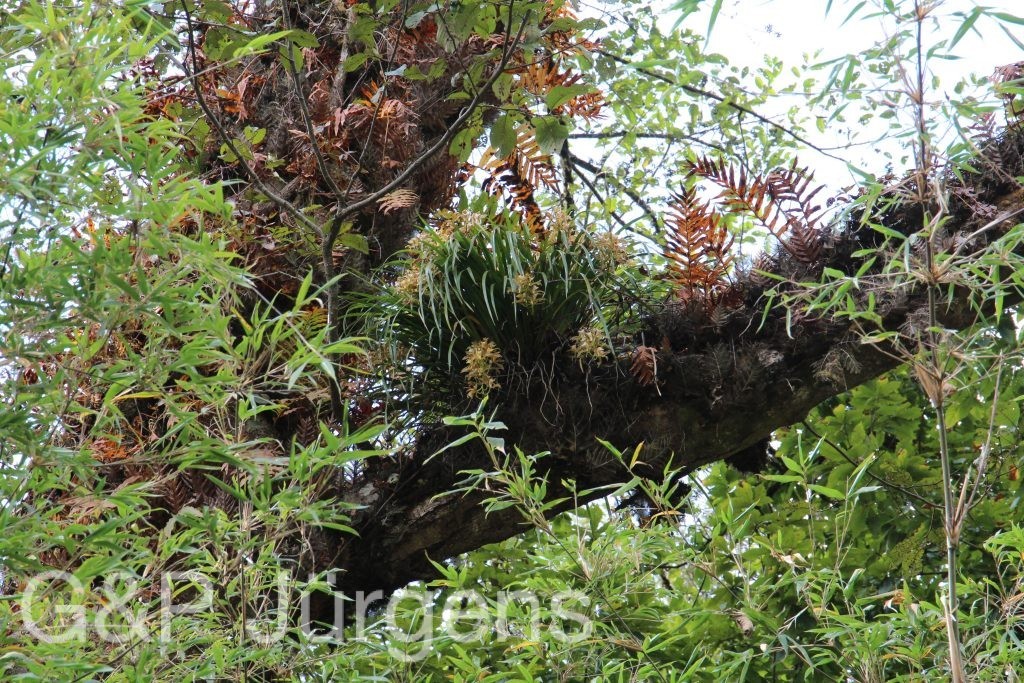
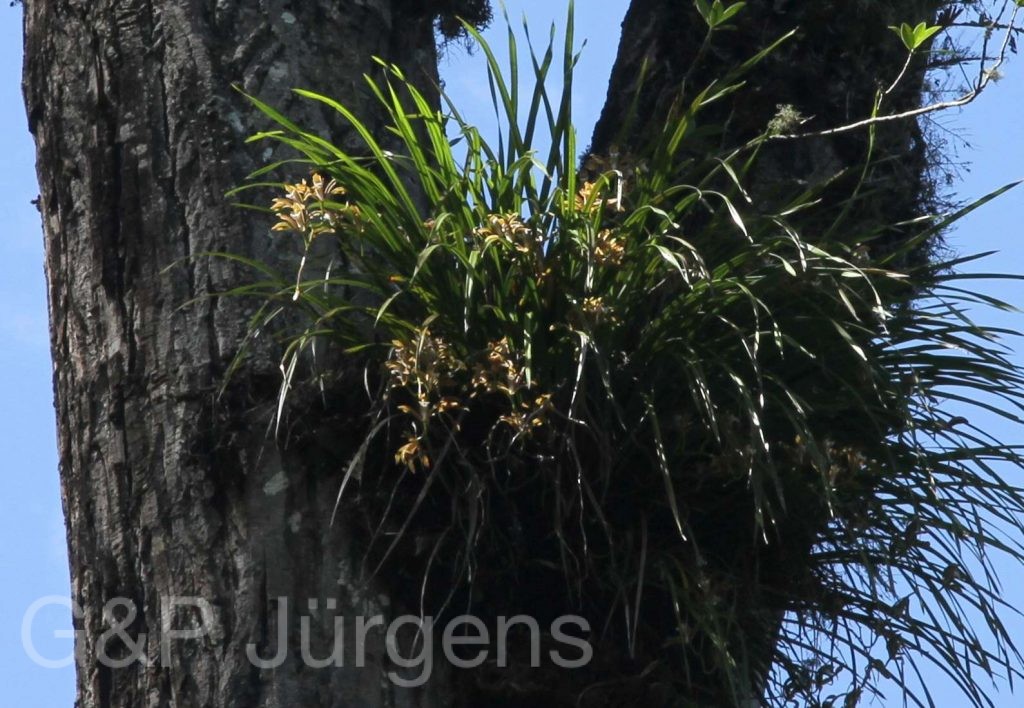
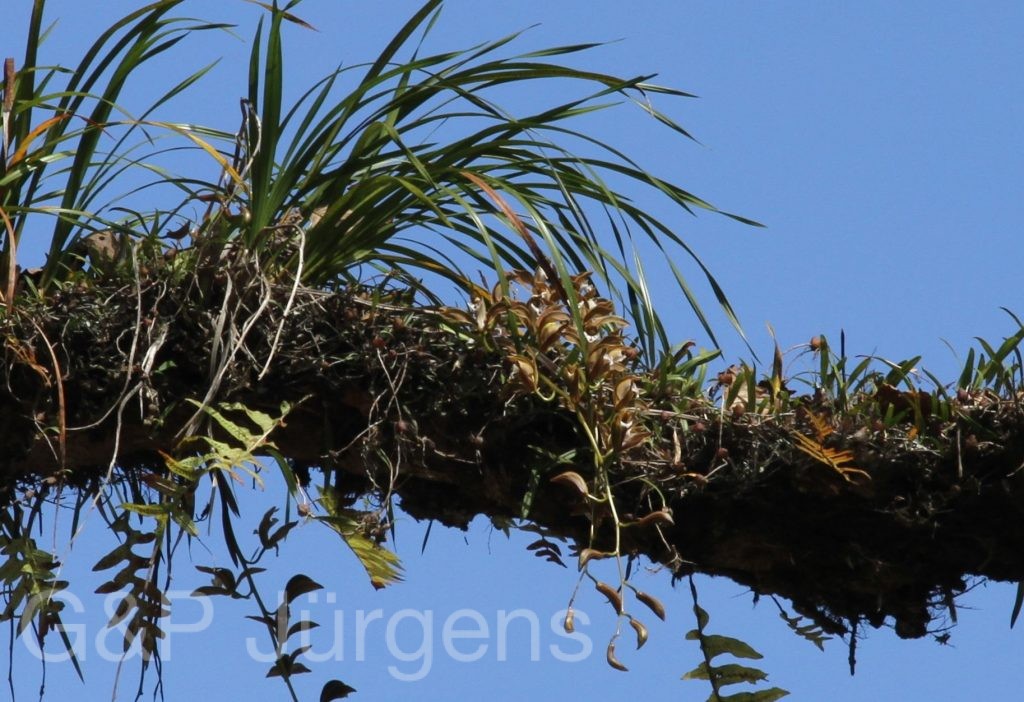
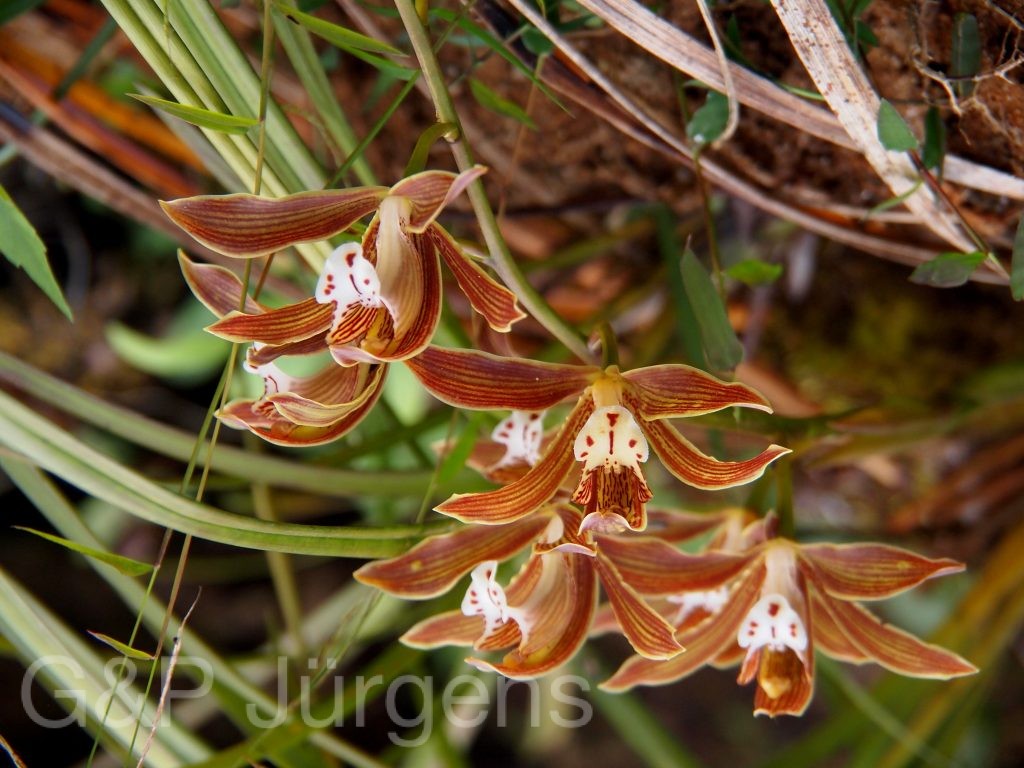
Cymbidium erythraeum is an epiphytic orchid distributed across the Sino-Himalayan region, native from China and the Himalaya (India, Nepal, Bhutan) into Myanmar and Vietnam, with cultivated material accounting for the Canadian GBIF records; about 116 occurrences are aggregated overall. It is an epiphyte, sometimes lithophytic, of humid evergreen and broad-leaved montane forest, growing on mossy trunks and shaded rock faces generally between roughly 1,400 and 2,800 m. The plant illustrated was photographed at Trashiyangtse (Trachiyangtse) in eastern Bhutan at about 1,780 m in October, the species typically flowering in autumn into winter.

It is a tufted epiphyte with ovoid to fusiform pseudobulbs sheathed by the bases of several distichous, narrowly linear, arching leaves. The inflorescence is a stout, suberect to arching lateral raceme carrying several large, fragrant flowers. The sepals and petals are green to olive, conspicuously veined and overlaid with reddish-brown lines, the petals spreading; the trilobed labellum is whitish to pale yellow, streaked and spotted with red, its disc furnished with two pubescent longitudinal keels and the side lobes erect about the slender column. The fruit is an ellipsoid, dehiscent capsule containing numerous minute seeds.

The species is referred to Cymbidium section Iridorchis, near C. iridioides, from which it differs in its narrower leaves and more strongly red-lined segments. Pollination is by bees, and germination requires mycorrhizal fungi. Prized in horticulture and subject to wild collection, it is, like the whole genus, protected under CITES Appendix II; over-collection and mid-elevation forest loss are the chief pressures.

Author: Lindl. · Sources: POWO (Kew), GBIF, Flora of China, Flora of Bhutan, The Orchids of Bhutan (Pearce & Cribb), Du Puy & Cribb's monograph The Genus Cymbidium

D.Don

Bhutan2012 1162
Bhutan Tashiyangtse 1900m, October
Bhutan2012 1163
Bhutan Tashiyangtse 1900m, October
Bhutan2012 1260
Bhutan Tashiyangtse 2000m, October

Description

Cymbidium iridioides is a large epiphytic orchid of the Sino-Himalayan and Indochinese region, native from China and the Himalaya (India, Nepal, Bhutan) through Myanmar to Vietnam, with the GBIF dataset reflecting both wild records and cultivated specimens in Europe and North America. It grows as an epiphyte, and occasionally a lithophyte, on mossy trunks and rocks in humid broad-leaved and evergreen montane forest, generally between about 1,200 and 2,800 m. The plants figured were photographed near Tashiyangtse in eastern Bhutan at roughly 1,900 to 2,000 m in October, where the species comes into flower at the close of the monsoon.

It is a robust, tufted epiphyte with stout, fusiform to ovoid pseudobulbs largely enclosed by the bases of several distichous, linear-ligulate, leathery leaves. The inflorescence is a stout, arching to pendent raceme arising laterally from the pseudobulb and bearing numerous large, showy flowers. The sepals and petals are yellowish-green, longitudinally veined and streaked with reddish-brown; the trilobed labellum is recurved, marked with red lines and crested with two longitudinal, papillose-pubescent keels, the side lobes erect about the column. The fruit is an ellipsoid, ribbed capsule releasing copious dust-like seeds.

The species belongs to Cymbidium section Iridorchis, marked by large pseudobulbs, many-flowered pendent racemes and hairy lip keels. Like other large Cymbidium it is bee-pollinated and depends on mycorrhizal fungi for establishment. Long valued in horticulture and medicine, it has been heavily collected; the genus is listed on CITES Appendix II, and over-collection with forest loss is the principal threat.

Author: D.Don · Sources: POWO (Kew), GBIF, Flora of China, Flora of Bhutan, The Orchids of Bhutan (Pearce & Cribb), Du Puy & Cribb's monograph The Genus Cymbidium

Daphne sureil

by GP Jürgens

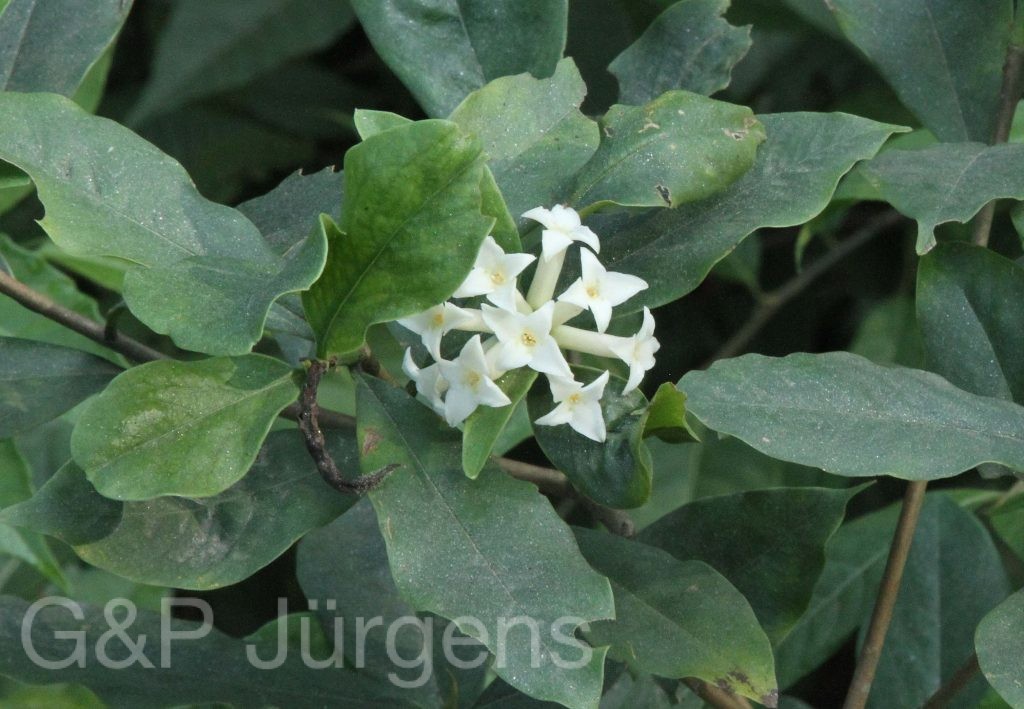
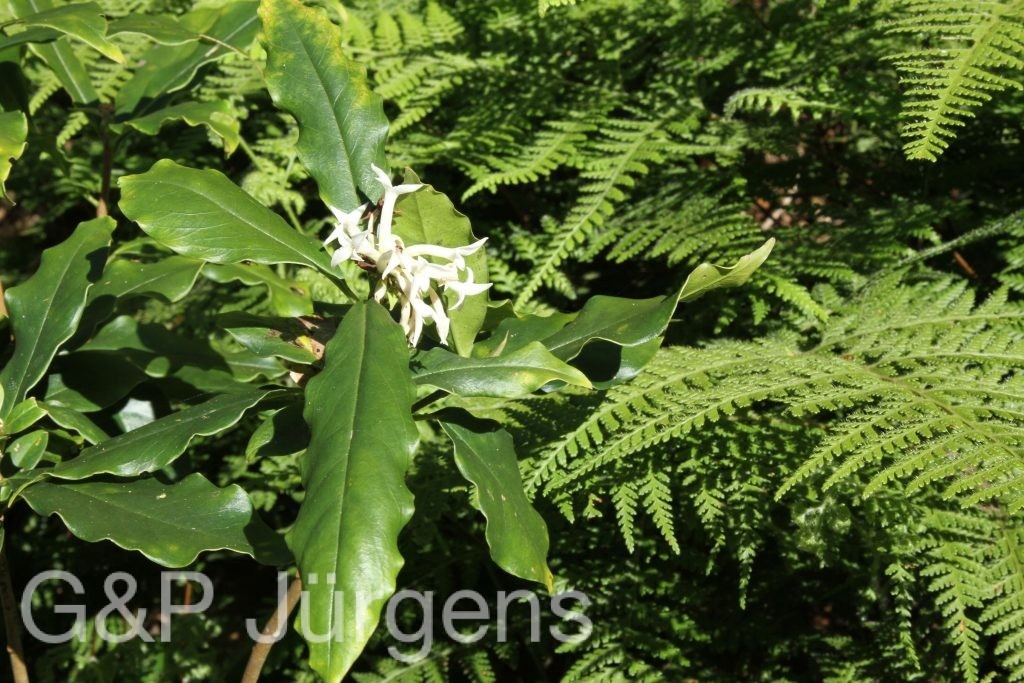
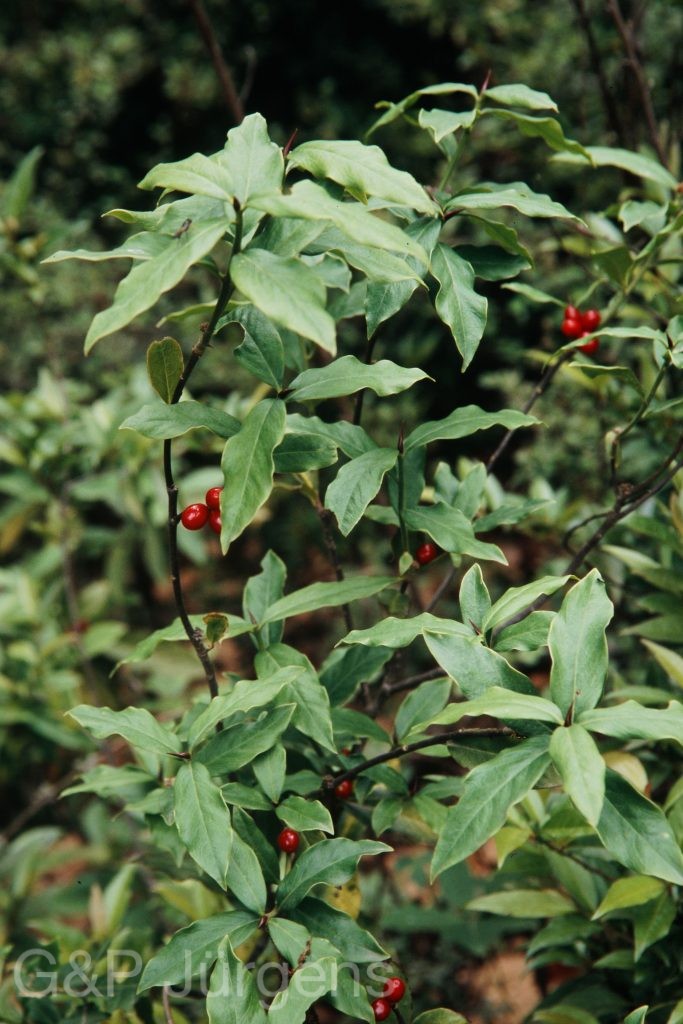
W.W.Sm. & Cave

Bhutan2012 638
Bhutan Tserang, 1600m September
Bhutan2015 218
Bhutan Zhemgang 1000m, October
Bh2008 515 P790
Bhutan Chongsakha, 1800m April

Description

Daphne sureil is a shrub of the eastern Himalaya and adjacent Southeast Asia, recorded from India, Thailand, Nepal, Bhutan, Myanmar, Bangladesh and Vietnam, with about 124 documented occurrences. It is a plant of warm-temperate and subtropical broad-leaved forest, growing in the understorey and along forest margins, ravines and stream banks on moist, well-drained slopes. In Bhutan it occupies the lower to middle montane belt across a broad elevational span, as shown by collections from Tserang at about 1600 m in September, Zhemgang at 1000 m in October and Chongsakha at 1800 m in April, the spring date corresponding to its flowering period.

The species is an evergreen shrub with slender, glabrous branches bearing alternate, shortly petiolate leaves that are elliptic to oblanceolate, entire, acuminate or acute at the apex and tapering at the base, leathery and glossy above with a paler lower surface. The flowers are borne in small terminal clusters and lack petals, the floral display formed instead by a tubular, fragrant white to creamy perianth of four spreading lobes, the tube silky-pubescent without and enclosing eight stamens in two whorls. The fruit is a fleshy ovoid drupe, ripening red, containing a single seed.

Daphne sureil was described by W. W. Smith and Cave from the eastern Himalaya and belongs to the predominantly evergreen Asian assemblage of the genus. As in other Daphne species, the bark contains tough phloem fibres and the tissues bear the diterpenoid daphnane compounds responsible for their acridity and toxicity. The bird-dispersed drupes and strongly scented, presumably moth-pollinated flowers reflect typical thymelaeaceous biology. The species is locally frequent in suitable forest but, being tied to lower-montane broad-leaved woodland, is potentially vulnerable to habitat clearance at its lower elevational limits.

Author: W.W.Sm. & Cave · Sources: POWO (Kew), GBIF, Flora of Bhutan Vol. 1, Flora of China Vol. 13, Flora of Nepal, Halda monograph The Genus Daphne

Jacquem. ex Cambess.

Bhutan2015 676
Bhutan Chele-La 3960m, October

Description

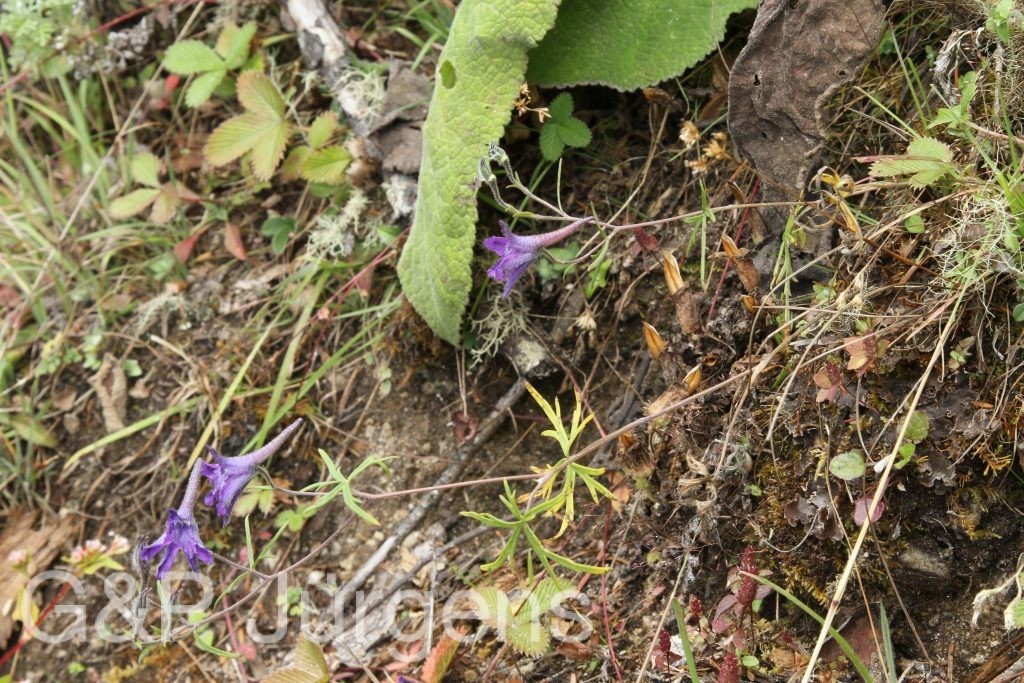
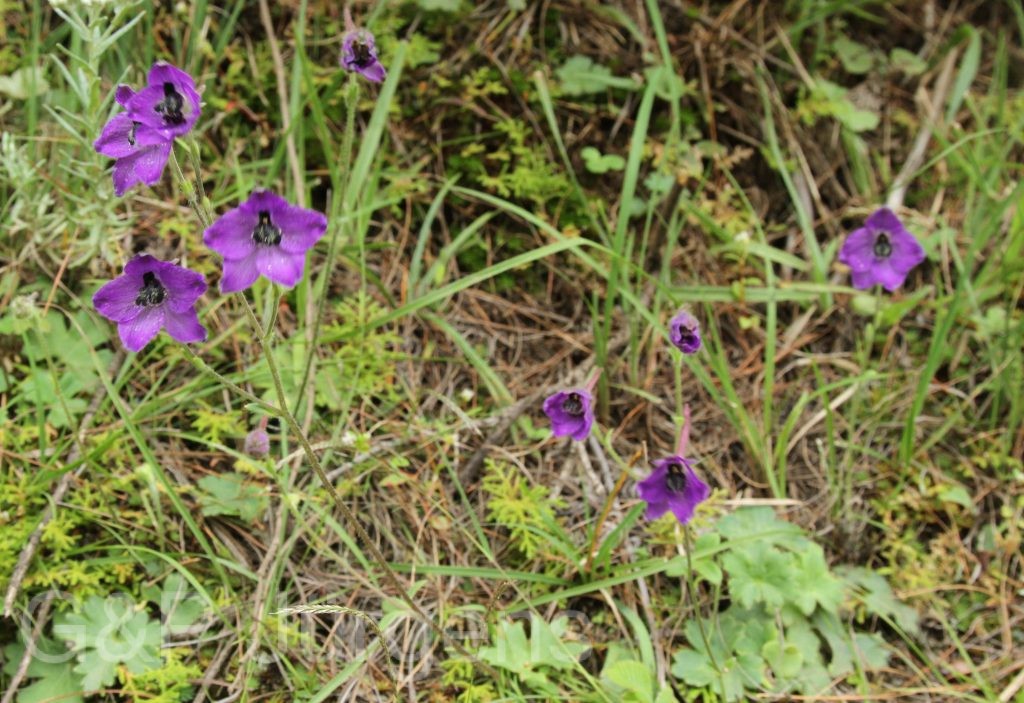
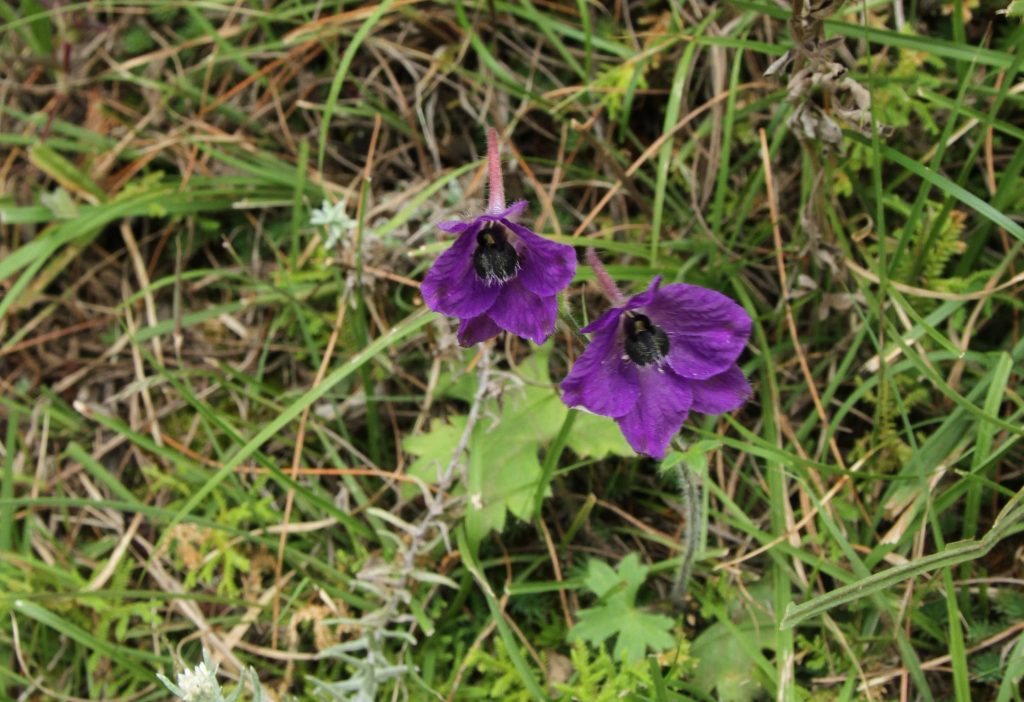
Delphinium caeruleum is an alpine larkspur of the high Himalaya and the Qinghai-Tibetan plateau, distributed across south-western China, northern India, Nepal and Bhutan, well represented in GBIF with 646 occurrences. It inhabits dry alpine meadows, open grassy slopes, sandy and gravelly turf and rocky pastures, typically between 3000 and 5000 m, often on relatively arid, well-drained ground. The photographed plant was found at Chele-La in Bhutan at 3960 m in October, a notably late flowering for this short, cushion-like high-elevation species at the close of the growing season on an exposed pass.

It is a low perennial herb, often only 5-30 cm tall, arising from a slender taproot, with erect or ascending stems and finely dissected leaves divided into narrow linear segments, the lower leaves long-petiolate. The flowers are few in a lax raceme or sometimes solitary, and are an intense deep blue to violet-blue. Each flower has five showy petaloid sepals, the upper one prolonged backward into a slender spur, enclosing the smaller true petals, of which the upper pair forms the nectariferous spur and the lower pair is often bearded. The fruit is a cluster of three erect, glabrous to pubescent follicles releasing winged or scaly seeds.

The spurred flower with its concealed nectar reservoir is adapted to pollination by long-tongued bumblebees, abundant in Himalayan alpine grassland. Within Delphinium it belongs to a group of dwarf, blue-flowered, plateau and high-alpine larkspurs. Like other members of the genus it contains diterpenoid alkaloids and is toxic to livestock, which contributes to its persistence in grazed pasture. Wide-ranging and locally common across the Tibetan and Himalayan highlands, it is of least concern, and several Sino-Himalayan Delphinium species, this among them, feature in traditional Tibetan medicine.

Author: Jacquem. ex Cambess. · Sources: POWO (Kew), GBIF, Flora of China, Flora of Bhutan, Munz: A Revision of Delphinium

Munz

Bhutan2012 184
Bhutan Haar-Valley, 3200m September
Bhutan2012 185
Bhutan Haar-Valley, 3200m September

Description

Delphinium cooperi is a Himalayan larkspur of restricted range, recorded principally from Bhutan and Nepal, with only about 42 GBIF occurrences reflecting its narrow distribution. It grows on open alpine and subalpine slopes, meadow margins and among scrub in cool, moist montane settings. The photographed plant in the Haa (Haar) valley of western Bhutan at 3200 m, flowering in September, captures its late-season anthesis in the high inner valleys, where it occupies humus-rich, well-drained ground in a cool, monsoon-influenced climate. Its limited recorded range marks it as a regional endemic of the eastern Himalaya.

The species is an erect perennial herb arising from a fibrous or somewhat thickened rootstock. The leaves are palmately divided into several cuneate, toothed or further-lobed segments, larger and longer-petiolate toward the base and reduced upward. The inflorescence is a terminal raceme of zygomorphic flowers in shades of blue to violet; as in all Delphinium the upper sepal is prolonged backward into a conspicuous spur that encloses the nectariferous petal spurs. Stamens are numerous and the gynoecium of free carpels matures into a cluster of erect, many-seeded follicles that split along the inner suture to shed angular seeds.

Delphinium belongs to the buttercup family Ranunculaceae, within the tribe Delphinieae characterised by spurred, bilaterally symmetrical flowers. The long-spurred corolla of D. cooperi is adapted to pollination by long-tongued bumblebees that probe the nectar spurs. As with many members of the genus, the plant contains toxic diterpenoid alkaloids that deter grazing. Given its apparently narrow eastern-Himalayan range and modest population records, the species warrants attention as a potentially vulnerable regional endemic dependent on intact subalpine habitat.

Author: Munz · Sources: POWO (Kew), GBIF, Flora of Bhutan, Annotated Checklist of the Flowering Plants of Nepal, Munz Delphinium monograph

Duthie ex Huth

Description

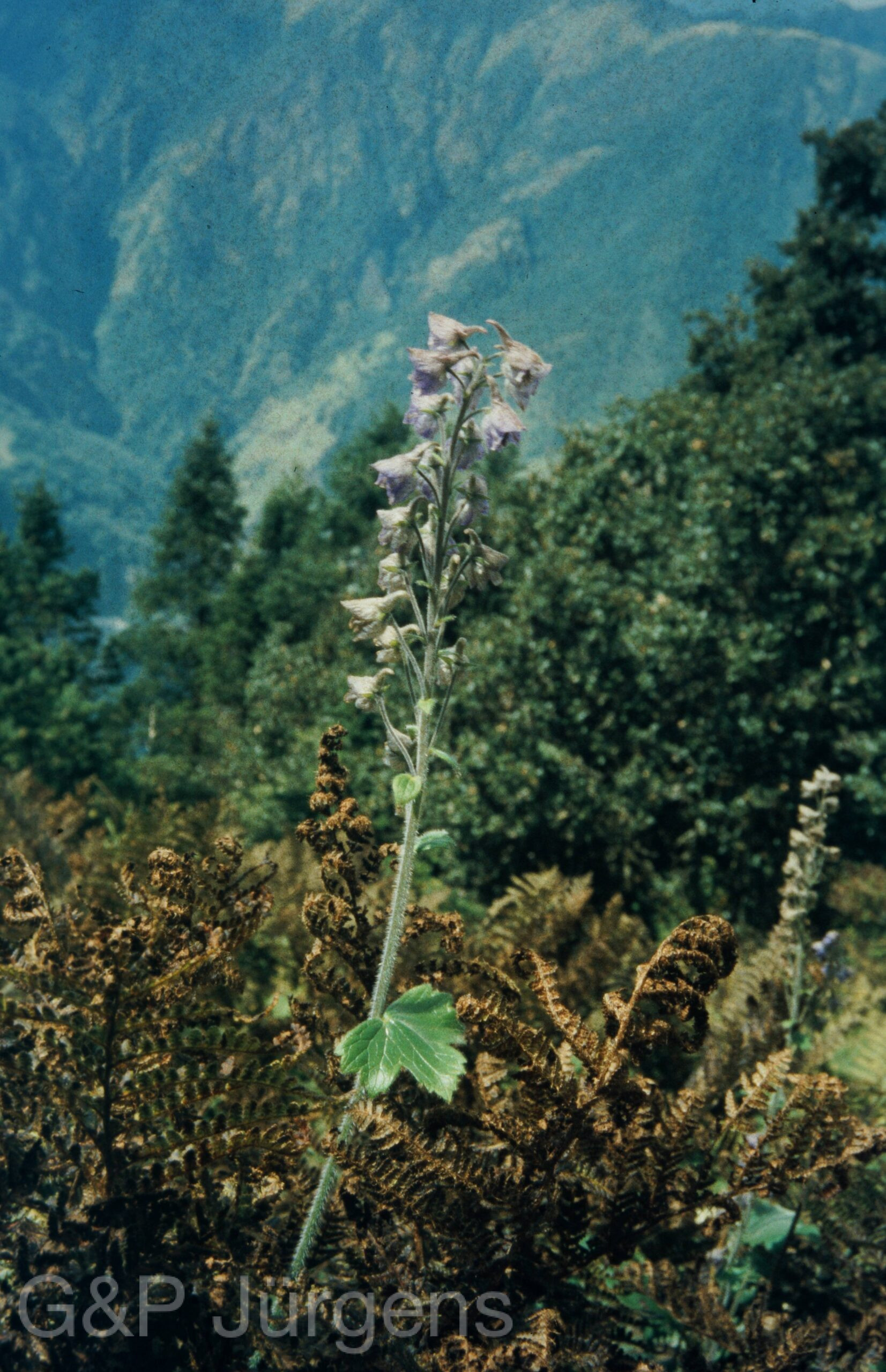
Delphinium densiflorum is a herbaceous perennial of the western and central Himalaya, recorded from India, Nepal and adjacent China (Xizang), with some 70 georeferenced occurrences documented in GBIF. It inhabits subalpine and alpine meadows, open slopes, forest margins and rocky grassland, where it flowers in the late monsoon. The plant illustrated was photographed in the Indian Garhwal Himalaya near Ali at about 3140 m in September, a typical elevation; across its range it generally occupies the belt from roughly 2800 to 4000 m, favouring moist, well-drained soils with abundant summer rainfall.

The species forms an erect, simple or branched stem arising from a fibrous to slightly tuberous rootstock, clothed below with petiolate, palmately divided leaves whose laminae are deeply cut into narrow, toothed lobes. As the specific epithet implies, the inflorescence is a dense, many-flowered raceme of strongly zygomorphic flowers. Each flower has five petaloid sepals, the uppermost prolonged into a conspicuous backward-pointing spur, and small petals modified into nectaries concealed within. The flowers are typically deep blue to violet; the fruit is a cluster of several erect, beaked follicles releasing numerous angular, scaly seeds.

Delphinium densiflorum belongs to the large genus Delphinium (Ranunculaceae), of which the Himalaya is a notable centre of diversity. Like other larkspurs it contains diterpenoid alkaloids and is poisonous to grazing livestock, a trait that influences its persistence in heavily pastured alpine meadows. The spurred flowers are adapted to pollination by long-tongued bumblebees. No major conservation concern is recognised, though localised pressure from grazing and habitat disturbance affects subalpine populations across the region.

Author: Duthie ex Huth · Sources: POWO (Kew), GBIF, Flora of China, Flora of Bhutan, Annotated Checklist of the Flowering Plants of Nepal, Munz Monograph of the Genus Delphinium