Tag:

Autumn

L.

Bhutan2012 625
Bhutan Wangdi 2800m, September

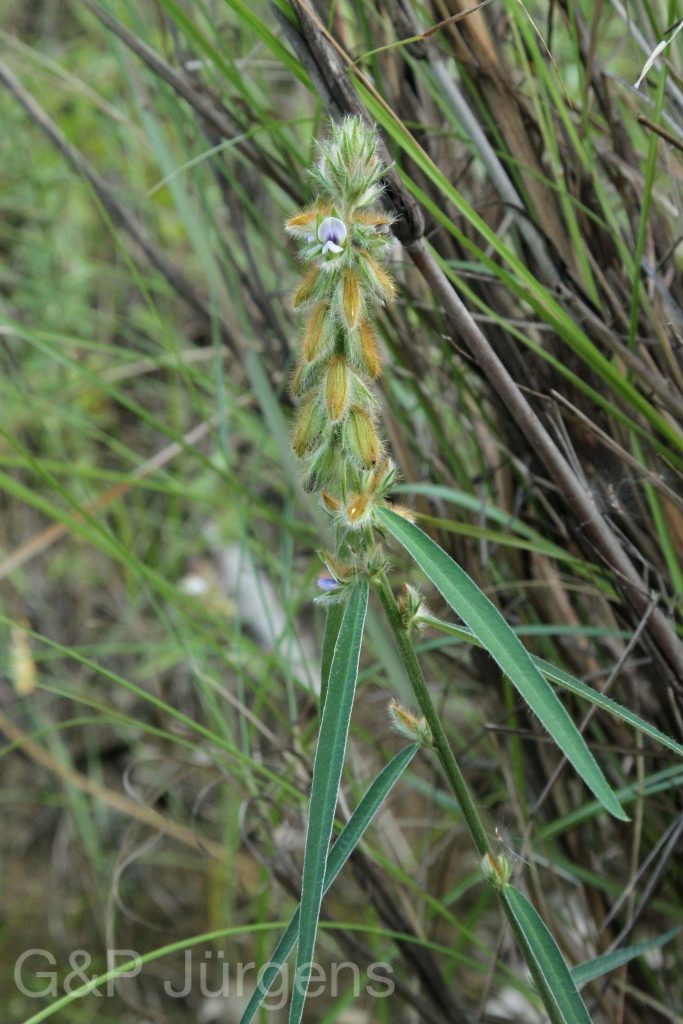
Description

Crotalaria sessiliflora is a wide-ranging Asian-Australasian rattlepod, recorded by GBIF (3102 occurrences) from China, Japan, Korea, Taiwan, India, Thailand, Indonesia, Papua New Guinea, Australia, Nepal, the Philippines, Myanmar, Bhutan, Malaysia and Indochina. It is a plant of open, sunny, seasonally dry habitats, occupying grasslands, hill slopes, fallow fields, roadsides and waste ground from the lowlands up into the lower mountains, roughly to 2800 m. The photographed plant from near Wangdi in western Bhutan at about 2800 m, flowering in September, sits at the upper elevational margin of the species and reflects its late-monsoon flowering across the eastern Himalaya.

The species is an erect annual herb, usually 30-100 cm tall, with stems and foliage clothed in long, spreading brownish hairs. The leaves are simple (unifoliolate), narrowly linear to oblanceolate, sessile or shortly petiolate, with conspicuous setose stipules. The flowers are borne in dense, head-like or short terminal racemes, often crowded and almost sessile as the epithet indicates, each subtended by leafy bracts. The papilionate corolla is blue, violet or pale purple, the standard hairy outside. As in Crotalaria the stamens are monadelphous with dimorphic anthers. The fruit is a small, inflated, oblong pod enclosed by the persistent calyx, the loose seeds rattling within when ripe.

Described by Linnaeus, the species belongs to the large pantropical genus Crotalaria (Fabaceae, subfamily Faboideae, tribe Crotalarieae). Like its relatives it forms root nodules with rhizobial bacteria, fixing atmospheric nitrogen and enriching soils, and is sometimes grown as a green manure. The plant contains pyrrolizidine alkaloids and is used in traditional Asian medicine, though these compounds render it potentially toxic to livestock. With an extensive range and weedy tendencies it is of least conservation concern.

Author: L. · Sources: POWO (Kew), GBIF, Flora of China, Flora of Bhutan, Monograph of the genus Crotalaria (Polhill)
Andrews

Bhutan2012 1148
Bhutan Trashiyangtse 1780m, October

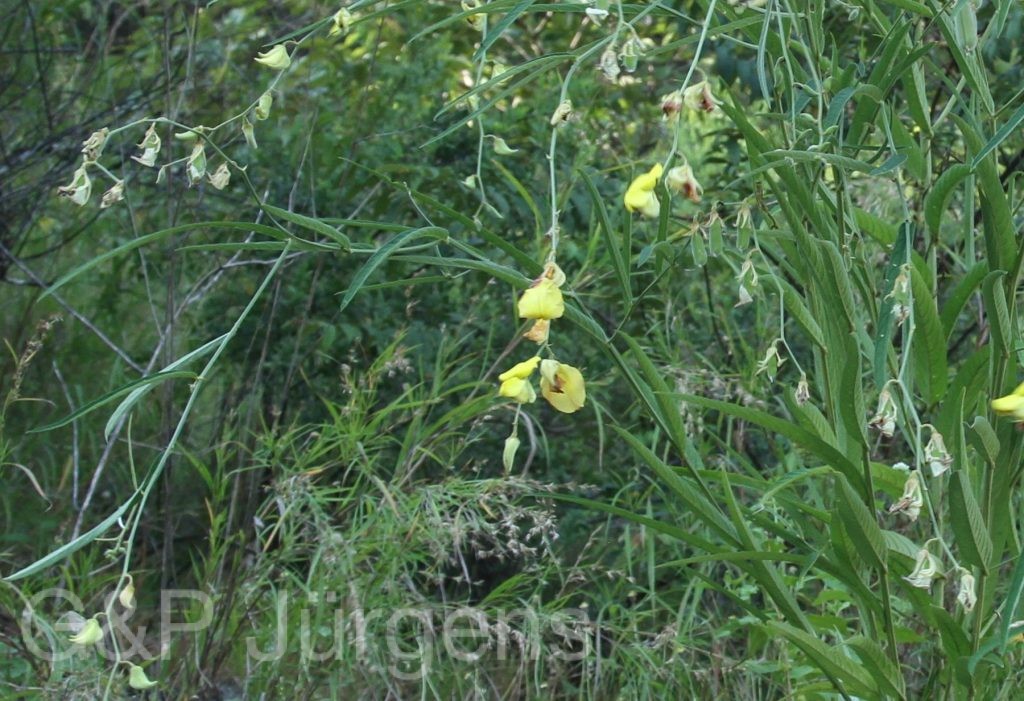
Description

Crotalaria tetragona Andrews is a tall rattlepod widely distributed across tropical and subtropical Asia, native from India, Nepal, Bhutan and Bangladesh through southern China, Myanmar, Thailand, Laos, Vietnam, Cambodia and the Malesian region; GBIF lists about 405 occurrences, with records from Brazil, Jamaica, Colombia and Mauritius indicating introduction and naturalisation. It grows in open grassland, forest margins, scrub and disturbed roadside ground in the warm subtropical and submontane zone, generally below about 2000 m. The photographed plant from Trashiyangtse in eastern Bhutan at around 1780 m, flowering in October, reflects its occurrence in warm, lower-elevation valley habitats.

The species is a robust erect perennial herb or subshrub with conspicuously four-angled, often winged stems, the epithet tetragona alluding to this quadrangular form. The leaves are simple, elliptic to lanceolate and entire. The flowers are borne in long terminal racemes and are large and bright yellow, with the standard frequently veined reddish-brown; the calyx is deeply lobed and the keel beaked in the papilionaceous arrangement. The fruit is a large, inflated, oblong pod that turns blackish and rattles when the loose seeds detach at maturity, giving the genus its common name.

Crotalaria (Fabaceae, subfamily Faboideae, tribe Crotalarieae) is a large pantropical genus of nitrogen-fixing legumes, several used as green manure and fibre plants. C. tetragona is locally common and weedy, of least conservation concern, and like its congeners may contain pyrrolizidine alkaloids rendering it toxic to livestock.

Author: Andrews · Sources: POWO (Kew), GBIF, Flora of China, Flora of Bhutan, Flora of British India, Polhill monograph Crotalaria in Africa and Asia

Roxb.

Bhutan2012 1238
Bhutan Trashigang 1150m, October

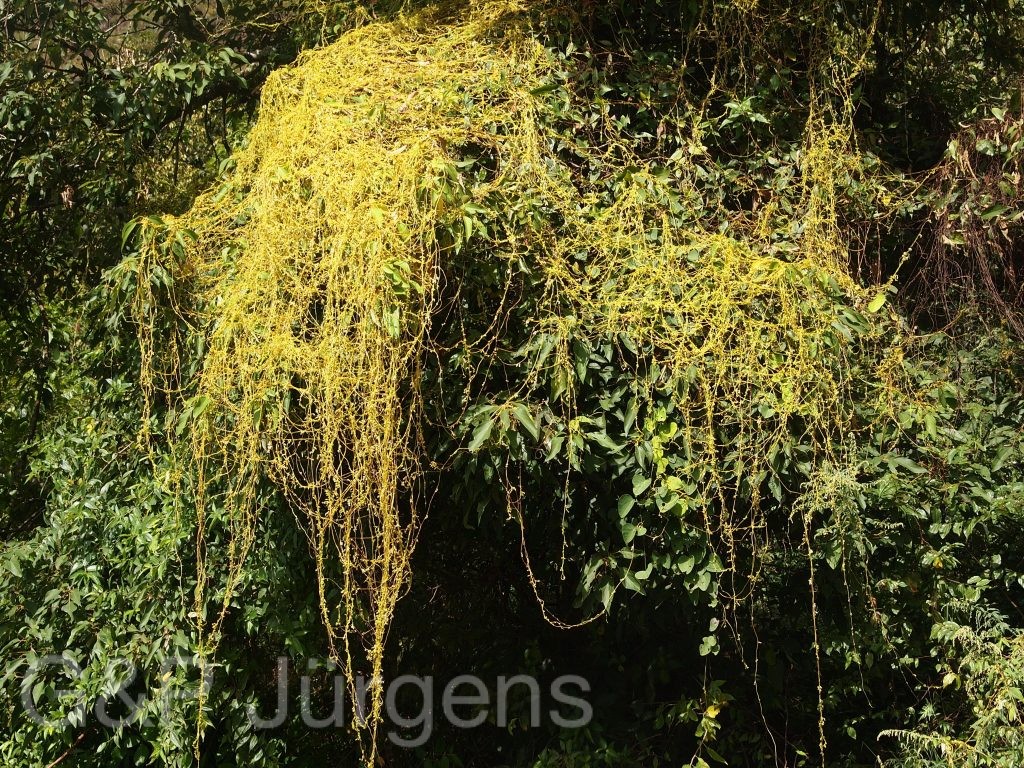
Description

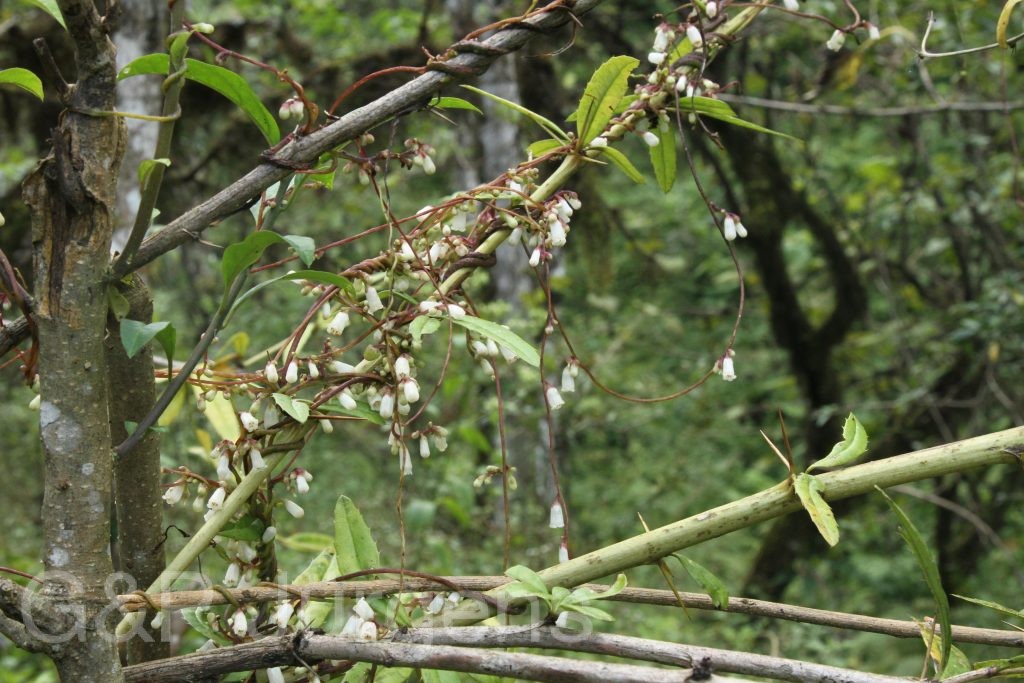
Cuscuta reflexa, the giant or Asian dodder, is a widely distributed parasitic vine ranging across South, Central and Southeast Asia and beyond, with GBIF documenting more than 1000 occurrences from India, Pakistan, Nepal, China, Afghanistan, Sri Lanka, Bangladesh, Bhutan, Thailand and Myanmar among others. It occurs from the plains into the lower hills, the photographed plant deriving from Trashigang in eastern Bhutan at 1150 m in October. As an obligate stem holoparasite it has no true habitat preference of its own but follows that of its hosts, smothering shrubs, hedges and trees along forest margins, scrub, roadsides and cultivated ground in warm subtropical settings.

The plant is a leafless, rootless twining parasite with stout, fleshy, glabrous stems coloured yellow, orange or reddish, attaching to hosts by means of haustoria that penetrate the vascular tissue. Leaves are reduced to minute scales and chlorophyll is largely absent. The flowers are comparatively large for the genus, white to creamy, fragrant, and crowded in dense lateral racemes; the campanulate corolla has reflexed lobes (hence the epithet) and bears characteristic infrastaminal scales within the tube. The fruit is a globose capsule capped by the persistent corolla and opening circumscissily to release several seeds.

Cuscuta (now placed within an enlarged Convolvulaceae rather than a segregate Cuscutaceae) comprises around 200 holoparasitic species. C. reflexa is economically significant as a pest of cultivated and ornamental plants, yet is simultaneously valued in traditional South Asian medicine. Far from threatened, it is locally abundant and weedy; its parasitism exerts measurable effects on host vigour and on plant-community structure where it proliferates.

Author: Roxb. · Sources: POWO (Kew), GBIF, Flora of China, Flora of Bhutan, Flora of Pakistan, Flora of British India (Hooker), Yuncker Monograph of the Genus Cuscuta

Roxb.

Bhutan2015 57
Bhutan Wangdi Phodrang 2000m, October
Bhutan2015 58
Bhutan Wangdi Phodrang 2000m, October

Description

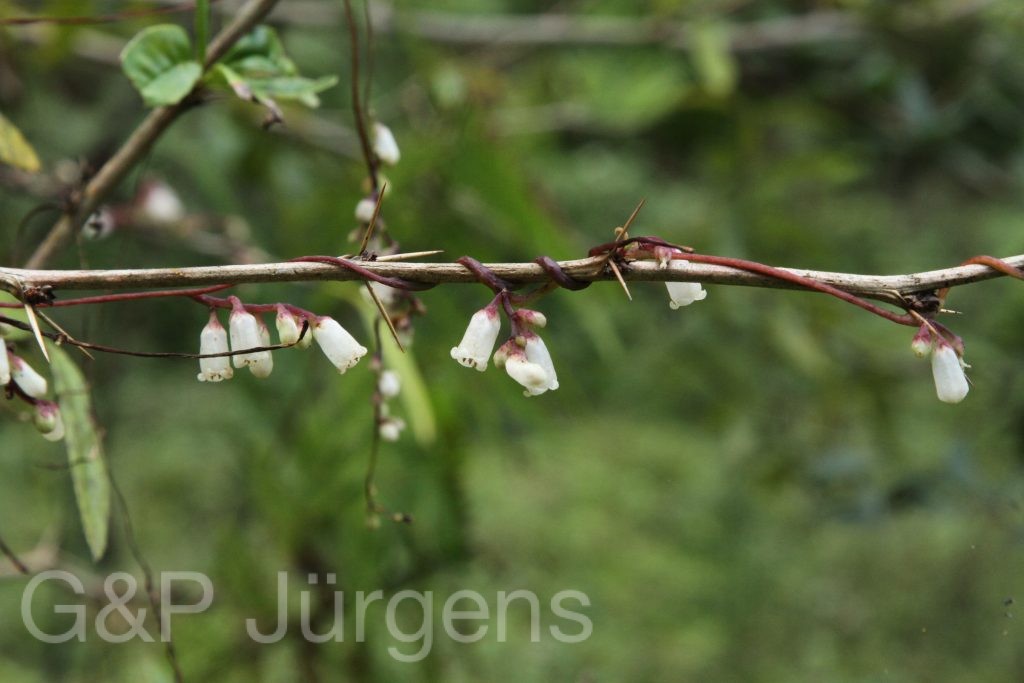
Cuscuta reflexa, the giant or Asiatic dodder, is a parasitic twiner widely distributed across South and Southeast Asia, from Afghanistan, Pakistan, India, Nepal, Bhutan and Sri Lanka through Bangladesh, Myanmar and Thailand to China, with introduced records reaching Britain, Kenya, Mauritius, Iraq, Korea and the United States; its more than 1000 GBIF occurrences reflect both abundance and weediness. It occurs from the plains into the lower mountains, scrambling over shrubs, hedges, trees and crops in open scrub, forest margins, gardens and waste ground. The plant photographed at Wangdue Phodrang in Bhutan at about 2000 m in October sits at the upper part of its range, which extends from near sea level to roughly 3000 m.

It is a leafless, rootless holoparasite whose body consists of slender, much-branched, twining stems that are yellow to orange and essentially without chlorophyll, attaching to the host by intrusive haustoria that tap the vascular tissue. Leaves are reduced to minute scales. The flowers are small, white to creamy, fragrant and bell-shaped, borne in dense lateral racemose or spike-like clusters; the campanulate corolla has five reflexed lobes (the source of the epithet reflexa) and encloses scale-like infrastaminal appendages. The fruit is a globose capsule that opens by a circumscissile lid to release several small seeds.

Though listed here under Convolvulaceae, Cuscuta is frequently segregated into its own family Cuscutaceae; molecular evidence nests the genus firmly within Convolvulaceae, validating the family placement given. C. reflexa is the largest-stemmed Asian dodder and an agriculturally significant parasite that can damage ornamentals, hedges and tree crops, while also being widely employed in traditional medicine. Its broad, partly anthropogenic distribution and its appearance as an introduced weed in distant regions mark it as a successful generalist parasite.

Author: Roxb. · Sources: POWO (Kew), GBIF, Flora of China, Flora of Pakistan, Yuncker monograph of Cuscuta, Stefanovic Convolvulaceae phylogeny

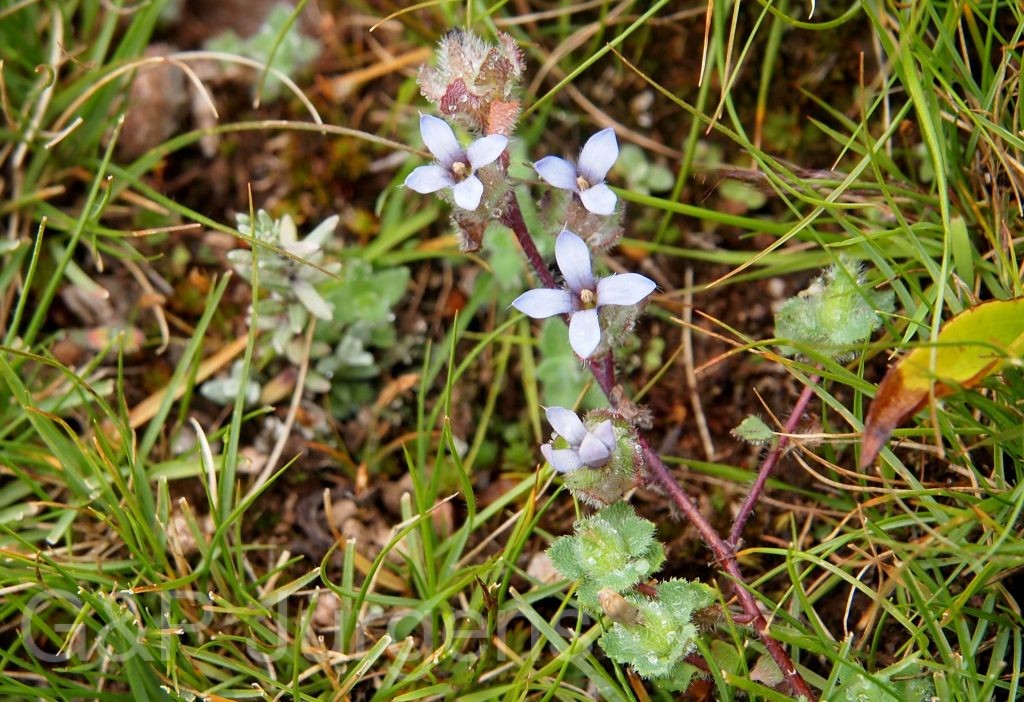
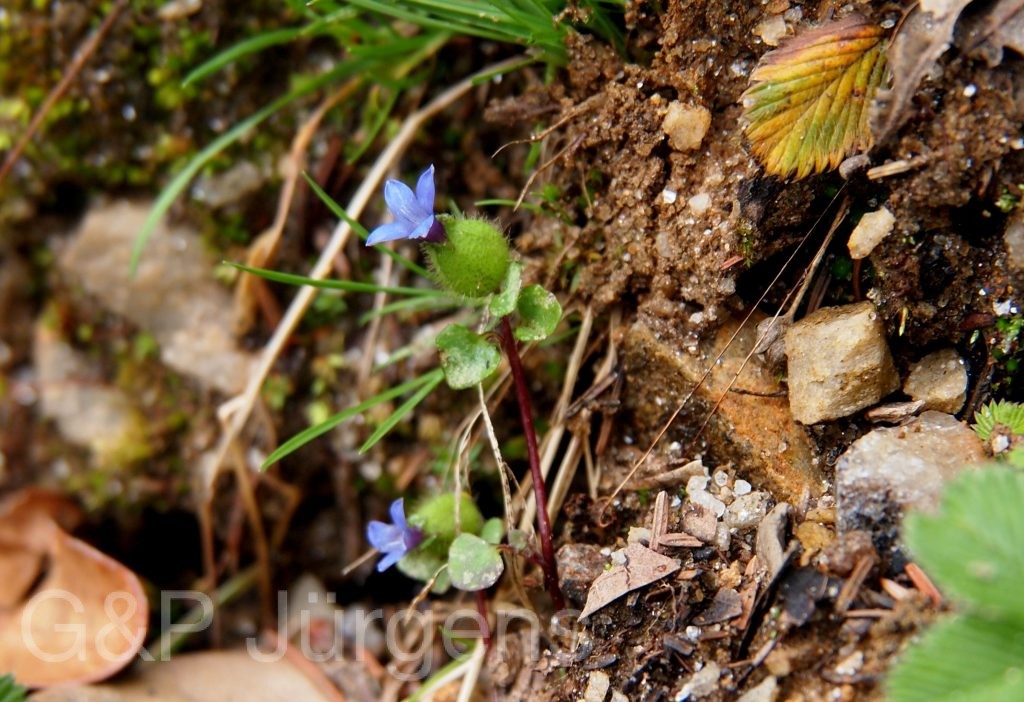
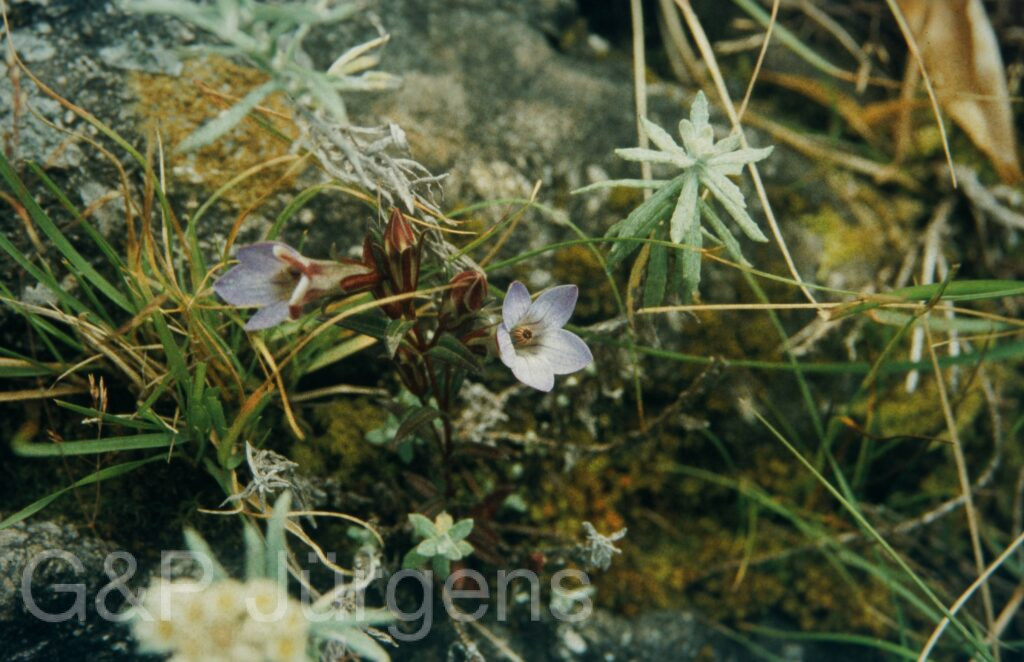
C.B.Clarke

Bhutan2012 881
Bhutan Jakar 2200m, October

Description

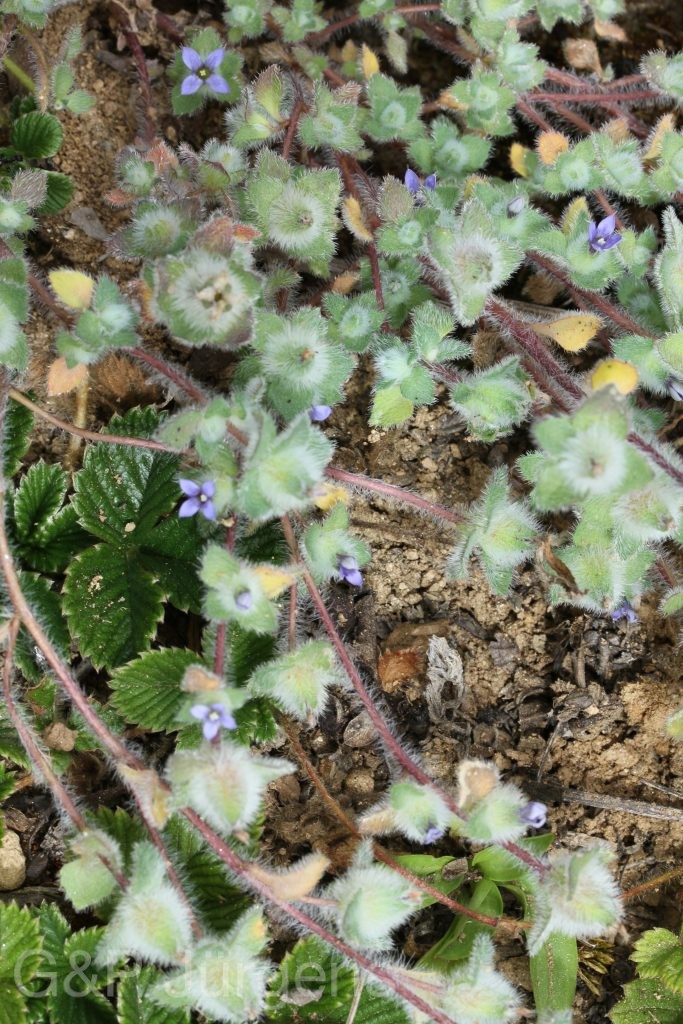
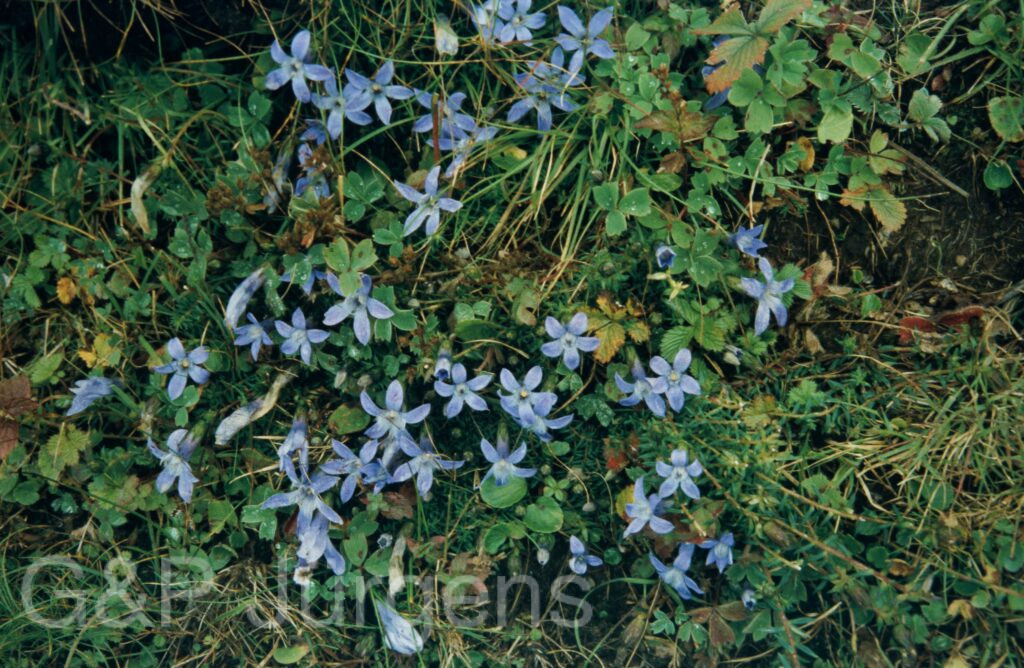
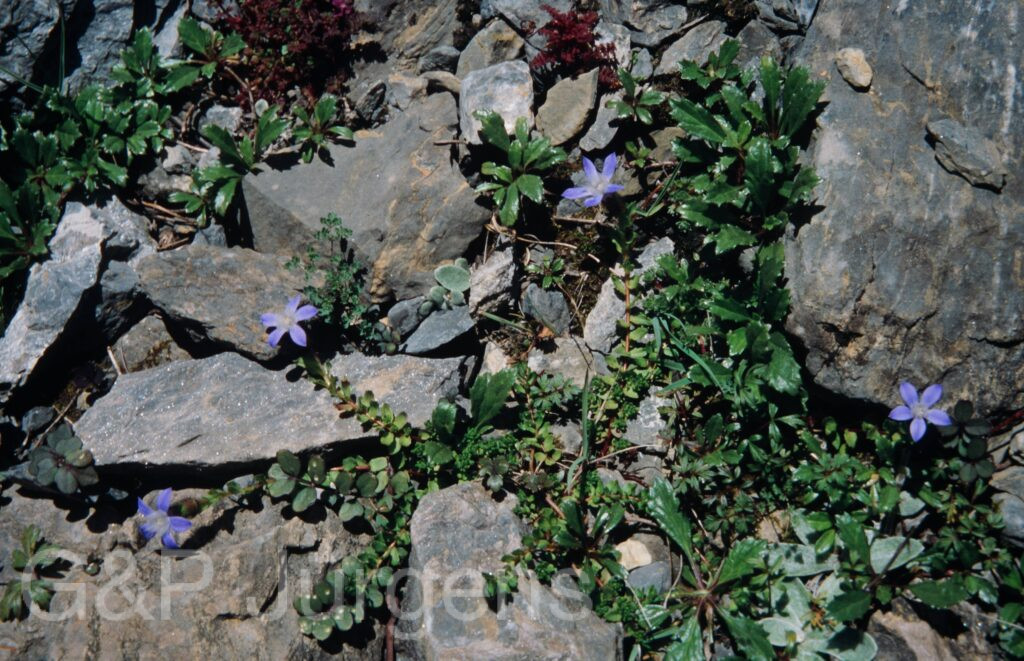
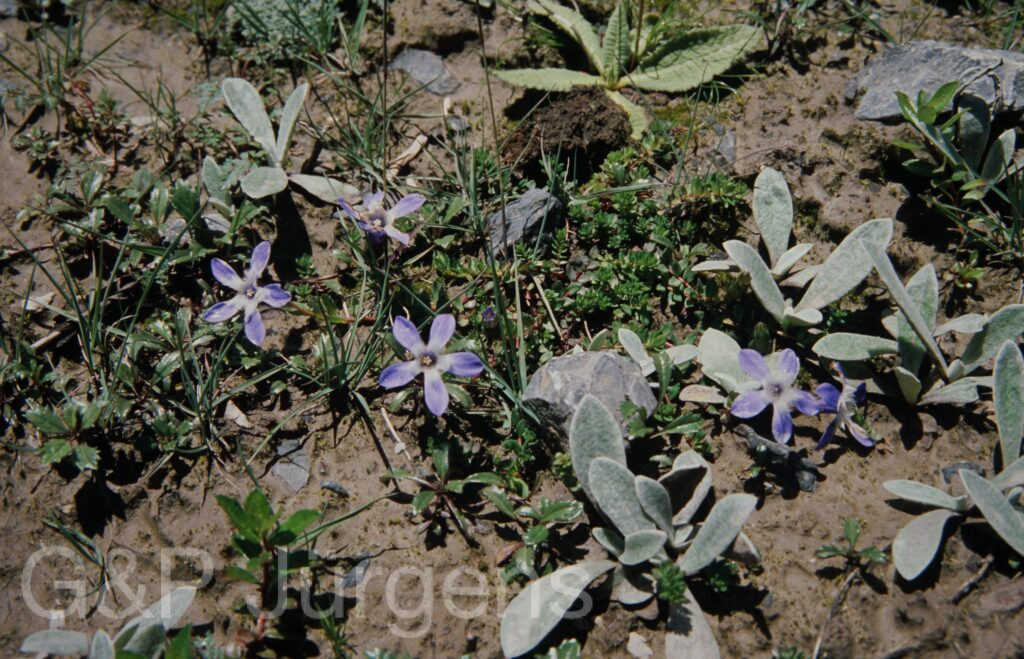
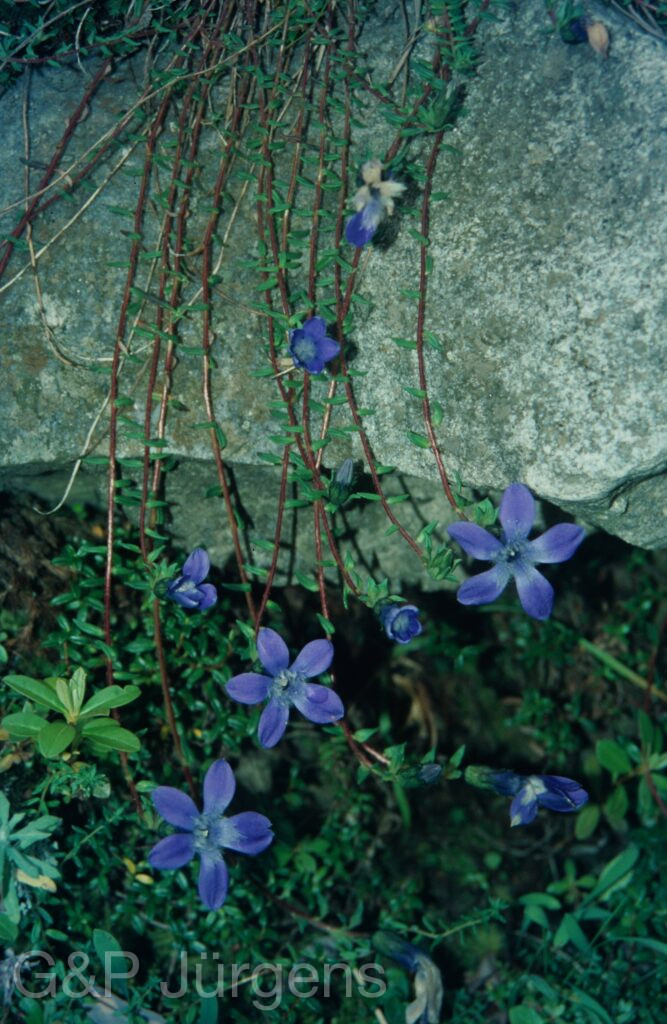
Cyananthus hookeri C.B.Clarke is a small Sino-Himalayan herb recorded by GBIF from China, Nepal, India and Bhutan, with 641 occurrences distributed through the higher Himalaya into south-western China. It grows on open slopes, grassy banks, rocky ground and trail margins in the temperate to subalpine zones, typically between about 2200 and 4000 m. The plant photographed at Jakar in central Bhutan, at roughly 2200 m in October, marks the lower end of its altitudinal range and illustrates its late-season flowering, the genus being characteristically autumn-blooming in the eastern Himalaya.

The species is a small, slender annual with prostrate to ascending, often branched stems. The leaves are alternate, small, ovate to obovate or oblanceolate, frequently with a few teeth and short hairs. The flowers are terminal and solitary, with a conspicuously inflated, hairy calyx tube; the corolla is broadly funnel- to bell-shaped, blue to pale blue or sometimes whitish, with the throat closed by a tuft of hairs and the lobes spreading. As in all Cyananthus, the fruit is a capsule that, distinctively for the family, dehisces from the apex downward to shed the numerous small seeds.

Cyananthus is an Asian alpine genus of the Campanulaceae centred on the Himalaya and the Qinghai-Tibetan plateau, distinguished by its apically dehiscent capsules and the bearded corolla throat. Among its members, C. hookeri is one of the smaller, annual species, contrasting with the perennial, larger-flowered relatives of the genus. It is pollinated by alpine insects and is not regarded as threatened, being locally frequent and forming a characteristic component of the late-flowering meadow and slope flora of the central and eastern Himalaya.

Author: C.B.Clarke · Sources: POWO (Kew), GBIF, Flora of China, Flora of Bhutan, Flora of Nepal, Sprague revision of Cyananthus

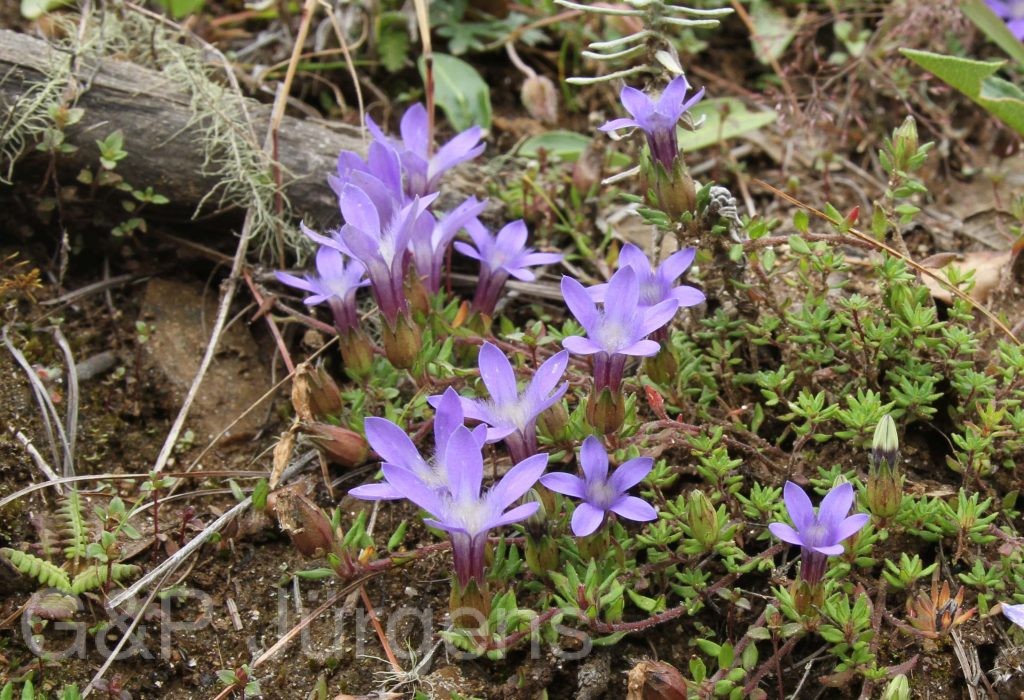
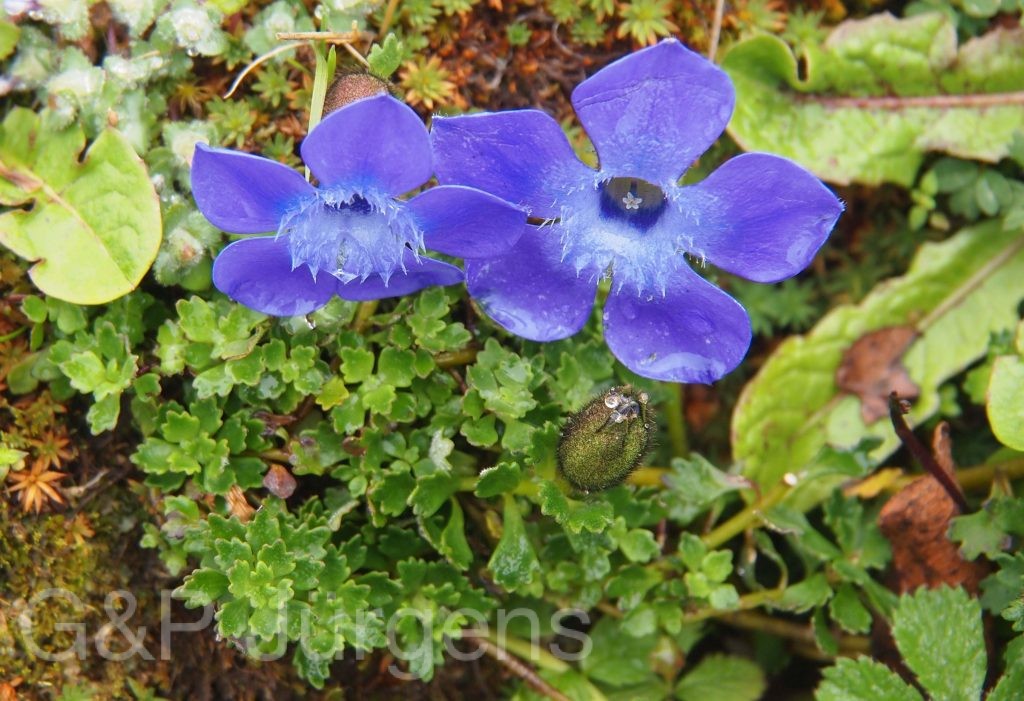
Hook.f. & Thomson

Bhutan2012 84
Bhutan Shele-La, 4100m September
Bhutan2012 87
Bhutan Shele-La, 4100m September
Sikkim2003 136 G184
Sikkim Dzongri 3950m, August

Description

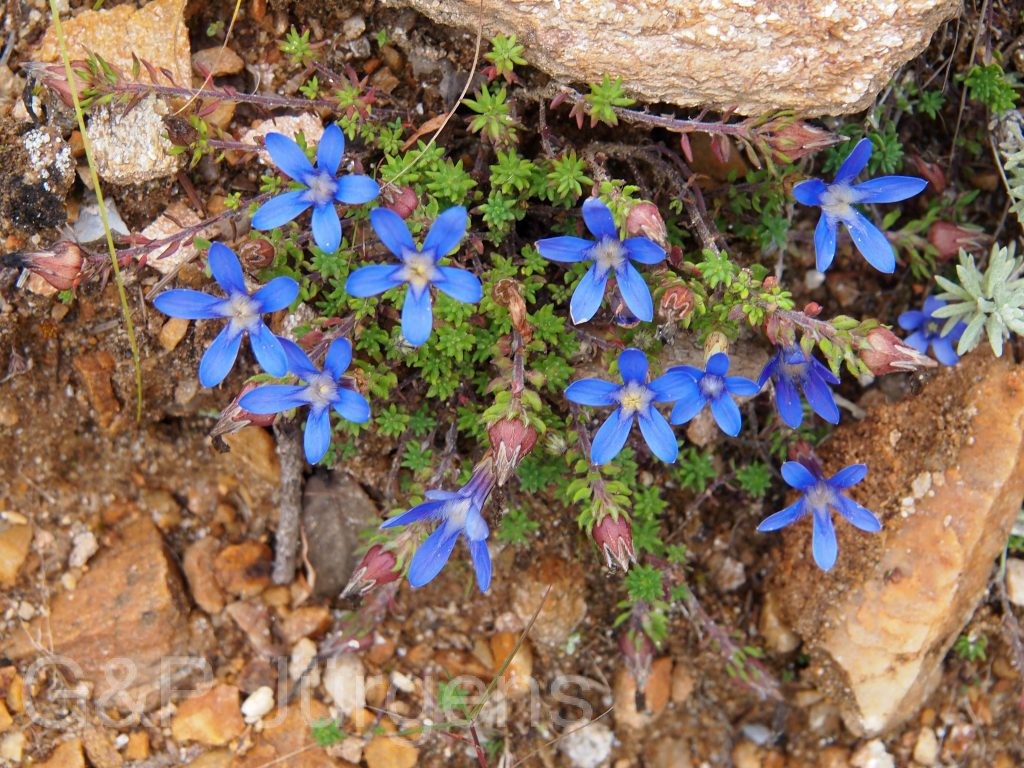
Cyananthus incanus is a low alpine perennial of the eastern Himalaya and adjacent Tibet, recorded from China, Nepal, India, Bhutan and Myanmar, with about 777 occurrences in GBIF. It grows on open alpine turf, stony slopes, screes and the margins of dwarf rhododendron scrub, generally between 3500 and 4500 m, in well-drained sites of the upper alpine zone. The photographs from the Shele La in Bhutan at about 4100 m in September and from Dzongri in Sikkim at about 3950 m in August show the plant flowering through the late-monsoon and early-autumn season typical of the high eastern Himalaya.

The plant is a mat-forming or loosely tufted perennial with a stout, woody rootstock from which radiate slender, prostrate to ascending stems. The small leaves are alternate, ovate to obovate, entire or slightly toothed, and clothed in greyish hairs, the indumentum reflected in the epithet incanus. The flowers are solitary and terminal, comparatively large for the plant; the calyx is densely hairy and tubular, and the broadly bell-shaped to funnelform corolla is blue to purplish-blue with five spreading lobes and a conspicuous tuft of hairs (a beard) closing the throat, a hallmark of the genus. The fruit is a capsule splitting from the apex to release numerous small seeds.

Cyananthus is a small Sino-Himalayan genus of the Campanulaceae distinguished from Campanula by its terminal solitary flowers, a deeply lobed corolla and the bearded throat. The cushion or mat habit and woolly leaves are typical adaptations to the cold, wind-exposed and sun-drenched conditions of the alpine zone. Several species, including C. incanus, are prized in alpine and rock gardens for their intense blue flowers. Locally frequent across its range, it is not regarded as threatened.

Author: Hook.f. & Thomson · Sources: POWO (Kew), GBIF, Flora of China, Flora of Bhutan, Annotated Checklist of the Flowering Plants of Nepal, Lammers' classification of the Campanulaceae

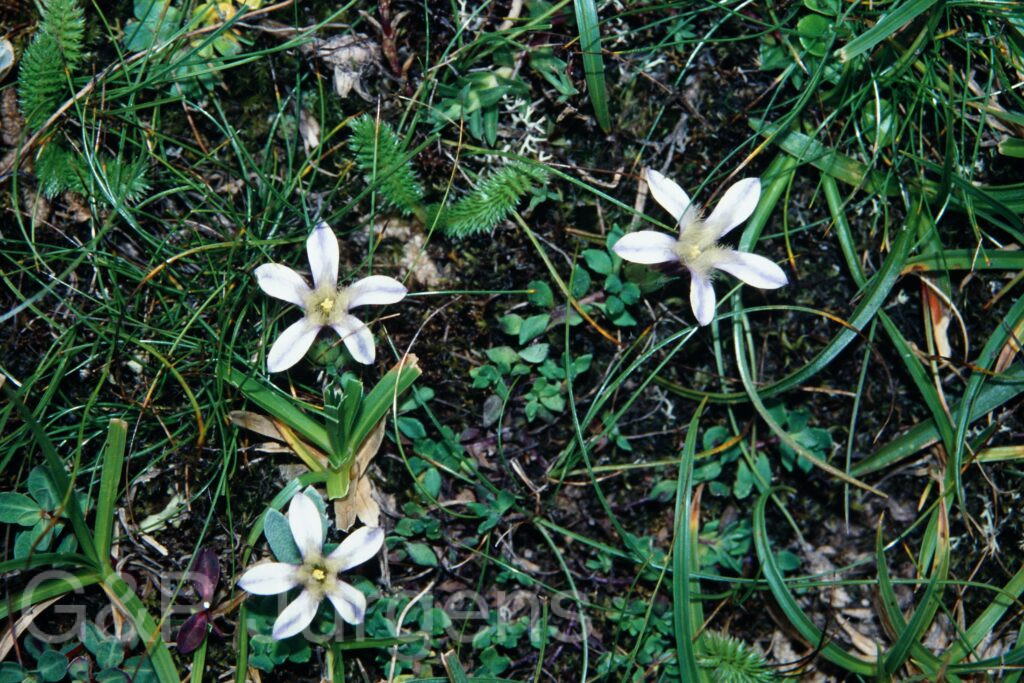
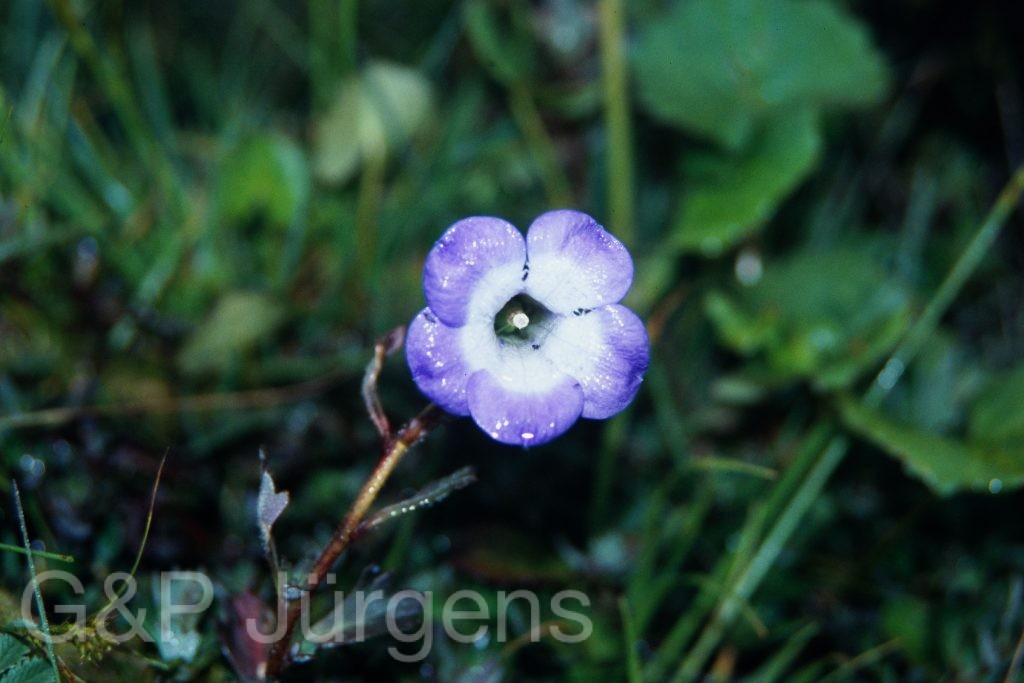
Hook.f. & Thomson

Bhutan2012 258
Bhutan Shele-La, 4000m September
Bhutan2012 106
Bhutan Shele-La, 4000m September

Description

Cyananthus inflatus is an annual herb of the eastern Himalaya and adjacent mountains, recorded by GBIF in some 605 occurrences from China, Nepal, India, Bhutan and Myanmar. It occupies open alpine and subalpine ground, including grassy slopes, screes, disturbed banks and the margins of trails and meadows, broadly between 3000 and 4300 m. The illustrated plant was photographed in Bhutan at the Shele-La at 4000 m in September, flowering late in the season as autumn approaches, when many alpine annuals complete their cycle on cool, well-drained slopes.

The plant is a slender, branching annual with ascending to decumbent stems bearing alternate, small, ovate to spathulate leaves that are entire or slightly toothed and sparsely hairy. The flowers are terminal and solitary on the branch tips, subtended by a leafy involucre. The calyx is conspicuously inflated and tubular, becoming swollen and membranous in fruit, clothed in dark or appressed hairs. The corolla is broadly campanulate, pale to deep blue, five-lobed and bearded within at the throat with a tuft of hairs characteristic of the genus. The fruit is a capsule enclosed by the persistent inflated calyx, splitting to shed numerous small seeds.

Cyananthus (Campanulaceae) is a Sino-Himalayan genus of around twenty species notable for its bearded corolla throat and superior to half-inferior ovary, distinguishing it from the related Codonopsis and Campanula. The epithet inflatus refers to the swollen fruiting calyx, a diagnostic feature within the annual group. GBIF treats the name as accepted. As a wide-ranging, often weedy annual of disturbed alpine ground, it is locally common and of no conservation concern.

Author: Hook.f. & Thomson · Sources: POWO (Kew), GBIF, Flora of China, Flora of Bhutan, Lammers studies of Campanulaceae

Wall. ex Benth.

Garw 2005 294 ergebnis
India Garhwal Patanati 3600m, September

Description

Cyananthus integer is a cushion-forming alpine herb of the western and central Himalaya, recorded by GBIF from India, Nepal and adjacent territories across some 48 occurrences, with an accepted status under its current name. It is a plant of high-altitude open habitats: stony alpine meadows, gravelly slopes, rock crevices and the margins of moraine, typically between about 3300 and 4300 m. The photographed material from Patanati in Garhwal at 3600 m, flowering in September, illustrates both its preferred elevation and its late-season phenology, the blooms opening towards the close of the monsoon when many co-occurring alpines are already in fruit. Like other members of its genus it thrives on the well-drained, sun-exposed turf and screes of the upper alpine zone.

The plant forms low, somewhat trailing to ascending mats from a slender woody rootstock, with numerous prostrate or decumbent stems clothed in small, alternate, entire to shallowly toothed leaves that are often densely arranged toward the stem tips. The solitary, terminal flowers are the conspicuous feature: a broadly funnelform to campanulate corolla, blue to violet-blue, with five spreading lobes and a conspicuous tuft of hairs in the throat. The calyx is tubular and frequently dark-hairy, the stamens five, and the ovary inferior to half-inferior. The fruit is a capsule that releases small seeds, the persistent calyx aiding wind exposure on the open slopes.

Cyananthus is a Sino-Himalayan genus of roughly twenty species centred on the Himalaya and southwest China, distinguished from related Campanulaceae by its throat-bearded, often deeply lobed corolla and its alpine, cushion-forming habit. C. integer sits among the blue-flowered, entire- to weakly toothed-leaved species and is told from relatives by leaf form and indumentum. As a widespread but elevation-restricted alpine it has not been flagged as threatened, though high-mountain plants of this kind are increasingly studied as indicators of climatic shifts in the Himalayan alpine belt.

Author: Wall. ex Benth. · Sources: POWO (Kew), GBIF, Flora of China Vol. 19, Flora of Nepal, Flora of Pakistan, Cyananthus monograph (a revision of the genus by Sykes/Brown)

Wall. ex Benth.

Bhutan2012 75
Bhutan Shele-La, 4100m September
Sikkim2003 114 G154
Sikkim below Dzongri 4000m 08.2003
Sikkim2003 130 P176
Sikkim Dzongri 4100m 08.2003

Description

Cyananthus lobatus is a well-known Himalayan trailing bellflower distributed from Nepal through India, Bhutan and southern Tibet (China) into Myanmar, with the genus's comparatively abundant 515 GBIF records (additional European and North American codes reflect its popularity in cultivation). It grows in the alpine and upper subalpine zones on open grassy slopes, rock ledges, screes and moist turf, broadly between about 3000 and 4500 m. The plants illustrated, from the Shele-La in Bhutan at around 4100 m in September and from Dzongri in Sikkim near 4000 m in August, occupy this late-summer to autumn alpine habitat.

It is a low, mat-forming or sprawling perennial herb arising from a stout rootstock, with prostrate to ascending, often reddish stems bearing small, alternate, obovate leaves that are usually lobed or toothed and somewhat fleshy. The flowers are solitary and terminal, large and showy for the plant's size; the broadly funnelform to bowl-shaped corolla is deep blue to violet-blue, five-lobed, and conspicuously bearded with white hairs in the throat, subtended by a swollen, hairy calyx tube. The fruit is a capsule enclosed in the persistent calyx, releasing numerous small seeds.

Cyananthus is a Sino-Himalayan genus distinguished from other Campanulaceae by its terminal solitary flowers, throat beard and superior ovary, and C. lobatus is its most familiar species, long valued as a choice late-flowering rock-garden plant, which explains its wide ex-situ record base. Its prostrate, cushiony habit suits exposed high-altitude ground. The species is widespread and locally common across the Himalaya and is not considered threatened, although alpine grazing and warming-driven upslope vegetation shifts could affect individual populations.

Author: Wall. ex Benth. · Sources: POWO (Kew), GBIF, Flora of Bhutan, Flora of China, Annotated Checklist of the Flowering Plants of Nepal, Lammers Revision of Campanulaceae

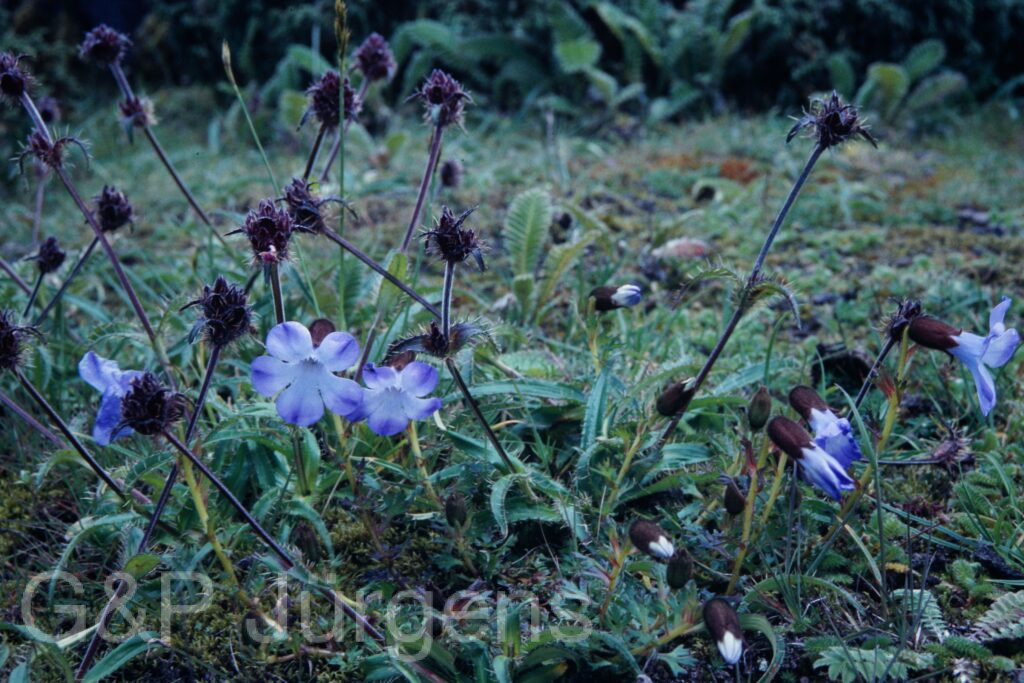
Edgew.

Garw 2005 300 ergebnis
India Garhwal Kunol 3100m, September
Nepal 99 855 ergebnis
West-Nepal Sanu Bheri 3850m, July
Nepal 99 856 ergebnis
West-Nepal Sanu Bheri 3850m, July
Garw 2005 44 ergebnis ergebnis
India Garhwal Valley of flowers 3150m, September

Description

Cyananthus microphyllus is an alpine cushion-forming herb endemic to the Himalaya, documented from Nepal, India and China, with the available occurrence records concentrated along the central and western Himalayan arc. It grows in alpine meadows, on open stony slopes, rock ledges and the gravelly margins of glacial moraines, generally between about 3000 and 4500 m. The images, gathered at Kunol in Garhwal at 3100 m and in the Valley of Flowers at 3150 m in September and at Sanu Bheri in West Nepal at 3850 m in July, capture its late-monsoon flowering in high pastures and rocks where the mats anchor in thin, well-drained soils.

The plant forms low, much-branched, somewhat woody-based mats from a slender taproot. The wiry, prostrate to ascending stems are clothed in numerous small, alternate, ovate to elliptic leaves that are often revolute at the margin and sparsely hairy. The flowers are solitary and terminal, with a campanulate, conspicuously hairy calyx whose tube is shorter than the deeply five-lobed, blue corolla; the corolla throat bears a dense ring of white hairs, a defining feature of the genus. Five stamens alternate with the corolla lobes, and the inferior to half-inferior ovary develops into a capsule that exceeds the persistent calyx and dehisces to release numerous small seeds.

Cyananthus is a small Sino-Himalayan genus of perhaps two dozen species, allied to the bellflowers but distinguished by the bearded corolla throat and largely inferior ovary. Cyananthus microphyllus is recognised among the small-leaved, blue-flowered species by its diminutive, densely leafy mats. Its restricted high-elevation distribution makes it sensitive to climatic shifts and trampling by grazing livestock, and as a late-flowering alpine it provides an important resource for bumblebees and other cold-adapted pollinators.

Author: Edgew. · Sources: POWO (Kew), GBIF, Flora of China, Annotated Checklist of the Flowering Plants of Nepal, Flowers of the Himalaya (Polunin & Stainton), revision of Cyananthus (Campanulaceae)