Tag:

Autumn

Hook.f.

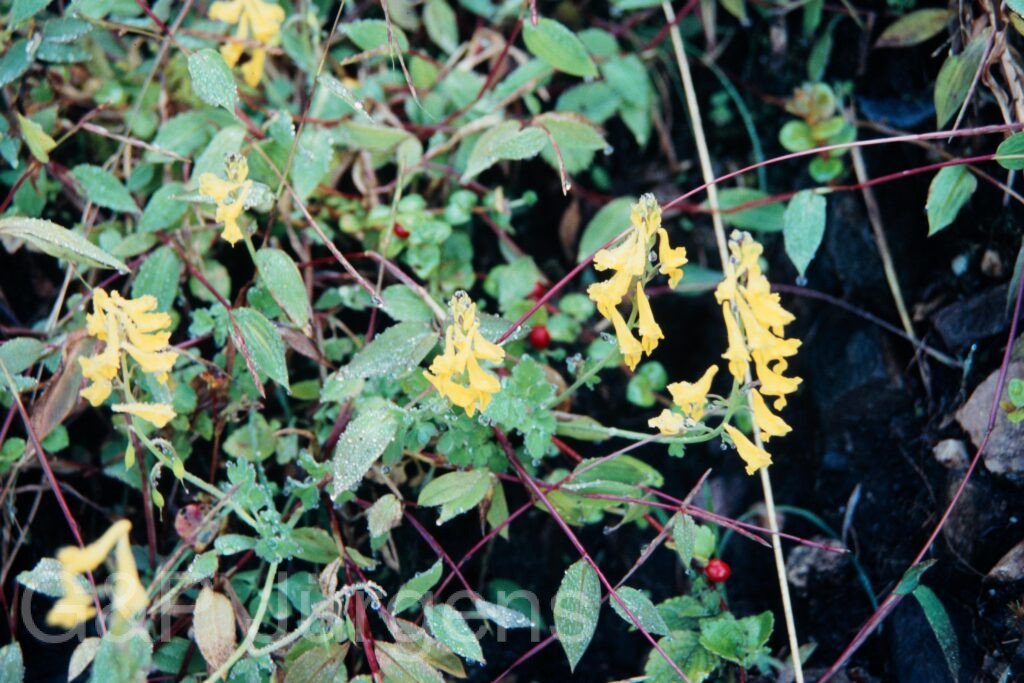
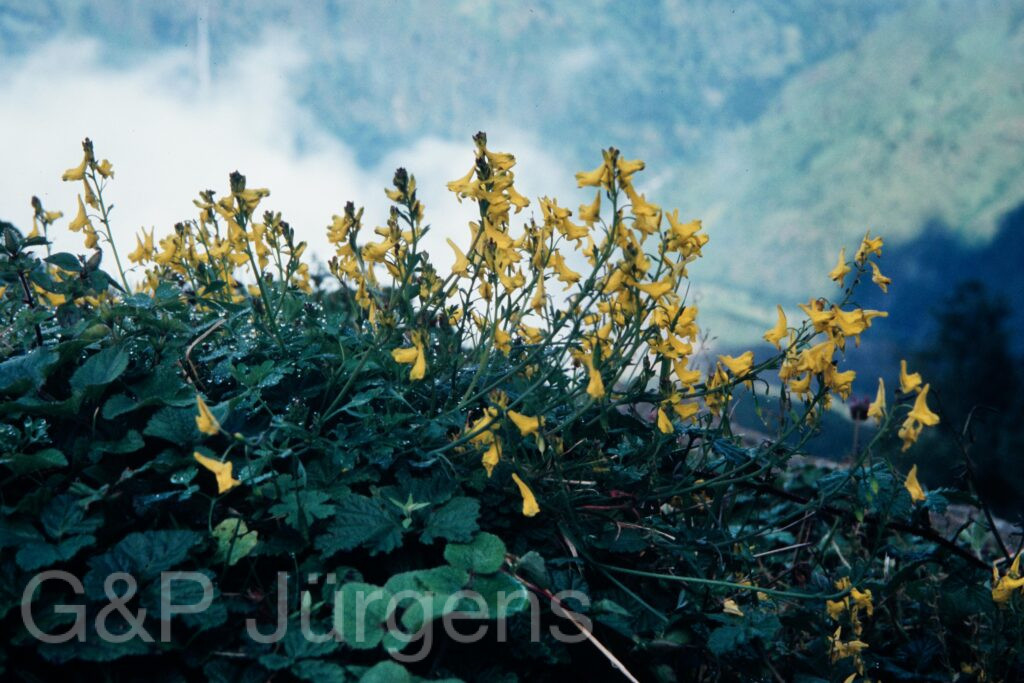
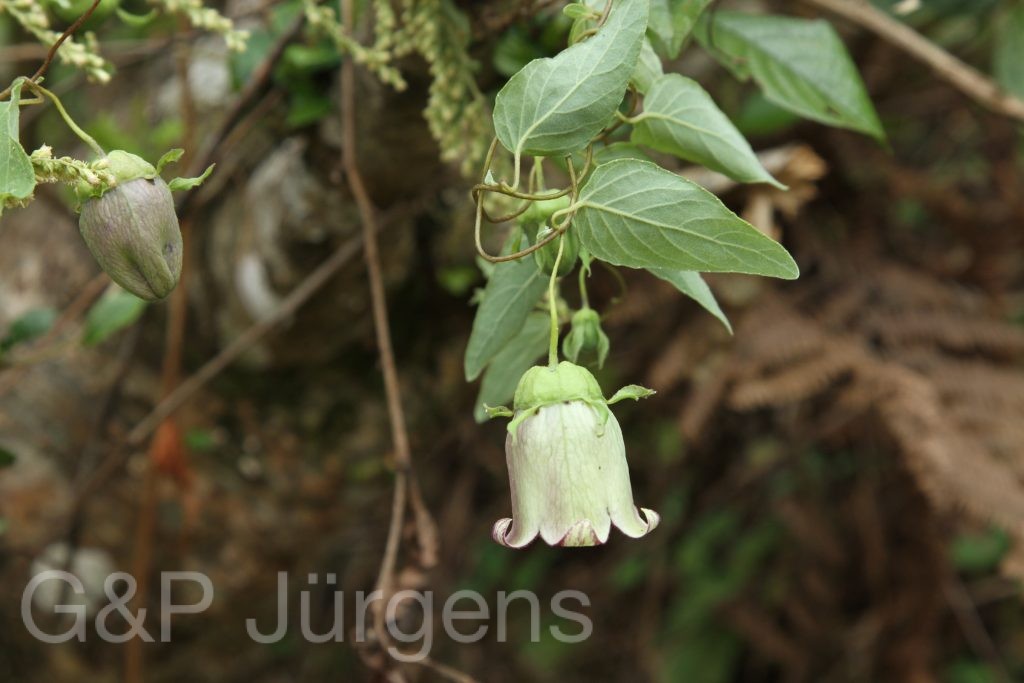
Bhutan2012 672
Bhutan Tserang 1000m, September
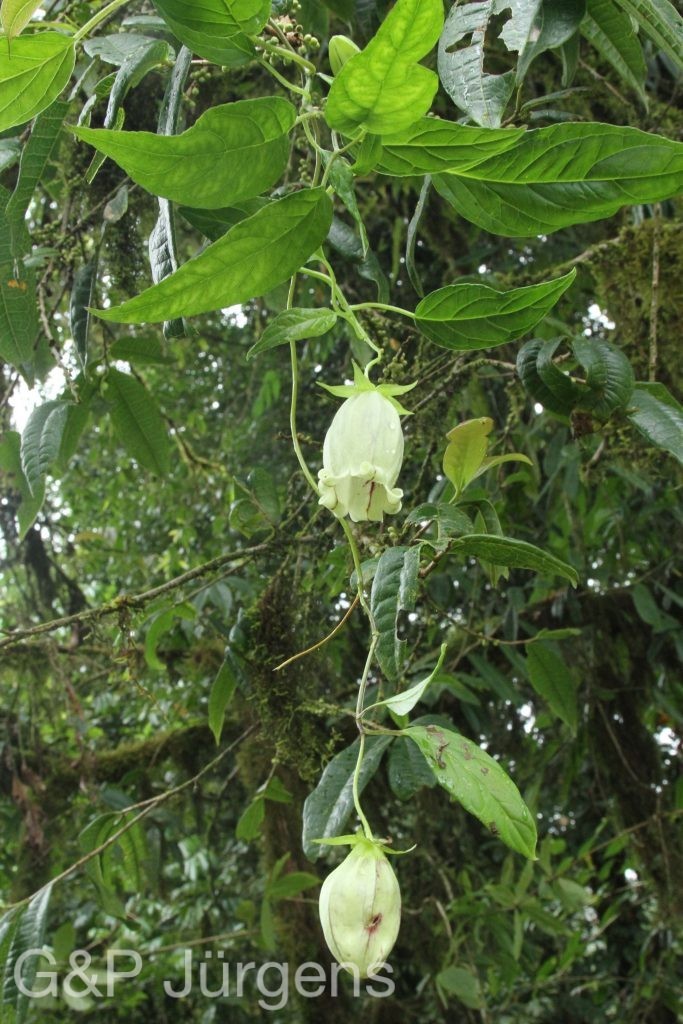
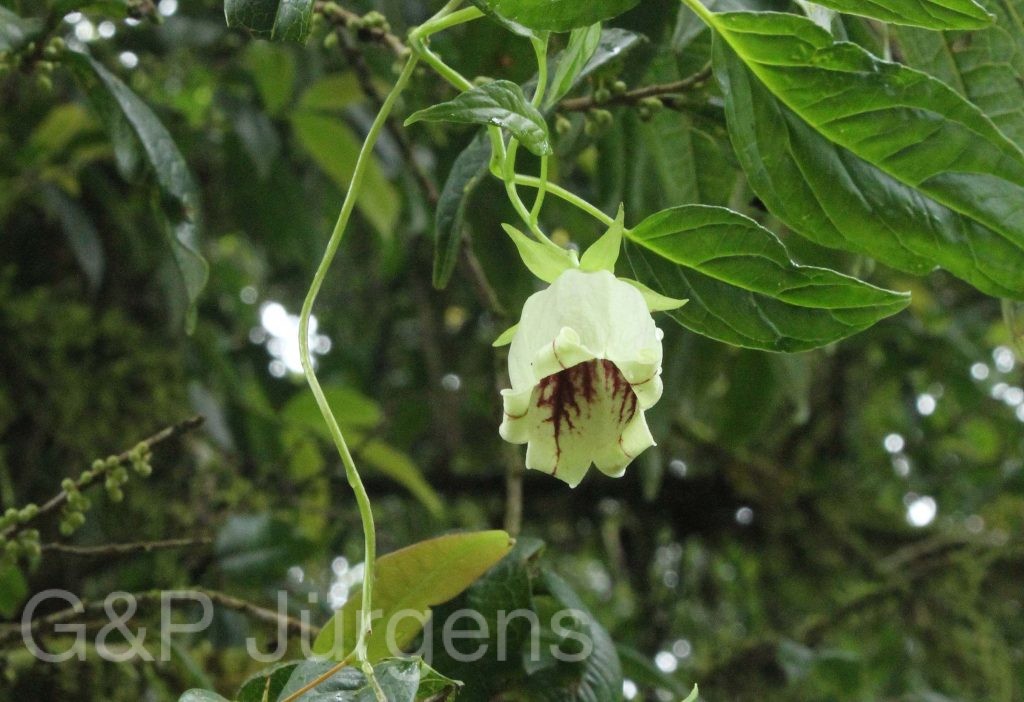
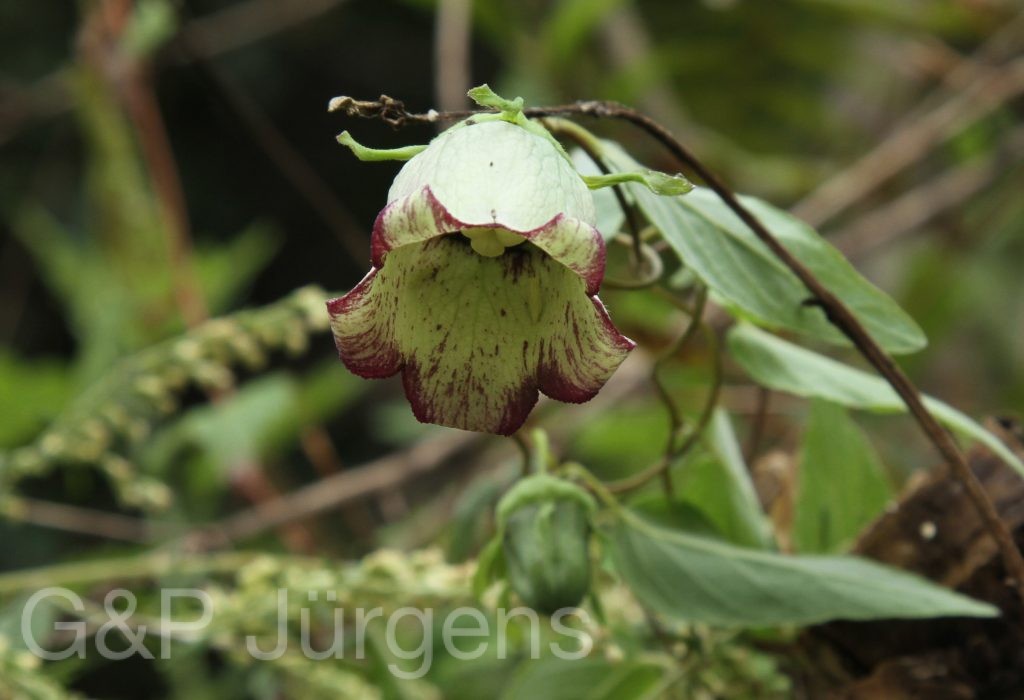
Bhutan2012 675
Bhutan Tserang 1000m, September

Description

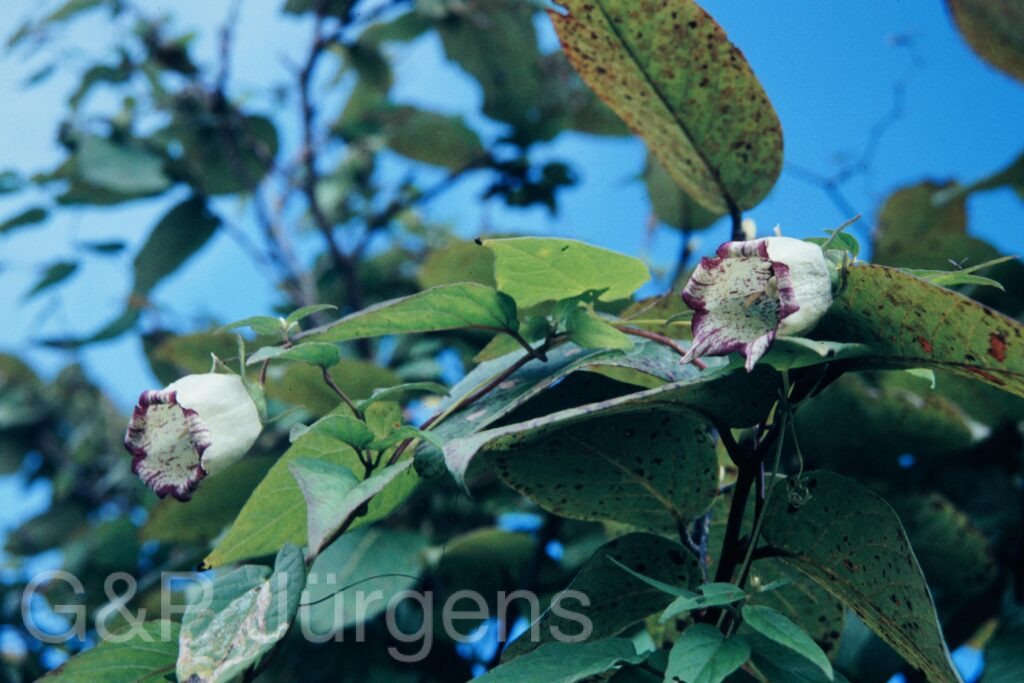
Codonopsis inflata is a herbaceous twining perennial of the eastern and central Himalaya, recorded from India, Nepal, Bhutan, China and Myanmar. It grows in forest margins, thickets, scrub and among tall herbs on shaded slopes and stream banks in the subtropical to lower temperate belt, generally between about 1000 and 2500 m, scrambling over surrounding vegetation. The photographed plant comes from Tserang in Bhutan at around 1000 m, flowering in September. With around 107 georeferenced records it is a moderately documented Himalayan bellflower relative, characteristic of the humid, vegetated lower montane zone where its slender climbing stems are supported by neighbouring shrubs and herbs.

It arises from a fleshy, often swollen rootstock and produces slender, twining, glabrous stems that exude latex when cut and emit the characteristic foetid odour of the genus. The leaves are alternate or subopposite, ovate to lanceolate, with entire to shallowly toothed margins and slender petioles. The flowers are solitary and nodding on long pedicels; the calyx has five lobes adnate to the lower part of the ovary, and the corolla is broadly campanulate to somewhat inflated, pale greenish, yellowish or bluish and usually marked within by darker veins or blotches. There are five stamens, and the inferior to half-inferior ovary ripens into a capsule that dehisces to release numerous small seeds.

Codonopsis is a large Sino-Himalayan genus, several species of which are valued in traditional Chinese and Himalayan medicine, the fleshy roots (dang shen) used as tonics; C. inflata shares this ethnobotanical use. Its taxonomy is complicated by variation in corolla form and by close affinity to allied Himalayan species. As a fairly widespread plant of vegetated montane habitats it is of least conservation concern.

Author: Hook.f. · Sources: POWO (Kew), GBIF, Flora of China, Flora of Bhutan, Lammers monograph of Campanulaceae (Codonopsis)
Wall.

Bhutan2012 1191
Bhutan Tashiyangtse 2000m, October
Bhutan2012 1193
Bhutan Tashiyangtse 2000m, October
Nepal 95 118 P206 ergebnis
Nepal south of Rupina La 3400m October
Nepal 95 119 P207 ergebnis
Nepal south of Rupina La 3400m October

Description

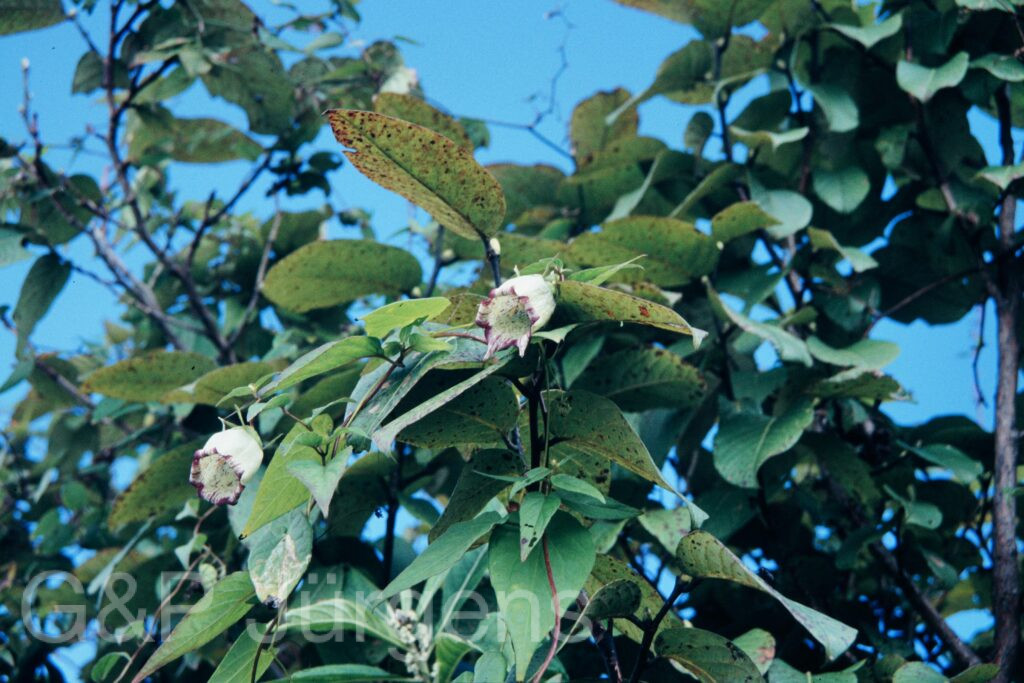
Codonopsis viridis is a Himalayan twining or scrambling perennial distributed along the central and eastern ranges from Nepal through northern India, Sikkim and Bhutan into south-western China, with 162 GBIF records concentrated in this Sino-Himalayan belt. It grows in shrubberies, forest margins, hedgerows and disturbed banks across a wide montane elevation span, from warm-temperate slopes to the subalpine zone. The cited collections illustrate this amplitude: from Tashiyangtse in eastern Bhutan at 2000 m to a higher site south of the Rupina La in Nepal at 3400 m, both flowering in October at the close of the monsoon.

It is a herbaceous climber with slender, twining stems emerging from a tuberous or fleshy rootstock, the foliage and roots emitting the characteristic acrid Codonopsis odour. The leaves are ovate to ovate-lanceolate, alternate or scattered along the stem, thin-textured and entire to obscurely toothed. The flowers are solitary and terminal or borne on slender lateral branches, broadly campanulate to cup-shaped, the corolla greenish to greenish-yellow, often faintly veined or tinged within, with five short spreading lobes. The fruit is a turbinate capsule with a flattened apex, dehiscing to release numerous small seeds.

Codonopsis is a large Asian genus centred on the Himalaya and China, and C. viridis is distinguished within it by its greenish corolla and climbing habit. Like its congeners, it is visited by bees and flies and several species are harvested as substitutes for the tonic root "dang shen". The species is widespread and locally frequent across its range and is not regarded as of conservation concern.

Author: Wall. · Sources: POWO (Kew), GBIF, Flora of China, Flora of Bhutan, Annotated Checklist of the Flowering Plants of Nepal, Lammers monograph of Campanulaceae (Codonopsis)
Lindl. ex Griff.

Bhutan2015 216
Bhutan Zhemgang 910m, October

Description

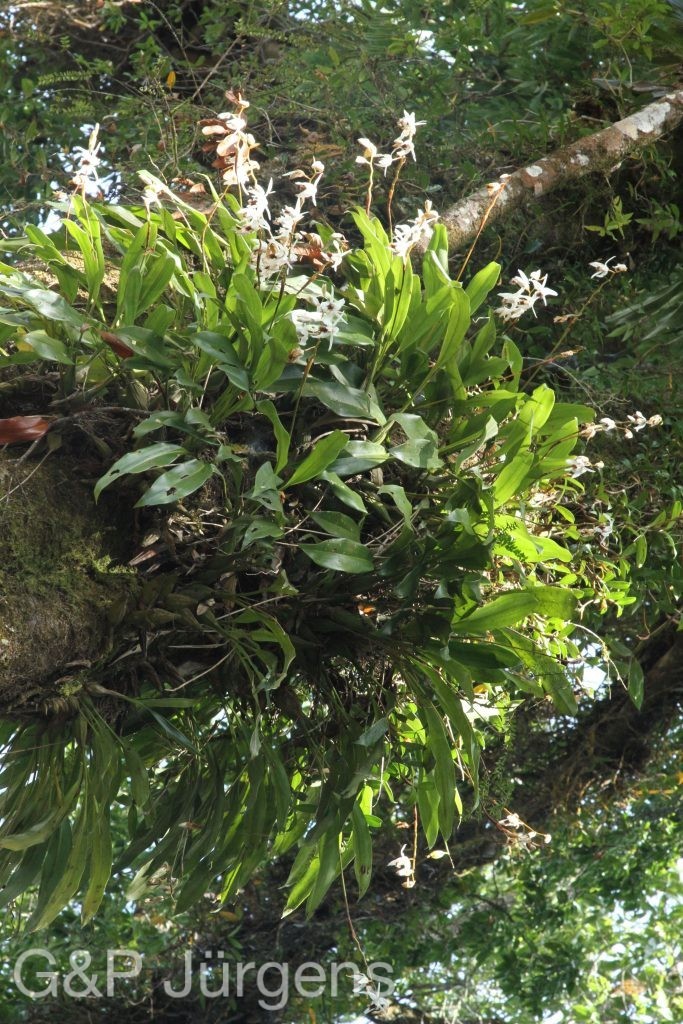
Coelogyne barbata is an Eastern Himalayan orchid recorded from China, north-eastern India, Bhutan, Myanmar, Bangladesh and Nepal, with GBIF documenting over a hundred occurrences across the region. It grows as an epiphyte on mossy tree trunks and large branches, and sometimes as a lithophyte on shaded, humus-covered rocks, in humid broad-leaved evergreen montane forest with abundant atmospheric moisture. The species occupies low to middle elevations of the warm-temperate belt; the photographed plant from Zhemgang in central Bhutan at about 910 m, flowering in October, exemplifies its autumn anthesis at the lower end of its altitudinal range, when many congeners are also in bloom.

The plant forms ovoid to oblong-conical pseudobulbs spaced along a stout creeping rhizome, each bearing a pair of apical leaves. The leaves are large, elliptic-lanceolate, plicate and prominently veined, narrowed to a petiole. The inflorescence is an erect to arching, several- to many-flowered raceme arising from the apex of a developing growth, the flowers opening more or less simultaneously. The flowers are showy and white, with spreading sepals and petals; the labellum is the most distinctive feature, trilobed and white marked with dark brown to blackish blotches, its disc and margins of the side lobes conspicuously fringed with long brown or blackish bristly hairs, from which the epithet derives. The fruit is a ribbed capsule.

C. barbata is placed within Coelogyne section Fuliginosae (the elata/ovalis alliance of fimbriate-lipped species), distinguished from its relatives by the heavily bearded, dark-marked labellum. Recent generic recircumscriptions of Coelogyne based on molecular phylogenetics retain the species in the genus. Attractive and readily recognised, it is collected from the wild for horticulture, which together with the clearance of mid-elevation forest constitutes the principal threat to its populations.

Author: Lindl. ex Griff. · Sources: POWO (Kew), GBIF, Flora of China, The Orchids of Bhutan (Pearce & Cribb), Coelogyne and its Allies (Clayton & Cribb)

Lindl.

Bhutan2012 468
Bhutan Wangdi 2500m, September

Description

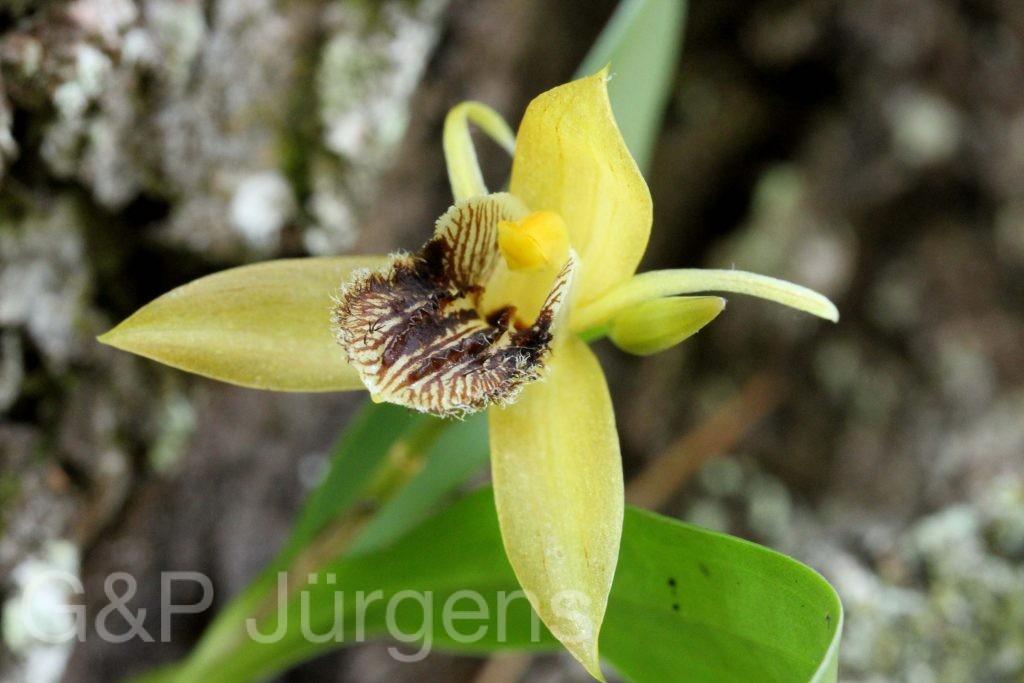
Coelogyne ovalis Lindl. is an epiphytic orchid of the Himalaya and northern Southeast Asia, recorded by GBIF from China, India, Nepal, Bhutan, Myanmar, Thailand, Vietnam, Malaysia and Indonesia, with cultivated records from Europe and North America, totalling some 235 occurrences. It grows as an epiphyte, and occasionally a lithophyte, on mossy trunks and rocks in humid evergreen and mixed montane forest, typically between about 1000 and 2500 m. The plant photographed near Wangdi in Bhutan at about 2500 m in September, at the close of the monsoon, represents the upper part of this range, where cool, perennially moist conditions favour the genus.

The species has a creeping rhizome bearing well-spaced, ovoid to oblong-cylindric pseudobulbs, each topped by two thin-textured, plicate, lanceolate to elliptic leaves that taper to a stalked base. The inflorescence arises from the apex of a developing or mature pseudobulb and carries one or a few comparatively large flowers in succession. The sepals and petals are narrow and pale yellowish to buff or olive-tinged; the broad three-lobed labellum is the showiest part, marked with rich brown to maroon blotches and bearing fringed keels along the disc, with erect lateral lobes flanking the column.

Coelogyne is a large Asian genus of subtribe Coelogyninae, and C. ovalis is placed in section Fuliginosae, characterised by successively produced, brown-marked flowers. It is reasonably widespread and is grown in cultivation, so it is not regarded as globally threatened, although wild populations are pressured by habitat loss and over-collection; like all orchids it is listed on CITES Appendix II. Its broad Indo-Himalayan to Sundaic range makes it a good example of the orchid connection between the Himalaya and Southeast Asia.

Author: Lindl. · Sources: POWO (Kew), GBIF, Flora of Bhutan, Flora of China, Pradhan Indian Orchids, Clayton monograph The Genus Coelogyne

Wall.

Bhutan2012 13
Bhutan Paro, 2300m September
Nepal 95 95 P164 ergebnis
Nepal Barphak 2000m October
Garw 2005 209 ergebnis ergebnis
India Garhwal Pana 2800m, September

Description

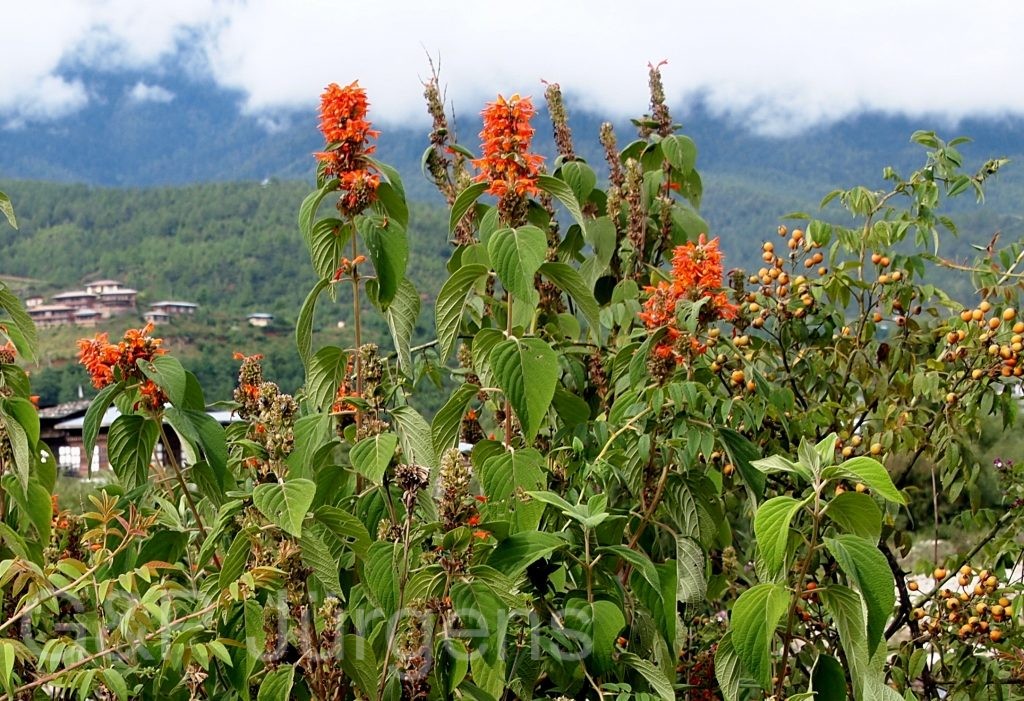
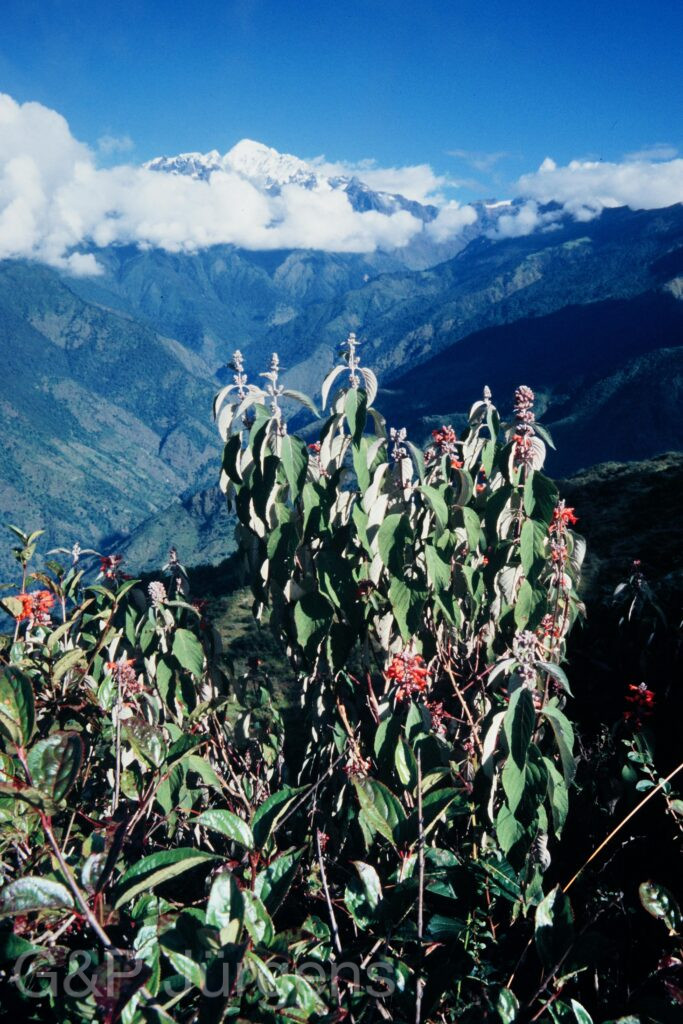
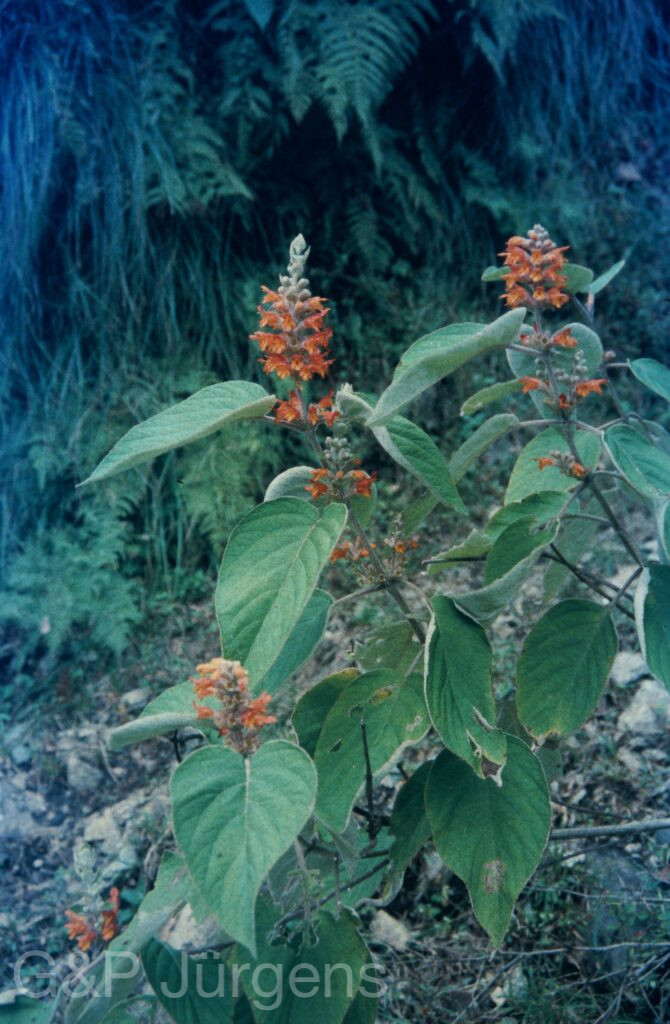
Colquhounia coccinea is a showy shrubby mint of the Himalaya and southwestern China. GBIF records it from China, Nepal, India, Bhutan, Thailand and Myanmar, with cultivated and introduced occurrences in Australia, Europe and North America, totalling around 670 records. It grows in open forest, scrub, thickets and along hill slopes and roadsides in the warm temperate zone, generally between 1500 and 3000 m. The populations illustrated were photographed at Paro in Bhutan (2300 m), Barphak in Nepal (2000 m) and Pana in Garhwal, India (2800 m), flowering in September and October, its characteristic autumn flowering season in the Himalayan foothills.

It is a robust, sprawling or semi-scandent shrub up to 2-3 m, the stems and foliage clothed in stellate or felted indumentum. The opposite leaves are ovate to lanceolate, acuminate, crenate-serrate and rugose, greyish-tomentose beneath. The flowers are borne in dense axillary cymose clusters; the curved, tubular, two-lipped corolla is brilliant scarlet to orange-red, well exserted from the calyx, with four didynamous stamens. The fruit is unusual among Lamiaceae in that the nutlets are winged, an adaptation favouring wind dispersal from the often steep slopes the plant occupies.

Colquhounia is a small Sino-Himalayan genus of subfamily Lamioideae, and the winged nutlets and tubular red corollas distinguish it within the family. The vivid scarlet, nectar-rich tubular flowers are adapted to bird pollination, notably by sunbirds, an uncommon strategy in the predominantly bee-pollinated mints. Long valued as an ornamental and frost-tender garden shrub, the species is widespread and locally common, and is not of conservation concern.

Author: Wall. · Sources: POWO (Kew), GBIF, Flora of China, Flora of Bhutan, Annotated Checklist of the Flowering Plants of Nepal, Phylogeny and classification of subfamily Lamioideae (Lamiaceae)

(Craib) B.L.Burtt

Bhutan2012 1027
Bhutan Trithangebe 900m, October
Bhutan2012 1028
Bhutan Trithangebe 900m, October

Description

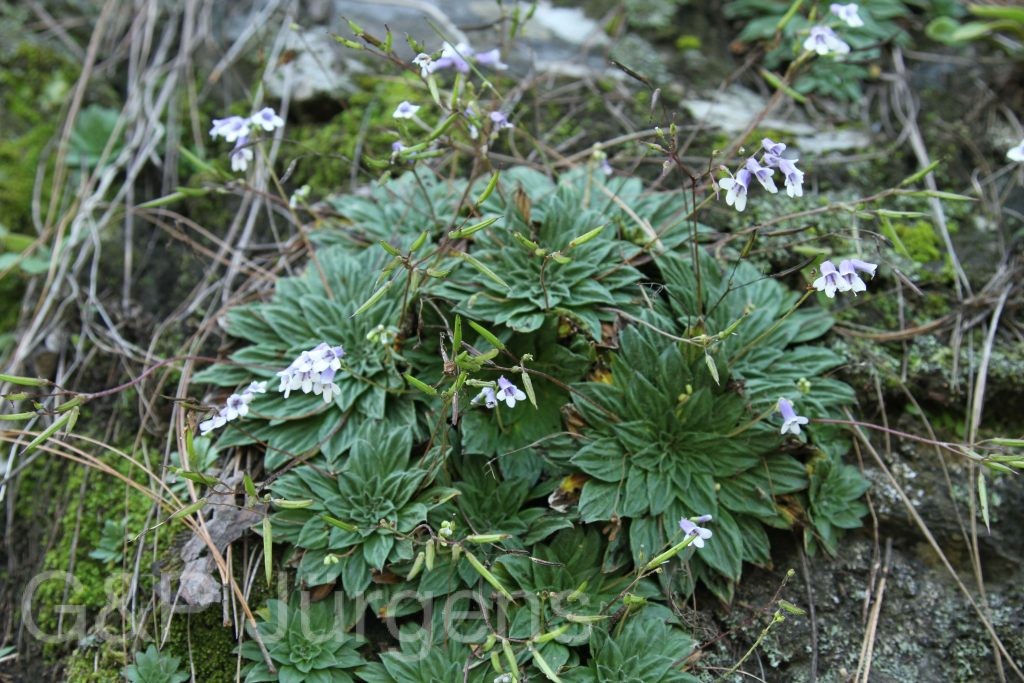
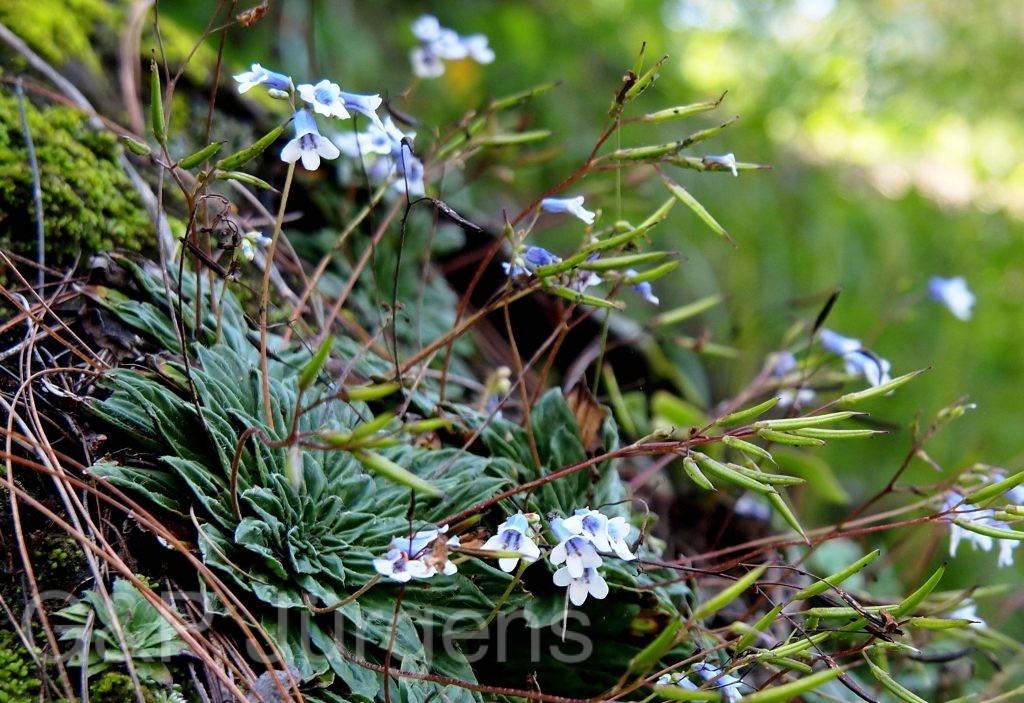
Corallodiscus cooperi is a narrowly distributed rosette herb of the eastern Himalaya, so far reliably known only from Bhutan, where the few catalogued occurrences point to a restricted, possibly endemic or near-endemic range. As with other members of the genus it is a lithophyte, growing on shaded, mossy rock faces, cliff ledges and boulders, often in the spray zone of streams or on damp, well-drained crags. The plant photographed at Trithangebe in Bhutan at 900 m in October occupies the warm subtropical foothill belt, lower than the montane elevations favoured by several congeners, flowering or fruiting into the autumn on its rocky substrate.

It is a small, perennial, acaulescent herb forming a dense, appressed basal rosette of leaves. The leaves are obovate to spathulate, thick-textured, with a green, often rugose and sparsely hairy upper surface and a densely brown- or rusty-tomentose lower surface, the margins crenate to entire. From the rosette arise slender, leafless scapes bearing few-flowered cymes; the flowers are small and weakly zygomorphic, with a tubular to campanulate, five-lobed corolla of blue to violet or purplish hue, and four didynamous stamens. The fruit is a slender, elongate capsule containing numerous minute seeds.

The placement here under "Corallodiscinae" reflects the subtribal rank of Corallodiscus within Gesneriaceae (subfamily Didymocarpoideae); the genus is a small Sino-Himalayan group of rosette-forming rock plants allied to Didymocarpus and Oreocharis. Its members are characteristically tolerant of seasonal desiccation. Given its apparently very limited known range, C. cooperi warrants attention as a potential narrow endemic of conservation interest, dependent on undisturbed rocky habitats.

Author: (Craib) B.L.Burtt · Sources: POWO (Kew), Flora of China Vol. 18, Flora of Bhutan Vol. 2, GBIF, Weber: Gesneriaceae in The Families and Genera of Vascular Plants

Duthie & Prain ex Prain

Garw 2005 174 ergebnis ergebnis
India Garhwal Shertoli 3100m, September

Description

Corydalis casimiriana is a Himalayan herb distributed across the western and central ranges, recorded from India, Nepal, Pakistan, southern China and Bhutan (gbif_countries: IN, NP, PK, CN, BT), with some 192 GBIF occurrences. It occupies moist temperate to subalpine habitats, including shaded forest floors, mossy banks, boulder slopes and the margins of streams, where cool, humid conditions persist through the growing season. The illustrated collection comes from Shertoli in Garhwal, India, at about 3100 m in September, capturing the species in late-season flower as the monsoon recedes from the western Himalayan hills.

The plant is a slender, often glaucous annual or short-lived herb arising from a fine root system, with erect to ascending, somewhat brittle stems. The leaves are alternate and two- to three-times pinnately or ternately divided into small, narrow to obovate segments, giving a delicate, ferny aspect. The flowers are borne in terminal racemes and are markedly zygomorphic, each with four petals of which the upper bears a backward-projecting spur; the corolla is typically blue to purplish, sometimes paler. The fruit is a slender, dehiscent capsule splitting to release small, shining seeds often bearing an elaiosome that promotes ant dispersal.

Corydalis is one of the largest genera in the fumitory alliance of Papaveraceae, exceptionally diverse in the Sino-Himalaya, and C. casimiriana belongs to its assemblage of slender, blue-flowered montane herbs. The genus is taxonomically complex, with many narrowly defined species, and accurate determination relies on flower and fruit detail. Widespread across the western and central Himalaya, the species is of no particular conservation concern.

Author: Duthie & Prain ex Prain · Sources: POWO (Kew), GBIF, Flora of Nepal, Flora of China, Annotated Checklist of the Flowering Plants of Nepal, Lidén & Zetterlund monograph of Corydalis

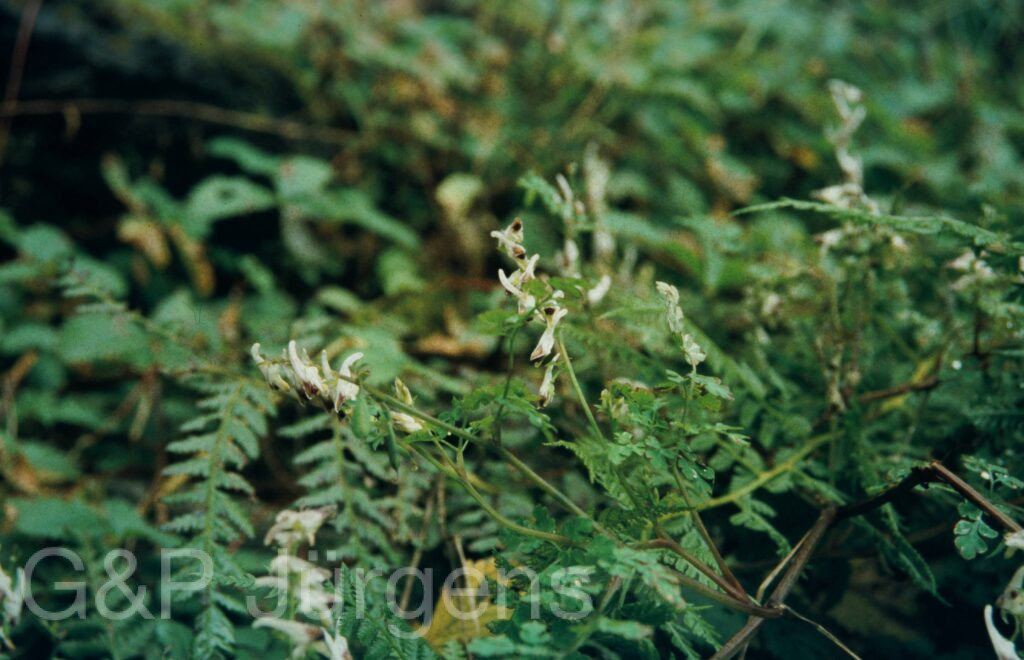
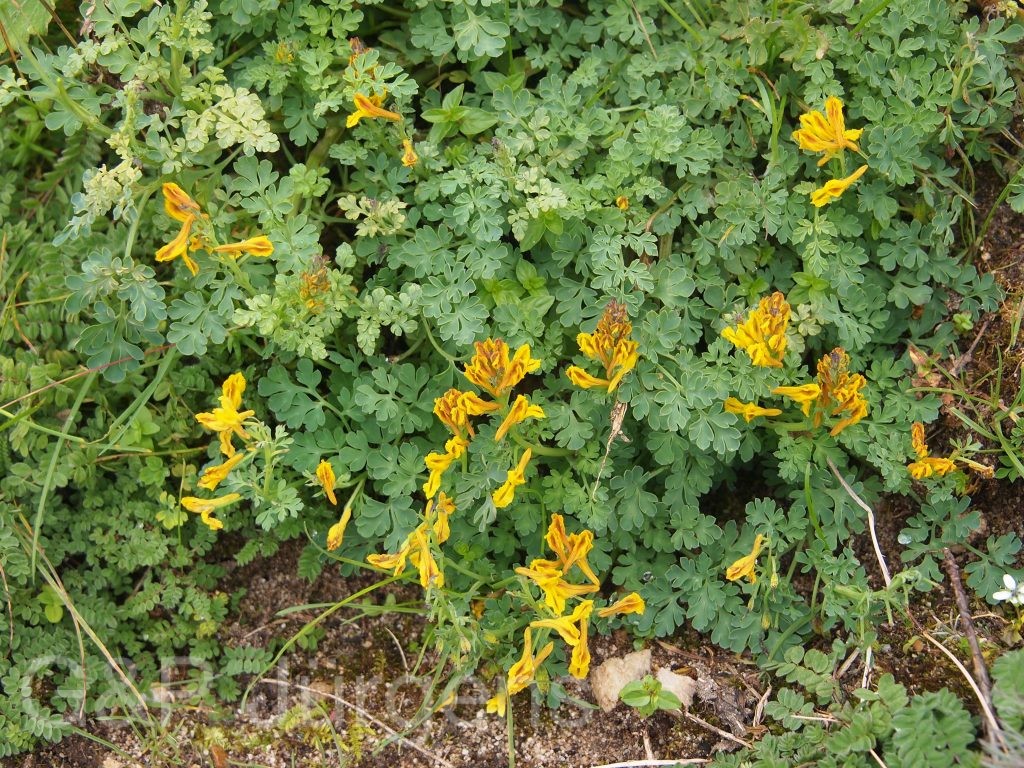
Prain

Bhutan2012 307
Bhutan Shale-La, 4100m September

Description

Corydalis crispa is an eastern Himalayan fumitory restricted to China, Bhutan and India, with around 129 GBIF records. It is a high-altitude species of the alpine zone, growing on open stony slopes, screes, rock crevices and the gravelly margins of meadows. The cited material from Shele-La in Bhutan at about 4100 m, flowering in September, is representative of its occurrence near the upper limit of vascular plant growth, where it occupies well-drained, sunny but moist mineral soils and flowers late in the brief alpine summer as the monsoon eases.

The plant is a glabrous, somewhat glaucous herb arising from a slender rootstock, with erect to ascending, branched and often slightly flexuose stems. The leaves are alternate, two- to three-times divided into small, narrow, often crisped or finely dissected ultimate segments, giving rise to the epithet. The flowers are borne in lax terminal racemes; each is strongly zygomorphic with four petals in two whorls, the outer upper petal prolonged backward into a spur, and are typically blue to purplish-blue. The fruit is a slender, dehiscent capsule that opens to disperse small black seeds, frequently bearing an oil-rich elaiosome attractive to ants.

Described by Prain, C. crispa is one of many alpine blue-flowered Corydalis that diversified across the Sino-Himalayan high mountains, a centre of exceptional richness for the genus. Such species are closely tied to specialised scree and crevice microhabitats. The web link references a synonymous name, C. bowes-lyonii, reflecting nomenclatural realignment. As a narrow high-altitude endemic, its populations merit monitoring against climatic change affecting alpine habitats.

Author: Prain · Sources: POWO (Kew), GBIF, Flora of China, Flora of Bhutan, Liden & Zetterlund's monograph of Corydalis

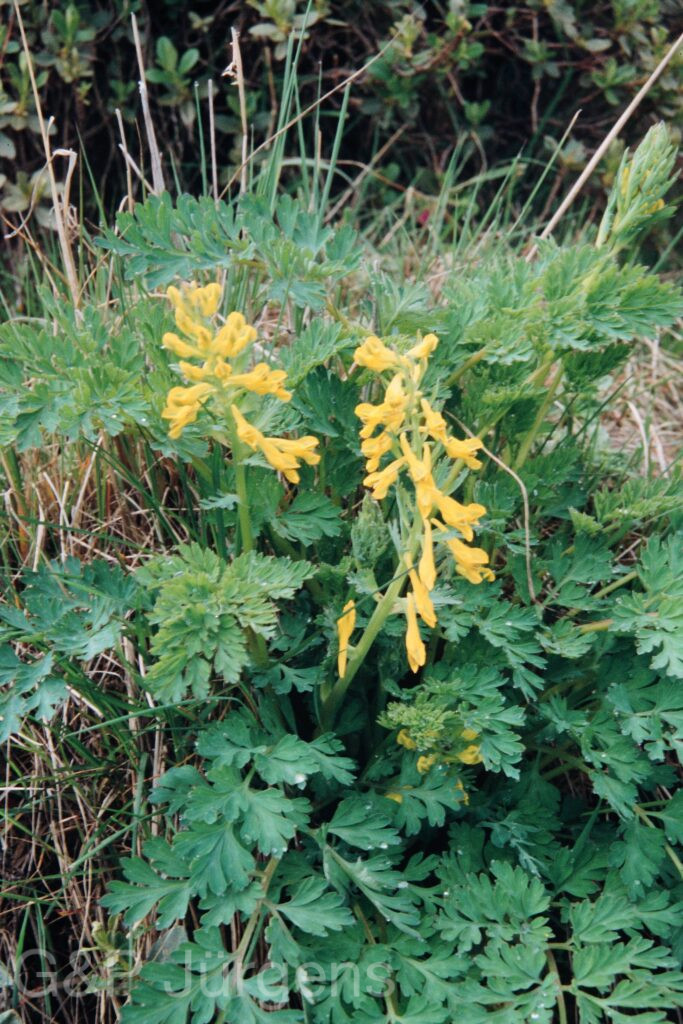
Wall.

Nepal 99 267 ergebnis
West-Nepal Loccu 3500m, June
Garw 2005 340 ergebnis
India Garhwal Baganathi 4150m, September

Description

Corydalis govaniana is a western and central Himalayan fumitory recorded from India, Nepal, Pakistan and Afghanistan among its roughly 204 occurrences, a distribution centred on the moist temperate and subalpine zones of the inner Himalayan ranges. It grows on shaded forest floors, among rocks, along stream banks and in alpine meadows and scrub where soils are humus-rich and reliably moist. The cited stations span a useful altitudinal range, from Loccu in West Nepal at about 3500 m flowering in June to Baganathi in Garhwal, India, at around 4150 m flowering in September, illustrating its occupancy of the temperate-to-alpine belt and a flowering season that tracks the monsoon up the slope.

It is a perennial herb arising from a fleshy tuberous or stout fibrous rootstock, with erect to ascending, somewhat glaucous stems. The leaves are alternate and several times pinnately or ternately divided into small, often glaucous, ultimate segments, giving a delicate, ferny aspect. The flowers are borne in terminal racemes and are strongly zygomorphic, each with four petals in two dissimilar whorls; the outer upper petal is prolonged backward into a slender nectar spur, and the colour is yellow, the inner petals often tipped darker. The diandrous androecium has the stamens in two bundles typical of the genus, and the fruit is a slender, dehiscent capsule splitting to release seeds that commonly bear an oil-rich elaiosome.

Corydalis, now placed in Papaveraceae (subfamily Fumarioideae, the segregate Fumariaceae of older treatments), reaches great diversity in the Himalaya and western China, where yellow-flowered species like C. govaniana, an old Wallich name, form a recognisable group distinguished by spur length, bract dissection and tuber form. The elaiosome-bearing seeds are dispersed by ants, a syndrome widespread in the genus. Widely distributed through the western Himalaya and frequent in suitable montane habitat, the species is of no particular conservation concern, though several Himalayan Corydalis are gathered for traditional medicine.

Author: Wall. · Sources: POWO (Kew), GBIF, Flora of Pakistan, Annotated Checklist of the Flowering Plants of Nepal, Flowers of the Himalaya, Lidén and Zetterlund's monograph of Corydalis

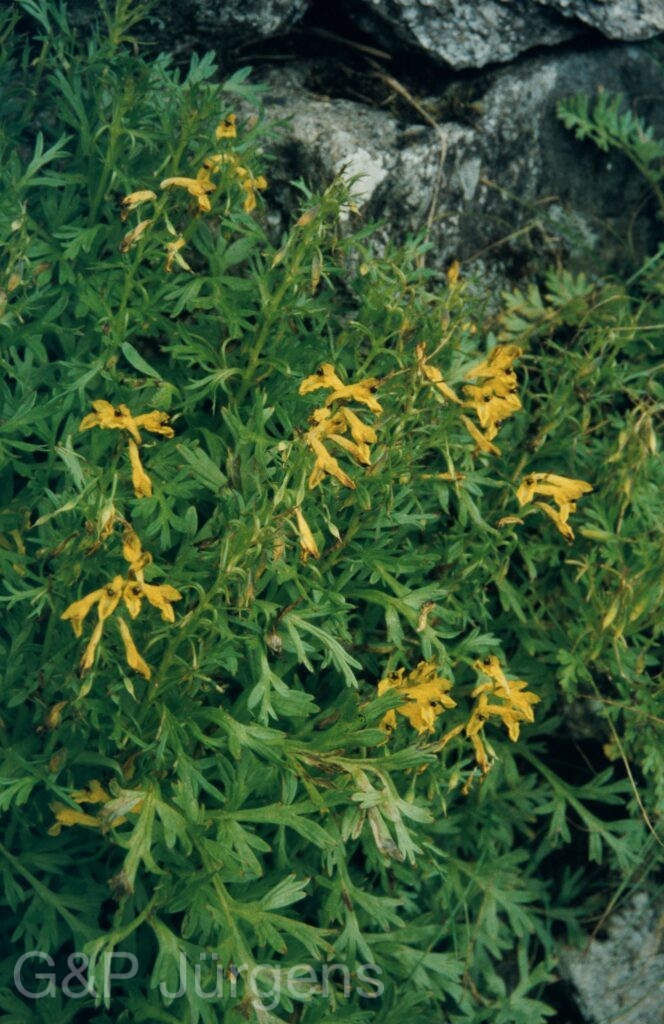
Wall.

Nepal 95 122 P210 ergebnis
Nepal south of Rupien La 3500m October
Nepal 95 123 P211 ergebnis
Nepal south of Rupien La 3500m October

Description

Corydalis juncea is a slender alpine herb of the central and eastern Himalaya. GBIF records place it in Nepal, India, China and Bhutan, with around 148 occurrences reflecting its distribution through the high mountains of the region. It grows on open, dry to moist alpine slopes, gravelly ground, screes and rocky banks at high elevation, where it tolerates the harsh, exposed conditions of the upper montane and alpine belt. The photographed plant from south of the Rupien La in Nepal at 3500 m, recorded in October, illustrates its occurrence in the late-season alpine zone, where it can flower into the autumn before the onset of winter dormancy.

It is an erect, glaucous perennial herb with slender, rush-like, sparingly leafy stems, the epithet juncea alluding to this reed-like habit. The leaves are few, glaucous and divided into narrow, linear segments, the upper ones reduced. The inflorescence is a lax, few-flowered terminal raceme; each flower is markedly zygomorphic, with four petals, the outer upper petal extended backwards into a slender spur, the corolla yellow, often tinged or tipped with purplish-brown. The fruit is a narrow, linear-oblong capsule that splits to release small, shining seeds furnished with an elaiosome.

Corydalis is a large genus of the Fumarioideae, treated within the Papaveraceae, with a marked centre of diversity in the Sino-Himalayan high mountains. C. juncea belongs to the assemblage of yellow-flowered, narrow-leaved Himalayan species adapted to dry, open, high-altitude habitats. As in its relatives, the oil-bearing seed appendage promotes dispersal by ants, while the spurred flowers are pollinated by nectar-seeking bees, and the deep-seated rootstock allows the plant to survive the severe alpine winter.

Author: Wall. · Sources: POWO (Kew), GBIF, Flora of Nepal, Flora of China (Papaveraceae, Fumarioideae), The Genus Corydalis (Lidén & Zetterlund)