
Wall.
Description
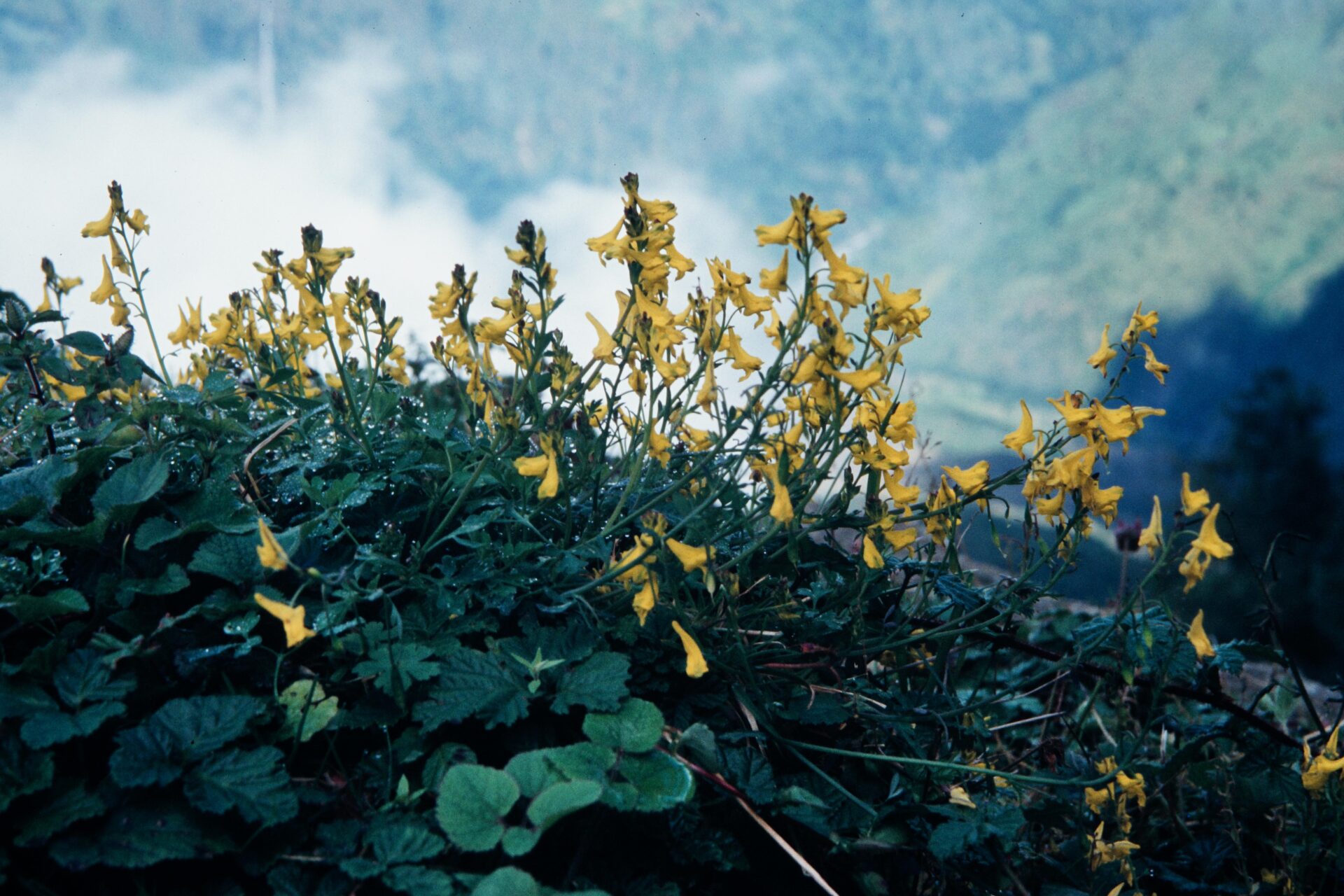
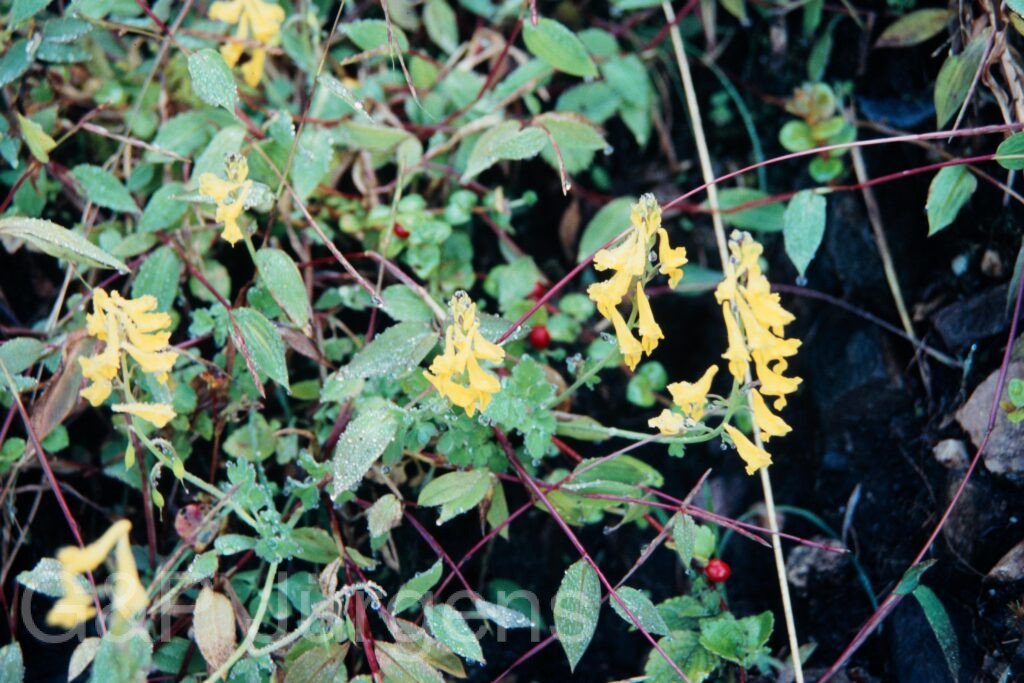
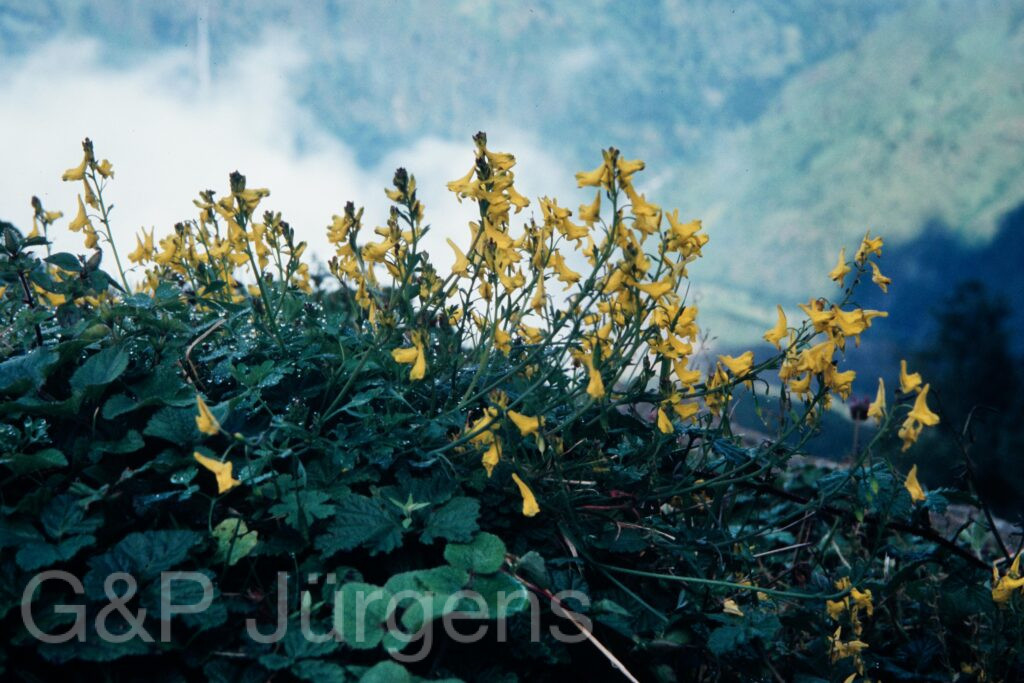
Corydalis juncea is a slender alpine herb of the central and eastern Himalaya. GBIF records place it in Nepal, India, China and Bhutan, with around 148 occurrences reflecting its distribution through the high mountains of the region. It grows on open, dry to moist alpine slopes, gravelly ground, screes and rocky banks at high elevation, where it tolerates the harsh, exposed conditions of the upper montane and alpine belt. The photographed plant from south of the Rupien La in Nepal at 3500 m, recorded in October, illustrates its occurrence in the late-season alpine zone, where it can flower into the autumn before the onset of winter dormancy.
It is an erect, glaucous perennial herb with slender, rush-like, sparingly leafy stems, the epithet juncea alluding to this reed-like habit. The leaves are few, glaucous and divided into narrow, linear segments, the upper ones reduced. The inflorescence is a lax, few-flowered terminal raceme; each flower is markedly zygomorphic, with four petals, the outer upper petal extended backwards into a slender spur, the corolla yellow, often tinged or tipped with purplish-brown. The fruit is a narrow, linear-oblong capsule that splits to release small, shining seeds furnished with an elaiosome.
Corydalis is a large genus of the Fumarioideae, treated within the Papaveraceae, with a marked centre of diversity in the Sino-Himalayan high mountains. C. juncea belongs to the assemblage of yellow-flowered, narrow-leaved Himalayan species adapted to dry, open, high-altitude habitats. As in its relatives, the oil-bearing seed appendage promotes dispersal by ants, while the spurred flowers are pollinated by nectar-seeking bees, and the deep-seated rootstock allows the plant to survive the severe alpine winter.
Author: Wall. · Sources: POWO (Kew), GBIF, Flora of Nepal, Flora of China (Papaveraceae, Fumarioideae), The Genus Corydalis (Lidén & Zetterlund)