Tag:

Autumn

Wall.

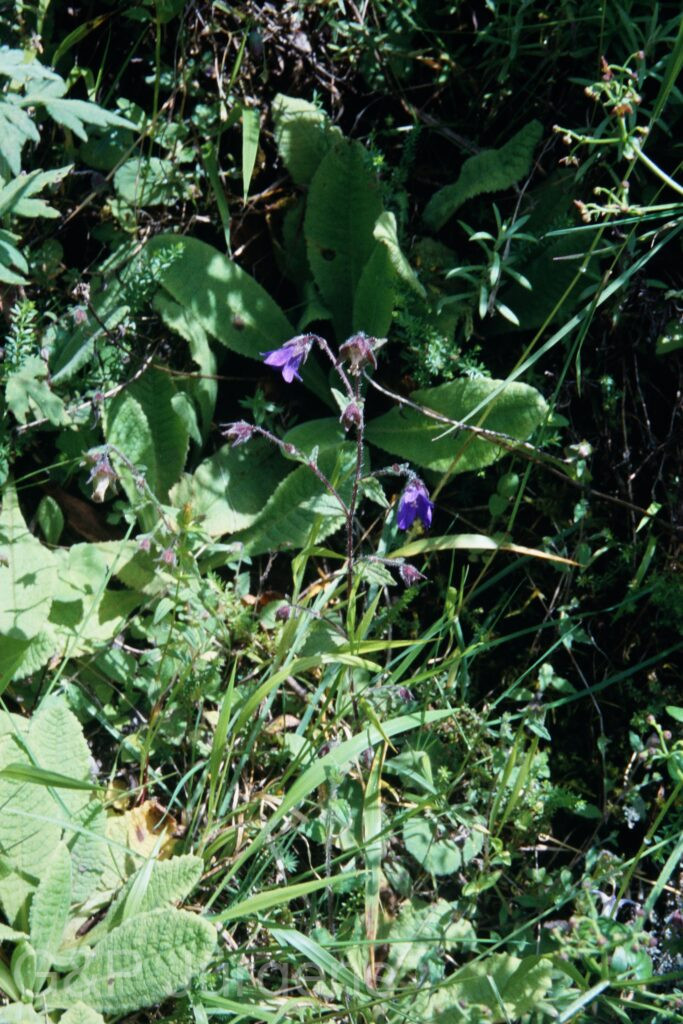
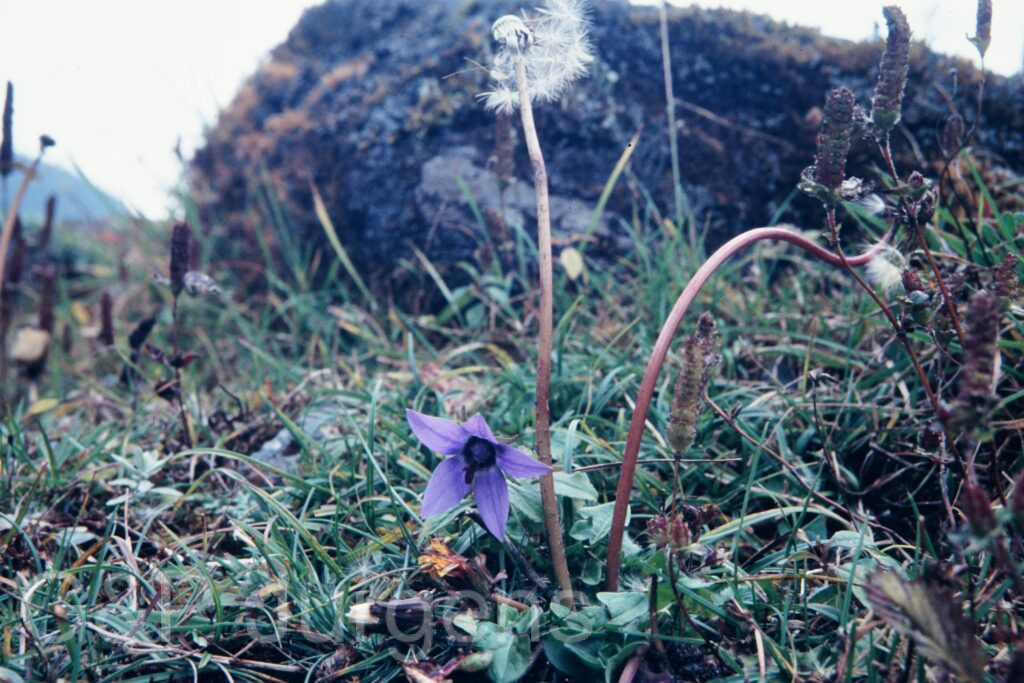
Nepal 95 392 P693 ergebnis
Nepal Bahanjyang 3800m October
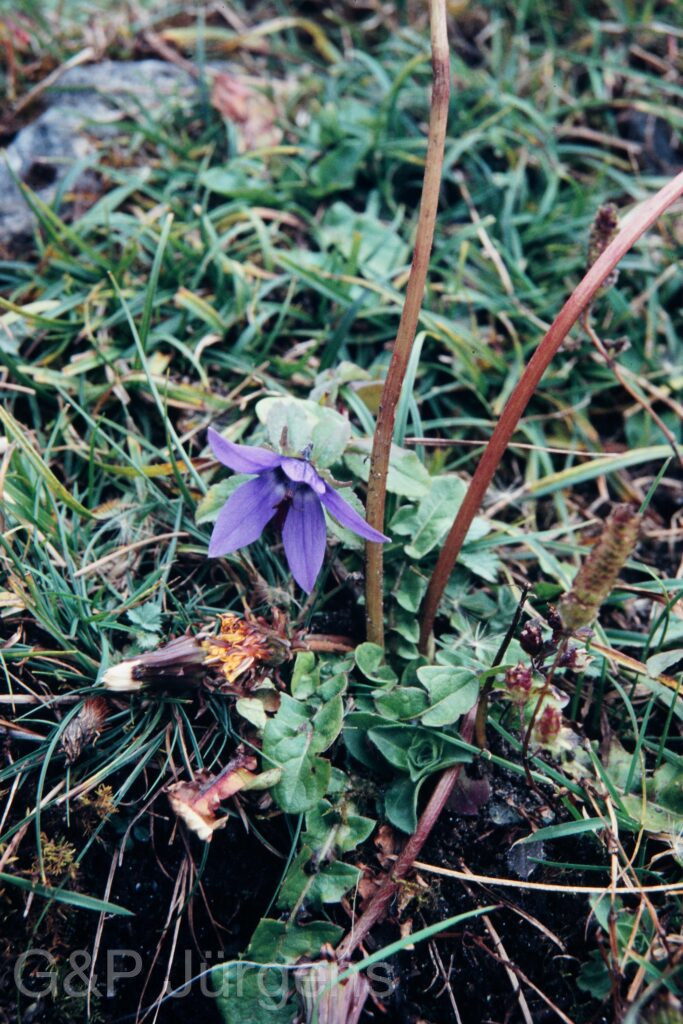
Nepal 95 393 P694 ergebnis
Nepal Bahanjyang 3800m October

Description

Campanula aristata Wall. is a slender alpine bellflower of the high Himalaya and Tibetan borderlands, ranging across China, India, Nepal, Pakistan and Bhutan, with about 557 occurrences in GBIF. It grows on open stony slopes, alpine turf, rock crevices and gravelly screes, characteristically at high elevations of roughly 3,000-5,000 m. The photographed plant comes from Bahanjyang in Nepal at 3,800 m, recorded in October, consistent with its occupation of the upper alpine zone where flowering and fruiting extend into the late season.

It is a small, slender, erect annual or short-lived perennial herb, typically only a few centimetres to about 20 cm tall, with a basal rosette of linear to oblanceolate leaves and narrow, sessile, entire cauline leaves. The flowers are solitary or few at the stem apex; the calyx is its most distinctive feature, with very long, narrow, awn-like (aristate) lobes that often equal or exceed the corolla, hence the epithet. The corolla is narrowly tubular to campanulate, pale blue to violet, with short erect lobes. The fruit is a capsule dehiscing by basal pores to shed numerous minute seeds.

Campanula (Campanulaceae) is a large, mainly Northern Hemisphere genus, with the Himalayan high-alpine species forming a distinctive group of dwarf, narrow-flowered herbs. C. aristata is readily recognised among them by its conspicuously elongate, bristle-like calyx lobes, an adaptation thought to aid in the wind-exposed alpine setting. Widespread across the Himalayan-Tibetan alpine belt and occupying abundant natural habitat, it is of no conservation concern.

Author: Wall. · Sources: POWO (Kew), GBIF, Flora of China, Flora of Pakistan, Annotated Checklist of the Flowering Plants of Nepal, Hooker Flora of British India, Campanulaceae revisionary studies

Wall.

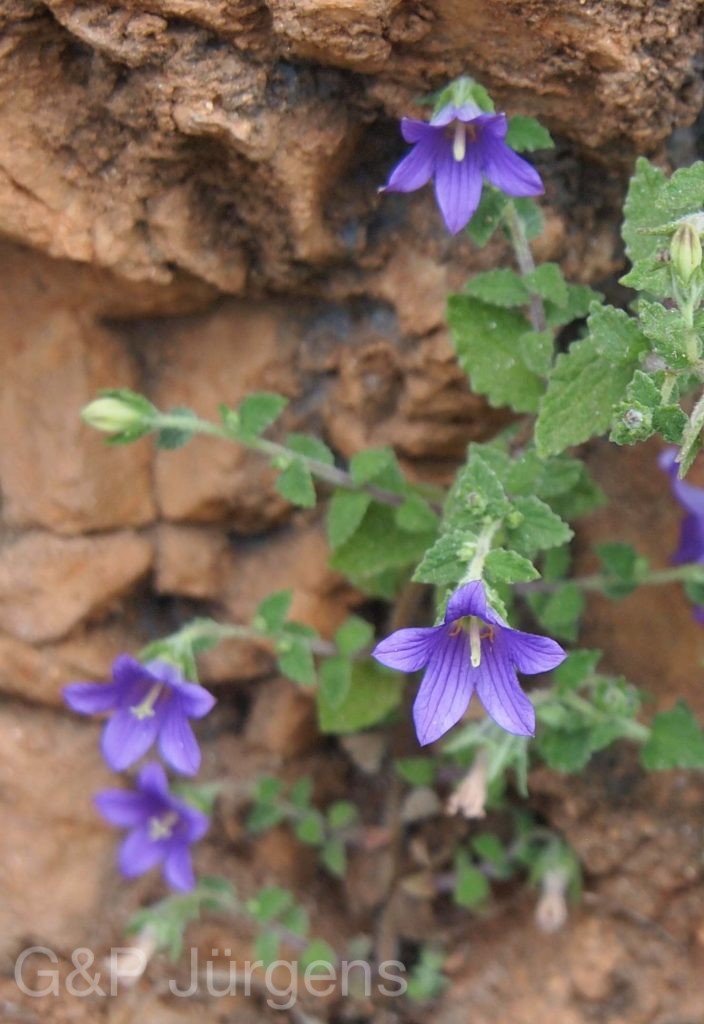
Bhutan2012 188
Bhutan Haar-Valley, 3300m September
Bhutan2012 313
Bhutan Haar-Valley, 3300m September
Sikkim2003 381 P537
Sikkim Tista valley 3300m August

Description

Campanula pallida is a widespread Asian bellflower with an extensive GBIF record (over 68,000 occurrences) centred on China, India, Nepal, Pakistan, Bhutan and Afghanistan, with numerous further reports across the broader range from Myanmar and Thailand to scattered cultivated and recorded localities elsewhere. It is a plant of open, well-drained ground, frequenting grassy slopes, rocky banks, terrace margins, roadside cuttings and forest clearings in the temperate and subalpine zones, broadly between about 1500 and 3500 m. The plants illustrated from the Haa valley in Bhutan at 3300 m in September and the Tista valley in Sikkim at 3300 m in August reflect its long summer-to-autumn flowering across the eastern Himalaya.

The species is a perennial herb with slender, ascending to decumbent stems bearing scattered hairs and clear latex. The leaves are alternate, ovate to oblong-lanceolate, with a crenate to serrate margin, the lower leaves petiolate and the upper sessile. The flowers are nodding, borne singly or in a loose few-flowered inflorescence; the corolla is broadly campanulate, five-lobed and pale blue to lilac or sometimes whitish, with reflexed appendages between the calyx lobes. The five stamens have dilated filament bases, and the inferior ovary matures into a nodding capsule that dehisces by basal pores to shed numerous small seeds.

Campanula is a large and taxonomically difficult genus, and C. pallida belongs to a complex of variable Himalayan bellflowers in which flower size and indumentum vary geographically. The pendulous, protandrous flowers are pollinated principally by bees, and the pore-dehiscent capsule disperses seed by wind shaking. The species is abundant, ecologically tolerant and frequently associated with semi-disturbed ground, and it is of no conservation concern.

Author: Wall. · Sources: POWO (Kew), GBIF, Flora of China, Flora of Bhutan, Flora of Pakistan, Revision of the Asiatic Campanula (Kolakovsky)

(Royle ex Schindl.) Schindl.

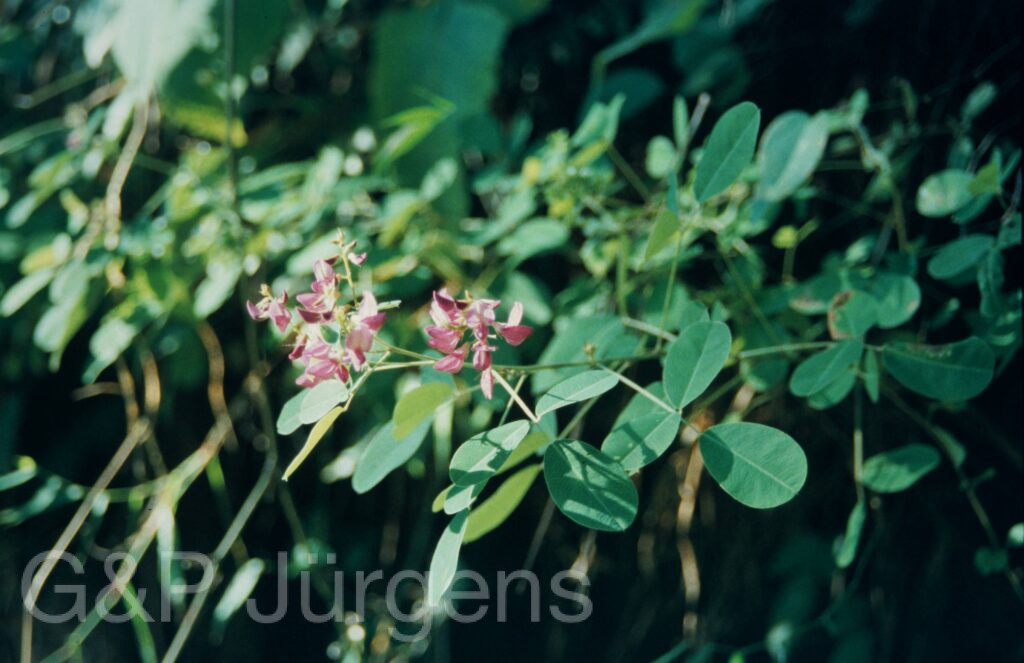
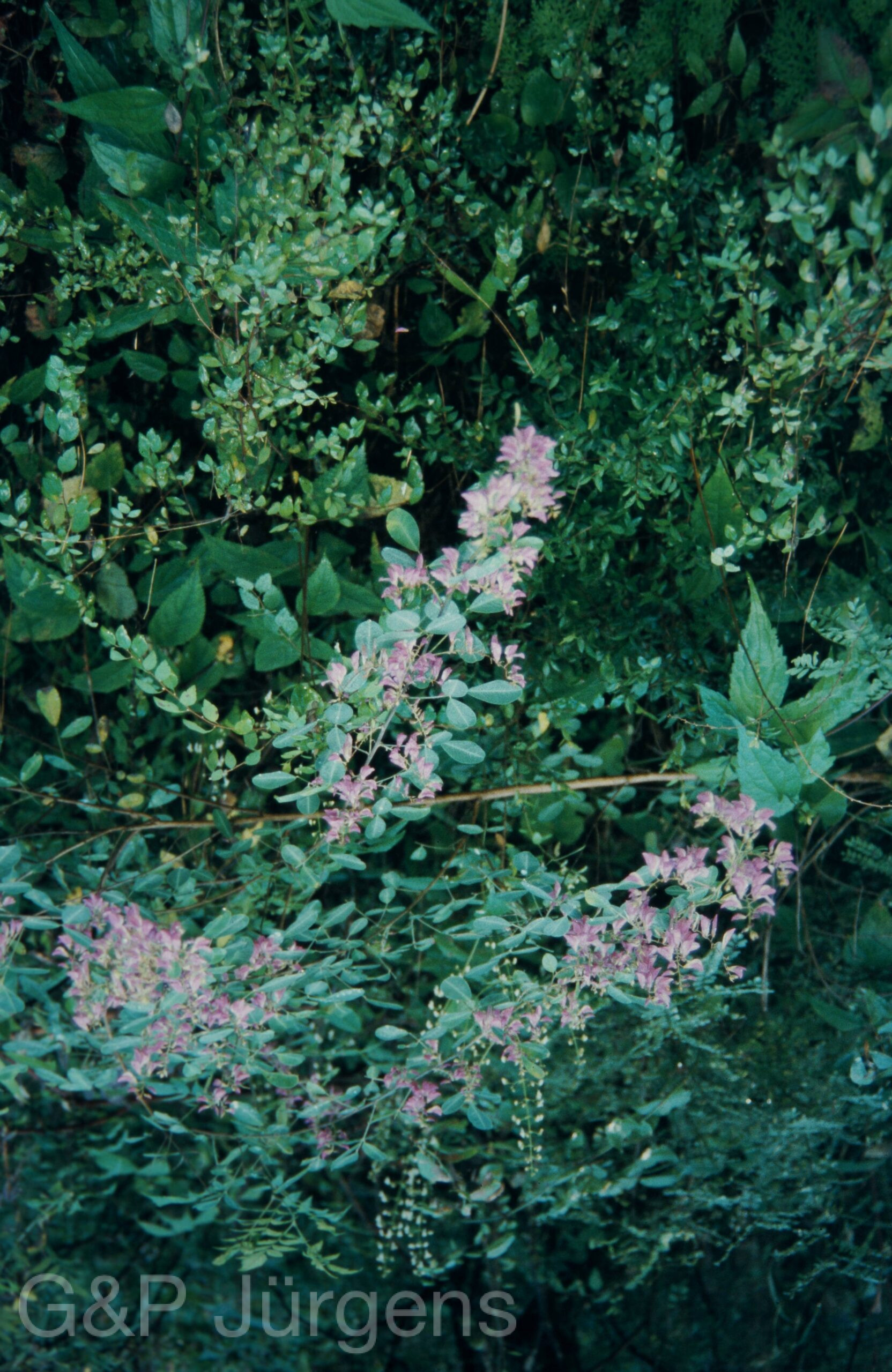
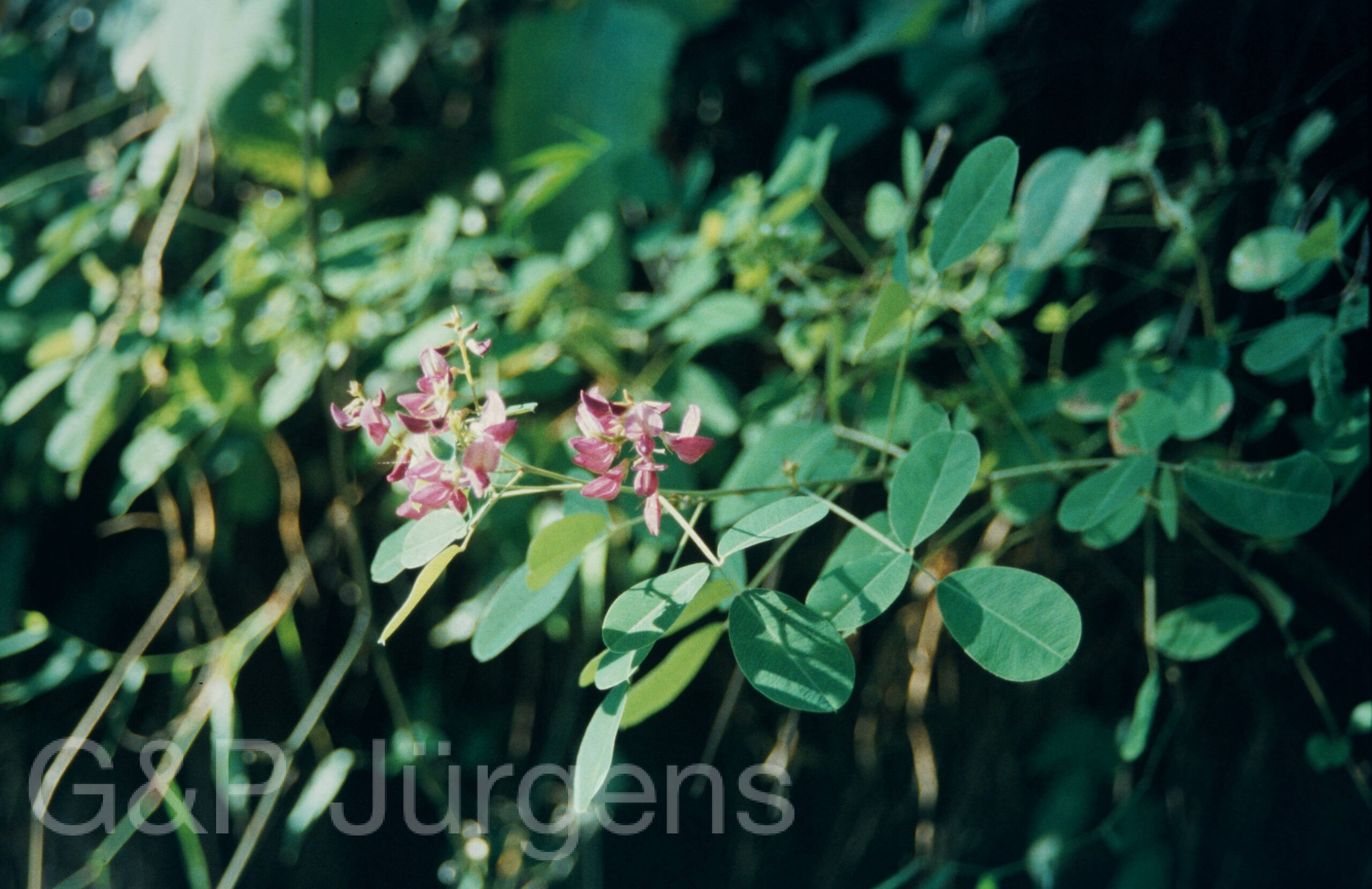
Garw 2005 263 ergebnis
India Garwahl Kunol 2500m, September

Description

Campylotropis speciosa is a Sino-Himalayan shrub distributed across the warm-temperate and subtropical belts of the southern Himalaya and adjacent China, with verified records from India, Nepal, Pakistan, Bhutan, Bangladesh, Myanmar and China. The roughly 294 occurrences trace a continuous arc along the outer ranges. In the Garhwal Himalaya it occupies open hill slopes, forest margins and scrub at around 1900-2500 m, as documented by collections from Kunol (2500 m) and Sitel (1900 m) flowering in September. It favours sunny, well-drained rocky ground and is typically a component of secondary scrub and degraded oak forest.

It forms an erect, much-branched shrub to about 2 m, with ridged, finely pubescent young branchlets. The leaves are pinnately trifoliolate; leaflets are elliptic to obovate, the terminal one largest, rounded or emarginate at the apex and mucronate, glabrescent above and appressed-pubescent beneath, the stipules subulate and persistent. The showy flowers are borne in elongate, lax terminal and axillary racemes, each pedicel articulate and bearing a single papilionaceous corolla; the standard is broad and reddish-purple to violet, the keel incurved. The fruit is a small, flattened, indehiscent, one-seeded legume with a reticulate-veined surface.

The genus Campylotropis, allied to Lespedeza within tribe Desmodieae, is distinguished by its articulate pedicels and one-seeded pods. C. speciosa is among the more ornamental Himalayan species, valued for its long racemes. As a leguminous pioneer it aids nitrogen enrichment and slope stabilisation on disturbed ground; though not assessed as threatened, its dependence on open habitats makes it sensitive to forest succession and grazing.

Author: (Royle ex Schindl.) Schindl. · Sources: POWO (Kew), GBIF, Flora of China, Flora of Bhutan, Flora of Pakistan, Iokawa & Ohashi revision of Campylotropis

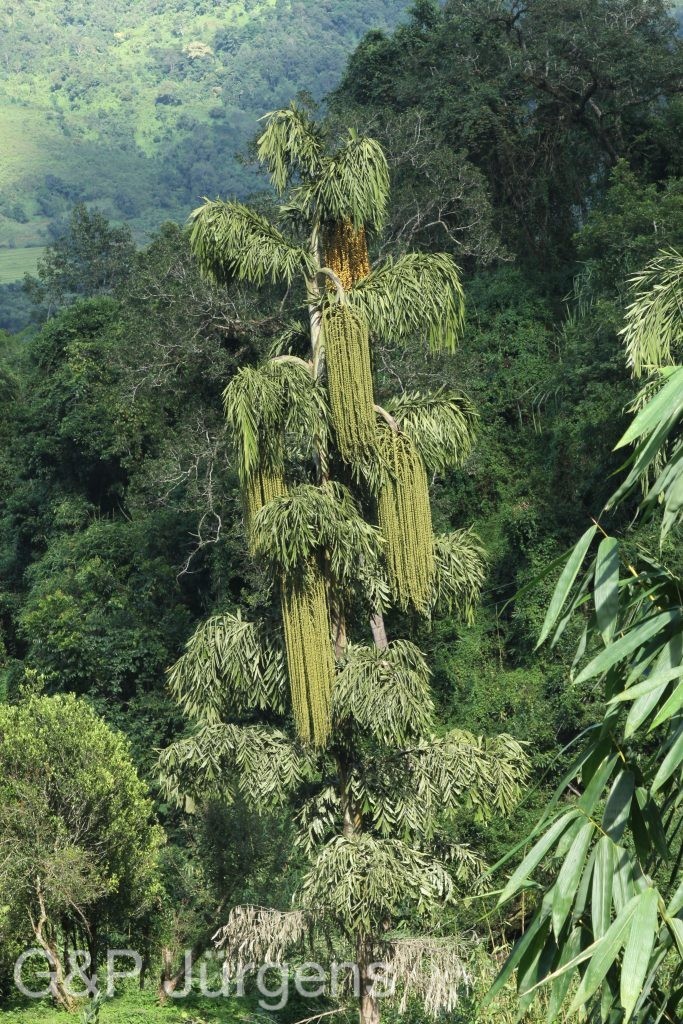
Caryota urens

by GP Jürgens

L.

Bhutan2015 261
Bhutan Zhemgang 1000m, October

Description

Caryota urens, the fishtail or jaggery palm, is a solitary tropical palm native to the Indian subcontinent, Sri Lanka, Myanmar and South-East Asia, with around 5517 occurrence records spanning both its native range and many countries where it is widely cultivated. It grows in moist tropical and subtropical forest, secondary woodland, river valleys and around villages, predominantly in the lowland to lower-montane zone. The photographed plant from Zhemgang in southern Bhutan at 1000 m, recorded in October, sits at the upper-elevation edge of its warm, humid habitat.

It is a tall, single-stemmed palm with a stout, ringed grey trunk reaching well over ten metres. The leaves are very large, bipinnate—unusual among palms—with the ultimate segments wedge-shaped and jaggedly toothed at the apex, resembling a fish's tail and giving the common name. The plant is monocarpic and hapaxanthic: after years of vegetative growth it flowers once, producing a sequence of massive pendulous inflorescences from the upper nodes downward, bearing cream to purplish unisexual flowers. The fruit is a globose red to purplish-black berry containing irritant calcium-oxalate raphides, whence the epithet urens ("stinging").

Despite the source labelling it Fabaceae, Caryota urens belongs to the palm family, Arecaceae, subfamily Coryphoideae, tribe Caryoteae. It is of considerable economic value: the sugary sap tapped from the inflorescences yields jaggery, palm wine and vinegar, while the trunk furnishes sago-like starch and the leaf sheaths a strong fibre (kittul). Widely planted and broadly distributed, it is not considered threatened.

Author: L. · Sources: POWO (Kew), GBIF, Flora of China (Arecaceae), Flora of Bhutan, Genera Palmarum (Dransfield et al.), Govaerts & Dransfield World Checklist of Palms

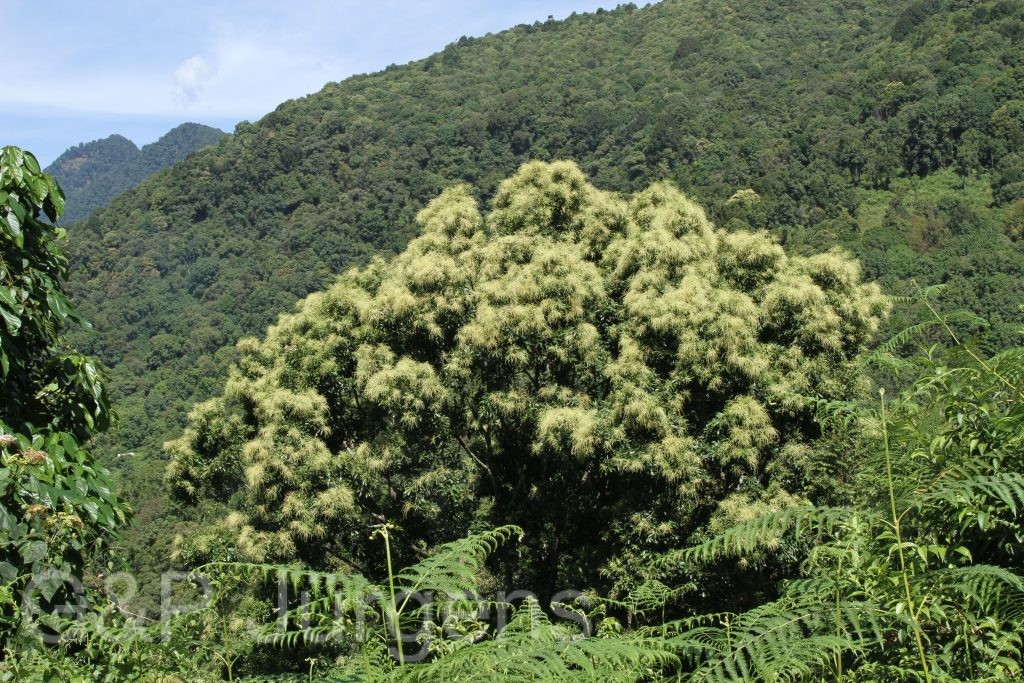
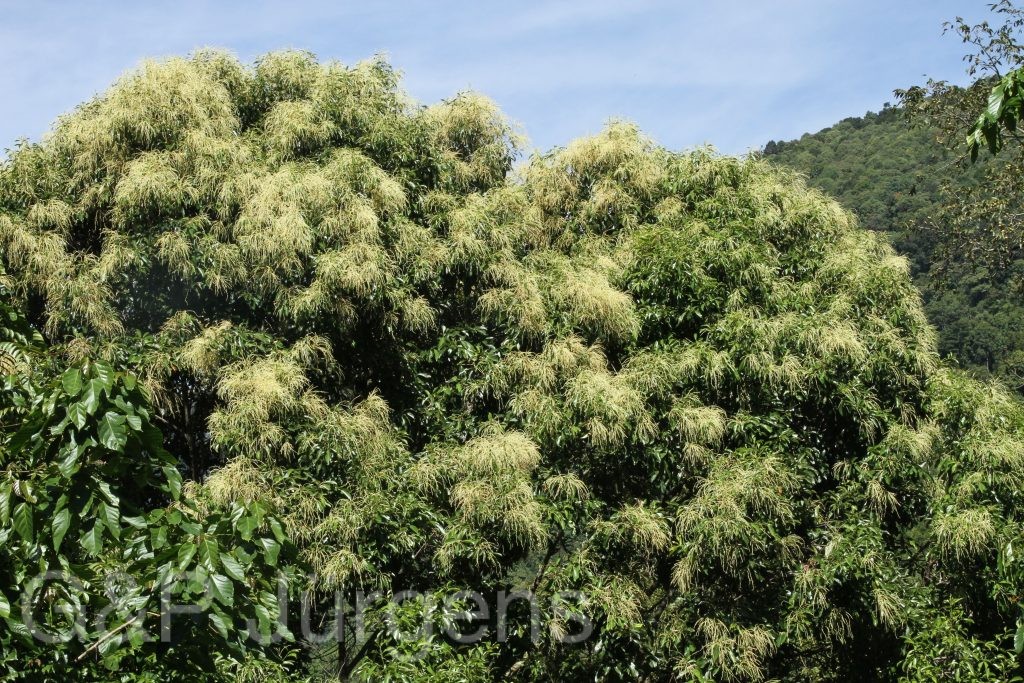
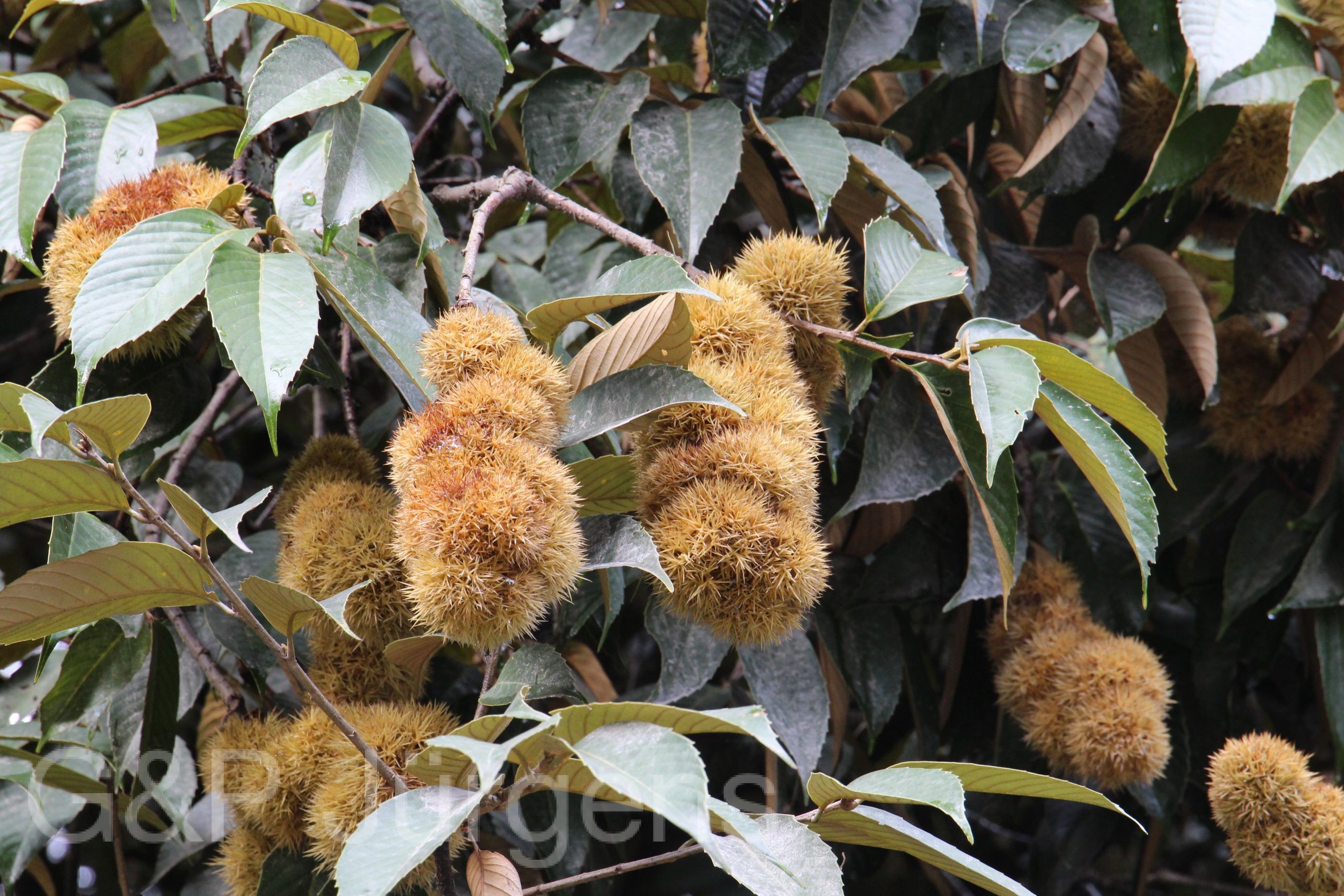
Castanopsis indica

by GP Jürgens

(Roxb. ex Lindl.) A.DC.

Bhutan2015 191
Bhutan Mo-Chu 1400m, October
Bhutan2015 192
Bhutan Mo-Chu 1400m, October
Bhutan2015 649 scaled
Bhutan Mo-Chu 1400m, October

Description

Castanopsis indica is a large evergreen tree of the subtropical and lower temperate forests of the Himalaya and Southeast Asia, abundantly recorded with around 1680 GBIF occurrences across India, China, Myanmar, Vietnam, Laos, Thailand, Nepal, Bhutan and Bangladesh. The photographed tree was found along the Mo-Chu in Bhutan at 1400 m in October. The species is a dominant or co-dominant canopy element of mid-elevation broad-leaved forest, typically between 800 and 2000 m, often forming Castanopsis-Schima associations on humid, well-drained hill slopes.

It is a stout tree with a broad crown and greyish, somewhat fissured bark. The leaves are alternate, leathery, oblong to elliptic-lanceolate, with a coarsely serrate margin bearing spinose-tipped teeth, glabrous and dark green above. Like other chestnut relatives the flowers are unisexual, the males borne in erect catkin-like spikes and the females clustered at their base, producing a strong scent at anthesis. The fruit is a hard nut wholly enclosed in a globose cupule densely armed with branched, spiny processes; the cupules split irregularly to release the edible nuts.

The genus Castanopsis (chinquapins) belongs to the Fagaceae and is a keystone group in Asian evergreen oak forests. The nutritious nuts are eaten locally and dispersed by rodents and birds, while the timber is valued for construction and the trees provide important habitat structure. Although the species is widespread and not globally threatened, the Castanopsis-dominated forests it characterises are under pressure from logging, fuelwood collection and agricultural conversion.

Author: (Roxb. ex Lindl.) A.DC. · Sources: POWO (Kew), GBIF, Flora of China, Flora of Bhutan, Flora of Nepal, Camus – Les Chenes: Monographie du genre Castanopsis

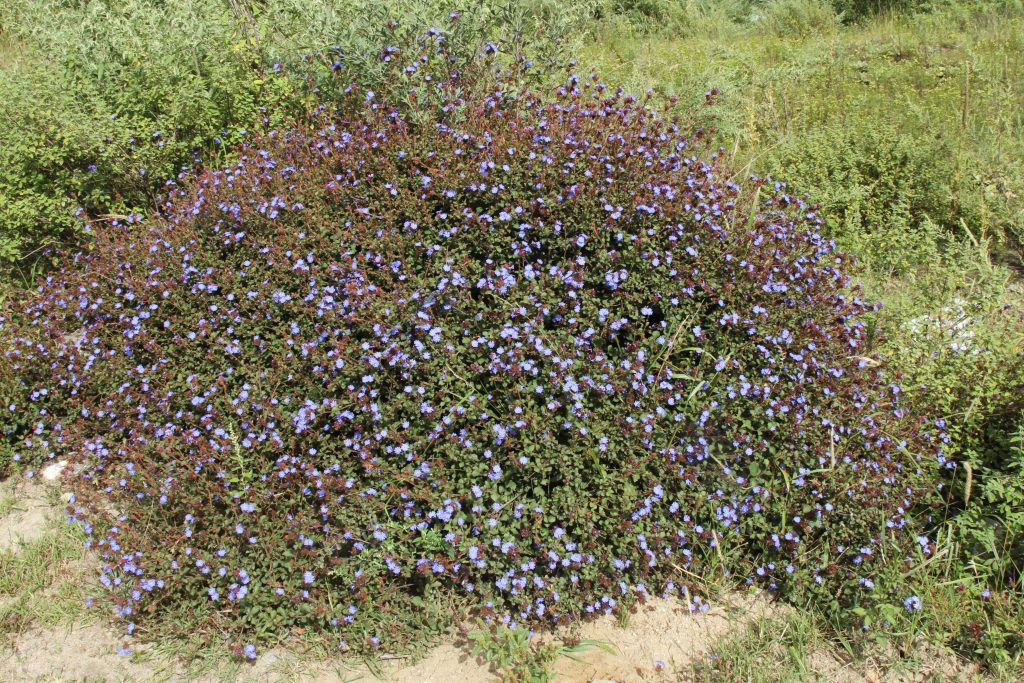
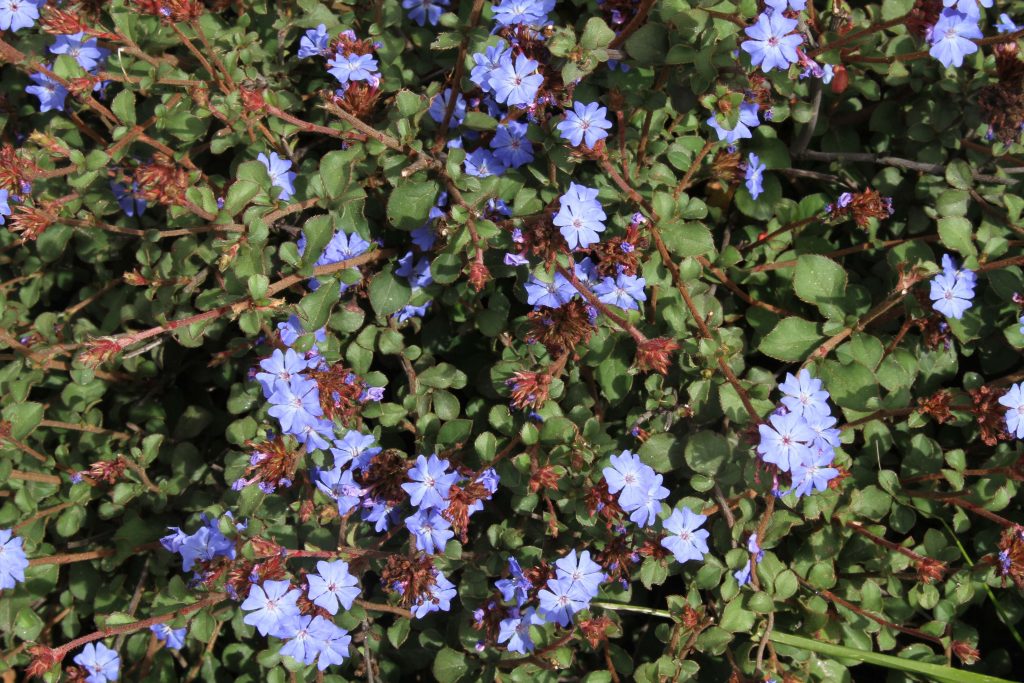
C.B.Clarke

Bhutan2012 315
Bhutan Paro-Chu, 2400m September
Bhutan2012 316
Bhutan Paro-Chu, 2400m September

Description

Ceratostigma griffithii is a shrub of the dry inner valleys of the eastern Himalaya and southwestern China, recorded from China, Bhutan, India and Myanmar, with cultivated and naturalised occurrences in the United States, Canada, Spain and Korea; GBIF holds about 163 georeferenced records. It grows on dry, sunny, stony slopes, rocky banks, scrub and the margins of cultivation in the rain-shadowed montane valleys, tolerating drought and strong insolation. The photographed plant from the Paro Chu valley in Bhutan at 2400 m in September is characteristic of these semi-arid inner-Himalayan habitats, where it flowers in late summer and autumn on open hillsides.

It is a low, much-branched, semi-evergreen shrub up to about 1 m, with stiff, reddish-tinged twiggy branches that turn bronze-red in autumn. The leaves are small, alternate, obovate to spathulate, entire, bristle-margined and somewhat leathery, often colouring red before falling. The flowers are clustered in dense terminal and lateral heads subtended by bristly bracts; each flower has a tubular, glandular-ribbed calyx and a slender salverform corolla with five spreading lobes of brilliant deep blue. There are five stamens and a five-branched style with stigmatic surfaces along the inner side; the fruit is a small membranous capsule enclosed in the persistent calyx, whose stiff bristles aid epizoochorous dispersal.

The genus Ceratostigma, described by Bunge, comprises a few Asian and African shrubs and subshrubs of Plumbaginaceae noted for their intense blue flowers and autumn foliage, the type collection of this species made by Griffith and named by C.B. Clarke. The bright corollas attract butterflies and bees, and the bristle-armed calyces cling to passing animals. Valued in horticulture for autumn colour, the wild plant is locally common in its dry-valley niche and not considered threatened.

Author: C.B.Clarke · Sources: POWO (Kew), GBIF, Flora of China Vol. 15, Flora of Bhutan Vol. 2, Flora of Nepal, A Revision of the Genus Ceratostigma (Plumbaginaceae)

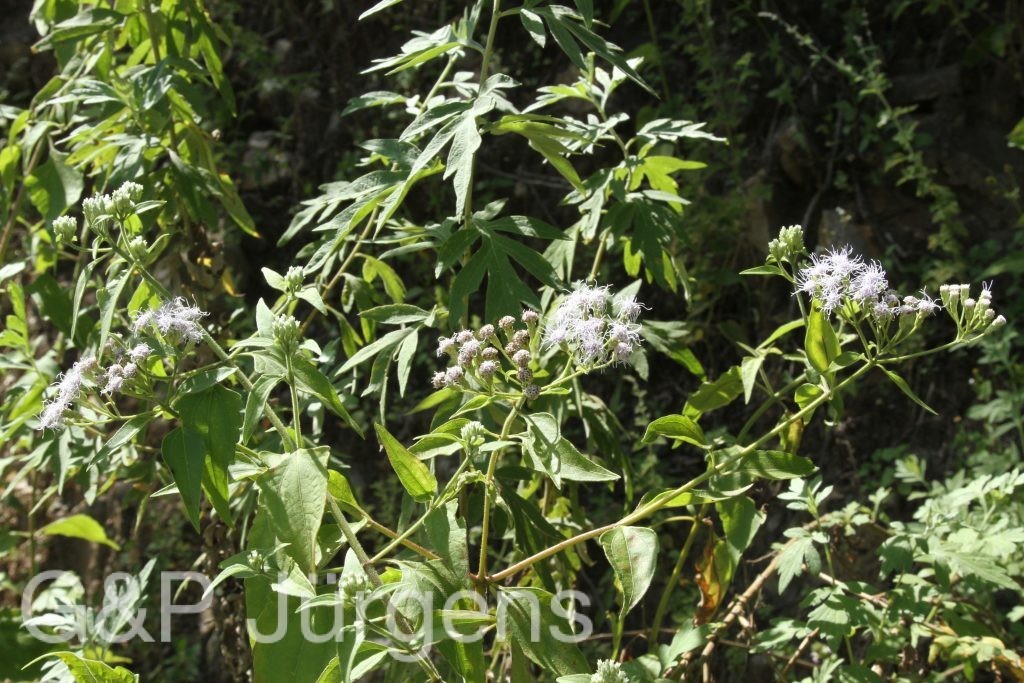
(L.) R.M.King & H.Rob.

Bhutan2015 309
Bhutan Trongsa 1900m, October

Description

Chromolaena odorata, Siam weed, is native to the Neotropics (Mexico, Central America, the Caribbean and tropical South America) but is now one of the world's most aggressive invasive weeds, reflected in its enormous GBIF dataset of 63,557 occurrences spanning the Americas, sub-Saharan Africa, South and Southeast Asia, Australia and the Pacific. It colonises disturbed ground, forest margins, abandoned fields, roadsides and plantations in the seasonal tropics and lower subtropics. The photograph was taken at Trongsa in central Bhutan at 1900 m in October, near the upper elevational limit of its spread into warm Himalayan valleys, where it forms dense post-monsoon thickets.

It is a scrambling, much-branched perennial shrub or subshrub reaching 1.5-3 m, with brittle, pubescent stems and opposite, triangular to ovate-deltoid leaves that are three-veined from the base, coarsely toothed, and aromatic when crushed. The numerous small, cylindrical capitula are grouped in flat-topped corymbose clusters and contain only tubular (disc) florets, lacking rays; the pale lilac to whitish corollas have exserted styles giving a fluffy appearance. The cypselae are slender, blackish and angled, each crowned by a pappus of barbellate bristles enabling abundant wind dispersal.

Described as Eupatorium odoratum by Linnaeus, it was transferred to Chromolaena by R.M. King & H. Robinson during the dismemberment of the broad genus Eupatorium. Allelopathic, fire-promoting and prolific, it suppresses native vegetation and pasture and is the subject of biological-control programmes worldwide. Its appearance in Bhutan signals the ongoing upslope advance of a serious tropical invasive of major economic and ecological concern.

Author: (L.) R.M.King & H.Rob. · Sources: POWO (Kew), GBIF, Flora of Bhutan, Flora of China, CABI Invasive Species Compendium, Eupatorieae of the World (King & Robinson)

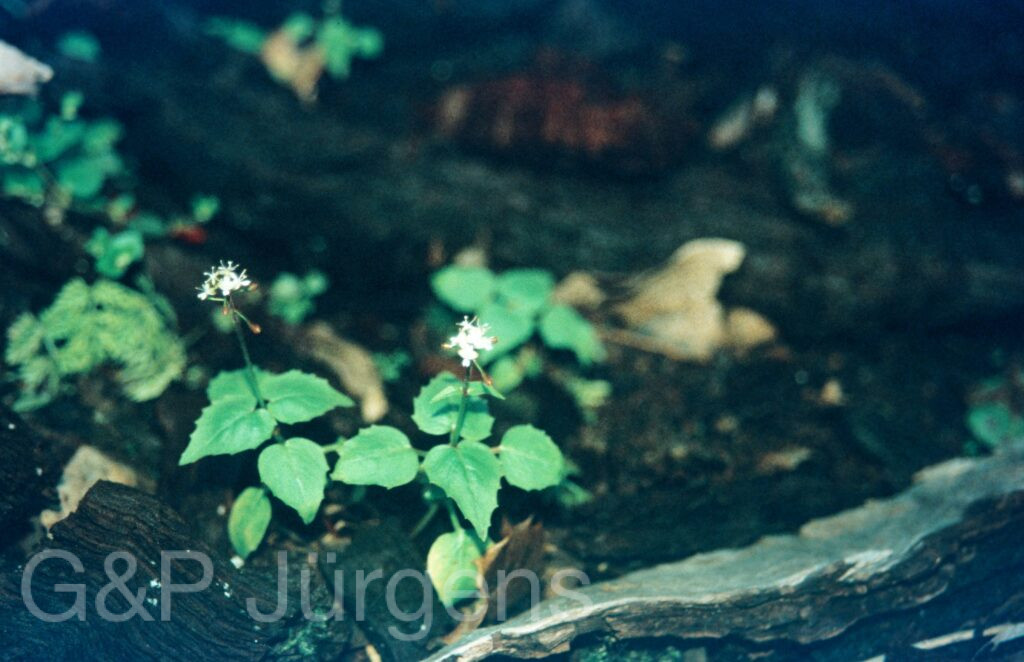
(Asch. & Magnus) Kitam.

Garw 2005 83 ergebnis ergebnis
India Garhwal Gaushon 3100m, September

Description

Circaea alpina subsp. imaicola (Asch. & Magnus) Kitam. is the Asian montane race of the circumboreal enchanter's nightshade complex, distributed according to GBIF across China, Taiwan, the Himalaya (India, Nepal, Pakistan), Myanmar, Thailand, Vietnam, Japan and Korea. It is a delicate herb of cool, moist, shaded habitats: damp coniferous and mixed forest floors, mossy banks, stream sides and humus-rich rocky places, typically between about 2,000 and 3,800 m. The September record from Gaushon in Garhwal, India, at 3,100 m reflects its occurrence in the shaded understorey of temperate Himalayan forest, where it grows in moist leaf litter amongst ferns and bryophytes.

The plant is a slender, glabrous to sparsely pubescent perennial spreading by thread-like, often tuber-tipped stolons, with erect stems usually only 5–25 cm tall. The leaves are opposite, thin, ovate to broadly cordate-ovate, with shallowly toothed margins and a translucent texture. The tiny flowers are borne in a lax terminal raceme that elongates in fruit; each flower has two white, deeply notched (bifid) petals, two sepals and two stamens, in the characteristic two-merous floral plan of Circaea. The small, club-shaped fruit is an indehiscent nutlet covered with soft, hooked bristles that promote epizoochorous dispersal.

Within the Circaea alpina complex, subspecies imaicola is distinguished by features of stolon, leaf shape and fruit, and it represents the principal Himalayan and East Asian element of this widespread, taxonomically intricate species. As a shade-demanding mesophyte it is a reliable indicator of humid, undisturbed montane forest. Circaea itself is of phylogenetic interest as one of the few temperate woodland genera in the otherwise largely tropical and warm-temperate Onagraceae.

Author: (Asch. & Magnus) Kitam. · Sources: POWO (Kew), GBIF, Flora of China Vol. 13, Flora of Pakistan (Onagraceae), Boufford: The Systematics of Circaea (Annals of the Missouri Botanical Garden)

DC.

Bhutan2015 492
Bhutan Pele-La 2900m, October
Bhutan2015 399
Bhutan Jakar 3100m, October
Bhutan2015 398
Bhutan Jakar 3100m, October

Description

Cirsium argyracanthum is a Sino-Himalayan thistle distributed across China, India, Nepal, Afghanistan, Bhutan and Pakistan, with GBIF holding around 150 occurrences along this mountain belt. It is characteristic of open, sunny, frequently disturbed ground in the temperate and subalpine zones, growing on grassy slopes, pasture, fallow fields, trackside banks and forest clearings where grazing keeps the sward open. The cited records from the Pele-La pass at 2900 m and from Jakar in central Bhutan at 3100 m, both in October, illustrate its occurrence in upper temperate to subalpine settings, where it persists and fruits late into the autumn after the main summer flowering.

It is a stout biennial or perennial herb with an erect, longitudinally ribbed, spiny-winged stem. The leaves are oblong to lanceolate in outline, pinnatifid to pinnatisect with spinose-toothed lobes, the upper surface green and the lower paler and thinly tomentose, the margins armed with stiff spines. The capitula are discoid and ovoid, solitary or few at the branch tips, subtended by spiny upper leaves; the involucre bears numerous imbricate phyllaries tipped with conspicuous silvery, spreading spines that give the species its epithet. The florets are all tubular and bisexual, purple to pinkish. The cypselae are oblong and smooth, crowned by a pappus of long, plumose bristles aiding wind dispersal.

Within the large, taxonomically intricate genus Cirsium (tribe Cardueae), C. argyracanthum is distinguished by its silvery-spined involucre, and it has often been confused with related Himalayan thistles such as C. verutum, reflecting the difficulty of delimiting species in this group. Its spiny defences deter grazing, while the purple heads attract bees and butterflies. As a tolerant plant of disturbed montane habitats it is widespread and secure, of no conservation concern across its range.

Author: DC. · Sources: POWO (Kew), GBIF, Flora of Bhutan, Flora of China, Annotated Checklist of the Flowering Plants of Nepal, Petrak's revision of Asiatic Cirsium (Cardueae)

(Hook.f.) Petr.

Bhutan2012 65
Bhutan Shele-La, 3900m September

Description

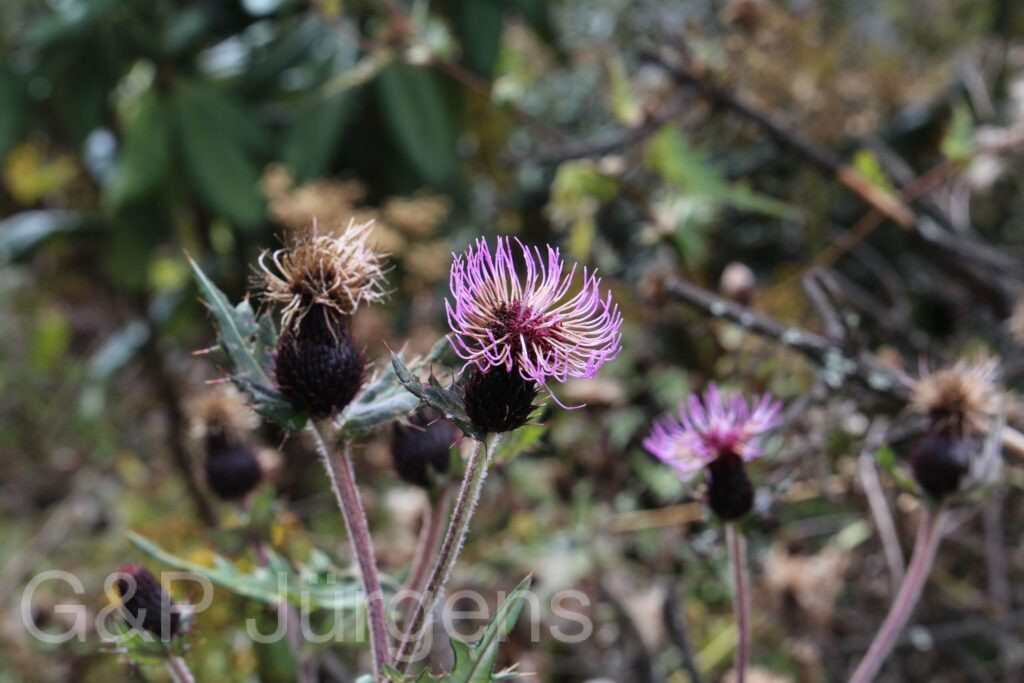
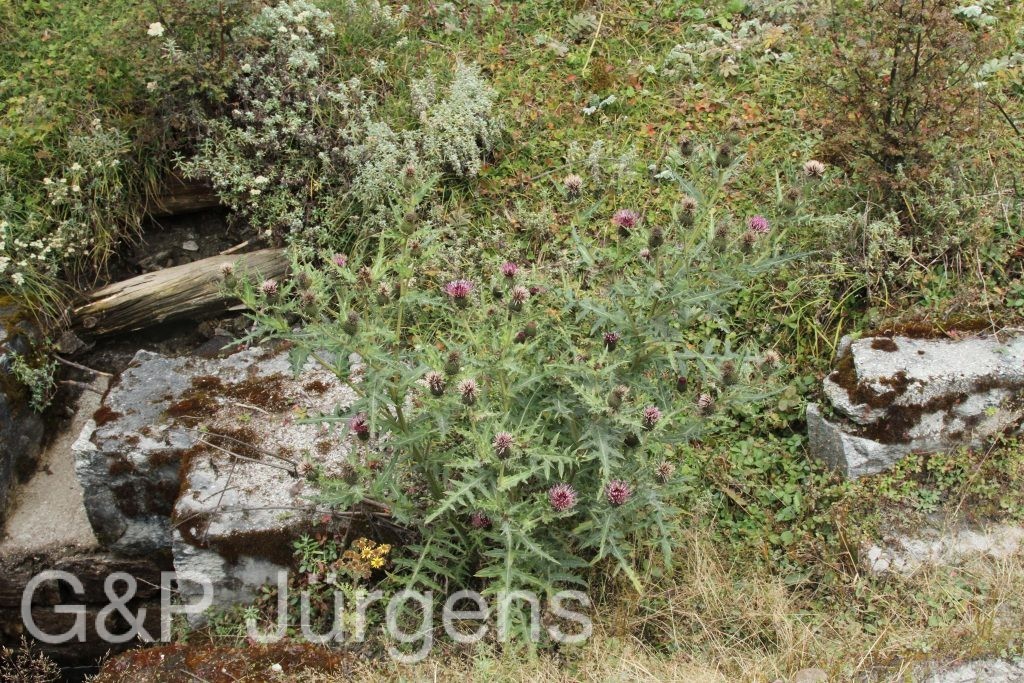
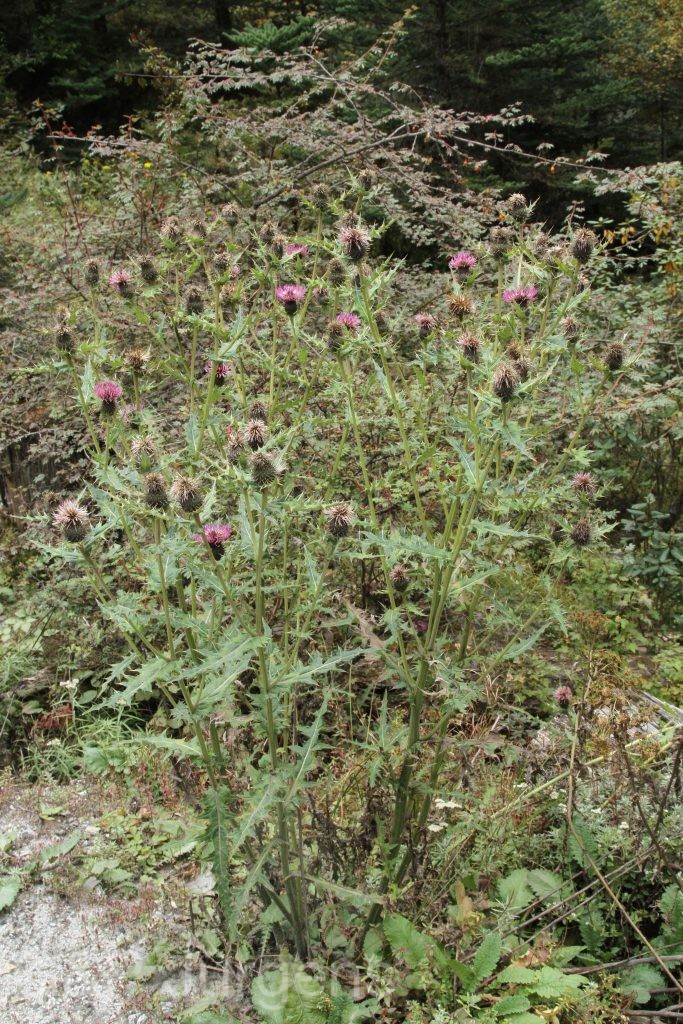
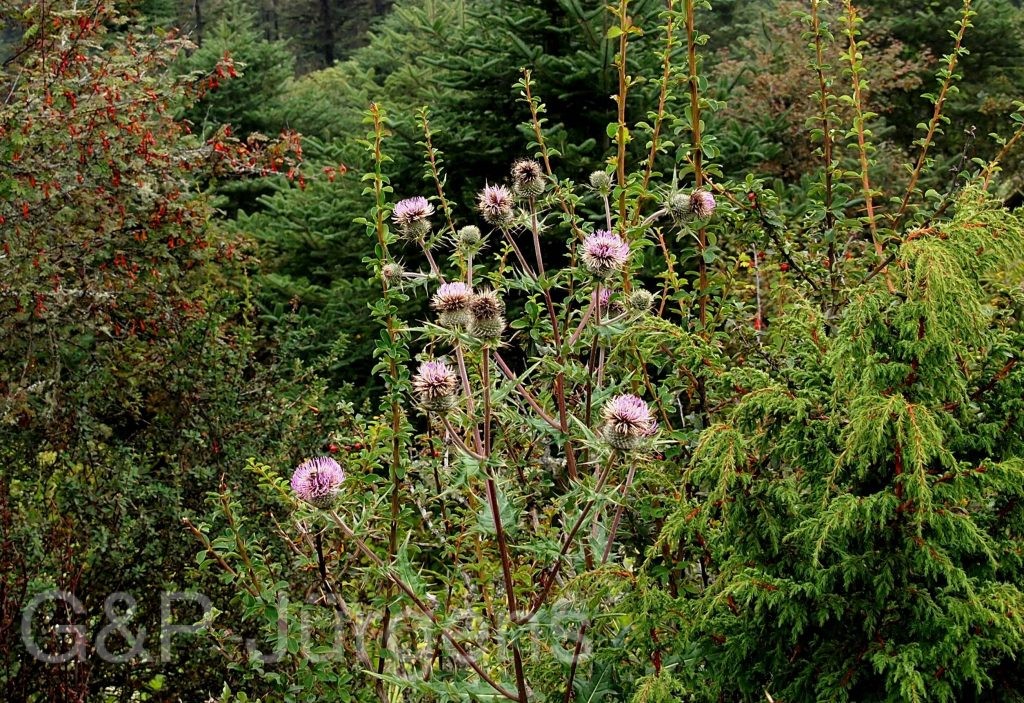
Cirsium falconeri is a robust subalpine to alpine thistle distributed along the Himalaya and adjacent ranges, recorded from Pakistan, India, Nepal, Bhutan, Myanmar and south-western China (Xizang, Yunnan), with some 207 georeferenced occurrences documenting its broad east-to-west arc. It favours open grassy hillsides, forest margins, moist meadows and disturbed slopes between roughly 2700 and 4300 m, where it forms scattered stands among tall-herb communities. The photographed plant from the Shele-La pass in Bhutan at about 3900 m in September typifies its preference for cool, humid high-altitude grasslands flowering toward the end of the monsoon.

The species is a stout biennial or short-lived perennial herb 0.6–2 m tall, with erect, longitudinally ribbed, often arachnoid-tomentose stems arising from a thickened taproot. The leaves are large, pinnatifid to pinnatisect, glabrescent to thinly cottony above and grey-tomentose beneath, with the lobes spiny-margined and the stem-leaves decurrent or amplexicaul. The capitula are large, hemispheric and usually nodding, solitary or few, subtended by reduced spiny floral leaves; the involucral bracts are linear-lanceolate and spinescent. Florets are numerous, tubular and purple to pinkish-red. The cypselae are oblong and glabrous, crowned by a copious pappus of plumose, basally connate bristles aiding wind dispersal.

Within Cirsium, a large Holarctic genus of spiny-leaved thistles, C. falconeri belongs to the Himalayan assemblage of stout nodding-headed species and was originally described under Cnicus before transfer to Cirsium. The nodding capitula are interpreted as protecting pollen and developing achenes from monsoon rain, while the nectar-rich heads attract bumblebees and other long-tongued alpine pollinators. The species remains widespread and locally common and is of no recognised conservation concern, though high-elevation grazing locally affects populations.

Author: (Hook.f.) Petr. · Sources: POWO (Kew), GBIF, Flora of China Vol. 20-21, Flora of Bhutan, Flora of Nepal, Kitamura Compositae of the Himalaya