Tag:

Autumn

Rchb.f.

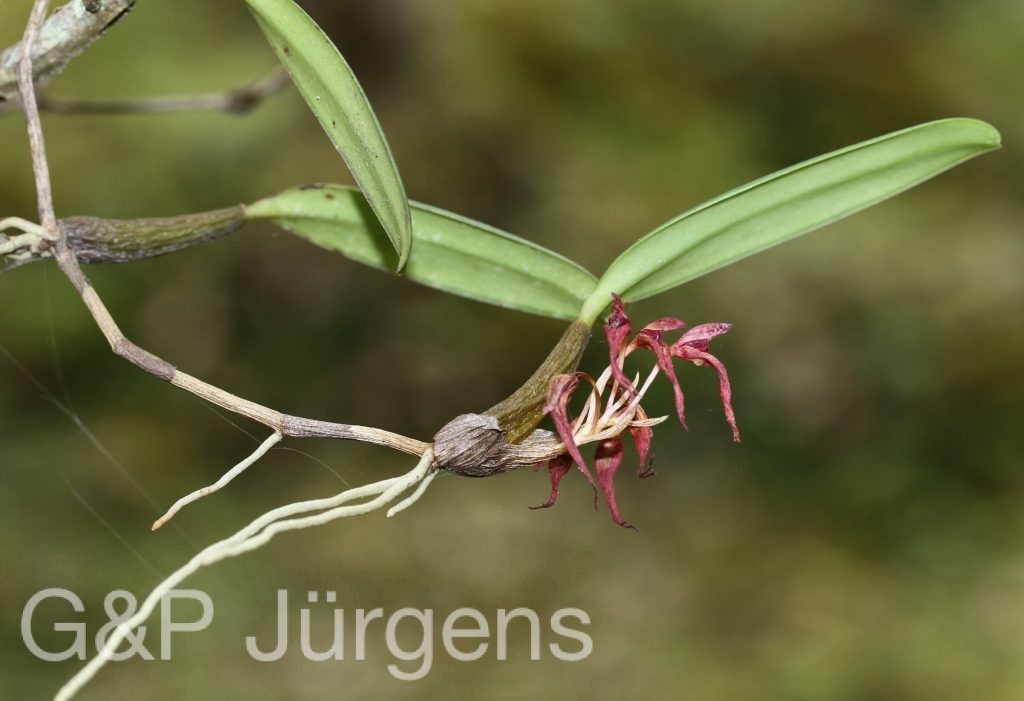
Bhutan2015 56
Bhutan Wangdi Phodrang 2000m, October
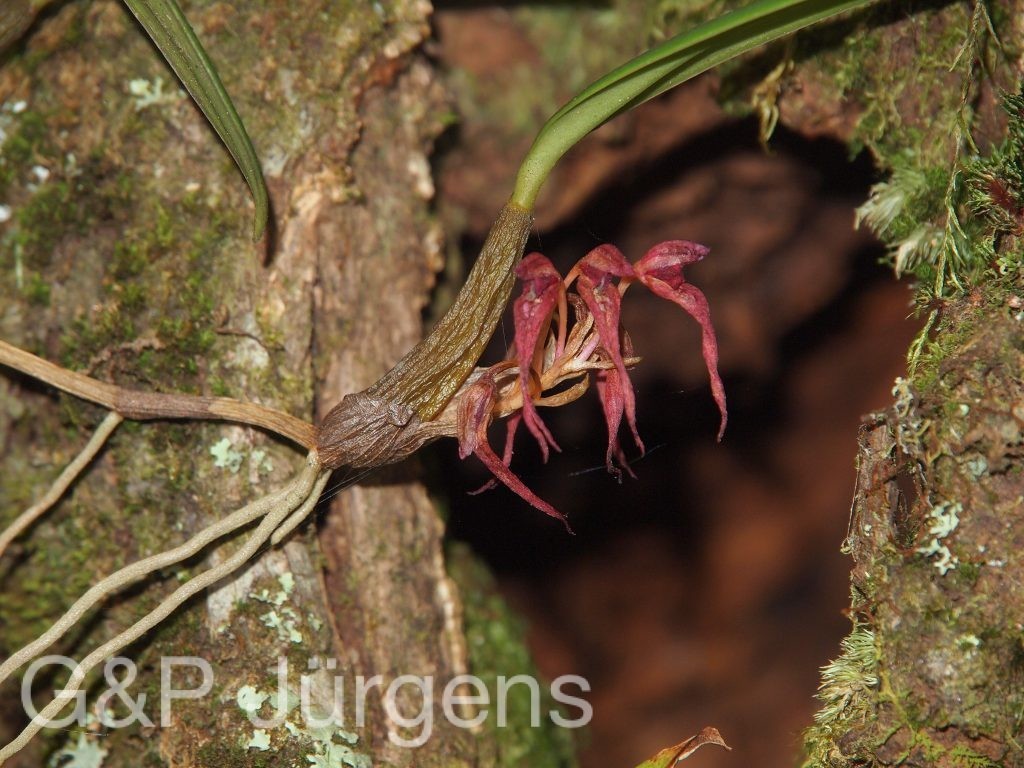
Bhutan2012 341 1
Bhutan Dochu-La 3100m, September

Description

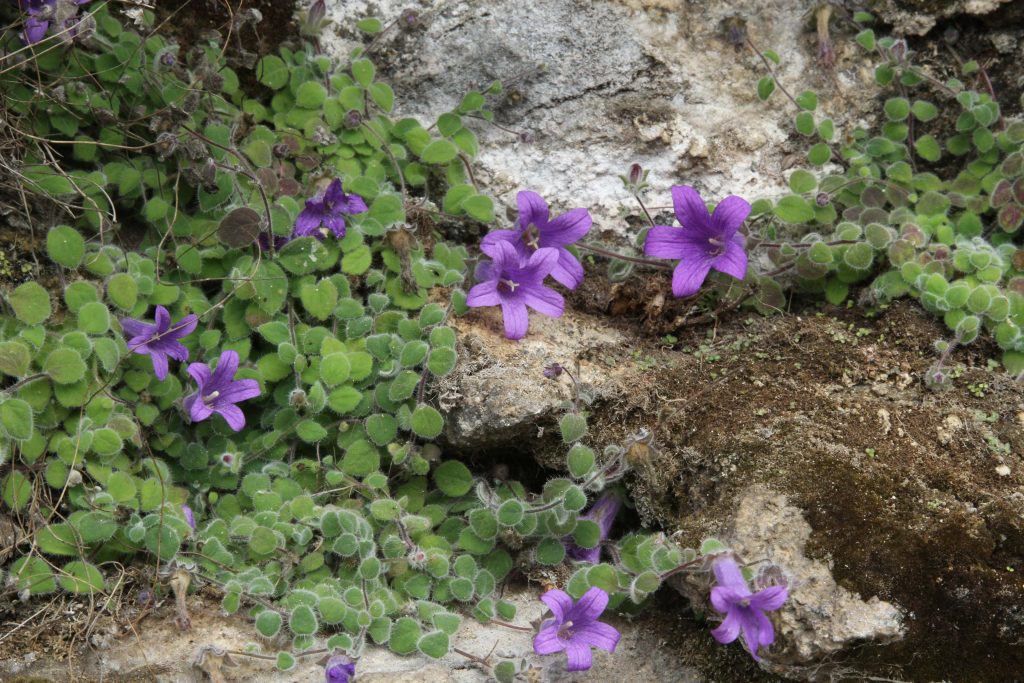
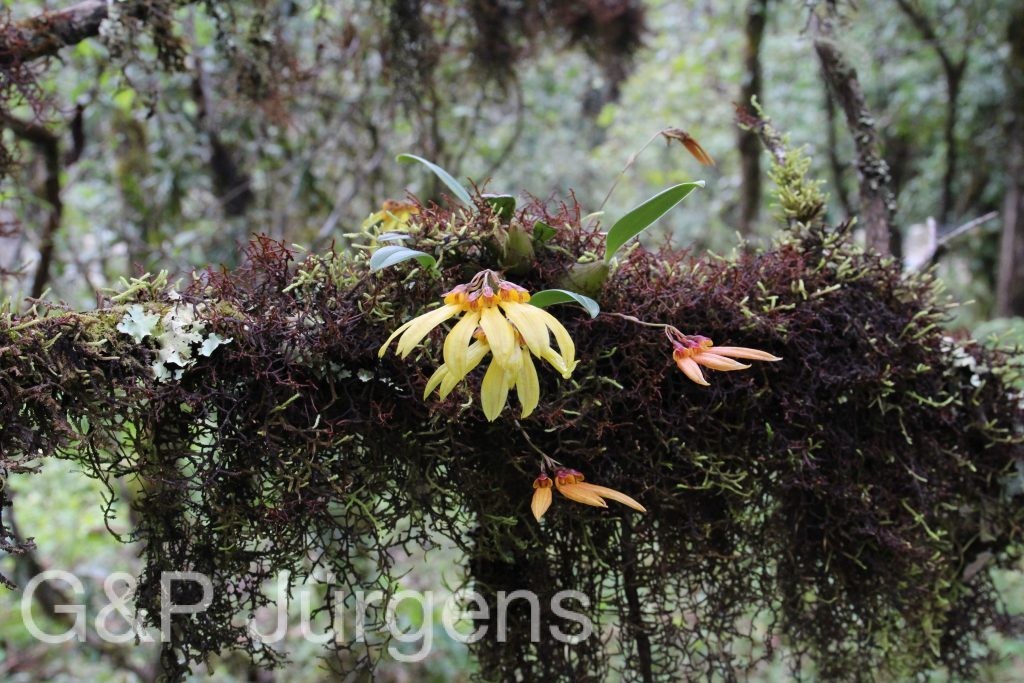
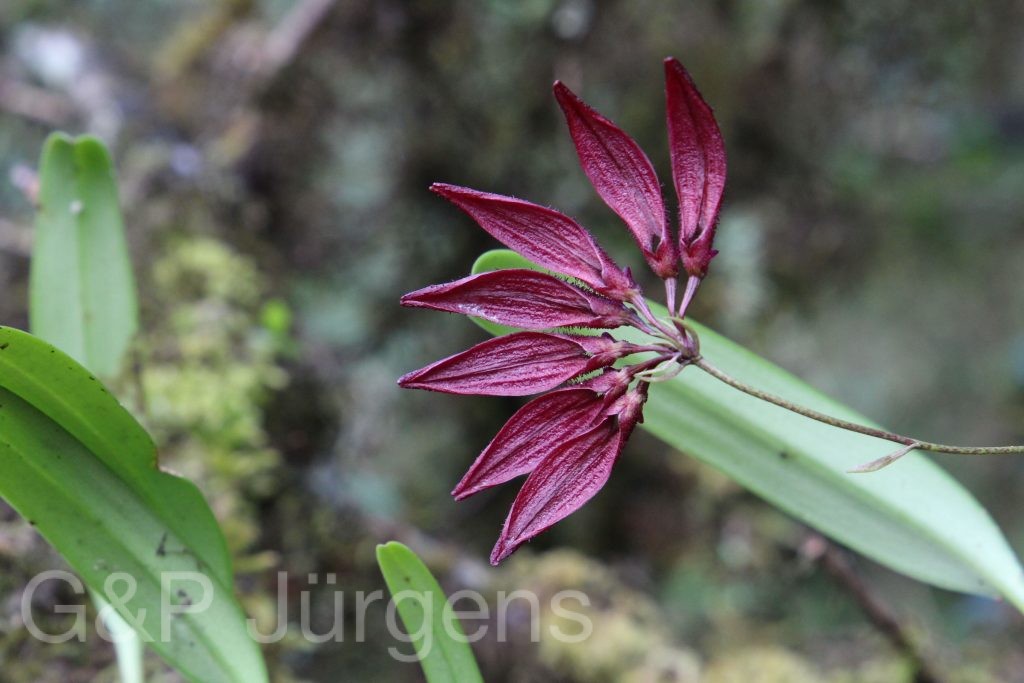
Bulbophyllum muscicola is a diminutive epiphytic orchid with a disjunct distribution from the eastern Himalayas (Nepal, northeast India, Bhutan) through Southeast Asia to New Guinea. The specific epithet 'muscicola' (moss-dweller) aptly describes its preferred microhabitat: the species grows embedded in moss mats on tree trunks and branches in cool, humid montane forests, typically at 1,200–3,100 m elevation.

This is one of the smallest Bulbophyllum species in the Himalayan flora. The pseudobulbs are minute, globose to ovoid, 3–8 mm tall, closely set on a threadlike, creeping rhizome. Each pseudobulb bears a single, fleshy, ovate leaf 1–3 cm long. The inflorescence is a solitary flower or a short, few-flowered raceme on a filiform peduncle 2–5 cm long. Flowers are tiny, 3–5 mm across, translucent yellow to orange, with the lateral sepals connate for most of their length. The lip is minute, fleshy, and mobile. Flowering occurs from September to November.

Due to its small size, B. muscicola is easily overlooked in the field and is probably under-recorded. Its occurrence at the Dochu-La pass in Bhutan at 3,100 m places it among the higher-altitude records for the genus in the eastern Himalayas.

Author: Rchb.f. · Sources: POWO (Kew), Flora of Bhutan Vol. 3, GBIF, Pearce & Cribb: The Orchids of Bhutan (2002)
Rchb.f.

Bhutan2015 44
Bhutan Wangdi Phodrang 2000m, October
Bhutan2015 53
Bhutan Wangdi Phodrang 2000m, October

Description

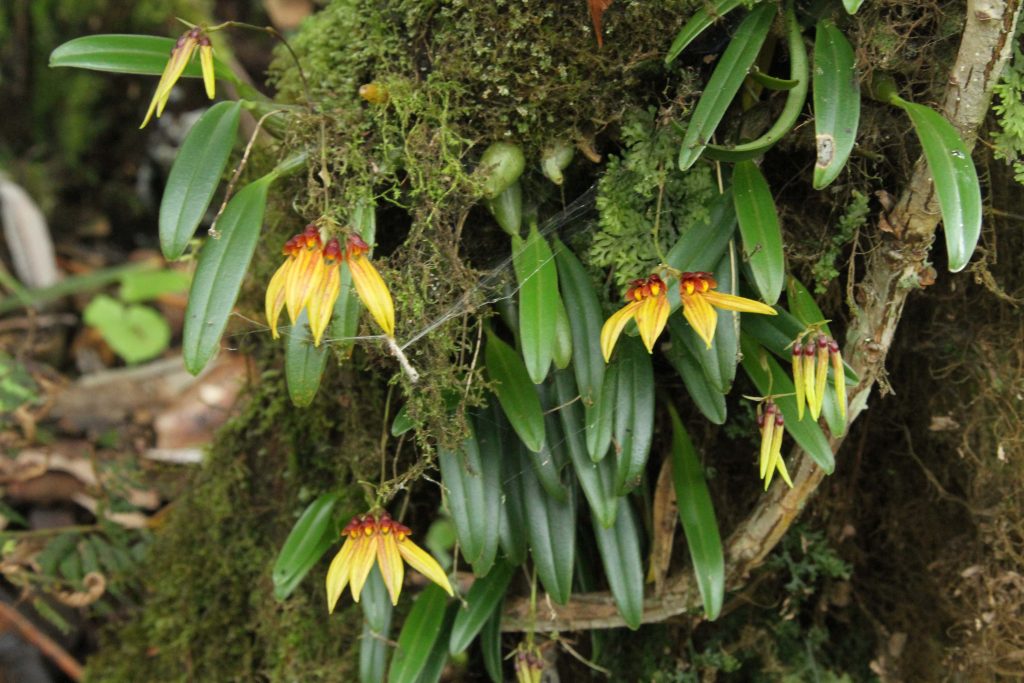
Bulbophyllum retusiusculum is a widespread epiphytic orchid ranging from the eastern Himalayas (Nepal, northeast India, Bhutan) through Myanmar, southern China, Taiwan, Vietnam, and Thailand. GBIF records document over 550 occurrences across this range. The species inhabits broadleaved and mixed forests at 800–2,500 m elevation, growing on tree trunks and branches in moderately humid conditions.

The pseudobulbs are narrowly ovoid to cylindrical, 1–2 cm tall, clustered on a short rhizome. Each bears a single, oblong-elliptic, leathery leaf 4–10 cm long with a slightly retuse (shallowly notched) apex — the feature reflected in the specific epithet 'retusiusculum'. The inflorescence is an erect to arching, densely many-flowered raceme 5–15 cm long. The flowers are minute, 3–4 mm across, arranged in a dense, cylindrical spike, typically pale yellowish-green to cream. The dorsal sepal is concave, the lateral sepals spreading, and the lip is small, fleshy, and recurved. Flowering occurs from September to November.

B. retusiusculum belongs to Bulbophyllum section Brachystachya, characterised by densely flowered, spike-like racemes. The species shows moderate morphological variation across its extensive range, particularly in flower colour and pseudobulb spacing.

Author: Rchb.f. · Sources: POWO (Kew), Flora of China Vol. 25, GBIF, Pearce & Cribb: The Orchids of Bhutan (2002)

Rchb.f.

Bhutan2012 1351
Bhutan Yankel 400m, October

Description

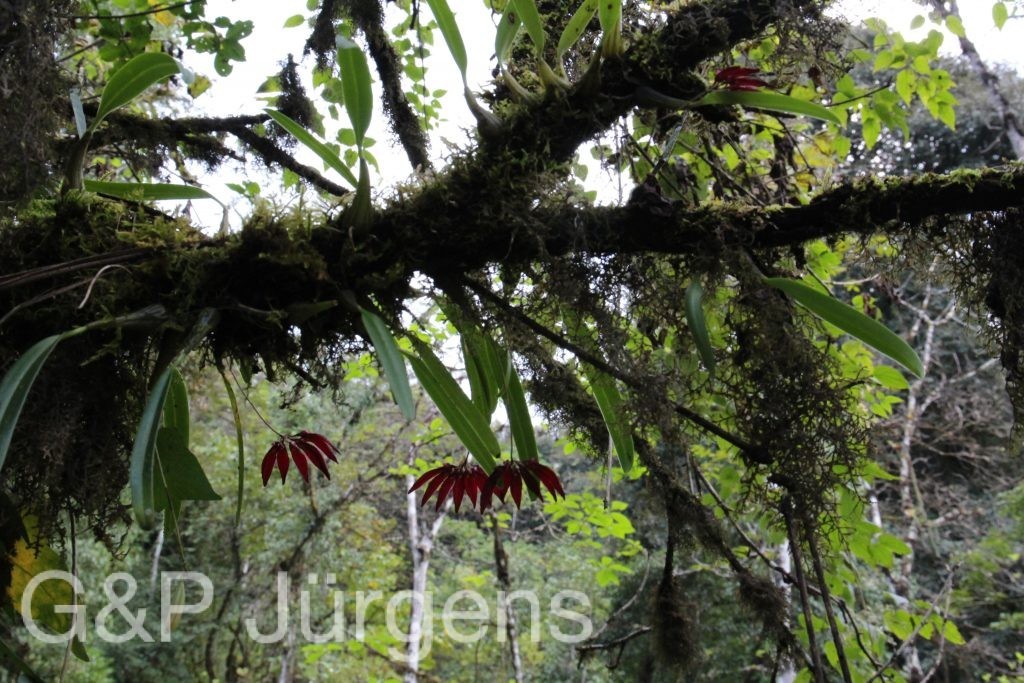
Bulbophyllum striatum is an epiphytic orchid confined to the eastern Himalayas and adjacent regions, with documented occurrences in northeast India (Sikkim, Assam, Meghalaya), Bhutan, Nepal, Bangladesh, and southwest China (Yunnan). It inhabits warm, humid subtropical and tropical forests at low to moderate elevations of 200–1,500 m — among the lower-altitude Bulbophyllum species in the Himalayan flora.

The pseudobulbs are ovoid, 2–3 cm tall, set at intervals on a stout, creeping rhizome. Each bears a single, oblong-lanceolate, coriaceous leaf 10–18 cm long. The inflorescence is an arching to pendent, laxly few-flowered raceme, 8–15 cm long, producing 3–8 flowers. The specific epithet 'striatum' (striped) refers to the conspicuous reddish-brown longitudinal striations on the sepals: flowers are 1.5–2 cm across, yellowish-green with prominent dark reddish-brown veining. The lip is dark purple, fleshy, curved, and mobile on the column foot. Flowering occurs from September to November.

The relatively low-altitude habitat of B. striatum at Yankel (400 m) in southern Bhutan reflects the warm, subtropical character of the Mo-Chu and lower Punatsangchu valleys, which harbour a distinct orchid flora adapted to high humidity and temperatures atypical for most of Bhutan.

Author: Rchb.f. · Sources: POWO (Kew), Flora of Bhutan Vol. 3, GBIF, Pearce & Cribb: The Orchids of Bhutan (2002)
J.J.Sm.

Bhutan2012 1178
Bhutan Tashiyangtse 2000m, October
Bhutan2012 1180
Bhutan Tashiyangtse 2000m, October
Bhutan2012 1181
Bhutan Tashiyangtse 2000m, October

Description

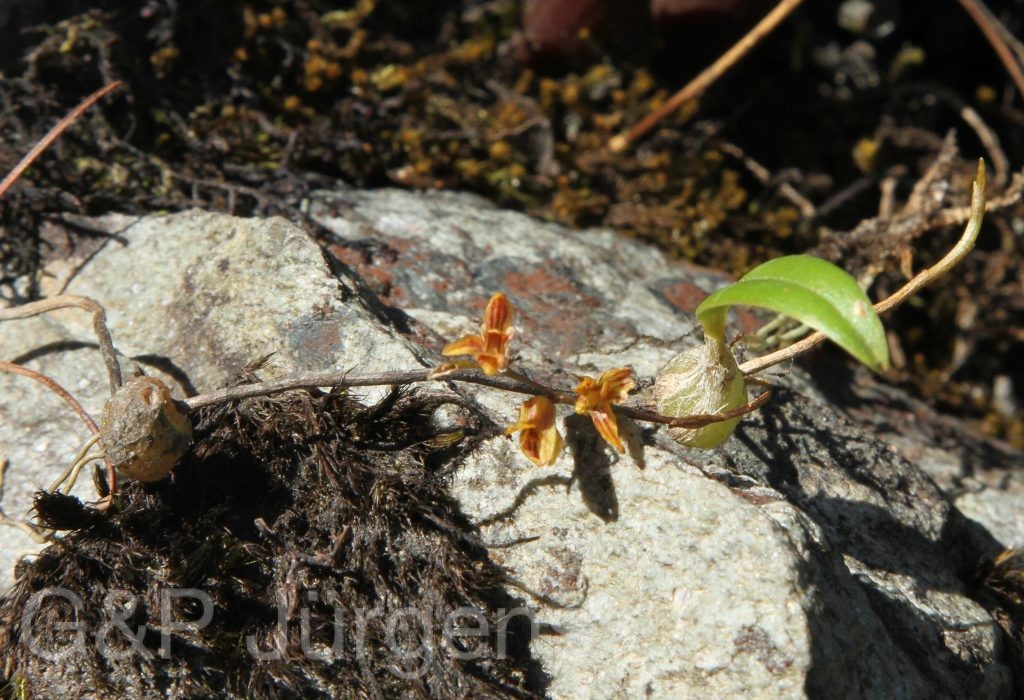
Bulbophyllum yoksunense is a rare epiphytic orchid with a restricted distribution in the eastern Himalayas. The species is named after Yuksom (also spelled Yoksum or Yoksun) in western Sikkim, India, where the type specimen was collected. Its known range includes Sikkim, Bhutan, eastern Nepal, and northern Myanmar. With only 17 documented occurrences in GBIF, it is among the less frequently recorded Bulbophyllum species in the region. It grows on mossy tree trunks in temperate broadleaved forests at 1,500–2,500 m elevation.

The pseudobulbs are ovoid, 1–2 cm tall, closely set on a creeping rhizome. Each bears a single, elliptic, coriaceous leaf 5–10 cm long. The inflorescence is a short, few-flowered raceme. Flowers are small, about 8–12 mm across, with distinctive coloration: the sepals are pale greenish-yellow with fine purple veining, and the lip is dark purple, fleshy, and slightly recurved. The lateral sepals are slightly longer than the dorsal sepal. Flowering in Bhutan occurs in October.

B. yoksunense is poorly known in cultivation and in the wild. Its apparent rarity may partly reflect under-collection in the remote eastern Himalayan forests of Bhutan and Sikkim. Further field survey is needed to clarify its true distribution and conservation status.

Author: J.J.Sm. · Sources: POWO (Kew), GBIF, Pearce & Cribb: The Orchids of Bhutan (2002), J.J. Smith: Orchidaceae Novae (1910)

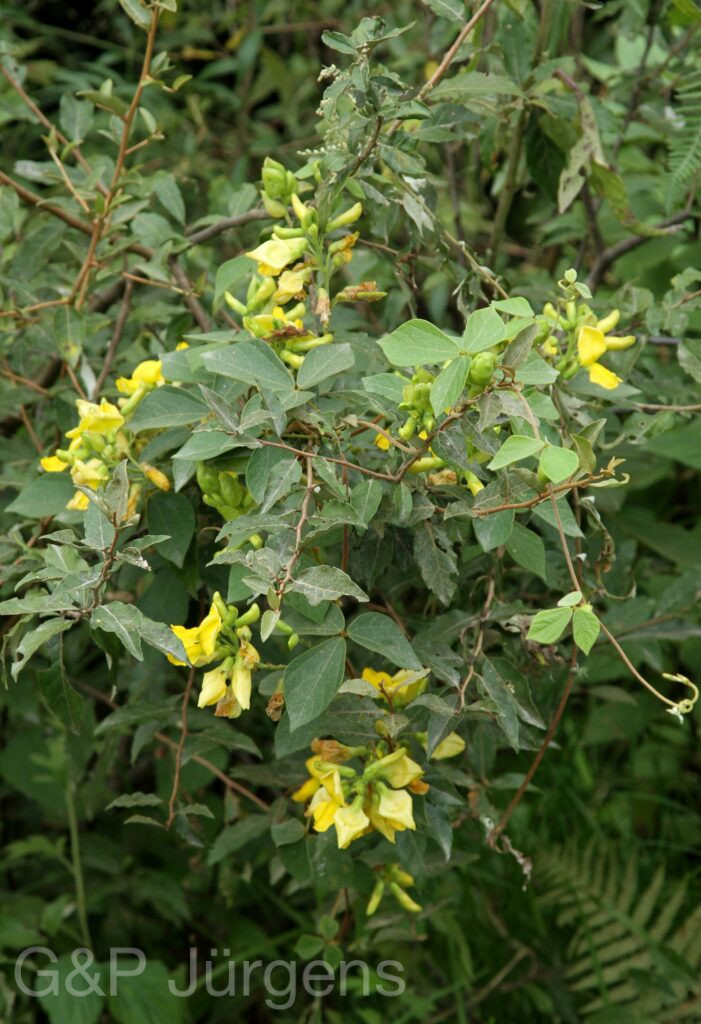
Cajanus mollis

by GP Jürgens

(Benth.) Maesen

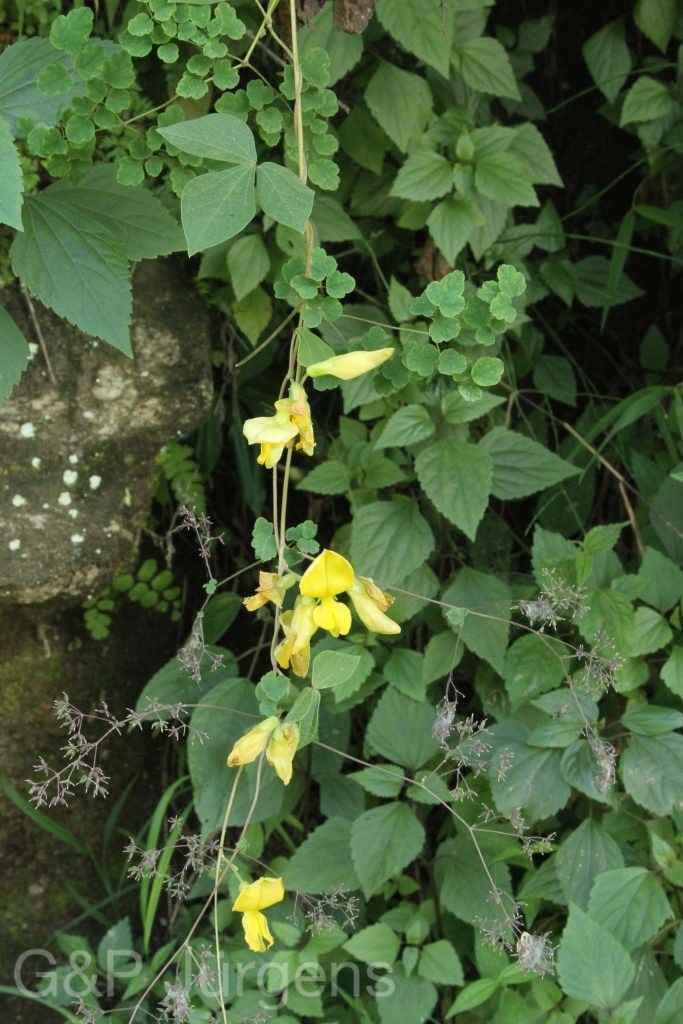
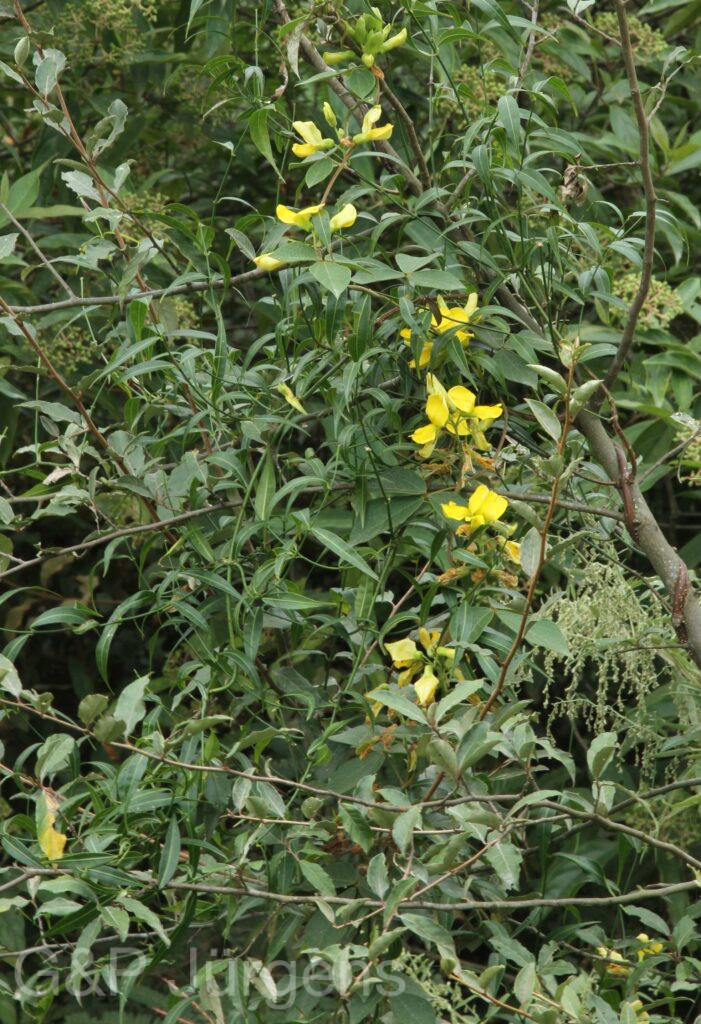
Bhutan2012 406
Bhutan Wangdi 2700m, September

Description

Cajanus mollis (Benth.) Maesen is a trailing or twining legume distributed through the Himalaya and southern and southeastern Asia; GBIF records (about 161 occurrences) span India, Nepal, Bhutan, southern China, Thailand, Indonesia, the Philippines and Pakistan. It grows in open scrub, grassland, forest margins, hedgerows and disturbed slopes at lower and middle elevations, scrambling over surrounding vegetation. The plant photographed near Wangdi in Bhutan at 2700 m in September, flowering and fruiting late in the warm season, sits at the upper part of its altitudinal range in the warm-temperate hill belt, where open, sunny, well-drained slopes suit its sprawling habit.

It is a perennial herb or subshrub with slender, prostrate to climbing stems clothed in soft spreading hairs. The leaves are pinnately trifoliolate, the leaflets obovate to elliptic and densely softly pubescent, gland-dotted beneath, and subtended by small stipules. The flowers are papilionaceous, borne in short axillary racemes; the corolla is yellow, the standard often reddish- or purplish-veined on the outer face, with the keel enclosing the diadelphous stamens. The calyx is campanulate and hairy. The fruit is a flattened, oblong, pubescent pod constricted between the seeds and bearing oblique depressions on the valves, dehiscing to release several small seeds.

The taxon, formerly placed in the segregate genus Atylosia, was transferred to Cajanus by Van der Maesen, who united Atylosia with Cajanus on morphological grounds; it is one of the wild relatives of the cultivated pigeonpea, Cajanus cajan, and is therefore of interest as a genetic resource for crop improvement and disease resistance. As a nitrogen-fixing legume it enriches soil on disturbed ground. Widespread and adaptable, it is of least conservation concern across its broad Asian range.

Author: (Benth.) Maesen · Sources: POWO (Kew), GBIF, Flora of China, Flora of Bhutan, Van der Maesen revision of Cajanus, Annotated Checklist of the Flowering Plants of Nepal

(L.) Graham ex Wall.

Bhutan2012 821
Bhutan Trongsa 2050m, October
Bhutan2012 822
Bhutan Trongsa 2050m, October

Description

Cajanus scarabaeoides is a widely distributed twining legume of the Old World tropics and subtropics, recorded by GBIF from more than two dozen territories spanning the Indian subcontinent, China, Taiwan, mainland and insular Southeast Asia (Thailand, Vietnam, the Philippines, Indonesia, Papua New Guinea), Japan, Australia, the western Indian Ocean islands (Madagascar, Réunion, Mayotte) and parts of West Africa, with over 4,200 georeferenced occurrences attesting to its commonness as a weedy scrambler. In the Himalayan portion of its range it ascends well into the hills, as the photographed plant from Trongsa in central Bhutan at about 2,050 m elevation in October illustrates. It typically grows in open grasslands, scrub, forest margins, fallow fields, roadsides and other disturbed sunny situations, flowering and fruiting through the post-monsoon dry season; as a nitrogen-fixing pioneer it colonises poor soils readily and is often a component of degraded secondary vegetation.

The species is a slender, trailing or twining perennial herb to subshrub with prostrate to climbing stems clothed in spreading silky or brownish hairs. The leaves are pinnately trifoliolate, the leaflets oblong-elliptic to obovate, the terminal one largest, gland-dotted beneath and silky-pubescent on both surfaces, with small stipels and persistent stipules. The flowers are borne in short axillary racemes; the corolla is papilionaceous and yellow, the standard frequently marked with reddish or purplish veining on the back, and the calyx is campanulate with narrow lobes. The fruit is a flattened, oblong, brownish-pubescent pod constricted between the seeds and conspicuously transversely depressed, dehiscing to release several small dark seeds.

Cajanus scarabaeoides belongs to the tribe Phaseoleae (subtribe Cajaninae) and is taxonomically significant as one of the closest wild relatives of the cultivated pigeon pea, Cajanus cajan, sharing the characteristic resinous glandular dots that distinguish the genus. As a hardy, drought-tolerant wild crop relative it is valued in plant breeding as a source of genes for pest resistance and stress tolerance, and it serves locally as fodder and a green-manure cover crop. Its enormous natural range, ecological adaptability and frequency leave it of least conservation concern, though wild germplasm is increasingly recognised for its importance to food-security research.

Author: (L.) Graham ex Wall. · Sources: POWO (Kew), GBIF, Flora of China Vol. 10, Flora of Bhutan Vol. 1, Flora of Nepal, Flora of Pakistan, van der Maesen monograph on Cajanus and Atylosia (Wageningen Agricultural University Papers)

Lindl.

Bhutan2012 689
Bhutan Galephu 850m, September

Description

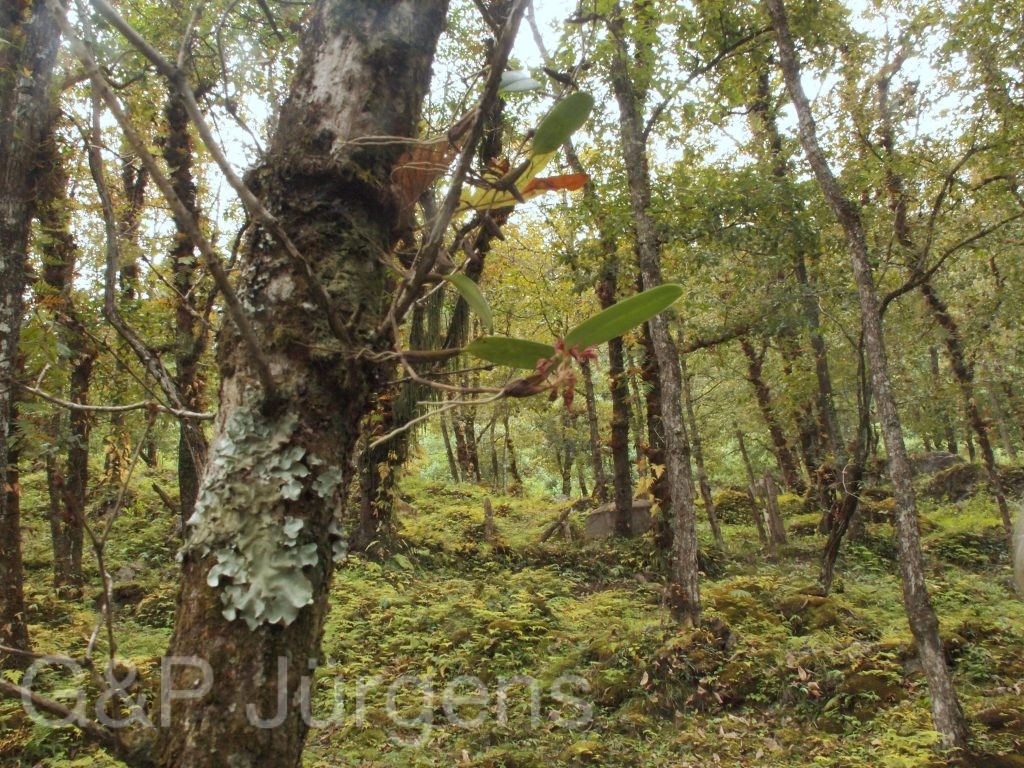
Calanthe biloba is a terrestrial orchid native to the eastern Himalayas and adjacent regions, occurring in northeast India (Sikkim, Assam, Meghalaya), Bhutan, Nepal, southwest China (Yunnan), and northern Vietnam. It grows in the understory of warm, humid broadleaved forests and along shaded stream banks at 500–1,500 m elevation, in well-drained, humus-rich soils.

The plant produces prominent, conical pseudobulbs partially enclosed by the persistent leaf bases. The leaves are large, 30–50 cm long, broadly elliptic to obovate, plicate (folded lengthwise), and deciduous in the dry season. The inflorescence is an erect, pubescent raceme 30–60 cm tall, bearing 10–20 flowers. Flowers are 2.5–3.5 cm across, white to pale yellow. The lip is conspicuously bilobed (as the specific epithet indicates), with two diverging apical lobes, and bears a yellow callus of raised lamellae. The spur is slender, 1.5–2 cm long. Flowering occurs from August to October.

Calanthe biloba belongs to the deciduous group of Calanthe (subgenus Preptanthe), which shed their leaves before or during flowering. The relatively low elevation of the collecting locality at Galephu (850 m) reflects southern Bhutan's subtropical climate, where several thermophilic orchid species reach their northern distributional limit.

Author: Lindl. · Sources: POWO (Kew), Flora of Bhutan Vol. 3, GBIF, Pearce & Cribb: The Orchids of Bhutan (2002)
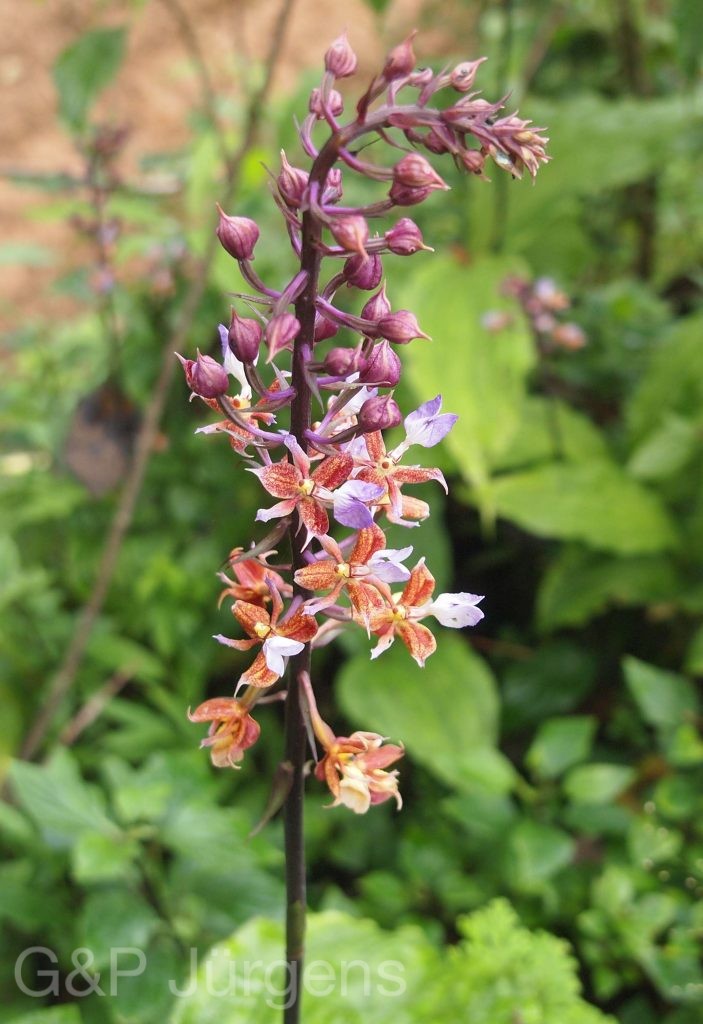
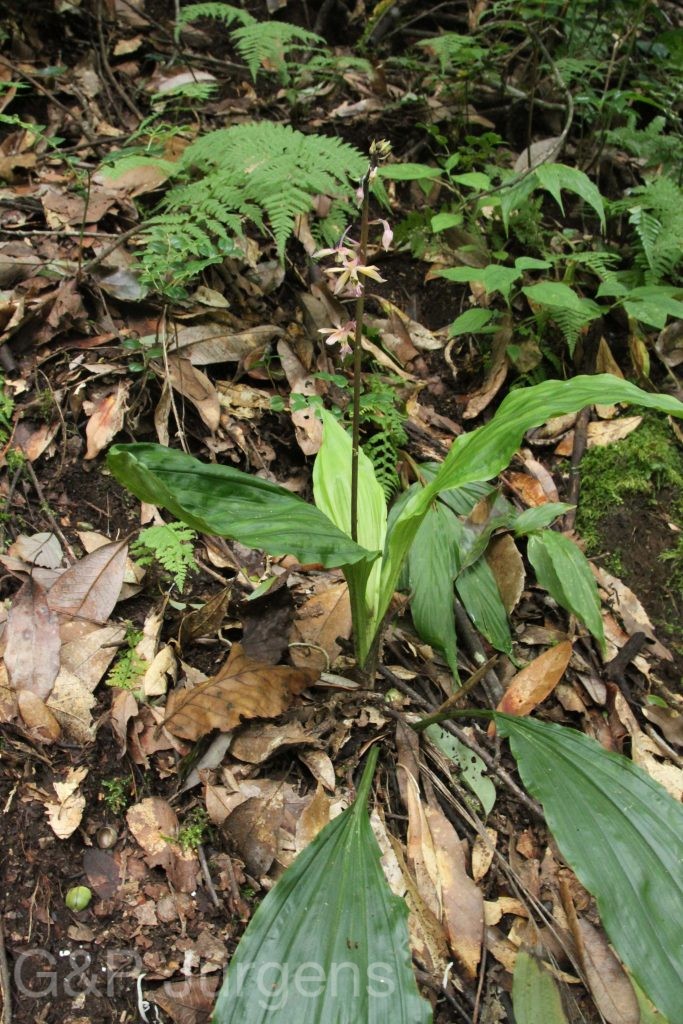
Lindl.

Bhutan2012 448
Bhutan Wangdi 2500m, September

Description

Calanthe sylvatica is a terrestrial orchid with one of the widest distributions in the genus, spanning from tropical and subtropical Africa (East Africa, Madagascar, Réunion, Comoros) to South and Southeast Asia (India, Bhutan, Nepal, Myanmar, China, Thailand, Vietnam). This pantropical range is reflected in GBIF's over 2,700 documented occurrences. In the Himalayas, it grows in the understory of humid broadleaved forests at 500–2,800 m elevation.

The plant is an evergreen species with inconspicuous pseudobulbs concealed by leaf sheaths. Leaves are 3–5, elliptic-lanceolate, 20–40 cm long, plicate, dark green. The inflorescence is an erect raceme 30–60 cm tall, bearing 10–30 flowers. Flowers are 2.5–3.5 cm across, typically deep violet to lilac-purple, though colour varies across the vast range from white to pink to deep purple. The lip is trilobed with a violet mid-lobe and a yellow callus with raised lamellae. The spur is slender, 1.5–2.5 cm long. In the Himalayas, flowering occurs from August to October.

The remarkable biogeographical range of Calanthe sylvatica — bridging Africa and Asia — has made it a subject of interest in orchid phylogeography. The Himalayan populations belong to the Asian lineage, and some taxonomists treat them as a distinct variety or subspecies. The species is adaptable and locally common in suitable habitats.

Author: Lindl. · Sources: POWO (Kew), Flora of Bhutan Vol. 3, GBIF, Cribb & Hermans: Field Guide to the Orchids of Madagascar (2009)

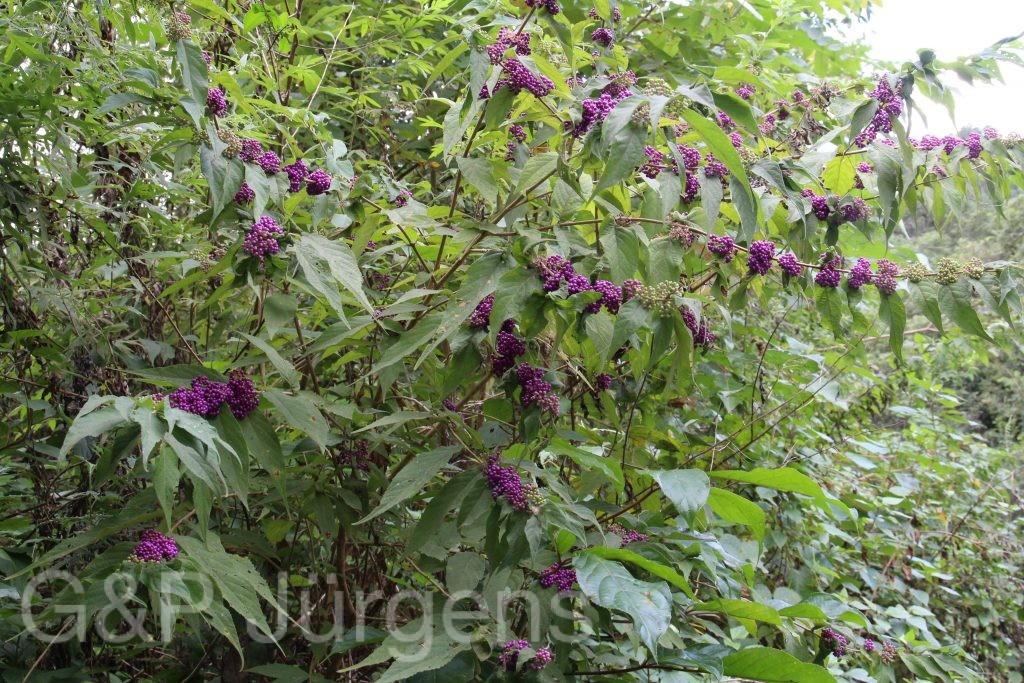
Lindl.

Bhutan2015 644
Bhutan Mo-Chu 1600m, October
Bhutan2015 642
Bhutan Mo-Chu 1600m, October

Description

Callicarpa rubella is a widespread subtropical shrub ranging from the Himalaya and southern China across mainland and insular South-East Asia, with GBIF records from China, India, Bhutan, Myanmar, Thailand, Laos, Vietnam, Malaysia, Indonesia, Taiwan, Hong Kong, Bangladesh and Japan, alongside scattered introduced or cultivated occurrences elsewhere. Its 2863 georeferenced records reflect a common, much-collected species of warm-temperate to subtropical forest. The Bhutanese material from the Mo-Chu valley at 1600 m in October is typical, the species growing in forest margins, secondary scrub, clearings and along streams at roughly 200-2000 m, often as an early successional component of disturbed broadleaf woodland.

It is an erect shrub whose young branchlets, petioles and inflorescences are densely clothed in reddish-brown stellate, gland-dotted and sometimes glandular hairs. The opposite leaves are oblong to obovate-oblong, acuminate, serrate to serrulate, cordate or auriculate at the base, and stellate-pubescent beneath with conspicuous yellowish to reddish glands. The flowers are borne in dense axillary cymes; the small calyx is cupular and the rose-pink to reddish-purple corolla is shortly four-lobed, with four exserted stamens and a slender style. The fruit is a small globose drupe, purplish at maturity, containing four pyrenes.

The placement here under Lamiaceae follows current circumscription, in which Callicarpa and the former Verbenaceae beautyberries are referred to the mint family on molecular grounds. Within Callicarpa, C. rubella is distinguished by its reddish stellate-glandular indumentum and auriculate leaf bases. The colourful drupes are dispersed by birds, and the species is locally used in traditional medicine and occasionally grown as an ornamental. Given its vast range and tolerance of disturbance it is of least conservation concern.

Author: Lindl. · Sources: POWO (Kew), GBIF, Flora of China, Flora of Bhutan, Revision of Callicarpa (Verbenaceae/Lamiaceae) monograph

Wall. & DC.

Bhutan2012 269
Bhutan Shele-La, 4100m September

Description

Campanula argyrotricha is a Himalayan bellflower ranging through India, Nepal, Bhutan, Pakistan and southern Tibet (China), with about 90 georeferenced records in GBIF. It is characteristic of the alpine zone, growing on open rocky slopes, screes, cliff ledges, moraine debris and short alpine meadows, generally between about 3500 and 4500 m. The plants illustrated were recorded at the Shele-La in Bhutan at around 4100 m in September, a typical late-season alpine setting where the species flowers as the monsoon recedes.

It is a low, tufted perennial herb whose epithet, meaning silvery-haired, refers to the conspicuous silvery-white indumentum clothing stems and foliage. From a slender rootstock arise several short, ascending or decumbent stems bearing small, ovate to oblong leaves with crenate to entire margins, often crowded near the base. The flowers are solitary or few, nodding to outward-facing, the broadly campanulate corolla blue to pale violet and divided to about the middle into spreading lobes; the calyx lobes are narrow and the whole exterior, including the reflexed appendages between the calyx teeth in related taxa, is silky-hairy. The fruit is a nodding capsule dehiscing by basal pores to shed numerous minute seeds.

Campanula in the Himalaya comprises numerous dwarf, hairy alpine species whose delimitation is often difficult, and C. argyrotricha is distinguished chiefly by its dense silvery vestiture and small nodding blue flowers. Such cushion-like, hairy alpines are well adapted to wind, drought and cold at high elevation. The species has not been formally assessed for conservation, but it appears locally frequent across a broad Himalayan range; like many high-altitude endemics it could be sensitive to grazing pressure and climate-driven upslope movement of vegetation zones.

Author: Wall. & DC. · Sources: POWO (Kew), GBIF, Flora of Bhutan, Flora of China, Annotated Checklist of the Flowering Plants of Nepal, Flora of Pakistan, Lammers Revision of Campanulaceae