Tag:

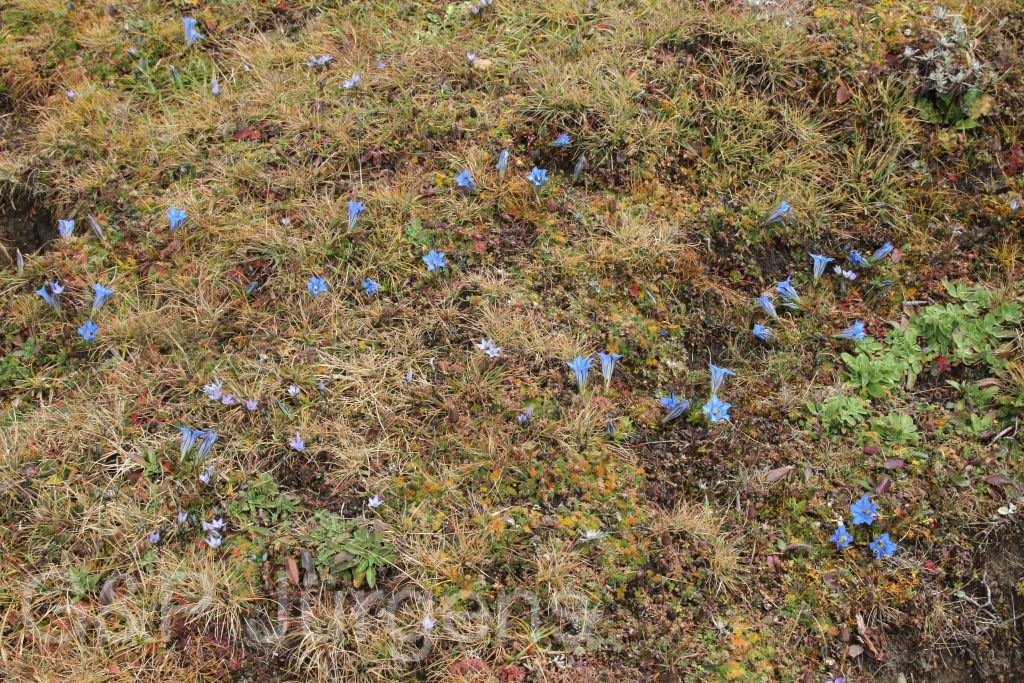
Autumn

D.Don

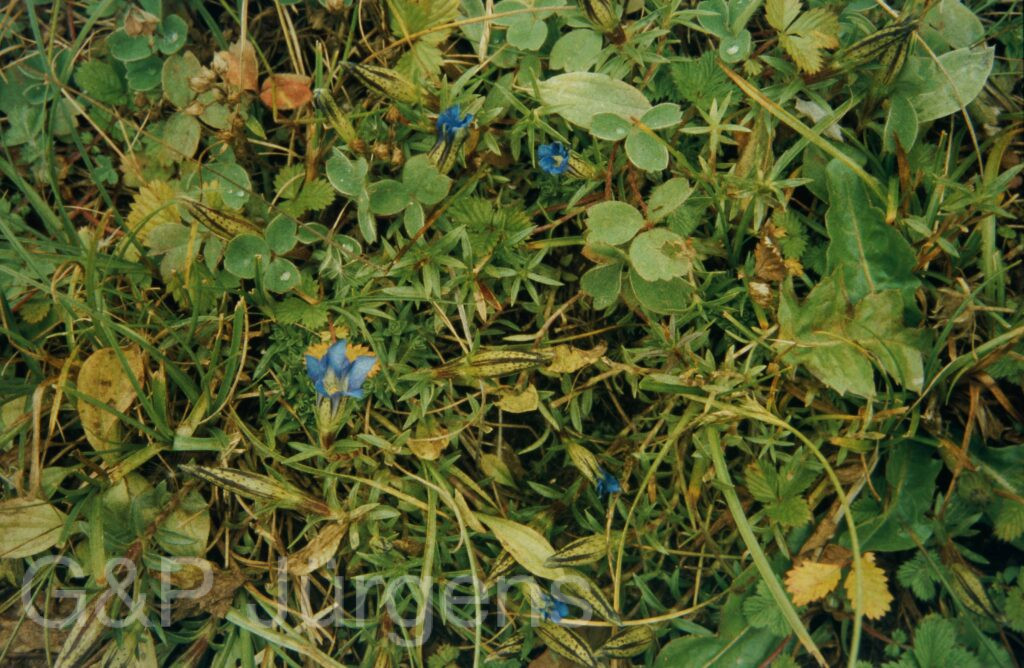
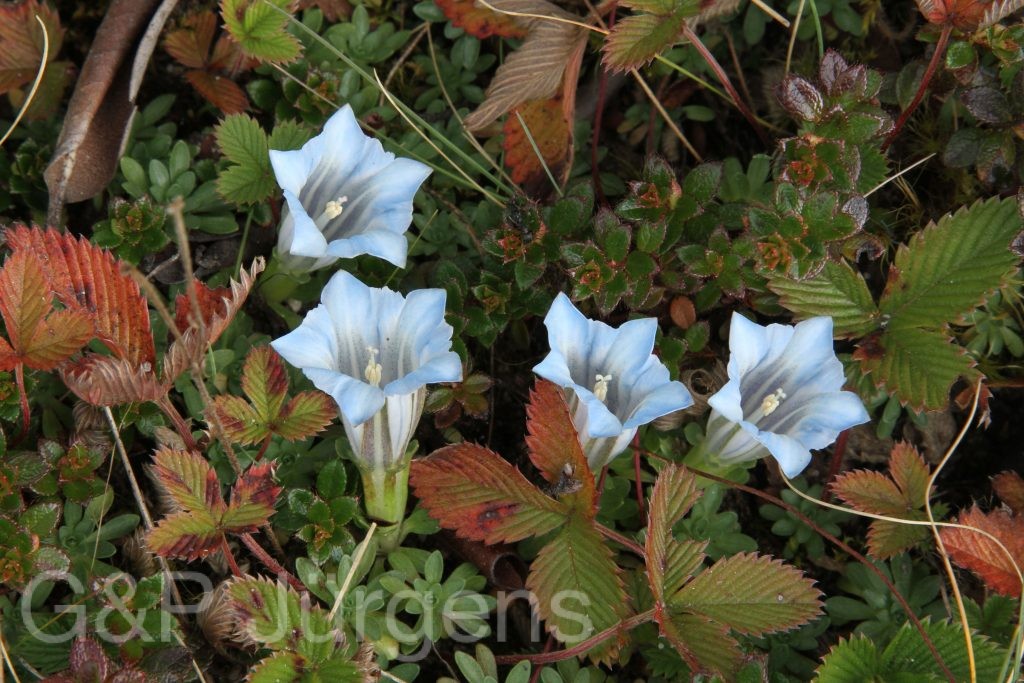
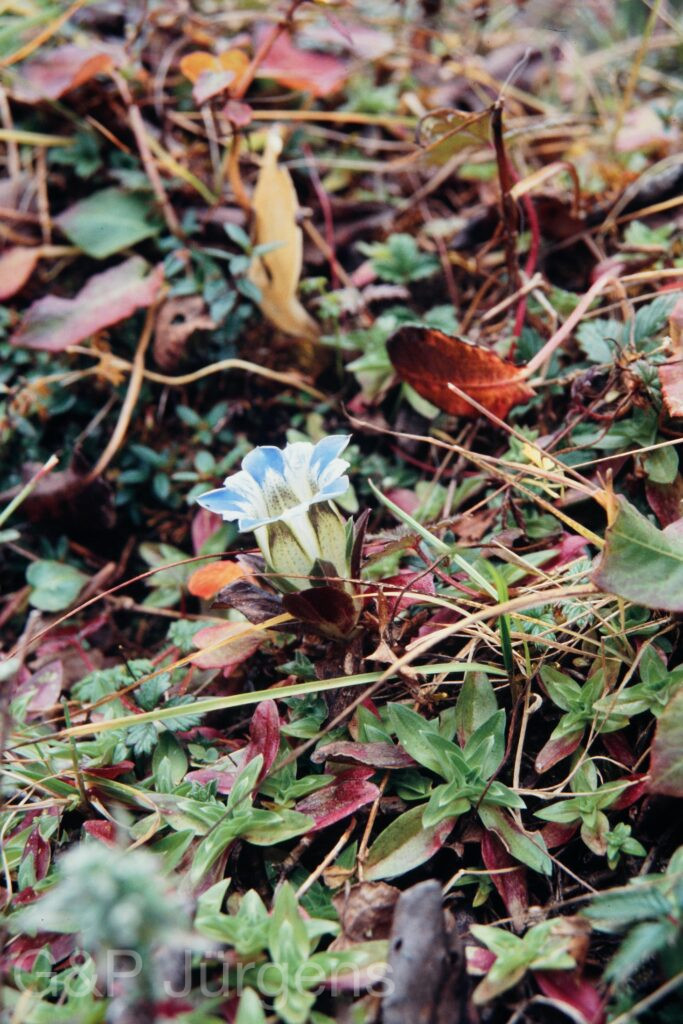
Nepal 95 367 P653 ergebnis
Nepal Pansing 3150m, October
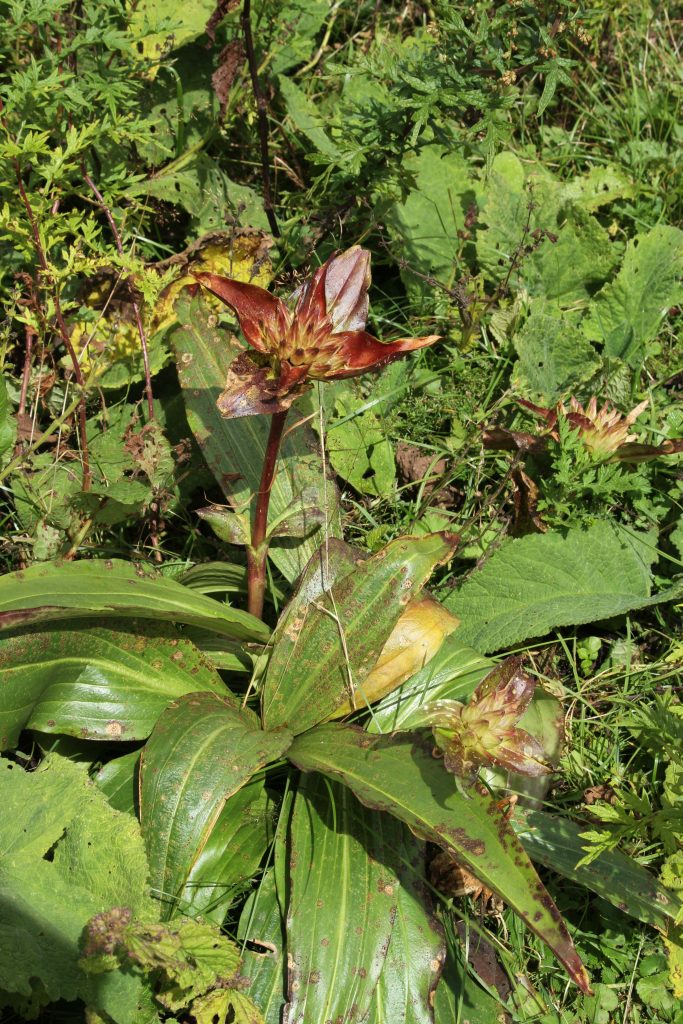
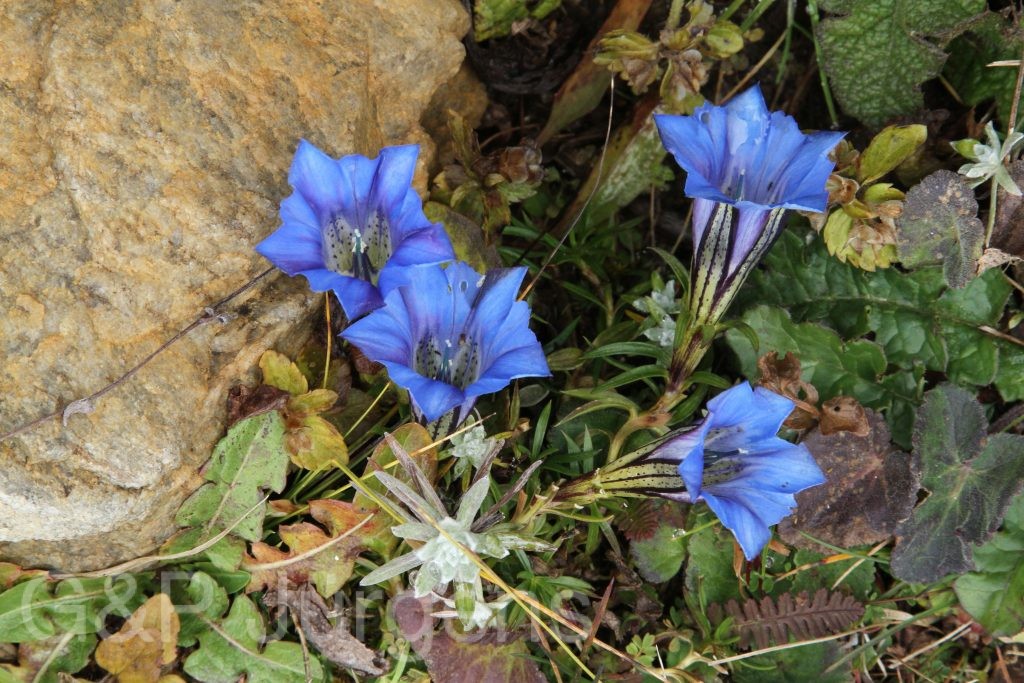
Nepal 95 368 P654 ergebnis
Nepal Pansing 3150m, October
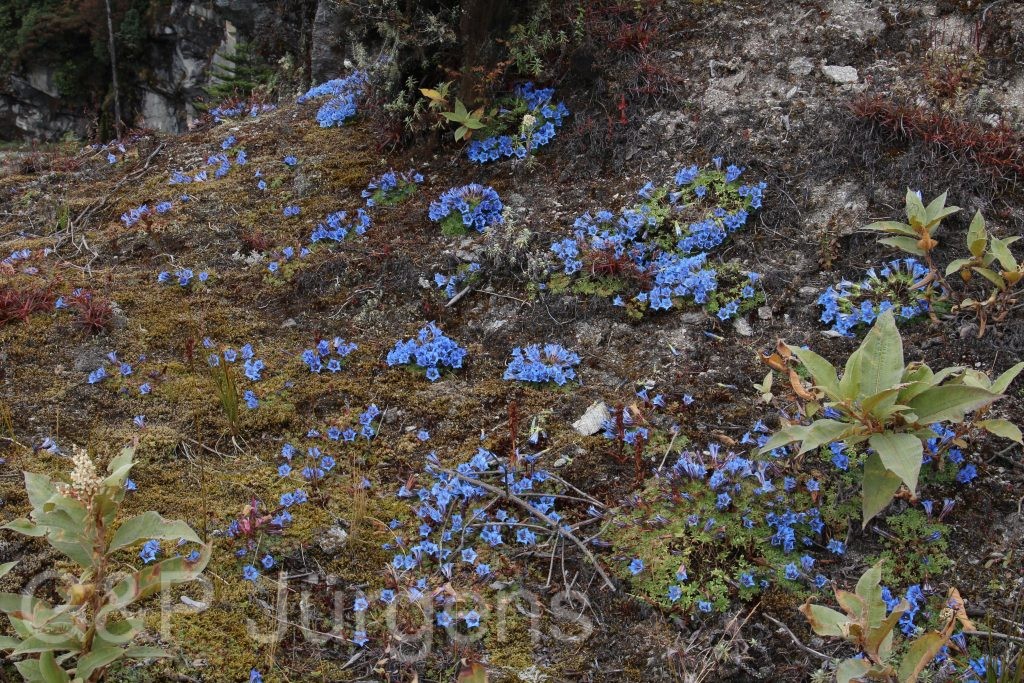
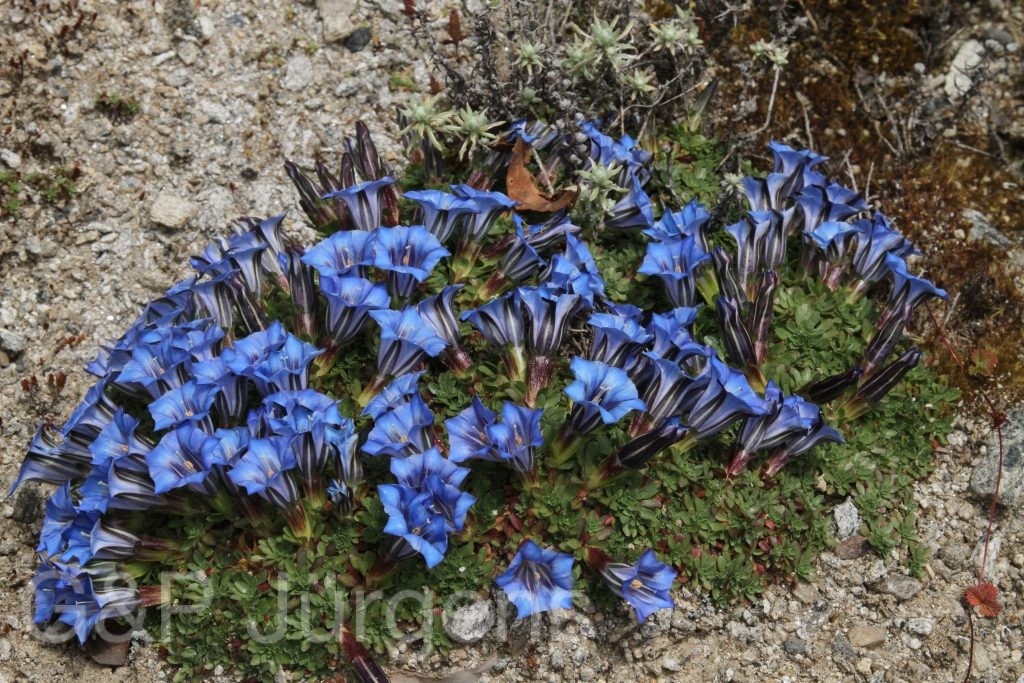
Nepal 95 420 P733 ergebnis
Nepal Pansing 3150m, October

Description

Gentiana depressa is a cushion-forming alpine gentian of the Himalaya, native to Nepal, India, China and Bhutan, the c. 301 georeferenced records tracing a range across the central and eastern high ranges. It grows in open alpine turf, on grassy and stony slopes, banks and amongst dwarf shrubs, generally between about 3000 and 4500 m, and is a notable autumn-flowering species. The plant was photographed at Pansing in Nepal at 3150 m in October, a season and elevation typical of the species, which produces its broad flowers late in the year as the surrounding herbage senesces.

It is a low, prostrate perennial forming dense mats, with creeping, much-branched stems clothed in crowded, small, ovate to elliptic leaves arranged in tight rosettes and overlapping pairs. The flowers are large relative to the plant and sit terminally, almost sessile within the leaf cluster, depressing the foliage around them (depressa). The corolla is broadly campanulate to funnel-shaped, pale greenish-yellow to whitish or sky-blue, conspicuously speckled and streaked within, with five short lobes separated by small plicate folds (plicae). The calyx is tubular and five-toothed; the fruit is a many-seeded capsule, often on a short stipe, releasing fine winged seeds.

Gentiana (tribe Gentianeae) is divided into numerous sections, and G. depressa belongs to the Himalayan autumnal cushion gentians of section Frigida and allies, distinguished by their plicate corollas and prostrate, mat-forming habit. The broad pale flowers borne flat against ground level are an adaptation to the cold, wind-exposed late-season alpine environment, maximising warmth for the developing capsule. Widespread and locally common across its range, the species is not regarded as threatened, though specialised cushion-formers are sensitive to trampling and climatic warming.

Author: D.Don · Sources: POWO (Kew), GBIF, Flora of China, Annotated Checklist of the Flowering Plants of Nepal, Ho & Liu monograph of Gentiana
Harry Sm.

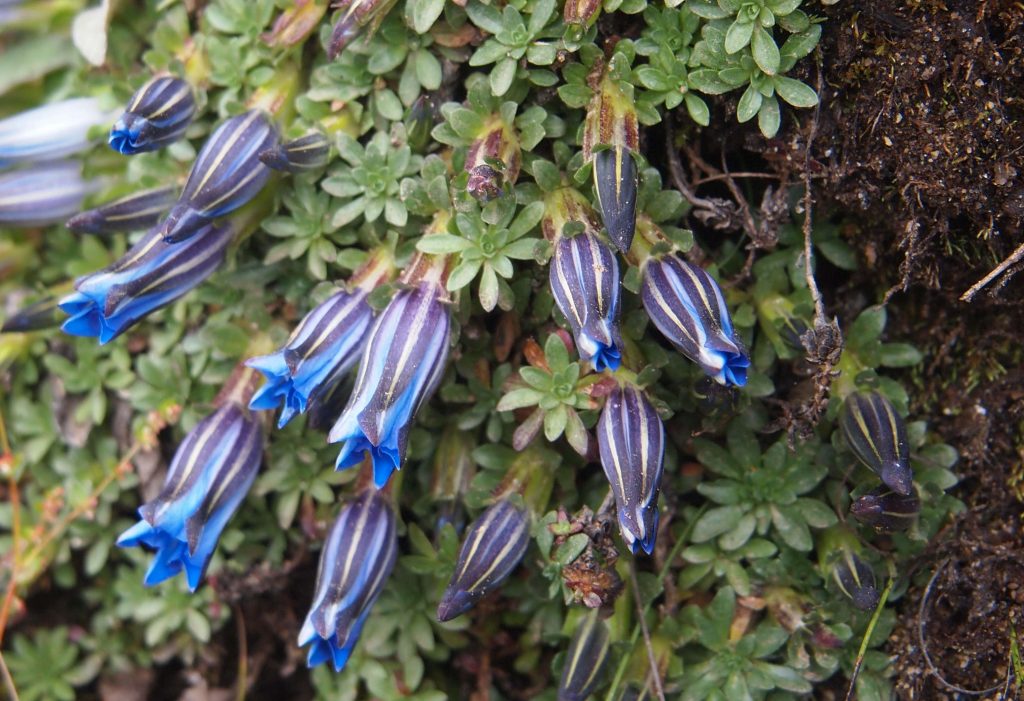
Bhutan2015 660
Bhutan Chele-La 4000m, October
Bhutan2015 662
Bhutan Chele-La 4000m, October
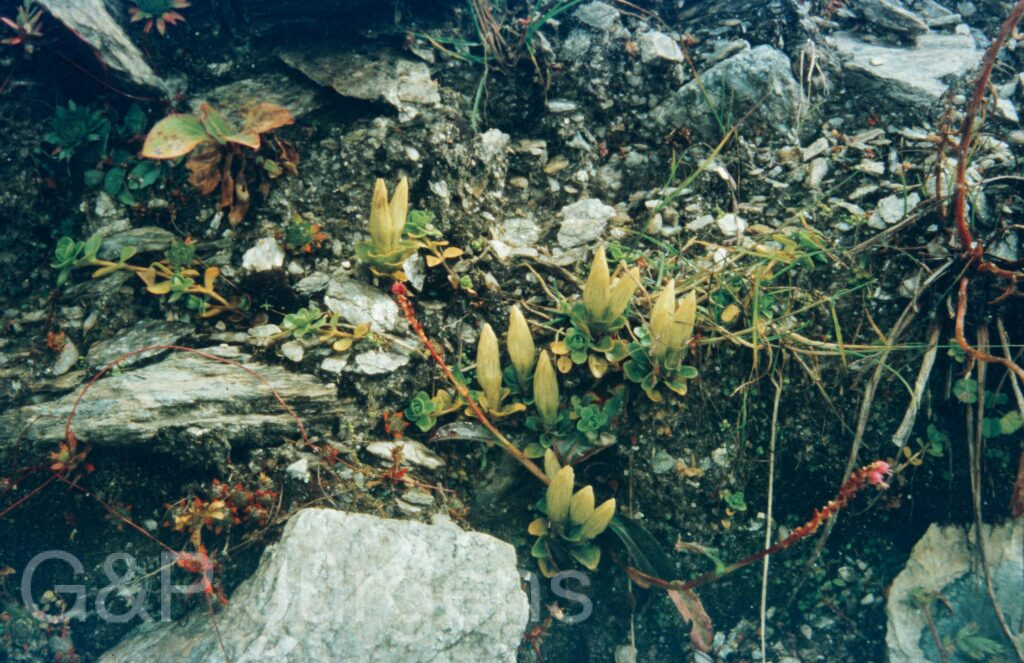
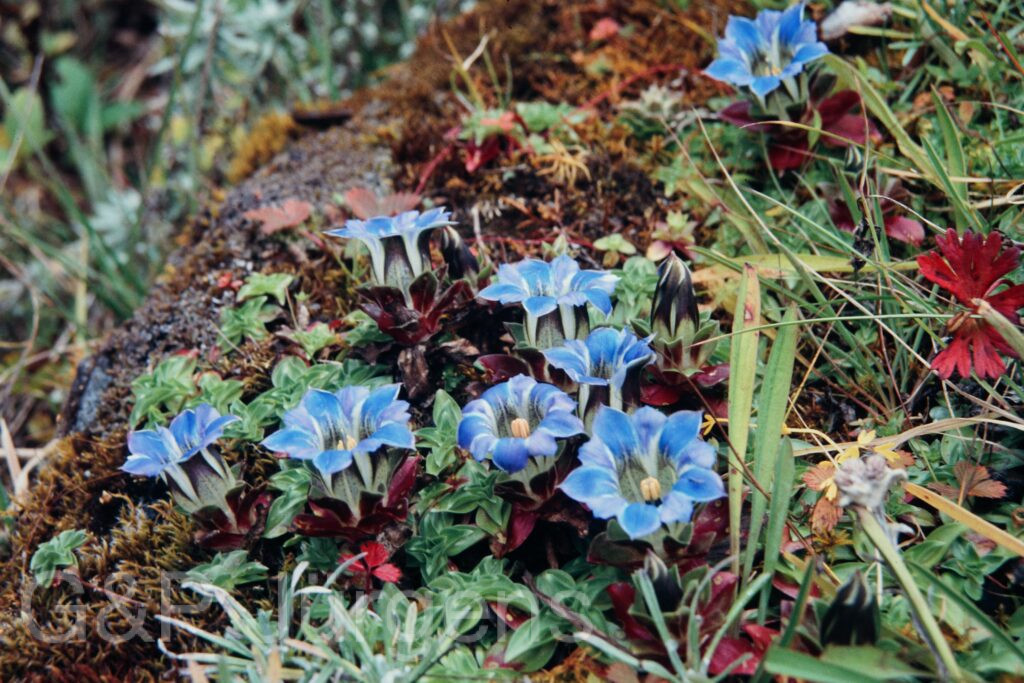
Bhutan2012 280
Bhutan Shele-La, 4100m September

Description

Gentiana oreodoxa is an eastern Himalayan and southwest Chinese alpine gentian recorded from China, Myanmar, Bhutan and India, a comparatively narrow distribution reflected in its modest GBIF tally of about 81 occurrences. It grows in alpine turf, open grassy slopes and rocky meadows of the high mountains, characteristically at and above 4000 m. The plants photographed at Chele-La (about 4000 m, October) and Shele-La (about 4100 m, September) in Bhutan exemplify its preference for short alpine grassland near the upper passes, where it flowers late in the season as autumn approaches.

The species is a small tufted perennial with a short rootstock giving rise to clustered, prostrate to ascending flowering stems and basal rosettes. The leaves are small, narrowly elliptic to oblanceolate, leathery and densely imbricate below, with cartilaginous-thickened margins. The flowers are solitary or few at the stem tips, the campanulate to narrowly funnel-shaped corolla deep blue with plicate folds (plicae) between the lobes, the calyx tubular with short teeth. The fruit is a stalked, bivalved capsule releasing numerous small seeds.

Gentiana oreodoxa belongs to the large autumn-flowering assemblage of dwarf alpine gentians (section Frigida and allies) that dominate the high turf of the Sino-Himalaya. These plants are well adapted to short growing seasons and intense radiation, opening their corollas in sunshine and closing in cold or cloud. With a restricted eastern Himalayan range it is a regional specialist; though not formally assessed as threatened, its confinement to high alpine habitats makes it a useful indicator of montane ecosystem integrity under a warming climate.

Author: Harry Sm. · Sources: POWO (Kew), GBIF, Flora of China, Flora of Bhutan, Annotated Checklist of the Flowering Plants of Nepal, Ho & Liu monograph of Gentiana
C.B.Clarke

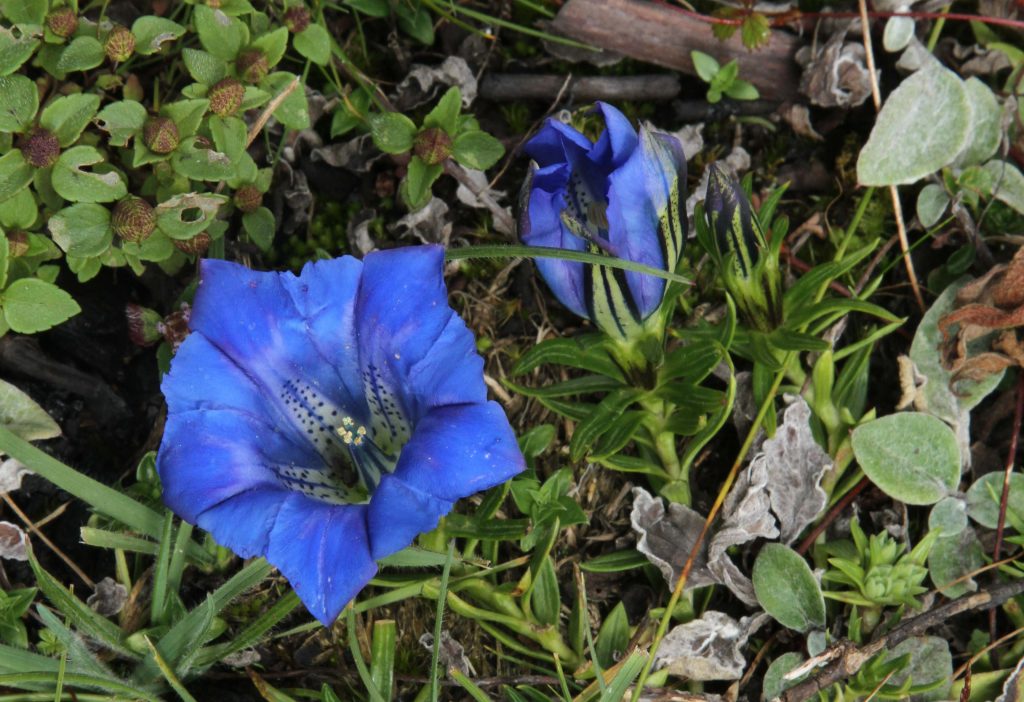
Bhutan2012 913
Bhutan Tumching-La 4100m, October

Description

Gentiana sikkimensis is an eastern Himalayan and Sino-Himalayan gentian recorded from China, India, Nepal and Bhutan, with nearly 200 georeferenced occurrences in GBIF. It is a characteristic plant of alpine turf, open moist meadows and the margins of dwarf-shrub heath in the high mountains, generally between about 3500 and 4500 m. The illustrated plant from Tumching-La in Bhutan at 4100 m, flowering in October, reflects the genus's late autumnal flowering, when these small gentians colour the alpine sward after the main summer bloom has passed.

It is a small tufted perennial herb with a short caudex and slender, ascending to decumbent flowering stems. The basal leaves form a rosette and are narrowly oblong to spathulate, while the cauline leaves are smaller, opposite and sessile, with cartilaginous margins. The flowers are solitary or few in terminal clusters, the campanulate to narrowly funnelform corolla deep blue with paler longitudinal bands and bearing well-developed plicae (folds) between the lobes. The calyx is tubular with unequal lobes, and the fruit is a stipitate, two-valved capsule releasing numerous small seeds.

The species belongs to Gentiana section Frigida (or allied sections of the autumn-flowering Asian gentians), a group much diversified across the Qinghai-Tibetan Plateau and its margins. It is widespread and not regarded as threatened, although alpine gentians of this kind are sensitive to overgrazing and to the upward shift of vegetation belts under a warming climate, making long-term monitoring of high-elevation populations worthwhile.

Author: C.B.Clarke · Sources: POWO (Kew), GBIF, Flora of Bhutan, Flora of China, Ho & Pringle monograph of Gentiana

Edgew.

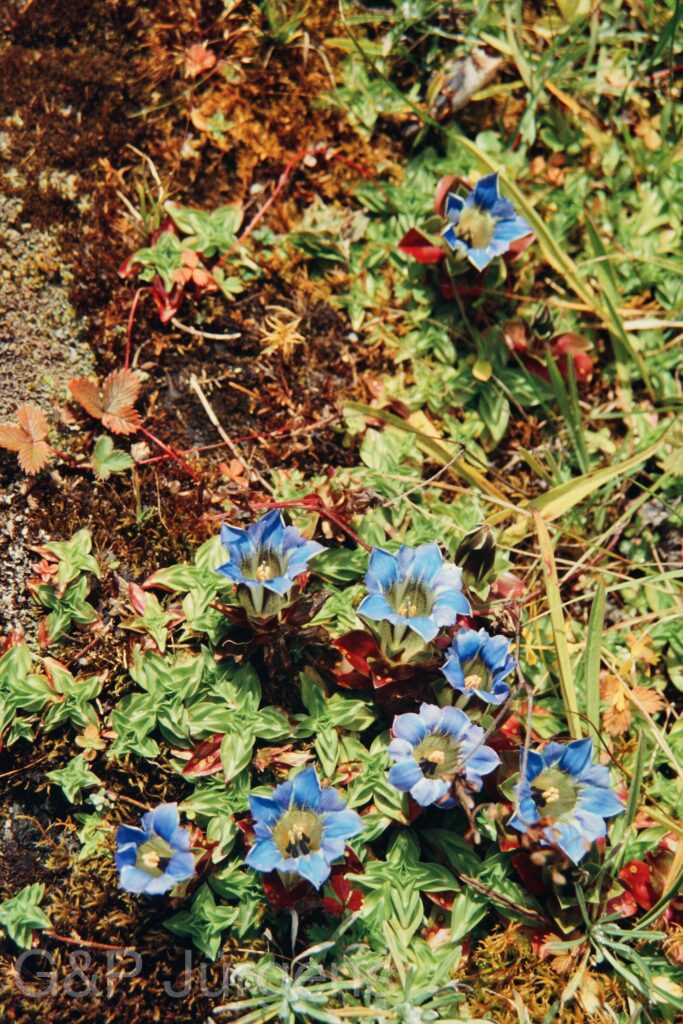
Garw 2005 356 ergebnis
India Garhwal Baganathi 3900m, September

Description

Gentiana stipitata Edgew. is a small alpine gentian endemic to the Sino-Himalayan region. GBIF data (some 239 occurrences) place it across the high mountains of China, India, Nepal, Bhutan and Taiwan, where it inhabits alpine and subalpine meadows, open turf, moist grassy slopes and the margins of seasonal snow-melt flushes. It is a plant of high elevations, typically between 3,000 and 4,500 m. The individual photographed at Baganathi in Garhwal (NW India) at 3,900 m in September captures it in late-season flower, when many high-altitude gentians provide a final burst of colour before the onset of winter.

The species is a low, tufted perennial herb with a slender rootstock and basal rosettes of narrowly lanceolate to spathulate leaves. The flowering stems are short and often several, each bearing a solitary, erect, narrowly funnel-shaped to campanulate corolla. The corolla is blue to purplish-blue, frequently with greenish or pale spotting in the throat, the five lobes alternating with smaller plicate folds (plicae) characteristic of section Frigida-allied gentians. The calyx is tubular with linear lobes, and the fruit is a stipitate capsule, the elongate gynophore (the stipe) giving the species its epithet and a useful diagnostic feature; seeds are numerous and small.

Gentiana stipitata belongs to the species-rich autumn-flowering Himalayan gentians and is distinguished from related taxa by its conspicuously stipitate capsule and floral proportions. Like many high-alpine gentians it is closely tied to short cool growing seasons and snow-influenced microhabitats. Though not assessed as threatened, its restricted high-elevation habitat makes it sensitive to alpine warming and grazing pressure across its range.

Author: Edgew. · Sources: POWO (Kew), Flora of China Vol. 16, Flora of Bhutan Vol. 2, GBIF, Ho & Liu: A Worldwide Monograph of Gentiana (2001)

King ex Hook.f.

Bhutan2012 261
Bhutan Shele-La, 4100m September

Description

Gentiana tibetica is a robust perennial gentian of the high Himalaya and Tibetan Plateau, native to China (notably Xizang and Qinghai), Bhutan and Nepal; the scattered European, Korean and Japanese GBIF records derive from cultivation and herbaria rather than wild populations. It occupies the alpine and upper subalpine zone, growing in moist meadows, grassy hillsides, scrub margins and open stony slopes. The cited collection from Shele-La in Bhutan at about 4100 m in September places it among the late-flowering high-altitude flora of the eastern Himalaya, where it endures cold nights and a short growing season.

The plant is a stout, erect perennial herb forming a basal rosette from a thick rootstock. The basal and lower stem leaves are large, broadly elliptic to oblong-lanceolate, prominently several-veined and narrowed to a sheathing base, the cauline leaves becoming smaller and bract-like upward. The flowers are numerous and sessile, crowded into dense terminal and axillary clusters subtended by leafy bracts. Each flower has a membranous calyx and a tubular to narrowly funnelform corolla that is pale yellowish-white to greenish, often spotted, with short erect lobes and small plicate folds (plicae) between them. The fruit is a stipitate bivalved capsule releasing numerous small winged seeds.

Gentiana tibetica belongs to section Cruciata of the genus, the cluster-flowered gentians, and was described by King from Hooker's material. The pale tubular flowers are pollinated chiefly by bumblebees adapted to the cold montane climate. Like several large-rooted gentians it has a history of medicinal use of its bitter roots. Widespread and locally common on the plateau and its Himalayan rim, it is not considered threatened.

Author: King ex Hook.f. · Sources: POWO (Kew), GBIF, Flora of China, Flora of Bhutan, Ho & Liu's monograph of the Gentians of China (Gentiana)

(G.Don) Griseb.

Bhutan2015 374
Bhutan Tumching-La 4000m, October
Bhutan2015 376
Bhutan Tumching-La 4000m, October
Bhutan2015 381
Bhutan Tumching-La 4000m, October
Bhutan2012 921
Bhutan Tumching-La 4000m, October

Description

Gentiana tubiflora is a dwarf alpine gentian of the Himalaya and the Tibetan plateau, recorded by GBIF from Nepal, India, Bhutan and China (a Malaysian datum is likely erroneous) across some 124 occurrences. It is a plant of high open ground: alpine turf, short grazed pastures, damp meadows, gravelly flushes and moist slopes near the upper limit of vegetation, typically between about 3500 and 4500 m. The specimen photographed at Tumching-La in Bhutan at 4000 m in October, flowering very late in the season, illustrates its tolerance of cold and its occupation of exposed, well-watered high-alpine grassland.

It is a small, tufted perennial herb forming low cushions or mats from a slender rootstock, with short, often prostrate to ascending leafy shoots. The leaves are small, opposite, linear to narrowly oblong, crowded and somewhat rigid, with cartilaginous margins. The flowers are solitary and terminal, the corolla narrowly tubular as the epithet indicates, with five short erect lobes alternating with small plicate folds, and coloured deep to pale blue. The calyx is tubular with narrow lobes, the stamens are inserted within the corolla tube, and the fruit is a stalked capsule that releases numerous minute seeds.

Gentiana is a large genus whose section of small-flowered, tube-corolla'd alpine species is especially diverse across the Sino-Himalaya, and G. tubiflora is a characteristic member of that high-elevation assemblage. The narrow tubular corolla and folds between the lobes channel access to specialised pollinators and protect the nectar, while the compact mat habit buffers the plant against wind and cold. The species is widespread and not regarded as threatened, forming a familiar element of late-flowering Himalayan alpine meadows.

Author: (G.Don) Griseb. · Sources: POWO (Kew), GBIF, Flora of China (Gentianaceae), Flora of Bhutan, Annotated Checklist of the Flowering Plants of Nepal, Ho & Liu monograph of Gentiana
(G.Don) Wall. ex Griseb.

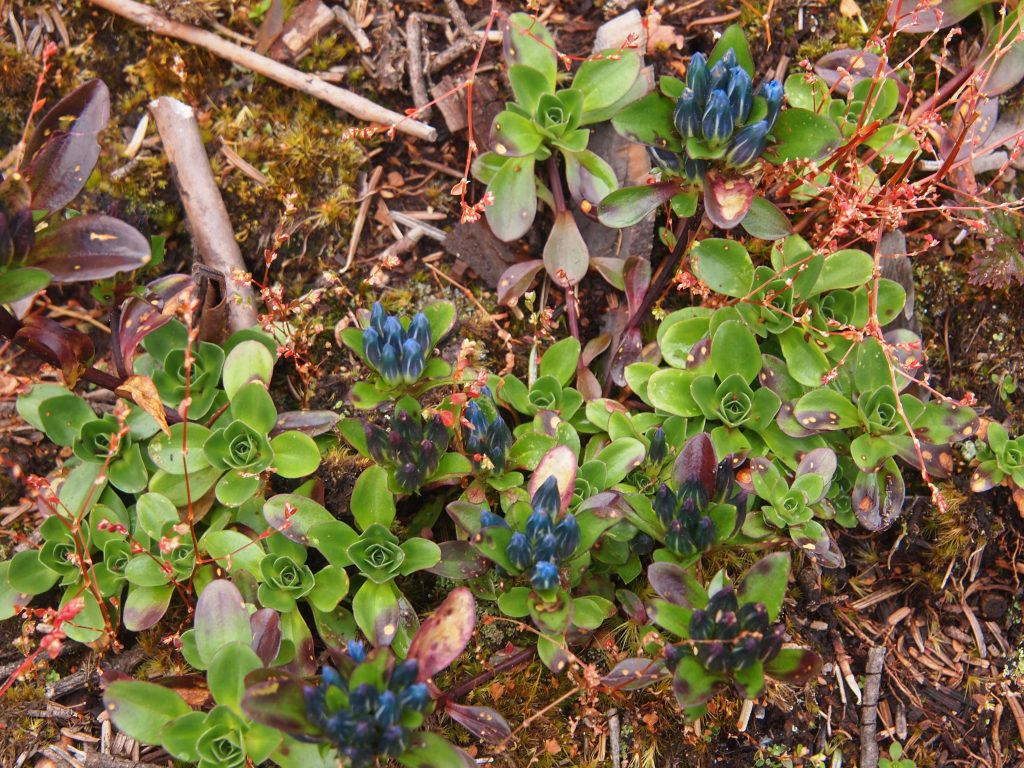
Garw 2005 330 ergebnis
India Garhwal Bagubasa 4100m, September

Description

Gentiana venusta is a Himalayan alpine gentian ranging through India, Nepal, Pakistan and Bhutan, with about 103 documented occurrences tracing a broad arc along the high Himalaya from the western to the eastern ranges. It is a strict alpine, growing on open grassy slopes, alpine meadows, moist turf and stony pastures above the treeline, generally between roughly 3500 and 4500 m. The illustrated plant from Bagubasa in Garhwal at 4100 m, flowering in September, exemplifies its late-monsoon to early-autumn flowering, when these dwarf gentians colour the short alpine sward after the snow-fed turf has been grazed and the meadows begin to dry.

It is a small tufted annual or short-lived perennial forming low rosettes from which arise several decumbent to ascending, few-flowered stems. The leaves are small, sessile, obovate to spathulate and crowded basally, the cauline pairs more distant and lanceolate, with a narrow cartilaginous margin. The flowers are solitary or few, terminal, with a tubular calyx whose lobes are unequal, and a narrowly funnelform to club-shaped corolla that is pale blue, whitish or yellowish, often spotted within, with short erect lobes and conspicuous plicate, fimbriate to bifid intervening folds (plicae). The fruit is a stipitate, bivalved capsule containing numerous minute, smooth seeds.

The species belongs to Gentiana sect. Chondrophyllae, the large group of small-flowered annual Himalayan and Sino-Himalayan gentians, a notoriously difficult complex in which G. venusta is distinguished by floral and plical characters. The name G. venusta (G.Don) Wall. ex Griseb. is accepted. Flowering is closely tied to snowmelt and monsoon timing, and pollination is by small insects; the diminutive seeds are dispersed by wind and water. It is widespread and of least conservation concern.

Author: (G.Don) Wall. ex Griseb. · Sources: POWO (Kew), GBIF, Flora of Bhutan Vol. 2, Flora of Pakistan, Flora of Nepal, Ho & Liu A Worldwide Monograph of Gentiana

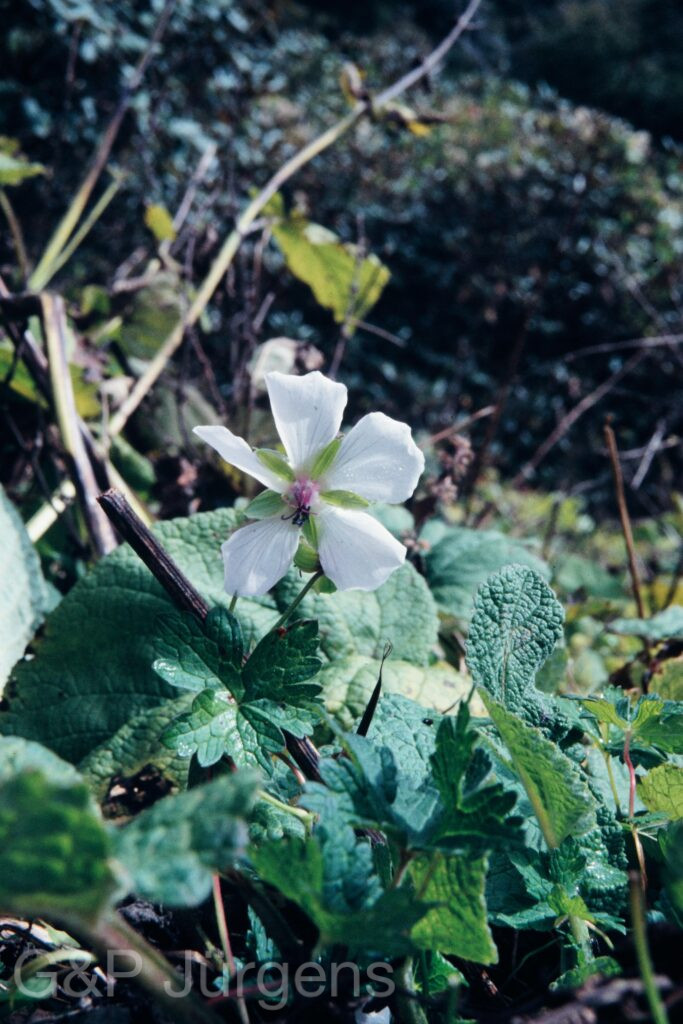
Sweet

Bhutan2012 218
Bhutan Shele-La, 3800m September
BhutanPG2011 679 01 01
Bhutan Luksur, 3700m July
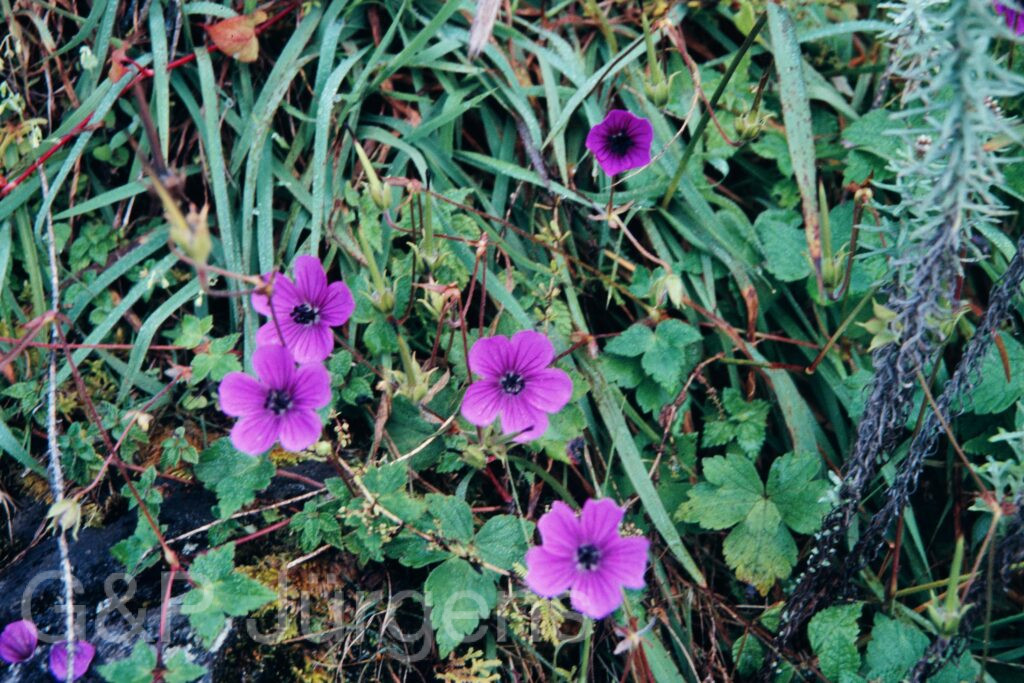
Nepal 95 389P688 ergebnis
Nepal Bahanjyang 3700m October

Description

Geranium lambertii is a perennial herb of the high Himalaya, distributed through China, India, Nepal, Bhutan and Pakistan, with about 304 georeferenced records (additional codes from Canada, Japan and Europe reflect its presence in cultivation). It inhabits subalpine and alpine meadows, forest clearings, shrubberies and moist rocky slopes, often among dwarf rhododendron and on the margins of birch forest. The collections cited from Bhutan at Shele-La (3800 m, September) and Luksur (3700 m, July) and from Bahanjyang in Nepal (3700 m, October) place it firmly in the 3500-4000 m belt, flowering through the late monsoon and into autumn.

It forms a clump of trailing to ascending stems from a stout rootstock. The leaves are long-petiolate and palmately divided into five to seven deeply lobed and toothed segments, sparsely hairy. The flowers are among the most distinctive in the genus, nodding and saucer- to bell-shaped, with five broad, satiny white petals usually flushed pink and contrasting with a dark crimson-purple centre; the ten stamens and the style cluster are conspicuous, and the pedicels recurve in fruit. The fruit is the typical geranium schizocarp, with a long beak that splits elastically to fling the seeds.

Geranium lambertii, named by Sweet, is a well-marked species of the Himalayan endemic assemblage and a long-cultivated ornamental prized for its pendent, dark-eyed blooms. Its mid- to late-season flowering supports bumblebees and other high-altitude pollinators, and the spring-loaded mericarps achieve effective ballistic seed dispersal. It is widespread and not considered threatened, though localised meadow populations are sensitive to heavy grazing.

Author: Sweet · Sources: POWO (Kew), GBIF, Flora of Bhutan, Annotated Checklist of the Flowering Plants of Nepal, Yeo Hardy Geraniums

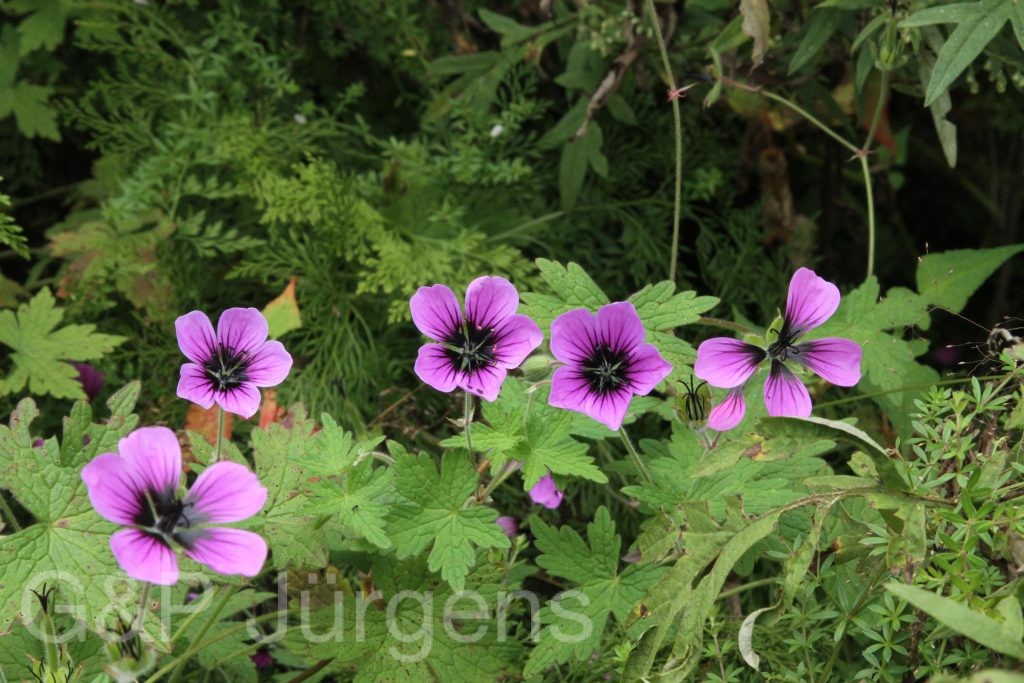
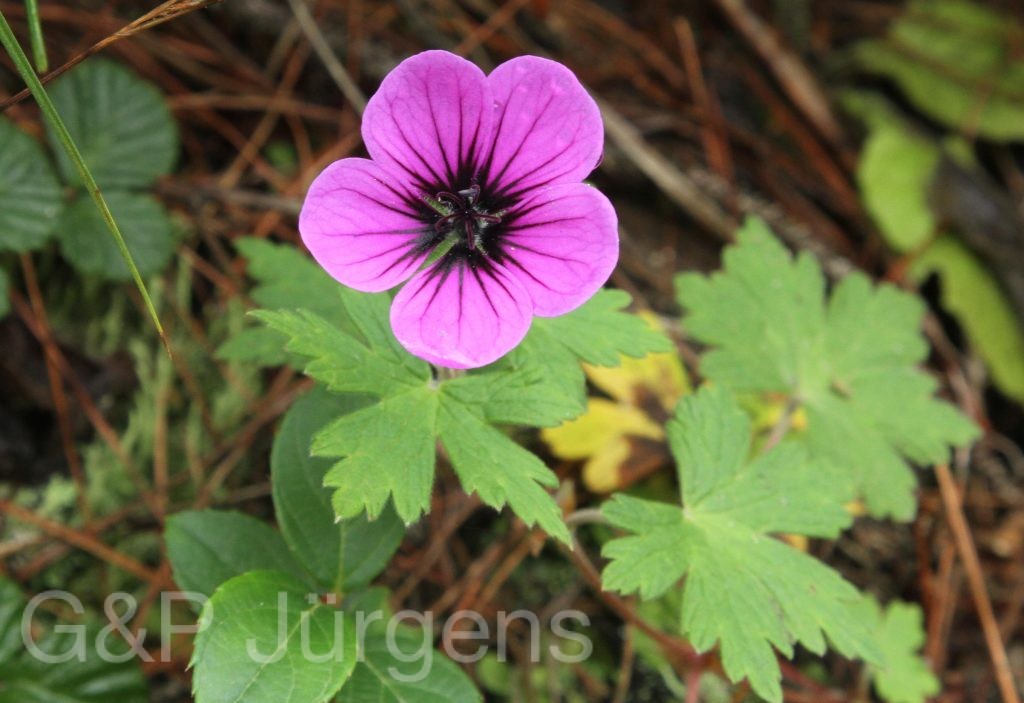
Yeo

Bhutan2012 336
Bhutan Haar-Valley, 3200m September
Bhutan2012 165
Bhutan Haar-Valley, 3200m September
Nepal 95 117 P205 ergebnis
Nepal south of Rupien La 3400m October

Description

Geranium procurrens is a trailing perennial of the central and eastern Himalaya, native to Nepal, Bhutan, India and adjacent China, with around 192 recorded occurrences and a scatter of cultivated or naturalised records farther afield reflecting its garden popularity. It grows in subalpine and upper temperate habitats, among forest margins, shrubberies, banks and open slopes where it scrambles over surrounding vegetation, flowering late into the autumn. The species is well represented in the high Himalaya, as shown by collections from the Haa (Haar) Valley in Bhutan at about 3200 m in September and from south of the Rupien La in Nepal at around 3400 m in October.

The plant is distinctive for its long, prostrate, procumbent stems that root at the nodes and form sprawling mats, giving the epithet procurrens. The leaves are long-petiolate with an orbicular blade deeply palmately five- to seven-lobed, the lobes themselves toothed or further divided, and marked above with a darker zone. The flowers are borne on slender pedicels and have five spreading obovate petals of deep magenta to purplish-crimson with darker veining and a near-black centre, surrounding ten stamens and a beaked ovary. The fruit is the characteristic geranium schizocarp, the long rostrate beak splitting elastically into five mericarps that catapult the seeds.

Geranium procurrens was described by Yeo, the monographer of the genus, and is closely allied to the magenta-flowered Himalayan species of section Polyantha. Its nodal rooting and stoloniferous habit, unusual among hardy geraniums, enable extensive vegetative spread and have made it a vigorous ground-cover plant in cultivation, where it has given rise to garden hybrids. In the wild it remains a locally common montane species of no particular conservation concern, valued ecologically as a late-flowering nectar source for high-altitude pollinators.

Author: Yeo · Sources: POWO (Kew), GBIF, Flora of Bhutan Vol. 2, Flora of Nepal, Flora of China Vol. 11, Yeo monograph Hardy Geraniums

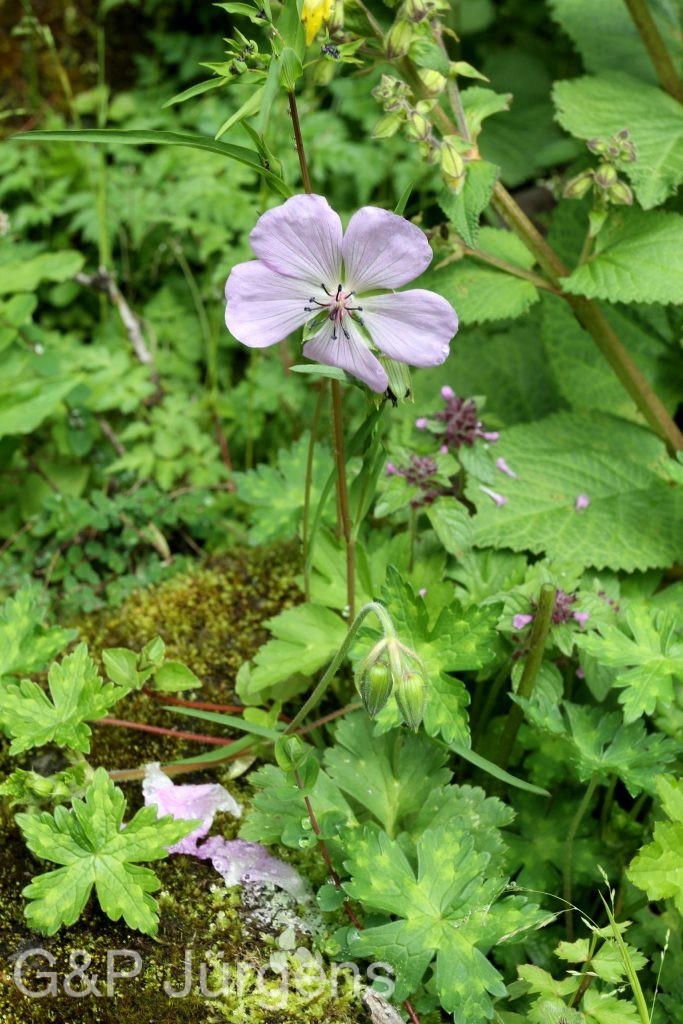
D.Don

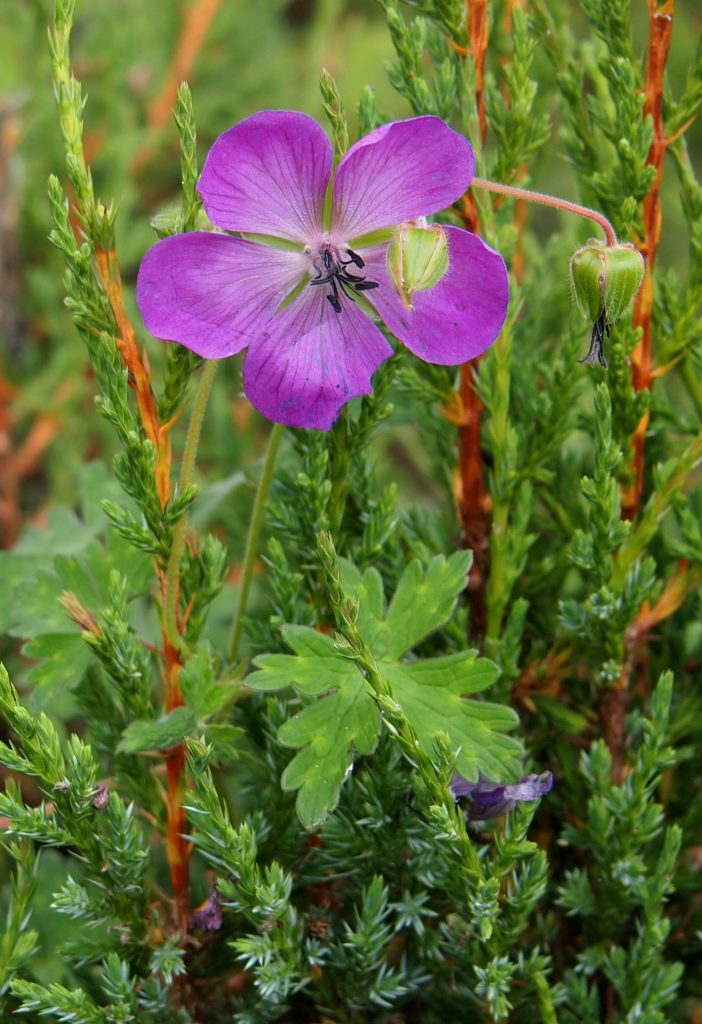
Garw 2005 271 ergebnis
India Garhwal Kunol 2650m, October

Description

Geranium wallichianum is a perennial cranesbill native to the Himalaya and adjacent mountain systems, distributed from Afghanistan and Pakistan through northern India (Kashmir, Himachal Pradesh, Uttarakhand) to Nepal, Bhutan, and southwestern China. It inhabits alpine and subalpine meadows, forest margins, open shrublands, and grassy slopes at elevations of 2,000–4,000 m, frequently forming extensive patches in disturbed and grazed areas. The species has been documented near Kunol in the Garhwal Himalaya at 2,650 m, where it flowers late into the autumn season in October.
The plant is a spreading to trailing perennial herb with a thick, woody rootstock and procumbent to ascending stems 20–60 cm long, covered in retrorse or patent hairs. Leaves are long-petiolate, orbicular in outline, 5–10 cm in diameter, deeply palmately divided into five to seven rhombic, further lobed and toothed segments. The flowers are large and showy, 3–4 cm in diameter, borne singly or in pairs on long, glandular-hairy pedicels. Petals are five, broadly obovate, typically violet-blue to lavender with a conspicuous white centre and darker veins radiating from the base. Stamens are ten with dark anthers. The fruit is a schizocarp with a persistent beak (rostrum) 2–3 cm long; at maturity the five mericarps separate elastically, each retaining a single seed.
Geranium wallichianum is among the most horticulturally significant Himalayan cranesbills, widely cultivated in temperate gardens worldwide since the nineteenth century. The cultivar 'Buxton's Variety' (syn. 'Buxton's Blue'), selected for its clear blue flowers with prominent white eyes, has received the Royal Horticultural Society's Award of Garden Merit and remains one of the most popular autumn-flowering hardy geraniums. In its native range, the species is ecologically important as a ground-cover plant that stabilizes soil on slopes and provides late-season nectar for pollinators. It is named after the Danish botanist Nathaniel Wallich, who collected extensively in Nepal and India.

Author: D.Don · Sources: POWO (Kew), GBIF, Flora of China Vol. 11, Yeo: Hardy Geraniums (2002), Annotated Checklist of the Flowering Plants of Nepal