Tag:

Autumn

L.

Bhutan2012 1208
Bhutan Trashigang 1150m, October

Description

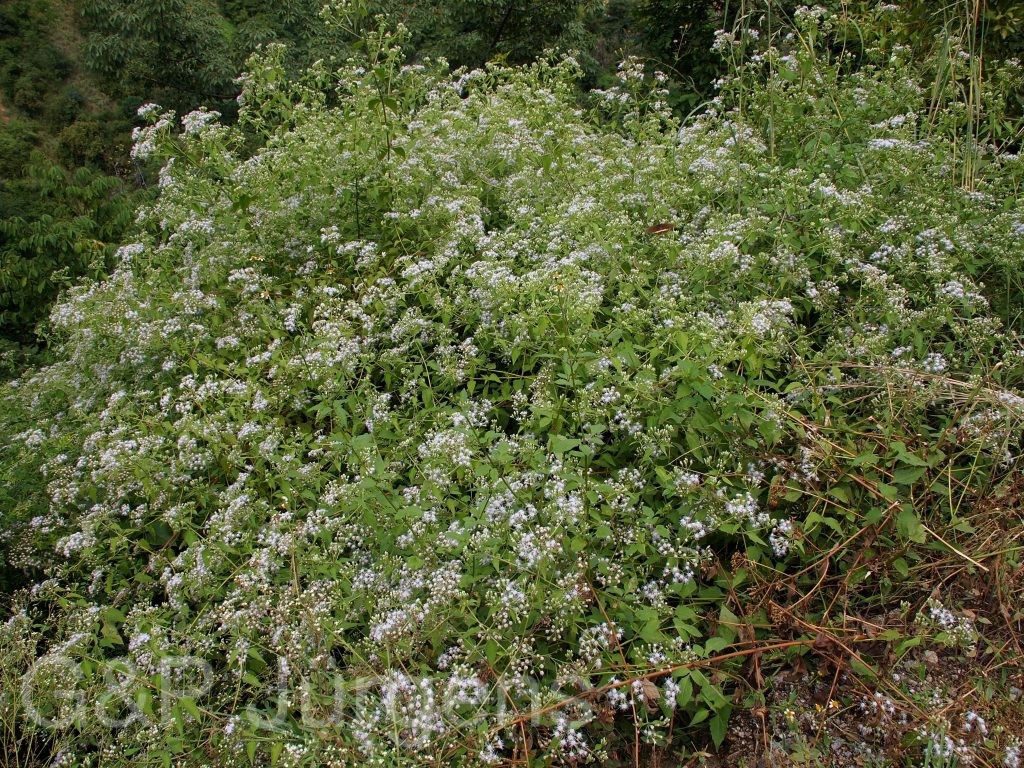
Eupatorium cannabinum, hemp-agrimony, is a wide-ranging temperate herb whose centre of distribution lies across Europe and western Asia; GBIF records overwhelmingly from France, Britain, the Netherlands, Germany, Belgium, Austria and many other European countries total over 687,000 occurrences, attesting to its abundance. In Asia related populations extend into the Himalaya, and the species was photographed at Trashigang in eastern Bhutan at 1150 m in October, in the warm subtropical lower valleys. Throughout its range it favours damp, fertile ground: marsh margins, ditches, wet meadows, streambanks and moist woodland clearings, flowering in late summer and autumn.

It is a robust erect perennial herb 0.5 to 1.5 m tall, with stout, often reddish, finely downy stems arising from a short rhizome. The opposite leaves are palmately divided into three to five lanceolate, toothed, hemp-like segments (hence cannabinum), the uppermost sometimes simple. The numerous small flower heads are crowded into dense, flat-topped terminal corymbs; each narrow head contains only a few tubular florets, discoid and dull pink to mauve, with conspicuously exserted bifid style branches giving the inflorescence a soft fuzzy appearance. The fruit is a small black five-angled cypsela bearing a pappus of fine white bristles.

The species belongs to tribe Eupatorieae; following segregation of many New World species into other genera, Eupatorium s.str. is now a small mainly Eurasian and North American group, of which E. cannabinum is the principal European representative. Its nectar-rich heads are heavily visited by butterflies, hoverflies and bees, an important late-season pollinator resource. It contains pyrrolizidine alkaloids and has a long history in folk medicine. Common on damp disturbed ground, it is of no conservation concern.

Author: L. · Sources: POWO (Kew), GBIF, Flora Europaea, Flora of Bhutan, Eupatorieae systematics (King & Robinson monograph)
DC.

Bhutan2012 1009
Bhutan Trithangebe, 1000m October
Bh2008 512 G786
Bhutan Chongsakha, 1850m April

Description

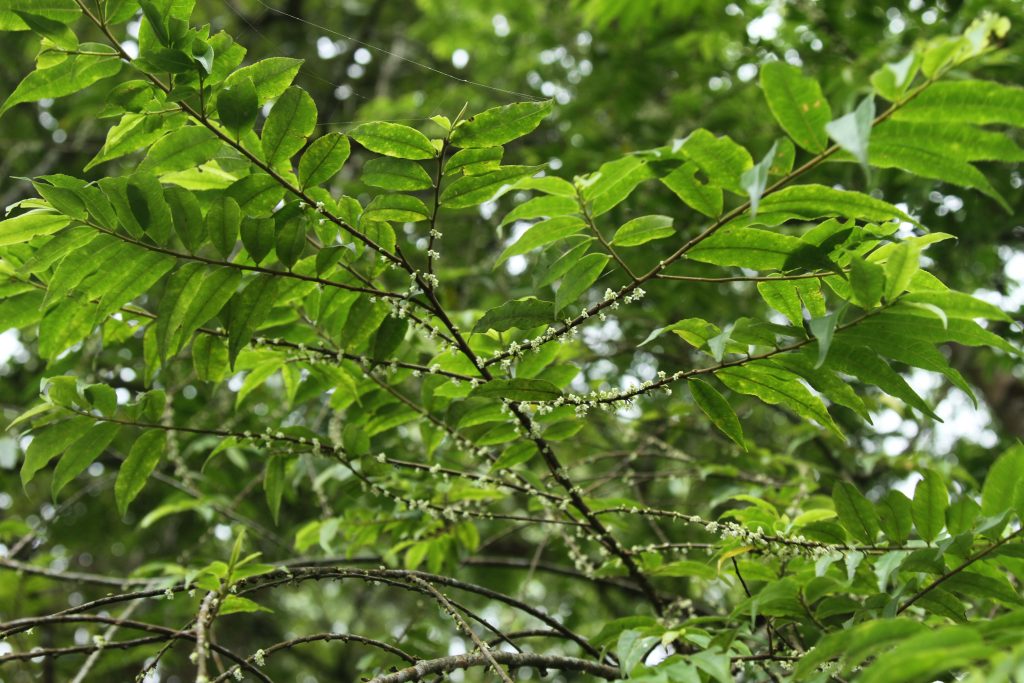
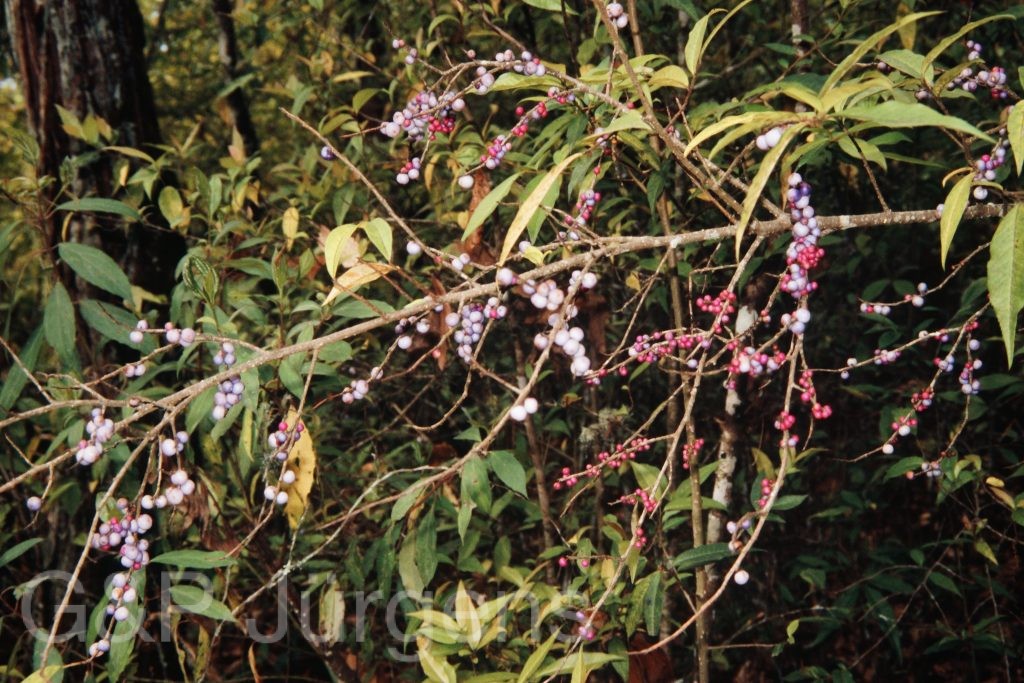
Eurya acuminata is an evergreen shrub or small tree widely distributed through tropical and subtropical Asia, ranging from the Himalaya across southern China, Taiwan and Japan to Indochina, the Malesian archipelago and New Guinea; its roughly 2614 GBIF occurrences span India, Nepal, Bhutan, China, Thailand, Malaysia, Indonesia and the Philippines. In Bhutan it occupies a broad altitudinal range, as recorded at Trithangebe around 1000 m in October and at Chongsakha near 1850 m in April. It grows in evergreen broad-leaved forest, along forest margins and in secondary woodland, often as an understorey or successional component of warm, moist forests.

The plant is a much-branched evergreen with leathery, alternate, distichous leaves that are lanceolate to oblong with the long-acuminate apex recorded in the epithet and a finely serrate margin; the young twigs are often two-edged. The species is dioecious, bearing small, axillary, fragrant flowers that are creamy to greenish-white with five sepals, five petals, and in male plants numerous stamens, while female flowers carry a superior ovary with a short divided style. The fruit is a small, globose, fleshy black berry containing several minute seeds, dispersed by birds.

Eurya, formerly placed in Theaceae and now referred to Pentaphylacaceae, is a large genus of Old World shrubs distinguished by its dioecy, bracteolate flowers and berry fruits; E. acuminata is among the most widespread and variable species, with several recognised varieties. As an abundant, generalist forest component spanning a vast area, it is of least concern, and its dense foliage and wood find local use as fuel, hedging and minor timber.

Author: DC. · Sources: POWO (Kew), GBIF, Flora of China Vol. 12, Flora of Bhutan Vol. 1, Flora of Nepal, Flora Malesiana (Theaceae/Pentaphylacaceae)

Exacum teres

by GP Jürgens

Wall.

Nepal 95 255 P438 ergebnis
Nepal Valley of Buri Gandaki, Kholabensi 2100m October

Description

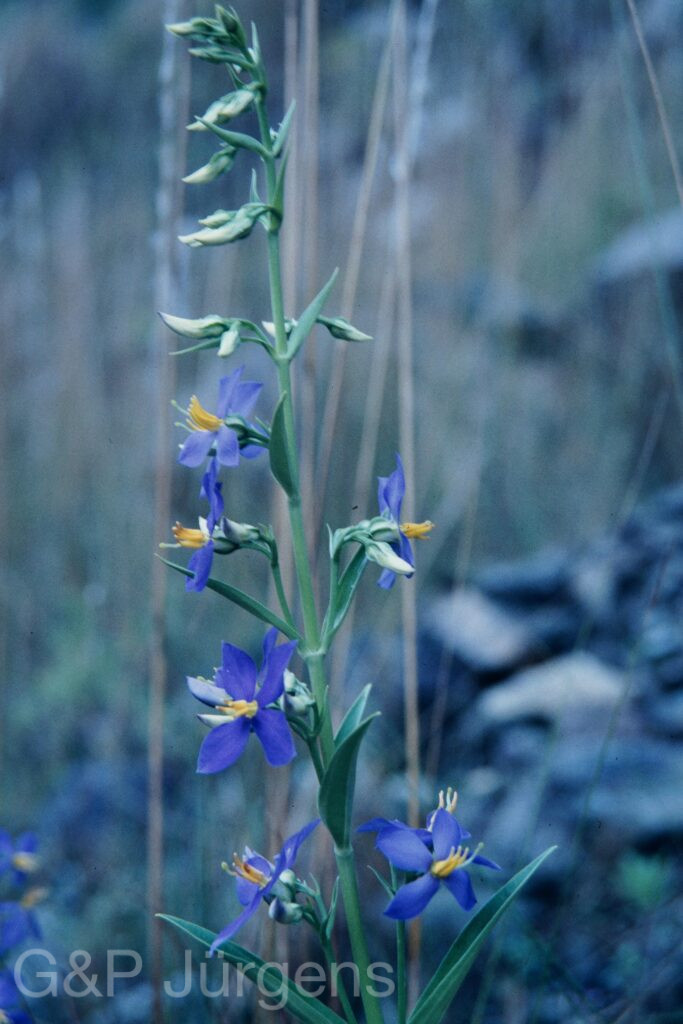
Exacum teres is a slender annual gentian of the eastern Himalaya and adjacent Indo-Burmese region, documented by GBIF (about 125 occurrences) from India, Nepal, Bangladesh, China, Myanmar and Bhutan. It grows in moist, open habitats of the warm-temperate and subtropical belt, including grassy banks, terraced field margins, forest clearings and damp roadside slopes, typically below the main forest line. The illustrated material was gathered in the valley of the Buri Gandaki at Kholabensi in Nepal at about 2100 m in October, a montane locality near the upper edge of its altitudinal range, which extends from the lowland hills up into the cooler middle hills.

The plant is an erect, glabrous herb with a quadrangular, often narrowly winged stem (the epithet teres referring to its terete-cylindric aspect) that branches above. The leaves are opposite, sessile to subsessile, ovate to lanceolate, entire, and conspicuously three- to five-nerved from the base. The flowers are borne in a lax terminal and axillary cyme; each has a four-lobed calyx with keeled, narrowly winged segments, and a rotate to broadly campanulate corolla that is blue to violet with a deeper throat. The four stamens bear large yellow anthers that open by terminal pores, a diagnostic feature of Exacum. The bilocular ovary matures into a small, septicidal capsule containing numerous minute, reticulate seeds.

Exacum is a palaeotropical genus centred on Sri Lanka, southern India and Madagascar, with E. teres representing the small Himalayan element of the lineage. As a widespread annual of disturbed and semi-natural grassland it is not considered threatened. Its poricidal anthers and blue corollas indicate buzz-pollination by bees, and several relatives are of horticultural interest as the cultivated Persian violets.

Author: Wall. · Sources: POWO (Kew), GBIF, Flora of China, Flora of Bhutan, Annotated Checklist of the Flowering Plants of Nepal, Klackenberg's monograph of Exacum (Gentianaceae)

Moench

Bhutan2012 155
Bhutan Haar-Valley, 3100m September

Description

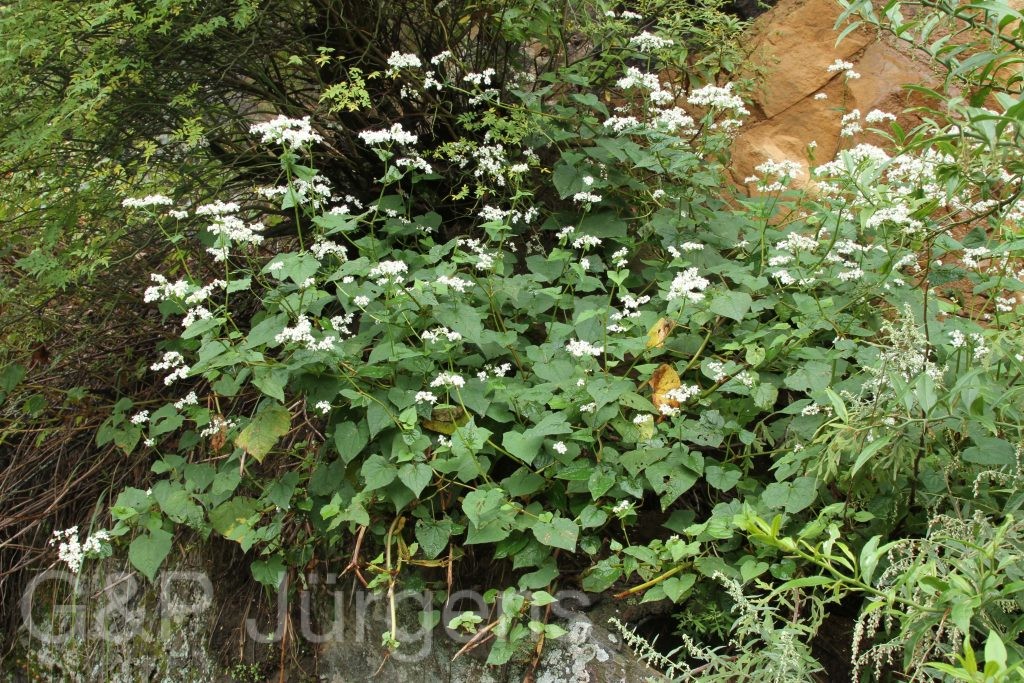
Fagopyrum esculentum, common buckwheat, is a domesticated annual of South-East Asian and Sino-Himalayan origin now cultivated and naturalised across the temperate world, accounting for its more than 72,000 GBIF occurrences in France, the Netherlands, Germany, Russia, China, Korea, Japan, the United States and Canada among many others. In the Himalaya it is a traditional mountain crop grown on terraced fields and as an escape on disturbed ground at middle to high elevations. The record from the Haa Valley of western Bhutan at 3100 m in September captures it in flower and early fruit at the close of a typical subalpine growing season.

It is an erect, glabrous annual 30-90 cm tall with reddish, somewhat fleshy stems and characteristic membranous ochreae sheathing the nodes. The leaves are alternate, broadly triangular-cordate to hastate, the lower ones petiolate and the upper sessile and clasping. The flowers are small, borne in dense axillary and terminal corymbose racemes, with a five-parted white to pinkish perianth, eight nectary-bearing stamens and a tristylous heterostylous breeding system promoting outcrossing. The fruit is a sharply three-angled, smooth brown achene (the buckwheat "grain") much exceeding the persistent perianth.

Within Polygonaceae the genus Fagopyrum is distinguished by its trigonous achenes and heterostyly; F. esculentum is the principal cultivated species, complemented by Tartary buckwheat F. tataricum. It is insect-pollinated, valued as a nectar source and pseudocereal, and is of agricultural rather than conservation interest, persisting widely as a weedy escape from cultivation.

Author: Moench · Sources: POWO (Kew), GBIF, Flora of China, Flora of Bhutan, Flora Europaea, Ohnishi monograph of Fagopyrum

Wall. ex Benth.

Bhutan2015 109
Bhutan Galephu 500m, October

Description

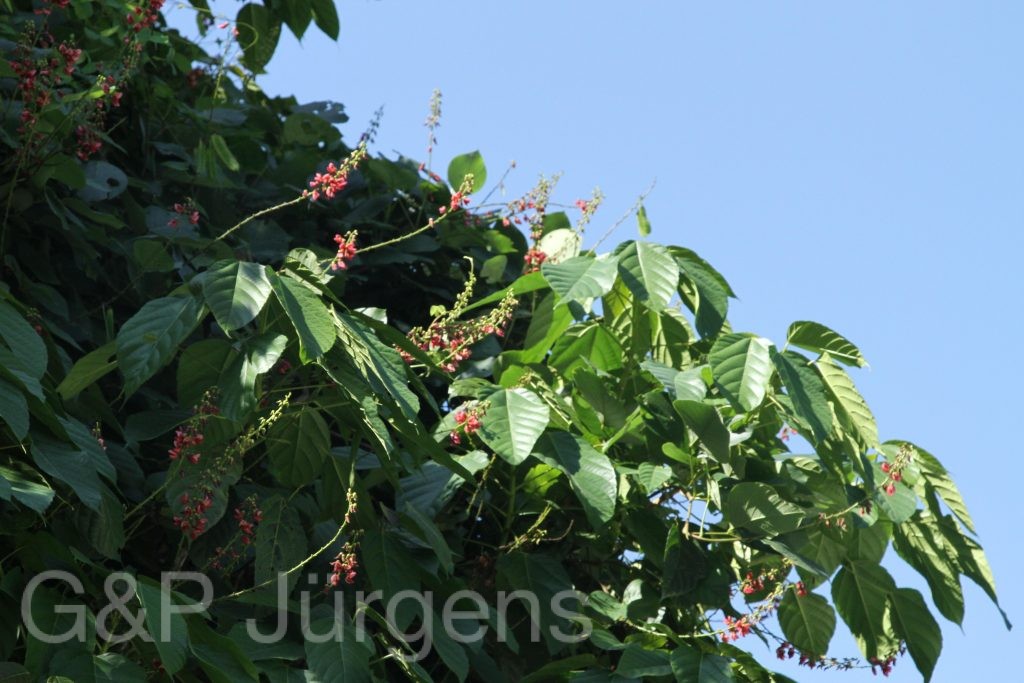
Flemingia paniculata Wall. ex Benth. is a subshrubby legume of the warm submontane belt of tropical and subtropical Asia, recorded from Thailand, Myanmar, India, Nepal, Malaysia, China, Bhutan, Laos and the Philippines, with about 106 georeferenced occurrences in GBIF. It grows in open forest, scrub, grassy slopes, forest margins and disturbed ground at low to moderate elevations, broadly from near sea level to around 1500 m. The photographed plant was found at Galephu in southern Bhutan at about 500 m in October, in the hot, humid foothill zone where the species flourishes in seasonally dry secondary vegetation.

The plant is an erect or ascending perennial herb or small shrub with ribbed, often pubescent stems. The leaves are characteristically unifoliolate (reduced to a single leaflet, unlike the trifoliolate condition of many congeners), the blade ovate to elliptic, prominently veined and frequently glandular, subtended by persistent stipules. The flowers are borne in dense terminal and axillary panicles; the papilionaceous corolla is typically purplish to pinkish, enclosed by a calyx whose lobes are unequal. The fruit is a small, inflated, two-seeded legume that is somewhat hairy and gland-dotted, dehiscing to release the seeds.

Flemingia belongs to the tribe Phaseoleae and is closely allied to Cajanus, distinguished by its glandular indumentum and pod structure; the genus has medicinal and dye uses across its range, several species yielding the orange resin known as waras. Plants help colonise disturbed and degraded slopes and, as nitrogen-fixing legumes, contribute to soil enrichment. The species is widespread and not of conservation concern, though its foothill habitats face pressure from agricultural expansion.

Author: Wall. ex Benth. · Sources: POWO (Kew), GBIF, Flora of China, Flora of Bhutan, Flora of Thailand, Lewis et al. Legumes of the World

Roxb.

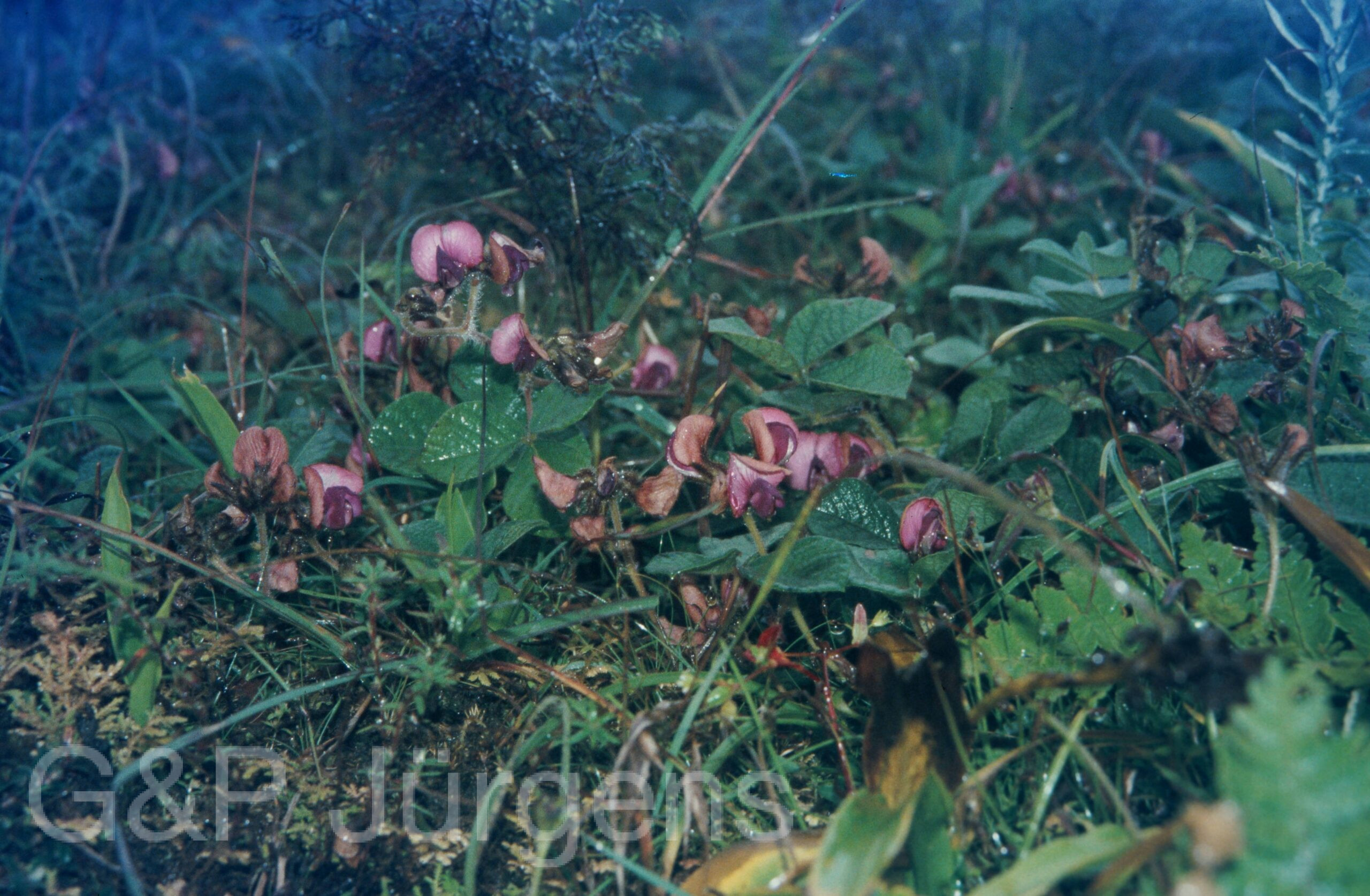
Description

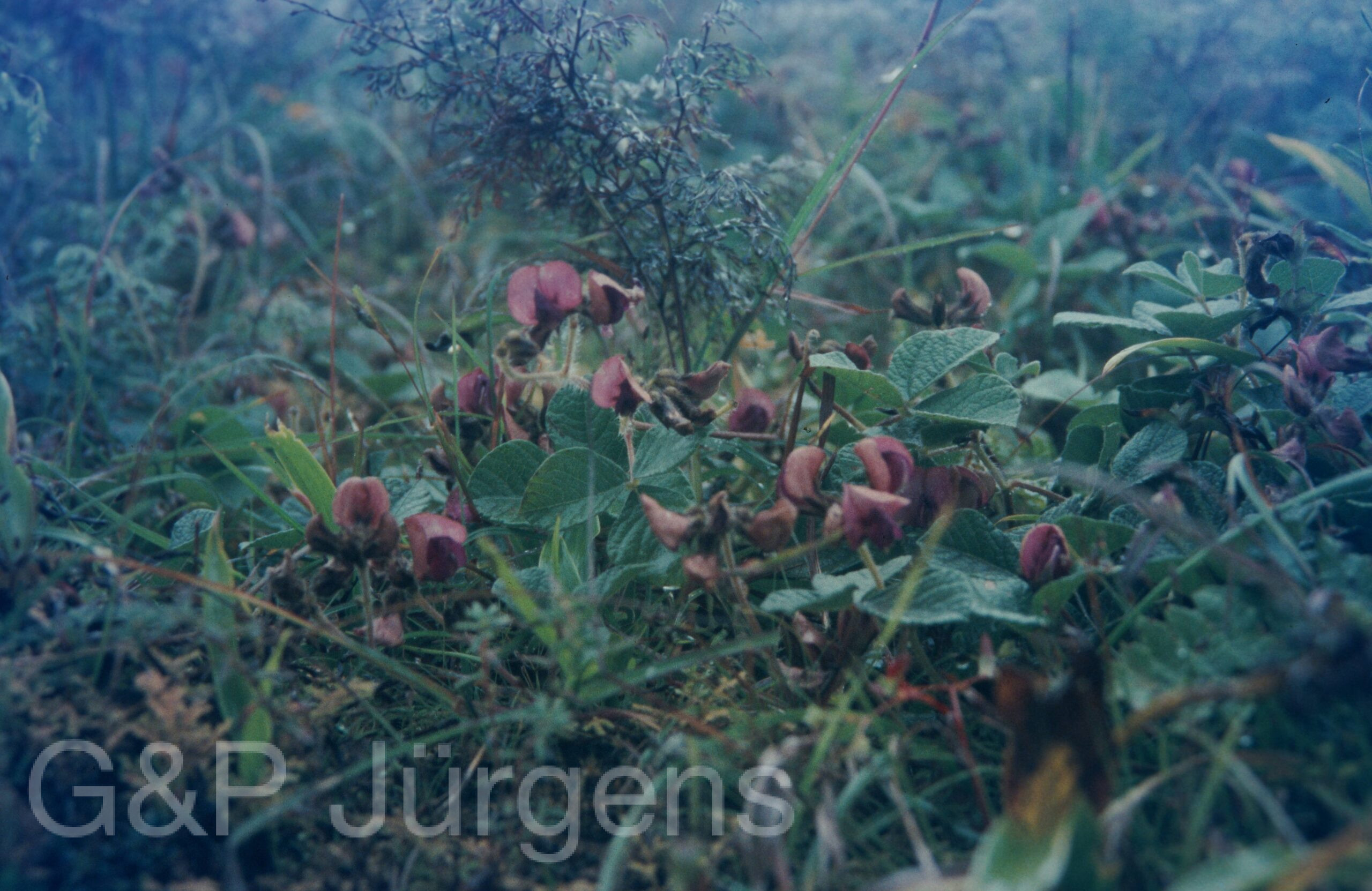
Flemingia procumbens is a prostrate, sub-Himalayan legume distributed from the western Himalaya eastward through Nepal into southern China, with scattered records reaching Laos and New Guinea. GBIF documents some 61 occurrences across India, China, Nepal, Laos and Papua New Guinea, reflecting a discontinuous range spanning warm-temperate montane slopes and submontane grasslands. The species favours open, sunny banks, terraced field margins, dry hill grasslands and stony, well-drained soils, typically flowering in late summer and early autumn. The material illustrated here was gathered in India at Garhwal, Simkarok, at about 2600 m in September, an elevation characteristic of its mid-altitude preference along the outer Himalayan ranges.

The plant is a low perennial herb or subshrub with trailing to decumbent, often somewhat woody stems arising from a stout rootstock, the younger branches finely pubescent. The leaves are pinnately trifoliolate with prominent stipules, the leaflets elliptic to obovate, entire-margined and glandular-punctate beneath, borne on short petiolules. Small papilionaceous flowers, pink to purplish, are aggregated in dense axillary or terminal racemes subtended by bracts; the calyx is deeply lobed and the standard petal exceeds the wings and keel. The fruit is a small, turgid, two-seeded pod which dehisces explosively at maturity, releasing minute, smooth seeds.

Flemingia is a genus of the tribe Phaseoleae closely allied to Moghania and frequently subsumed within or segregated from it by various authors; the gland-dotted foliage and inflated pods are diagnostic of the group. Several species yield the orange resinous dye and dusting powder known as waras, harvested from glandular hairs of the inflorescences. F. procumbens has no recognised conservation concern given its broad if sparse distribution, though montane grassland habitats face pressure from grazing and land conversion.

Author: Roxb. · Sources: POWO (Kew), GBIF, Flora of China, Flora of British India, The Legumes of the Indian Subcontinent, A Revision of the Genus Flemingia (Leguminosae-Papilionoideae)

(L.) W.T.Aiton

Garw 2005 246 ergebnis ergebnis
India Garhwal Sitel 1850m, September

Description

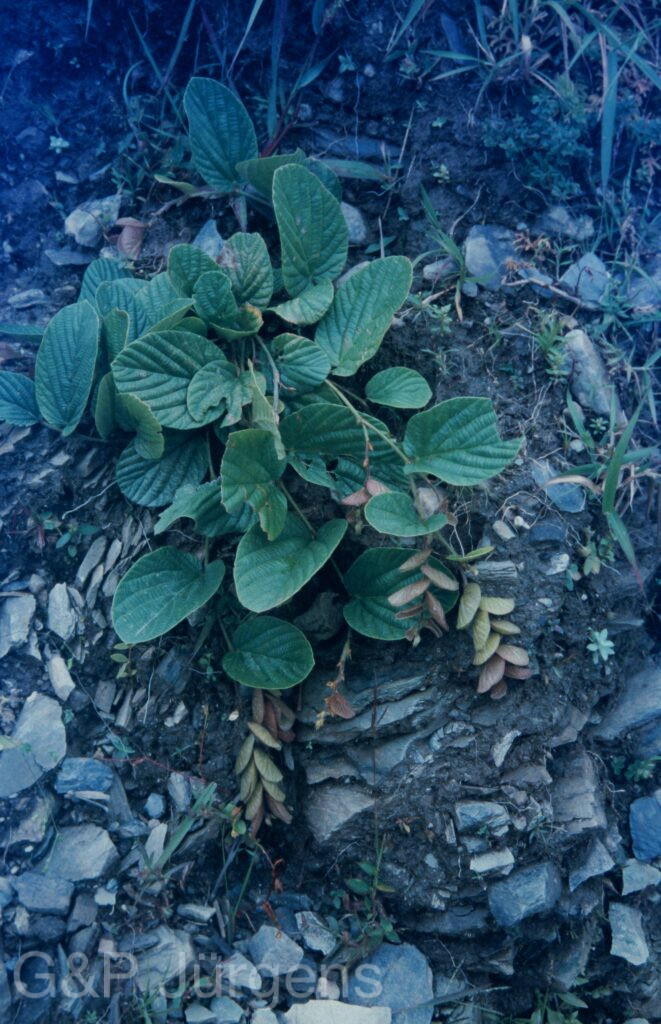
Flemingia strobilifera is a widespread shrub of tropical and subtropical Asia, now pantropical through introduction, recorded from India, China, Nepal, Myanmar, Thailand, Taiwan, the Philippines, Malaysia, Indonesia, Papua New Guinea and numerous tropical American localities; its roughly 3874 georeferenced records make it by far the most abundantly documented species in this group. It thrives in open forest, scrub, grassland, roadsides and disturbed ground from the lowlands to about 1900 m. The plant photographed at Sitel in the Garhwal Himalaya at 1850 m, flowering in September, marks the upper subtropical edge of its Himalayan range.

It is an erect, branching shrub to about 1-2 m with finely pubescent, angled stems. The leaves are simple (not trifoliolate as in most relatives), ovate to elliptic, acuminate, with three prominent basal veins and entire margins. The species is at once recognised by its inflorescence: the small purplish papilionaceous flowers are enclosed within conspicuous, accrescent, folded and reniform bracts that overlap to form a cone- or strobilus-like cluster, hence the epithet strobilifera. The fruit is a small, inflated, two-seeded pod hidden among the persistent bracts.

Flemingia, of tribe Phaseoleae, is distinguished from Cajanus and allies by its glandular pods and, in this species, the showy enclosing bracts. F. strobilifera is highly variable and several infraspecific forms have been recognised. It is widely used in folk medicine and as a green manure and cover crop, and its nitrogen-fixing root nodules aid soil improvement on poor ground. A vigorous coloniser, it is locally regarded as weedy and is of no conservation concern.

Author: (L.) W.T.Aiton · Sources: POWO (Kew), GBIF, Flora of China, Flora of British India, Annotated Checklist of the Flowering Plants of Nepal, Mukerjee revision of Flemingia

Lour.

Bhutan2012 662
Bhutan Chele-La 3400m, September

Description

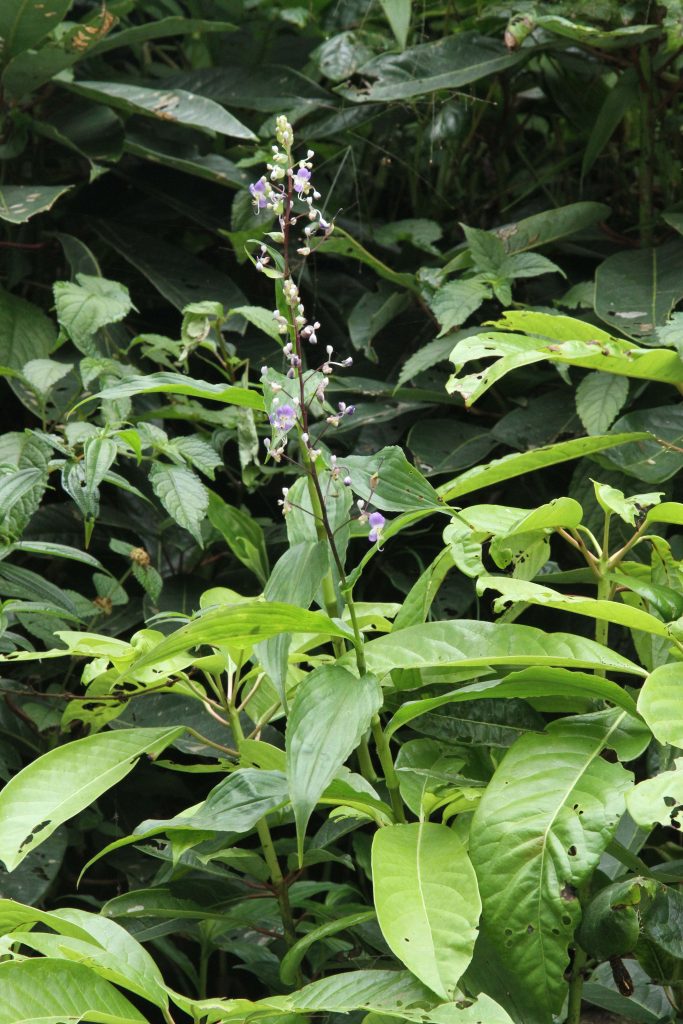
Floscopa scandens is a perennial spiderwort with a very broad Indo-Malesian to Australasian range, documented by GBIF (2373 occurrences) from China, India, Indochina, the Malay Archipelago, the Philippines, New Guinea, Sri Lanka, Bangladesh, Nepal and Australia. It is a plant of wet, shaded ground, growing along streams, ditches, marshes, paddy margins and damp forest floors, predominantly at low and middle elevations though ascending higher locally. The cited record from Chele-La in Bhutan at 3400 m in September lies at the upper end of its range, where it persists in moist hollows and seepage zones flowering into the late monsoon.

The species is a soft, somewhat straggling to decumbent or scrambling herb with elongate, often reddish stems rooting at the lower nodes. The leaves are alternate, sessile or shortly petiolate, lanceolate to elliptic, with closed sheathing bases that are usually ciliate at the mouth. The inflorescence is a dense, much-branched terminal thyrse or panicle of small flowers subtended by membranous bracts and bracteoles; each flower has three free sepals, three free blue to pinkish or whitish petals, and typically six stamens, the filaments often bearded. The fruit is a small, two-locular, laterally compressed capsule containing few seeds.

Floscopa is distinguished within Commelinaceae from the closely related Commelina and Tradescantia by its many-flowered, paniculate inflorescence not enclosed in a folded spathe, and by its compressed bilocular capsule. The genus favours permanently moist, often disturbed wetland habitats and is pollinated by small insects. Widespread and ecologically plastic, F. scandens is common throughout its range and faces no conservation threat.

Author: Lour. · Sources: POWO (Kew), GBIF, Flora of China Vol. 24, Flora of Bhutan Vol. 3, Flora of Nepal, Faden Commelinaceae systematic studies

D.Don

Garw 2005 166 ergebnis ergebnis
India Garhwal Shertoli 3200m, September

Description

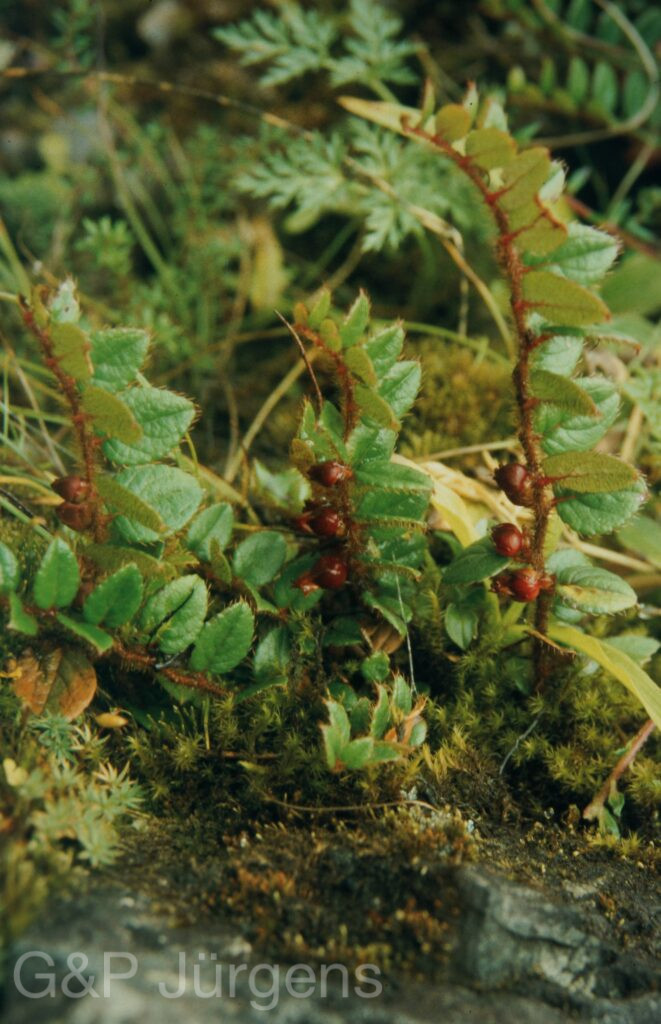
Gaultheria nummularioides D.Don is a prostrate, creeping dwarf shrub of the temperate and subalpine Himalaya and adjacent mountains of East and Southeast Asia. Its range extends through Nepal, NE and NW India, Bhutan, Myanmar and SW China, with outlying records in Malesia (Indonesia, Malaysia) and cultivated occurrences in Japan, Great Britain and the United States; GBIF documents over 1,200 collections across this wide span. It typically grows between 2,000 and 4,000 m in mossy forest margins, on damp rocks, banks and epiphytically on tree trunks, as recorded for the photographed plant from Garhwal at Shertoli, 3,200 m, in September. It favours humid, shaded, acidic substrates and is a characteristic component of Rhododendron–oak understorey and bryophyte-rich rock communities.

The plant forms wiry, much-branched, reddish-brown procumbent stems clothed in stiff brown bristles, rooting at the nodes to form dense mats. Leaves are small, distichous, ovate to rounded (nummularioides referring to the coin-like blade), 5–12 mm long, coriaceous, dark green and glossy above, the margins finely toothed and ciliate. Flowers are solitary and axillary, pendent on short pedicels, the corolla campanulate to urceolate, white tinged pink, 4–5 mm long with five short recurved lobes; the calyx is often reddish. The fruit is a fleshy blue-black berry-like capsule enclosed by the accrescent succulent calyx.

The genus Gaultheria (subfamily Vaccinioideae) is notable for aromatic foliage rich in methyl salicylate; G. nummularioides is locally used as a fragrant and medicinal plant. Its broad Himalayan-to-Malesian distribution illustrates the floristic continuity of the Sino-Himalayan ericaceous element. The species is common and not of conservation concern across most of its range.

Author: D.Don · Sources: POWO (Kew), GBIF, Flora of China Vol. 14, Flora of Bhutan Vol. 2, Flora of Nepal, Airy Shaw: The Gaultheria-Pernettya complex (Kew Bulletin)

Royle

Nepal 95 380 P673 ergebnis
Nepal Jaisuli Kund 4200m, October

Description

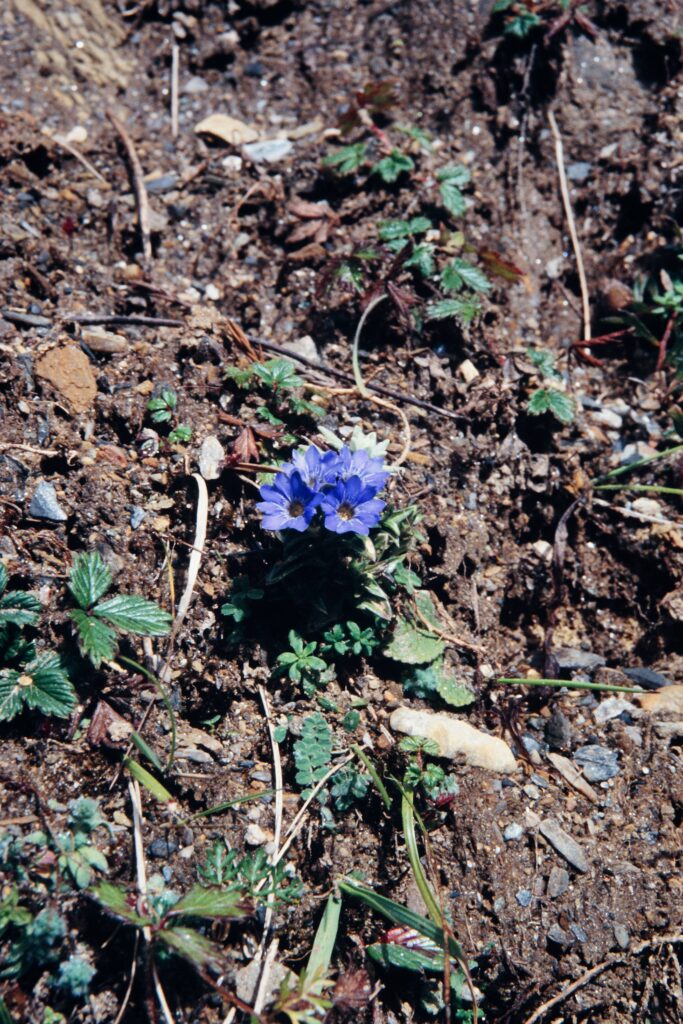
Gentiana coronata is a Himalayan alpine gentian distributed across the western and central Himalaya, from Pakistan through northern India (Kashmir, Himachal Pradesh, Uttarakhand) to Nepal. GBIF records 52 occurrences from India, Pakistan, and adjacent regions. The species typically grows in alpine meadows, moist grassy slopes, and along stream margins at elevations of 3,500–4,800 m. The photograph from Jaisuli Kund in Nepal at 4,200 m, taken in October, captures the species in its characteristically late flowering season when most alpine herbs have already set seed.
The plant is an annual or biennial herb, 5–15 cm tall, with erect or ascending stems that are simple or sparingly branched from the base. Basal leaves are ovate to elliptic, forming a loose rosette; cauline leaves are opposite, sessile, ovate-lanceolate, 8–20 mm long, with acute apices. Flowers are solitary and terminal or few in upper leaf axils, sessile or subsessile. The calyx is tubular, 10–15 mm long, with five lanceolate lobes. The corolla is tubular-campanulate, 20–30 mm long, pale blue to deep azure, with conspicuous plicae (inter-lobe folds) that are fringed or laciniate, forming the corona-like structure alluded to in the specific epithet. Stamens five, inserted at the middle of the corolla tube. The capsule is stipitate, ellipsoid.
Gentiana coronata belongs to section Chondrophyllae and is part of a complex of small annual gentians that diversified extensively in the high-altitude environments of the Himalaya and Tibetan Plateau. Its late-season phenology is ecologically significant, as it provides nectar resources for pollinators at a time when floral availability is minimal. The species is considered locally common in suitable habitats but faces potential long-term threats from climate-induced shifts in alpine vegetation zones.

Sources: POWO (Kew), GBIF, Flora of Pakistan Vol. 197, Ho & Pringle: Gentianaceae in Flora of China Vol. 16