
Lour.
Description
Floscopa scandens is a perennial spiderwort with a very broad Indo-Malesian to Australasian range, documented by GBIF (2373 occurrences) from China, India, Indochina, the Malay Archipelago, the Philippines, New Guinea, Sri Lanka, Bangladesh, Nepal and Australia. It is a plant of wet, shaded ground, growing along streams, ditches, marshes, paddy margins and damp forest floors, predominantly at low and middle elevations though ascending higher locally. The cited record from Chele-La in Bhutan at 3400 m in September lies at the upper end of its range, where it persists in moist hollows and seepage zones flowering into the late monsoon.
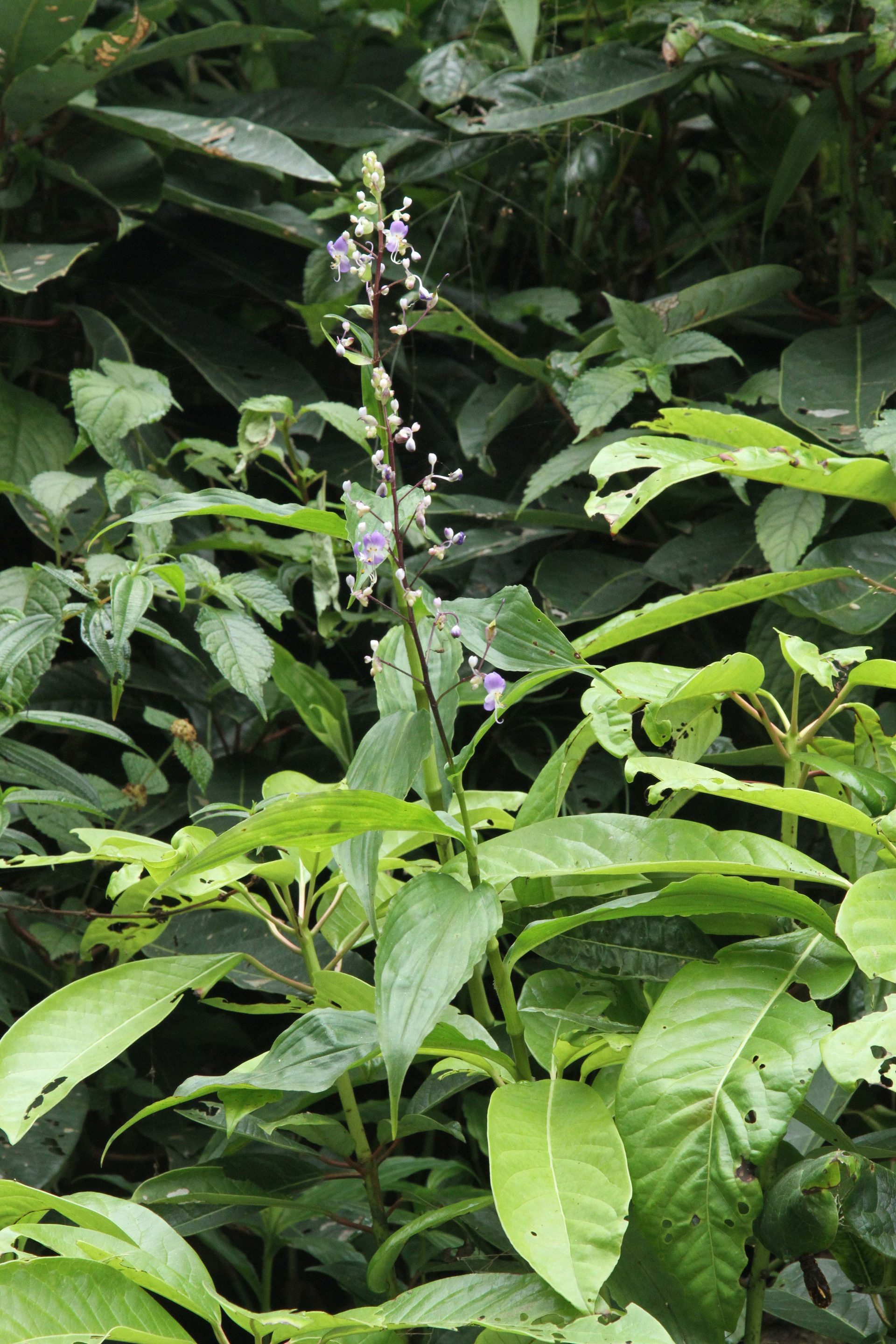
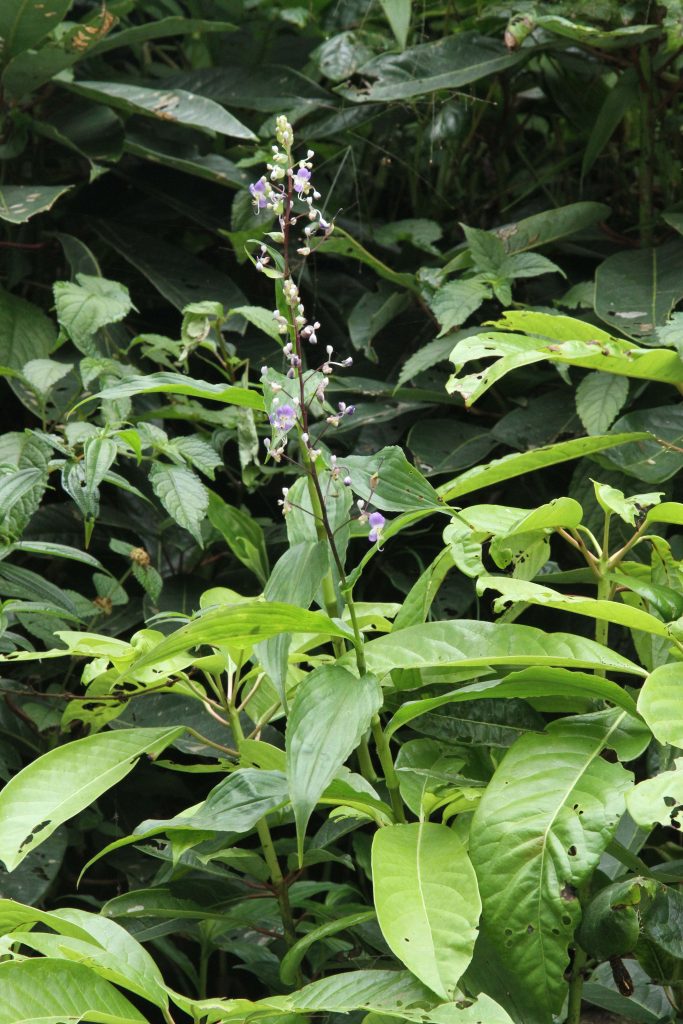
The species is a soft, somewhat straggling to decumbent or scrambling herb with elongate, often reddish stems rooting at the lower nodes. The leaves are alternate, sessile or shortly petiolate, lanceolate to elliptic, with closed sheathing bases that are usually ciliate at the mouth. The inflorescence is a dense, much-branched terminal thyrse or panicle of small flowers subtended by membranous bracts and bracteoles; each flower has three free sepals, three free blue to pinkish or whitish petals, and typically six stamens, the filaments often bearded. The fruit is a small, two-locular, laterally compressed capsule containing few seeds.
Floscopa is distinguished within Commelinaceae from the closely related Commelina and Tradescantia by its many-flowered, paniculate inflorescence not enclosed in a folded spathe, and by its compressed bilocular capsule. The genus favours permanently moist, often disturbed wetland habitats and is pollinated by small insects. Widespread and ecologically plastic, F. scandens is common throughout its range and faces no conservation threat.
Author: Lour. · Sources: POWO (Kew), GBIF, Flora of China Vol. 24, Flora of Bhutan Vol. 3, Flora of Nepal, Faden Commelinaceae systematic studies