
(Stokes) Faden
Description
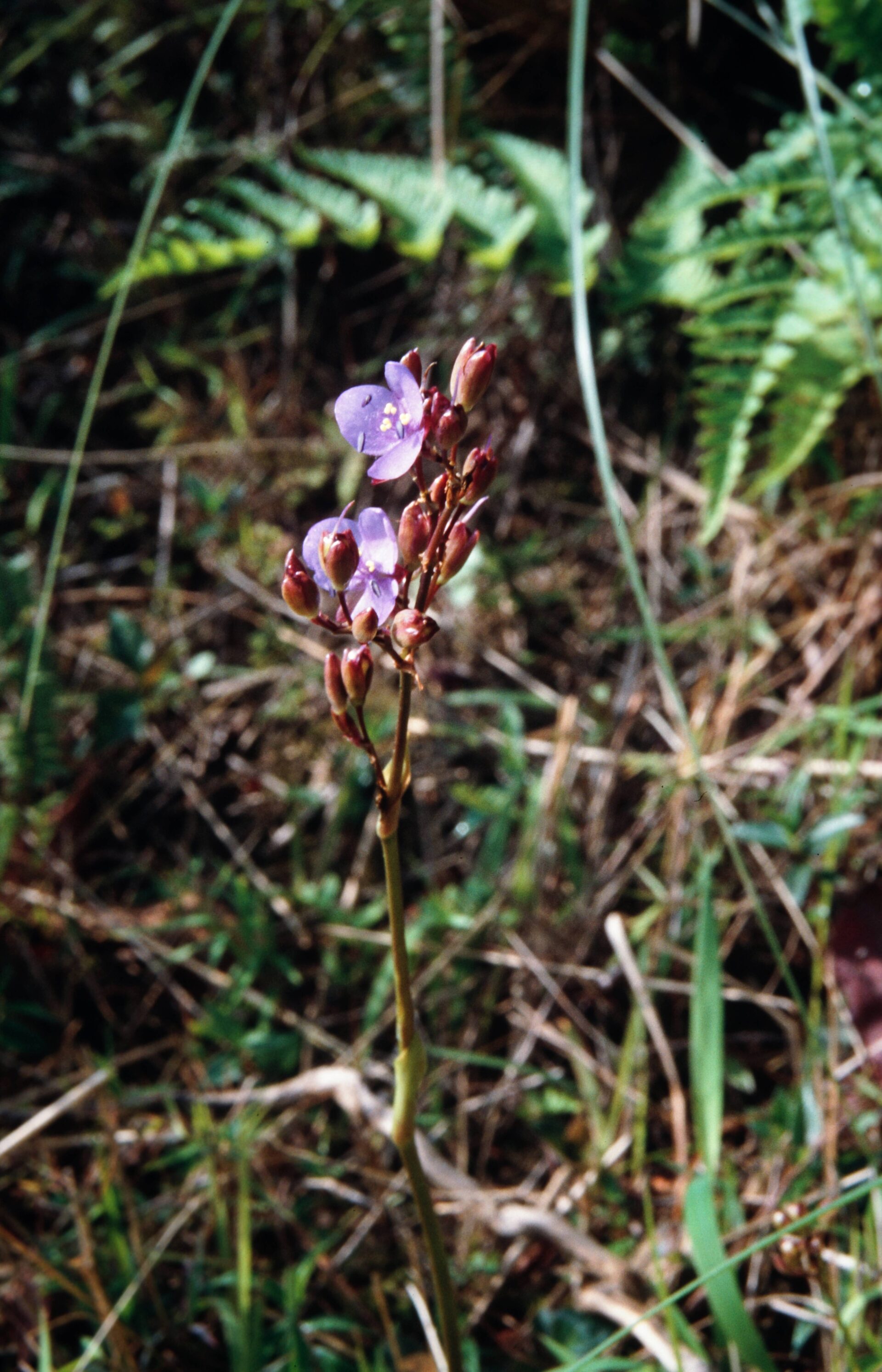
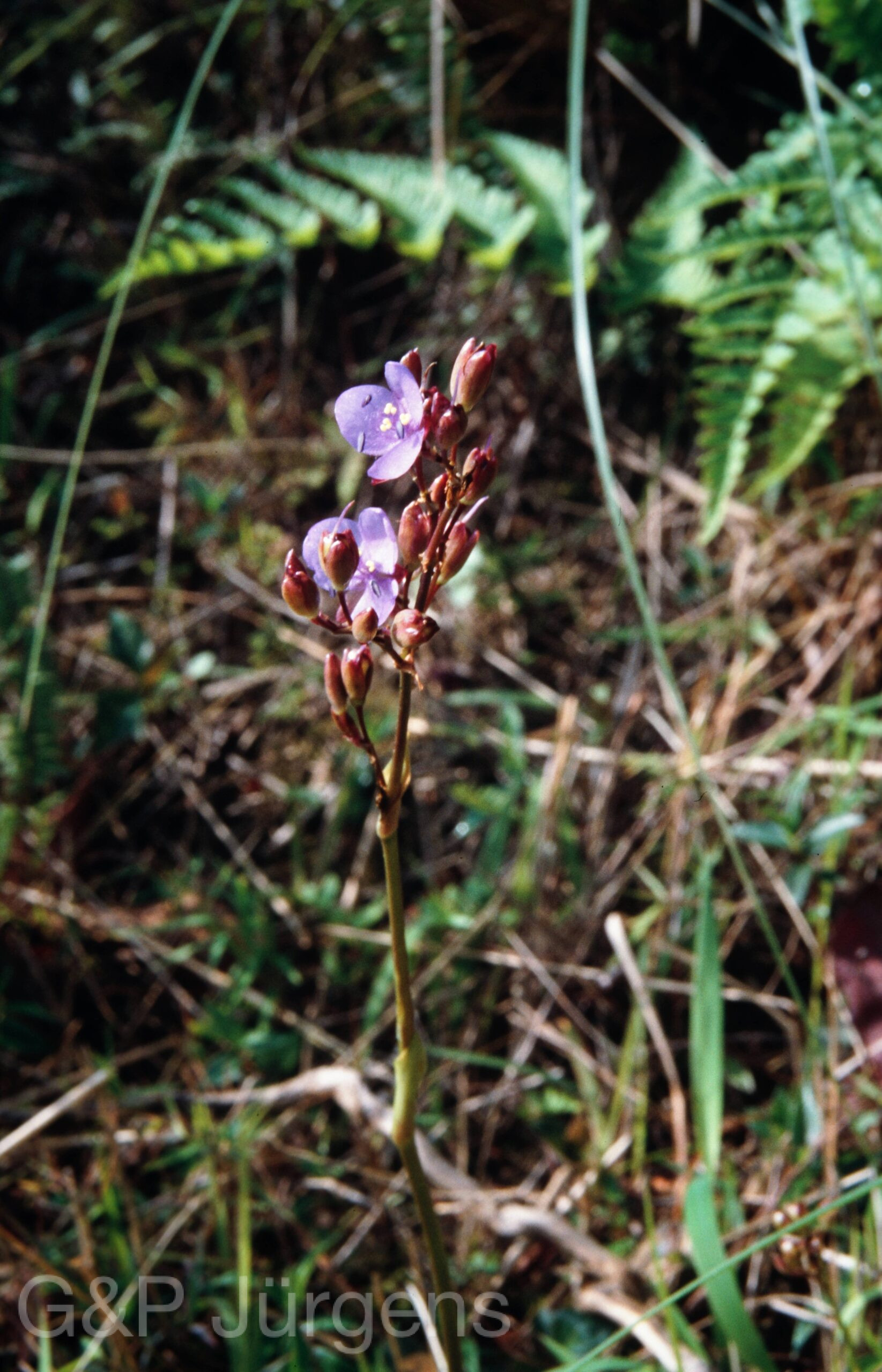
Murdannia edulis is a tuberous-rooted dayflower relative distributed across tropical and subtropical Asia, from the Himalaya (Nepal, Bhutan, northeast India) through southern China, Taiwan, Myanmar, Thailand and Indochina to Malesia, the Philippines and New Guinea. It grows in open grassland, scrub, forest margins and seasonally moist banks, often on disturbed or cultivated ground, principally at low to mid elevations. The plant recorded at Mulabari in the Gorkha district of Nepal at 1,340 m in May represents its presence in the warm subtropical foothill zone, where it emerges and flowers with the onset of the pre-monsoon rains.
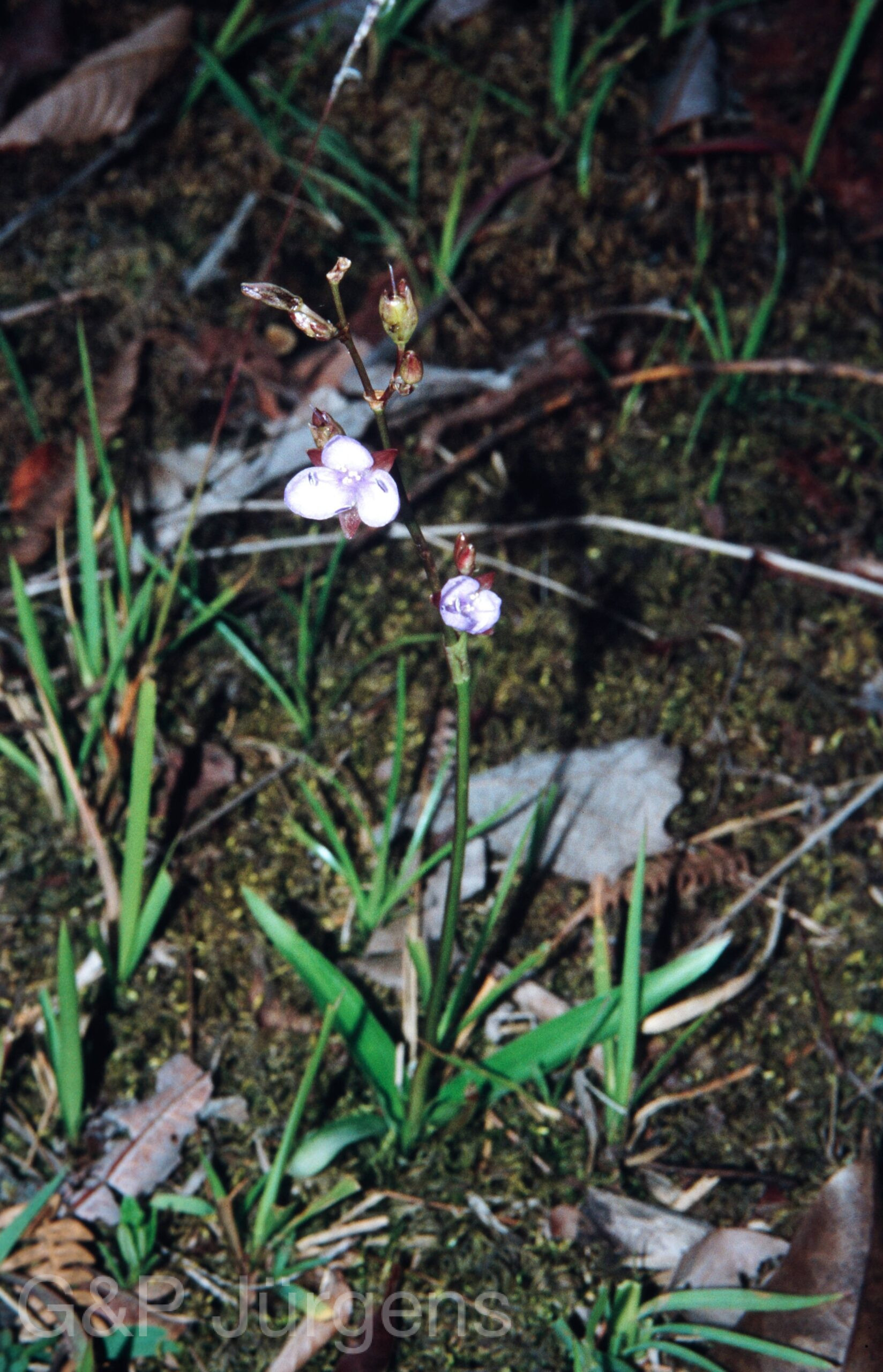
The plant is a perennial herb arising from a cluster of fleshy, fusiform, fascicled tuberous roots that store water and nutrients. The leaves are mostly radical, linear to lanceolate, sheathing at the base and arranged in a basal tuft, with parallel venation typical of the family. The inflorescence is a scapose, terminal panicle of cincinni bearing ephemeral, actinomorphic flowers with three free, pink to pale blue or mauve petals and conspicuous bearded staminodes accompanying the fertile stamens. The fruit is a small, loculicidal, ellipsoid capsule containing few angular seeds.
The genus Murdannia, segregated from Aneilema and Commelina, is distinguished by its enantiostylous, regular flowers and characteristic stamen arrangement; M. edulis was transferred to the genus by Faden, its basionym attributed to Stokes. As the epithet indicates, the starchy tuberous roots are edible and have been used as a famine or supplementary food across its range. The species is widespread, weedy and adaptable, and is of no conservation concern.
Author: (Stokes) Faden · Sources: POWO (Kew), Flora of China Vol. 24, Flora of Nepal, GBIF, Faden: Commelinaceae systematics