
Wall. ex Benth.
Description
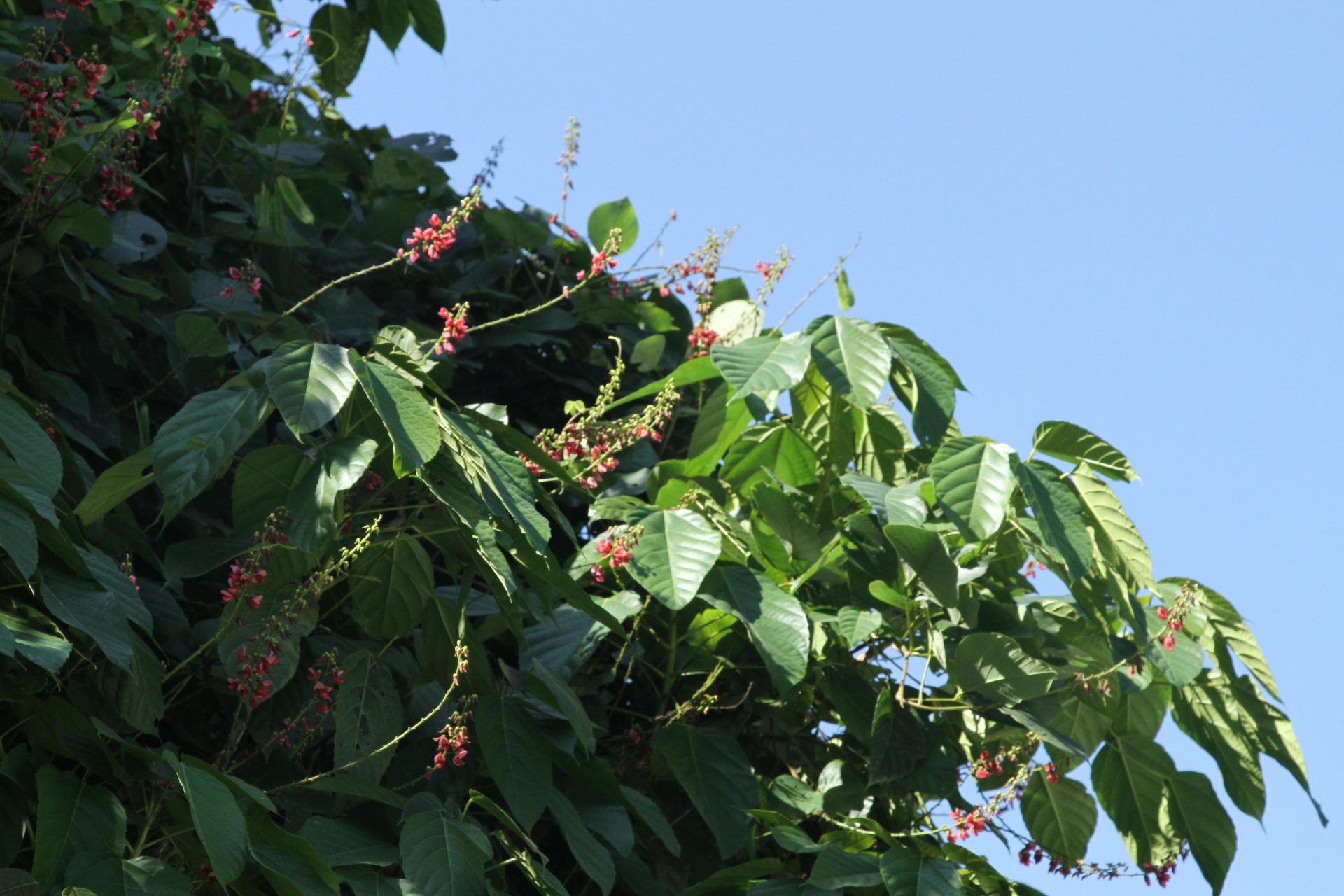
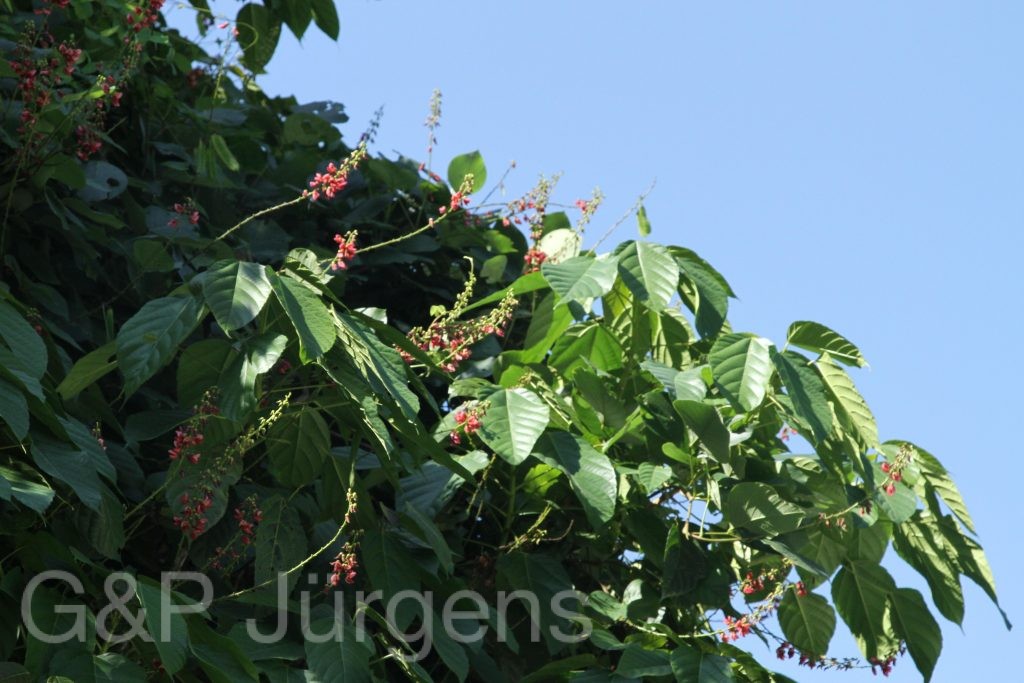
Flemingia paniculata Wall. ex Benth. is a subshrubby legume of the warm submontane belt of tropical and subtropical Asia, recorded from Thailand, Myanmar, India, Nepal, Malaysia, China, Bhutan, Laos and the Philippines, with about 106 georeferenced occurrences in GBIF. It grows in open forest, scrub, grassy slopes, forest margins and disturbed ground at low to moderate elevations, broadly from near sea level to around 1500 m. The photographed plant was found at Galephu in southern Bhutan at about 500 m in October, in the hot, humid foothill zone where the species flourishes in seasonally dry secondary vegetation.
The plant is an erect or ascending perennial herb or small shrub with ribbed, often pubescent stems. The leaves are characteristically unifoliolate (reduced to a single leaflet, unlike the trifoliolate condition of many congeners), the blade ovate to elliptic, prominently veined and frequently glandular, subtended by persistent stipules. The flowers are borne in dense terminal and axillary panicles; the papilionaceous corolla is typically purplish to pinkish, enclosed by a calyx whose lobes are unequal. The fruit is a small, inflated, two-seeded legume that is somewhat hairy and gland-dotted, dehiscing to release the seeds.
Flemingia belongs to the tribe Phaseoleae and is closely allied to Cajanus, distinguished by its glandular indumentum and pod structure; the genus has medicinal and dye uses across its range, several species yielding the orange resin known as waras. Plants help colonise disturbed and degraded slopes and, as nitrogen-fixing legumes, contribute to soil enrichment. The species is widespread and not of conservation concern, though its foothill habitats face pressure from agricultural expansion.
Author: Wall. ex Benth. · Sources: POWO (Kew), GBIF, Flora of China, Flora of Bhutan, Flora of Thailand, Lewis et al. Legumes of the World