Tag:

Autumn

Danser

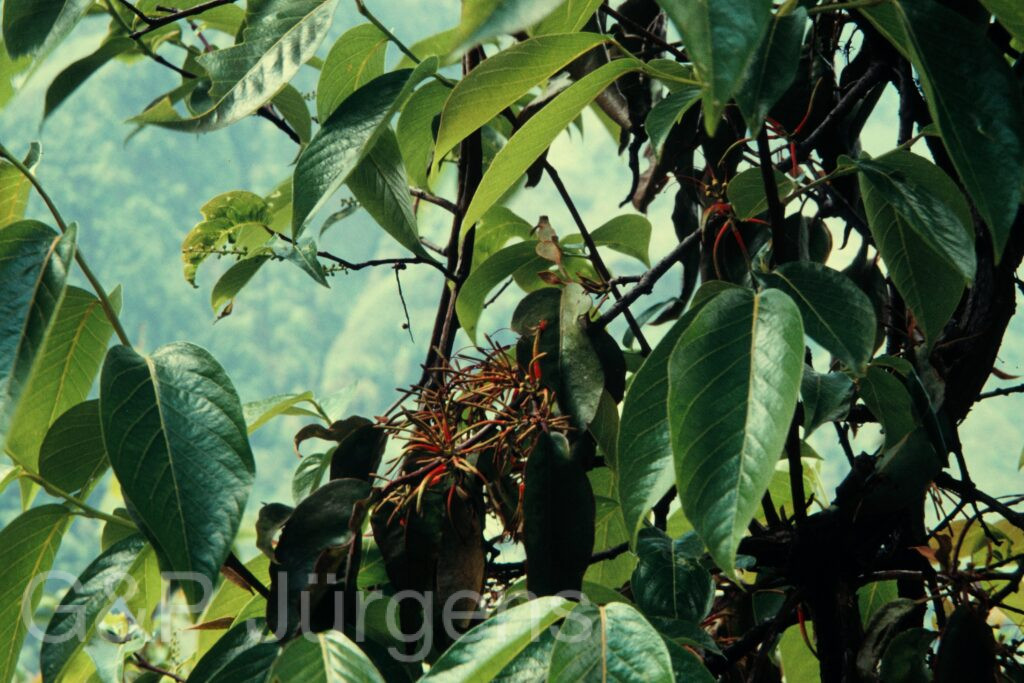
Bhutan2012 994
Bhutan Trithangebe 1000m, October
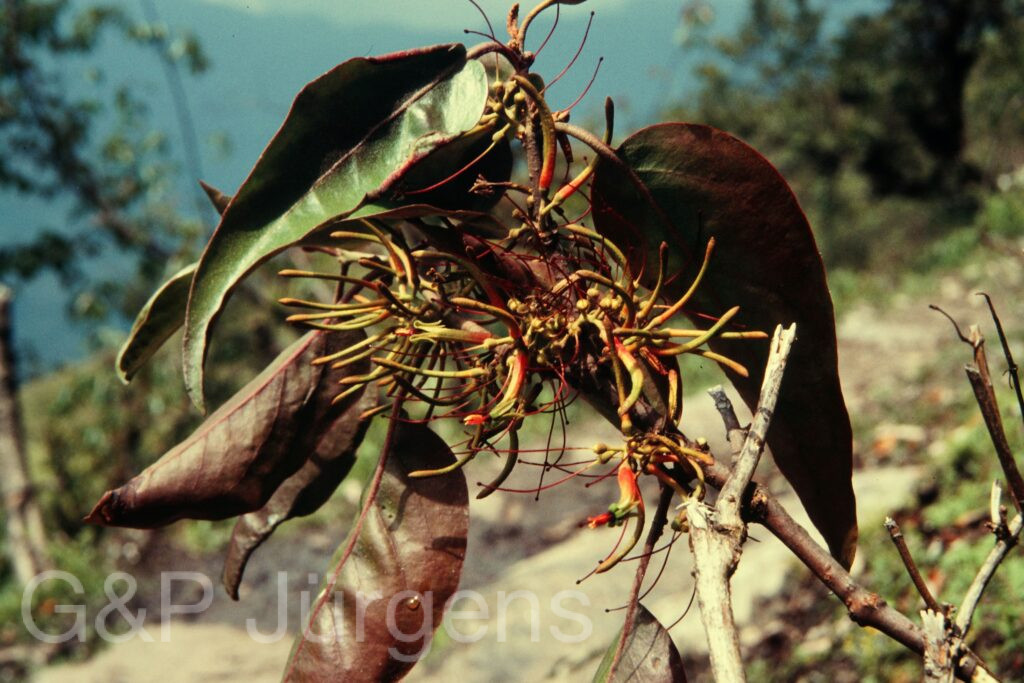
Bhutan2012 995
Bhutan Trithangebe 1000m, October
Nepal 97 307 P610
Nepal Honggaon 2360m May
Nepal 97 308 P611
Nepal Honggaon 2360m May

Description

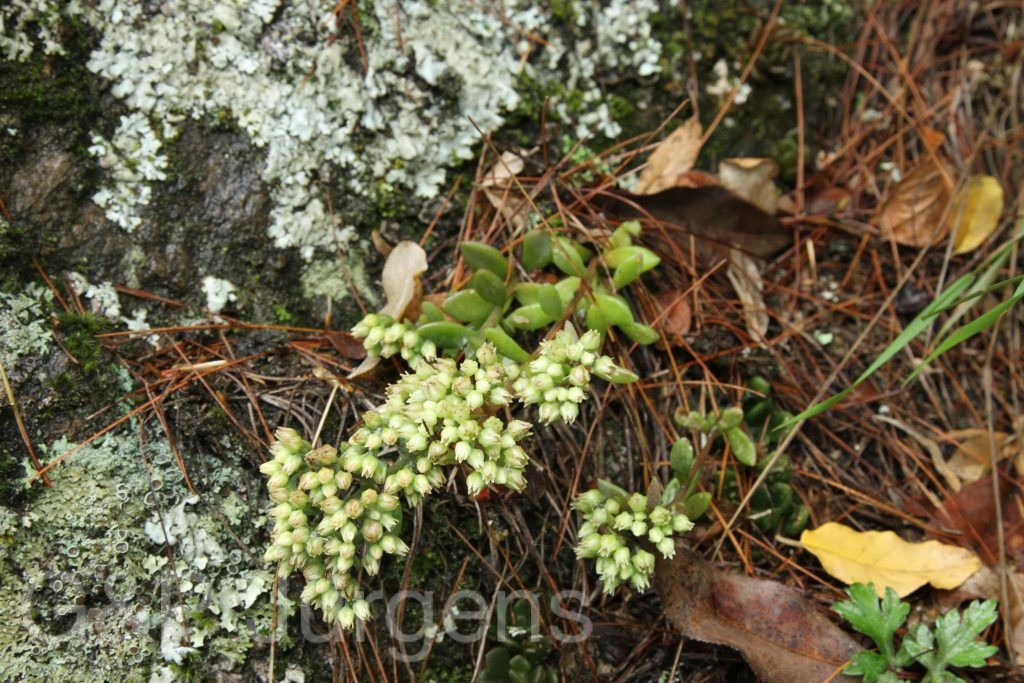
Scurrula elata is a hemiparasitic mistletoe of the eastern and central Himalaya, recorded from Nepal, China, Bhutan and India, with around 200 occurrences in GBIF. As an obligate stem parasite it occurs wherever suitable woody host trees grow in subtropical to warm temperate broad-leaved forest, hill forest and forest edges, drawing water and minerals from its host through a haustorial connection while photosynthesising in its own leaves. Its altitudinal spread is shown by the cited material from Trithangebe in Bhutan at 1000 m, in flower in October, and from Honggaon in Nepal at 2360 m in May, indicating a range across the lower and mid montane forest belt where host diversity is high.

The plant forms a pendent to spreading parasitic shrublet attached to host branches by a swollen haustorial union. The young stems and foliage are clothed in a brownish to rusty stellate or dendritic tomentum. The leaves are opposite or subopposite, ovate to elliptic, entire and shortly petiolate. The flowers are arranged in short axillary racemes and are characteristically zygomorphic, with a slender, curved, tubular corolla that splits along one side as it opens, ranging from greenish to reddish in colour; the calyx is borne on an elongate, club-shaped receptacle. The fruit is a small, club-shaped (turbinate) berry, narrowed below, containing a single viscin-coated seed adapted for bird dispersal and adhesion to new host branches.

Scurrula is a genus of the showy mistletoe family Loranthaceae, distinguished within the family by its pear- or club-shaped fruit and curved, one-sided corolla, and centred on tropical and subtropical Asia. As with other loranths, its flowers are typically pollinated by birds, and its seeds are spread by frugivorous birds such as flowerpeckers that wipe the sticky seeds onto branches. Heavy infestation can damage host trees, but the species is a natural component of Himalayan forest canopies, is widespread within its range and is not considered threatened.

Author: Danser · Sources: POWO (Kew), GBIF, Flora of China Vol. 5, Flora of Bhutan Vol. 1, Flora of Nepal, The Loranthaceae of the Indomalayan Region (Danser)
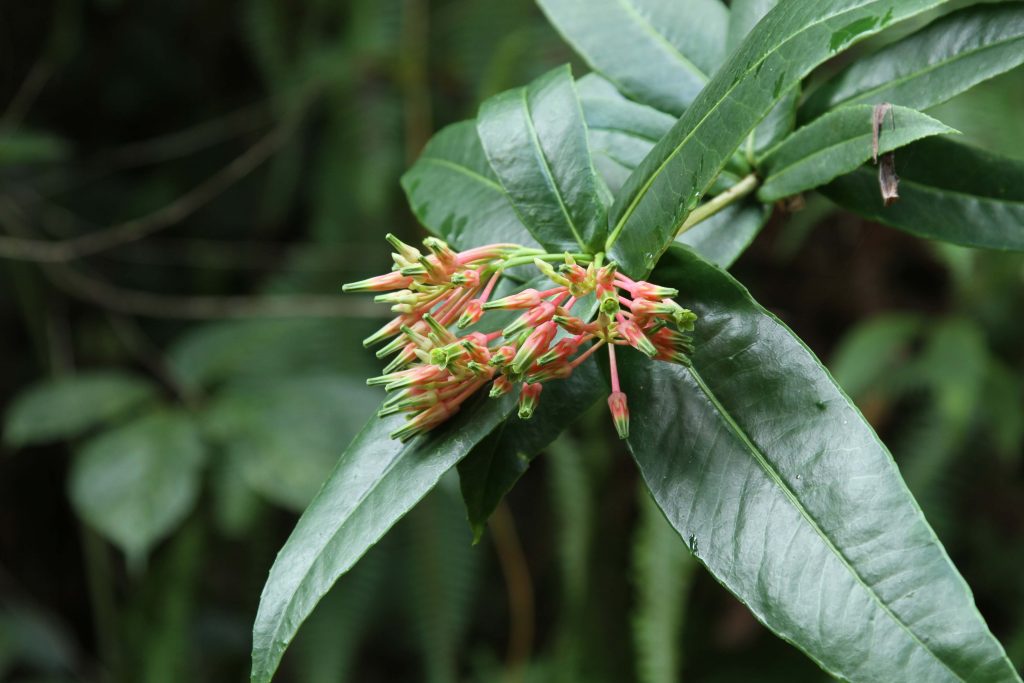
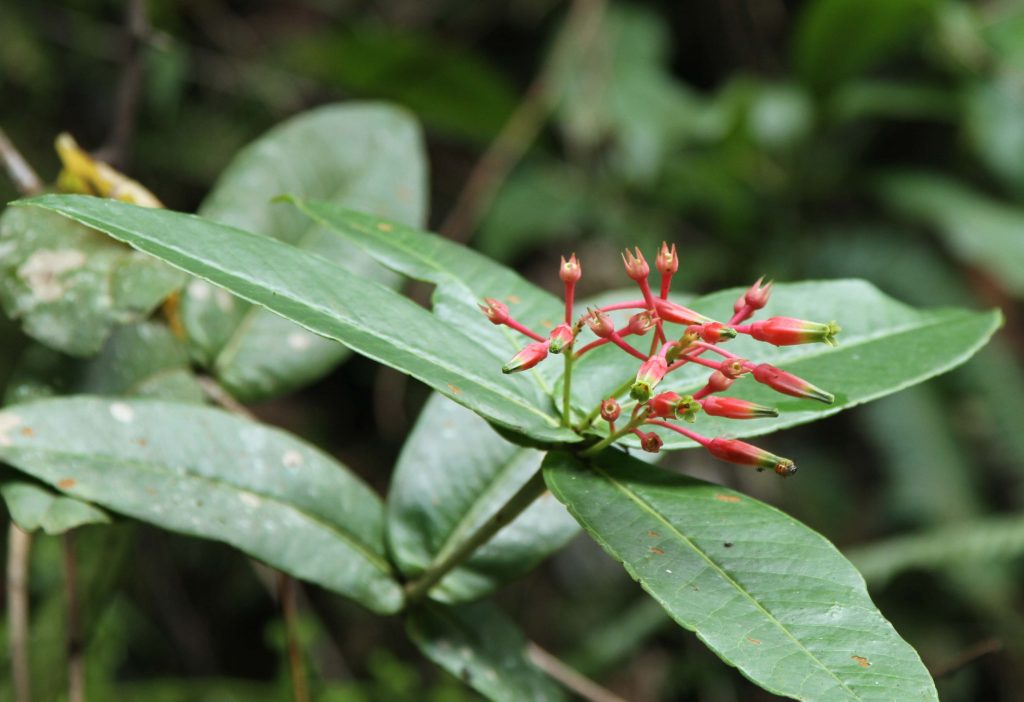
G. Don

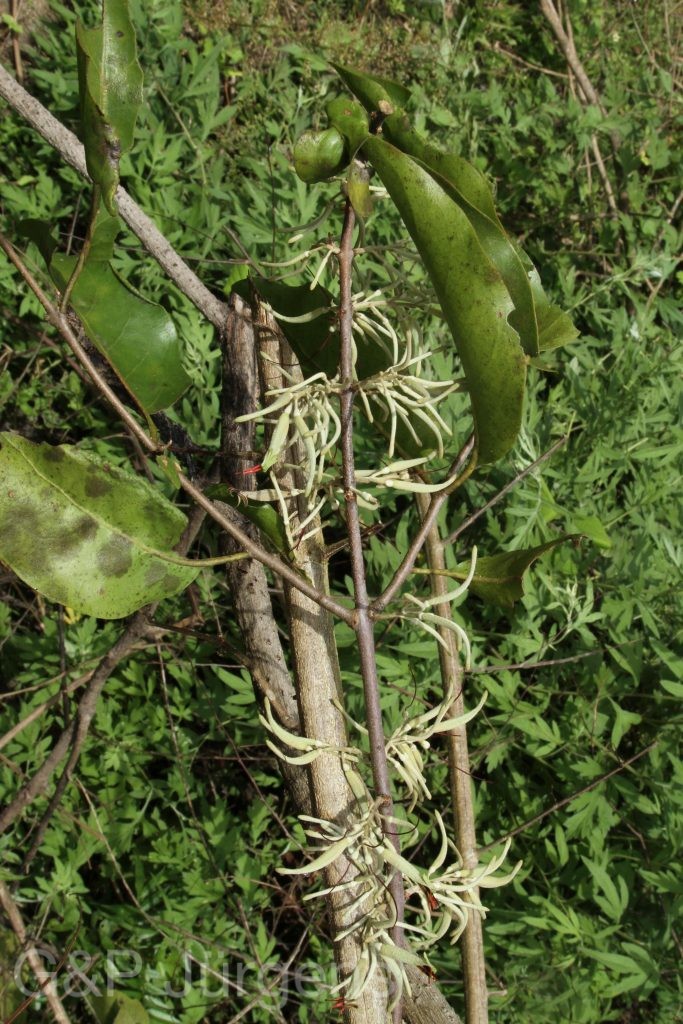
Bhutan2012 1241
Bhutan Tashigang 1900m, October
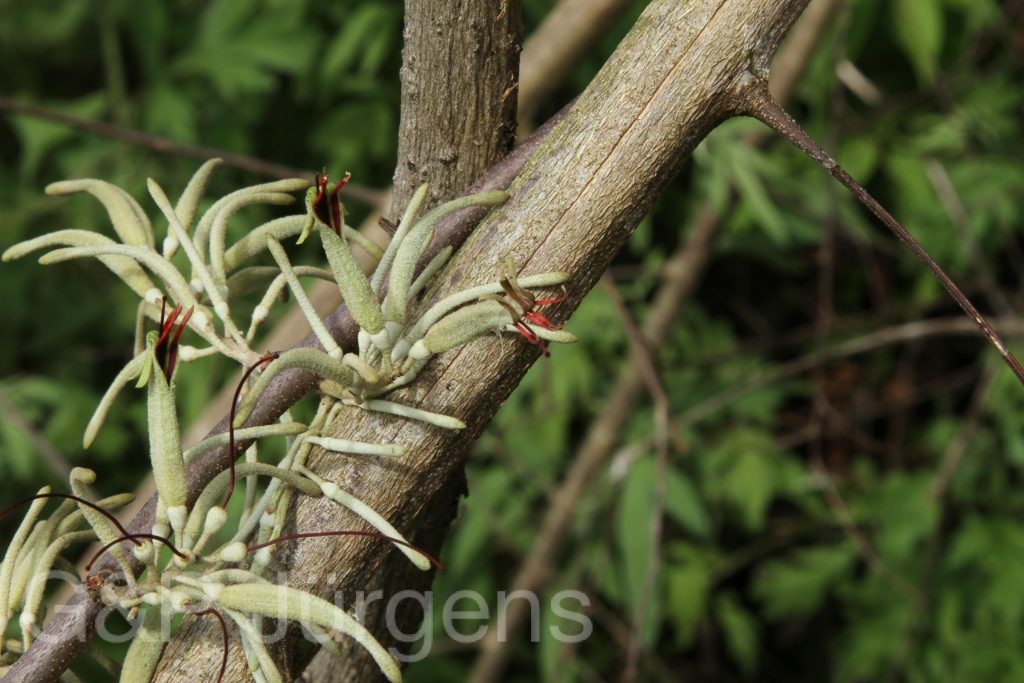
Bhutan2012 1242
Bhutan Trashigang 1900m, October

Description

Scurrula pulverulenta G.Don is a hemiparasitic mistletoe of the Loranthaceae distributed through the eastern Himalaya and Indo-Burmese region. GBIF (about 126 occurrences) records it from India, Myanmar, Nepal, Bhutan, southern China, Thailand and Bangladesh, where it grows as a branch parasite on a range of woody hosts in broad-leaved and subtropical hill forest. It occurs chiefly in warm-temperate to subtropical montane zones; the collections from Tashigang (Trashigang) in eastern Bhutan at 1,900 m, flowering in October, illustrate its autumn anthesis in mid-elevation forest where it depends on suitable phorophytes for establishment.

The plant is a much-branched aerial shrublet attached to its host by a haustorial union, drawing water and minerals while photosynthesising in its own leaves. Young branches, leaves and inflorescences are densely covered with a rusty or greyish stellate-mealy indumentum, the source of the epithet "pulverulenta" (powdery). Leaves are opposite, ovate to elliptic, leathery and short-petiolate. The flowers are borne in short axillary racemes; the corolla is tubular and curved, four-lobed and typically reddish to orange, characteristic of bird-pollinated Loranthaceae. The fruit is the distinctive Scurrula "club-shaped" (pyriform, narrowed to the base) berry, with viscid pulp.

The genus Scurrula is defined within the Loranthaceae by its club-shaped fruit and the curved, often tetramerous corolla, and is closely allied to Taxillus and Dendrophthoe. Its sticky, viscin-coated seeds are dispersed by frugivorous birds (notably flowerpeckers), which wipe them onto host branches, completing an obligate host-parasite-disperser interaction. As a branch parasite, Scurrula pulverulenta is ecologically significant in Himalayan forest dynamics and is of interest in studies of mistletoe host specificity and pollination.

Author: G. Don · Sources: POWO (Kew), Flora of Bhutan Vol. 1, Flora of China Vol. 5, GBIF, Barlow: Loranthaceae of Asia and Malesia

Fröd.

Bhutan2012 148
Bhutan Haarvalley 3500m, October

Description

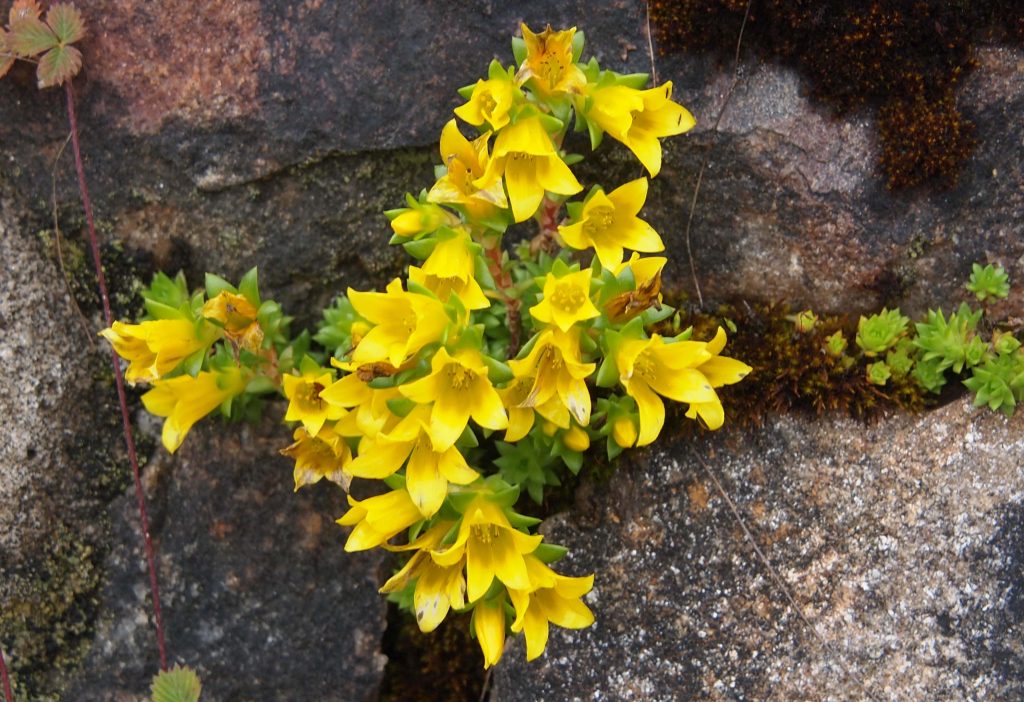
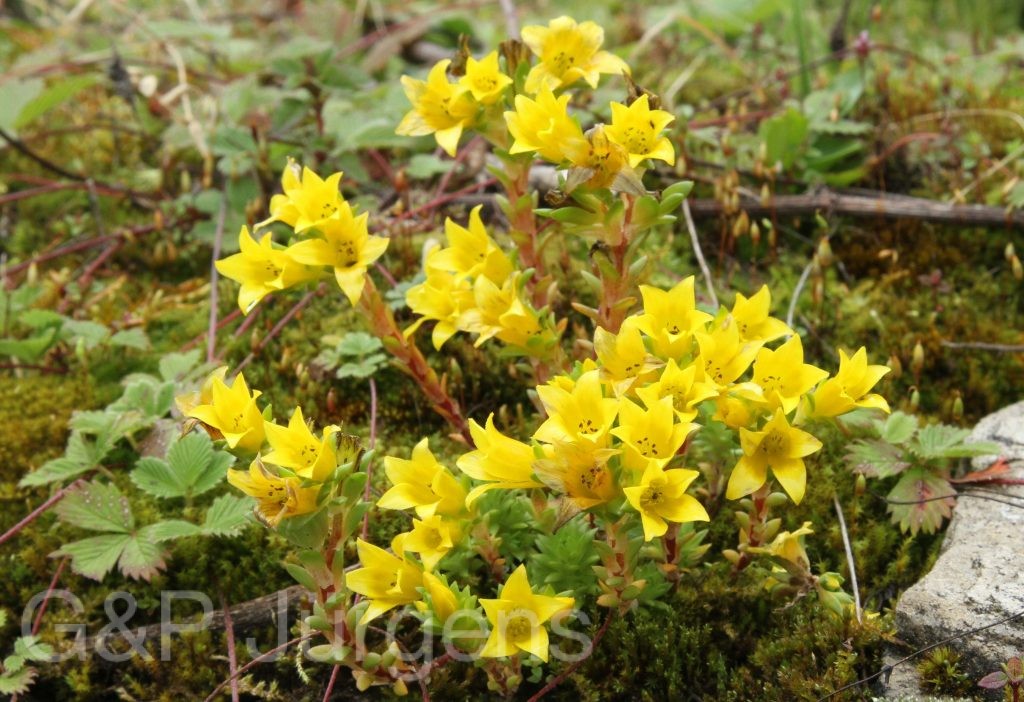
Sedum correptum is a rare stonecrop with a restricted distribution in the eastern Himalaya, known from Bhutan and adjacent areas of southwestern China (southern Tibet). GBIF records only nine occurrences, indicating the species is infrequently collected and poorly documented. It inhabits rocky ledges, cliff faces, stony ground, and mossy boulders in the upper temperate to subalpine zone, at elevations of approximately 3,000–4,000 m. The photograph from the Haar Valley in Bhutan at 3,500 m, taken in October, captures the species in fruit or late flowering in its characteristic rocky subalpine habitat.
The plant is a perennial succulent herb, 5–15 cm tall, with ascending to decumbent stems arising from a slender rootstock. Leaves are alternate, sessile, fleshy, oblong-elliptic to obovate, 8–15 mm long, entire, glabrous, often tinged reddish-purple especially under high light conditions. The inflorescence is a compact, terminal, corymbose cyme with few to several flowers. Flowers are pentamerous with lanceolate, fleshy sepals and yellow to pale yellow petals, 4–6 mm long, lanceolate to elliptic, acute. Stamens 10, in two whorls. Carpels five, erect, ripening into divergent follicles containing minute, oblong seeds.
Sedum correptum was described by the Swedish botanist Harald Fröderström, who monographed the genus extensively in the early twentieth century. The species belongs to the large and taxonomically difficult genus Sedum, which has undergone significant reclassification in recent decades as molecular phylogenetics have revealed polyphyly in its traditional circumscription. The placement of S. correptum within current infrageneric classifications requires further study. Its limited collection record and restricted range suggest it may be uncommon, though it likely remains undercollected due to the remoteness and inaccessibility of its subalpine habitats in Bhutan and Tibet.

Author: Fröd. · Sources: POWO (Kew), GBIF, Grierson & Long: Flora of Bhutan Vol. 1, Fu & Ohba: Crassulaceae in Flora of China Vol. 8

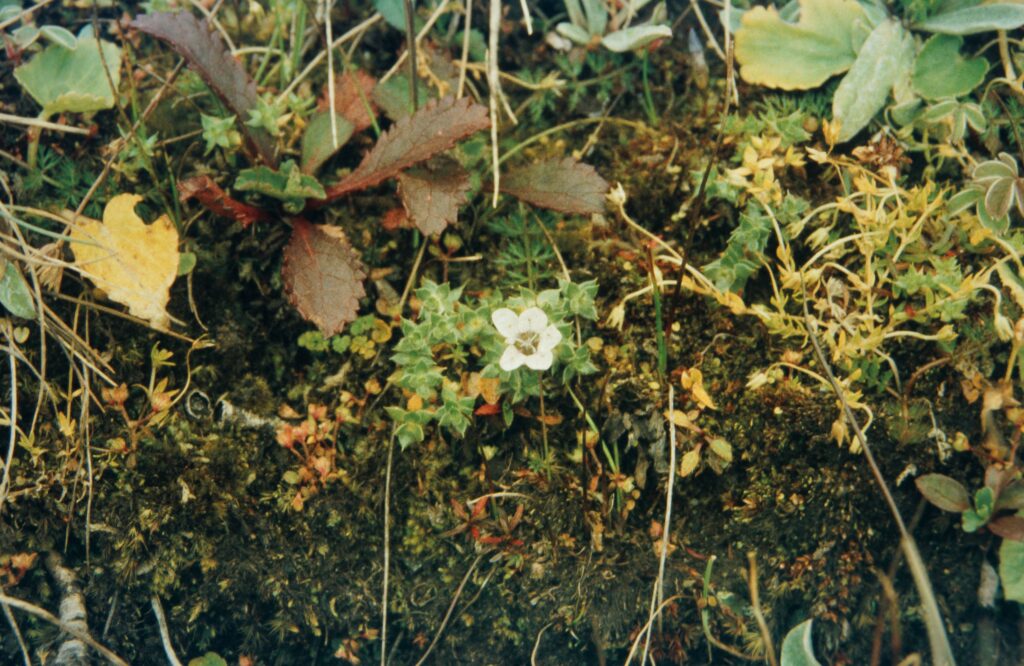
Hemsl. ex F.B. Forbes & Hemsl.

Bhutan2012 150
Bhutan Haarvalley 3500m, October

Description

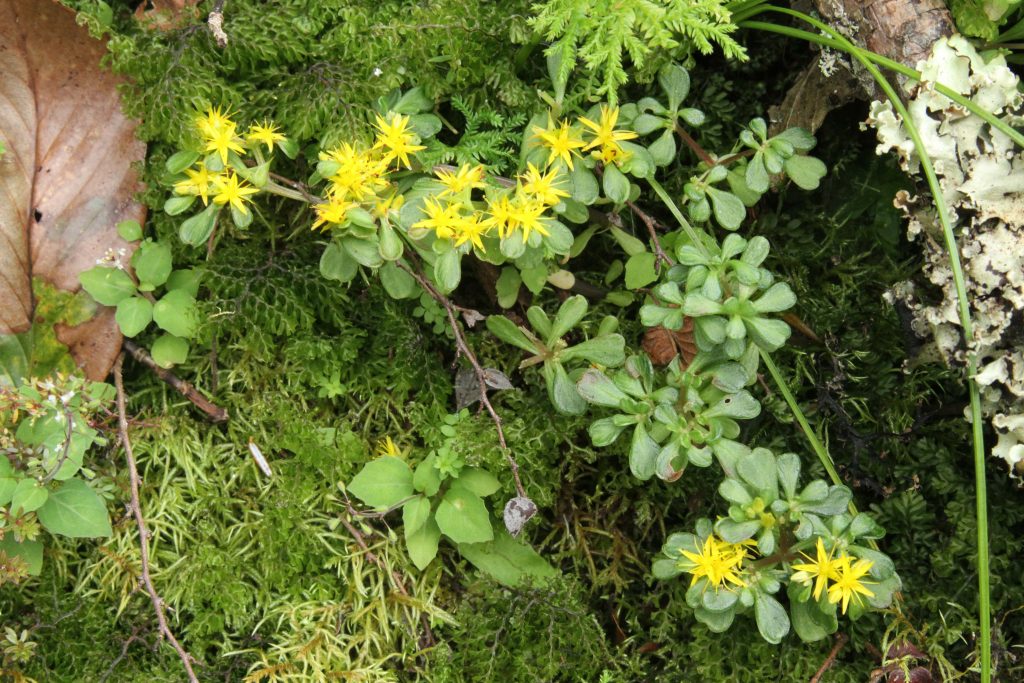
Sedum filipes Hemsl. ex F.B.Forbes & Hemsl. is a slender, succulent herb of the Sino-Himalayan mountains, recorded by GBIF from China, Nepal, India, Bhutan and Myanmar. It is a plant of moist, shaded rock ledges, mossy boulders, stream banks and forest margins in the subalpine and lower alpine belts, occurring from around 2,500 to 4,000 m. The October collection from the Haa valley in western Bhutan at 3,500 m reflects its preference for cool, humid microhabitats, where it often grows in thin soil pockets over rock alongside ferns, bryophytes and other small montane herbs at the close of the monsoon season.

The species is a delicate, glabrous annual or short-lived perennial with thread-like, often reddish, ascending or decumbent stems, as the epithet filipes (slender-stalked) implies. The fleshy leaves are alternate, flat to slightly terete, spathulate to obovate, narrowed to the base and entire. The inflorescence is a lax, few-flowered cyme bearing small, yellow, star-shaped flowers; each flower is typically five-merous, with lanceolate sepals, narrowly lanceolate petals, ten stamens and free or basally united carpels that ripen into erect, beaked follicles releasing minute seeds.

Within Crassulaceae the genus Sedum in its broad traditional sense is highly polymorphic, and slender Himalayan taxa such as S. filipes have at times been segregated into genera such as Sinocrassula or treated within narrowly defined sections. Its succulent CAM-related physiology allows survival on exposed, drought-prone rock surfaces, making it a characteristic colonist of rocky subalpine habitats and a useful indicator of undisturbed montane rock communities.

Author: Hemsl. ex F.B. Forbes & Hemsl. · Sources: POWO (Kew), GBIF, Flora of China Vol. 8, Flora of Bhutan Vol. 1, 't Hart & Eggli: Evolution and Systematics of the Crassulaceae

Sedum oreades

by GP Jürgens

(Decne.) Raym.-Hamet

Bhutan2012 46
Bhutan Shele-La, 3900m September
Bhutan2012 48
Bhutan Shele-La, 3900m September

Description

Sedum oreades is a small succulent perennial of the Himalaya and Tibetan Plateau, recorded by GBIF in some 368 occurrences from China, India, Nepal, Bhutan and Pakistan. It is a plant of high alpine habitats, colonising rock crevices, stony slopes, screes, moraine and gravelly turf, broadly between 3500 and 5000 m. The illustrated plant was photographed in Bhutan at the Shele-La at 3900 m in September, persisting and fruiting late in the season, its drought- and cold-tolerant succulence well suited to the thin, freely draining, sun-exposed substrates of the upper alpine zone.

The plant forms low tufts or cushions from a branched, often woody rootstock bearing crowded leafy shoots. The leaves are small, fleshy and succulent, linear-oblong to terete and densely imbricate along the stems, frequently flushed red in exposed sites. The flowers are borne in a compact terminal cyme; they are typically five-merous with lanceolate, free or basally connate petals that are yellow, sometimes tinged red, surrounding the stamens and the cluster of carpels. The fruit consists of erect to slightly spreading follicles that split along the inner suture to release numerous minute seeds.

Sedum (Crassulaceae) is a large, taxonomically complex genus, and many Himalayan-Tibetan species formerly placed here have been transferred to segregate genera such as Rhodiola and Phedimus on the basis of habit and floral structure; S. oreades is a member of the high-altitude alpine assemblage. GBIF treats the name as accepted. Employing crassulacean acid metabolism and a cushion habit, it is a hardy pioneer of harsh, exposed ground and is locally common, with no recognised conservation concern.

Author: (Decne.) Raym.-Hamet · Sources: POWO (Kew), GBIF, Flora of China, Flora of Pakistan, Ohba studies of Himalayan Crassulaceae

A. Berger

Bhutan2012 328
Bhutan Dochu-La 3200m, September
Bhutan2014 35
Bhutan Trashigang 1570m, May

Description

Sedum triactina is a succulent herb of the eastern Himalaya and Sino-Himalayan region, recorded from China, Nepal, India and Bhutan; its c. 329 georeferenced records span a wide temperate to subalpine altitudinal range. It grows on damp rocks, mossy banks, cliff ledges, stream margins and forest floor, generally between 1500 and 3500 m. The two Bhutanese localities documented in the image, Dochu-La at 3200 m in September and Trashigang at 1570 m in May, illustrate the species' broad ecological tolerance, occurring both in cool subalpine forest passes and warmer mid-elevation valleys.

It is a small, fleshy perennial herb with slender, often decumbent to ascending stems rising from a delicate creeping base, sometimes rooting at the nodes. The leaves are succulent, alternate, oblong to spathulate, entire and rather flat, glabrous and somewhat glaucous. The inflorescence is a lax, few-flowered terminal cyme. The flowers are typically pentamerous (the epithet "triactina" alluding to a three-rayed or three-parted character in some flowers), with narrow, spreading, pale yellow to greenish-yellow or whitish petals, ten stamens, and free or basally connate carpels. The fruit comprises several spreading, many-seeded follicles releasing minute seeds.

Described by A. Berger, S. triactina belongs to the large genus Sedum of the stonecrop family Crassulaceae, a group employing CAM photosynthesis as an adaptation to the desiccating conditions of rock and cliff microhabitats. Its small flowers are visited by generalist insects, and vegetative fragmentation supplements seed reproduction. The species is widespread and locally common across its montane range, with no recognised conservation concern, persisting readily on disturbed rocky and roadside substrates.

Author: A. Berger · Sources: POWO (Kew), GBIF, Flora of Bhutan, Flora of China, Flora of Nepal, 't Hart & Bleij's account of Sedum (Crassulaceae)

Franch.

Bhutan2015 327
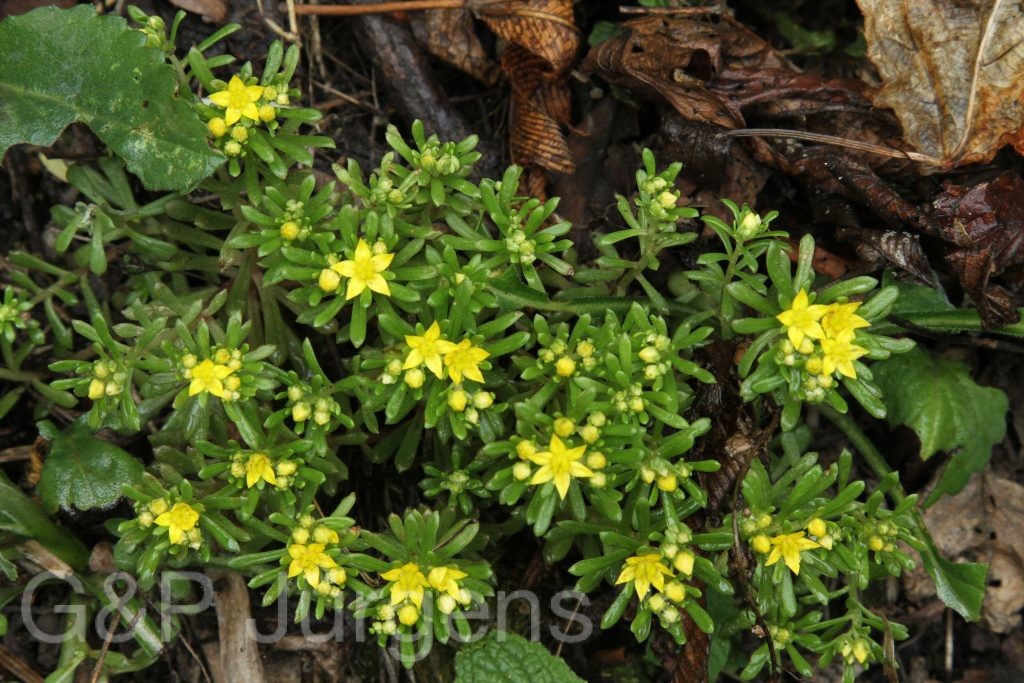
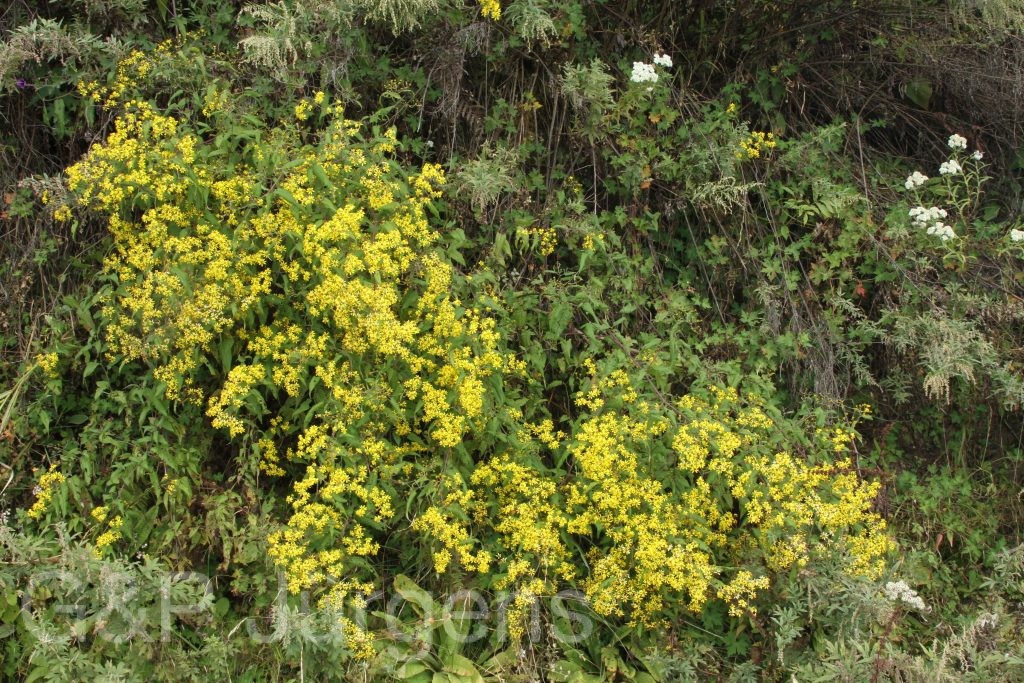
Bhutan, Trongsa 3100m, October

Description

Senecio scandens var. incisus is a regional variant of the widespread climbing groundsel, recorded from China, Taiwan, Hong Kong and Nepal, with 338 georeferenced occurrences across the type species' range; the variety is part of an East Asian to Himalayan complex. It grows in moist montane forest margins, thickets, scrub and along streamsides and clearings, scrambling over shrubs and rocks, generally in the temperate zone. It was photographed near Trongsa, Bhutan, at 3100 m in October, flowering in the cool post-monsoon season when its golden heads brighten forest edges and disturbed slopes.

It is a scrambling or climbing perennial herb with long, slender, ribbed and often woody-based stems reaching several metres through surrounding vegetation. The alternate leaves are ovate to triangular-lanceolate, in var. incisus more deeply and irregularly incised or lobed than in the typical form, with toothed margins, an acuminate apex and frequently a pair of small basal lobes. The numerous radiate flower heads are arranged in broad terminal and axillary corymbose panicles; each head has bright yellow ray and disc florets subtended by a uniseriate involucre of green phyllaries with small outer calyculate bracts. The fruit is a cylindrical cypsela bearing a white pappus of fine bristles.

The species belongs to Senecio s.str. in tribe Senecioneae, one of the largest genera of flowering plants; the scandent climbing habit is unusual within an otherwise herbaceous genus. The variety incisus, described by Franchet, is distinguished by its more dissected leaves and treated as part of the variable S. scandens aggregate. Like the type, it contains pyrrolizidine alkaloids and is used in traditional Chinese medicine. It is common and not of conservation concern.

Author: Franch. · Sources: POWO (Kew), GBIF, Flora of China, Flora of Bhutan, Senecioneae of the World (Nordenstam & Pelser studies)

Senna alata

by GP Jürgens

(L.) Roxb.

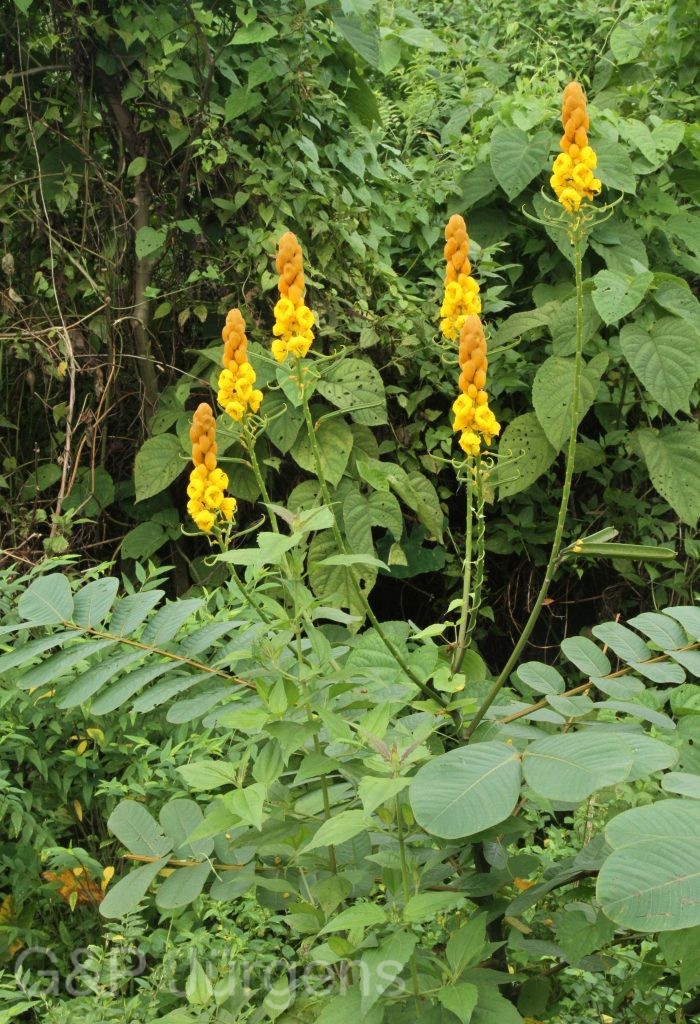
Bhutan2012 728
Bhutan Galephu 380m, September

Description

Senna alata, the candle bush or ringworm shrub, is a pantropical species of probable Neotropical origin, now widely naturalised throughout the tropics; GBIF records (12391 occurrences) span Brazil, the United States, Mexico, India, Australia, Indonesia, Taiwan, the Philippines, West Africa and much of Southeast Asia. It thrives in warm, humid lowland habitats, occupying riverbanks, ditches, waste ground, field margins and other disturbed, moist sites, generally below about 1000 m. The photographed plant from Galephu in southern Bhutan at only 380 m, flowering in September, marks its presence in the hot, subtropical Himalayan foothills where it occurs as an introduced or cultivated ornamental and medicinal plant.

The species is a robust, fast-growing shrub or small tree reaching 2-4 m, with stout, sparsely branched stems. The large pinnate leaves bear 6-14 pairs of oblong leaflets that are rounded at the apex, the rachis often narrowly winged. The inflorescence is a dense, erect, candle-like terminal raceme of bright golden-yellow flowers, each enclosed in bud by an orange bract that falls at anthesis. The flowers have five subequal petals and fertile and reduced stamens characteristic of Senna. The distinctive fruit is a straight, oblong, four-winged (alate) pod, dehiscing to release numerous flattened seeds, the wings giving the species its epithet.

Described by Linnaeus and transferred by Roxburgh, the species belongs to genus Senna (Fabaceae, subfamily Caesalpinioideae), segregated from the broad old concept of Cassia. It is renowned in ethnomedicine, its anthraquinone-rich leaves used as a topical antifungal treatment for ringworm and other skin conditions. While valued horticulturally and medicinally, its vigour and prolific seed make it a potential weed of disturbed tropical land. It is of least conservation concern given its enormous, partly anthropogenic range.

Author: (L.) Roxb. · Sources: POWO (Kew), GBIF, Flora of China, Flora of Bhutan, Cassiinae: A Synoptic Revision of Senna (Irwin & Barneby)

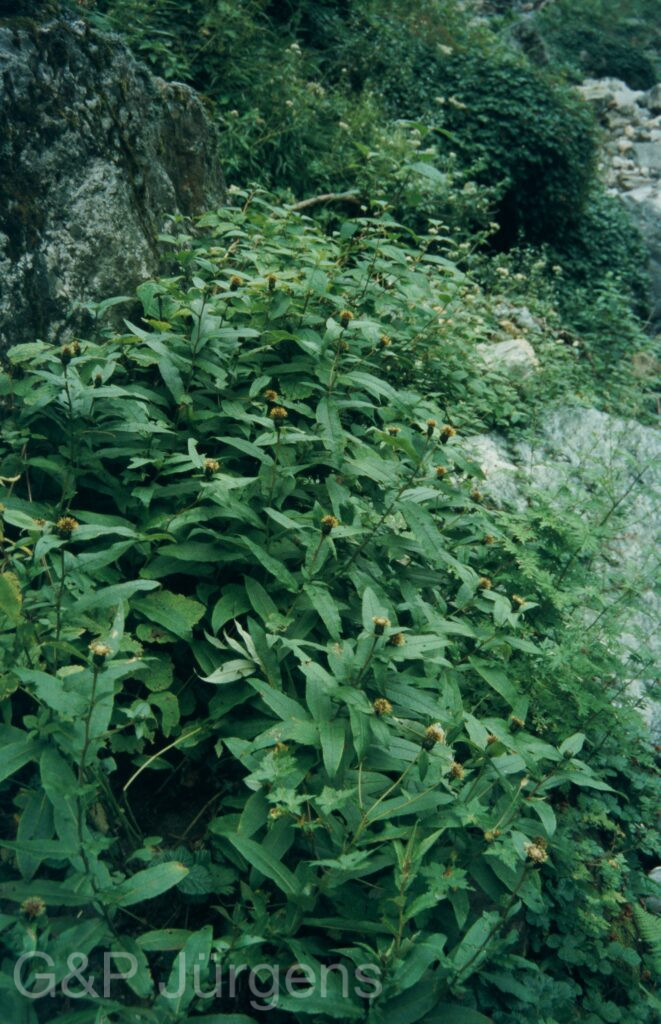
(DC.) Raab-Straube & Yu J.Wang

Garw 2005 64 ergebnis ergebnis
India Garhwal Valley of flowers 3400m, September
Garw 2005 170 ergebnis ergebnis
India Garhwal Shertoli 3100m, September

Description

Shangwua denticulata is an alpine perennial herb of the Himalaya and the Tibetan plateau region, recorded from China, Nepal, India and Bhutan, with about 170 occurrences in GBIF. It is a plant of high open habitats, growing on alpine and subalpine slopes, in meadows, on screes and among rocks, generally above the treeline. The photographed plants come from the Garhwal Himalaya of India, at the Valley of Flowers (3400 m) and at Shertoli (3100 m), both recorded in September as the late-summer alpine flora comes into flower and fruit, an elevation and setting characteristic of this cold-mountain specialist.

The plant arises from a perennial rootstock and produces erect or ascending stems bearing alternate leaves; the leaves are oblong to lanceolate with toothed (denticulate) margins, as the epithet records, and are often somewhat hairy. The flower heads (capitula) are borne singly or in small clusters and are surrounded by a many-rowed involucre of bracts, the latter frequently tinged dark or purplish as in many alpine composites. As a member of the tribe Cardueae the capitula are discoid, composed wholly of tubular, purplish florets, and the achenes are crowned by a pappus of fine bristles that aids wind dispersal.

Shangwua is a small genus recently segregated from Saussurea on molecular and morphological grounds, the species formerly treated under that genus; the recombination by Raab-Straube and Wang reflects modern phylogenetic revision of the Saussurea complex. As a high-alpine thistle relative, S. denticulata is adapted to short growing seasons, intense radiation and cold, and its specialised montane distribution makes it of biogeographic interest within the rich Sino-Himalayan Cardueae flora.

Author: (DC.) Raab-Straube & Yu J.Wang · Sources: POWO (Kew), GBIF, Flora of China, Flora of Bhutan, Saussurea and allies revision (Raab-Straube)

(Edgew.) Pusalkar & D.K.Singh

Garw 2005 333 ergebnis
India Garhwal Bagubas 4000m, October

Description

Shivparvatia glanduligera is an alpine herb of the Caryophyllaceae distributed across the Himalaya from northern India (Kashmir, Himachal Pradesh, Uttarakhand) through Nepal and Bhutan to southwestern China (Tibet). GBIF records 256 occurrences, making it one of the more frequently collected high-altitude caryophylls in the region. The species inhabits alpine meadows, moist scree, rocky slopes, and gravel flats at elevations of 3,500–5,200 m. The photograph from Bagubas in the Garhwal Himalaya at 4,000 m, taken in October, shows the species in the western part of its range during its late-season flowering.
The plant is a low, tufted perennial herb, 3–12 cm tall, with ascending stems that are characteristically glandular-pubescent throughout — the feature referenced in the epithet glanduligera. Leaves are opposite, linear-lanceolate to narrowly elliptic, 5–15 mm long, acute, with glandular hairs on both surfaces and margins. Flowers are solitary or in few-flowered terminal cymes. Sepals five, ovate-lanceolate, glandular-hairy, 3–5 mm long. Petals five, white, obovate, slightly exceeding the sepals, entire or shallowly emarginate at the apex. Stamens 10. Styles three. The capsule is ovoid, dehiscing by six teeth, containing numerous small, reniform, tuberculate seeds.
This species was long placed in Arenaria as A. glanduligera Edgew. before molecular phylogenetic analyses revealed that the traditional genus Arenaria was massively polyphyletic. Pusalkar and D.K. Singh transferred it to the newly erected genus Shivparvatia, named after the Hindu deities Shiva and Parvati in reference to the Himalayan home of these plants. The reclassification reflects a broader reorganisation within Caryophyllaceae tribe Arenarieae based on molecular evidence. The species is ecologically significant as a component of high-alpine plant communities and is not currently assessed as threatened.

Author: (Edgew.) Pusalkar & D.K.Singh · Sources: POWO (Kew), GBIF, Pusalkar & Singh (2015) in Phytotaxa, Flora of China Vol. 6, Naithani: Flora of Chamoli Vol. 1