
(Decne.) Raym.-Hamet
Description
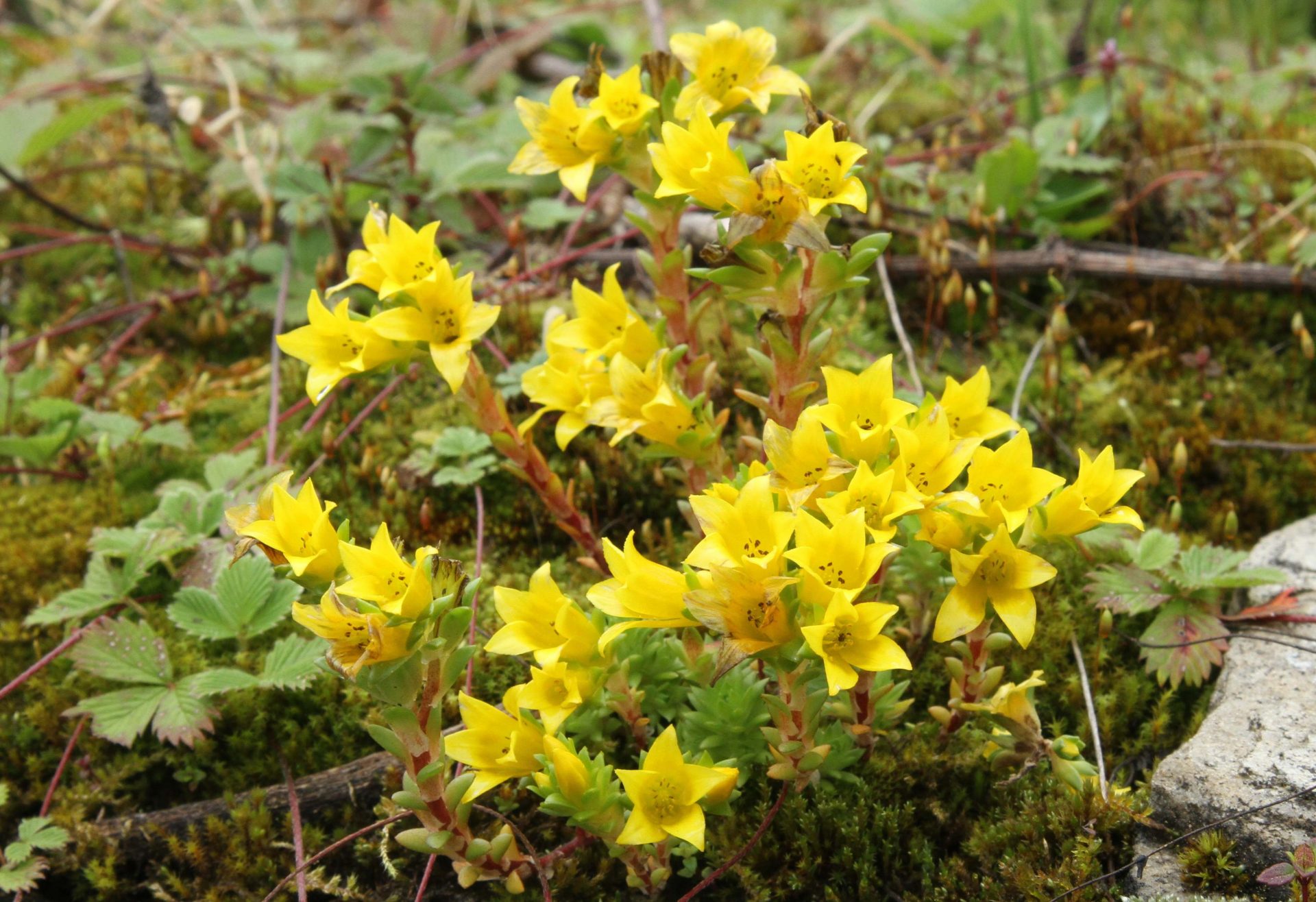
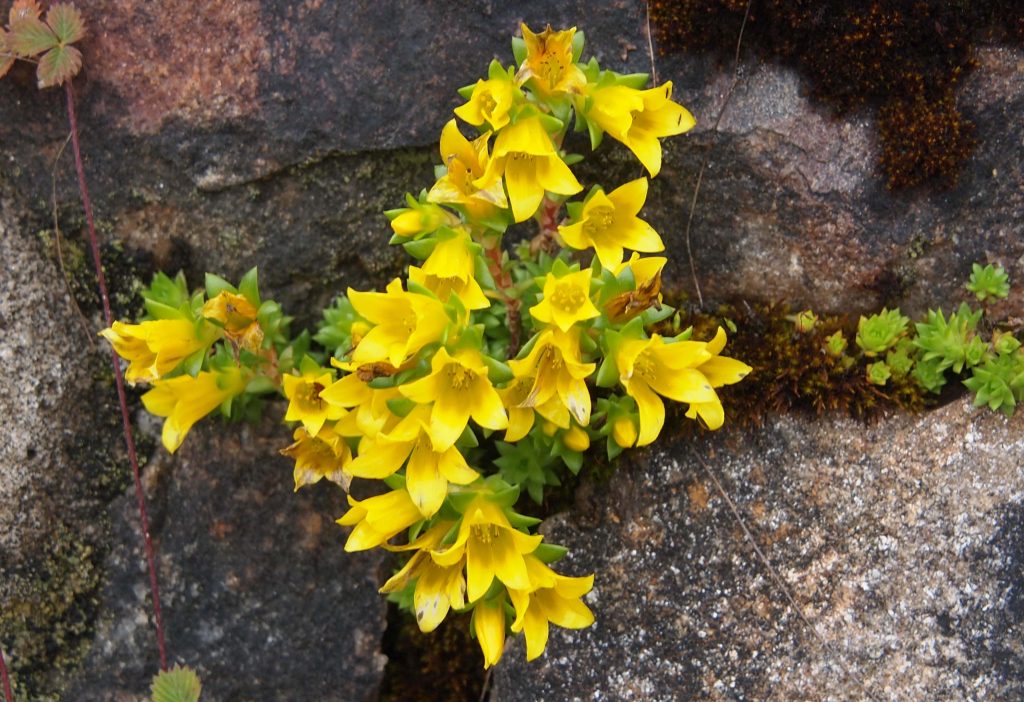
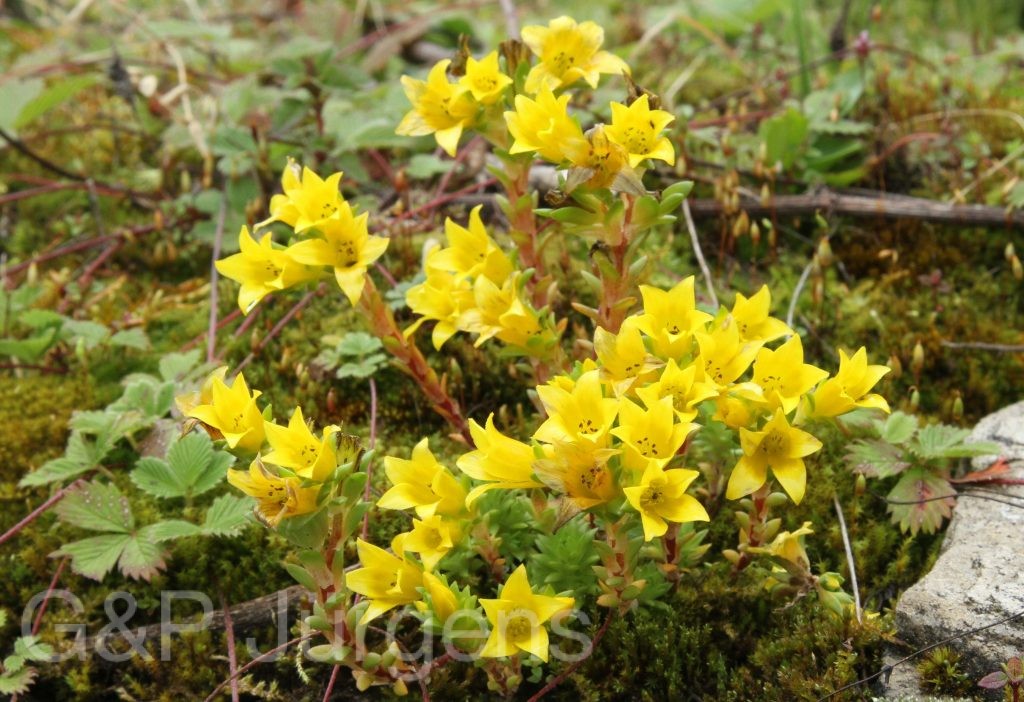
Sedum oreades is a small succulent perennial of the Himalaya and Tibetan Plateau, recorded by GBIF in some 368 occurrences from China, India, Nepal, Bhutan and Pakistan. It is a plant of high alpine habitats, colonising rock crevices, stony slopes, screes, moraine and gravelly turf, broadly between 3500 and 5000 m. The illustrated plant was photographed in Bhutan at the Shele-La at 3900 m in September, persisting and fruiting late in the season, its drought- and cold-tolerant succulence well suited to the thin, freely draining, sun-exposed substrates of the upper alpine zone.
The plant forms low tufts or cushions from a branched, often woody rootstock bearing crowded leafy shoots. The leaves are small, fleshy and succulent, linear-oblong to terete and densely imbricate along the stems, frequently flushed red in exposed sites. The flowers are borne in a compact terminal cyme; they are typically five-merous with lanceolate, free or basally connate petals that are yellow, sometimes tinged red, surrounding the stamens and the cluster of carpels. The fruit consists of erect to slightly spreading follicles that split along the inner suture to release numerous minute seeds.
Sedum (Crassulaceae) is a large, taxonomically complex genus, and many Himalayan-Tibetan species formerly placed here have been transferred to segregate genera such as Rhodiola and Phedimus on the basis of habit and floral structure; S. oreades is a member of the high-altitude alpine assemblage. GBIF treats the name as accepted. Employing crassulacean acid metabolism and a cushion habit, it is a hardy pioneer of harsh, exposed ground and is locally common, with no recognised conservation concern.
Author: (Decne.) Raym.-Hamet · Sources: POWO (Kew), GBIF, Flora of China, Flora of Pakistan, Ohba studies of Himalayan Crassulaceae