Tag:

Autumn

(Wall. ex Edgew.) C.-A.Jansson
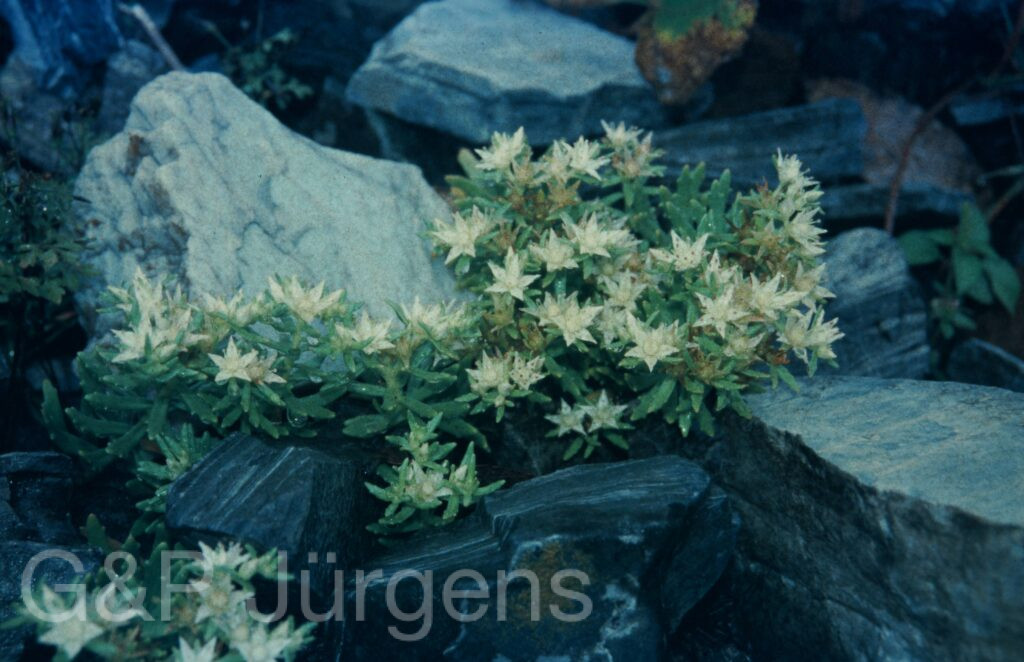
Bhutan2012 1072
Bhutan Anthso 980m, October
Bhutan2012 1073
Bhutan Anthso 980m, October

Description

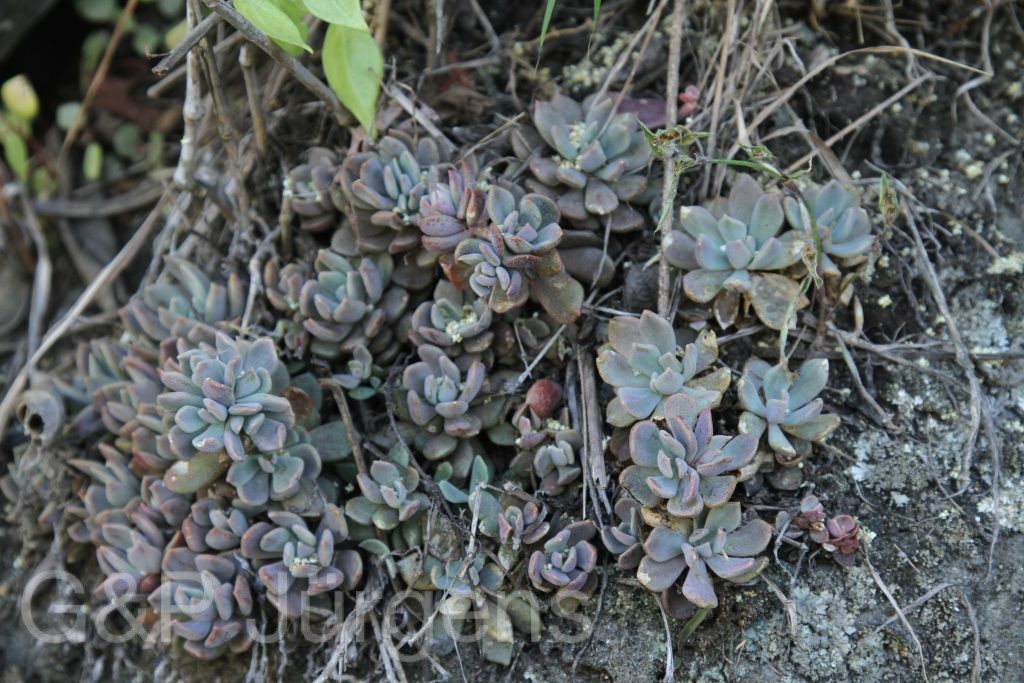
Rosularia adenotricha (Wall. ex Edgew.) C.-A.Jansson is a succulent rosette-forming herb of dry rocky slopes and cliff crevices in the western and central Himalaya and adjacent mountains. GBIF records span India, Pakistan, Afghanistan, Nepal and Bhutan, with scattered occurrences eastward to Myanmar and Thailand and west to Oman, totalling some 200 collections. It is a chasmophyte of warm, well-drained, often sun-exposed rock faces and gravelly banks, typically from low and middle elevations into the subalpine zone; the illustrated material was gathered in Bhutan at Anthso, 980 m, in October, near the lower end of its altitudinal range.
The plant develops compact basal rosettes of fleshy, obovate to spathulate leaves that are densely covered with glandular (adenose) hairs, giving a viscid, greyish-green appearance and accounting for the epithet adenotricha. From the rosette arises an erect, glandular-pubescent flowering stem bearing a cymose or thyrsoid inflorescence. The flowers are 5(–7)-merous with narrow, erect to slightly spreading petals fused only at the base, whitish to pale yellow often flushed pink, the stamens twice as many as the petals; nectar scales subtend each carpel. The fruit is a group of erect, many-seeded follicles.

Rosularia (subfamily Sempervivoideae) is a small Old World genus close to Sempervivum and Prometheum, distinguished by its campanulate, basally connate corolla. The species has been treated under several combinations, reflecting unsettled generic limits within the Sempervivum alliance. As a widespread rock-dwelling succulent it is not considered threatened, though its glandular indumentum makes it a distinctive element of arid Himalayan cliff floras.

Author: (Wall. ex Edgew.) C.-A.Jansson · Sources: POWO (Kew), GBIF, Flora of Pakistan, Flora of Bhutan Vol. 1, Flora of Nepal, Jansson: Studies in Rosularia (Sempervivoideae)
(Edgew.) H.Ohba

Garw 2005 234 ergebnis ergebnis
India Garhwal Guni 2400m, September

Description

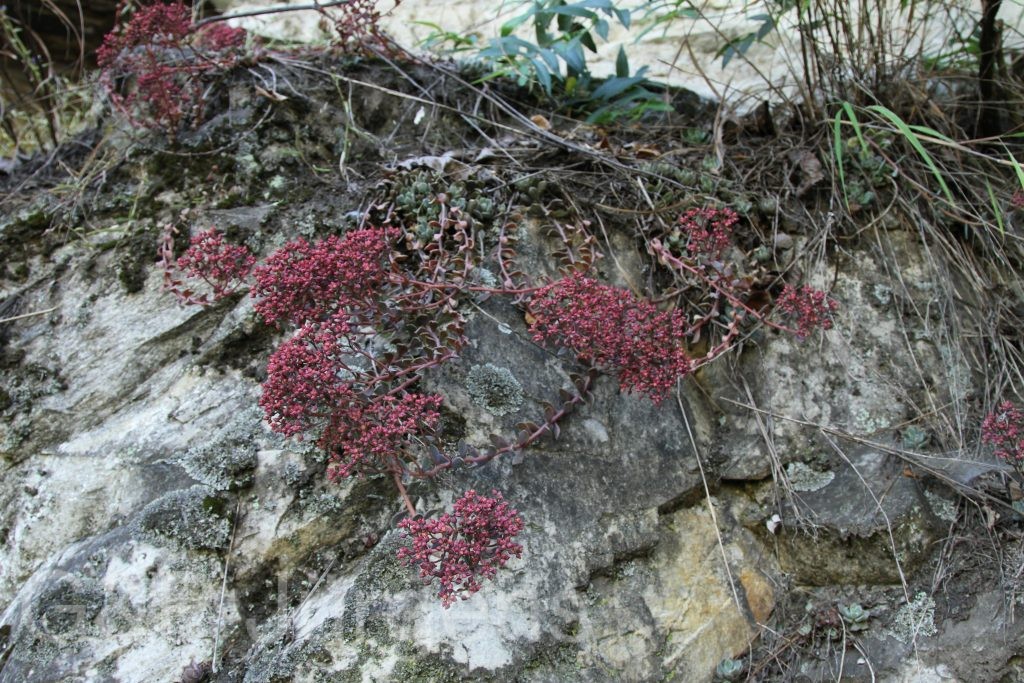
Rosularia rosulata is a saxicolous succulent of the western and central Himalaya, recorded from northern India, Pakistan and Nepal, with around 106 georeferenced occurrences in the GBIF dataset. It is a plant of dry, sunny rock faces, cliff crevices, stony slopes and crumbling walls at montane to subalpine elevations, where it exploits thin pockets of mineral soil and tolerates strong insolation and seasonal drought. The collection illustrated from Guni in Garhwal, India, at 2400 m in September, exemplifies its occurrence on exposed rocky ground in the inner-Himalayan ranges where the monsoon is attenuated and conditions are markedly continental.

It is a perennial herb forming dense basal rosettes of fleshy, obovate to spathulate leaves that are glabrous or finely glandular-pubescent, often reddish-tinged at the margins and apex. From the rosette arises an erect or ascending leafy flowering stem bearing a cymose, somewhat secund inflorescence. The flowers are five-merous, with narrow sepals and a campanulate to shortly tubular corolla of pale yellowish-white to pinkish petals fused at the base, the lobes erect to spreading. Stamens are typically ten, the carpels free and erect, maturing into follicles that release small seeds. After flowering the monocarpic rosette commonly dies, the plant persisting through offsets.

The genus Rosularia, segregated from Sedum and Cotyledon, comprises Old World rosette-forming Crassulaceae distinguished by their tubular fused corollas and rosulate habit. Rosularia rosulata, treated by H. Ohba, occupies a biogeographically interesting niche in the drier inner valleys, sharing affinities with Central Asian congeners. CAM photosynthesis and water storage adapt it to arid rock habitats; it is not considered threatened but is locally restricted to suitable lithic microsites.

Author: (Edgew.) H.Ohba · Sources: POWO (Kew), GBIF, Flora of Pakistan, Flora of Nepal, Crassulaceae of the Himalaya (H. Ohba), A Revision of the Genus Rosularia

Salvia nubicola

by GP Jürgens

Wall. ex Sweet

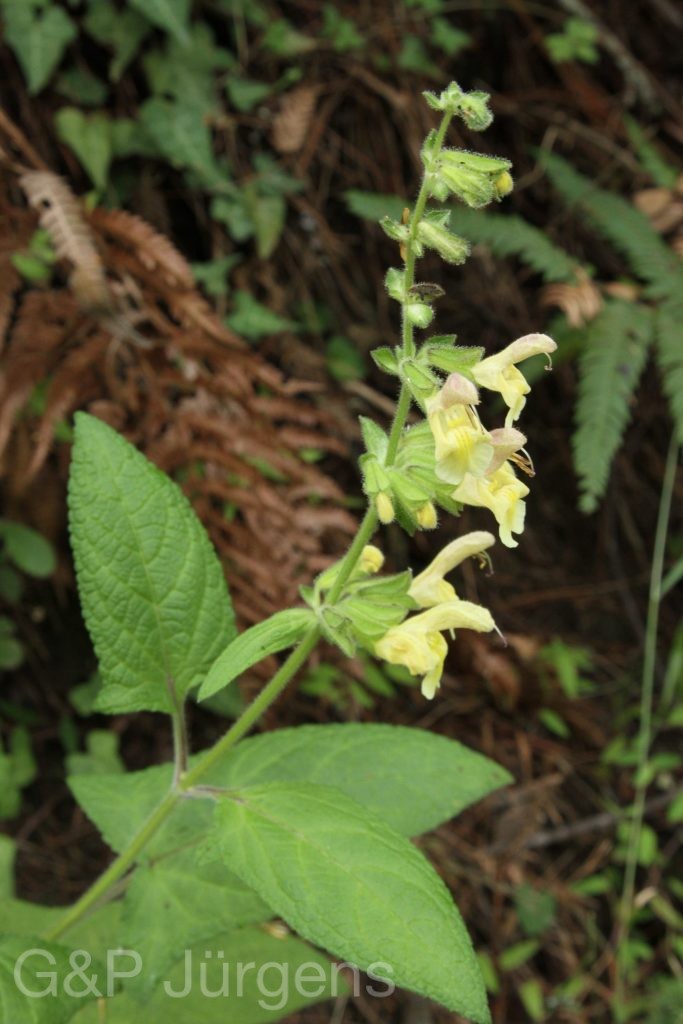
Bhutan2012 15 scaled
Bhutan Paro, 2300m September

Description

Salvia nubicola is a robust herbaceous sage of the Himalaya and adjacent mountains, distributed from Afghanistan and Pakistan through Nepal, northern India and Bhutan into south-western China, with 372 GBIF occurrences that include naturalised or cultivated material in Europe, North America, Iran and New Zealand. It favours open slopes, forest margins, clearings, roadsides and disturbed ground in the temperate montane zone, broadly between 1800 and 3600 m. The illustrated plant was photographed at Paro in Bhutan at 2300 m in September, in the late-summer to autumn flowering season characteristic of the species at mid-elevations.

It is a stout perennial herb up to 1-1.5 m tall with quadrangular, glandular-hairy stems and a strong aromatic scent. The leaves are large, ovate-triangular to hastate with a cordate or sagittate base and crenate margin, long-petiolate and rugose. The flowers are arranged in widely spaced verticillasters forming an elongate terminal inflorescence, subtended by conspicuous bracts. The corolla is pale yellow, often blotched or veined with purple or brown on the lower lip, strongly two-lipped with a hooded galea-like upper lip; the two fertile stamens bear the characteristic lever-like connective of Salvia. The fruit comprises four smooth nutlets enclosed in the persistent two-lipped calyx.

The staminal lever mechanism deposits pollen on visiting long-tongued bees and is a defining synapomorphy of Salvia; in S. nubicola the pale, dark-marked flowers attract bumblebees. The species belongs to a Himalayan group of large-leaved yellowish-flowered sages allied to S. glutinosa of Europe. Wide-ranging, weedy-tolerant and locally common, it is of least concern, and like many sages it has minor local use in traditional medicine and is grown as an ornamental in temperate gardens.

Author: Wall. ex Sweet · Sources: POWO (Kew), GBIF, Flora of China, Flora of Pakistan, Hedge: Labiatae of South-West Asia

Sambucus adnata

by GP Jürgens

Wall. ex DC.

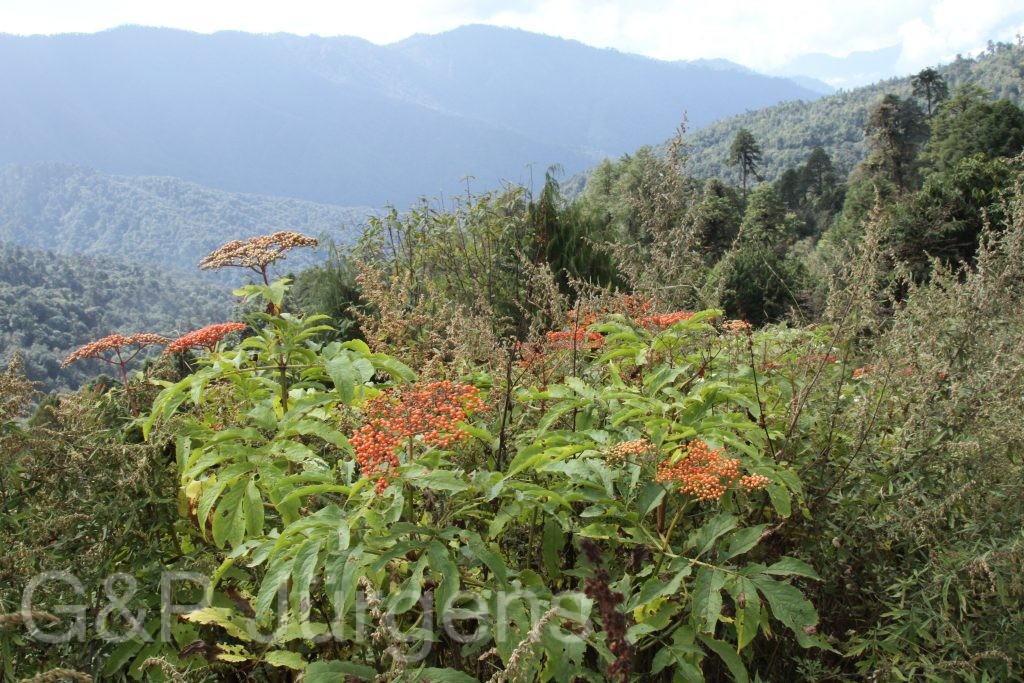
Bhutan2015 322
Bhutan Trongsa 2100m, October
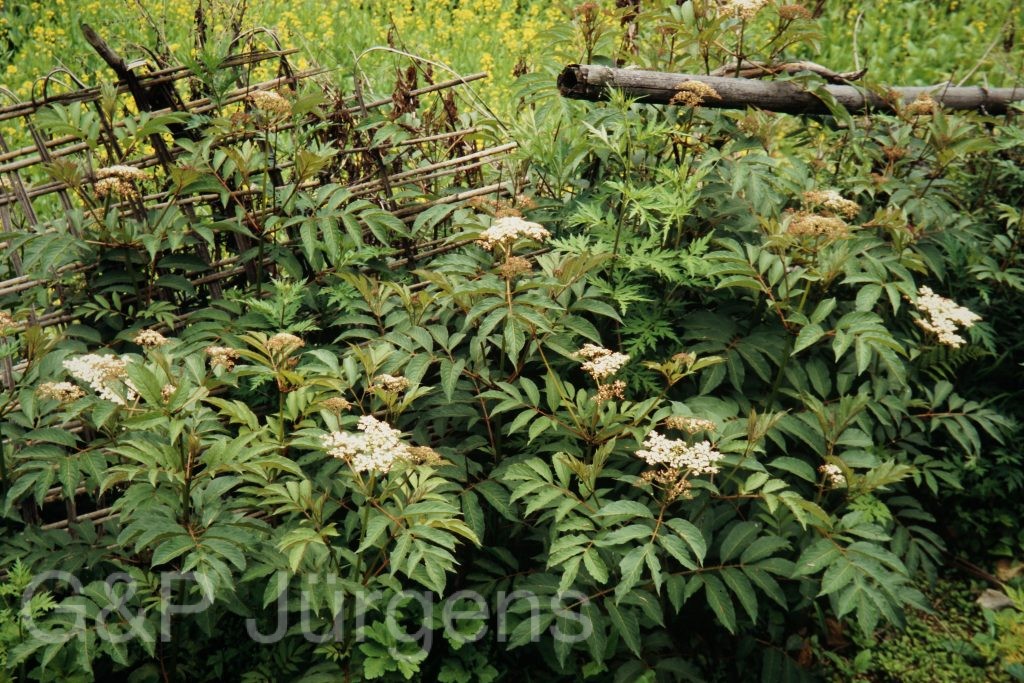
Bh09 202 P341
Bhutan Thimphu, 2500m June

Description

Sambucus adnata is a herbaceous elder distributed across the Himalaya and western to central China, occurring in Nepal, Bhutan, northern India and widely in China, with its very numerous GBIF records (over 1700) concentrated in this region; records from Germany, the United States, Austria, Japan and elsewhere reflect cultivation and herbarium accessions. It grows in moist forest clearings, on shrubby slopes, along stream banks, roadsides and at forest margins, generally between about 1600 and 3600 m. The photographed plants from Trongsa (2100 m, October) and Thimphu (2500 m, June) in Bhutan illustrate its range through the cool, humid mid-montane belt of the eastern Himalaya.

Unlike its woody relatives, S. adnata is a tall, robust perennial herb dying back to a thick, fleshy, creeping rhizome. The stout, erect, ridged stems bear large, opposite, imparipinnate leaves with several pairs of lanceolate, serrate leaflets, the lowest leaflets often adnate to the rachis or with adnate stipule-like outgrowths, a feature reflected in the epithet. The inflorescence is a large, flat-topped to convex compound cyme of numerous small flowers with a rotate, whitish to pinkish corolla and conspicuous reddish anthers or nectaries. The fruit is a small, globose, red drupe containing a few seed-like stones.

Sambucus, formerly placed in the Caprifoliaceae, is now referred with the genus Adoxa and Viburnum to the Adoxaceae on molecular and morphological grounds. S. adnata is distinctive among elders for its fully herbaceous, rhizomatous habit. It is widespread, common and weedy in disturbed montane habitats, and is of no conservation concern; the plant has a record of local medicinal use for bruises and swellings.

Author: Wall. ex DC. · Sources: POWO (Kew), GBIF, Flora of China, Flora of Bhutan, Annotated Checklist of the Flowering Plants of Nepal, Sambucus (Adoxaceae) monograph

Müll.Arg.

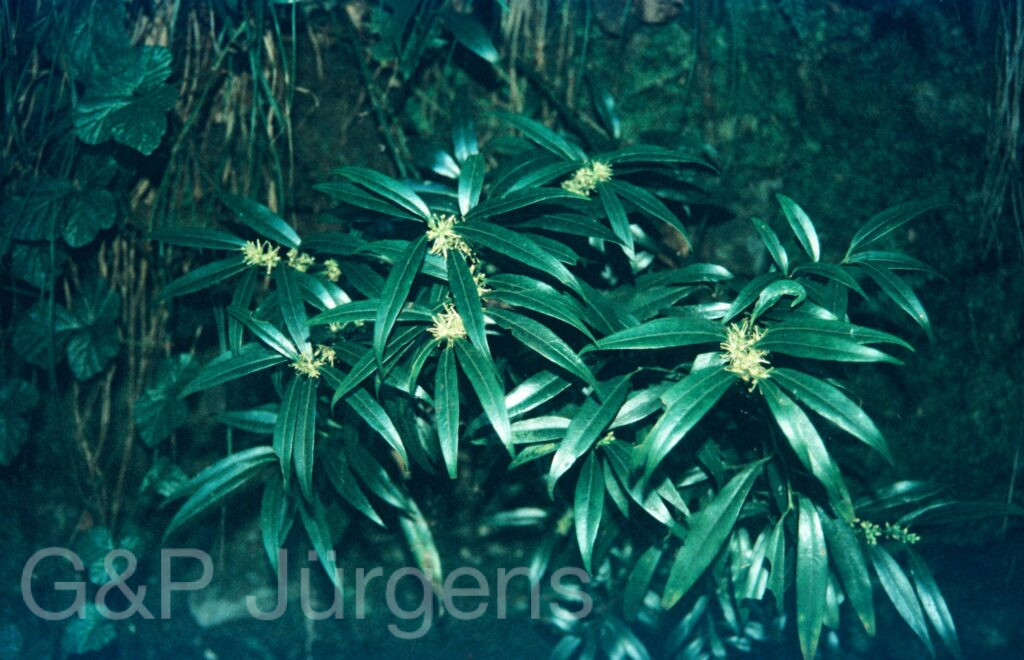
Garw 2005 432 ergebnis
India Garhwal Barqargay 2100m, September

Description

Sarcococca saligna (Müll.Arg.), the willow-leaf sweet box, is an evergreen shrub of the family Buxaceae native to the Himalaya and adjacent uplands, ranging from Afghanistan and Pakistan through northern India and Nepal to China, with related records extending into Southeast Asia. The fewer than 400 GBIF occurrences point to a scattered montane distribution, supplemented by cultivated material in Europe and North America where the plant is grown as an ornamental. It inhabits shady, moist temperate forest, ravine slopes and the understorey of oak and conifer woodland, generally between 1,500 and 2,800 m, as shown by the Garhwal collection from Barqargay at 2,100 m in September.

The plant is a glabrous, much-branched shrub up to about 2 m tall, with slender green stems. The leaves are alternate, narrowly lanceolate to oblong-lanceolate, leathery, entire-margined, acuminate at the apex and tapering to a short petiole, the venation prominent beneath, distinguishing this species from its broader-leaved congeners. The small, fragrant, apetalous flowers are unisexual and borne in short axillary spikes or clusters, the plant being monoecious with the few female flowers placed below the more numerous male flowers; the male flowers display creamy-white stamens. The fruit is a small, globose, fleshy drupe ripening from red to purplish-black.

Sarcococca belongs to the same family as Buxus and Pachysandra, sharing the reduced, unisexual, perianth-simple flowers characteristic of the Buxaceae. The species is rich in steroidal alkaloids that have attracted pharmacological interest for their cholinesterase-inhibitory activity, and it is used in regional traditional medicine. Valued in gardens for its glossy foliage and intensely sweet winter fragrance, S. saligna is widely cultivated; in the wild it remains locally common and is not considered threatened.

Author: Müll.Arg. · Sources: POWO (Kew), Flora of Pakistan, GBIF, Flora of China Vol. 11, Köhler & Brückner: Buxaceae in The Families and Genera of Vascular Plants

Wall.

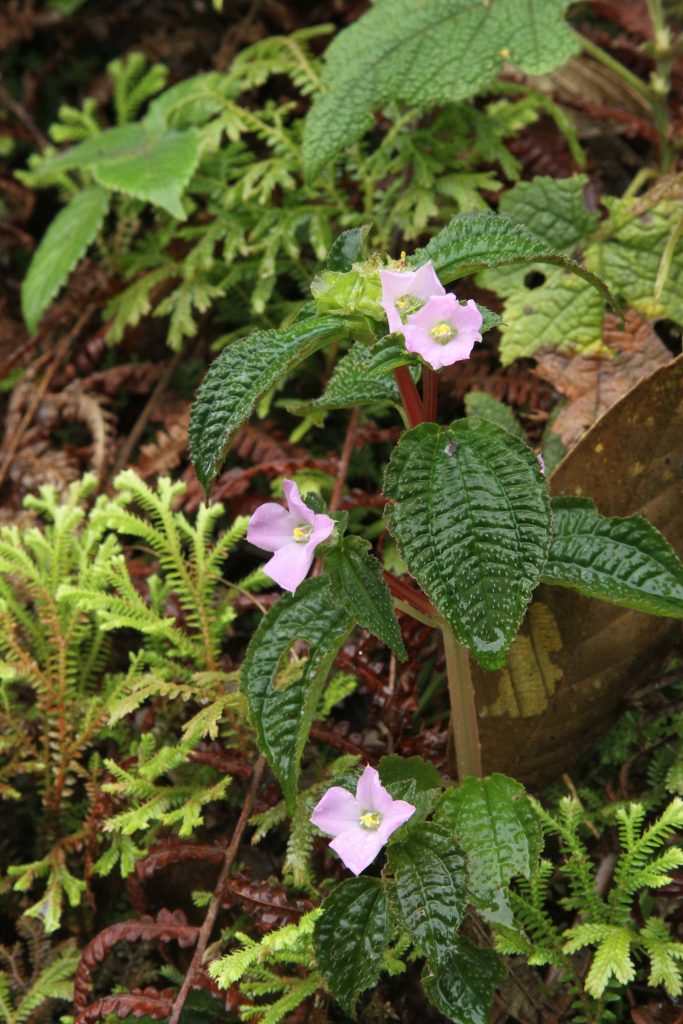
Bhutan2012 676
Bhutan Galephu 900m, September

Description

Sarcopyramis nepalensis Wall. is a small, delicate herb of the Melastomataceae distributed through the eastern Himalaya and Southeast Asia. Its several hundred records range across Nepal, northeast India, Bhutan, southern China, Taiwan, Myanmar, Vietnam, Malaysia, Indonesia and the Philippines. The species is a denizen of cool, shaded, perpetually moist habitats, growing on damp humus-rich banks, mossy rocks, ravine sides and the forest floor of evergreen broad-leaved and subtropical forests. It generally occupies low to mid elevations, and the plant photographed near Galephu in southern Bhutan at 900 m in September, late in the monsoon when these herbs flower, is typical of its preference for humid, dripping microsites.

The plant is a small, succulent, low annual or short-lived perennial with weak, ascending, four-angled stems that often root at the lower nodes. The leaves are opposite, membranous, broadly ovate to elliptic, with the three to five arcuate, longitudinally curved veins characteristic of the family, the margins finely toothed and sometimes reddish beneath. The flowers are borne singly or in few-flowered terminal cymes; they have a distinctive urceolate, four-angled hypanthium with prominent crested or winged angles, four pink to pale rose-purple petals, and eight stamens with conspicuously appendaged connectives. The fruit is a small, four-lobed, cup-shaped capsule crowned by the persistent calyx.

Sarcopyramis is a small Asian genus closely allied to Bredia and Phyllagathis within tribe Sonerileae, and the species has at times been treated as a variable complex with several segregate taxa and varieties. Its dependence on humid, shaded forest microhabitats makes it a useful indicator of intact, moisture-rich forest understorey. While not currently regarded as threatened across its broad range, local populations are sensitive to deforestation and the drying of streamside and seepage habitats.

Author: Wall. · Sources: POWO (Kew), GBIF, Flora of China Vol. 13, Flora of Bhutan Vol. 2, Renner et al.: Melastomataceae systematics

D.Don

Sikkim2003 363 P512
Sikkim Lachen Tista Tal 3450m August
Sikkim2003 364 P511
Sikkim Lachen Tista Tal 3450m August
Nepal 95 100 P178 ergebnis
Nepal Barphak 2450m October
Nepal 95 135 P228 ergebnis
Nepal Barphak 2450m October

Description

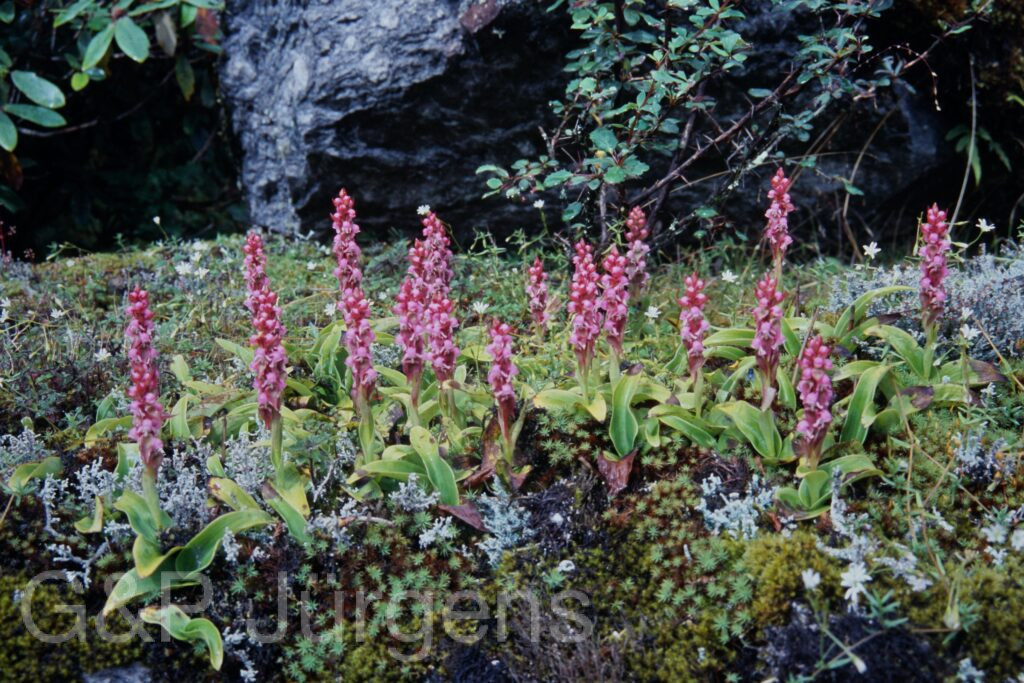
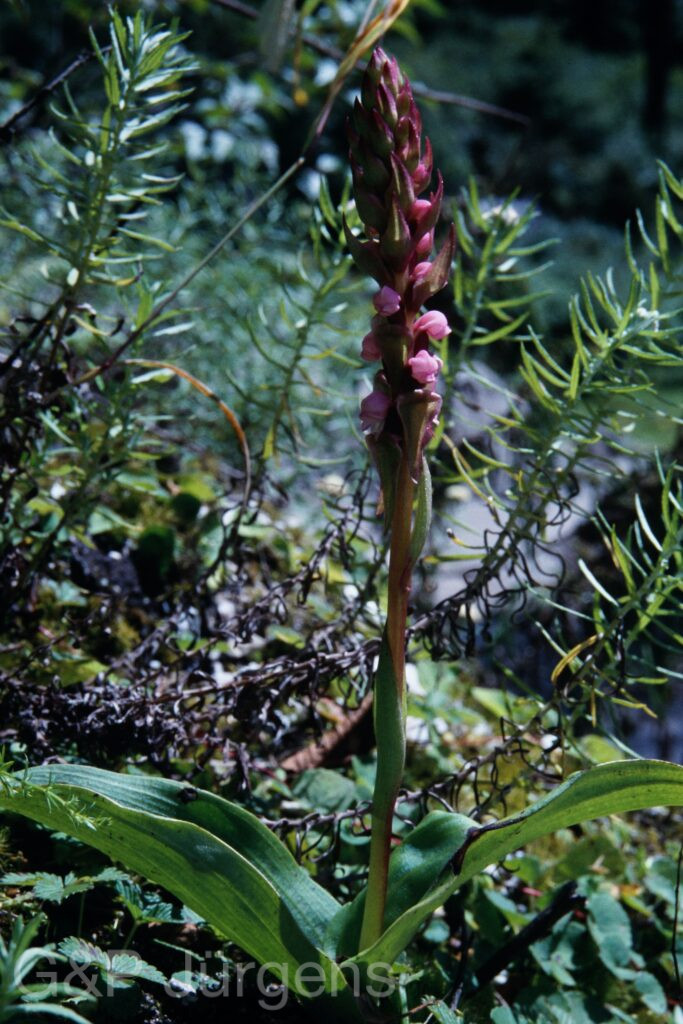
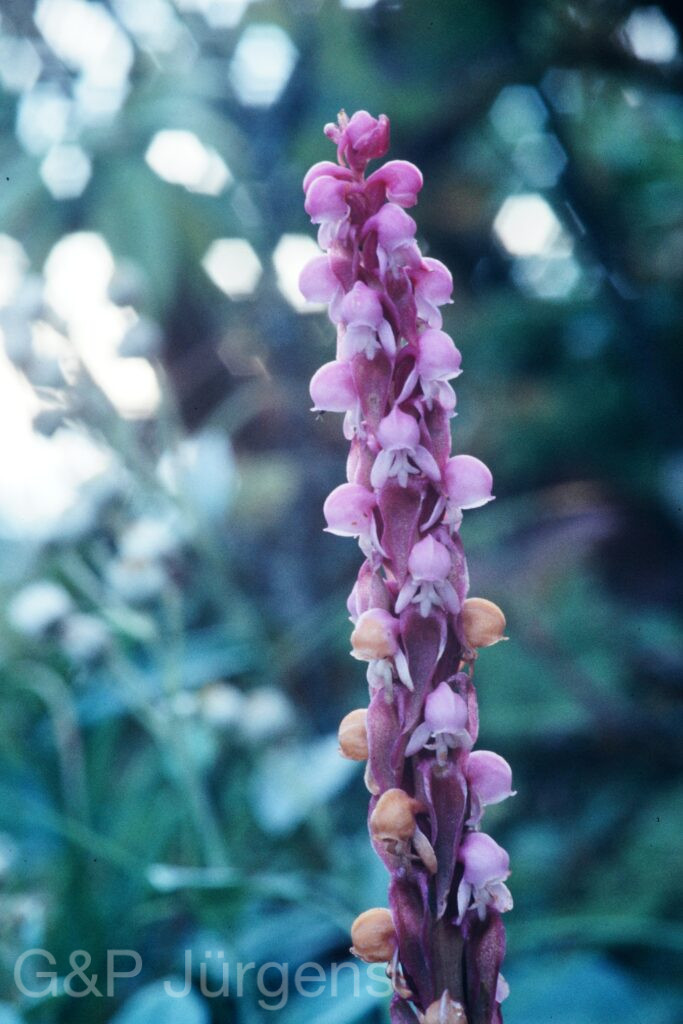
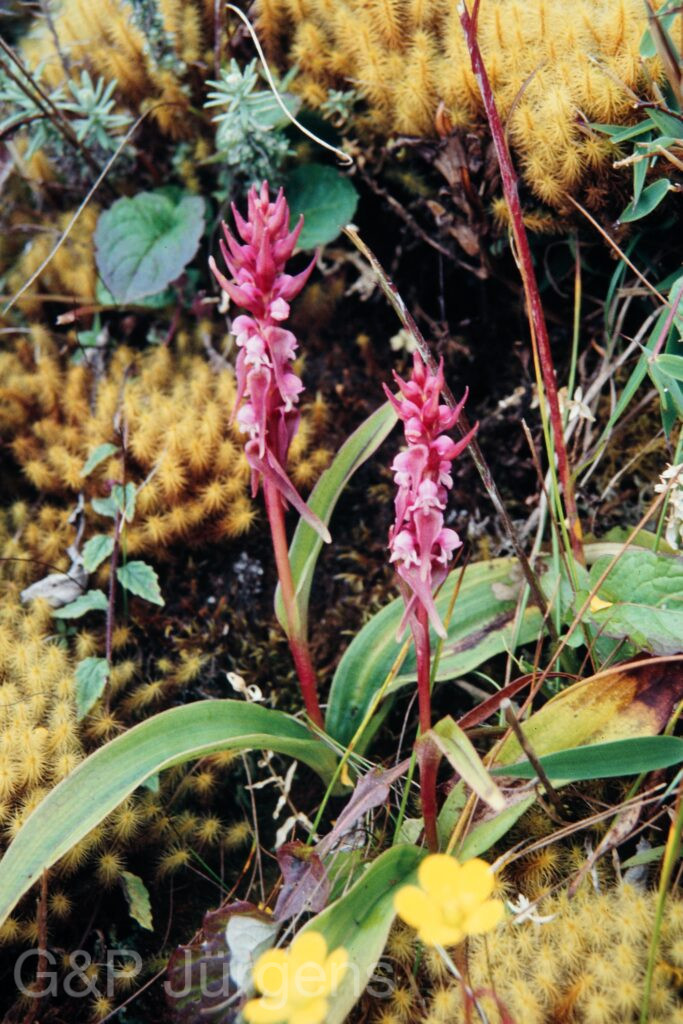
Satyrium nepalense D.Don is a terrestrial orchid of remarkably wide distribution, ranging across the Himalaya and southern Asia from Pakistan, India, Nepal, Bhutan, Sri Lanka and southern China to Myanmar, and extending through tropical and southern Africa; GBIF records nearly 1921 occurrences, reflecting its broad ecological tolerance. It grows in open grassy slopes, meadows, scrub and forest clearings from the submontane belt to high alpine pastures, broadly between about 1500 and 3700 m. The cited material from Lachen in Sikkim at 3450 m in August and Barphak in central Nepal at 2450 m in October illustrates its long flowering season across a wide altitudinal range.

The species is a terrestric herb arising from paired ovoid, tomentose tubers, with an erect leafy stem bearing a few ovate to lanceolate sheathing leaves. The inflorescence is a dense cylindrical raceme of many small, pink to rose-purple, fragrant flowers; each flower is non-resupinate, with the lip uppermost and produced into two slender, parallel spurs at its base, a diagnostic feature of the genus. The fruit is a small dehiscent capsule releasing abundant dust-like seeds.

Satyrium (Orchidaceae, subtribe Satyriinae) is a chiefly African genus with an outlying Asian representation, of which S. nepalense is the most widespread; its twin-spurred, non-resupinate flowers and moth pollination are characteristic. Valued in traditional medicine for its tubers, the species is locally collected, and although still common it warrants monitoring where harvesting pressure is intense.

Author: D.Don · Sources: POWO (Kew), GBIF, Flora of Bhutan, Flora of China, Orchids of Sikkim Himalaya, Pridgeon et al. Genera Orchidacearum

DC.

Bhutan2012 757
Bhutan Zemgang 1200m, October
Bhutan2012 758
Bhutan Zemgang 1200m, October

Description

Saurauia napaulensis is a subtropical tree or large shrub widely distributed through the southern Himalaya and Southeast Asia, with abundant GBIF occurrences in China, Nepal, India, Bhutan, Bangladesh, Myanmar, Thailand, Laos, Vietnam, Malaysia and Sri Lanka. It is a frequent component of moist subtropical broad-leaved forest, secondary forest, ravines and stream sides, generally between 600 and 2,100 m. The photographed individual was recorded at Zhemgang in central Bhutan at about 1,200 m in October, within the warm mid-hill belt where the species is a conspicuous understorey and gap-colonising tree.

The plant is a small evergreen tree, typically with stout twigs and young parts clothed in scaly or bristly indumentum characteristic of the genus. The leaves are large, alternate, oblanceolate to elliptic, leathery, with serrate margins and prominent lateral venation, the lower surface bearing scattered scales or appressed setae. The flowers are borne in branched axillary panicles; each is five-merous with white to pink, somewhat cup-shaped petals, numerous stamens, and several distinct or basally united styles. The fruit is a small, fleshy, depressed-globose, greenish to whitish berry containing many minute seeds, attractive to birds and other animal dispersers.

Saurauia is the only genus of Actinidiaceae with a wide Old World tropical distribution, the family also containing the kiwifruit genus Actinidia, and the scaly indumentum and many-styled flowers are diagnostic. Saurauia napaulensis is among the most common and widespread Asian species, used locally for fuel, fodder and edible fruit. It is abundant, regenerates readily in disturbed ground, and is not of conservation concern.

Author: DC. · Sources: POWO (Kew), GBIF, Flora of China Vol. 12 (Actinidiaceae), Grierson & Long: Flora of Bhutan Vol. 2, Hunter: Revision of the Asian species of Saurauia

(Decne.) Sch.Bip.

Garw 2005 170 ergebnis
India Garhwal Simka 2800m, October

Description

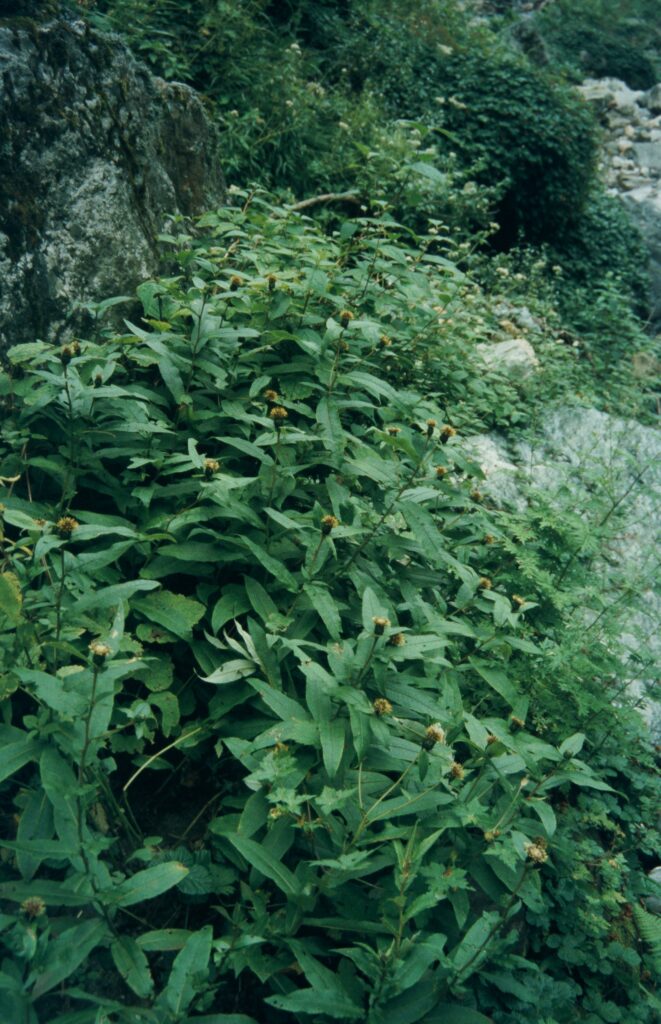
Saussurea fastuosa is a Sino-Himalayan species distributed across the high mountain ranges of China, India, Nepal and Bhutan, with around 94 georeferenced occurrences documenting a coherent eastern Himalayan to southwest Chinese range. It is a plant of temperate and subalpine zones, favouring forest margins, moist grassy slopes, scrub and stream banks, typically between roughly 2500 and 3800 m. The photographed material from Simka in Indian Garhwal at 2800 m, flowering in October, is representative of its autumn-flowering behaviour in the western part of its range, where it occupies cool, humid clearings within mixed conifer and broad-leaved forest.

It is a robust perennial herb with an erect, leafy, often glandular-pubescent stem arising from a stout rootstock. The leaves are alternate, the lower ones petiolate and lyrate-pinnatifid to broadly ovate, the upper progressively smaller, sessile and somewhat amplexicaul, with dentate margins and a thinly arachnoid-hairy lamina beneath. The capitula are medium-sized and aggregated in a corymbose synflorescence, each surrounded by an ovoid to campanulate involucre of imbricate, often purple-tinged, frequently squarrose phyllaries. The florets are all tubular and purple; the achenes are glabrous and crowned by a double pappus, the outer row scabrid and caducous, the inner of plumose, basally connate bristles.

Within the very large and taxonomically complex genus Saussurea, this species belongs to the broad-leaved, lowland-to-subalpine assemblage rather than the cushion-forming snow lotuses of the highest alpine zone. The name S. fastuosa (Decne.) Sch.Bip. is the accepted name. As an entomophilous late-season nectar source it is visited by bumblebees and other long-tongued insects, and like its congeners it disperses by anemochory via the plumose pappus. It is locally frequent and not regarded as threatened.

Author: (Decne.) Sch.Bip. · Sources: POWO (Kew), GBIF, Flora of China Vol. 20-21, Flora of Bhutan Vol. 2, Flora of Nepal, Lipschitz Genus Saussurea (monograph)

Wall. ex DC.

Garw 2005 328 ergebnis
India Garhwal Bagubasa 4100m, September

Description

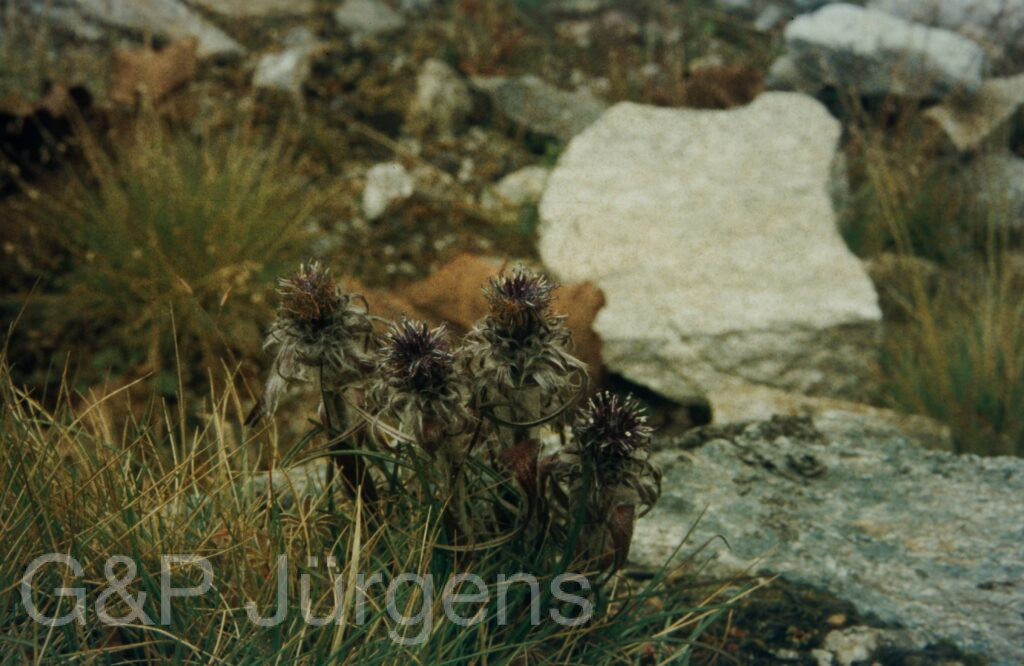
Saussurea graminifolia is a high-alpine composite of the Himalaya and Tibetan borderlands, distributed across Nepal, India, China and Bhutan, with about 127 GBIF occurrences. It is a true plant of the upper alpine zone, occupying screes, fine gravel, glacial moraine, stony meadows and exposed ridges generally above 4000 m and reaching well over 4500 m. The collection from Bagubasa in Garhwal, India, at 4100 m in September corresponds to its late-season flowering, when these wind-swept slopes near the limit of vascular plant life carry the characteristic cushion and rosette flora of the region.

It is a low, tufted perennial herb growing from a stout rootstock, with very narrow, grass-like (graminifolious) basal leaves that form a dense rosette, the epithet alluding to this distinctive linear foliage. One or few short scapes bear a cluster of capitula crowded among the leaves and often partly enveloped by them. The flower heads are discoid, containing only tubular florets that are purple to violet, surrounded by overlapping involucral bracts. As in Saussurea generally the fruit is an achene topped by a pappus of feathery (plumose) inner bristles and shorter outer ones.

Saussurea belongs to tribe Cardueae of the Asteraceae and is a hallmark genus of the Sino-Himalayan alpine zone, where many species show adaptations such as woolly indumentum or translucent bracts (the "snowball" and "glasshouse" plants) that buffer the harsh, cold, high-radiation environment. Though not formally threatened, such specialised high-elevation endemics are sensitive to climate warming and to harvesting where Saussurea species are used medicinally.

Author: Wall. ex DC. · Sources: POWO (Kew), GBIF, Flora of China, Flora of Bhutan, Saussurea monograph (Lipschitz)