Pax
Description
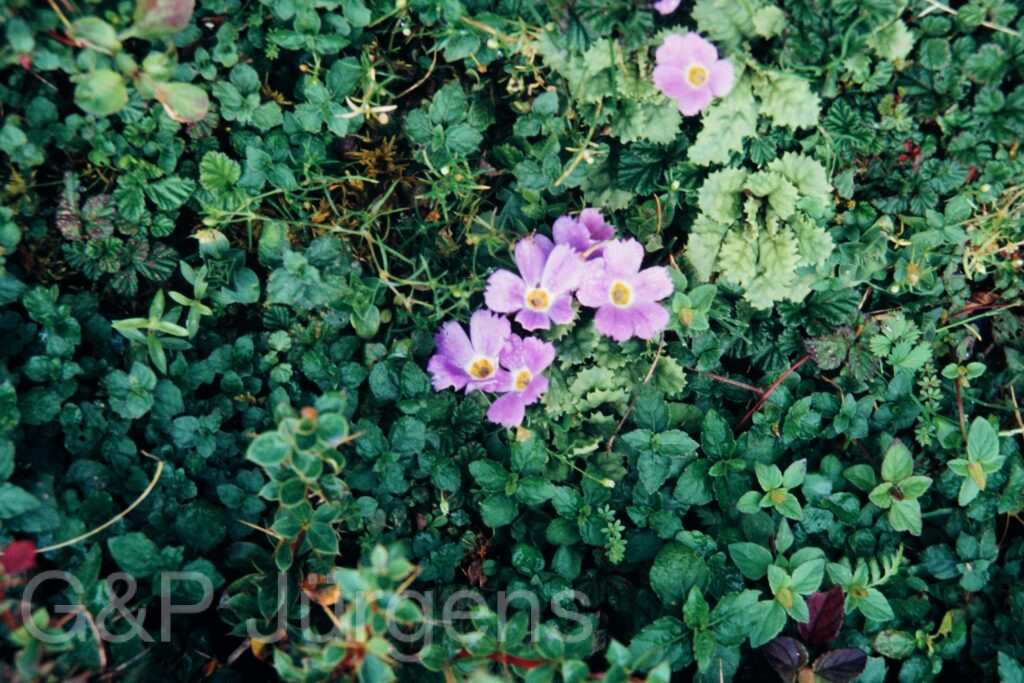
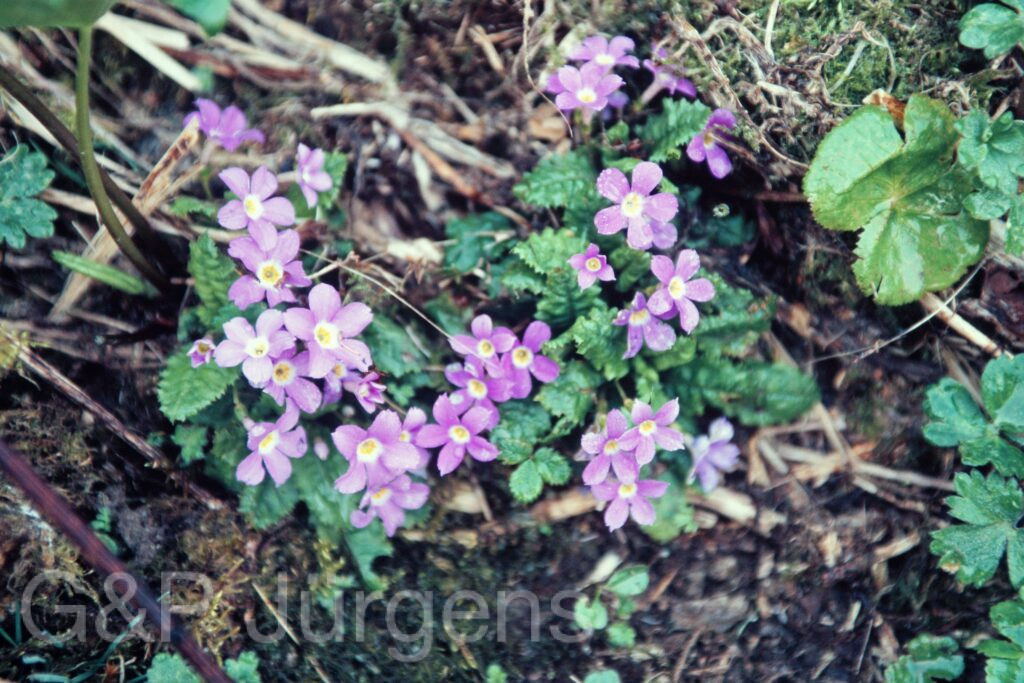
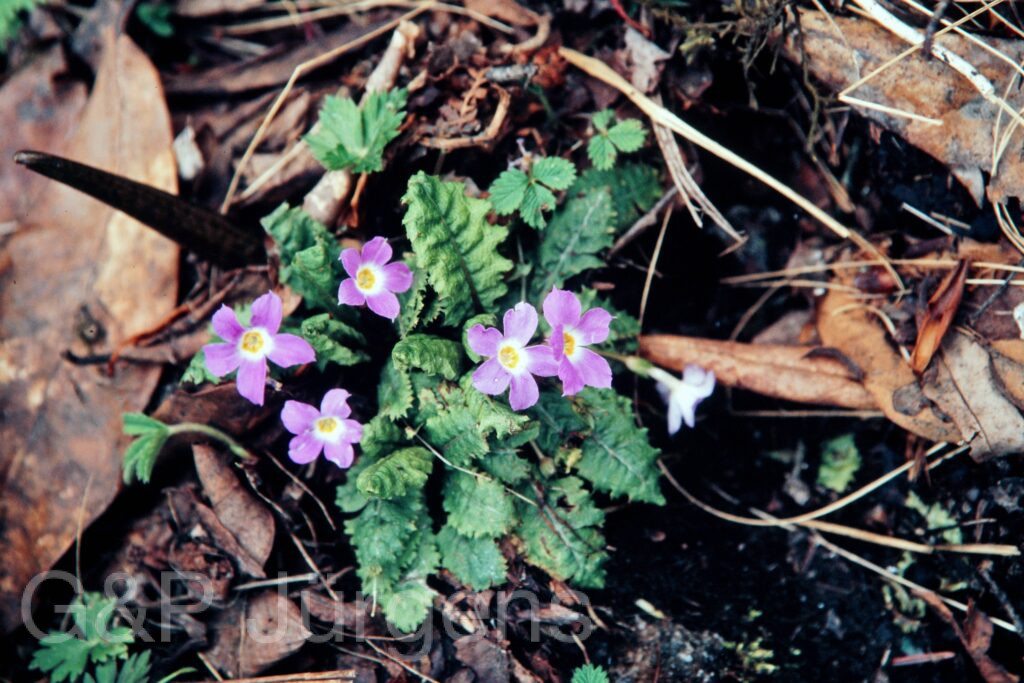
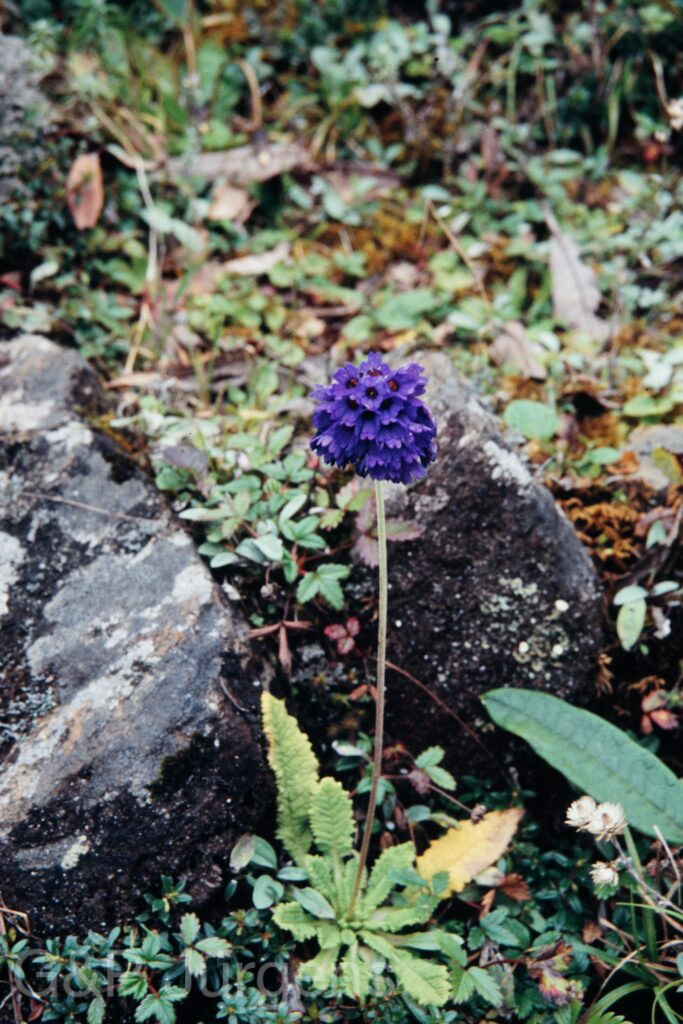
Primula glomerata Pax is an alpine primrose of the central and eastern Himalaya, recorded from Nepal, India, Bhutan and southern China, with roughly 207 GBIF occurrences; isolated points in Canada and Japan reflect botanic-garden or cultivated material. It inhabits open grassy slopes, moist alpine meadows and the margins of streams and seepages, broadly between about 3000 and 4500 m. The photographed plant from the Rupina-La in central Nepal at approximately 3100 m, in September, illustrates its late-season flowering on cool, humid montane turf where it forms scattered colonies among short alpine herbage.
The species is a perennial herb with a short rootstock bearing a rosette of leaves that are oblong to spathulate, crenate to denticulate at the margin, and frequently mealy or efarinose beneath. From the rosette rises a slender scape terminating in a dense, capitate or glomerate inflorescence, whence the epithet, of small bluish-purple to violet flowers; each has a tubular calyx and a salverform corolla with an annulate throat and notched lobes. The fruit is a small capsule dehiscing to release numerous minute seeds.
Primula glomerata is classified within Primula section Capitatae (subgenus Aleuritia), a group of farinose, head-flowered Sino-Himalayan primulas. Its capitate inflorescence and farina distinguish it from related taxa such as P. capitata. Locally frequent across its alpine range and not currently of conservation concern, it remains sensitive to grazing pressure and habitat disturbance at high elevations.
Author: Pax · Sources: POWO (Kew), GBIF, Flora of Bhutan, Flora of China, Flora of Nepal, Richards monograph Primula (Royal Botanic Garden Edinburgh)