Tag:

Autumn

Andrews

Bhutan2012 398
Bhutan Wangdi 2600m, September

Description

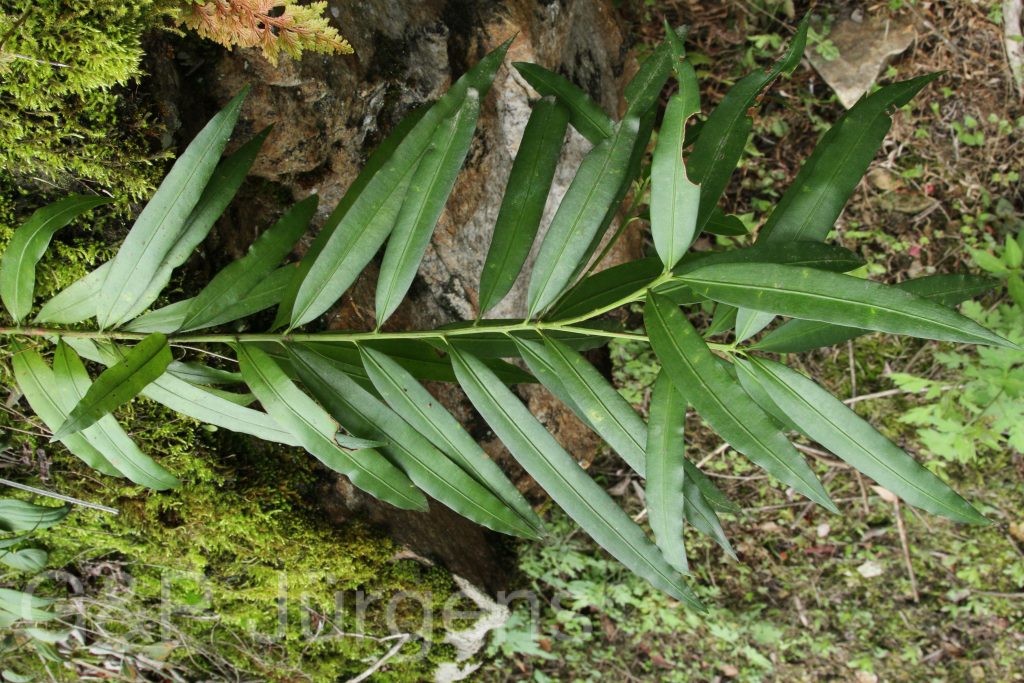
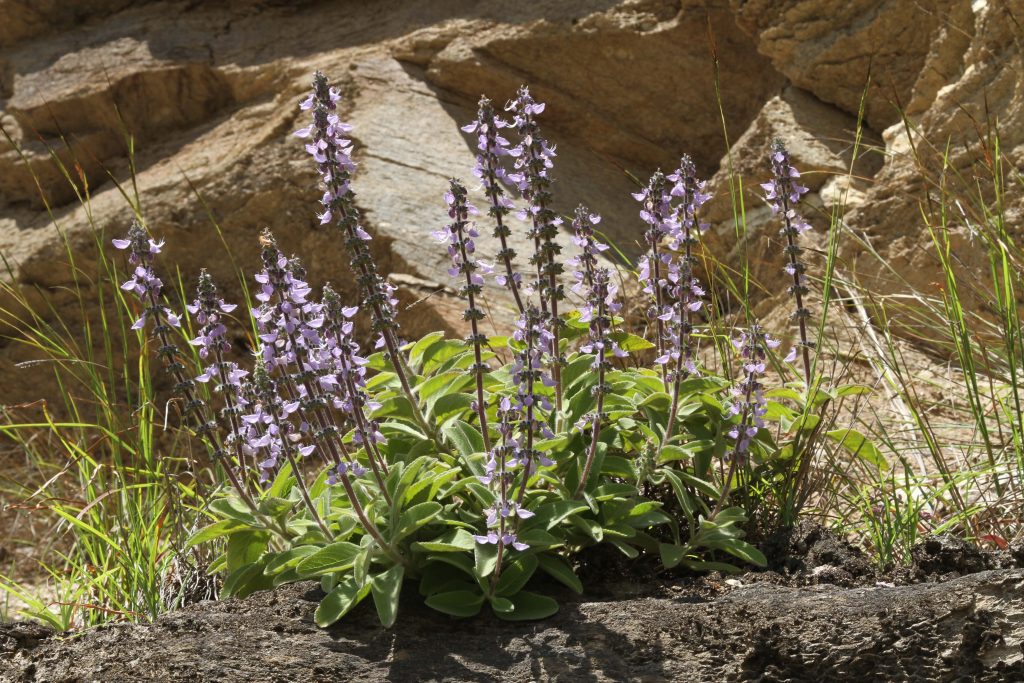
Plectranthus barbatus Andrews is an aromatic perennial herb or subshrub with a broad palaeotropical distribution, recorded from tropical and southern Africa (Ethiopia, Kenya, Tanzania, South Africa) and the Arabian Peninsula through to the Indian subcontinent, Nepal, Bhutan and Sri Lanka, where it is both native and widely cultivated and naturalised. In the Himalaya it grows on warm, dry, rocky banks, terrace margins, scrub and open hill slopes, often near villages. The photographed plant from Wangdi (Wangdue Phodrang) in Bhutan at 2600 m, flowering in September at the close of the monsoon, illustrates its tolerance of sunny, well-drained sites in the lower-temperate zone. GBIF treats the listed name as a synonym, with Plectranthus barbatus the accepted name.

The plant forms an erect, branching, softly woody-based herb with quadrangular, finely pubescent stems. The opposite leaves are broadly ovate, crenate-margined, somewhat fleshy and strongly aromatic, narrowing to a winged petiole and densely glandular and hairy. The flowers are borne in whorls along elongate, terminal racemose inflorescences; the bilabiate corolla is blue to violet-blue, with a short upper lip and a deflexed, boat-shaped lower lip enclosing the four didynamous stamens. As in other Lamiaceae the fruit comprises four smooth nutlets seated in the persistent calyx.

Long cultivated for medicine and as a hedge plant, P. barbatus (often called Coleus forskohlii in pharmacological literature) is the principal source of the diterpenoid forskolin, which has driven extensive cultivation across India and Africa. Its taxonomy is complicated by this synonymy and by horticultural movement blurring native and introduced ranges. The species is not of conservation concern, being weedy, easily propagated and widely naturalised.

Author: Andrews · Sources: POWO (Kew), GBIF, Flora of Bhutan, Flora of Tropical East Africa (Lamiaceae), Plectranthus and Allied Genera (Lukhoba, Simmonds & Paton)
(Sm.) D.Don

Bhutan2012 828 Kopie
Bhutan Tongsa 2050m, October
Bhutan2012 831 Kopie
Bhutan Tongsa 2050m, October
Bhutan2012 1302
Bhutan Trashigang 1900m, October

Description

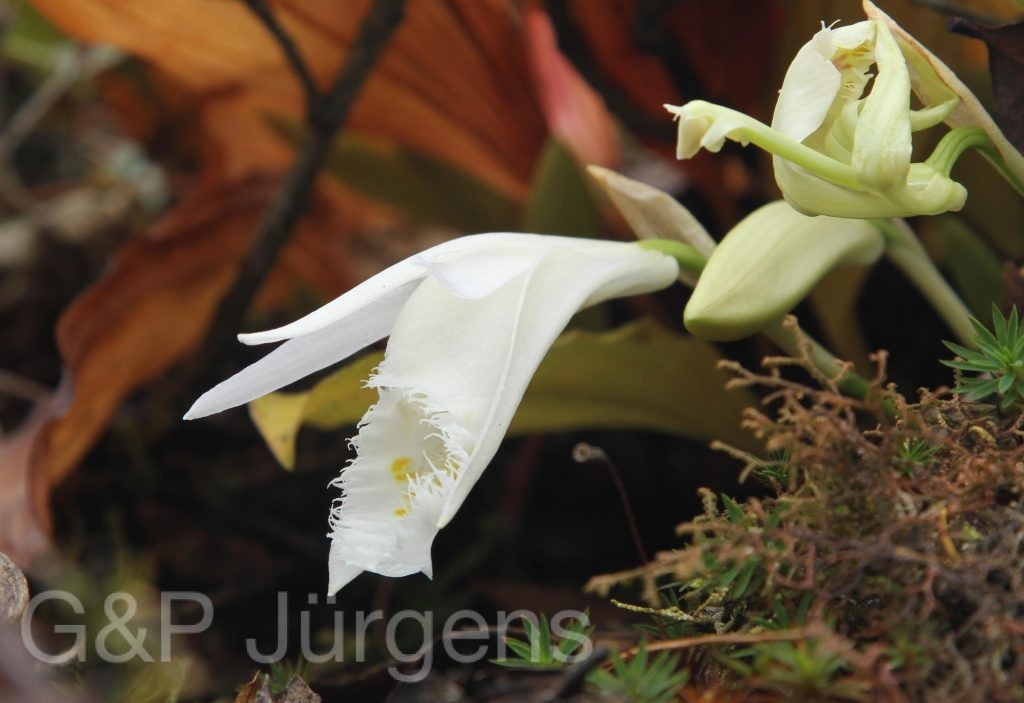
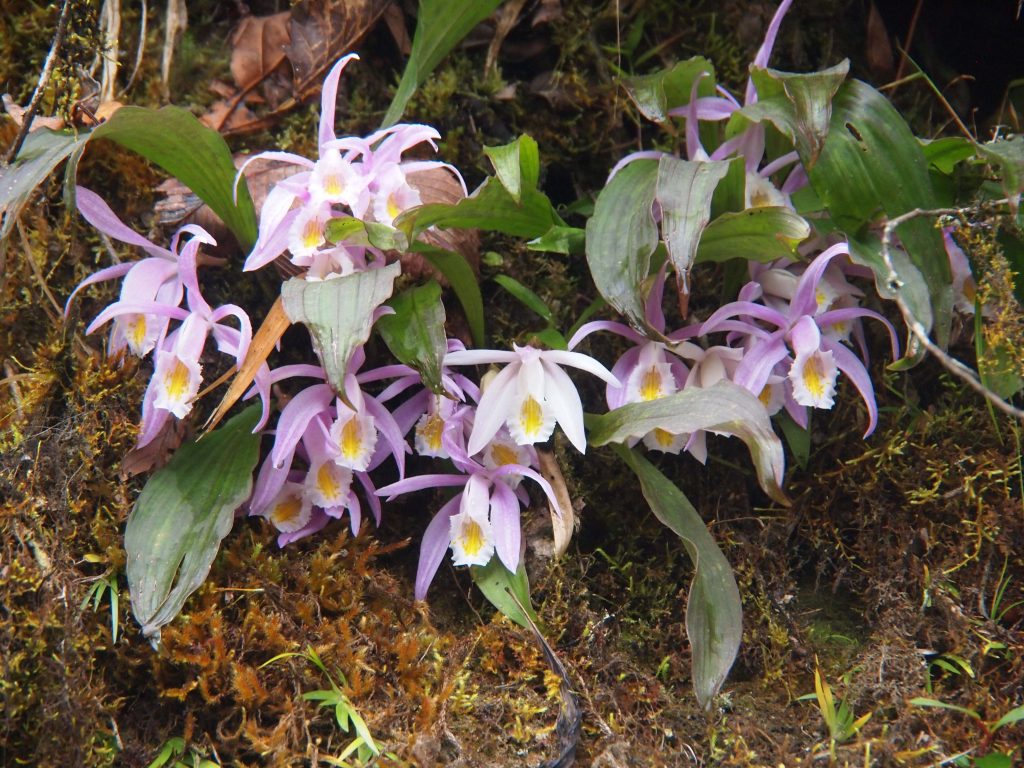
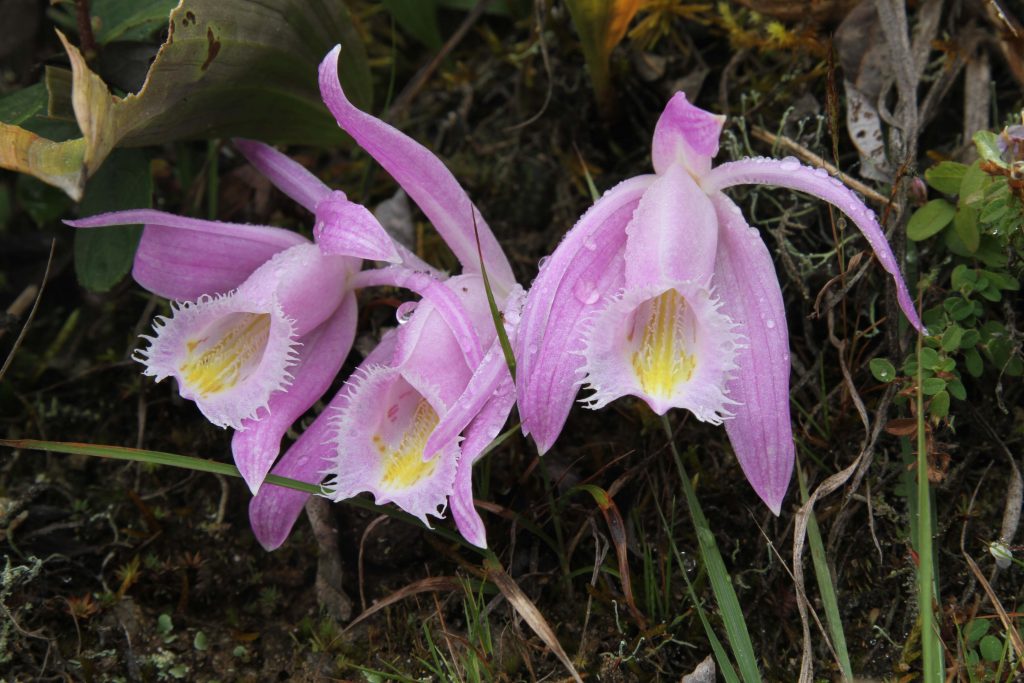
Pleione praecox is an autumn-flowering epiphytic and lithophytic orchid of the eastern Himalaya and Indo-Burmese region, ranging through India, Nepal, Bhutan, China, Thailand, Myanmar, Vietnam and Bangladesh, with cultivated records in Britain and the United States among its roughly 335 GBIF occurrences. It grows on mossy tree trunks, rocks and banks in humid broadleaved montane forest, typically between about 1200 and 2500 m. The cited Bhutanese plants from Trongsa (2050 m) and Trashigang (1900 m), both flowering in October, exemplify its diagnostic late-season anthesis, the epithet praecox referring to bloom appearing as or before the leaves develop.

The species is a deciduous sympodial orchid producing conspicuous, flask-shaped to conical pseudobulbs, often mottled green and purple, each typically bearing one or two pleated, lanceolate leaves that are shed in the dormant season. The showy flowers, borne singly (rarely paired) on a short scape from the base of a pseudobulb, have spreading rose-pink to magenta sepals and petals. The funnel-shaped labellum is the showpiece: broad, fimbriate at the margin, and marked internally with several toothed or lamellate crests and reddish-brown blotching. The column is slender and winged, and the fruit is an ellipsoid capsule.

Pleione is a small genus of subtribe Coelogyninae, and P. praecox is among its most horticulturally prized species, widely cultivated by alpine and orchid growers, which accounts for its scattered records in Europe and North America. Its showy labellum attracts bee pollinators despite offering little reward. Although locally frequent, wild populations face pressure from commercial and amateur collection of pseudobulbs and from clearance of montane forest, making in-situ conservation of its epiphytic habitat important.

Author: (Sm.) D.Don · Sources: POWO (Kew), GBIF, Flora of Bhutan, Flora of China (Orchidaceae), Cribb & Butterfield The Genus Pleione

D.Don

Bhutan2015 187
Bhutan Zhemgang 1000m, October
Bhutan2015 188
Bhutan Zhemgang 1000m, October
Bhutan2014 194
Bhutan Trashyangtse 2100m, May
Bhutan2014 195
Bhutan Trashyangtse 2100m, May

Description

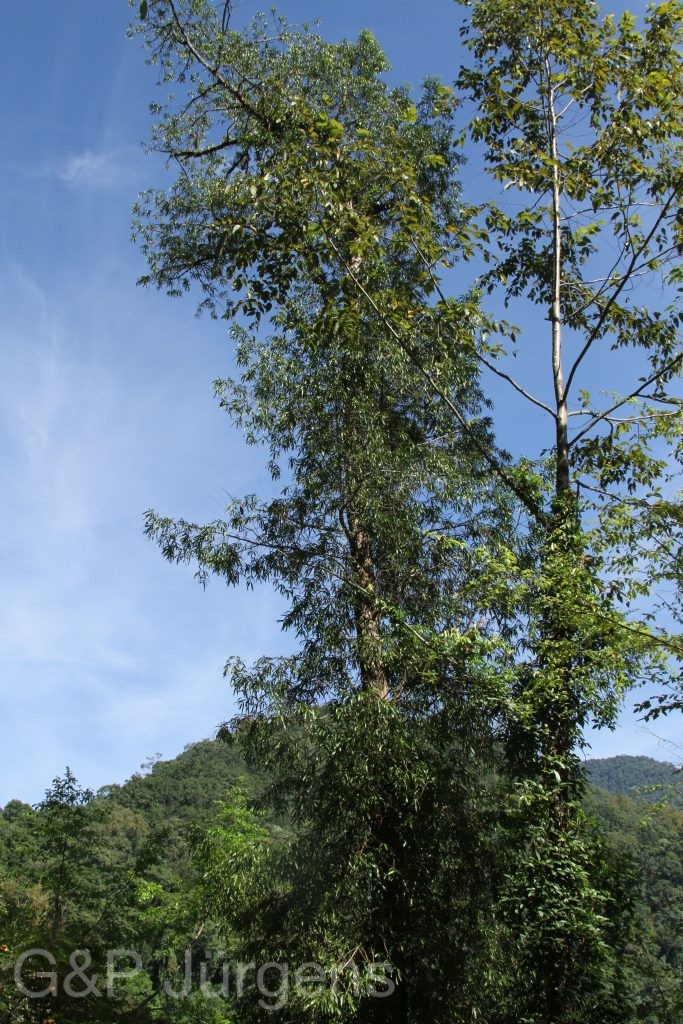
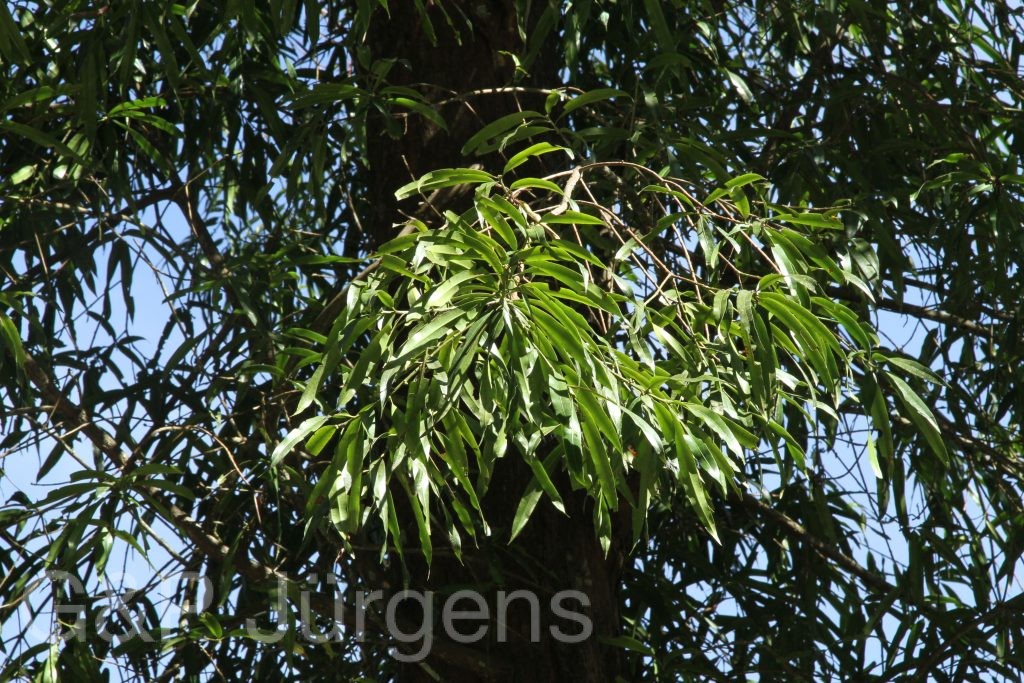
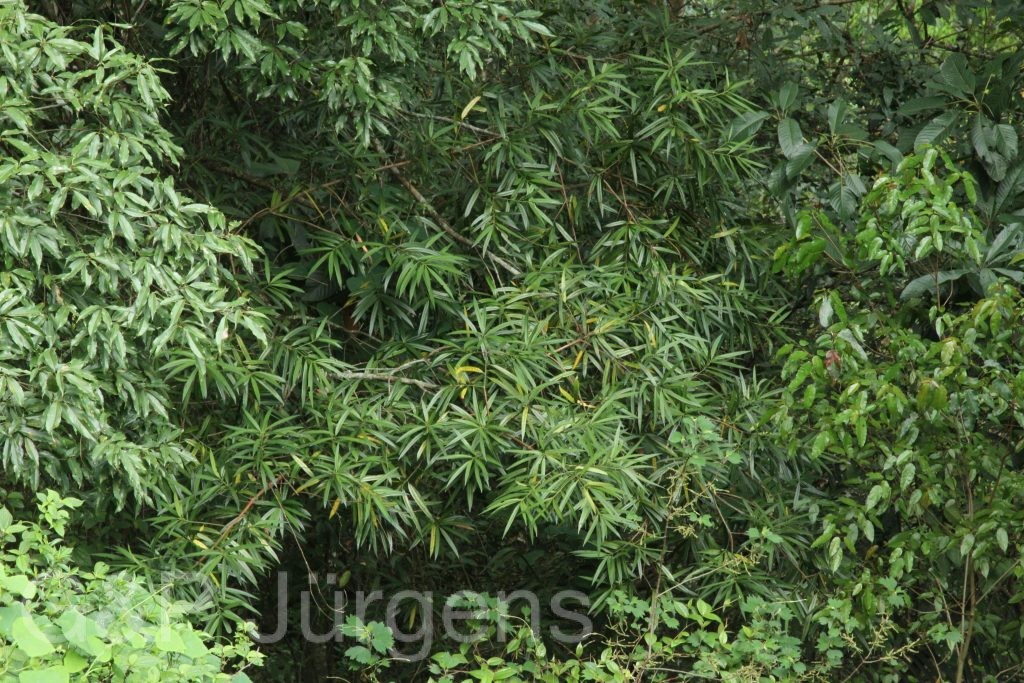
Podocarpus neriifolius, the brown pine or oleander-leaved podocarp, is a broadly distributed evergreen conifer of tropical and subtropical Asia and the western Pacific, with GBIF recording over 3,100 occurrences from Papua New Guinea, Fiji, Indonesia, Vietnam, China, Malaysia, the Solomon Islands, the Philippines, India, Thailand, Nepal, Vanuatu, Cambodia, Laos and beyond. In the eastern Himalaya it occurs in warm broad-leaved and mixed forest of the foothills and lower mountains, generally between about 500 and 2100 m. The images from Zhemgang in Bhutan at 1000 m, in October, and from Trashyangtse at 2100 m, in May, bracket its altitudinal range in that country, showing it as a scattered emergent or canopy tree in humid, evergreen subtropical forest on well-drained slopes.

It is an evergreen tree commonly 10-25 m tall, occasionally much larger, with grey to brown, fibrous, flaking bark and a dense crown. The leaves are spirally arranged but often appearing two-ranked, simple, narrowly lanceolate and leathery with a prominent midrib and a long, gradually tapering apex, recalling the foliage of oleander as the epithet indicates. The species is dioecious: pollen cones are slender, cylindrical and borne in leaf axils, while the seed cones are reduced to one or two ovules seated on a swollen, fleshy receptacle (the epimatium and aril) that ripens red to purple, the single seed crowned by a green to bluish covering and dispersed by birds.

Podocarpus is the largest genus of the Southern Hemisphere-centred family Podocarpaceae, and P. neriifolius is among its most wide-ranging species, exhibiting considerable variation in leaf size across its vast area. It is valued for its fine, even timber, which has led to local overexploitation, though its enormous geographic range means it is assessed by the IUCN as Least Concern overall. In the Himalaya it represents a tropical-Gondwanan conifer lineage reaching its northern limits in the warm forests of the eastern foothills.

Author: D.Don · Sources: POWO (Kew), GBIF, Flora of China Vol. 4, Flora of Bhutan Vol. 1, Flora of Nepal, de Laubenfels' revision of Podocarpus and the Podocarpaceae

Kuntze

Bhutan2012 1165
Bhutan Trashiyangtse 1780m, October

Description

Pogostemon linearis is an Asian mint distributed through India, China, Bhutan, Myanmar, Bangladesh and westward to Iran, with around 99 georeferenced records in GBIF. It is a plant of warm-temperate to subtropical hill country, occurring on open grassy slopes, forest edges, streambanks and disturbed ground in the lower and middle montane zone. The Bhutanese material photographed near Trashiyangtse at about 1780 m in October reflects its typical autumn flowering at modest elevation, where it benefits from the warm, moist conditions of the eastern Himalayan foothills and frequently colonises seasonally damp, sunny situations.

The species is an erect to ascending herb or subshrub with quadrangular stems that are often pubescent. The leaves, as the epithet indicates, are narrow, linear to linear-lanceolate, sessile or shortly petiolate, with serrate to subentire margins and an acute apex. The flowers are borne in dense, cylindrical, spike-like verticillasters forming a terminal thyrse; each small flower has a tubular, five-toothed calyx and a campanulate, weakly two-lipped corolla. The four stamens are characteristically long-exserted and bear conspicuously bearded filaments, a diagnostic feature of Pogostemon, giving the inflorescence a fluffy appearance. The fruit comprises four smooth nutlets enclosed by the persistent calyx.

Described by Kuntze, P. linearis belongs to a genus best known for P. cablin, the source of patchouli oil. The bearded, far-exserted stamens place it firmly within Pogostemon and distinguish it from related Lamiaceae genera. Its broad distribution, ecological tolerance and association with open and disturbed habitats indicate a secure conservation status throughout its range.

Author: Kuntze · Sources: POWO (Kew), GBIF, Flora of Bhutan, Flora of China, Bhatti & Ingrouille revision of Pogostemon

A.Benn.

Bhutan2015 560
Bhutan Mo-Chu 1500m, October

Description

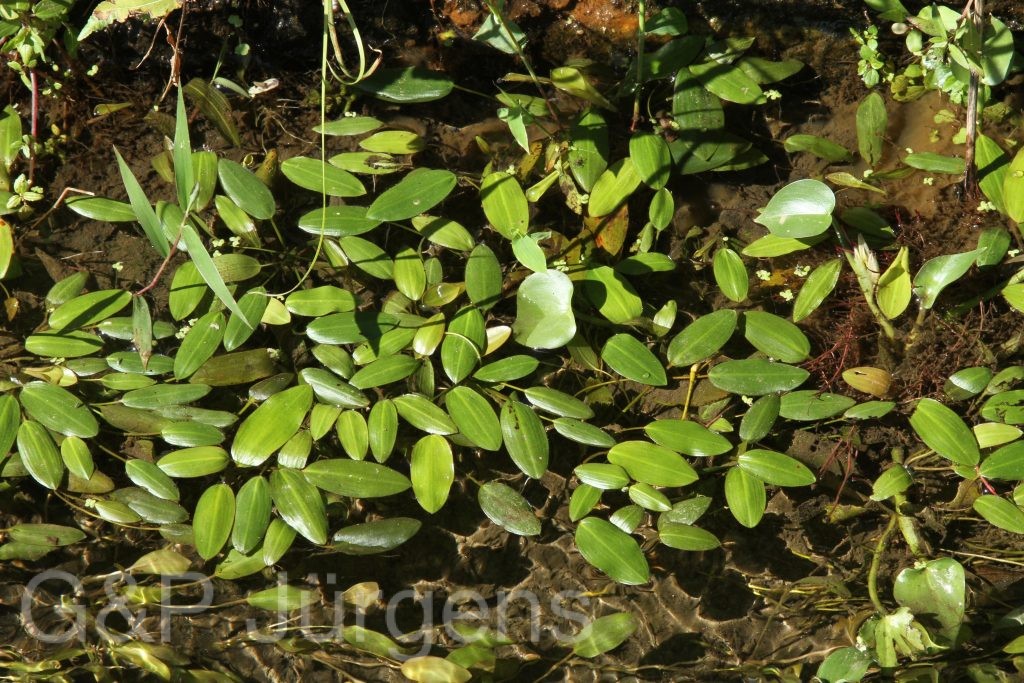
Potamogeton distinctus is an aquatic herb widespread across temperate and subtropical Asia, recorded from Japan, Korea, China, Taiwan and the Russian Far East through the Himalaya (India, Nepal, Bhutan) into Southeast Asia and beyond. It is a plant of still and slow-moving fresh water — ponds, ditches, paddy fields, oxbows and the margins of slow rivers — from the lowlands to the lower montane belt. The individual photographed along the Mo Chu in Bhutan at 1,500 m in October illustrates its occurrence in a sluggish river backwater of the inner valleys, where it persists into autumn. It is well known as a weed of rice cultivation across its eastern range.

It is a perennial rooting in mud and spreading by slender, whitish, often tuber-bearing rhizomes. The plant is heterophyllous: submerged leaves are translucent, narrow and sessile or short-petioled, while the floating leaves are coriaceous, elliptic to oblong, long-petioled and with rounded to subcordate bases. Membranous stipules (ochreae) sheath the stem at the nodes. The inflorescence is a dense, cylindrical, emergent spike raised above the water on a stout peduncle; the small flowers each bear four clawed tepal-like segments and four stamens. The fruit is a small, obliquely obovoid drupelet with a short beak and a dorsal keel.

Potamogeton (Potamogetonaceae) is a cosmopolitan genus prone to hybridisation and to plastic, environmentally induced variation, which complicates identification; floating-leaved species such as P. distinctus are best separated on fruit, stipule and tuber characters. The species is widespread, often abundant, and of no conservation concern, though as a paddy weed it is locally controlled.

Author: A.Benn. · Sources: POWO (Kew), Flora of China Vol. 23, Flora of Bhutan Vol. 3, GBIF, Wiegleb & Kaplan: Account of Potamogeton (1998)

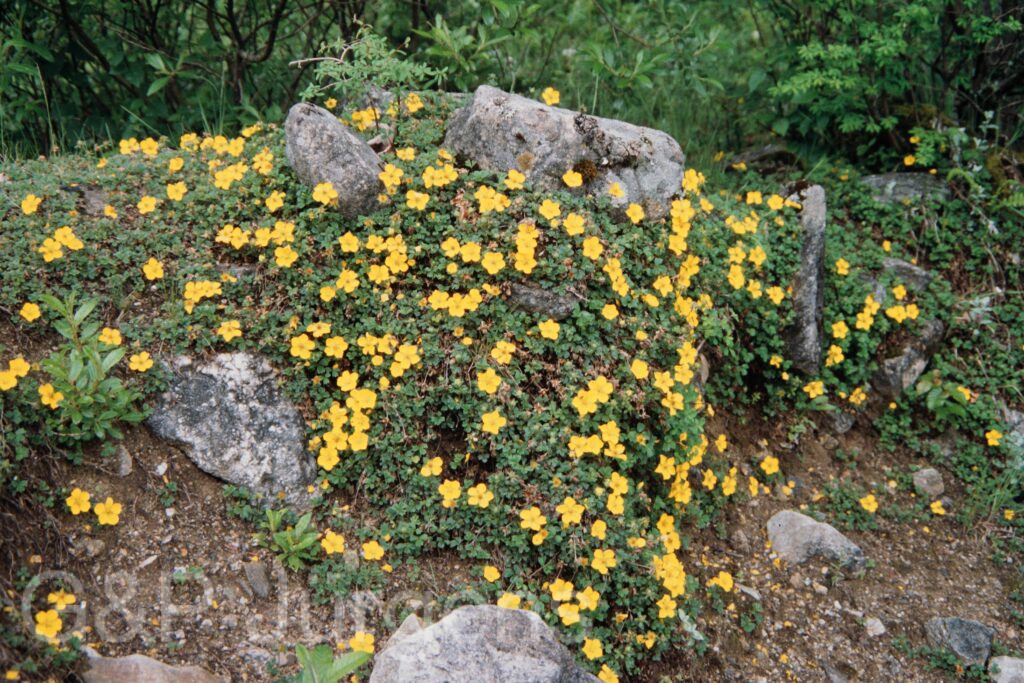
Lodd, G.Lodd. & W.Lodd

Nepal 99 110 ergebnis
West-Nepal South of Rara-Lake 3600m, June
Garw 2005 48 ergebnis ergebnis
India Garhwal Valley of flowers 3350m, September

Description

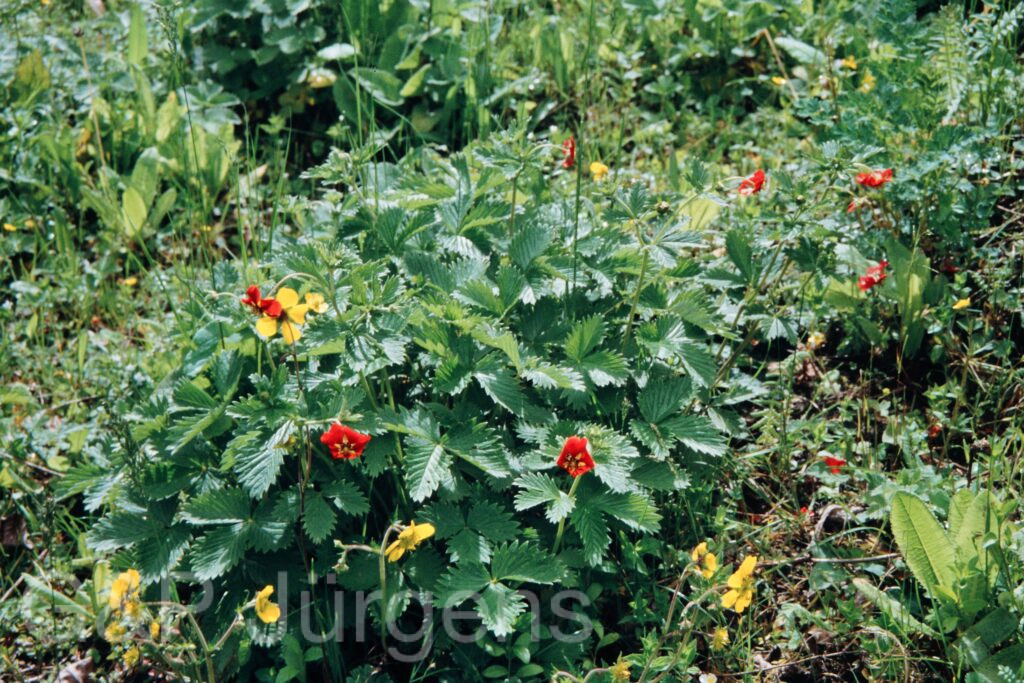
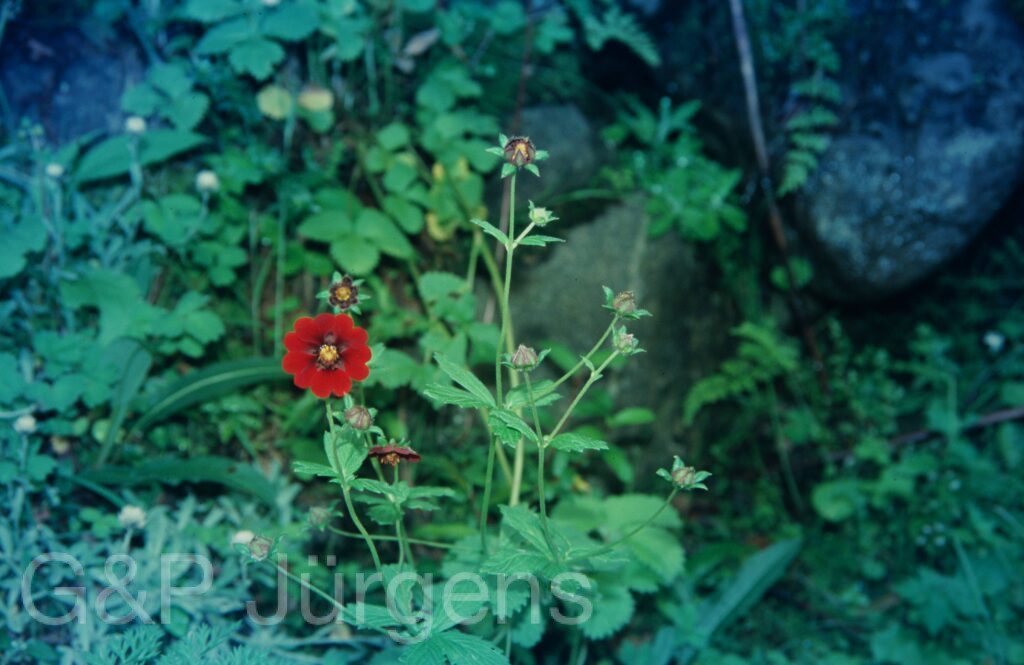
Potentilla atrosanguinea is a Himalayan alpine herb ranging from Pakistan through the western and central Himalaya into Nepal. GBIF documents about 450 occurrences, drawing on native populations in India, Nepal and Pakistan plus numerous cultivated and naturalised records across Europe and North America. It grows in alpine and subalpine meadows, open grassy slopes and rocky ground, typically between about 2500 and 4000 m. The photographed plants come from West Nepal south of Rara Lake at roughly 3600 m in June and the Valley of Flowers in Garhwal, India, at about 3350 m in September, both species-rich high-meadow settings.

The species is a tufted perennial arising from a stout, woody rootstock. The basal leaves are long-petioled and pinnately or digitately compound, with three to five obovate, coarsely toothed leaflets that are green above and densely white-tomentose beneath. The stems are erect, branched and silky-hairy, bearing reduced cauline leaves. The flowers are borne in lax cymes and are showy, with five spreading petals ranging from deep blood-red and orange to occasionally yellow, an epicalyx alternating with the calyx lobes, and numerous stamens. The fruit is an aggregate of small dry achenes on a dry receptacle.

GBIF flags the recorded name as a SYNONYM, with Potentilla atrosanguinea as the accepted name. The species is variable in flower colour and leaf division, and several varieties and segregates have been recognised. Its richly coloured forms have entered horticulture and underlie garden hybrids. Widespread and common across its native alpine range, it is of no conservation concern and is an important component of Himalayan meadow communities.

Author: Lodd, G.Lodd. & W.Lodd · Sources: POWO (Kew), GBIF, Flora of Nepal, Flora Simlensis, Th. Wolf: Monographie der Gattung Potentilla

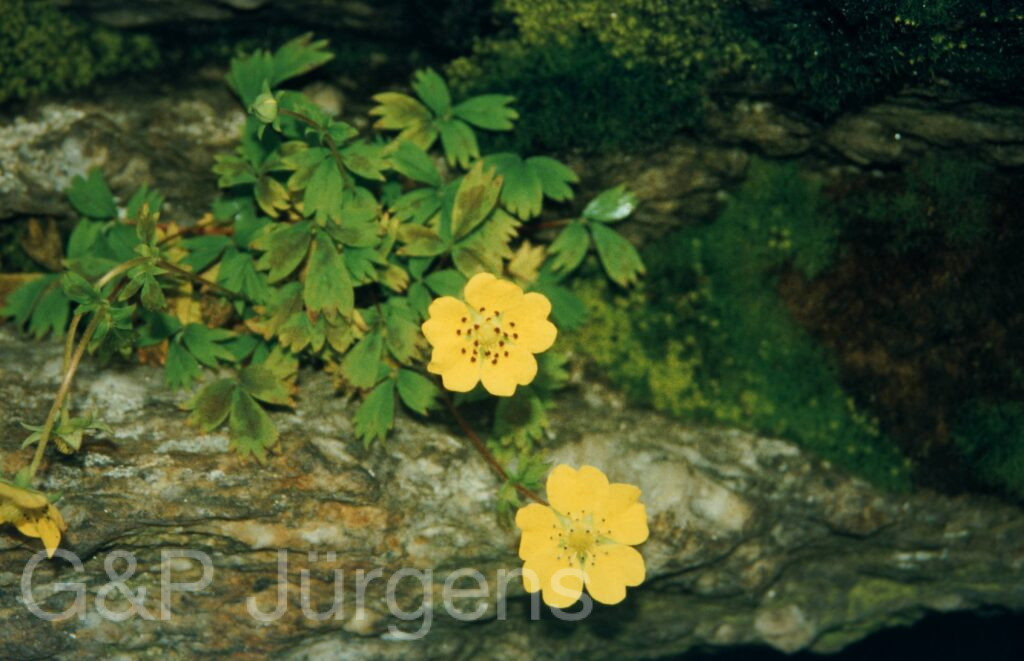
Wall. & Lehm.

Nepal 99 481 ergebnis
West-Nepal Churta-Khola 3700m, June
Garw 2005 309 ergebnis
India Garhwal Patanathi 3600m, September

Description

Potentilla eriocarpa is a mat-forming alpine cinquefoil distributed throughout the Himalaya and adjacent ranges, from Afghanistan and Pakistan eastward through India, Nepal and Bhutan into south-western China and Myanmar. GBIF records some 667 occurrences, densest in Nepal, the Indian Himalaya and the Chinese borderlands. It is a plant of the high alpine zone, colonising rock crevices, screes, stony meadows, moraines and exposed ridges, characteristically between about 3000 and 4800 m. The populations imaged in West-Nepal at Churta-Khola (3700 m, June) and in Indian Garhwal at Patanathi (3600 m, September) reflect its broad flowering season across the western Himalaya, from early summer into autumn near the upper limits of vascular plant growth.

The species forms low, dense cushions or tufts from a stout, woody, branched caudex clothed in the persistent remains of old stipules and leaf-bases. The leaves are ternate, the three obovate to cuneate leaflets coarsely toothed toward the apex, dark green and glabrescent above, paler and often silky beneath. The flowering stems are short, ascending to decumbent, bearing one to few flowers. Each flower has five sepals alternating with five epicalyx segments, five broadly obovate, often emarginate yellow petals, numerous stamens and many carpels on a hairy receptacle. The diagnostic feature, reflected in the epithet, is the densely woolly-hairy (eriocarpous) achenes forming the fruiting head.

Potentilla is a large and taxonomically intricate northern-temperate genus, and P. eriocarpa, described by Wallich and Lehmann, belongs to the predominantly Asian alpine cushion-forming group. Its ternate leaves and conspicuously hairy achenes separate it from the many associated Himalayan cinquefoils. As a widespread, abundant high-alpine perennial it is of no conservation concern, and is a significant component of cushion-plant and fellfield communities at extreme elevations.

Author: Wall. & Lehm. · Sources: POWO (Kew), GBIF, Flora of China, Flora of Pakistan, Flora of Bhutan, Annotated Checklist of the Flowering Plants of Nepal, monograph of the genus Potentilla (Wolf)

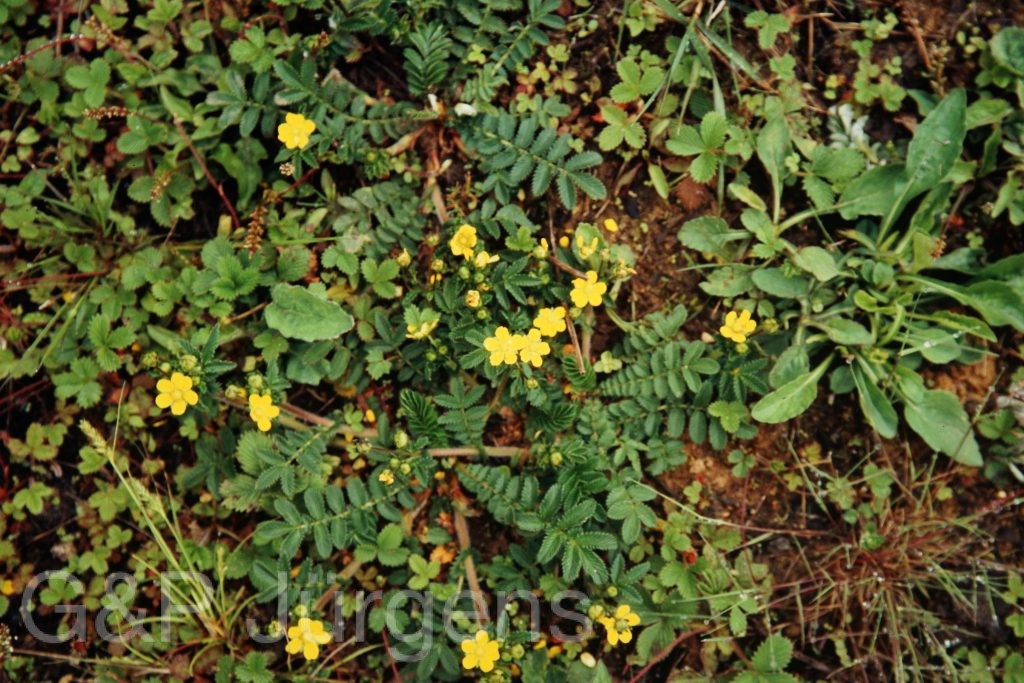
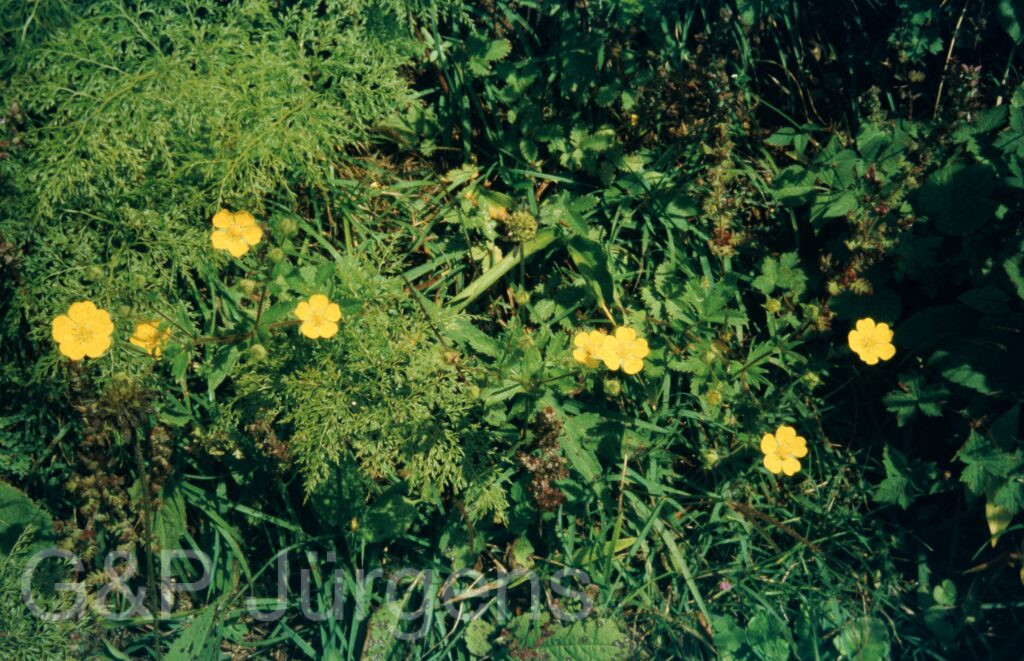
Trevir.

Bh09 289 P475
Bhutan Tongsa, 2300m June
Garw 2005 284 ergebnis
India Garhwal Kunol 2650m, September

Description

Potentilla lineata is a widespread Asian cinquefoil ranging across the Himalaya and into China, Myanmar and Vietnam, well represented in GBIF with around 519 records from China, Nepal, India, Bhutan, Pakistan and beyond. In GBIF the queried name is treated as a synonym, with Potentilla lineata itself given as the accepted name. It occupies open grassy slopes, forest clearings, banks, pastures and disturbed roadsides through the temperate and subalpine belts, roughly 1500 to 3500 m. The collections cited from Tongsa in Bhutan at 2300 m in June and from Kunol in the Garhwal Himalaya at 2650 m in September show its long flowering season across the monsoon.

It is a perennial herb with a woody rootstock producing erect to ascending, often silky-hairy stems. The leaves are pinnate or digitately compound with toothed, oblong to obovate leaflets that are typically green and appressed-hairy above and densely silvery- or white-tomentose beneath, the strongly impressed venation giving rise to the epithet lineata. The flowers are borne in lax terminal cymes; each has five yellow petals alternating with an epicalyx and five sepals, numerous stamens and many carpels seated on a hairy receptacle. The fruit is an aggregate of small dry achenes.

Potentilla is a large and taxonomically complex genus in which hybridisation and polyploidy blur species boundaries, and P. lineata has accordingly accumulated several synonyms. The silvery indumentum reduces water loss and reflects intense montane radiation. With its broad ecological tolerance and ready colonisation of disturbed ground, the species is common and of no conservation concern, functioning as a characteristic component of Himalayan grazing land and successional grassland.

Author: Trevir. · Sources: POWO (Kew), GBIF, Flora of China (Rosaceae), Flora of Bhutan, Annotated Checklist of the Flowering Plants of Nepal, Soják taxonomic studies of Potentilla

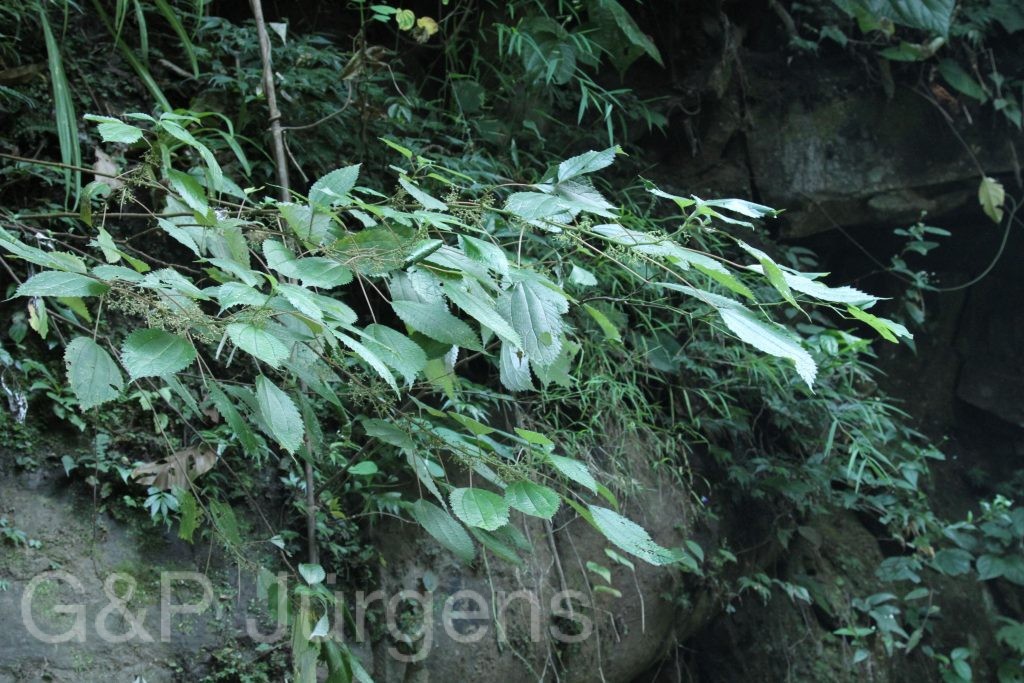
(Blume) Merr.

Bhutan2015 274
Bhutan Zhemgang 1000m, October

Description

Pouzolzia sanguinea (Blume) Merr. is a widespread shrub of the nettle family ranging through tropical and subtropical Asia, from the Himalaya and India eastward to China, Taiwan, Japan, and across Southeast Asia to Indonesia, Malaysia and the Philippines; GBIF holds over 3100 occurrences. It is a plant of forest margins, secondary scrub, ravines, roadside banks and disturbed slopes at low to mid elevations, ascending into the warm broad-leaved zone. In Bhutan it was recorded at Zhemgang at about 1000 m in October, a subtropical hill setting typical of its preference for humid, partially shaded ground in the outer ranges.

It is an erect to spreading shrub with terete, often reddish or purple-tinged young branches that are appressed-pubescent. The leaves are alternate, ovate to elliptic-lanceolate, acuminate, with three prominent basal veins, the upper surface scabrid or strigose and the lower paler and pubescent; stipules are present and the leaves lack the stinging hairs of true nettles. The plant is monoecious, the small greenish flowers borne in dense axillary glomerules, with unisexual perianths; the female flowers develop into a small, shining, longitudinally ribbed achene enclosed by the persistent accrescent perianth.

The species is taxonomically variable and several infraspecific variants have been recognised across its broad range, contributing to a tangled synonymy under Pouzolzia. Like many Urticaceae it yields a strong bast fibre and is used locally for cordage, while leaves serve as fodder and in folk medicine. Its tolerance of disturbance and wide ecological amplitude make it a common pioneer rather than a species of conservation concern, and it figures as a characteristic element of regenerating Himalayan hill forest.

Author: (Blume) Merr. · Sources: POWO (Kew), GBIF, Flora of China, Flora of Bhutan, Flora of British India, Urticaceae monograph (Friis; Wilmot-Dear & Friis revision of Pouzolzia)

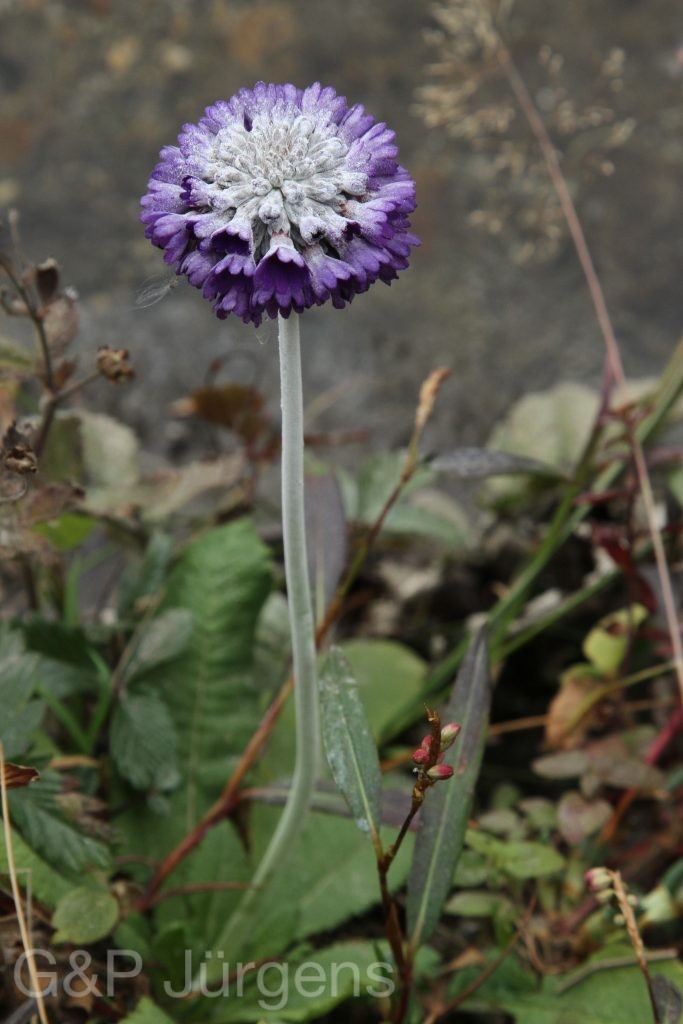
Hook.

Bhutan2015 372
Bhutan Tumching-La 4000m, October

Description

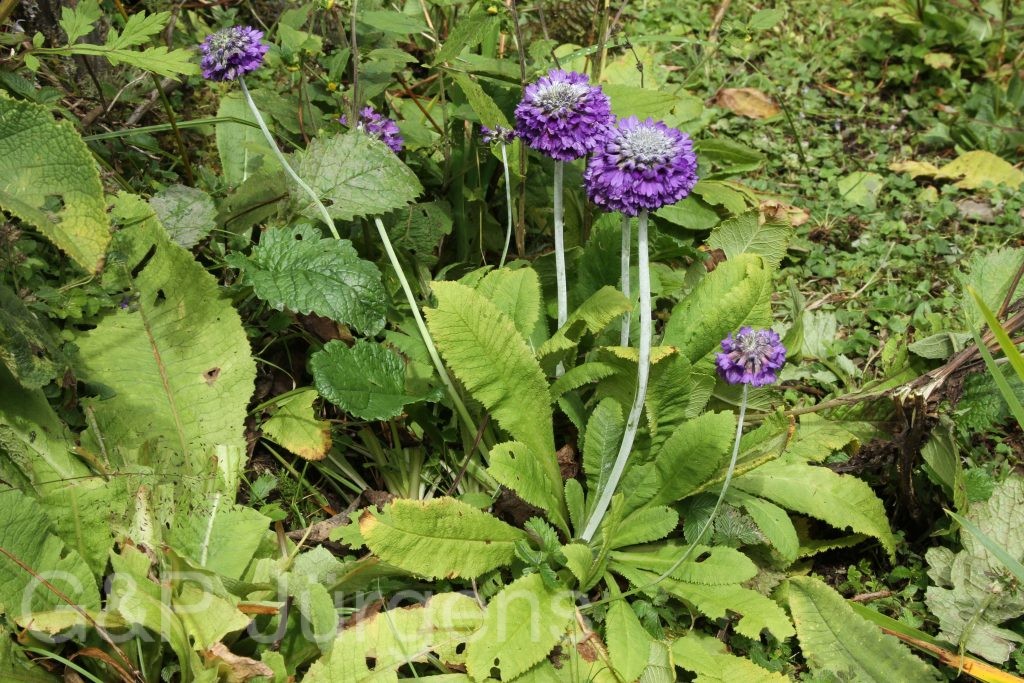
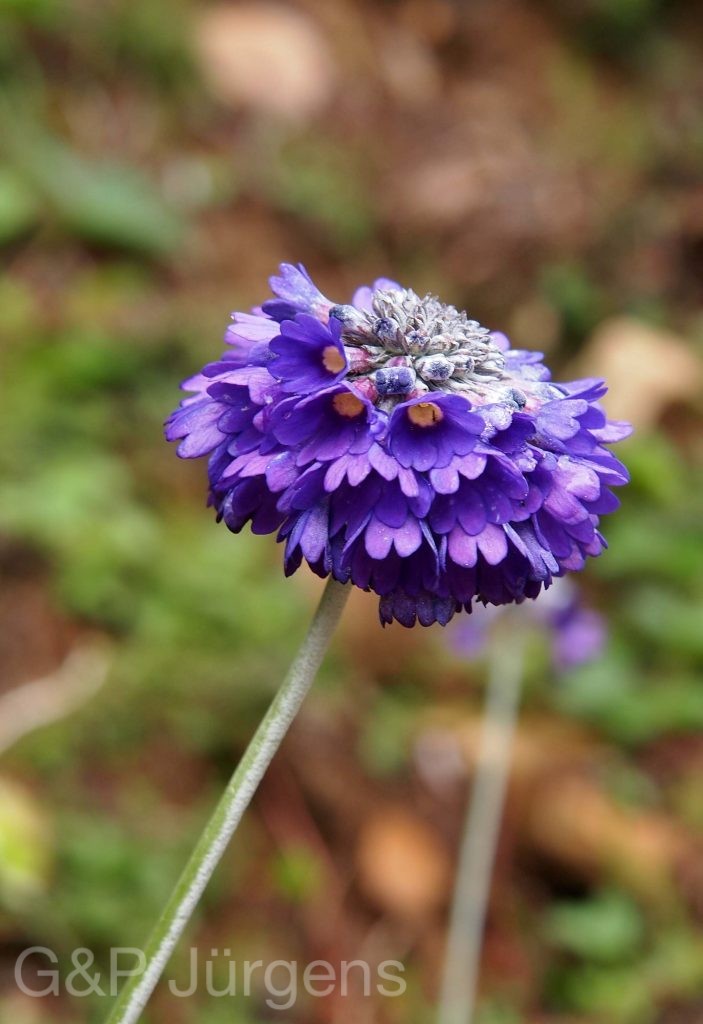
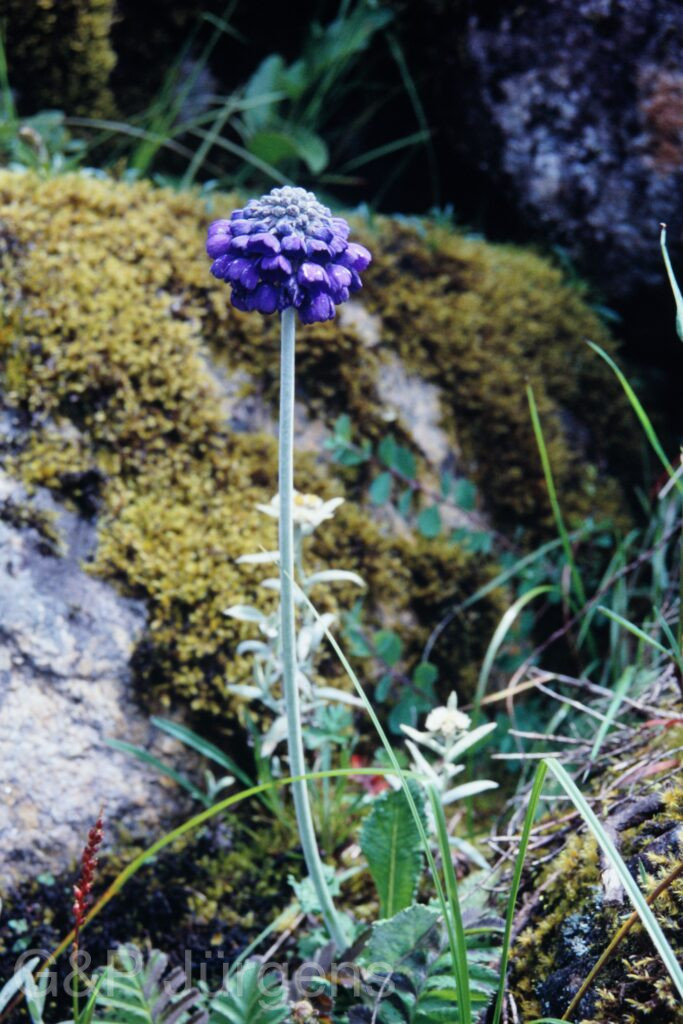
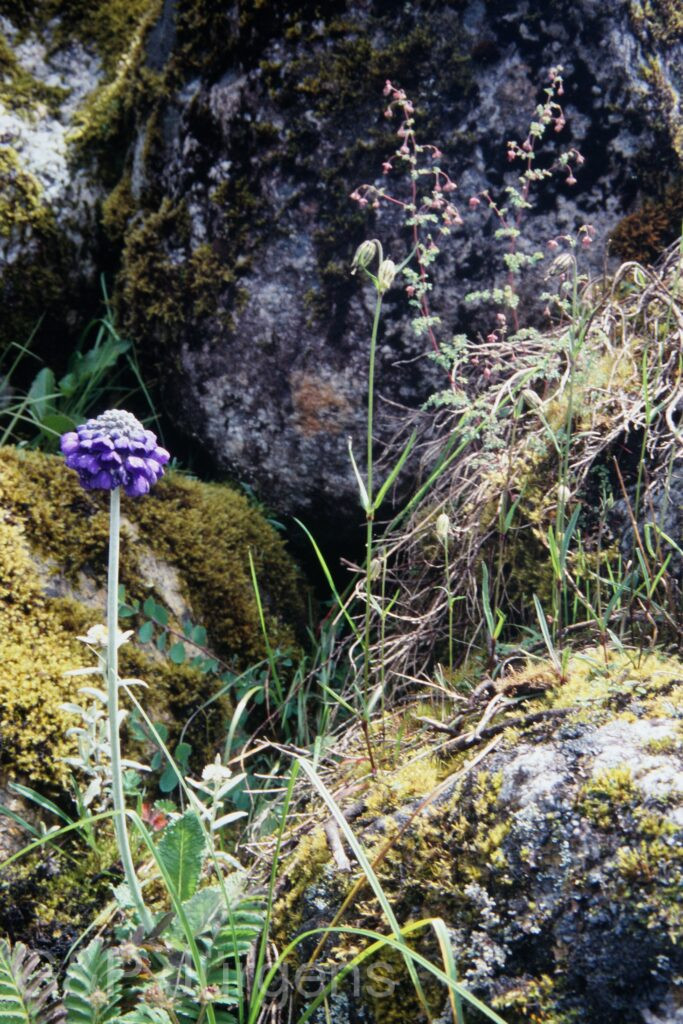
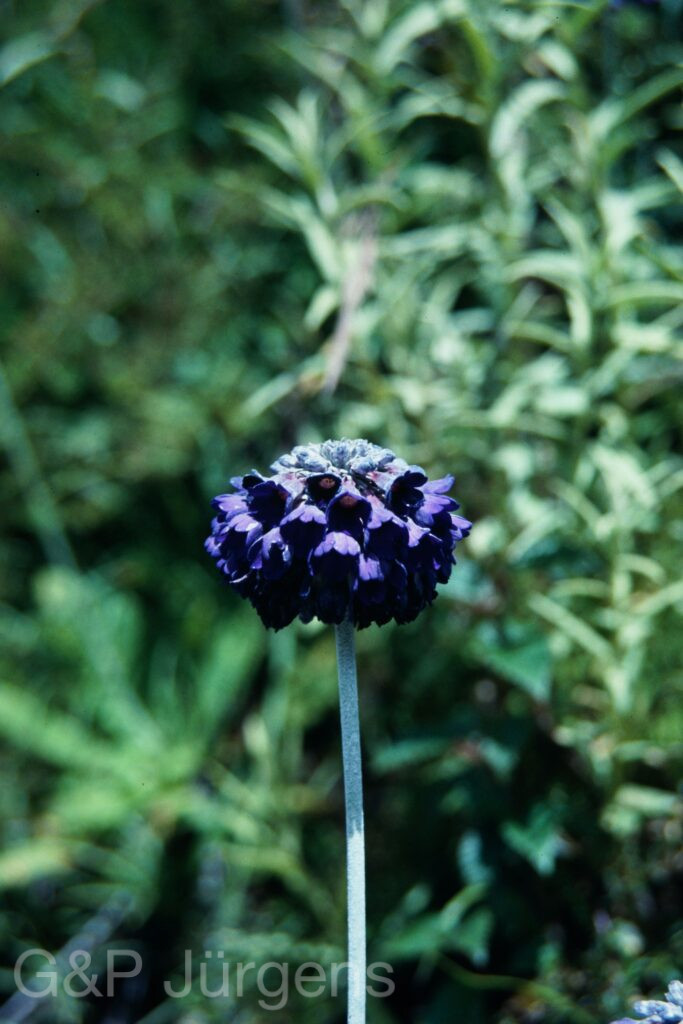
Primula capitata is an eastern Himalayan primrose distributed through Nepal, Sikkim and northern India, Bhutan and adjacent southern China and northern Myanmar, with around 476 GBIF records (additional entries from Europe, North America, Japan and Korea reflecting its cultivation). It is a plant of open, moist alpine and subalpine habitats, growing in damp meadows, on grassy slopes, streamsides and among rocks. The imaged populations at Tumching La (4000 m) and Shele La (3000 m) in Bhutan and at Dzongri in Sikkim (4100 m) span its typical elevational range and its notably late, monsoon-to-autumn flowering from August into October, when much of the alpine flora has already set seed.

The species forms a rosette of oblanceolate to spathulate leaves that are crenate to denticulate at the margin and densely white- or yellow-farinose beneath. From the rosette rises a stout, farinose scape bearing the diagnostic inflorescence: a dense, flat-topped to hemispherical capitate head of many small flowers, the lowermost opening first so that the head appears truncate. Each flower has a tubular calyx and a violet to deep blue-purple corolla with a short tube and small, spreading limb-lobes, the throat farinose. The plant is heterostylous. The fruit is a small capsule enclosed in the persistent calyx.

Primula capitata belongs to sect. Capitatae, a small group distinguished by their compact, drumstick-like heads of farinose flowers. Several subspecies and varieties have been recognised on the basis of leaf and farina characters and degree of late-season flowering. Its dependence on cool, moist alpine turf ties its distribution to the high monsoon-influenced ranges of the eastern Himalaya; it is locally common and not regarded as threatened, and is valued in cultivation as a hardy late-flowering rock-garden primula.

Author: Hook. · Sources: POWO (Kew), GBIF, Flora of Bhutan, Flora of China, Annotated Checklist of the Flowering Plants of Nepal, Richards' Primula (monograph)