
D.Don
Description
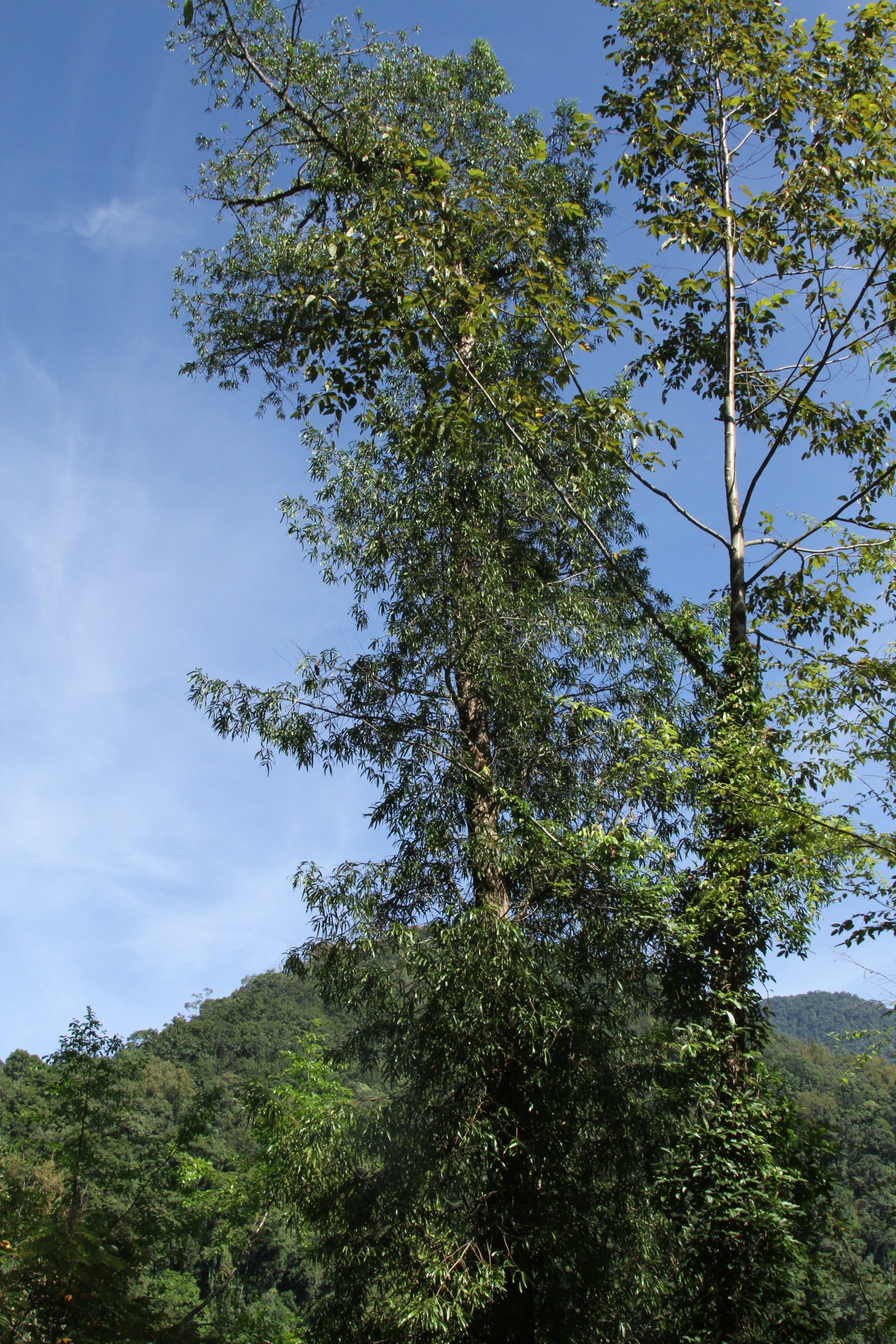
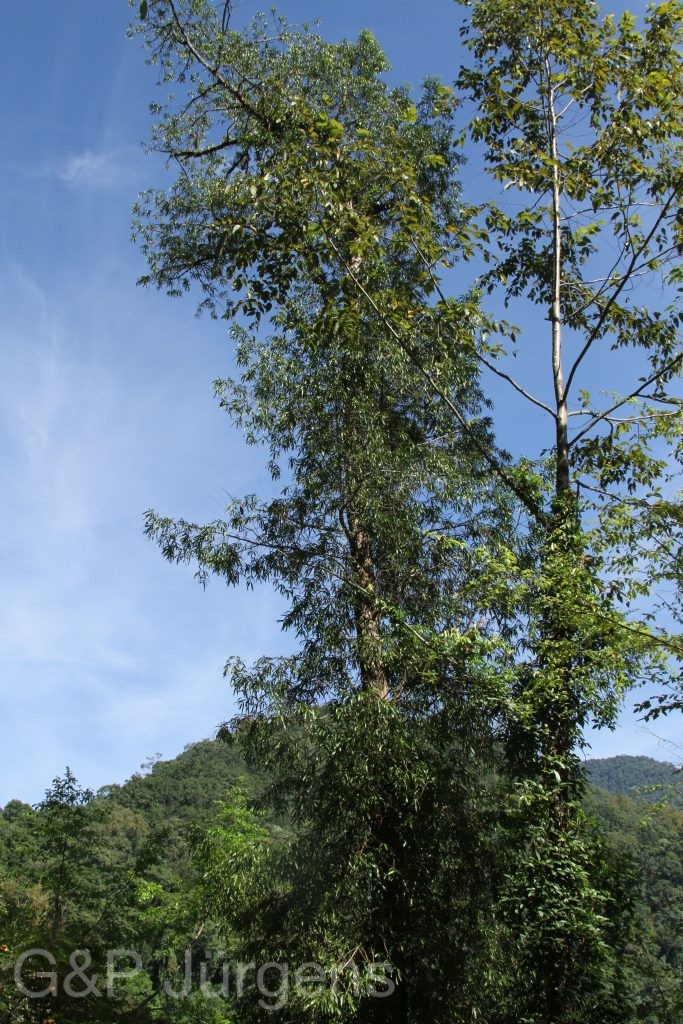
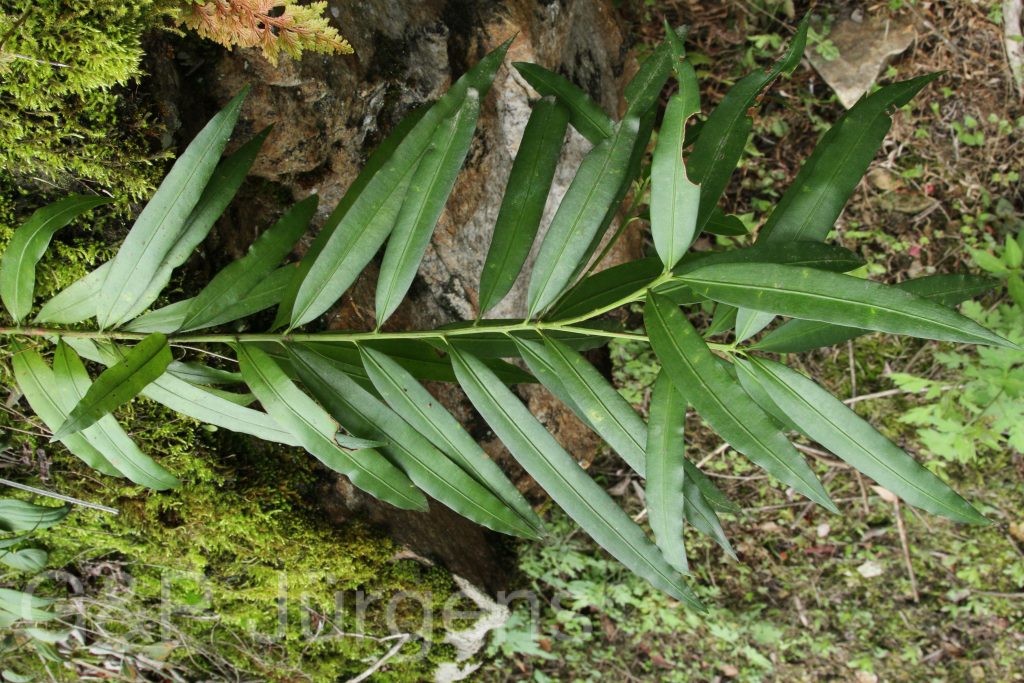
Podocarpus neriifolius, the brown pine or oleander-leaved podocarp, is a broadly distributed evergreen conifer of tropical and subtropical Asia and the western Pacific, with GBIF recording over 3,100 occurrences from Papua New Guinea, Fiji, Indonesia, Vietnam, China, Malaysia, the Solomon Islands, the Philippines, India, Thailand, Nepal, Vanuatu, Cambodia, Laos and beyond. In the eastern Himalaya it occurs in warm broad-leaved and mixed forest of the foothills and lower mountains, generally between about 500 and 2100 m. The images from Zhemgang in Bhutan at 1000 m, in October, and from Trashyangtse at 2100 m, in May, bracket its altitudinal range in that country, showing it as a scattered emergent or canopy tree in humid, evergreen subtropical forest on well-drained slopes.
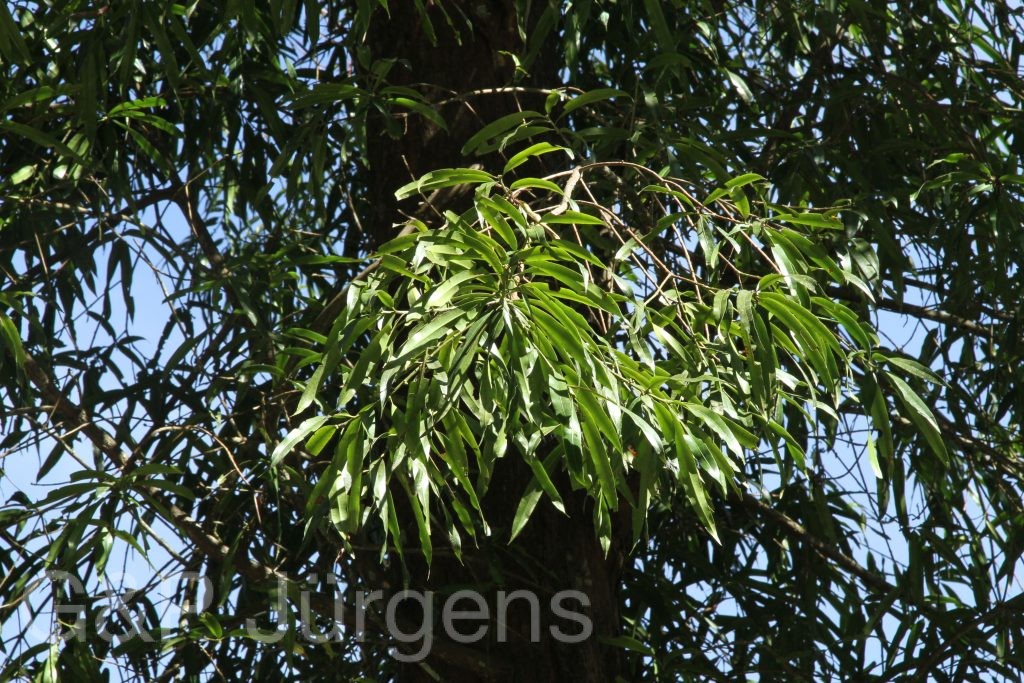
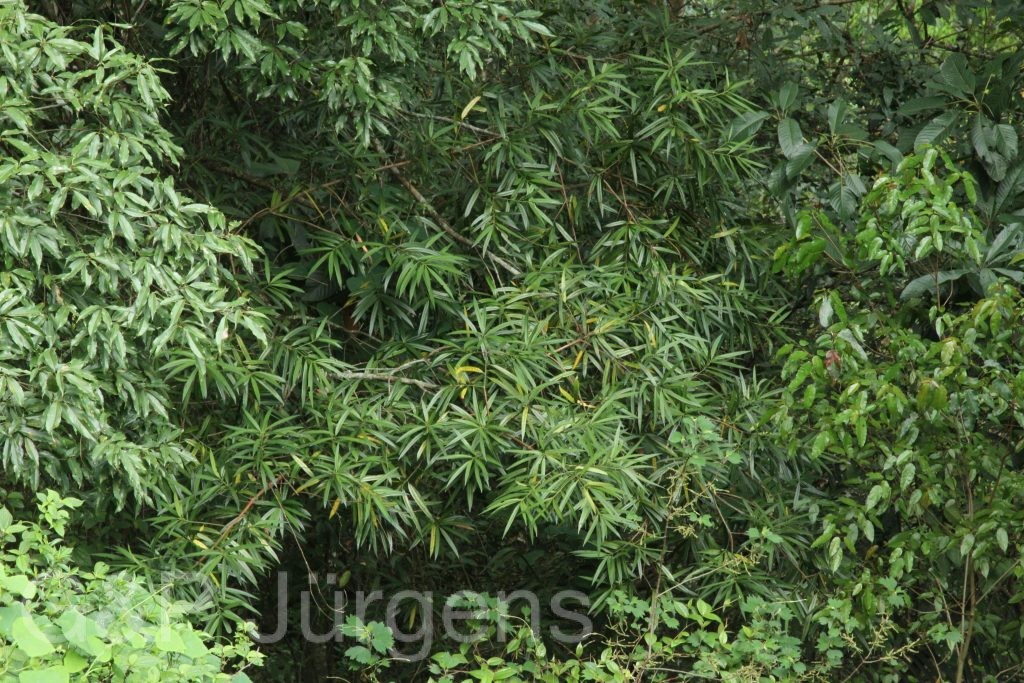
It is an evergreen tree commonly 10-25 m tall, occasionally much larger, with grey to brown, fibrous, flaking bark and a dense crown. The leaves are spirally arranged but often appearing two-ranked, simple, narrowly lanceolate and leathery with a prominent midrib and a long, gradually tapering apex, recalling the foliage of oleander as the epithet indicates. The species is dioecious: pollen cones are slender, cylindrical and borne in leaf axils, while the seed cones are reduced to one or two ovules seated on a swollen, fleshy receptacle (the epimatium and aril) that ripens red to purple, the single seed crowned by a green to bluish covering and dispersed by birds.
Podocarpus is the largest genus of the Southern Hemisphere-centred family Podocarpaceae, and P. neriifolius is among its most wide-ranging species, exhibiting considerable variation in leaf size across its vast area. It is valued for its fine, even timber, which has led to local overexploitation, though its enormous geographic range means it is assessed by the IUCN as Least Concern overall. In the Himalaya it represents a tropical-Gondwanan conifer lineage reaching its northern limits in the warm forests of the eastern foothills.
Author: D.Don · Sources: POWO (Kew), GBIF, Flora of China Vol. 4, Flora of Bhutan Vol. 1, Flora of Nepal, de Laubenfels' revision of Podocarpus and the Podocarpaceae