
Thunb.

Description
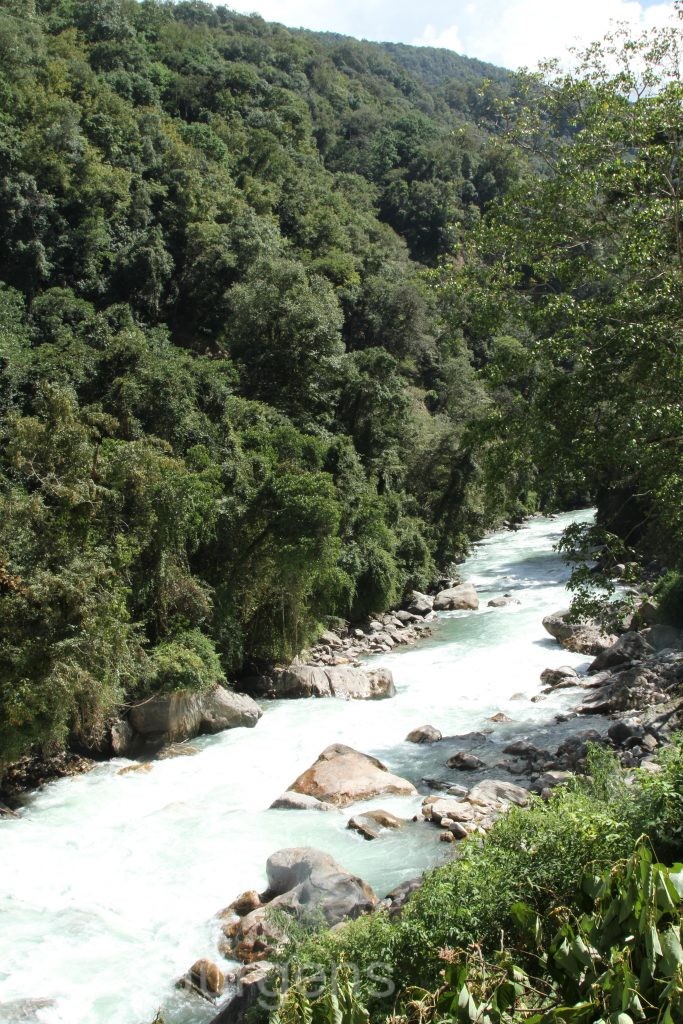
Quercus glauca, the ring-cupped or Japanese blue oak, is one of the most widespread evergreen oaks of East and South Asia. GBIF documents nearly 14,910 occurrences spanning Japan, China, Taiwan, Korea, Nepal, India, Bhutan, Myanmar, Laos and Pakistan, with numerous introduced records in Europe and North America. It is a dominant or co-dominant of subtropical and warm-temperate broadleaved evergreen forest, frequently on hill slopes, ravines and along watercourses at low to mid elevations. The photographed tree grew in Bhutan along the Mo-Chu at 1550 m in October, a typical mid-montane riparian situation within the species' Himalayan range.
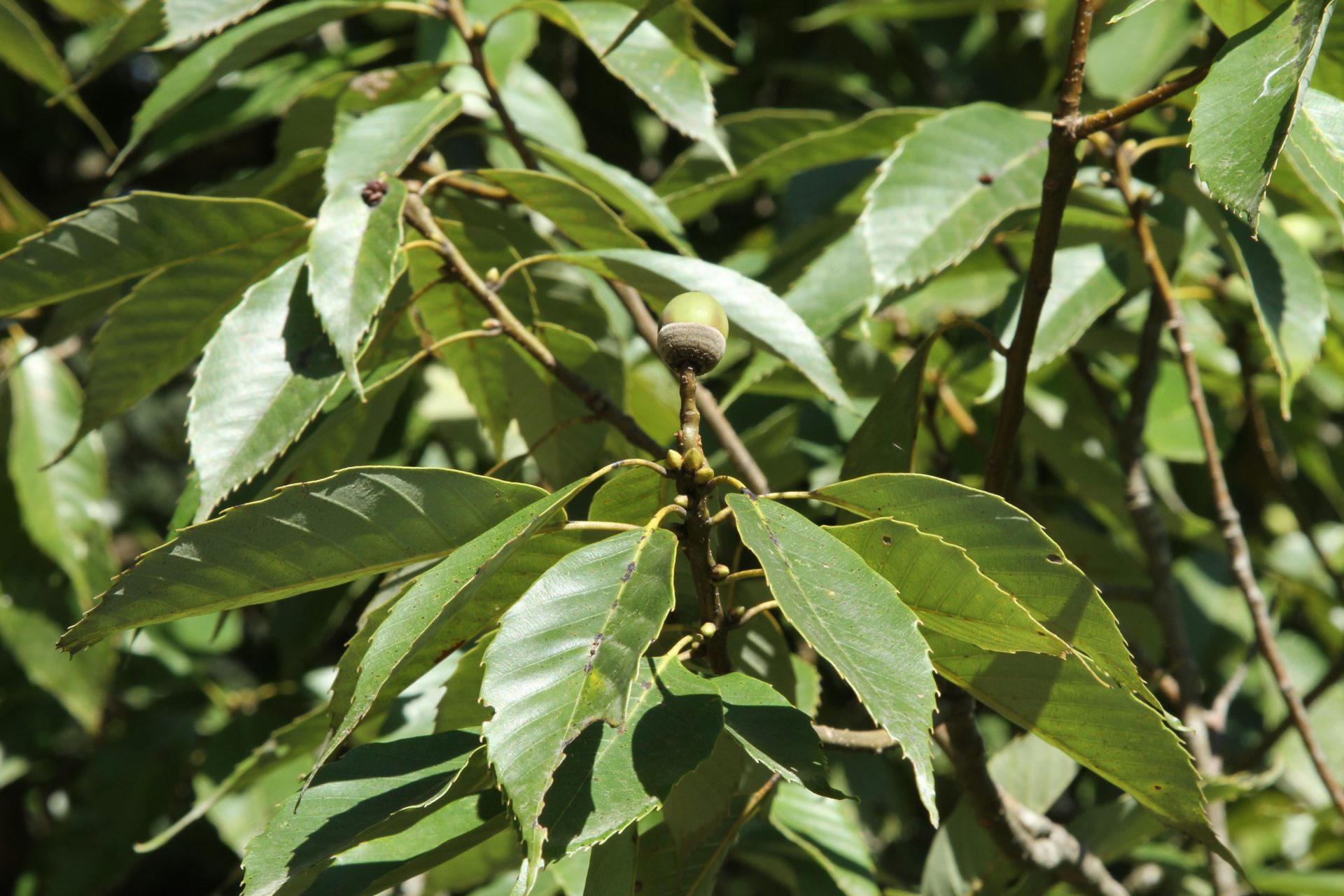
It is an evergreen tree with smooth greyish bark and alternate, coriaceous, oblong-lanceolate leaves whose upper half is conspicuously serrate while the lower margin is entire; the lamina is glossy dark green above and glaucous, often whitish-waxy and pubescent beneath, giving the species its epithet. Young shoots are silky-villous. As a member of subgenus Cerris, section Cyclobalanopsis, it bears its acorns in a distinctive cupule formed of concentric, ring-like fused bracts rather than separate scales; the ovoid nut ripens in a single season. Flowers are unisexual, the staminate in slender pendent catkins, the pistillate few in short spikes.
GBIF accepts the name. Its placement in section Cyclobalanopsis, sometimes treated as a separate genus, unites the Asian ring-cupped oaks. Quercus glauca is an important timber and afforestation tree, widely planted and naturalised, and ecologically central to evergreen oak forests. It is abundant and assessed as of least conservation concern.
Author: Thunb. · Sources: POWO (Kew), GBIF, Flora of China, Flora of Bhutan, monograph of Asian Quercus (Cyclobalanopsis)