
Lindl. ex A.Camus
Description
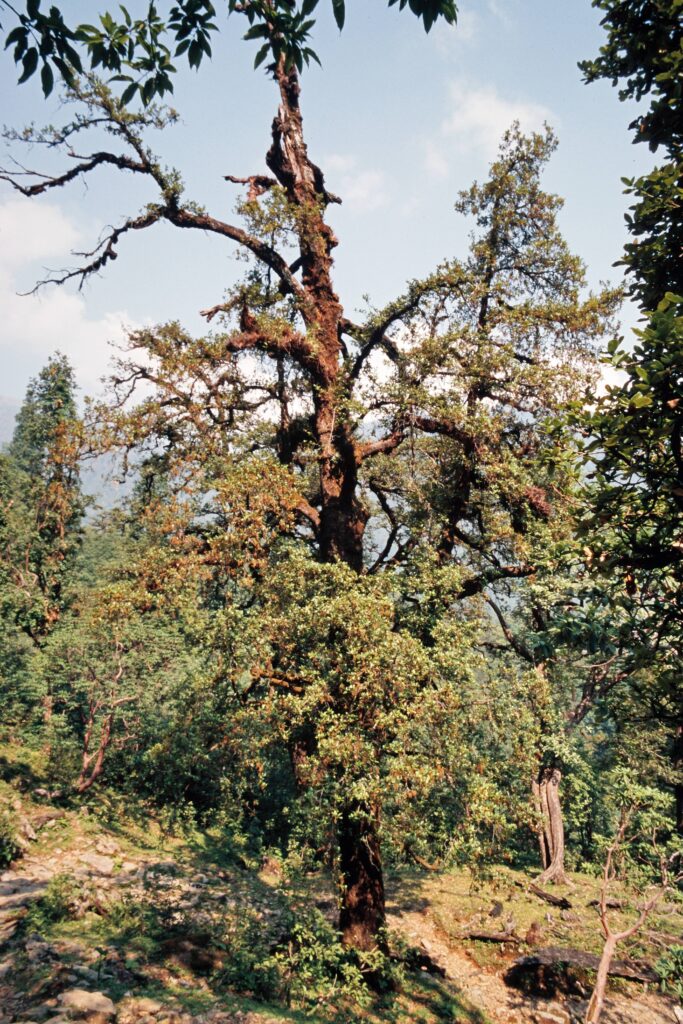
Quercus floribunda Lindl. ex A.Camus, the moru or green oak, is an evergreen tree of the Fagaceae forming a major element of the temperate forests of the western and central Himalaya. GBIF records, totalling 278 occurrences, span India, Nepal, China, Pakistan and Afghanistan, with peripheral reports. The species dominates moist, cool-temperate slopes typically between 2,000 and 2,700 m, often in association with Quercus leucotrichophora, Rhododendron arboreum and Lyonia. The photographed tree from Trijugi Narayan in Garhwal at 2,250 m, in June, is representative of these mid-altitude oak forests that are climatically and hydrologically critical to the Himalayan watershed.
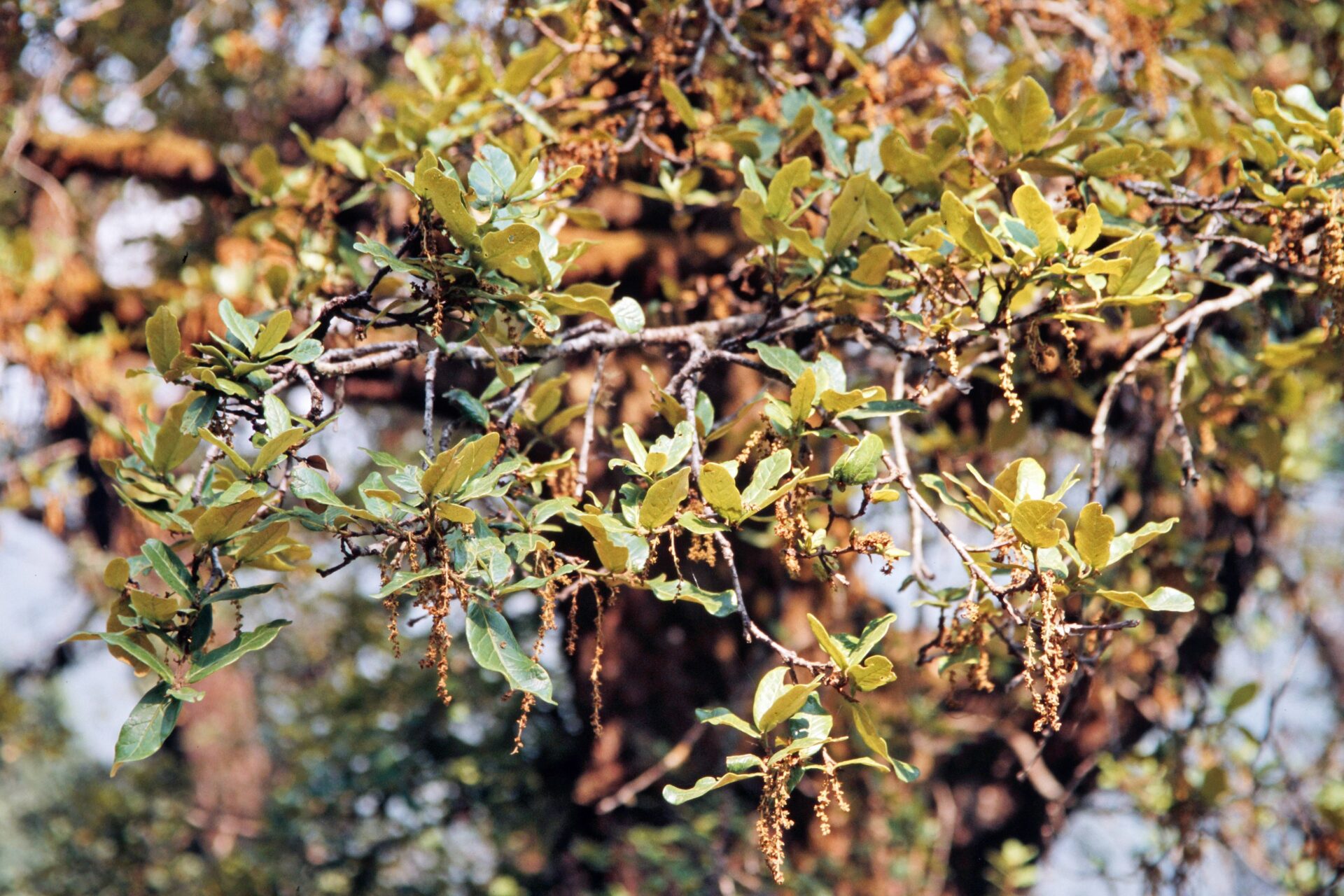
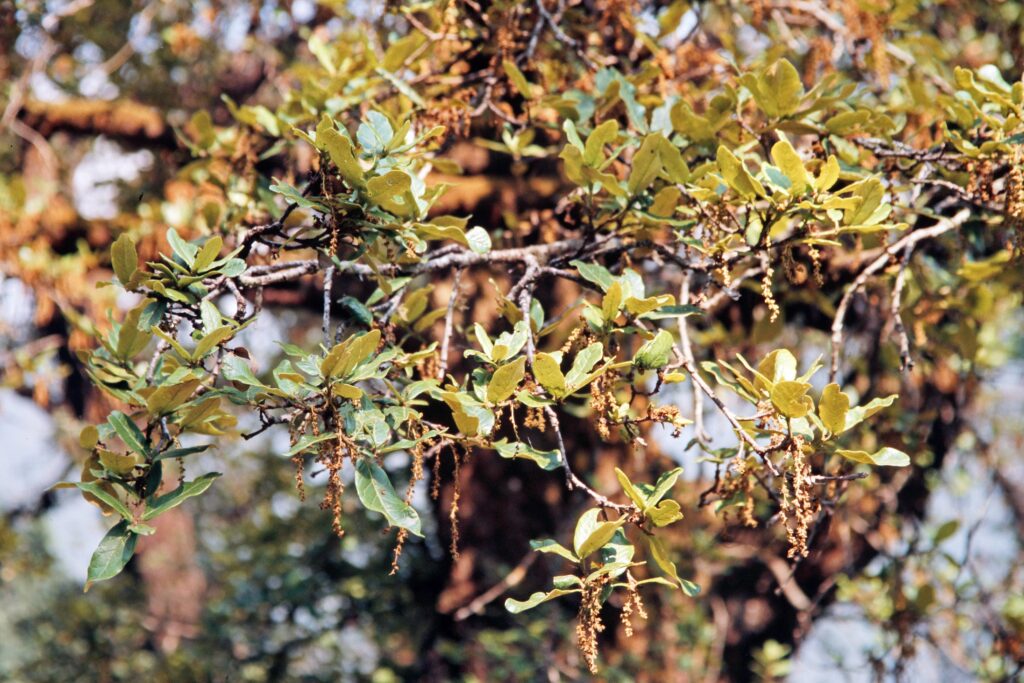
The plant is a large evergreen tree reaching 25–30 m, with a rounded crown and greyish, fissured bark. The leaves are coriaceous, oblong-lanceolate to elliptic, glossy dark green above and glaucous-pubescent or glabrescent beneath, the margins entire to spinulose-serrate especially on young foliage. The species is monoecious: the staminate flowers are borne in slender pendulous catkins, while the pistillate flowers are few and inconspicuous. As the name suggests, flowering is profuse. The fruit is an ovoid acorn seated in a shallow, scaly cupule, maturing in the second year.
Quercus floribunda has long been confused with Q. dilatata and other Himalayan oaks, and its nomenclature reflects a tangled taxonomic history within the ring-cupped oak group (subgenus Cerris / section Ilex). Ecologically these oak forests are keystone communities, regulating spring discharge and supporting rich epiphyte and lichen assemblages, yet they are heavily exploited for fuelwood, fodder and leaf-litter, making mature stands increasingly fragmented and locally threatened.
Author: Lindl. ex A.Camus · Sources: POWO (Kew), GBIF, Flora of China Vol. 4, Flora of Pakistan (Fagaceae), Flora of British India Vol. 5, Menitsky: Oaks of Asia