Tag:

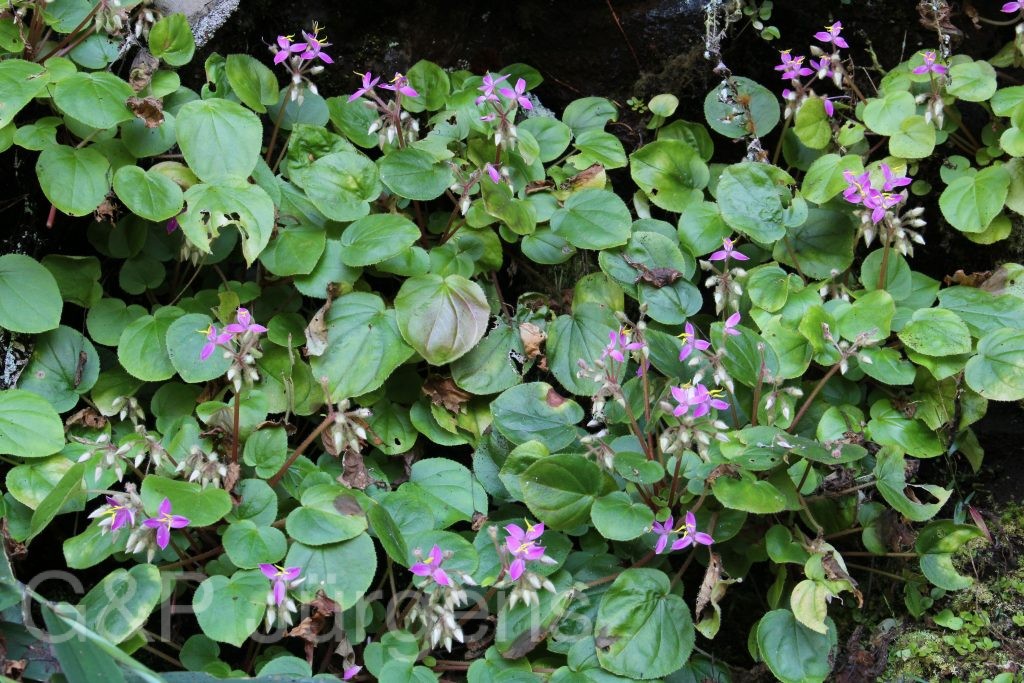
Autumn

C.B.Clarke

Bhutan2015 138
Bhutan Galephug 600m, October
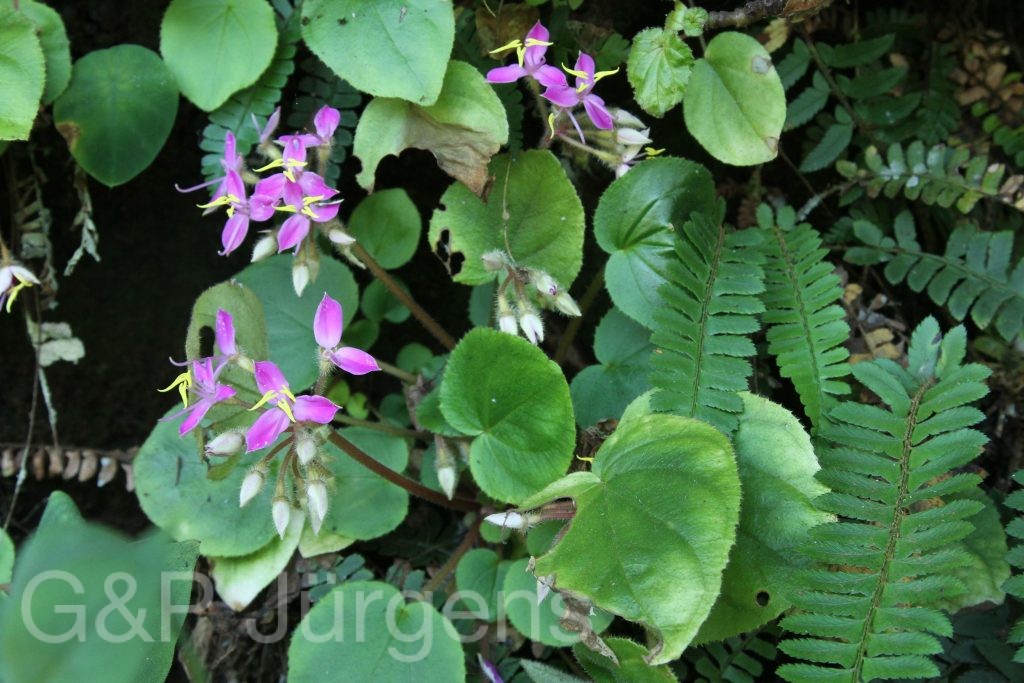
Bhutan2015 142
Bhutan Galephug 600m, October

Description

Sonerila khasiana is a small herb of the eastern Himalayan and northeast Indian region, recorded from India, Nepal, Bhutan, China and Myanmar, with comparatively few documented collections. It is a shade-loving plant of moist, humus-rich forest floors, shaded rock faces and damp banks in subtropical and lower montane forest, typically below about 1500 m. The illustrated plant from Galephug in southern Bhutan, at around 600 m and flowering in October, is characteristic of its lowland, post-monsoon flowering habit in warm, perpetually humid foothill forest where deep shade and constant moisture prevail.

The species is a delicate, often somewhat succulent annual or short-lived perennial with slender, ascending, frequently reddish stems. The leaves are opposite, ovate to elliptic, serrulate and traversed by the curved, parallel-converging nervation diagnostic of the Melastomataceae, the lamina often sparsely setose. The inflorescence is a short, terminal, scorpioid cyme of few flowers. The flowers are trimerous, with three pink to rose-purple petals and typically three stamens bearing the conspicuous, yellow, beaked anthers characteristic of the genus; the fruit is a small, three-angled, top-shaped capsule releasing numerous minute seeds.

The epithet refers to the Khasi Hills of Meghalaya, a centre of diversity for the genus. Sonerila is a large palaeotropical genus notable for its consistently trimerous flowers, unusual within a predominantly pentamerous family, and for its many narrow-range, forest-floor endemics. With relatively few records and a dependence on undisturbed shaded forest, such species are potentially sensitive to deforestation, although its full conservation status remains insufficiently assessed.

Author: C.B.Clarke · Sources: POWO (Kew), GBIF, Flora of China Vol. 13, Flora of Bhutan Vol. 2, Flora of Nepal, Revision of Sonerila (Melastomataceae)
Wenz.

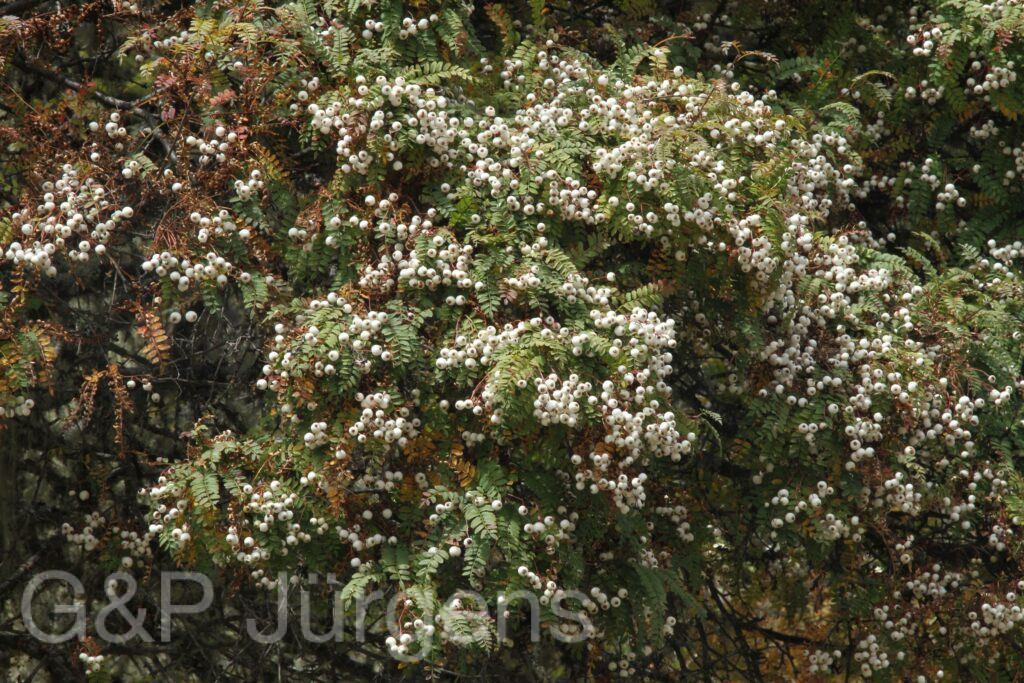
Bhutan2015 371
Bhutan Tumching-La 4000m, October
Bhutan2012 906
Bhutan Tumching-La 3900m, October
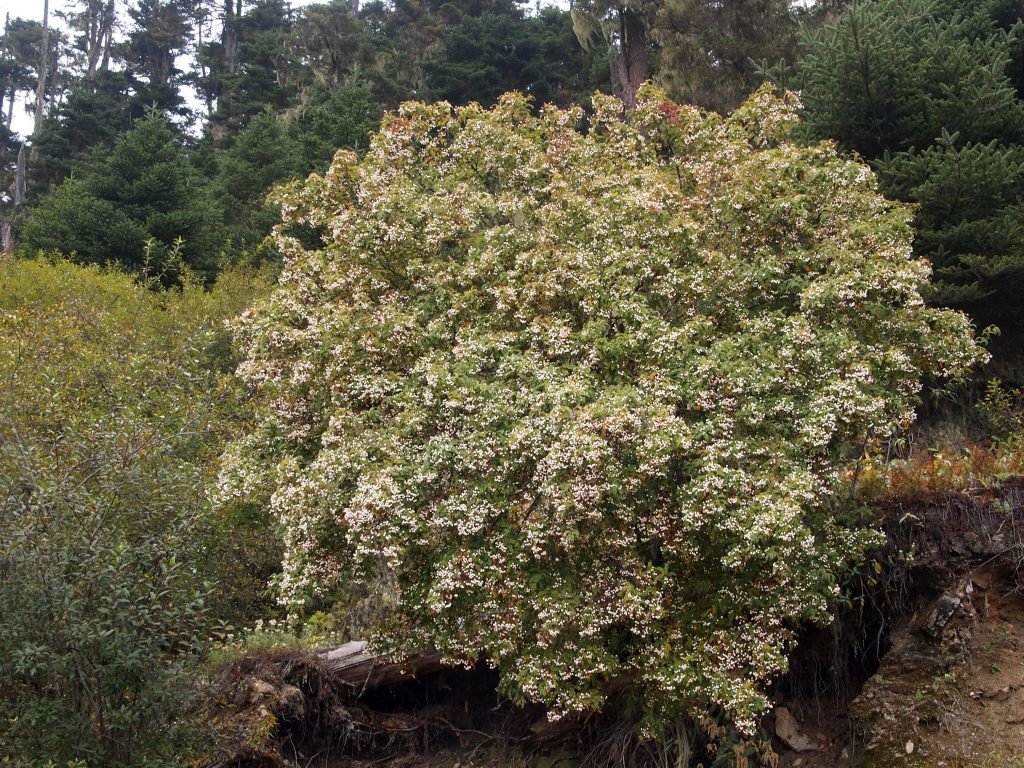
Bhutan2012 907
Bhutan Tumching-La 3900m, October

Description

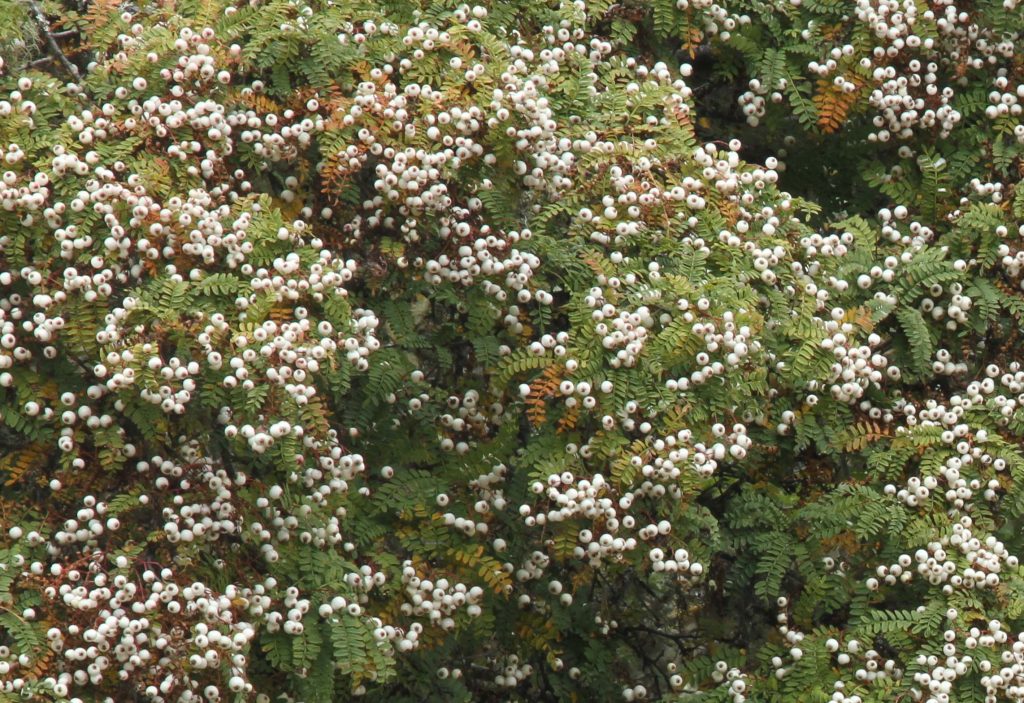
Sorbus microphylla is a high-montane to subalpine deciduous shrub or small tree distributed along the Himalayan arc from Pakistan through Nepal, northern India, Sikkim and Bhutan into south-central China and Myanmar, with the GBIF dataset recording some 344 occurrences including ex-situ collections in Britain, Belgium and North America. It occupies open coniferous and Rhododendron forest, forest margins and alpine thickets, typically between 3000 and 4300 m. The photographed plants were gathered at Tumching-La in Bhutan at 3900-4000 m in October, the fruiting season, where the species forms part of the krummholz and dwarf-shrub community below the treeline.

It is a slender shrub, often 1-3 m tall, with reddish-brown to purplish glabrescent young branches bearing conspicuous lenticels. The leaves are imparipinnate with 10-15 or more pairs of small, crowded, oblong leaflets that are sharply serrate toward the apex, dark green above and paler beneath, turning rich crimson in autumn, the rachis often narrowly winged. The white to pinkish flowers are borne in small terminal corymbs, each with five petals, numerous stamens and two to three styles. The fruit is a small globose pome, white, pink-tinged or pale rose, 6-8 mm across, persisting after leaf-fall.

The species belongs to Sorbus subgenus Albocarmesinae, the white- and pink-fruited Himalayan-Sino mountain ashes, a complex group in which apomixis and hybridisation blur species limits. Its small leaflets and pale fruits distinguish it from related S. ursina and S. foliolosa. The pomes are an important autumn food for thrushes and other montane birds, which disperse the seed. Widespread and locally common across a broad range, it is not considered threatened, though valued horticulturally for its delicate foliage and persistent rosy fruit.

Author: Wenz. · Sources: POWO (Kew), GBIF, Flora of China, Flora of Bhutan, McAllister: The Genus Sorbus

(Cardot) Hand.-Mazz.

Bhutan2015 495
  Bhutan Pele-La 3000m, October
Bhutan2015 497
  Bhutan Pele-La 3000m, October

Description

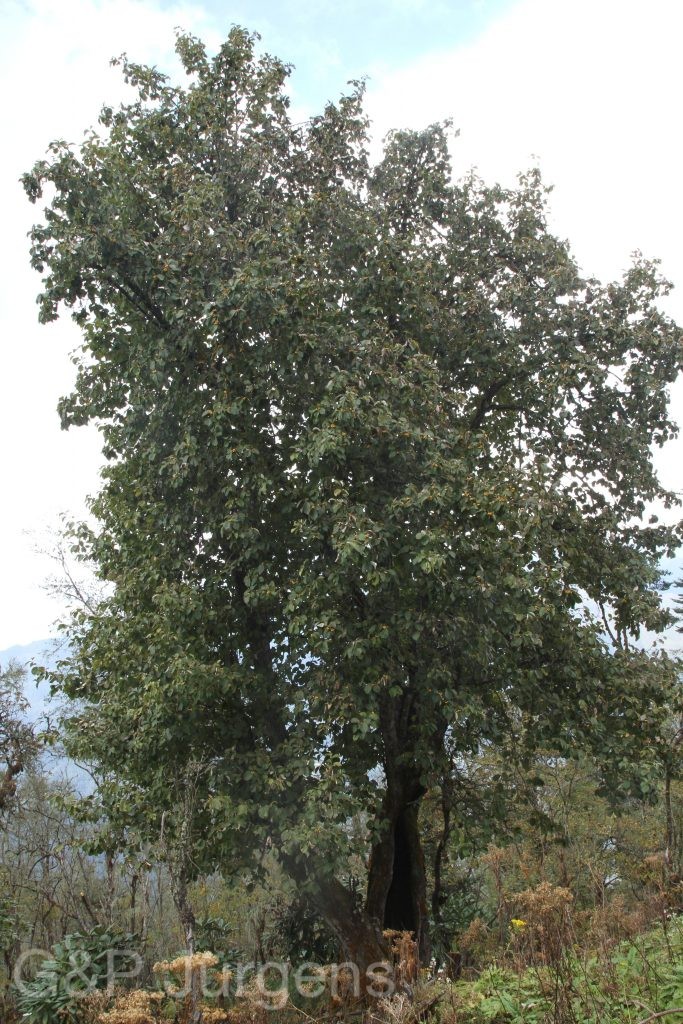
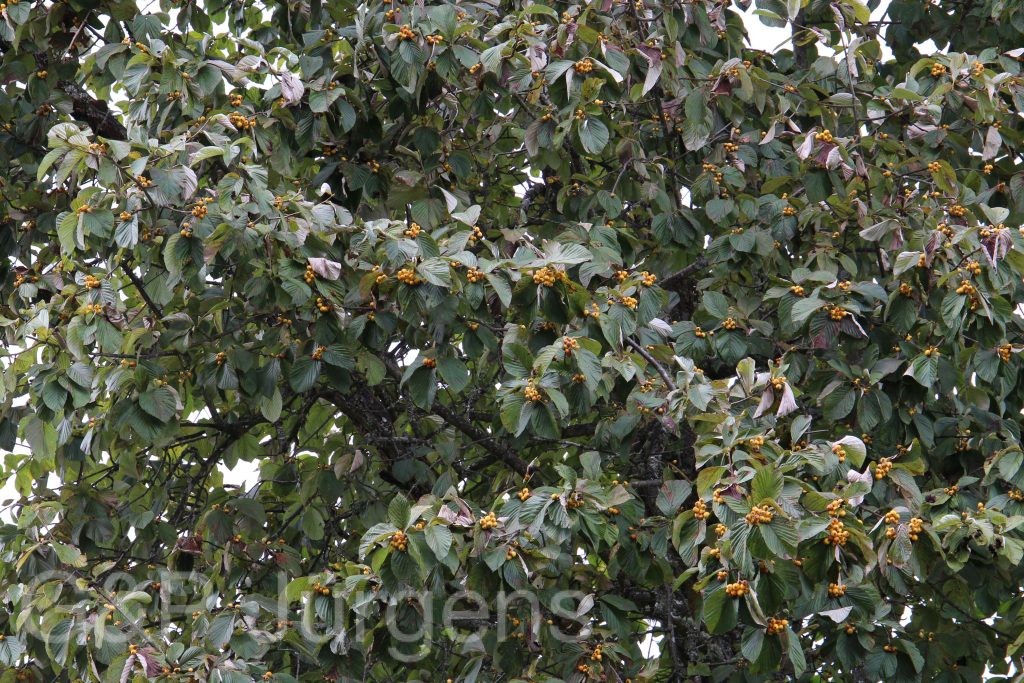
Sorbus thibetica is a Sino-Himalayan whitebeam distributed along the eastern Himalaya and adjacent China, from Nepal through northern India, Sikkim and Bhutan into south-western China (Xizang, Yunnan) and northern Myanmar; its roughly 470 georeferenced occurrences include numerous cultivated records in Britain and northern Europe (GB, NO, DK), reflecting its long-standing horticultural use. It grows in temperate and subalpine forest, woodland margins, rocky slopes and open hillsides, generally between about 2500 and 3600 m. The tree photographed at Pele-La in Bhutan at 3000 m in October, in autumn fruit and leaf-colour, is typical of its cool, montane forest habitat.

It is a deciduous tree to 10-20 m, with a rounded crown and grey bark; the stout twigs and buds are densely white-tomentose when young. The leaves are simple (not pinnate), broadly elliptic to obovate, entire-leaved members of the Aria group, dark green and glabrescent above but persistently covered beneath with a thick, silvery-white felted tomentum, the margins finely and shallowly toothed. The white flowers are borne in flat-topped corymbs, each with five petals, numerous stamens and an inferior ovary. The fruit is a small subglobose pome, ripening orange-brown to russet and bearing scattered lenticels, typical of the simple-leaved whitebeams.

Sorbus thibetica belongs to the Aria group of simple-leaved whitebeams (sometimes segregated as the genus Aria), distinct from the pinnate-leaved rowans of Sorbus sensu stricto. The selection 'John Mitchell', with very large leaves, is widely grown ornamentally. Apomixis and hybridisation complicate species limits throughout the group. Widespread and frequent, it is not considered threatened.

Author: (Cardot) Hand.-Mazz. · Sources: POWO (Kew), GBIF, Flora of China, Flora of Bhutan, Flora of Nepal, McAllister's The Genus Sorbus: Mountain Ash and other Rowans

unknown

Bhutan2012 281
Bhutan Shele-La, 4100m September

Description

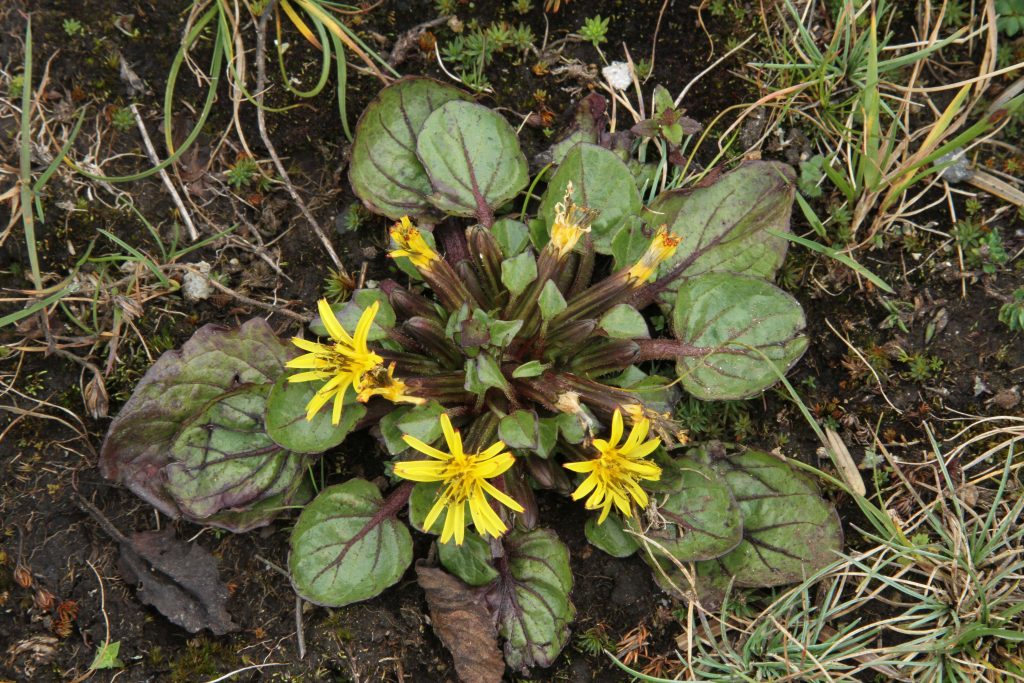
Soroseris depressa is a cushion-forming alpine composite of the high Himalaya and Tibetan margins, documented from Bhutan, India, China, Nepal and Japan, with about 62 GBIF occurrences. It is a specialist of the highest open ground, colonising scree, gravelly alpine turf, moraines and stony flats well above the treeline, commonly between about 4000 and 5000 m. The photographed material comes from the Shele-La in Bhutan at 4100 m in September, a wind-exposed pass where the species hugs the substrate among sparse alpine cushion vegetation late in the season.

The plant is a low, compact perennial herb with a stout, deep-seated taproot and a contracted, often subterranean caudex from which the leaves and capitula are densely crowded at ground level, forming a flattened ("depressa") rosette or cushion. The leaves are linear-oblanceolate to spathulate, entire to pinnatifid, and frequently woolly or glandular. The capitula are aggregated into a dense, head-like synflorescence sunk among the leaves; each is ligulate with yellow to whitish strap-shaped florets, enclosed by an involucre of few phyllaries. The fruit is a slender, ribbed cypsela crowned by a pappus of fine bristles.

Soroseris is a small genus of the tribe Cichorieae endemic to the Sino-Himalayan and Tibetan high mountains, and S. depressa (also treated under the name Tibetoseris depressa) exemplifies the extreme cushion habit evolved in response to cold, desiccation and short growing seasons. Its restriction to fragile high-alpine substrates makes it sensitive to climate warming and trampling, though its remote habitat affords some protection.

Author: unknown · Sources: POWO (Kew), GBIF, Flora of China, Flora of Bhutan, Annotated Checklist of the Flowering Plants of Nepal, Systematics of Cichorieae (Asteraceae)

(D.Don) Lindl.

Bhutan2015 77
Bhutan Wangdi Galegphug 1500m, October
Bhutan2012 641
Bhutan Tserang 1600m, September
Bhutan2012 642
Bhutan Tserang 1600m, September

Description

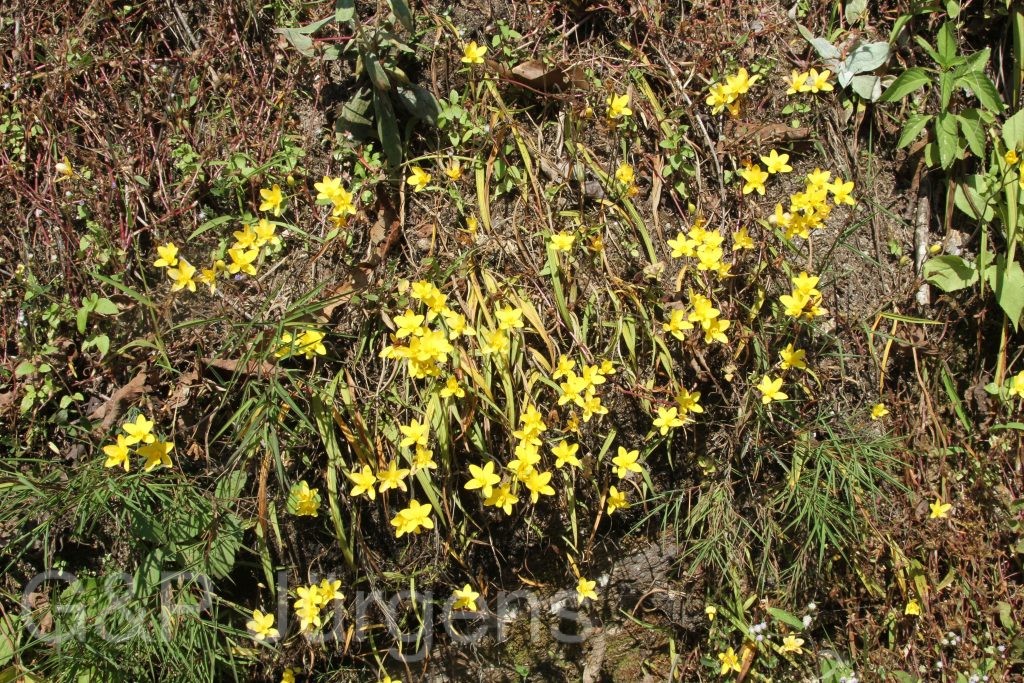
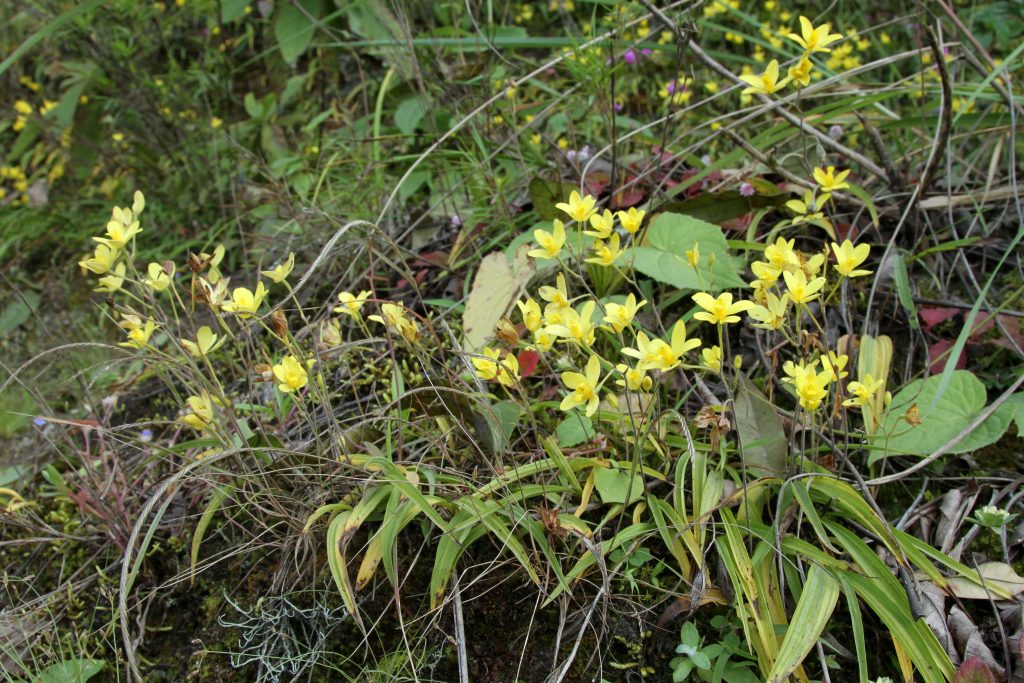
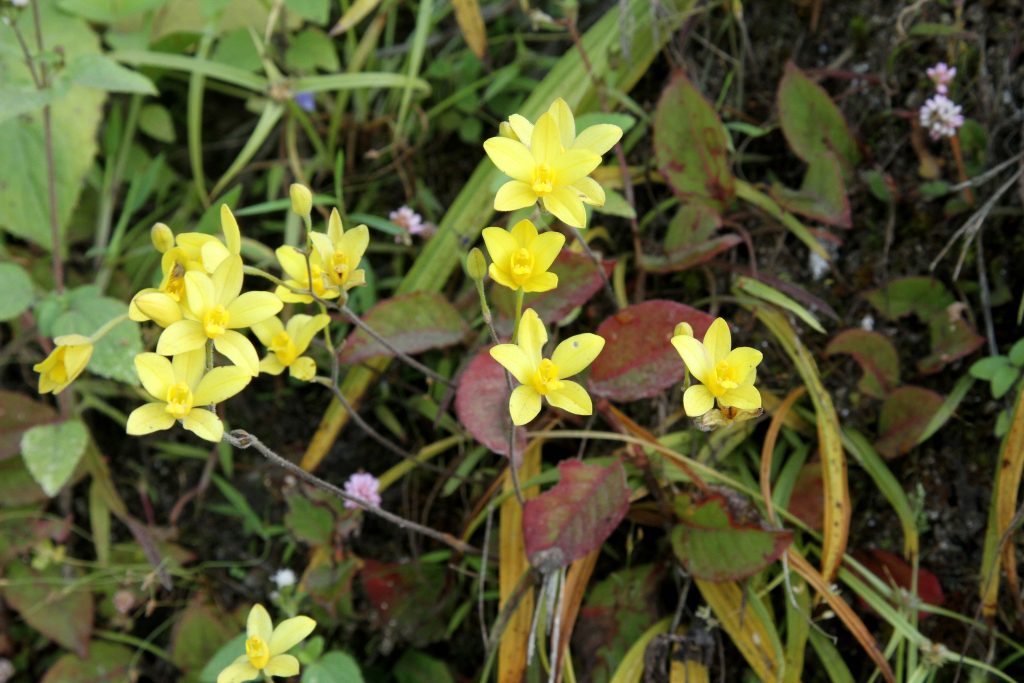
Spathoglottis ixioides is a small terrestrial orchid of the Himalaya, recorded from Nepal, India, Bhutan and China, a relatively narrowly distributed species with 146 occurrences in GBIF. It grows on open grassy banks, mossy rock ledges, humus-rich slopes and forest margins, generally between 1500 and 3500 m. The Bhutanese localities given, Wangdi Galegphug at about 1500 m in October and Tserang at 1600 m in September, reflect the warm-temperate to subtropical montane grassland and bank habitats where it flowers in the post-monsoon autumn, often among grasses on damp, partly shaded ground.

The species is a dwarf, deciduous, terrestrial herb growing from a small subterranean pseudobulb or corm-like tuber. From this arise a few narrowly lanceolate, plicate (longitudinally pleated) leaves that taper to a slender base. The slender erect inflorescence carries one to a few comparatively large flowers; the floral segments are bright yellow, with spreading ovate-lanceolate sepals and petals and a distinctly three-lobed labellum bearing raised keels or calli on the disc and small lateral lobes flanking the column. The fruit is a small ellipsoid dehiscent capsule releasing numerous dust-like seeds.

Spathoglottis (subtribe Collabiinae, tribe Collabieae of the Epidendroideae) is chiefly a tropical Asian and Pacific genus, and S. ixioides is among its most cold-tolerant, high-altitude members, the yellow flowers and reduced deciduous habit distinguishing it within the genus. Like most terrestrial orchids it depends on mycorrhizal fungi for germination of its minute seeds and is pollinated by bees. Although locally frequent in suitable habitat, its restricted range, specialised ecology and the broad pressures of habitat disturbance and orchid collection warrant monitoring, and all orchids are listed under CITES Appendix II.

Author: (D.Don) Lindl. · Sources: POWO (Kew), GBIF, Flora of Bhutan, Orchids of Bhutan, Genera Orchidacearum (Pridgeon et al.)

(Wall.) R.Br. ex. Wall.

Bhutan2012 357
Bhutan Dochu-La 2900m, September
Bhutan2014 609
Bhutan Phobjika 3100m, May
Sikkim2004 26 P41
Sikkim West-Bengal, Sambon 1850m April

Description

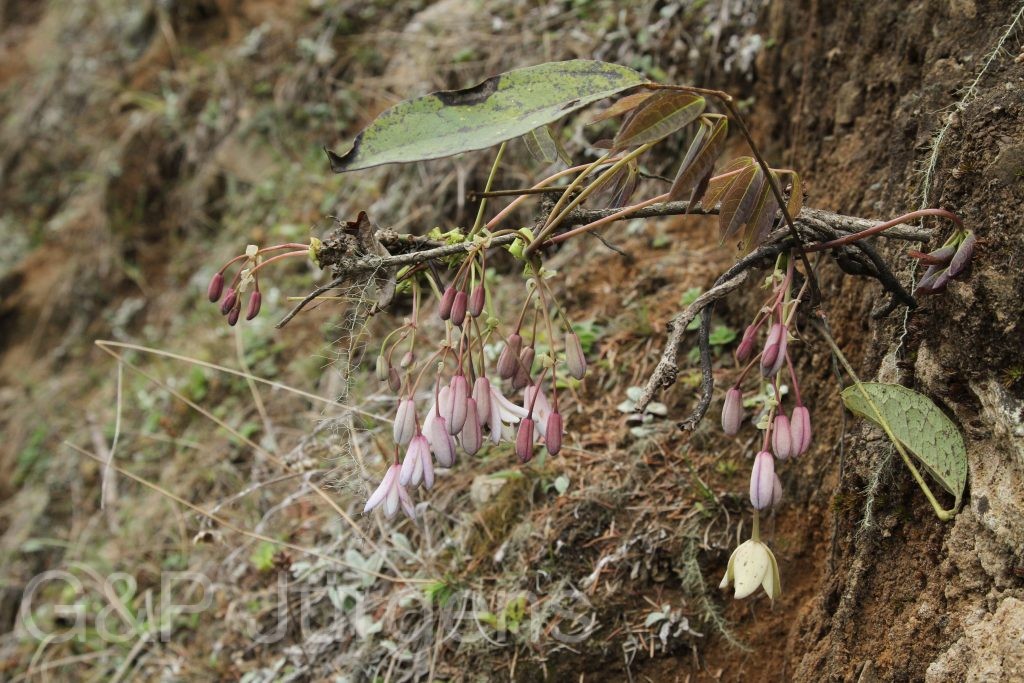
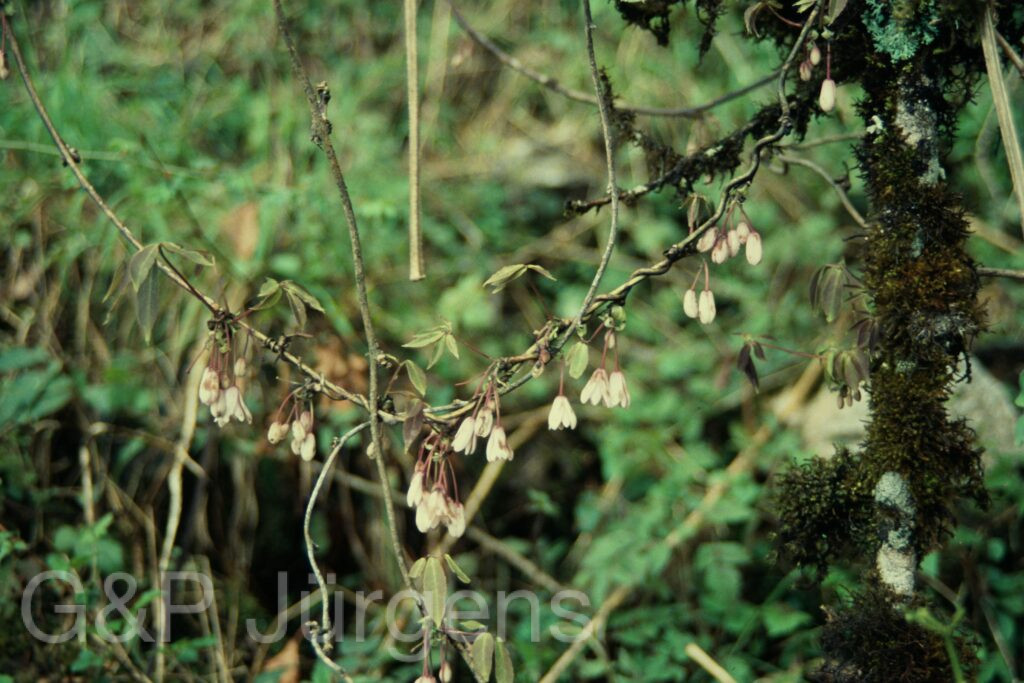
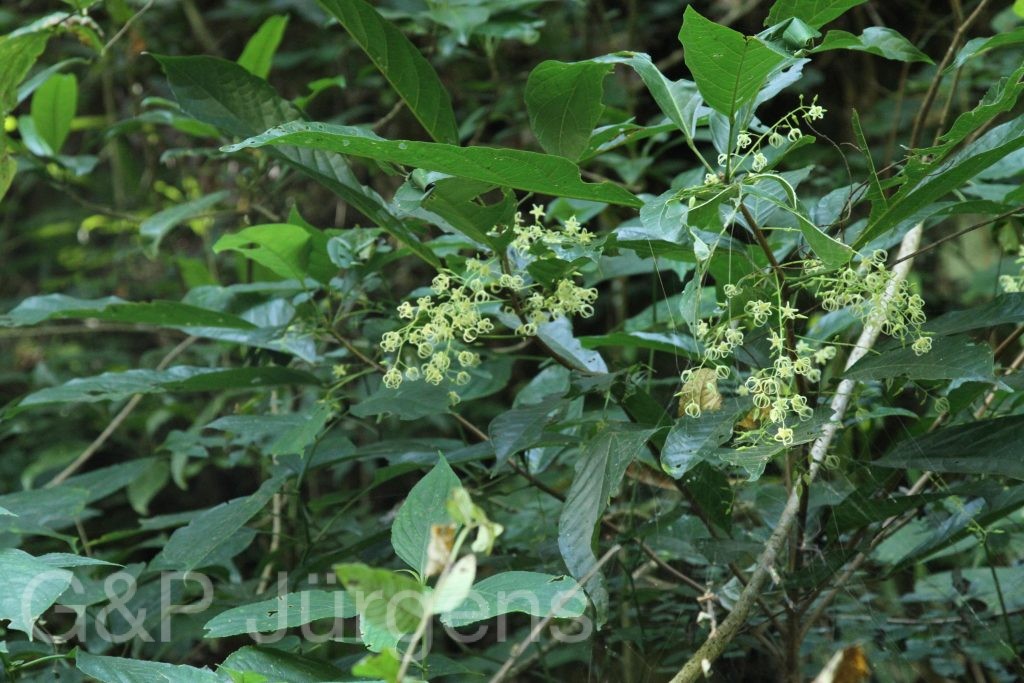
Stauntonia latifolia is a Himalayan woody climber distributed through China, India, Nepal, Bhutan and Myanmar, with GBIF aggregating some 517 occurrences across the warm temperate belt. It is a liana of moist broad-leaved and mixed forest, scrambling over shrubs and into the canopy along forest margins, ravines and streamsides typically between about 1500 and 3100 m. The accompanying records span this range well, from Sambon on the Sikkim–West Bengal border at 1850 m in April, through the Dochu-La in Bhutan at 2900 m in September, to Phobjika at 3100 m flowering in May, reflecting an extended phenology across elevation and longitude in the eastern Himalaya.

The family is here cited as Ranunculaceae, but the plant in fact belongs to the Lardizabalaceae; the description follows the true affinity. It is an evergreen twining climber with palmately compound leaves of three to seven leathery, entire, ovate to elliptic leaflets borne on long petioles. The plant is functionally monoecious, the flowers unisexual and borne in axillary racemes; they are greenish-white to purplish, lacking true petals, the showy parts being six sepals in two whorls, with six stamens in male flowers and three carpels in female ones. The fruit is a fleshy, oblong, purple berry-like follicle, edible and sweet, containing numerous black seeds embedded in a juicy pulp.

The taxon was described by Wallich and is widely treated under the synonym Holboellia latifolia, the generic limits between Holboellia and Stauntonia having been repeatedly debated and revised; under recent circumscriptions the Himalayan plant is placed in Stauntonia. The Lardizabalaceae are a small east-Asian and Chilean family of considerable phylogenetic interest as an early-diverging lineage of the Ranunculales. The succulent fruits are locally gathered and eaten and serve to disperse the seeds via birds and mammals; the species is common and faces no significant conservation concern.

Author: (Wall.) R.Br. ex. Wall. · Sources: POWO (Kew), GBIF, Flora of China, Flora of Bhutan, Annotated Checklist of the Flowering Plants of Nepal, monographic studies of Lardizabalaceae (Holboellia and Stauntonia)

(Jack) Phengklai

Bhutan2015 230
Bhutan Zhemgang 950m, October

Description

Sterculia lanceolata var. coccinea is a tree of tropical and subtropical Asia, ranging from the Indian subcontinent (India, Nepal, Sri Lanka) through Myanmar, Thailand, Indochina (Vietnam, Laos, Cambodia) and southern China into Malesia (Malaysia, Indonesia, Singapore, Brunei, Philippines), as reflected in the 322 GBIF records. It occurs in evergreen and semi-evergreen lowland to lower-montane forest, along streams and forest margins, typically below about 1500 m. The photographed tree from Zhemgang in central Bhutan at around 950 m, fruiting in October, sits at the warm-temperate northern edge of the species' range, where the bright fruiting display is conspicuous in autumn.

The variety is a small to medium tree with a slender bole and spreading crown. The leaves are alternate, simple, elliptic-lanceolate to oblong, entire, glabrescent and pinnately veined, on slender petioles — the lanceolate blade distinguishing this species from the palmately lobed S. villosa. The small flowers are apetalous with a campanulate, lobed calyx and are borne in axillary panicles; the variety coccinea is named for its scarlet colouring. The fruit is the diagnostic cluster of woody, beaked follicles that ripen a vivid red ('coccineus') and split open to reveal glossy black seeds against the crimson inner wall.

Now classified in Malvaceae subfamily Sterculioideae (formerly Sterculiaceae), Sterculia lanceolata is a variable species, and this variety, based on the basionym described by Jack and recombined by Phengklai, segregates the scarlet-fruited Malesian-Indochinese populations. The boldly coloured dehisced follicles are bird-dispersed, the contrasting red and black serving as a visual lure. Widespread and occurring in both primary and secondary forest, the taxon is not regarded as threatened.

Author: (Jack) Phengklai · Sources: POWO (Kew), GBIF, Flora of Thailand, Flora of China, Flora of British India, Kostermans Sterculiaceae monograph

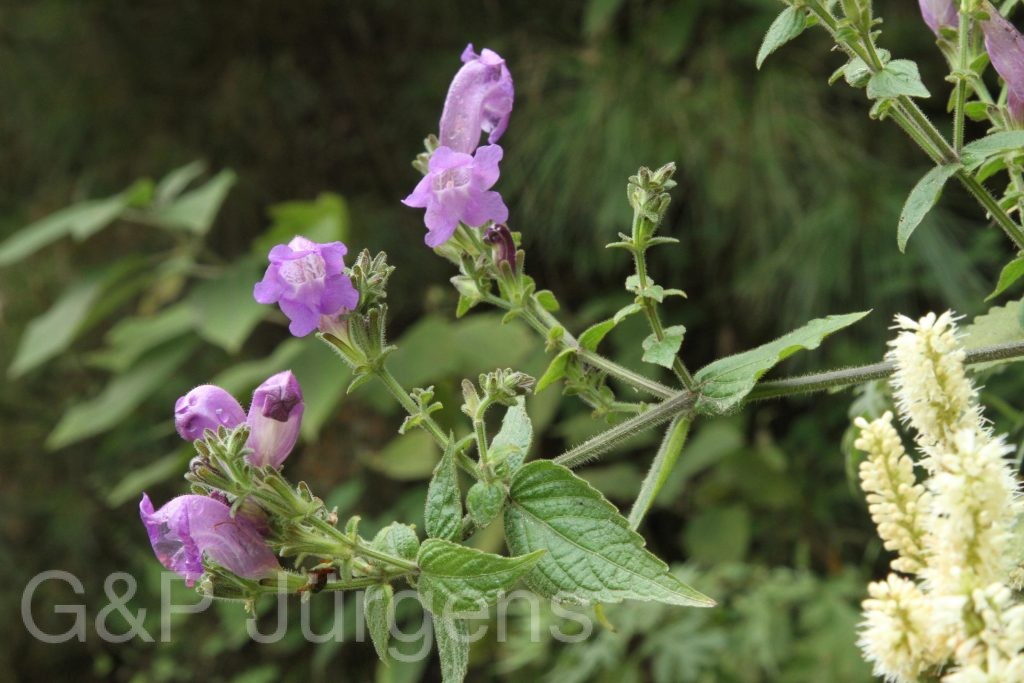
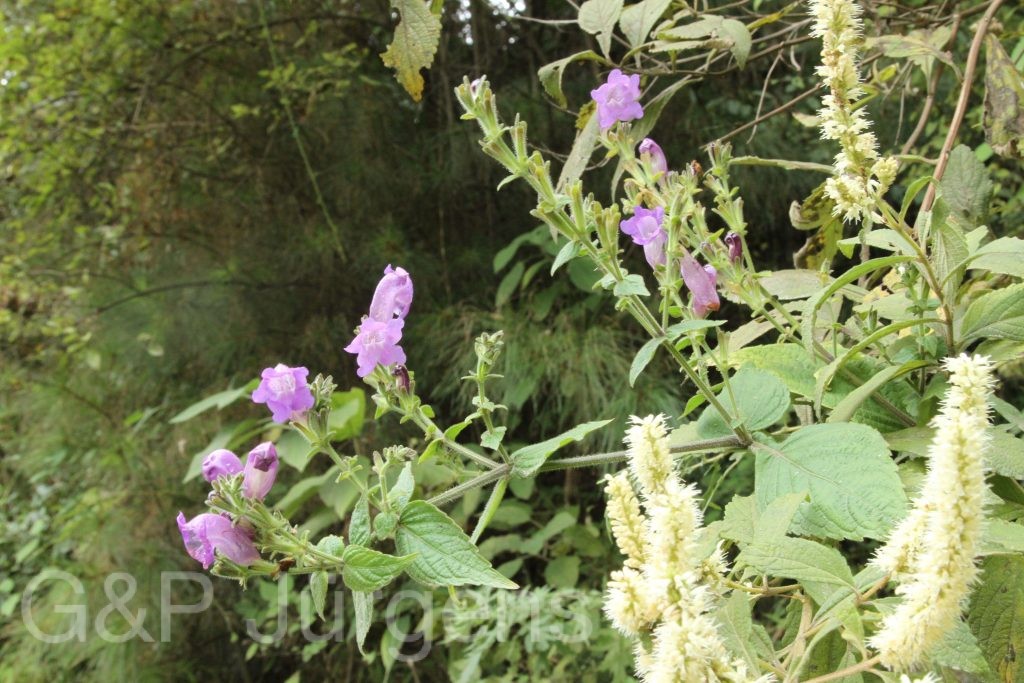
Nees

Garw 2005 247 ergebnis ergebnis
India Garhwal Sitel 1850m, September

Description

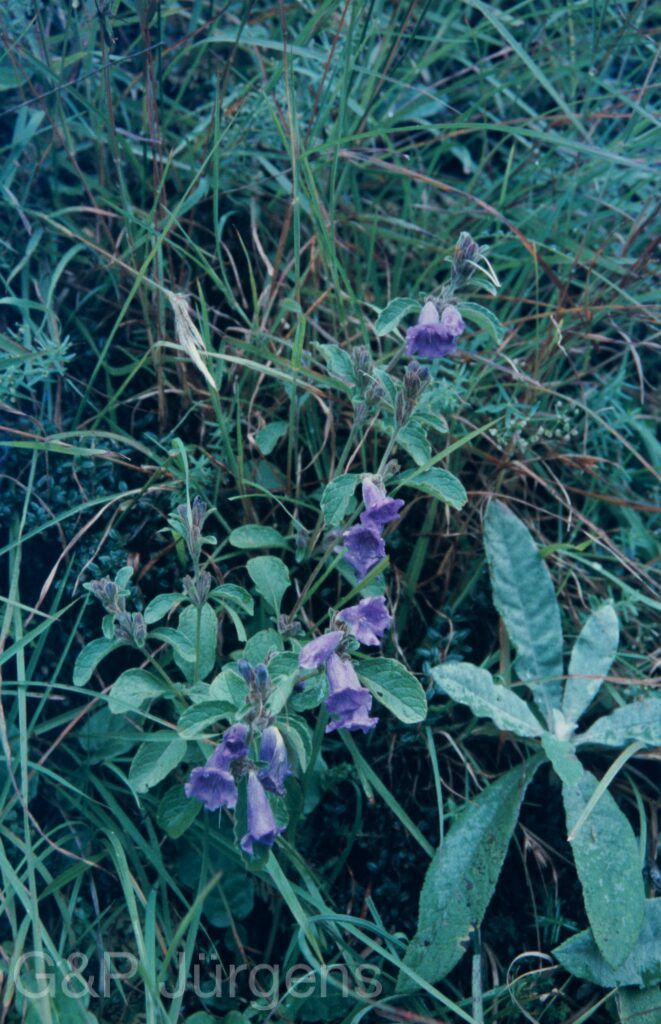
Strobilanthes atropurpurea Nees is a robust perennial herb of the Acanthaceae, distributed along the Himalaya from Pakistan and India through Nepal and Bhutan to southwestern China, with further records reaching Myanmar and Vietnam (GBIF: c. 328 occurrences). It is a characteristic understorey and forest-margin plant of moist temperate broad-leaved and mixed forests, favouring shaded, humid ravines and stream banks. The illustrated plant from Sitel in Garhwal, western India, at about 1,850 m and flowering in September, reflects its typical late-monsoon flowering in the mid-montane forest belt.

The plant is an erect, branched herb or subshrub reaching 0.5–1.5 m, with quadrangular stems often swollen at the nodes. The leaves are opposite and decussate, the pairs frequently unequal (anisophyllous), ovate to elliptic, acuminate, with crenate-serrate margins and prominent venation; cystoliths are usually visible as fine streaks on the leaf surface. The inflorescence is a terminal or axillary spike or panicle of cymose clusters subtended by bracts. The flowers have a tubular-funnelform corolla that is deep violet to purple, five-lobed and slightly two-lipped, with four didynamous stamens. The fruit is an explosively dehiscent capsule bearing few seeds on hooked retinacula.

Strobilanthes is a large, taxonomically difficult genus noted for gregarious, often plietesial (mast) flowering, in which many individuals bloom synchronously after several years and then die. Such cohort dynamics complicate field identification and herbarium representation. The species is locally common and not considered threatened, though its forest habitat is subject to regional degradation.

Author: Nees · Sources: POWO (Kew), Flora of China Vol. 19, Flora of Bhutan Vol. 2, Flora of Nepal, GBIF, Wood & Scotland: Strobilanthes monograph

(Steud.) Bosser & Heine

Bhutan2012 992
Bhutan Trithangebe 1100m, October
Bhutan2012 993
Bhutan Trithangebe 1100m, October

Description

Strobilanthes hamiltoniana (Steud.) Bosser & Heine is a shrubby Acanthaceae of the eastern Himalaya and Indo-Burmese region, native to India, Bhutan, Nepal, Myanmar and China, but widely naturalised and cultivated, as reflected in its GBIF total of nearly 779 occurrences spanning many tropical islands and the Americas. In its native range it grows along forest margins, streamsides, ravines and shaded roadbanks in the warm subtropical hill zone, flowering in the late monsoon and autumn. The illustrated plant from Trithangebe in Bhutan at 1100 m in October shows it in its characteristic low-elevation forest-edge habitat at the onset of its flowering season.

The species is an erect, much-branched perennial shrub with four-angled stems and opposite, petiolate, ovate-lanceolate leaves that are acuminate and finely toothed, the pairs typically anisophyllous. The inflorescences are slender, lax, often drooping panicles bearing numerous flowers; each corolla is tubular and gracefully curved, pale violet to mauve-blue with a paler tube, the limb shortly five-lobed, and the androecium of four stamens. The fruit is the typical acanthaceous club-shaped capsule that dehisces explosively to disperse the seeds, which are borne on hooked retinacula.

Strobilanthes is a large and taxonomically difficult Asian genus famed for the gregarious, mast (plietesial) flowering of many species, in which whole populations bloom synchronously after a span of years and then die. S. hamiltoniana is popular in ornamental horticulture for its arching sprays of bloom and consequently appears far beyond its native limits. It is not of conservation concern, being common and readily cultivated.

Author: (Steud.) Bosser & Heine · Sources: POWO (Kew), GBIF, Flora of Bhutan, Flora of China, Acanthaceae of the Indian Subcontinent, Carine & Scotland revision of Strobilanthes

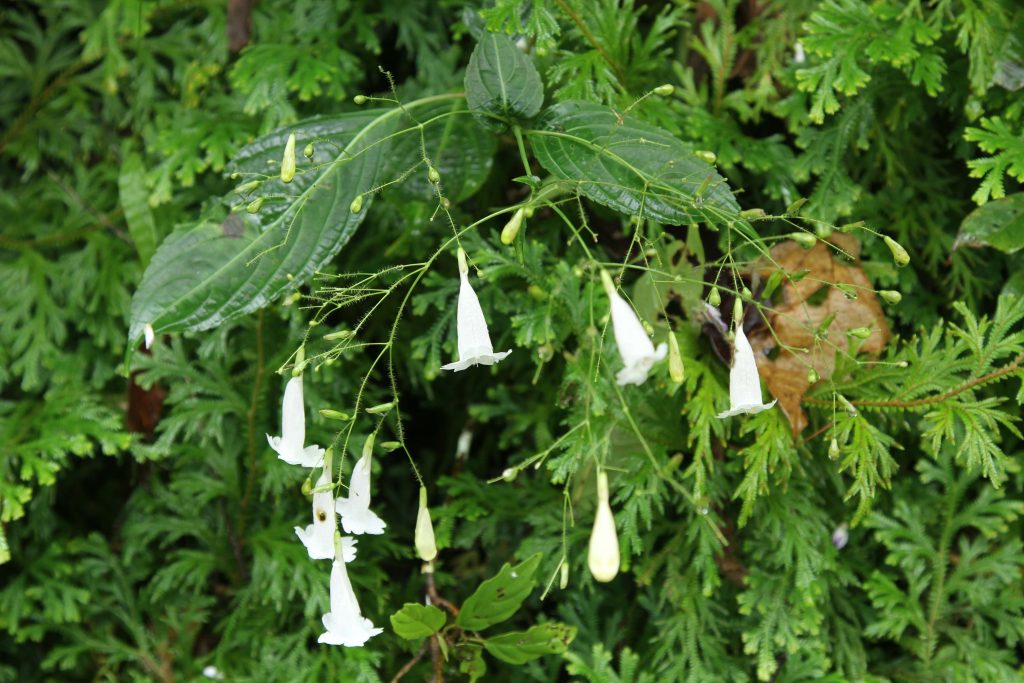
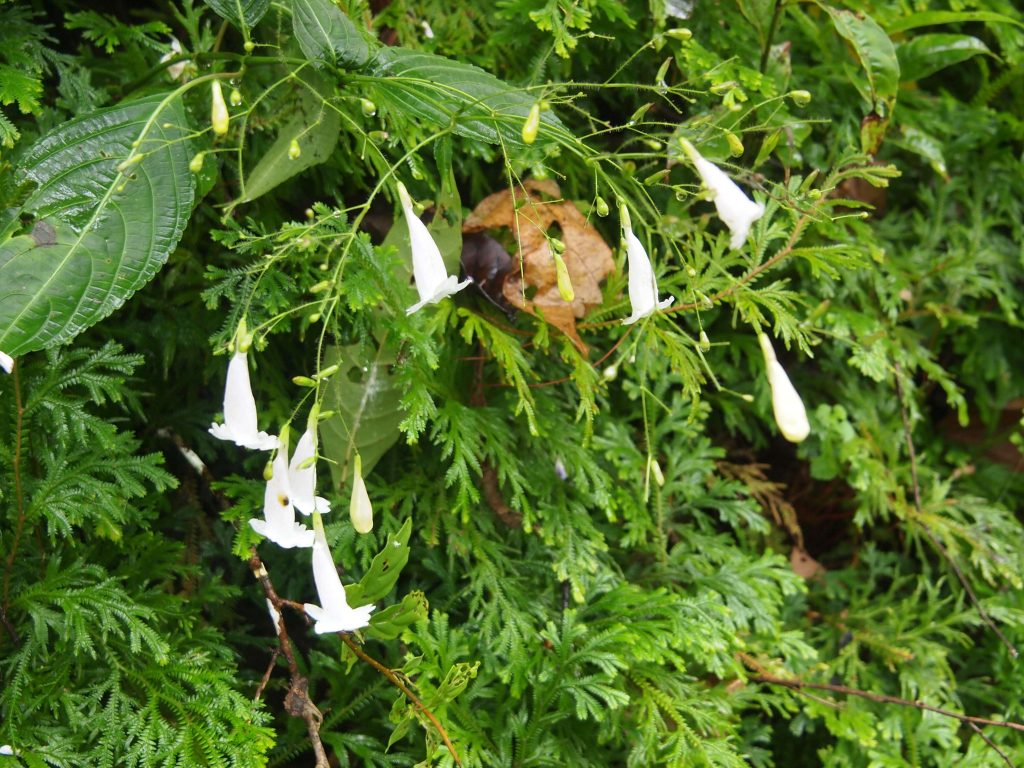
C.B.Clarke

Bhutan2015 654
Bhutan Semkota 2000m, October
Bhutan2015 653
Bhutan Semkota 2000m, October

Description

Strobilanthes lachenensis C.B.Clarke is a shrubby herb of the Acanthaceae endemic to the eastern Himalaya and adjacent ranges, recorded from China, Nepal, India and Bhutan, with about 125 GBIF occurrences. It grows in the understorey and along the margins of temperate broad-leaved and mixed forest, on shaded slopes, banks and forest clearings, mainly between about 1800 and 2800 m. It was documented in Bhutan at Semkota near 2000 m in October, an autumn flowering that accords with the often gregarious, plietesial flowering behaviour characteristic of many Himalayan Strobilanthes, in which populations bloom synchronously after several years of vegetative growth.

It is an erect, branched perennial or subshrub with quadrangular stems that are swollen at the nodes. The leaves are opposite and conspicuously anisophyllous, the pair unequal, elliptic to lanceolate, acuminate, with crenate-serrate margins and cystoliths visible as fine streaks on the surface. The flowers are borne in spike-like or capitate inflorescences subtended by bracts; the bilabiate, funnel-shaped corolla is blue to pale violet, curved and slightly inflated at the throat, enclosing four didynamous stamens. The fruit is an elongate, two-valved capsule that dehisces explosively, ejecting a few flattened seeds borne on hooked retinacula.

Strobilanthes is a large and taxonomically complex genus centred on tropical and subtropical Asia, and the Sino-Himalayan species such as S. lachenensis form part of an intricate, much-revised assemblage. Its mass-flowering, bee-pollinated reproductive strategy and the type locality at Lachen in Sikkim, from which the epithet derives, anchor it in the eastern Himalayan flora. The species is forest-dependent and locally distributed, making it potentially sensitive to habitat disturbance, though it is not formally assessed.

Author: C.B.Clarke · Sources: POWO (Kew), GBIF, Flora of China, Flora of Bhutan, Flora of British India, Strobilanthes monograph (Wood; Carine & Scotland revision of Strobilanthes)