Tag:

Autumn

Miq.

Bhutan2015 532
Bhutan Punaka 1400m, October
Bhutan2015 533
Bhutan Punaka 1400m, October

Description

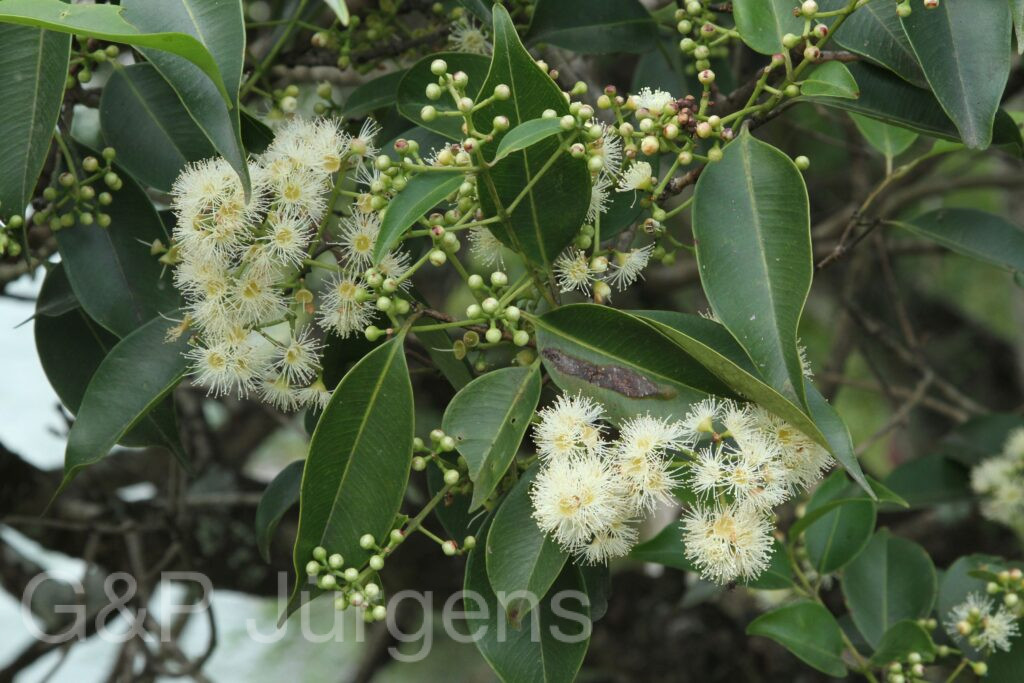
Symplocos acuminata Miq. is an evergreen shrub or small tree of the Symplocaceae, widely distributed across tropical and subtropical Asia. Its substantial GBIF record (over 4,100 occurrences) spans China, Taiwan, India, the Himalaya, Indochina, Sri Lanka, Japan, and the Malesian archipelago, reflecting a broad Indo-Malayan range. The species was recorded near Punakha in Bhutan at 1,400 m in October; it characteristically inhabits broad-leaved evergreen and mixed mesophytic forests, forest margins, and secondary woodland from the lowlands up to around 2,000 m, favouring moist, well-drained slopes.

The plant forms a much-branched crown with coriaceous, alternate leaves that are elliptic to oblong-lanceolate and conspicuously acuminate at the apex, the margins finely serrate and the surfaces glabrous. The flowers are small, white, and fragrant, with numerous stamens arranged in fascicles, borne in short axillary racemes or spikes. The ovary is inferior, developing into an ovoid to ellipsoid drupe that ripens dark blue-black, crowned by the persistent calyx and attractive to frugivorous birds, which act as the principal dispersal agents.

Symplocos is the sole genus of its family and is taxonomically complex, with acuminata representing part of a variable, widely circumscribed species aggregate that has accumulated numerous synonyms across its vast range. Members of the genus are notable for accumulating aluminium, and several have historically been used as natural mordants in dyeing. Given its wide distribution and tolerance of disturbed forest, the species is not considered threatened.

Author: Miq. · Sources: POWO (Kew), Flora of China Vol. 15, Flora of Bhutan Vol. 2, GBIF, Nooteboom: Symplocaceae (Flora Malesiana, 1977)
Siebold & Zucc.

Bhutan2015 531
Bhutan Phobjika 2450m, October
Bhutan2015 529
Bhutan Phobjika 2450m, October

Description

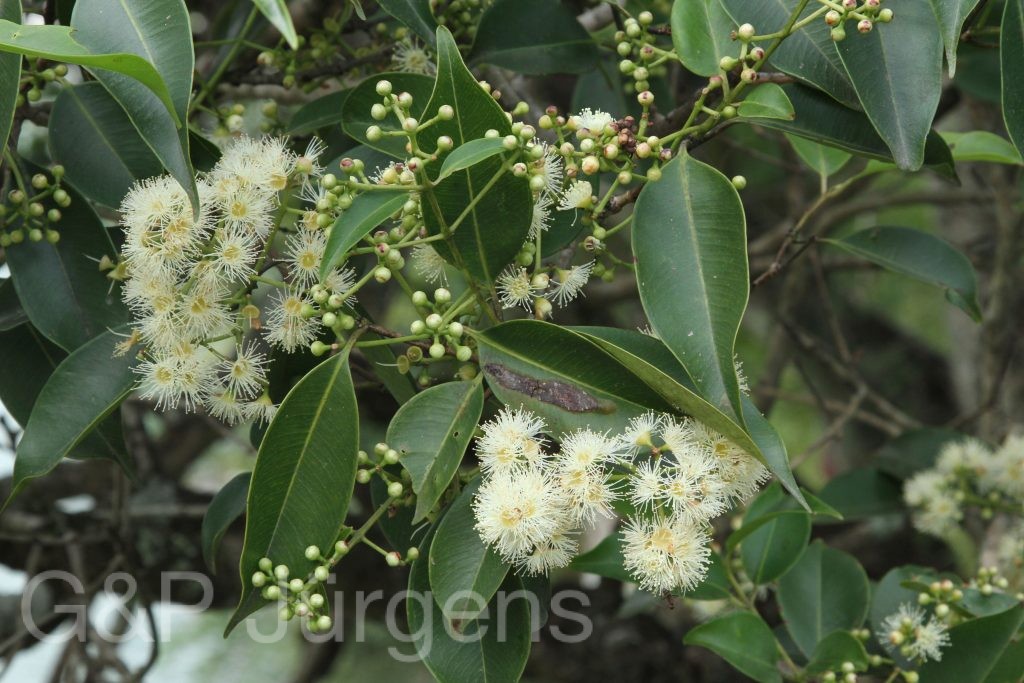
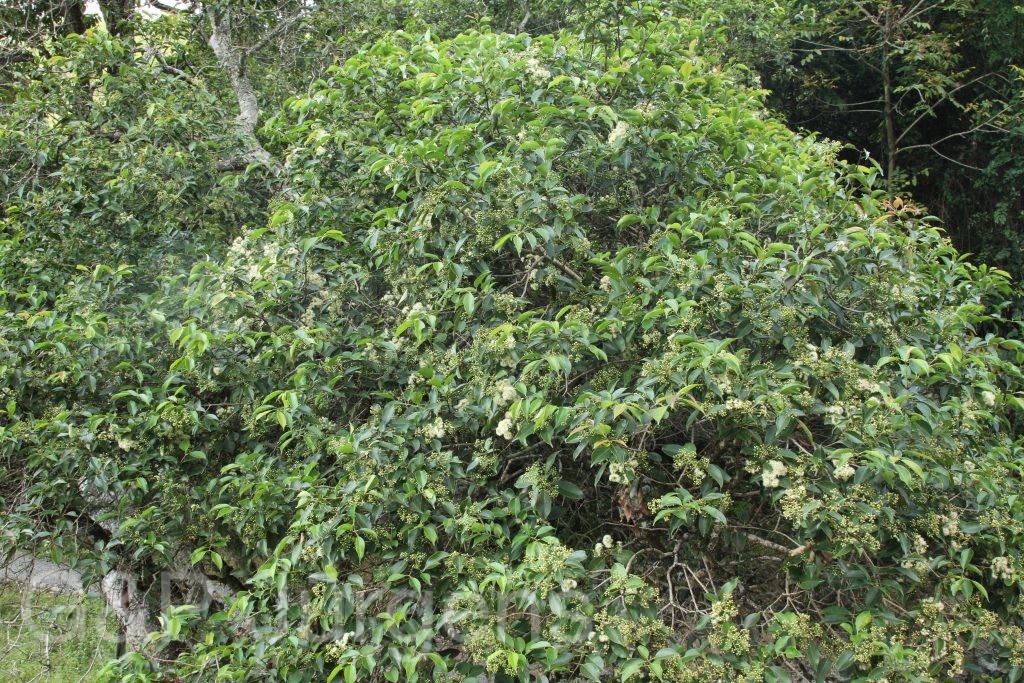
Symplocos lucida is a broadly distributed evergreen of eastern and southern Asia, occurring from China, Japan, Korea and Taiwan through Hong Kong, the Philippines, Vietnam, Thailand, Malaysia and Indonesia to the Himalayan countries of Nepal, India and Bhutan; its more than 413 GBIF records reflect this wide range, with the United States accessions cultivated or herbarium-based. It grows in evergreen broad-leaved and mixed mid-montane forests, on forest margins and shrubby slopes, generally between about 1500 and 2800 m. The photographed tree at Phobjika in central Bhutan at 2450 m in October illustrates its occurrence in cool, humid temperate forest of the eastern Himalaya.

It is an evergreen shrub or small tree with smooth grey bark and glabrous young shoots. The alternate, leathery leaves are elliptic to oblong-lanceolate, glossy (whence lucida) and dark green above, with a serrate to crenate margin and a short petiole. The flowers are small, white and fragrant, borne in short axillary spikes or racemes; each has a five-lobed calyx and corolla and numerous stamens fused in fascicles at the base. The fruit is a small, ovoid to oblong drupe, dark blue-black or purplish when ripe, crowned by the persistent calyx and enclosing a single hard stone.

Symplocos is the sole genus of the Symplocaceae, a pantropical to warm-temperate family of some hundreds of species centred on Asia. S. lucida belongs to a taxonomically complex aggregate, and its leaves and bark have a long history of use as a mordant (aluminium-accumulating) source in natural dyeing. Widespread and ecologically plastic, it is not considered threatened, though its forest habitats face regional pressure from logging and land conversion.

Author: Siebold & Zucc. · Sources: POWO (Kew), GBIF, Flora of China, Flora of Bhutan, Flora of Japan, Symplocaceae revision (Nooteboom monograph)

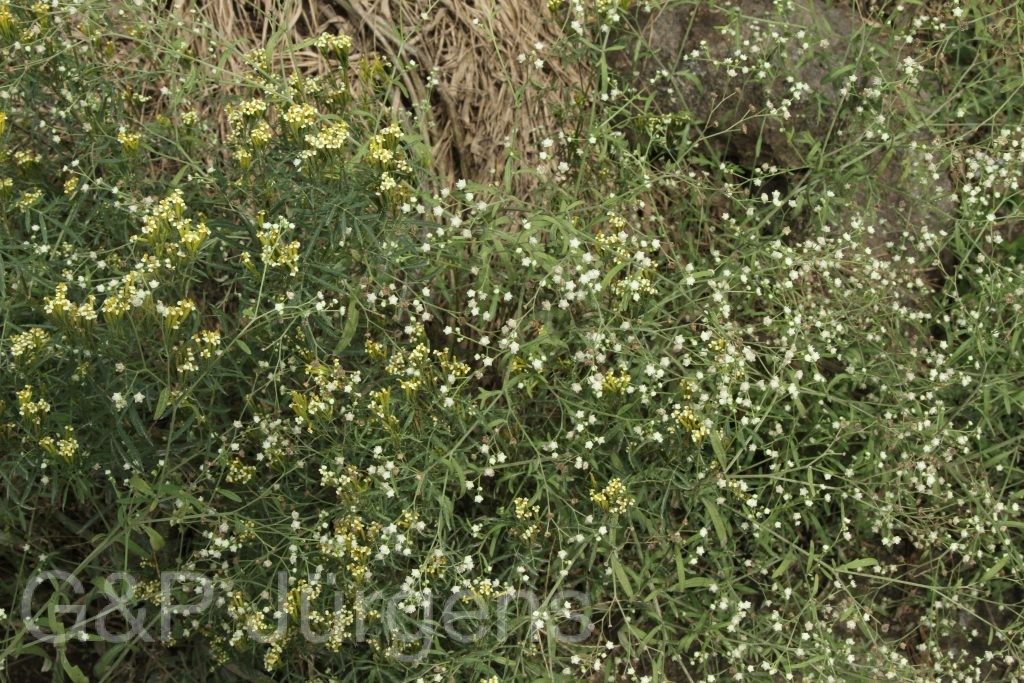
(Wall. ex DC.) C.Jeffrey & Y.L.Chen

Garw 2005 172 ergebnis ergebnis
India Garhwal Shertoli 3100m, September

Description

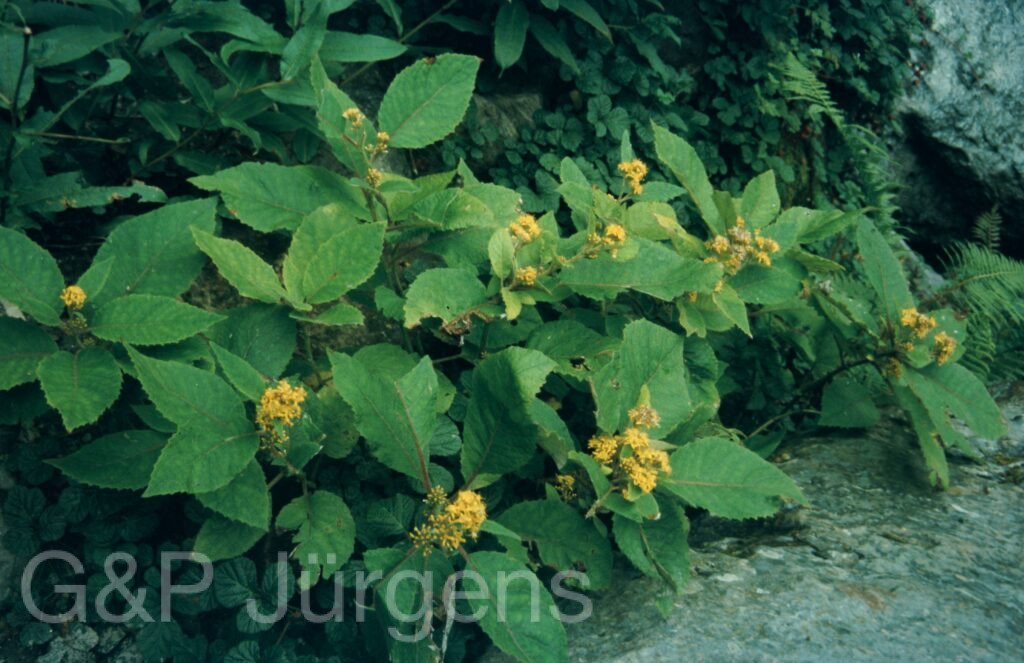
Synotis alata is a robust ragwort-allied composite of the Himalaya and southwestern China, documented by GBIF (330 occurrences) from Nepal, India, Bhutan, Myanmar and China. It grows in forest clearings, shrubberies, along streamsides and on grassy slopes within the upper temperate and subalpine zones, typically between about 2500 and 3500 m. The plant photographed at Shertoli in Garhwal, India, at 3100 m in September captures its late-monsoon to autumn flowering, when these tall herbs come into bloom along moist montane margins after the rains.

The species is a perennial herb with erect, often winged or narrowly alate stems, a feature reflected in the epithet "alata". The leaves are alternate, ovate to elliptic-lanceolate, sharply toothed and frequently decurrent down the stem to form the characteristic wings, with a thinly hairy lower surface. The capitula are numerous and arranged in a broad terminal corymbose panicle; each head is radiate with a few yellow ligulate ray florets surrounding a disc of yellow tubular florets, subtended by an involucre of uniseriate phyllaries with small calyculate bracts. The fruit is a cylindrical, ribbed cypsela bearing a copious white pappus of fine barbellate bristles that aids wind dispersal.

Synotis was segregated from the vast genus Senecio by C. Jeffrey and Y. L. Chen, who recognised its distinctive style and pollen characters; S. alata is a typical member of this Sino-Himalayan group. The wind-borne pappus permits rapid colonisation of disturbed and successional ground, and the bright capitula attract a range of generalist butterfly and bee pollinators. The species is common and widespread across its range and is not considered to be of conservation concern.

Author: (Wall. ex DC.) C.Jeffrey & Y.L.Chen · Sources: POWO (Kew), GBIF, Flora of China, Flora of Bhutan, Annotated Checklist of the Flowering Plants of Nepal, The Senecioneae of the Himalaya (Jeffrey)

(Wall. ex DC.) C.Jeffrey & Y.L.Chen

Garw 2005 51 ergebnis ergebnis
India Garhwal Valley of flowers 3400m, September

Description

Synotis kunthiana is a Sino-Himalayan composite distributed across the central and eastern Himalaya, with verified records from India, Nepal and Bhutan and roughly 56 georeferenced occurrences in GBIF. It is a plant of the upper temperate and subalpine zones, typically occupying moist forest margins, shrubberies, streamsides and open herb-rich slopes between about 2800 and 3800 m. The photographed population in the Garhwal Himalaya, in the renowned Valley of Flowers at around 3400 m, flowering in September, exemplifies its late-season phenology in tall-herb communities flushed by the receding monsoon.

It is a perennial herb with erect, often somewhat woody-based stems arising from a short rhizome, the stems leafy and frequently floccose-tomentose when young. The leaves are alternate, ovate to elliptic-lanceolate, acuminate, with a serrate to denticulate margin and a thinly arachnoid-pubescent abaxial surface. The capitula are numerous, small and arranged in lax terminal corymbose-paniculate cymes; each head bears an involucre of uniseriate phyllaries subtended by a few calyculate bracteoles, with yellow radiate ray florets surrounding the disc. The fruit is a cylindrical, ribbed cypsela crowned by a copious white pappus of fine barbellate bristles.

The genus Synotis was segregated from Senecio sensu lato by C. Jeffrey and Y. L. Chen on the basis of style-branch and capitular characters, and S. kunthiana is based on the Wallichian Senecio kunthianus. The species remains locally common across its range and is not considered threatened, though its dependence on intact subalpine tall-herb meadows makes it a useful indicator of grazing pressure and habitat continuity.

Author: (Wall. ex DC.) C.Jeffrey & Y.L.Chen · Sources: POWO (Kew), GBIF, Flora of Bhutan, Flora of China, Jeffrey & Chen revision of Asiatic Senecioneae (Synotis)

(L.) R.Br. ex Roem. & Schult.

Bhutan2014 64
Bhutan Trashigang 1250m, May
Bhutan2012 732
Bhutan Galephu 550m, October
Bhutan2012 736
Bhutan Galephu 550m, October

Description

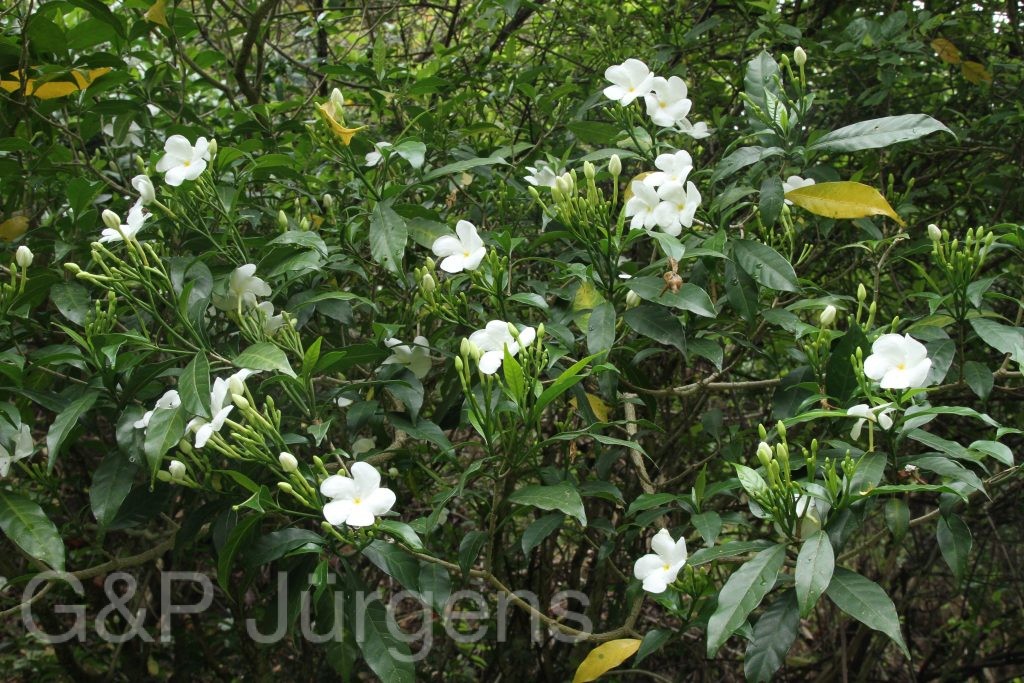
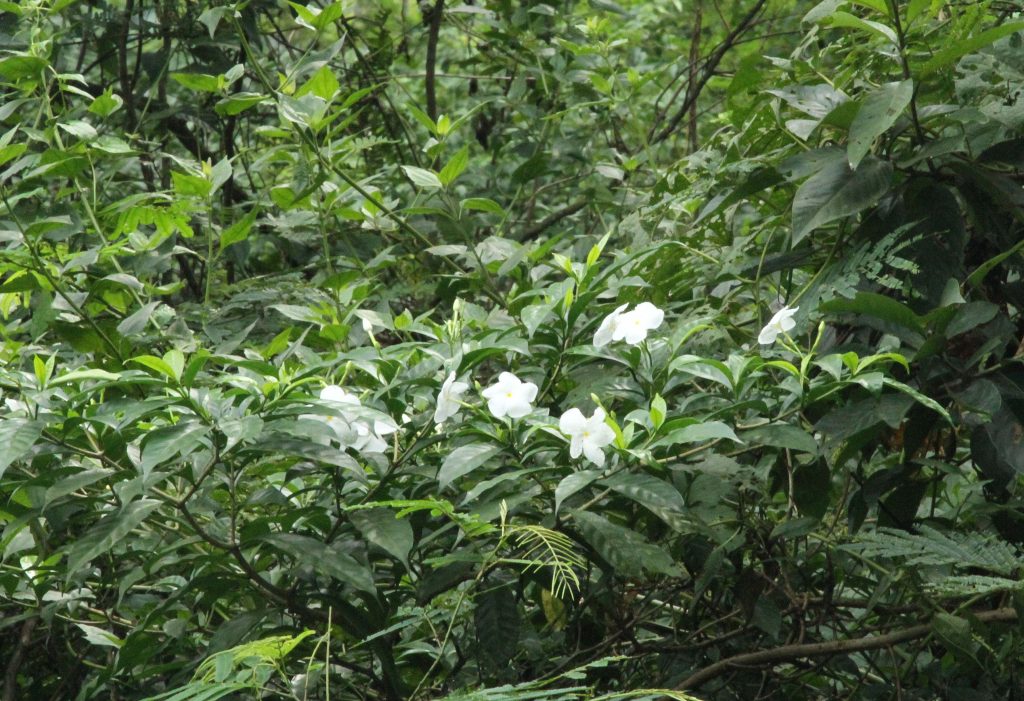
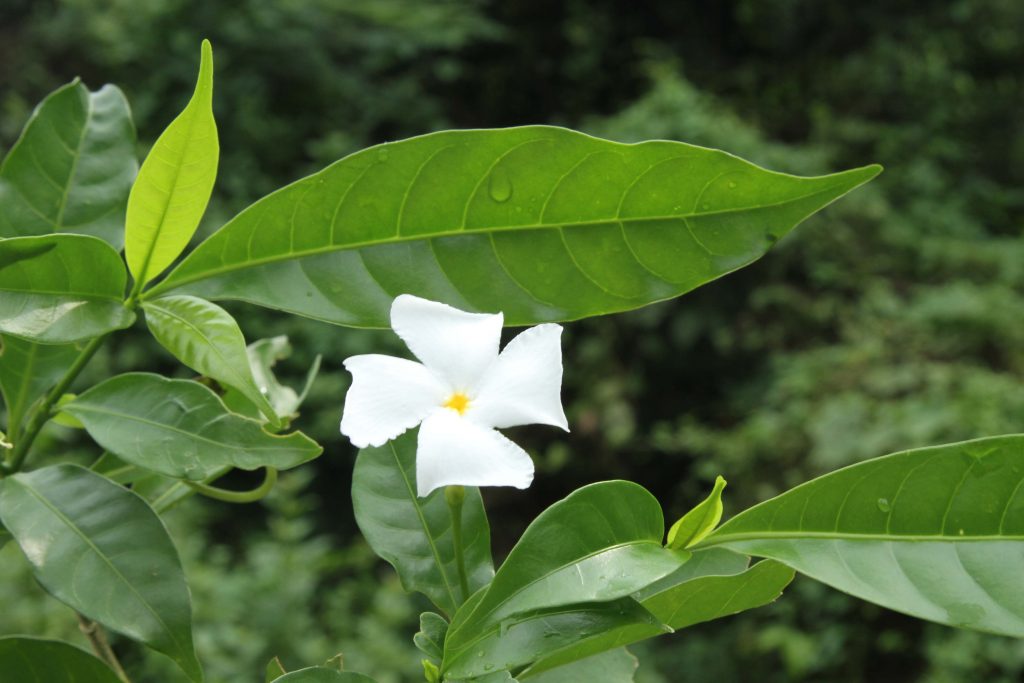
Tabernaemontana divaricata is a shrub of tropical and subtropical Asia, native to the Indian subcontinent and Southeast Asia and now pantropically cultivated and naturalised; GBIF records over 6500 occurrences across countries including India, China, Thailand, Sri Lanka, Bangladesh, Malaysia, Vietnam, the Philippines and many introduced ranges in the Americas and Pacific. In Bhutan it was photographed at Trashigang at 1250 m in May and at Galephu at 550 m in October, reflecting its occurrence in warm foothill forests, scrub and village surrounds, where it is also widely planted as the ornamental "crape jasmine."

It is a glabrous, evergreen shrub with dichotomously branched (divaricate) stems exuding copious white latex when cut. The leaves are opposite, simple, elliptic to oblanceolate, glossy dark green, with a tapering apex and prominent lateral venation. The flowers are borne in few-flowered terminal or axillary cymes; each is salverform with a slender tube and five contorted, white, often pinwheel-twisted lobes, fragrant especially at night, and cultivated double-flowered forms are common. The fruit is a paired (often divaricate) follicle, somewhat curved and ridged, splitting to expose seeds embedded in a bright orange-red fleshy aril.

The species belongs to the Apocynaceae (subfamily Rauvolfioideae) and, like its relatives, is rich in indole and monoterpene alkaloids that underpin its use in traditional medicine and account for its toxicity. Long cultivated, it has accumulated many synonyms and horticultural forms. It is not threatened, being abundant in cultivation and naturalising readily; its presence in lowland Bhutan marks the subtropical Himalayan margin of a broadly Indomalayan range.

Author: (L.) R.Br. ex Roem. & Schult. · Sources: POWO (Kew), GBIF, Flora of Bhutan, Flora of China, Flora of British India, revision of Tabernaemontana (Leeuwenberg)

L.

Bhutan2015 523
Bhutan Phobjika 2410m, October

Description

Tagetes minuta L. is native to the temperate grasslands and lower Andes of southern South America but is now a pantropical and warm-temperate weed; GBIF lists over 16,000 occurrences spanning Argentina, Bolivia, Brazil, Ecuador, the United States, Spain, France, Belgium, the Netherlands, South Africa, Kenya, Tanzania, Namibia, Zimbabwe, Ethiopia, India, Korea, Saudi Arabia and Australia. It is a ruderal colonist of cultivated ground, roadsides, waste places and field margins. The record from Phobjika at 2410 m in October shows its naturalisation in the Bhutan Himalaya, where it flowers late in the season on disturbed and abandoned ground.

It is a tall erect annual herb reaching well over a metre, with a strongly aromatic, glandular-punctate foliage. The stems are ribbed and branched above; the leaves are opposite below and alternate above, pinnately divided into numerous lanceolate, sharply serrate leaflets dotted with conspicuous oil glands. The small, narrow, cylindrical capitula are clustered in dense flat-topped corymbs; each head has a single series of fused involucral bracts, few inconspicuous pale-yellow ray florets and several tubular disc florets. The fruit is a slender black cypsela bearing a pappus of a few short scales, some awned.

The oil glands yield the volatile "tagetes oil" used commercially and in traditional medicine, and the plant has well-documented allelopathic and nematicidal properties exploited in companion planting. A highly successful colonising annual, T. minuta is classed as an invasive or noxious weed in several regions and is of no conservation concern.

Author: L. · Sources: POWO (Kew), GBIF, Flora of China, Flora of North America, Soule taxonomic revision of Tagetes

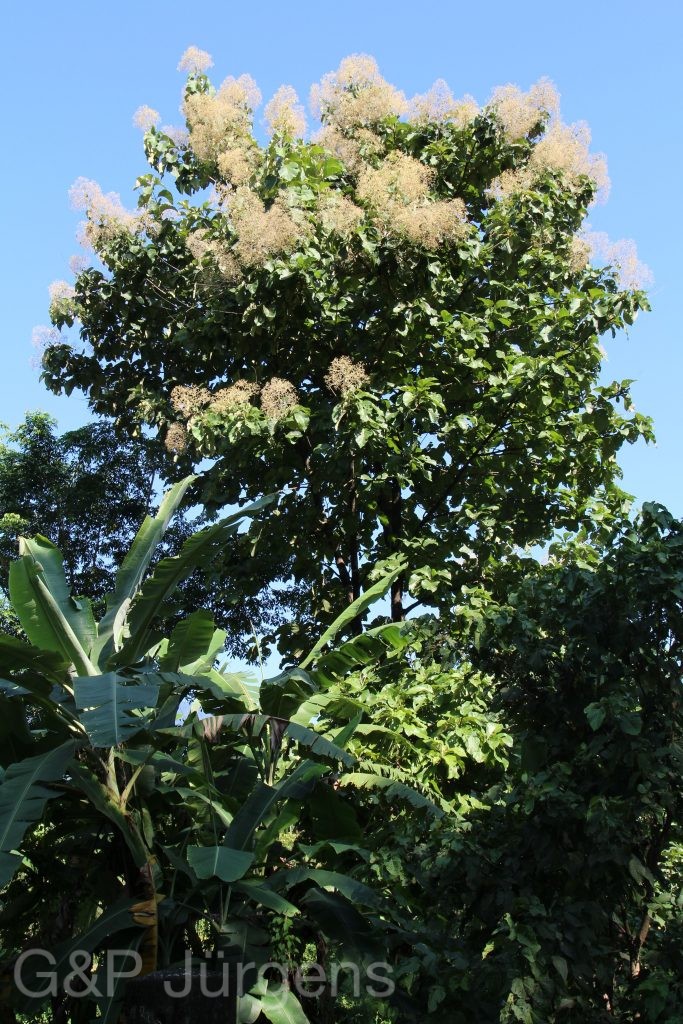
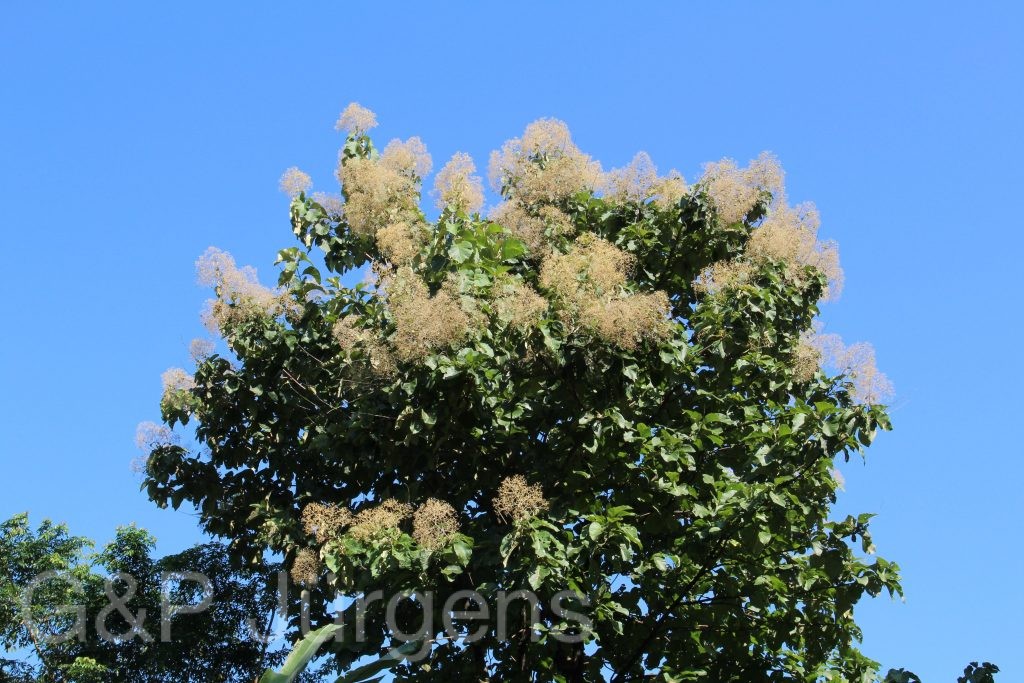
L.f.

Bhutan2015 95
Bhutan Galephug 300m, October
Bhutan2015 96
Bhutan Galephug 300m, October

Description

Tectona grandis L.f., the teak, is a large deciduous tree native to the monsoonal forests of South and Southeast Asia, including India, Myanmar, Thailand, Laos and Sri Lanka, and now widely planted and naturalised across the tropics in Indonesia, Brazil, Nigeria, Tanzania, Costa Rica and beyond. In the Himalayan foothills it is recorded from Bhutan at Galephug near 300 m in October, at the warm, low-elevation southern margin of the region. The species grows in tropical dry and moist deciduous forest, on well-drained alluvial and lateritic soils, typically below 1000 m, where a pronounced dry season triggers leaf fall. Its roughly 37 411 GBIF records reflect both its native range and its enormous footprint as a cultivated timber tree.

It is a tall tree reaching 30–40 m with a tall, often fluted bole and pale, fibrous, longitudinally fissured bark. The leaves are very large, opposite or sub-opposite, broadly elliptic to obovate, scabrid above and densely stellate-tomentose beneath, exuding a reddish sap when crushed. The small whitish to pale lilac flowers are five- to six-merous and borne in massive, much-branched terminal panicles. The fruit is a hard, four-chambered drupe enclosed in a conspicuously inflated, bladder-like accrescent calyx that aids wind and water dispersal.

Formerly placed in Verbenaceae, Tectona is now assigned to Lamiaceae (subfamily Tectonoideae) on molecular grounds, here matching the input family. Its heartwood, rich in protective tectoquinones and natural oils, is among the world's most prized timbers for its durability, dimensional stability and resistance to decay and insects, underpinning a vast plantation industry. While extensively cultivated, genuinely wild teak forests have been much reduced and fragmented by logging, and conservation of natural provenances and their genetic diversity is an ongoing priority.

Author: L.f. · Sources: POWO (Kew), GBIF, Flora of British India, Flora of Bhutan, Trees of Tropical Asia, Teak: A Global Overview (FAO monograph)

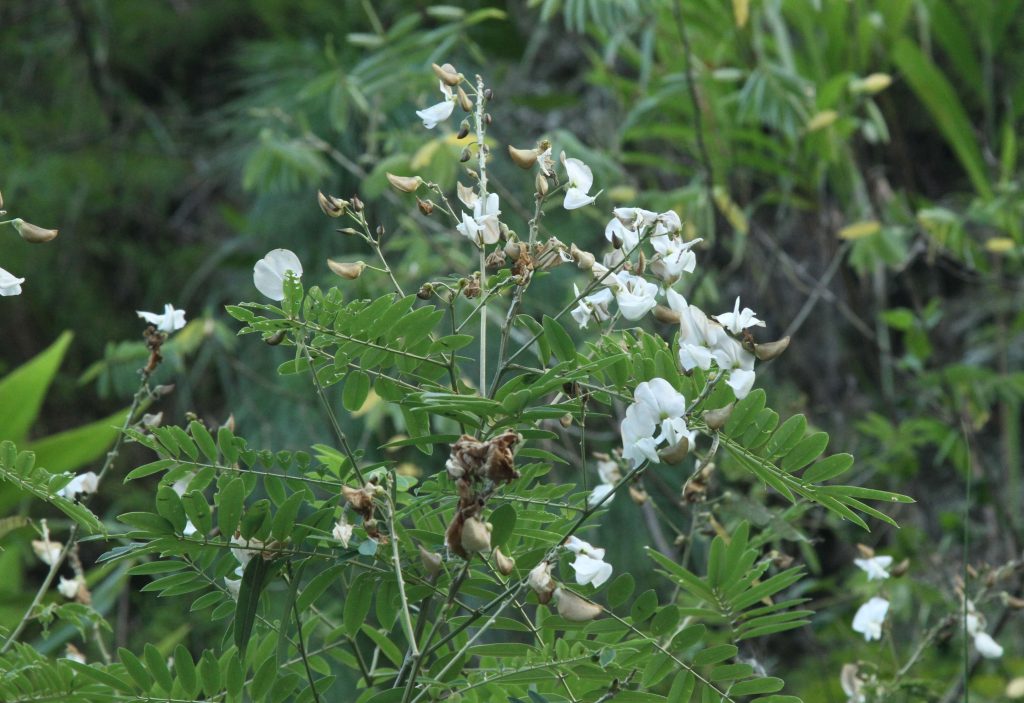
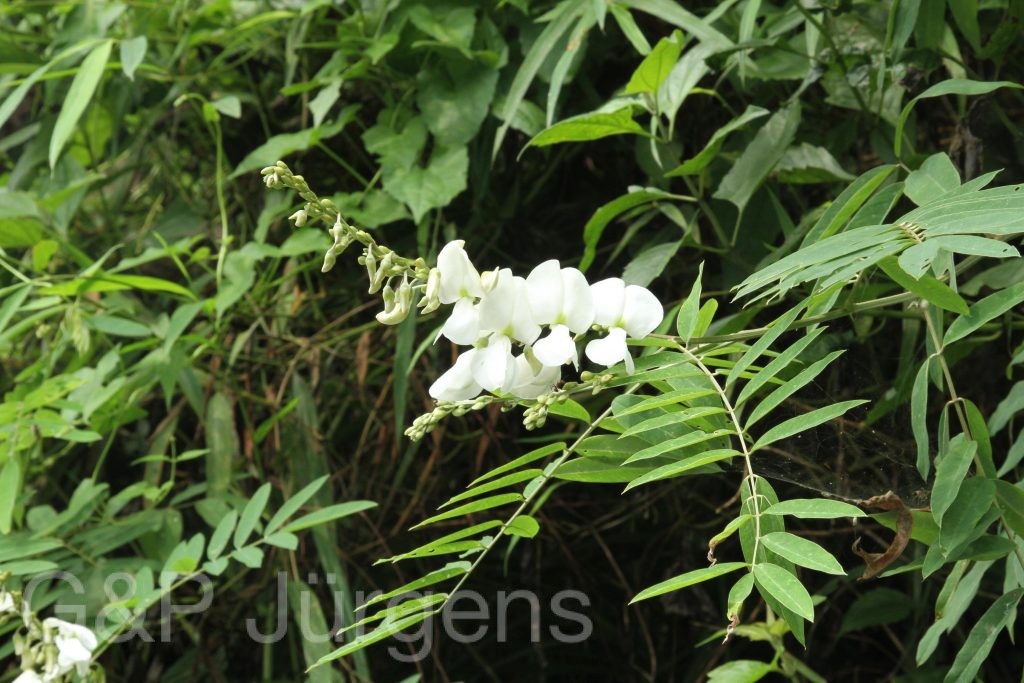
DC.

Bhutan2012 628
Bhutan Wangdi 2600m September
Bhutan2012 734
Bhutan Galephu 650m, October

Description

Tephrosia candida is a shrubby legume native to the Indian subcontinent and adjacent Himalaya, including India, Nepal and Bhutan, but now pantropically naturalised through widespread cultivation, with GBIF records from Brazil, Indonesia, Taiwan, China, Papua New Guinea, Australia, Madagascar, the Caribbean, the Mascarenes and beyond. It thrives in warm subtropical and tropical conditions on forest margins, roadsides, river banks and disturbed open ground. The Bhutanese collections illustrate its altitudinal breadth, from Galephu in the foothills at about 650 m in October to Wangdi at 2600 m flowering in September.

The plant is an erect, much-branched shrub up to about 3 m, with silky-pubescent young growth. The leaves are imparipinnate with numerous (often 8-12 pairs of) narrowly oblong leaflets that are silky-sericeous beneath, giving the foliage a greyish sheen. The flowers are borne in dense terminal racemes; each papilionate flower has a campanulate pubescent calyx and a white to pale pink or cream corolla with a broad standard silky on the outer face, the keel and wings enclosing diadelphous stamens. The fruit is a flattened, linear, densely velvety-pubescent dehiscent pod that twists on splitting to expel several seeds.

A member of the papilionoid Fabaceae and tribe Millettieae, T. candida is a nitrogen-fixing species long valued as a green manure, cover crop, fallow improver and erosion-control plant, which explains its extensive intentional dispersal across the tropics. Like other Tephrosia it contains rotenoid compounds and has been used as a fish poison and insecticide. Robust and weedy in cultivation, it is in no way of conservation concern and can become locally naturalised.

Author: DC. · Sources: POWO (Kew), GBIF, Flora of Bhutan, Flora of British India, Brummitt's and related revisions of Tephrosia (Leguminosae)

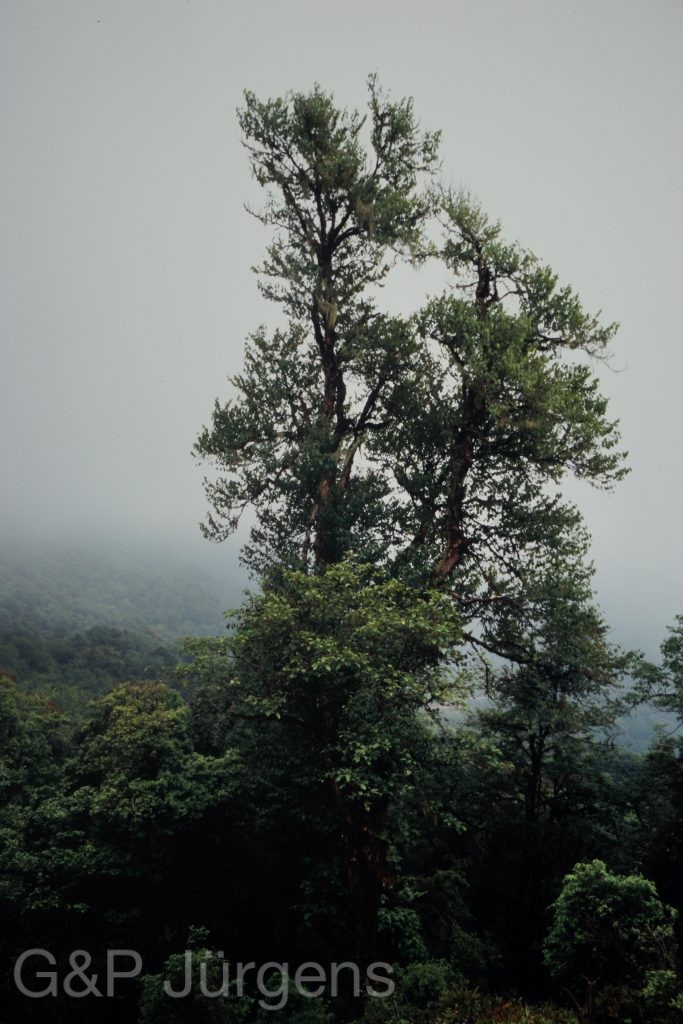
Van Heurck & Müll. Arg.

Bhutan2015 170
Bhutan Zhemgang 950m, October
Bhutan2012 783
Bhutan Zemgang 1800m, October

Description

Terminalia myriocarpa Van Heurck & Mull.Arg. is a large evergreen tree of the Combretaceae, distributed across the eastern Himalaya and Indo-Burmese region, ranging from northeastern India, Nepal and Bhutan through Myanmar, Thailand, Laos and Vietnam to southwestern China (GBIF: c. 454 occurrences). It is a canopy tree of subtropical and tropical moist evergreen forests, favouring deep, moist soils along streams and in foothill valleys, generally below about 1,500 m though ascending higher locally. The photographed trees from Zhemgang in central Bhutan, recorded at about 950 m and 1,800 m in October, illustrate its presence in the warm, humid forests of the southern foothills.

The tree is tall, reaching 30 m or more, frequently developing prominent buttresses at the base. The leaves are opposite or subopposite, oblong-elliptic, with an acuminate apex and entire to crenulate margins, and often bear a pair of glands near the base of the petiole. The flowers are small, numerous and bisexual, borne in large, much-branched terminal and axillary panicles, giving rise to the species epithet "myriocarpa" ("many-fruited"). The fruit is a small, two-winged, samaroid nutlet that turns pink to crimson in dense masses, a striking feature that aids wind dispersal.

Terminalia belongs to the pantropical Combretaceae and includes many ecologically and economically important timber trees. Terminalia myriocarpa yields a useful general-purpose hardwood and is a significant component of lowland evergreen forest. Although locally common over a wide range and not globally threatened, its lowland forest habitat is under pressure from logging and land conversion across parts of its distribution.

Author: Van Heurck & Müll. Arg. · Sources: POWO (Kew), Flora of China Vol. 13, Flora of Bhutan Vol. 2, Flora of Nepal, GBIF, Exell: Combretaceae revisions

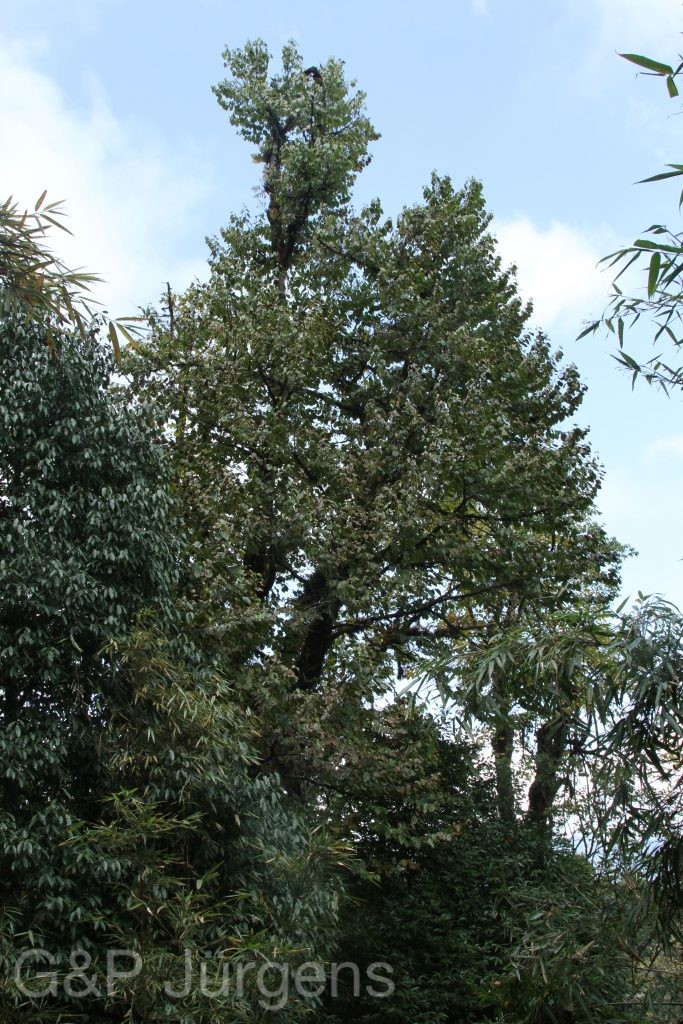
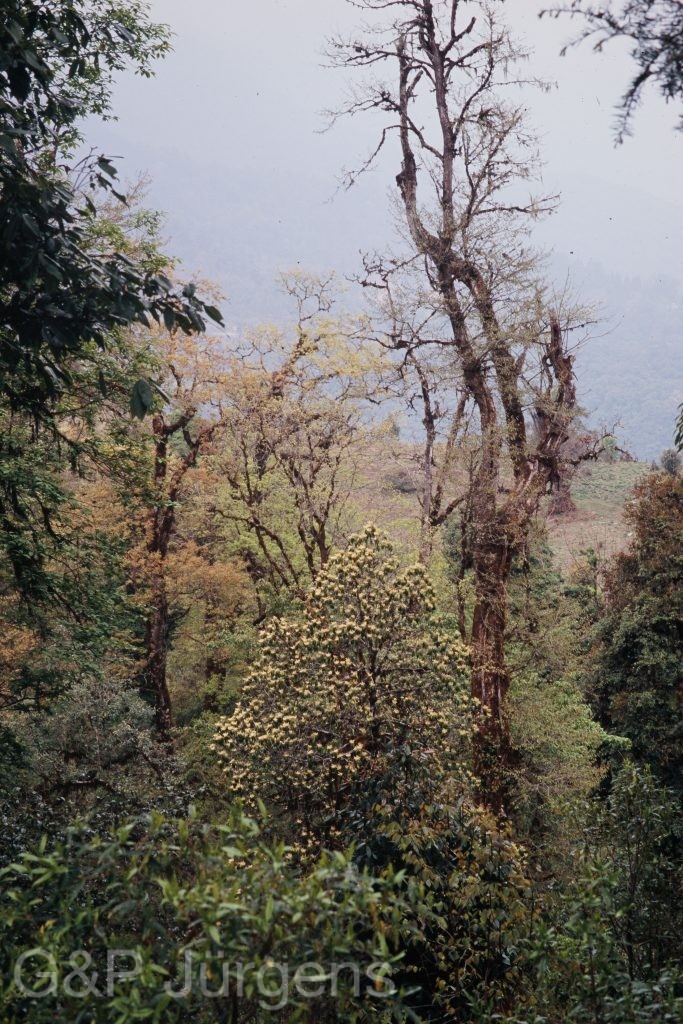
Oliv.

Bhutan2015 34
Bhutan Thimphu 2200m, October
Bh2008 43 G76
Bhutan Thimphu 2200m, April
Bh09 209 P350
Bhutan Thimphu 2200m, April

Description

Tetracentron sinense is a deciduous tree of the eastern Himalaya and the mountains of central and southwestern China, recorded by GBIF from China, Nepal, Bhutan, India, Myanmar and Vietnam (with cultivated records in Europe and North America) across about 940 georeferenced occurrences. It is a tree of cool, moist temperate broadleaf and mixed forest, growing in valleys, on shaded slopes and along streamsides, generally between about 1,700 and 3,500 m. The cited records from Thimphu in western Bhutan at around 2,200 m, photographed in both April and October, span the leafing-out and the autumnal phases of its annual cycle and place it well within the temperate forest belt of the inner Himalaya, where it occurs scattered among other broadleaved trees.

The tree has a straight trunk and bears its leaves in two kinds of position: simple, alternate, long-petioled leaves on long shoots and solitary leaves terminating short spur shoots. The leaves are ovate to broadly ovate, cordate at the base, acuminate, finely serrate, and conspicuously palmately veined from the base. The minute, perfect flowers are densely crowded on slender, pendulous, catkin-like spikes; each tetramerous flower has four tepals, four stamens and a four-carpellate ovary. The fruit is a small four-locular capsule that splits to release tiny winged seeds. Anatomically the wood is remarkable for being vesselless, the water-conducting tissue consisting only of tracheids.

Tetracentron sinense is one of only two genera in the small, isolated family Trochodendraceae (the other being Trochodendron), an ancient and phylogenetically basal lineage of eudicots whose vesselless wood is regarded as a primitive or secondarily reduced condition of great interest to plant systematists and to studies of angiosperm wood evolution. As a relict species with a disjunct, fragmented distribution, it is of significant conservation concern: it is legally protected in China and assessed as near-threatened, its populations reduced by logging and habitat loss, making it an emblematic "living-fossil" tree of the East Asian temperate flora.

Author: Oliv. · Sources: POWO (Kew), GBIF, Flora of China Vol. 6, Flora of Bhutan Vol. 1, Flora of Nepal, Flora of Pakistan, Endress: systematics and floral morphology of Trochodendraceae