
L.
Description
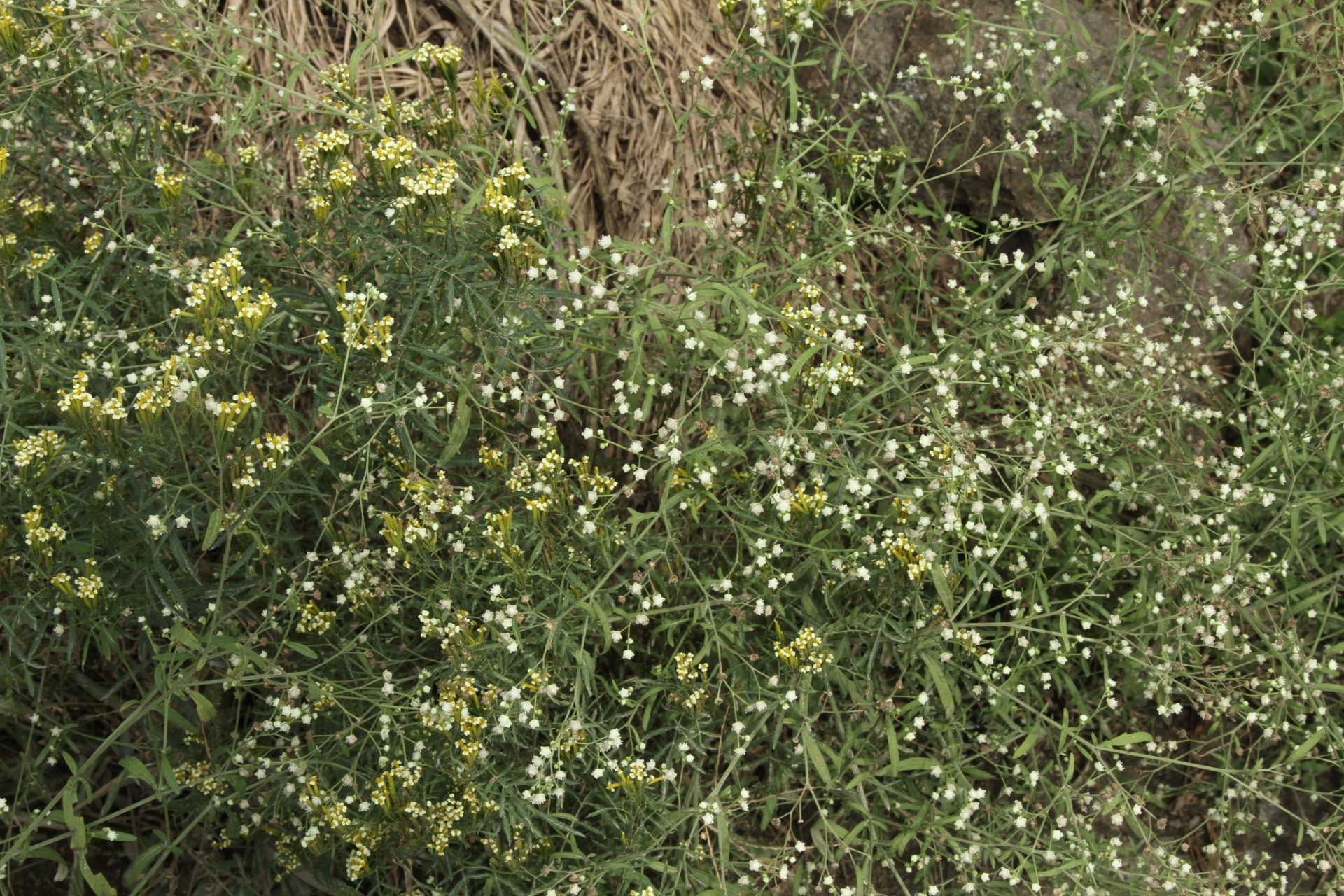
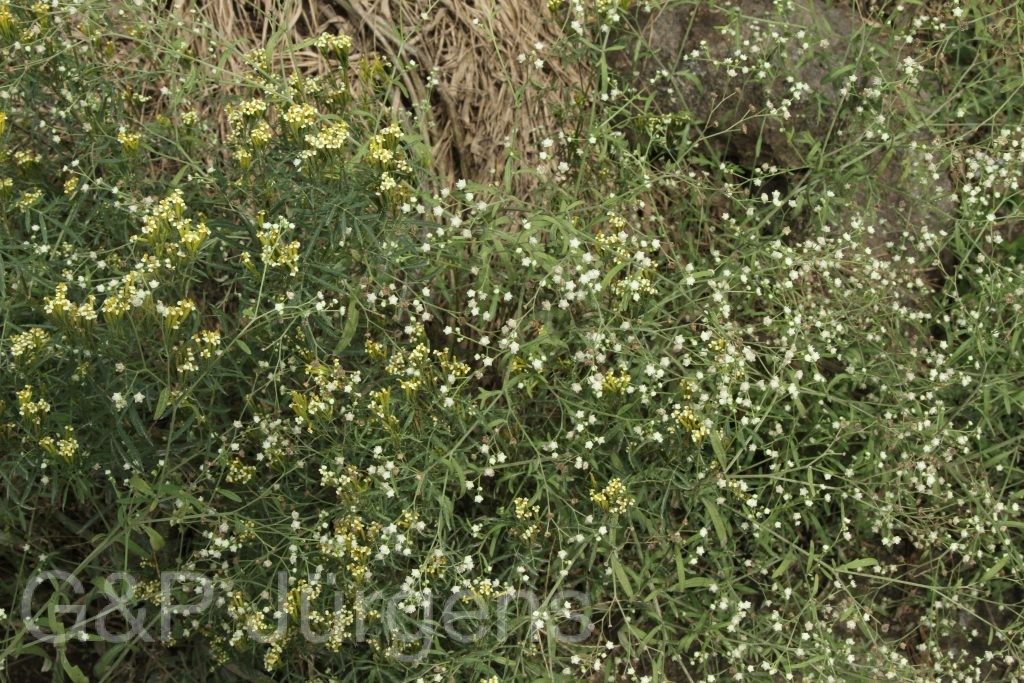
Tagetes minuta L. is native to the temperate grasslands and lower Andes of southern South America but is now a pantropical and warm-temperate weed; GBIF lists over 16,000 occurrences spanning Argentina, Bolivia, Brazil, Ecuador, the United States, Spain, France, Belgium, the Netherlands, South Africa, Kenya, Tanzania, Namibia, Zimbabwe, Ethiopia, India, Korea, Saudi Arabia and Australia. It is a ruderal colonist of cultivated ground, roadsides, waste places and field margins. The record from Phobjika at 2410 m in October shows its naturalisation in the Bhutan Himalaya, where it flowers late in the season on disturbed and abandoned ground.
It is a tall erect annual herb reaching well over a metre, with a strongly aromatic, glandular-punctate foliage. The stems are ribbed and branched above; the leaves are opposite below and alternate above, pinnately divided into numerous lanceolate, sharply serrate leaflets dotted with conspicuous oil glands. The small, narrow, cylindrical capitula are clustered in dense flat-topped corymbs; each head has a single series of fused involucral bracts, few inconspicuous pale-yellow ray florets and several tubular disc florets. The fruit is a slender black cypsela bearing a pappus of a few short scales, some awned.
The oil glands yield the volatile "tagetes oil" used commercially and in traditional medicine, and the plant has well-documented allelopathic and nematicidal properties exploited in companion planting. A highly successful colonising annual, T. minuta is classed as an invasive or noxious weed in several regions and is of no conservation concern.
Author: L. · Sources: POWO (Kew), GBIF, Flora of China, Flora of North America, Soule taxonomic revision of Tagetes