
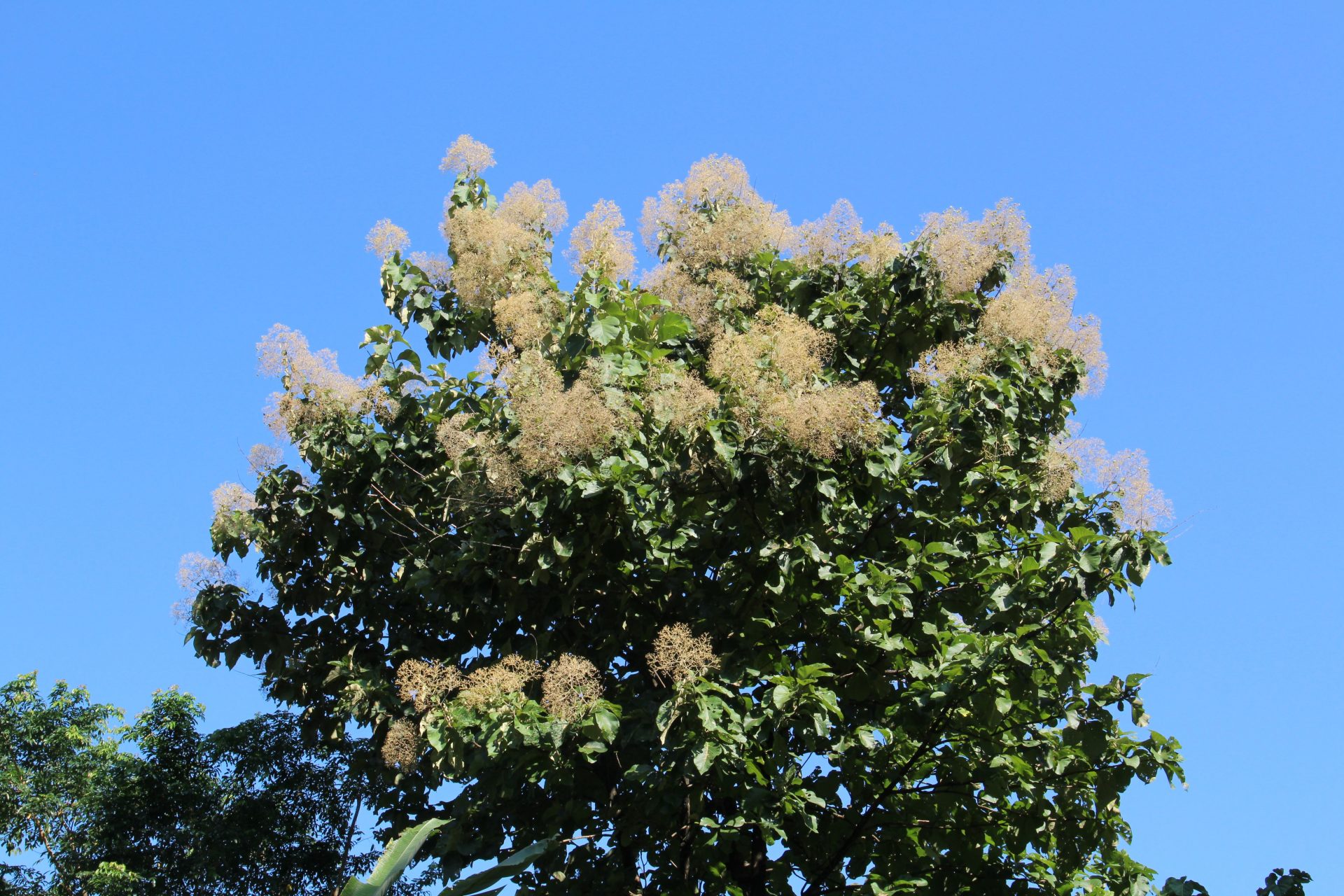
L.f.
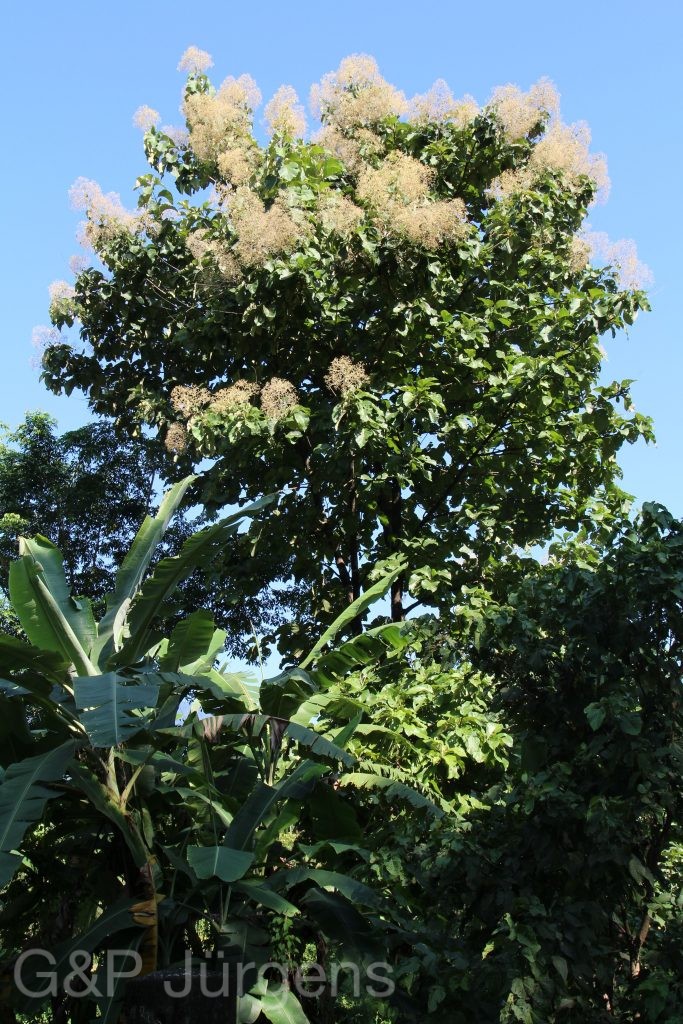
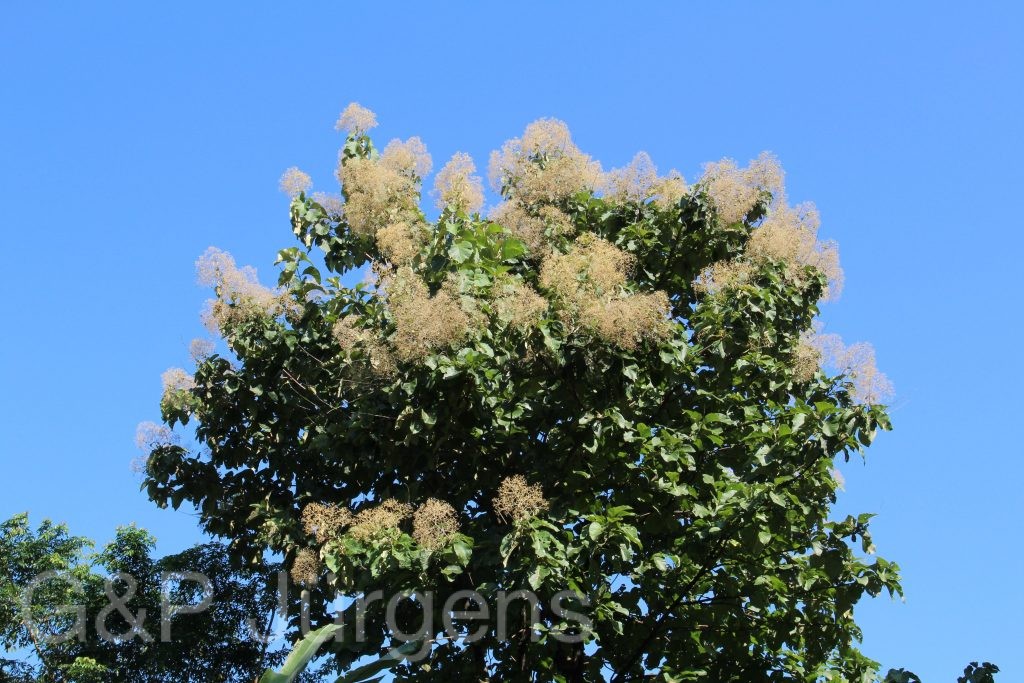
Description
Tectona grandis L.f., the teak, is a large deciduous tree native to the monsoonal forests of South and Southeast Asia, including India, Myanmar, Thailand, Laos and Sri Lanka, and now widely planted and naturalised across the tropics in Indonesia, Brazil, Nigeria, Tanzania, Costa Rica and beyond. In the Himalayan foothills it is recorded from Bhutan at Galephug near 300 m in October, at the warm, low-elevation southern margin of the region. The species grows in tropical dry and moist deciduous forest, on well-drained alluvial and lateritic soils, typically below 1000 m, where a pronounced dry season triggers leaf fall. Its roughly 37 411 GBIF records reflect both its native range and its enormous footprint as a cultivated timber tree.
It is a tall tree reaching 30–40 m with a tall, often fluted bole and pale, fibrous, longitudinally fissured bark. The leaves are very large, opposite or sub-opposite, broadly elliptic to obovate, scabrid above and densely stellate-tomentose beneath, exuding a reddish sap when crushed. The small whitish to pale lilac flowers are five- to six-merous and borne in massive, much-branched terminal panicles. The fruit is a hard, four-chambered drupe enclosed in a conspicuously inflated, bladder-like accrescent calyx that aids wind and water dispersal.
Formerly placed in Verbenaceae, Tectona is now assigned to Lamiaceae (subfamily Tectonoideae) on molecular grounds, here matching the input family. Its heartwood, rich in protective tectoquinones and natural oils, is among the world's most prized timbers for its durability, dimensional stability and resistance to decay and insects, underpinning a vast plantation industry. While extensively cultivated, genuinely wild teak forests have been much reduced and fragmented by logging, and conservation of natural provenances and their genetic diversity is an ongoing priority.
Author: L.f. · Sources: POWO (Kew), GBIF, Flora of British India, Flora of Bhutan, Trees of Tropical Asia, Teak: A Global Overview (FAO monograph)