
unknown
Description
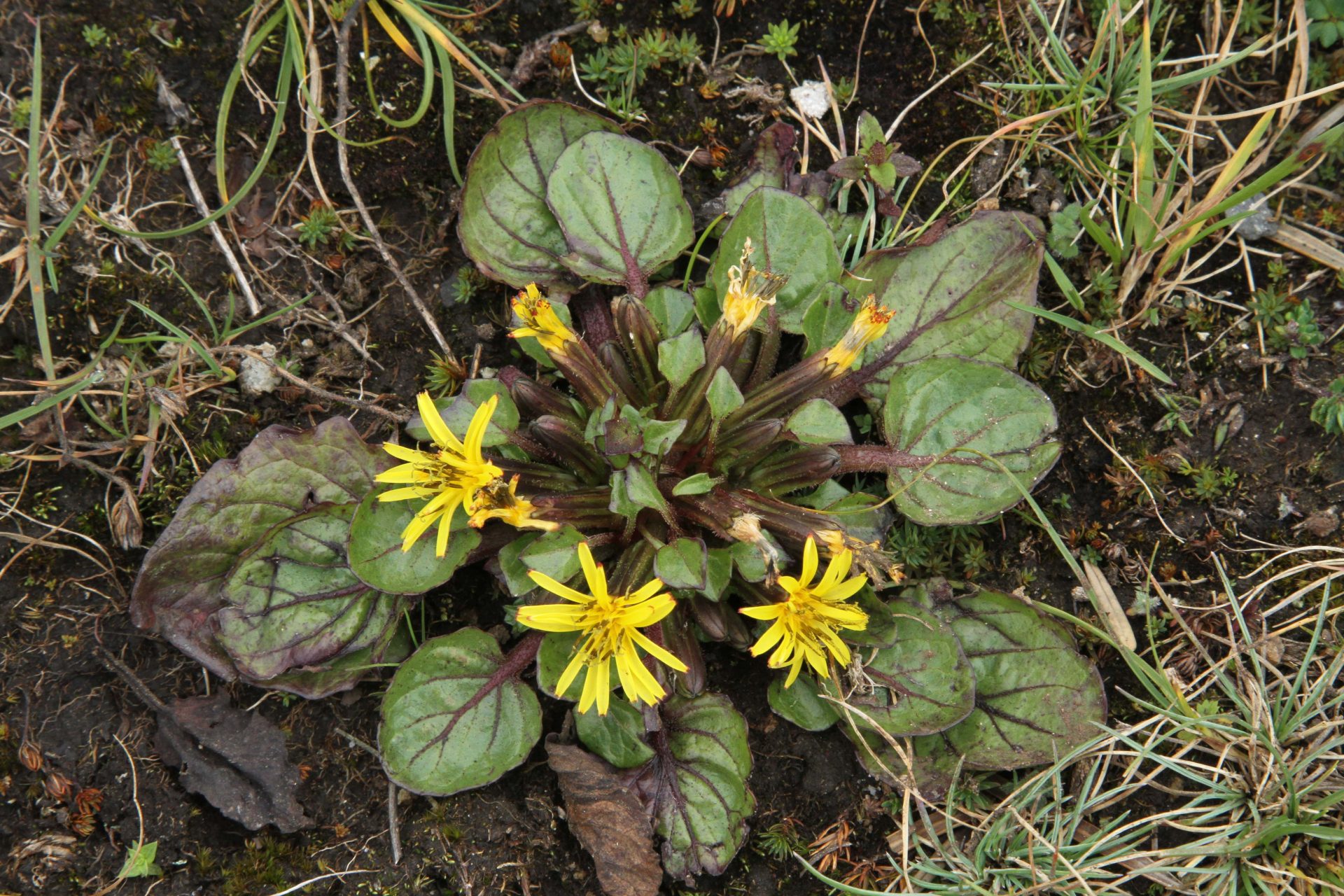
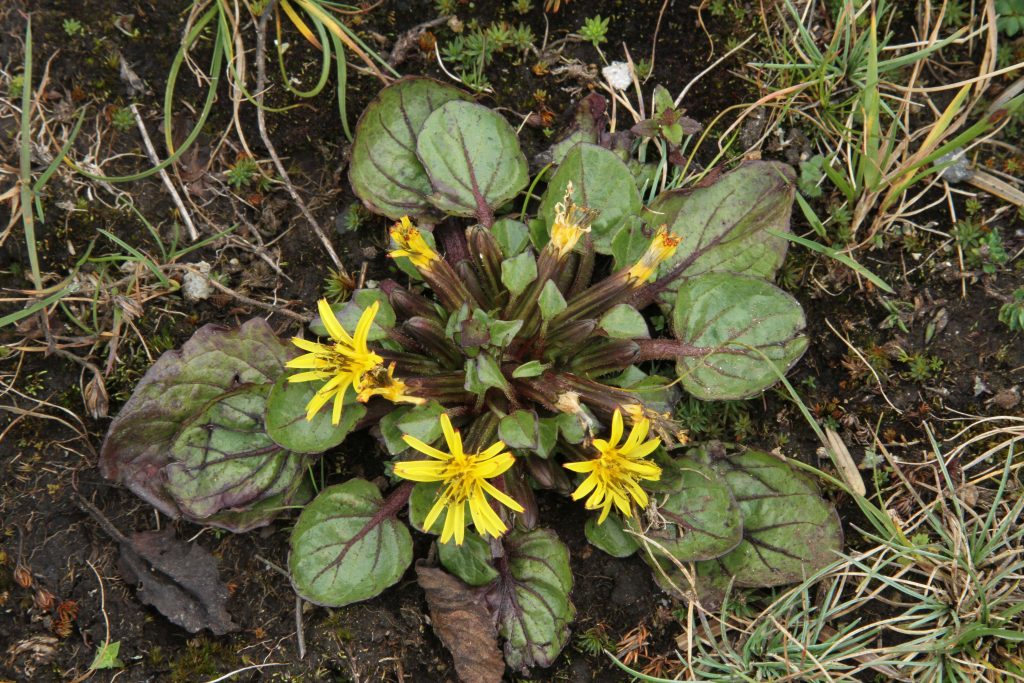
Soroseris depressa is a cushion-forming alpine composite of the high Himalaya and Tibetan margins, documented from Bhutan, India, China, Nepal and Japan, with about 62 GBIF occurrences. It is a specialist of the highest open ground, colonising scree, gravelly alpine turf, moraines and stony flats well above the treeline, commonly between about 4000 and 5000 m. The photographed material comes from the Shele-La in Bhutan at 4100 m in September, a wind-exposed pass where the species hugs the substrate among sparse alpine cushion vegetation late in the season.
The plant is a low, compact perennial herb with a stout, deep-seated taproot and a contracted, often subterranean caudex from which the leaves and capitula are densely crowded at ground level, forming a flattened ("depressa") rosette or cushion. The leaves are linear-oblanceolate to spathulate, entire to pinnatifid, and frequently woolly or glandular. The capitula are aggregated into a dense, head-like synflorescence sunk among the leaves; each is ligulate with yellow to whitish strap-shaped florets, enclosed by an involucre of few phyllaries. The fruit is a slender, ribbed cypsela crowned by a pappus of fine bristles.
Soroseris is a small genus of the tribe Cichorieae endemic to the Sino-Himalayan and Tibetan high mountains, and S. depressa (also treated under the name Tibetoseris depressa) exemplifies the extreme cushion habit evolved in response to cold, desiccation and short growing seasons. Its restriction to fragile high-alpine substrates makes it sensitive to climate warming and trampling, though its remote habitat affords some protection.
Author: unknown · Sources: POWO (Kew), GBIF, Flora of China, Flora of Bhutan, Annotated Checklist of the Flowering Plants of Nepal, Systematics of Cichorieae (Asteraceae)