
(Steud.) Bosser & Heine
Description
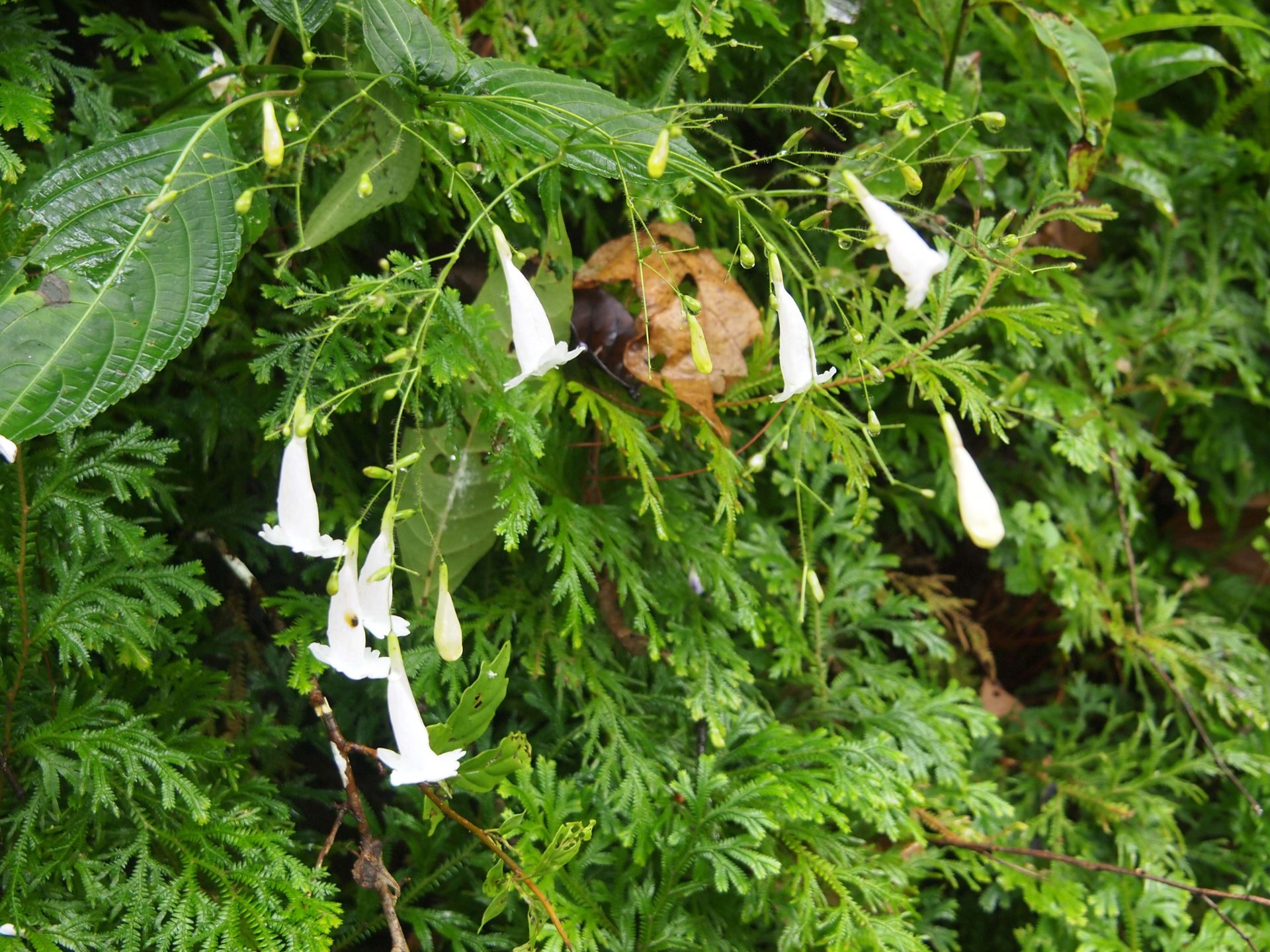
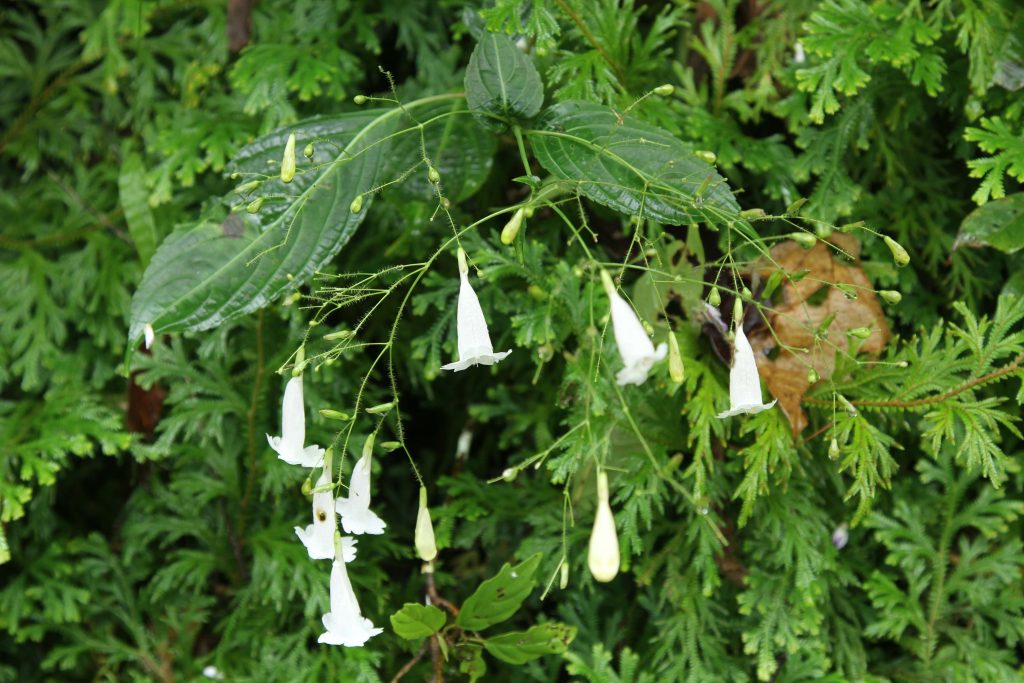
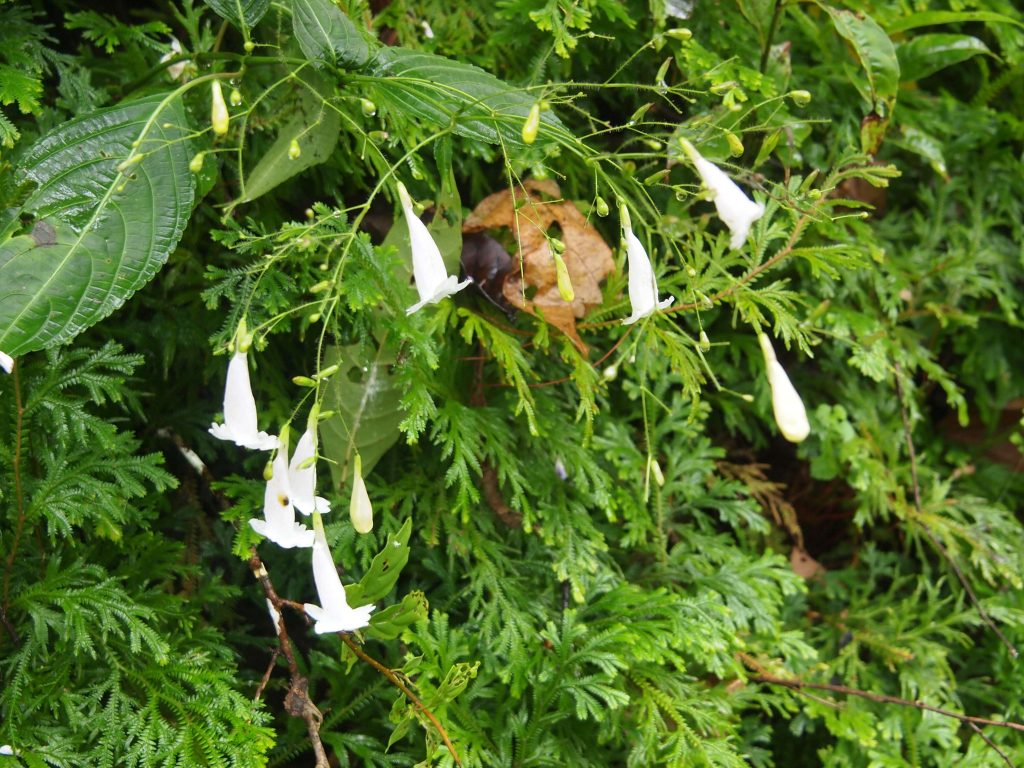
Strobilanthes hamiltoniana (Steud.) Bosser & Heine is a shrubby Acanthaceae of the eastern Himalaya and Indo-Burmese region, native to India, Bhutan, Nepal, Myanmar and China, but widely naturalised and cultivated, as reflected in its GBIF total of nearly 779 occurrences spanning many tropical islands and the Americas. In its native range it grows along forest margins, streamsides, ravines and shaded roadbanks in the warm subtropical hill zone, flowering in the late monsoon and autumn. The illustrated plant from Trithangebe in Bhutan at 1100 m in October shows it in its characteristic low-elevation forest-edge habitat at the onset of its flowering season.
The species is an erect, much-branched perennial shrub with four-angled stems and opposite, petiolate, ovate-lanceolate leaves that are acuminate and finely toothed, the pairs typically anisophyllous. The inflorescences are slender, lax, often drooping panicles bearing numerous flowers; each corolla is tubular and gracefully curved, pale violet to mauve-blue with a paler tube, the limb shortly five-lobed, and the androecium of four stamens. The fruit is the typical acanthaceous club-shaped capsule that dehisces explosively to disperse the seeds, which are borne on hooked retinacula.
Strobilanthes is a large and taxonomically difficult Asian genus famed for the gregarious, mast (plietesial) flowering of many species, in which whole populations bloom synchronously after a span of years and then die. S. hamiltoniana is popular in ornamental horticulture for its arching sprays of bloom and consequently appears far beyond its native limits. It is not of conservation concern, being common and readily cultivated.
Author: (Steud.) Bosser & Heine · Sources: POWO (Kew), GBIF, Flora of Bhutan, Flora of China, Acanthaceae of the Indian Subcontinent, Carine & Scotland revision of Strobilanthes