
Wight ex Nees
Description
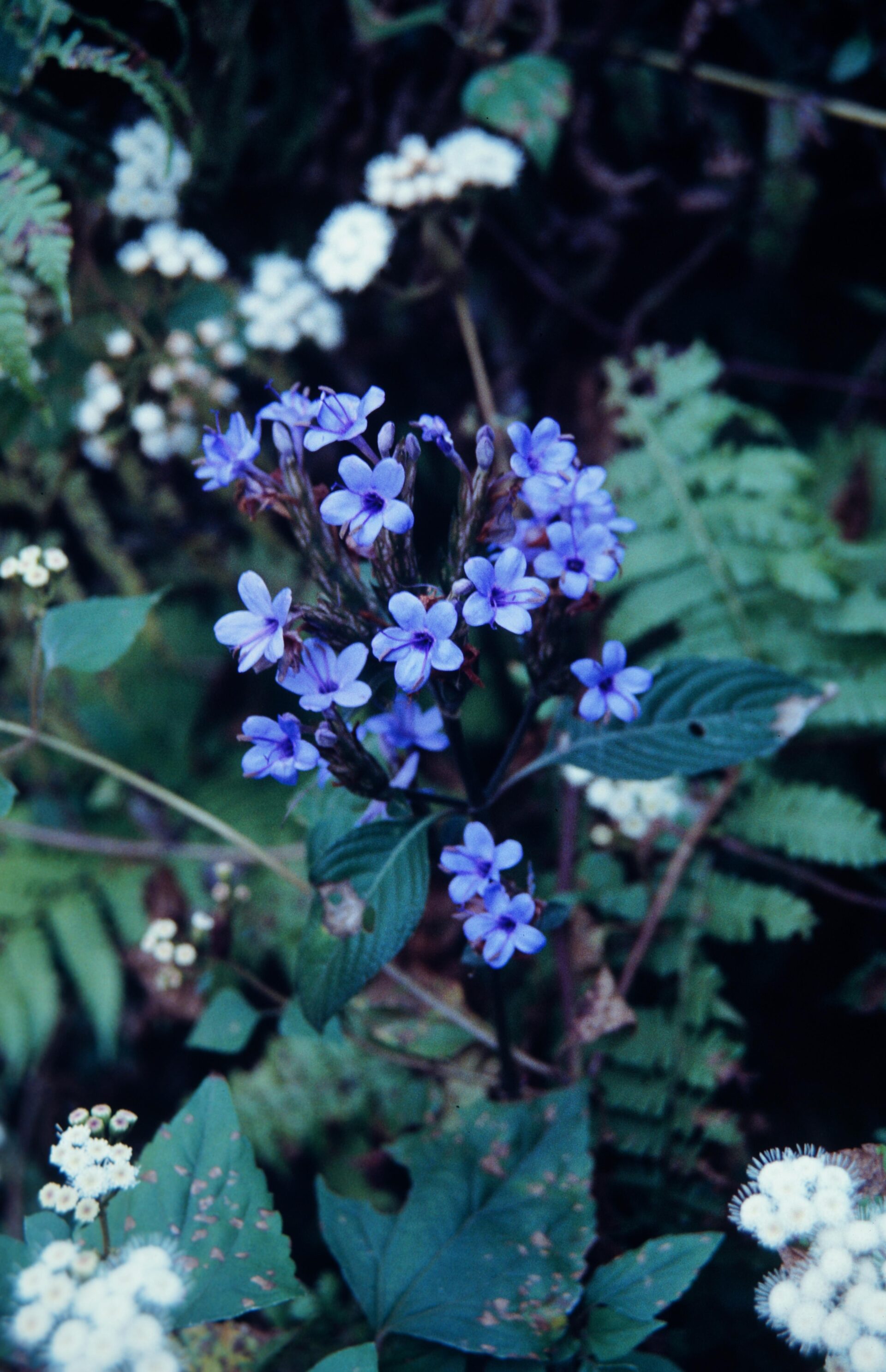
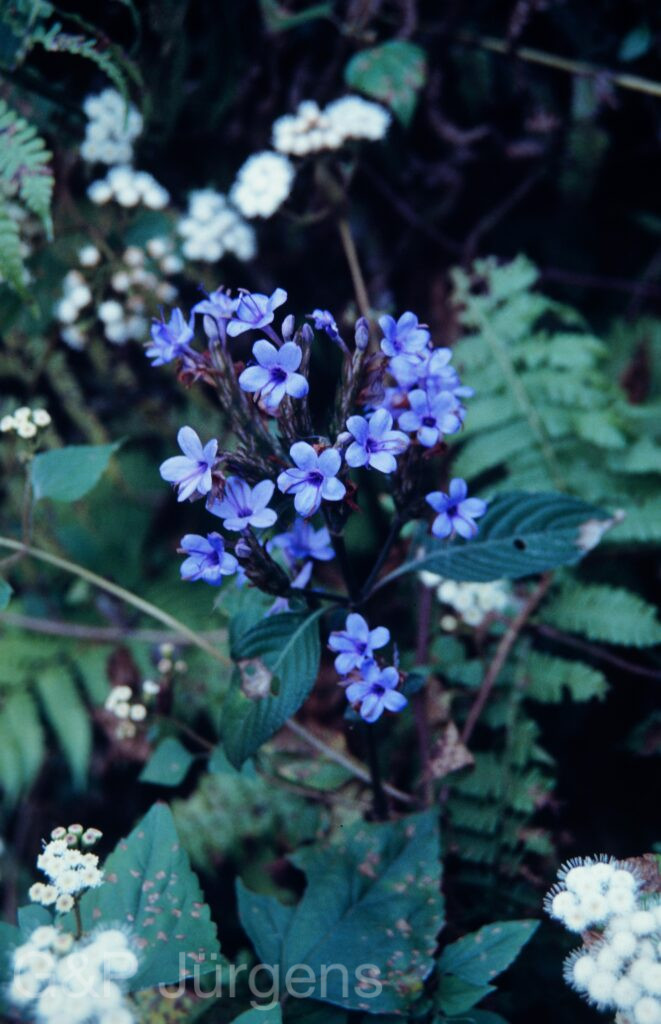
Eranthemum purpurascens is a subtropical understorey shrub of the Himalayan foothills and adjacent Indian subcontinent, recorded principally from India and Nepal, with cultivated and naturalised occurrences in China, Indonesia, Jamaica, the Dominican Republic and the United States reflecting its ornamental use. It grows in the shaded understorey of moist subtropical and lower temperate forest, along streambanks and shaded ravines, generally between about 600 and 1800 m. The photographed plant from Sokathum, Nepal, at roughly 1650 m and flowering in March, exemplifies its early-spring blooming in warm, sheltered hill forest before the onset of the monsoon.
The plant is an erect, soft-wooded shrub with quadrangular, often swollen-nodal stems. The leaves are opposite, ovate to elliptic, acuminate, entire to obscurely crenate, and frequently bear cystoliths visible as fine streaks on the lamina. The flowers are borne in dense terminal and axillary spikes subtended by conspicuous, often purple-tinged bracts. Each flower has a slender corolla tube expanding into a spreading five-lobed limb of pale blue to violet, with two exserted stamens; the fruit is a clavate, explosively dehiscent capsule bearing seeds on hooked retinacula typical of the Acanthaceae.
The epithet purpurascens refers to the purplish bracts and flushed foliage. Eranthemum is a tropical Asian genus allied to Pseuderanthemum and Daedalacanthus, several members of which, including this species, are cultivated for their winter and spring colour. The conspicuous bracts and tubular blue corollas are adapted to insect pollination, while the cystolith-bearing leaves are a diagnostic family feature. The species is locally common and not regarded as threatened.
Author: Wight ex Nees · Sources: POWO (Kew), GBIF, Flora of China Vol. 19, Flora of Bhutan Vol. 2, Flora of Nepal, Acanthaceae of the Indian Subcontinent