
L.
Description
Barleria cristata is a widespread species distributed from the Indian subcontinent through Southeast Asia to southern China, occurring in India, Nepal, Bhutan, Pakistan, Myanmar, Thailand, and Laos. It has also become naturalized in parts of the tropics worldwide, including Australia, Brazil, and the Philippines. The species inhabits open and disturbed forests, rocky slopes, stream banks, and forest margins at elevations from near sea level to approximately 1,800 m. In Bhutan, it is found in the warm broadleaved forests of the southern foothills, as documented from the Koma-Chu Valley at 800 m and near Zhemgang at 910 m, where it flowers from September to October.
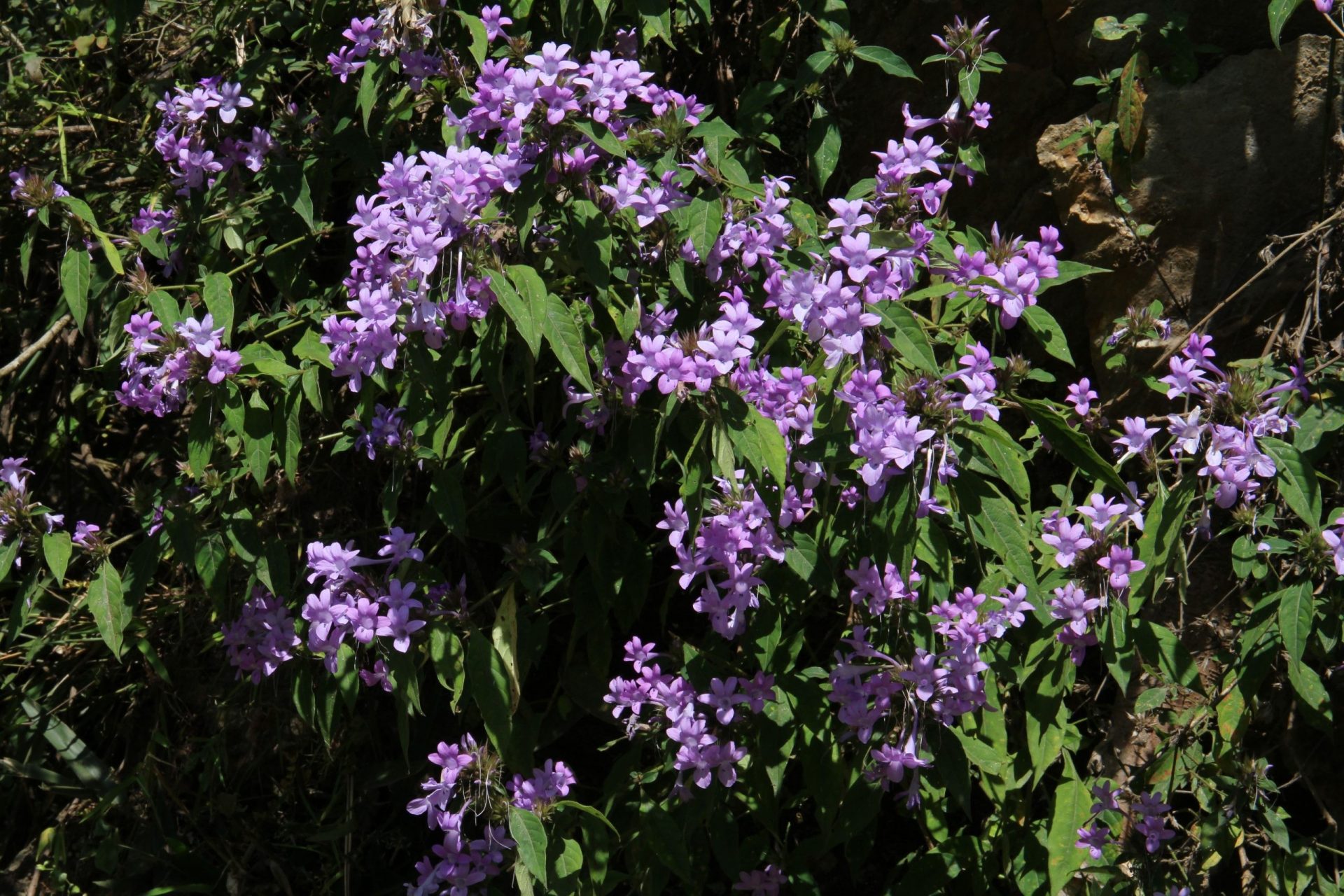
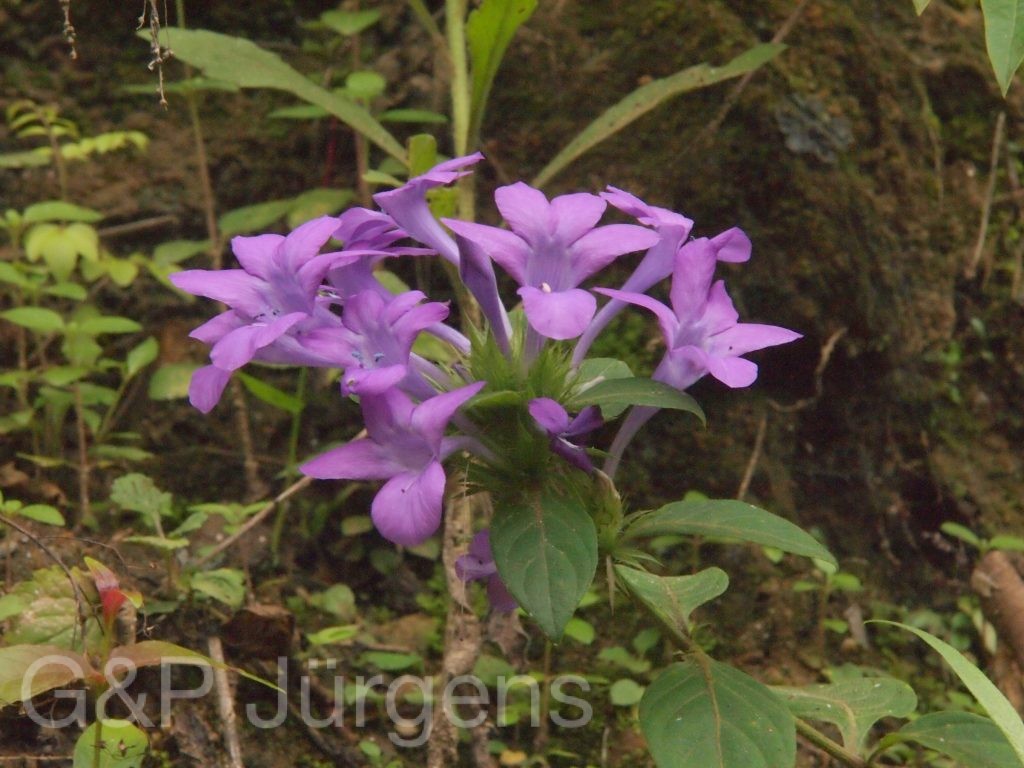
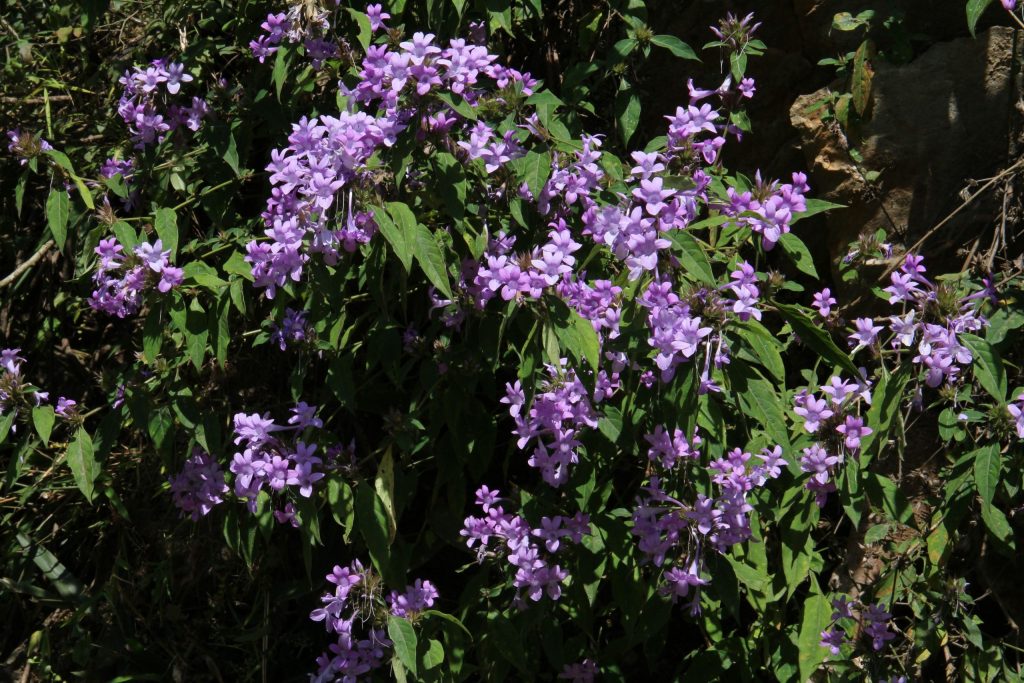
The plant is an erect to spreading shrub or subshrub, 0.5–1.5 m tall, with quadrangular stems that are pubescent when young. Leaves are opposite, ovate to elliptic, 5–12 cm long, with an acuminate apex and entire margins, bearing scattered hairs on both surfaces. The inflorescence is a dense, terminal or axillary spike, subtended by conspicuous, ovate, spinose-tipped bracts that give the species its epithet "cristata" (crested). Flowers are bilabiate, 3–4 cm long, typically violet to pale blue or occasionally white. The calyx is deeply four-lobed with two larger outer lobes and two smaller inner ones. The fruit is an oblong capsule containing two to four flattened, hygroscopic seeds that are explosively dehiscent when wetted.
Barleria is a large pantropical genus of approximately 300 species, with its centre of diversity in Africa and Asia. B. cristata is among the most commonly cultivated ornamental species in the genus and has escaped cultivation in numerous tropical regions, raising concerns about its invasive potential in some areas. Ecologically, it provides nectar resources for butterflies and long-tongued pollinators. The species exhibits considerable variation in flower colour across its range, which has led to the description of several infraspecific taxa, though most are not currently recognized.
Author: L. · Sources: POWO (Kew), GBIF, Flora of Bhutan Vol. 2, Flora of China Vol. 19