
Danser
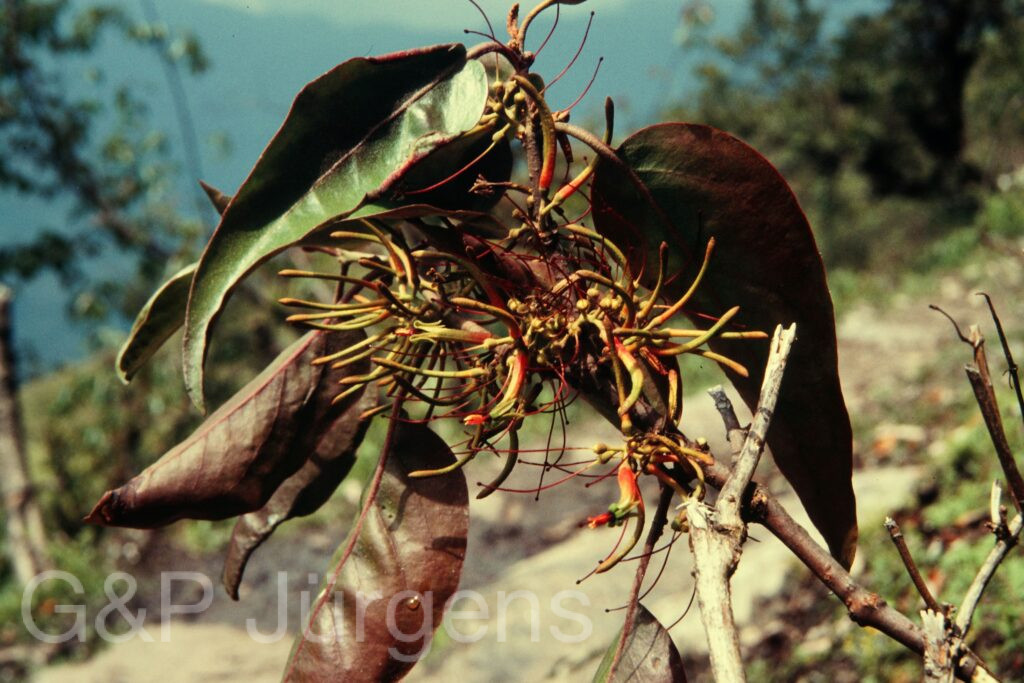
Description
Scurrula elata is a hemiparasitic mistletoe of the eastern and central Himalaya, recorded from Nepal, China, Bhutan and India, with around 200 occurrences in GBIF. As an obligate stem parasite it occurs wherever suitable woody host trees grow in subtropical to warm temperate broad-leaved forest, hill forest and forest edges, drawing water and minerals from its host through a haustorial connection while photosynthesising in its own leaves. Its altitudinal spread is shown by the cited material from Trithangebe in Bhutan at 1000 m, in flower in October, and from Honggaon in Nepal at 2360 m in May, indicating a range across the lower and mid montane forest belt where host diversity is high.
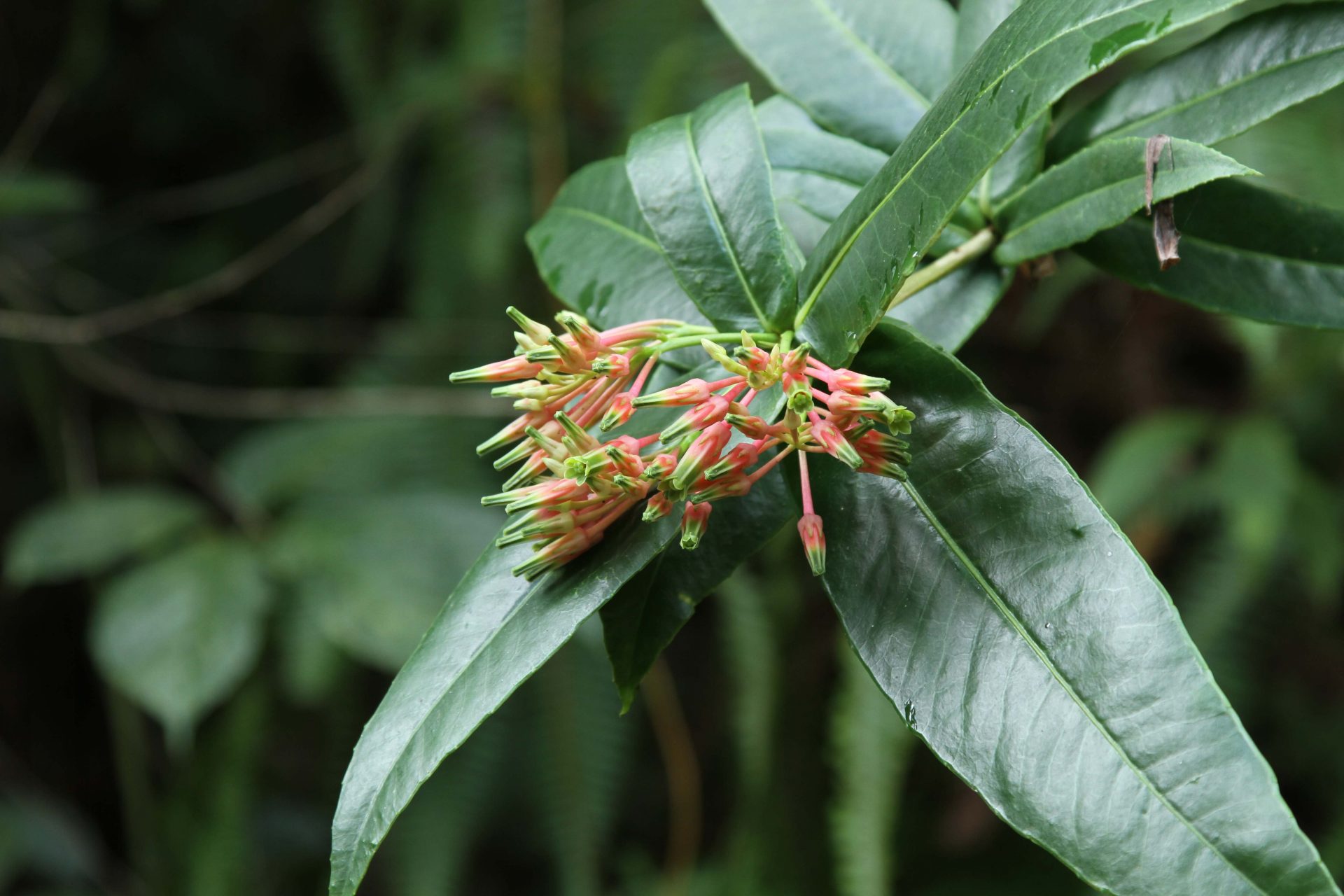
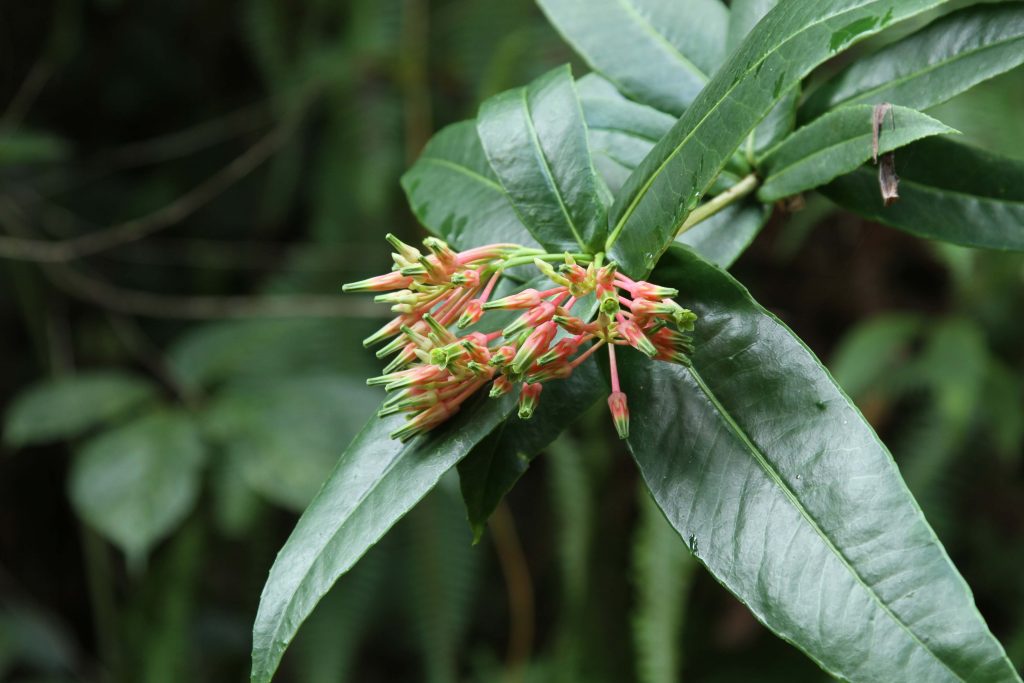
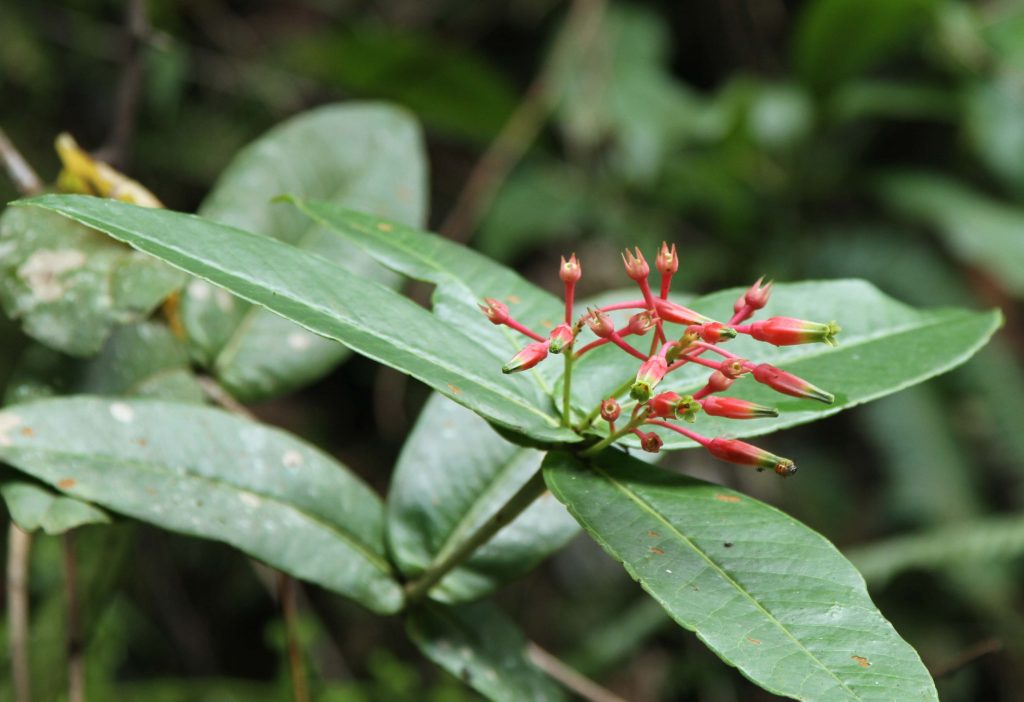
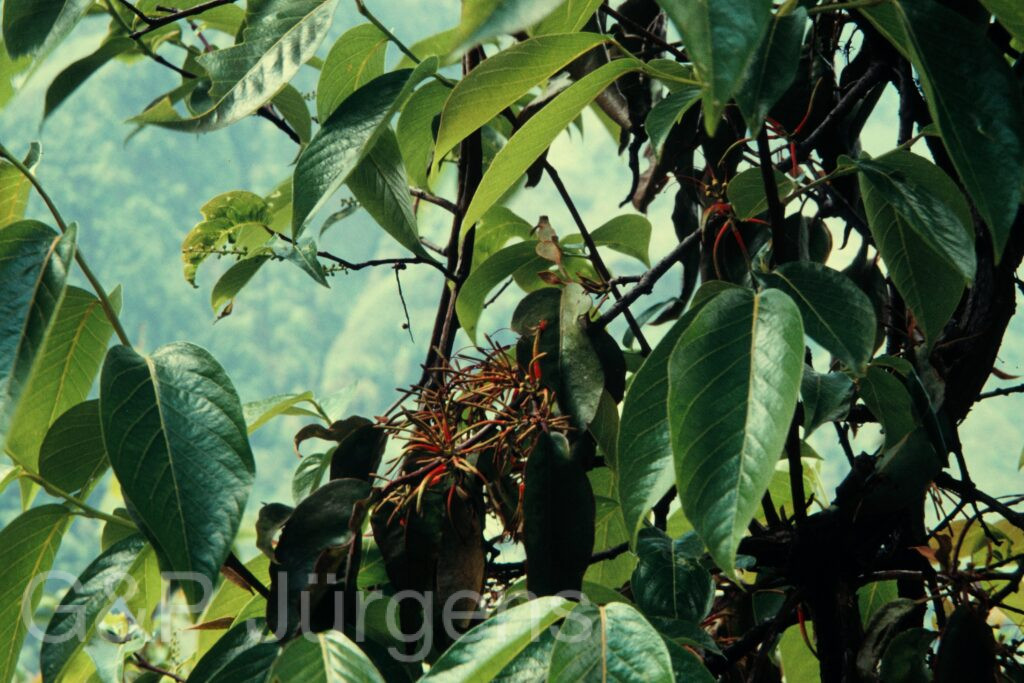
The plant forms a pendent to spreading parasitic shrublet attached to host branches by a swollen haustorial union. The young stems and foliage are clothed in a brownish to rusty stellate or dendritic tomentum. The leaves are opposite or subopposite, ovate to elliptic, entire and shortly petiolate. The flowers are arranged in short axillary racemes and are characteristically zygomorphic, with a slender, curved, tubular corolla that splits along one side as it opens, ranging from greenish to reddish in colour; the calyx is borne on an elongate, club-shaped receptacle. The fruit is a small, club-shaped (turbinate) berry, narrowed below, containing a single viscin-coated seed adapted for bird dispersal and adhesion to new host branches.
Scurrula is a genus of the showy mistletoe family Loranthaceae, distinguished within the family by its pear- or club-shaped fruit and curved, one-sided corolla, and centred on tropical and subtropical Asia. As with other loranths, its flowers are typically pollinated by birds, and its seeds are spread by frugivorous birds such as flowerpeckers that wipe the sticky seeds onto branches. Heavy infestation can damage host trees, but the species is a natural component of Himalayan forest canopies, is widespread within its range and is not considered threatened.
Author: Danser · Sources: POWO (Kew), GBIF, Flora of China Vol. 5, Flora of Bhutan Vol. 1, Flora of Nepal, The Loranthaceae of the Indomalayan Region (Danser)