Tag:

Bhutan

Flowers of Bhutan — 1326 plant species documented across the Bhutanese Himalaya, from dense broadleaf and conifer forests to alpine scrub and meadows. Bhutan’s largely intact wilderness shelters an exceptional diversity of orchids, rhododendrons, primulas and Himalayan poppies, many of them regional endemics. Each species page includes a botanical description, distribution, habitat and flowering time, with the original photograph and its recorded altitude and locality.

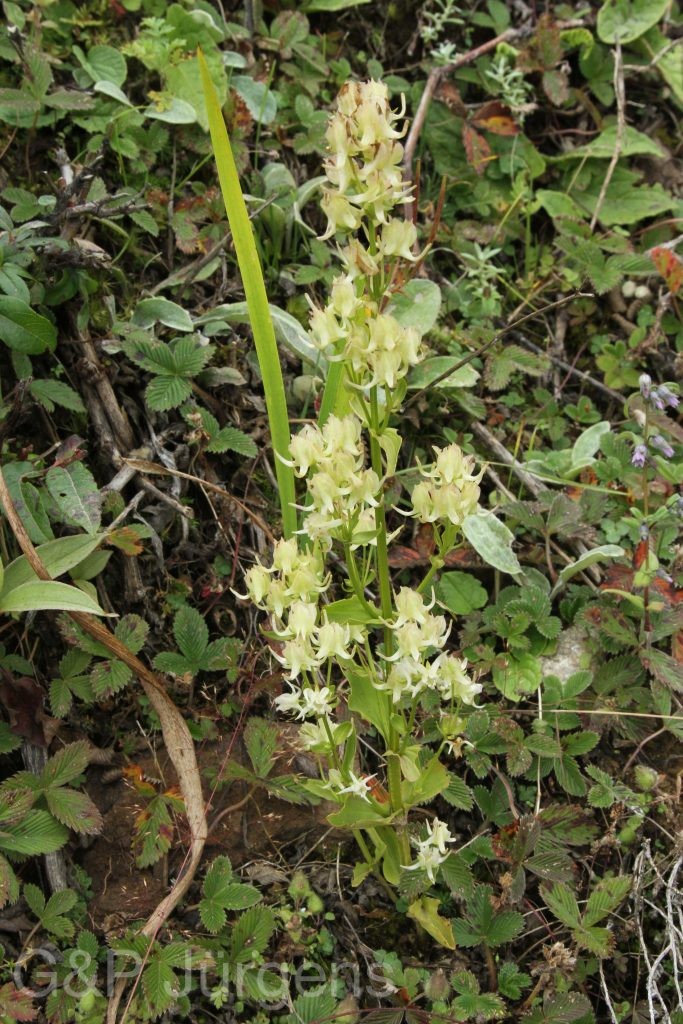
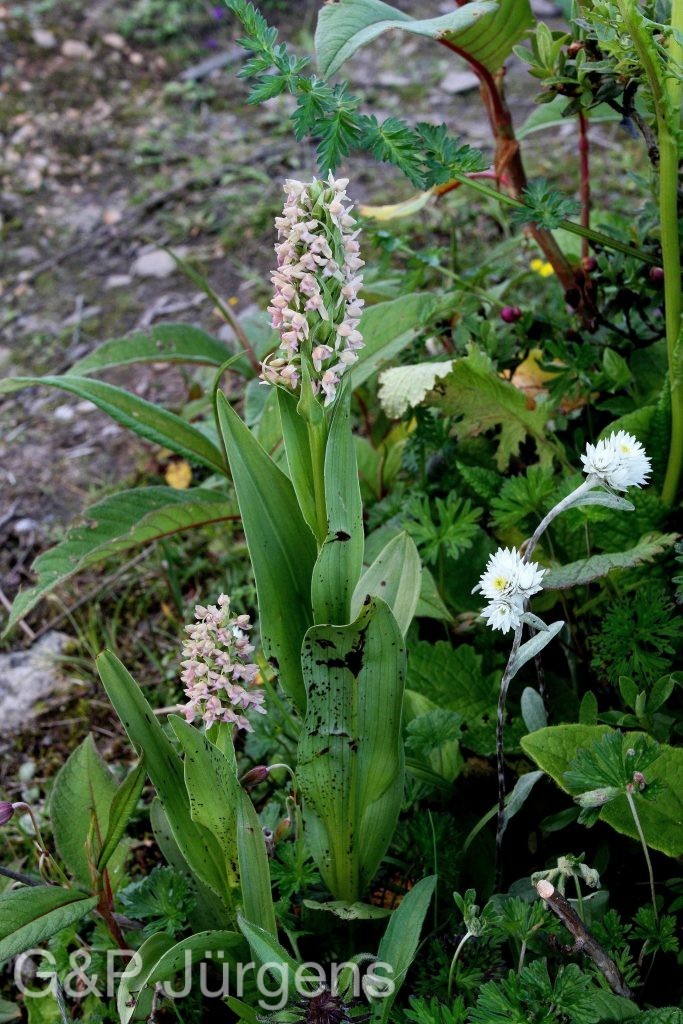
Lindl.

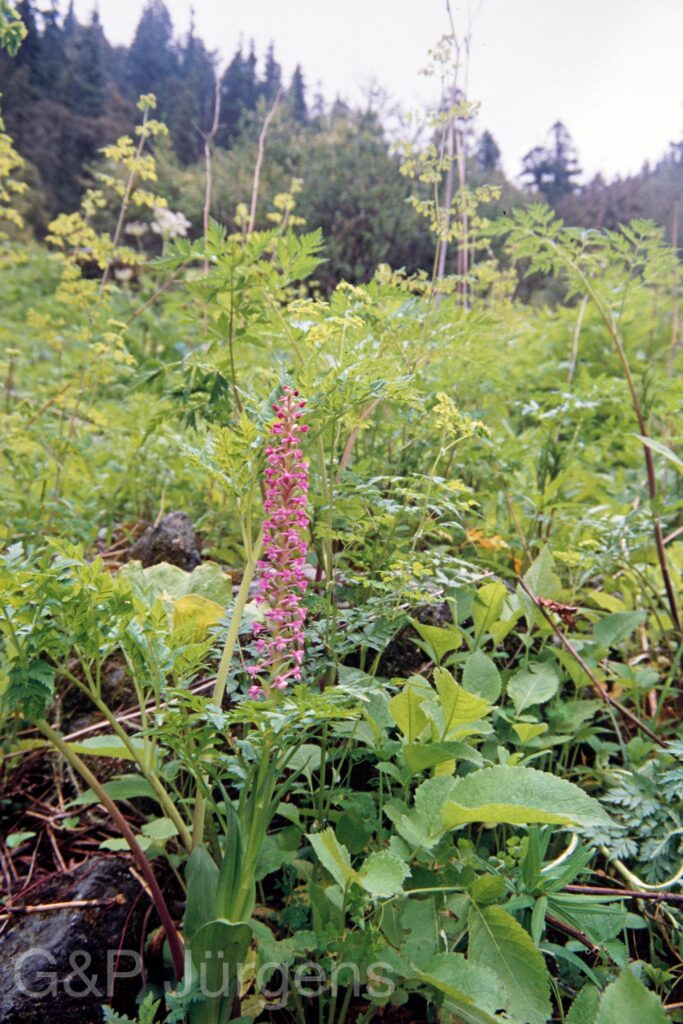
BhutanPG2011 801 01 01
Bhutan Chele-La, 3800m July
also included: Anaphalis busua (D.Don) DC. and Anemone demissa Hook.f. & Thomson
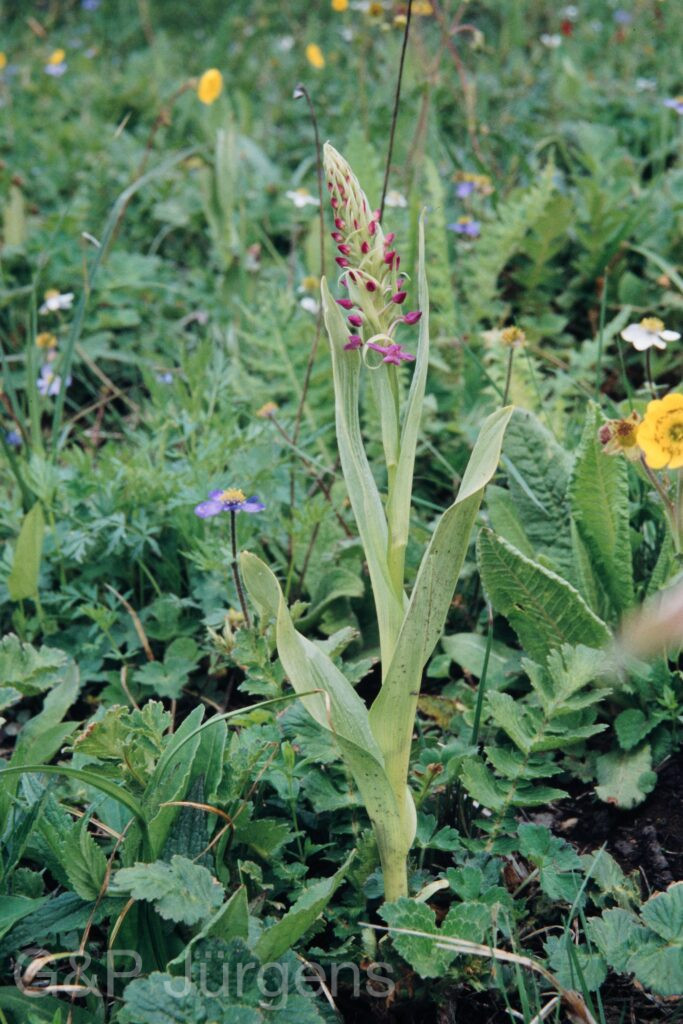
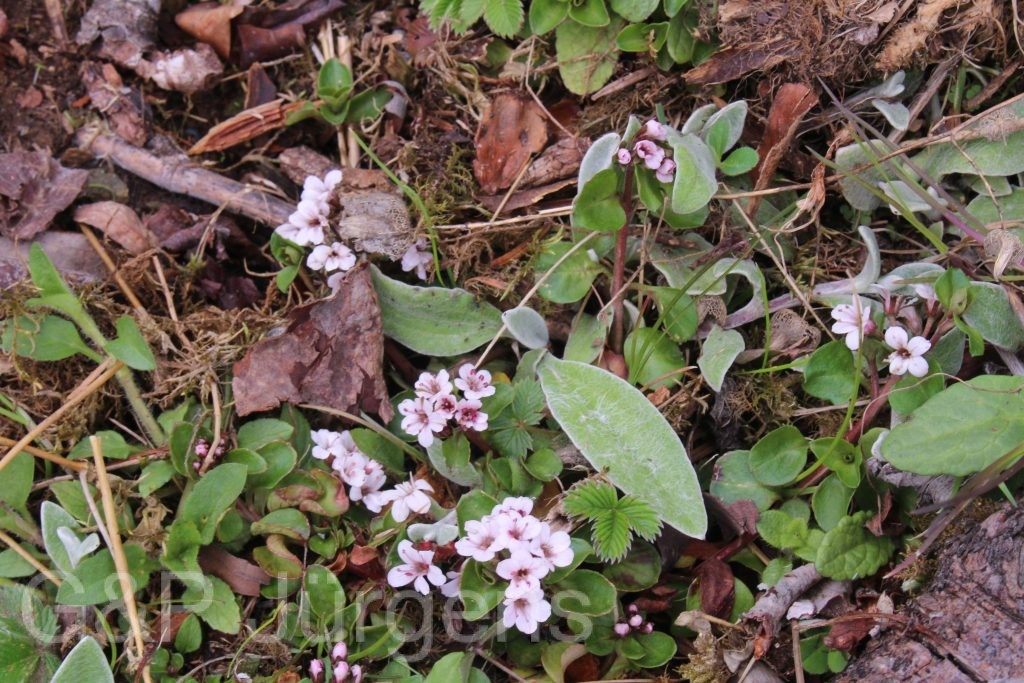
Nepal 99 371 ergebnis
West-Nepal Linji-Khola 3400m, June
Nepal 99 474 ergebnis
West-Nepal Churta-Khola 3200m, June

Description

Gymnadenia orchidis is a terrestrial orchid of the Himalaya and adjacent China, distributed through China, Nepal, India, Bhutan, Myanmar and Pakistan, with GBIF documenting some 795 occurrences. It is a plant of open alpine and subalpine meadows, grassy slopes, forest clearings and damp turf, growing in full sun to light shade on humus-rich soils. The species occupies the upper montane to alpine zone; the photographed material from the Chele-La pass in Bhutan at about 3800 m in July, sharing its habitat with Anaphalis busua and Anemone demissa, and from the Linji-Khola and Churta-Khola valleys of West Nepal at 3200-3400 m in June, illustrates its summer flowering across this high-elevation belt.

The plant arises from palmately lobed, fleshy root-tubers and bears an erect, leafy stem. The leaves are several, oblong to lanceolate, sheathing at the base and reduced upward to bracts. The inflorescence is a dense, cylindrical terminal spike of many small flowers, ranging in colour from purple and pink-magenta to occasionally white. Each flower has spreading lateral sepals, a hooded arrangement of the dorsal sepal and petals, and a trilobed labellum bearing a slender, decurved spur about equalling or shorter than the ovary, containing nectar. The pollinaria have naked, exposed viscidia characteristic of the genus. The fruit is a small, erect capsule.

The species belongs to Gymnadenia, a genus of nectar-spurred terrestrial orchids closely allied to Dactylorhiza and Platanthera; it has at times been segregated into Habenaria or treated under broader generic concepts, reflecting ongoing debate over the limits of the orchidine genera. Pollinated by long-tongued insects attracted to its spur nectar, it remains widespread and locally common in Himalayan alpine grasslands, although meadow degradation and grazing may affect individual populations.

Author: Lindl. · Sources: POWO (Kew), GBIF, Flora of China, Flora of Bhutan, The Orchids of Sikkim and Bhutan (Pearce & Cribb)
(Roxb. ex Willd.) DC.

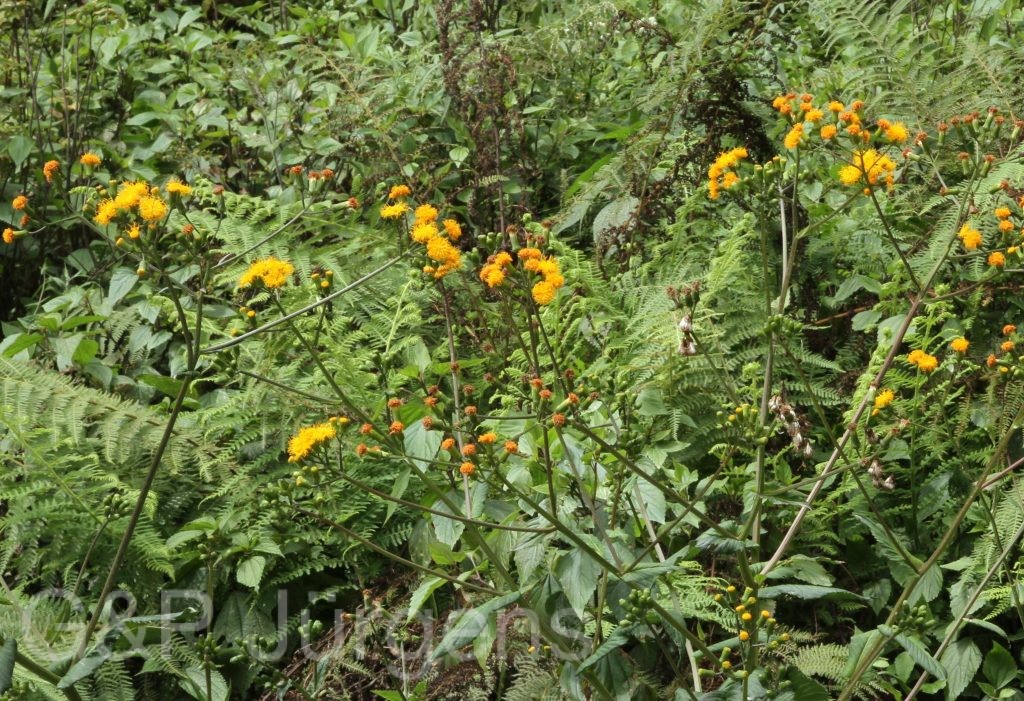
Bhutan2012 1313
Bhutan Pemagatse 1800m, October

Description

Gynura bicolor is a soft-stemmed composite of warm-temperate to subtropical Asia, native through China, Taiwan, Japan, India, Nepal, Thailand, Myanmar and Bhutan, and very widely cultivated and naturalised across the Pacific, Americas and elsewhere; GBIF lists over 600 occurrences reflecting both wild and grown plants. It occupies forest margins, moist shaded slopes, streamsides and disturbed ground, generally below about 2000 m. The photographed plant is from Pemagatse in Bhutan at 1800 m in October, growing in humid subtropical hill forest at the lower edge of the survey area.

The species is an erect to ascending perennial herb with fleshy, somewhat succulent, often purplish stems. The leaves are alternate, ovate to oblong-lanceolate, irregularly toothed to lyrately lobed, and strikingly bicolorous, green above and deep purple beneath, the source of the epithet. The capitula are discoid, lacking ray florets, and gathered in lax terminal corymbs; each head holds numerous orange to reddish tubular florets within a cylindrical involucre of narrow phyllaries, the long styles exserted with hairy, recurved branches. The fruit is a ribbed cypsela bearing a copious white pappus of fine bristles.

Gynura belongs to the tribe Senecioneae, and G. bicolor is well known as the edible "Okinawan spinach" or hong feng cai, grown as a leaf vegetable and used in traditional medicine, which accounts for its extensive cultivated distribution. It is of no conservation concern, being a vigorous, easily propagated plant tolerant of disturbance.

Author: (Roxb. ex Willd.) DC. · Sources: POWO (Kew), GBIF, Flora of China, Flora of Bhutan, Annotated Checklist of the Flowering Plants of Nepal, Revision of the Genus Gynura (Senecioneae)

D.Don

BhutanPG2011 233
Bhutan Tsochenchen, 3650m June
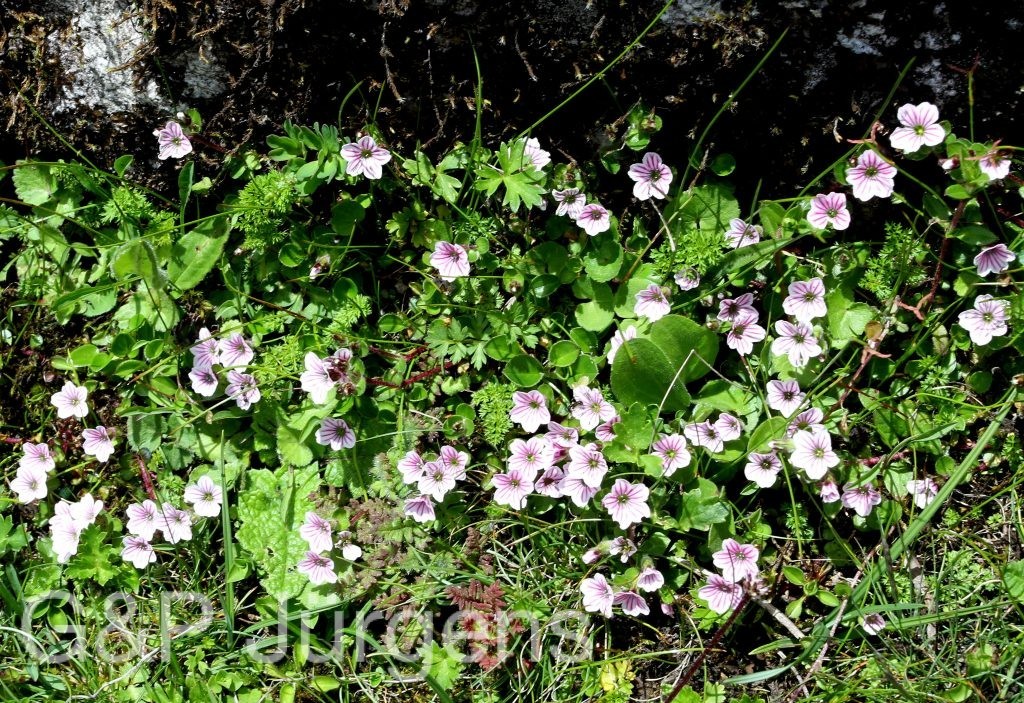
Bhutan2014 512
Bhutan Tsochenchen, 3600m June

Description

Gypsophila cerastoides is a mat-forming Himalayan pink ranging across India, Nepal and Bhutan, with the remaining GBIF country codes (USA, Austria) representing cultivated and herbarium records; the dataset holds about 65 occurrences. It is an alpine and upper subalpine plant of open stony slopes, gravelly flats, short turf and rock crevices, typically between about 3000 and 4500 m. The cushions photographed at Tsochenchen in Bhutan at roughly 3600 to 3650 m in June occupy exactly this kind of well-drained, sunlit high-mountain ground where the species flowers early in the season.

It forms low, spreading mats or loose cushions from a branched woody rootstock. The numerous small leaves are oblong to spathulate, sessile, somewhat hairy and crowded, recalling those of a Cerastium, hence the epithet. The flowers are borne singly or in few-flowered cymes on short stalks; each has five white to pale lilac petals conspicuously veined with violet or purple lines and often notched at the apex, set against a campanulate, five-toothed calyx. There are ten stamens and two styles, and the fruit is a small capsule opening by teeth to release minute seeds.

Unusual among Gypsophila for its broad, prettily veined petals and prostrate alpine habit, G. cerastoides is widely grown as a rock-garden and trough plant in temperate horticulture, which accounts for its appearance in European and North American records. Its cushion growth form is a typical adaptation to high-altitude wind, frost and drought. The species is locally common over a wide Himalayan arc and is not regarded as threatened, although alpine grazing and warming-driven vegetation shifts could affect particular populations at the margins of its range.

Author: D.Don · Sources: POWO (Kew), GBIF, Flora of Bhutan, Flora of China, Annotated Checklist of the Flowering Plants of Nepal, Barkoudah Revision of the Genus Gypsophila

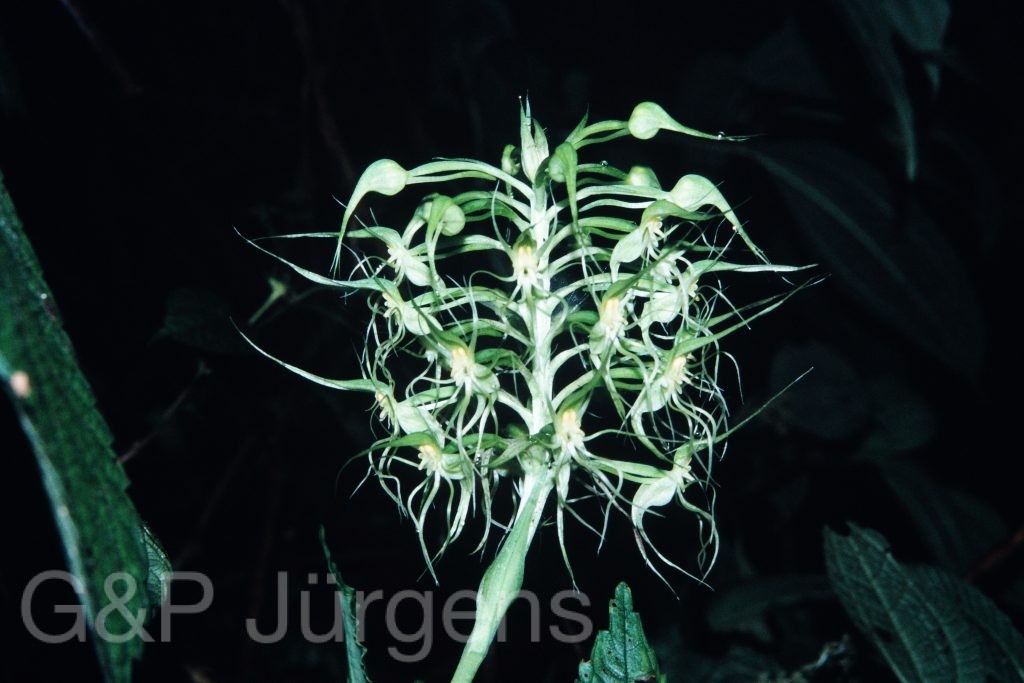
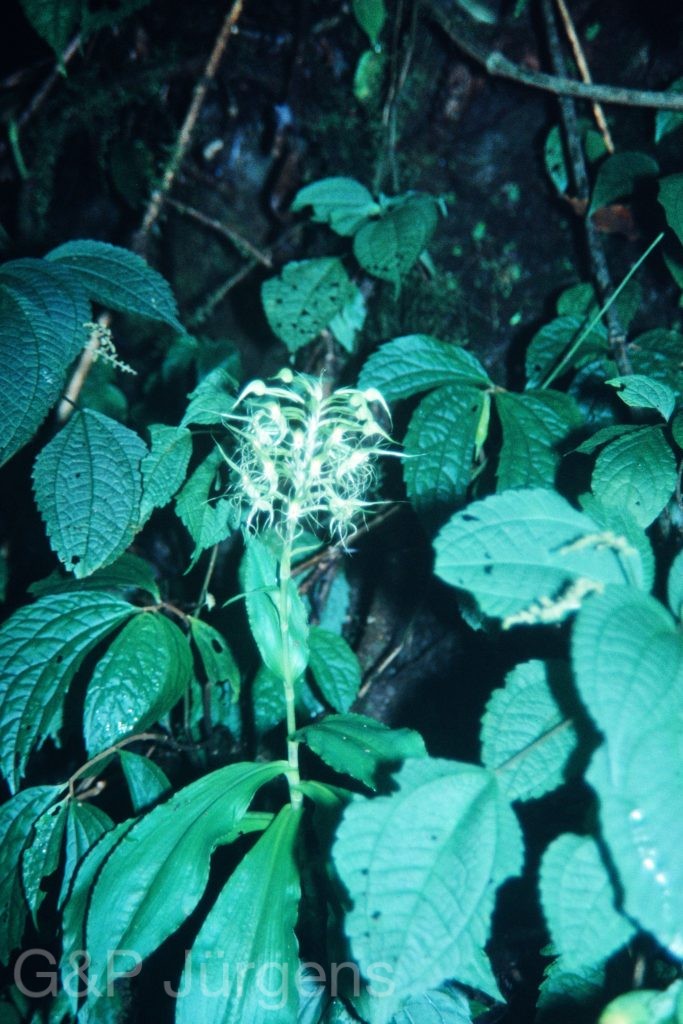
Schltr.

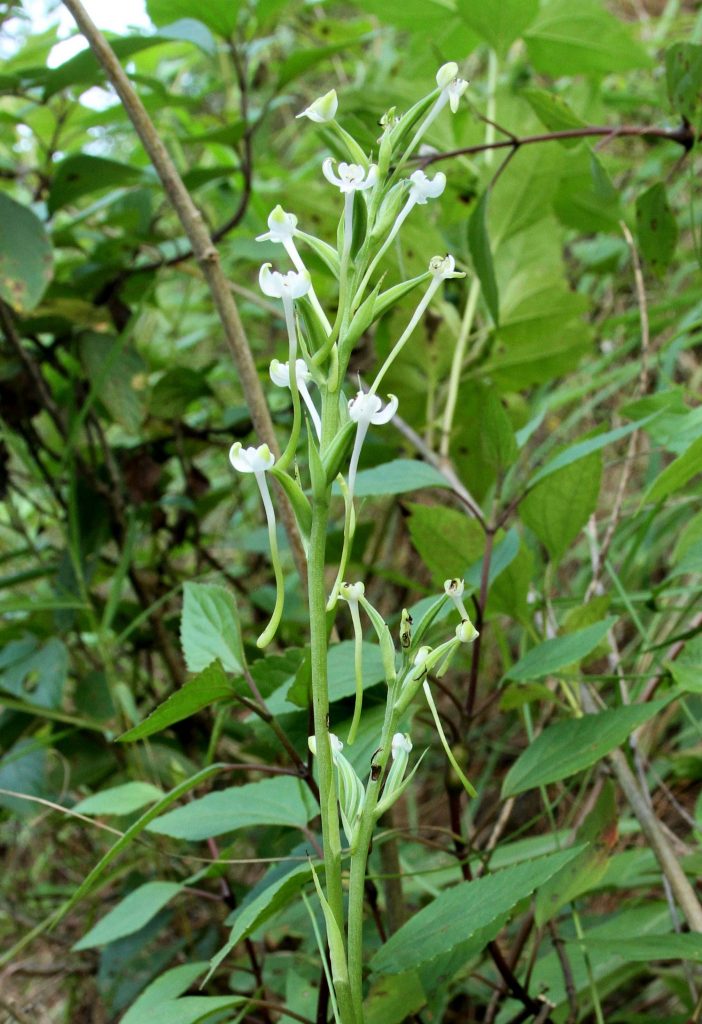
Bhutan2012 624
Bhutan Dochu-La 2800m, September
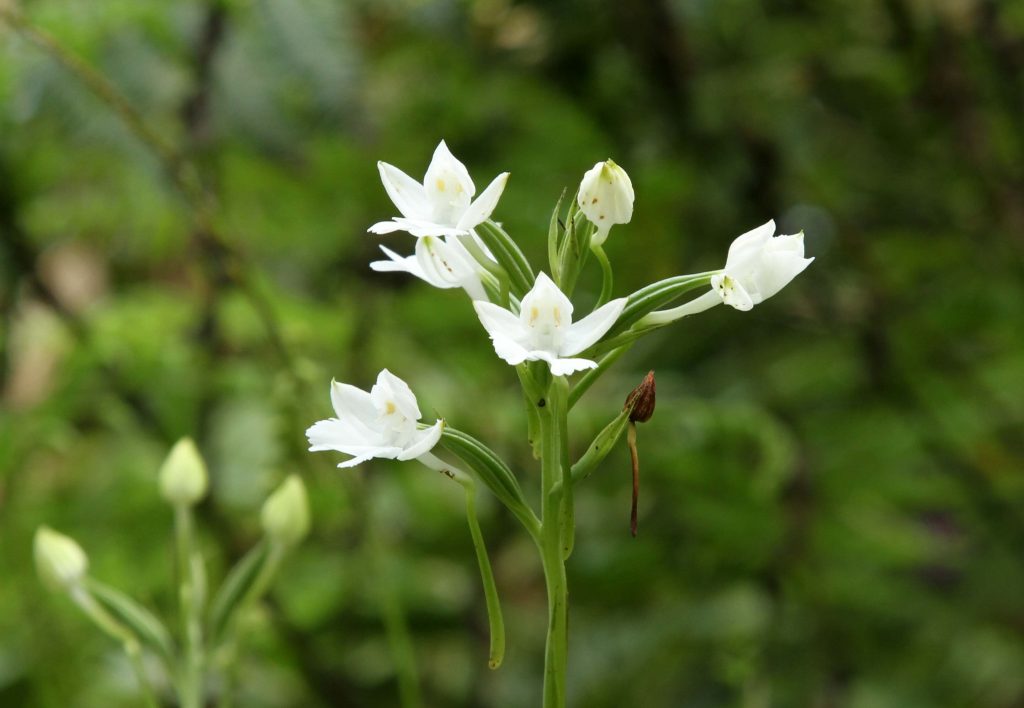
Bhutan2012 957
Bhutan Dochu-La 2800m, September

Description

Habenaria dentata is a wide-ranging terrestrial orchid of tropical and subtropical Asia, documented in GBIF across 933 occurrences from China, Thailand, Japan, Taiwan, India, Vietnam, Myanmar, Nepal, Bhutan and beyond. It grows in grassy slopes, open forest, scrub and forest-margin clearings from the lowlands to about 2800 m. The photographed plant was found at Dochu-La in Bhutan at about 2800 m in September, at the upper edge of its range, flowering at the close of the monsoon when soil moisture remains high in the cool mid-montane zone.

It is a tuberous terrestrial herb arising from underground ellipsoid tubers, with an erect leafy stem 30-60 cm tall bearing several oblong-lanceolate to elliptic, clasping cauline leaves. The inflorescence is a dense terminal raceme of showy white flowers; the dorsal sepal and petals converge to form a hood, while the conspicuous three-lobed labellum has the lateral lobes broadly dilated and fringed-dentate along the margins, giving the epithet dentata, and bears a long, slender, downcurved spur. The column is short with the rostellum and pollinaria typical of Habenaria, and pollination is effected by long-tongued, often nocturnal moths attracted to the white, spurred flowers.

Habenaria (Orchidaceae, subtribe Orchidinae) is a large, cosmopolitan genus of terrestrial orchids best diversified in the tropics, and like all orchids it is listed on CITES Appendix II. Seed germination depends on symbiosis with mycorrhizal fungi. Despite its broad distribution and relative frequency, populations are reduced locally by grassland conversion and collection, but the species is not globally threatened.

Author: Schltr. · Sources: POWO (Kew), GBIF, Flora of China, Flora of Bhutan, The Orchids of Bhutan, CITES Appendix II listing

Kraenzl.

Sikkim2003 35 G48
Sikkim above Yoksam 1880m 08.2003
Sikkim2003 34 W47
Sikkim above Yoksam 1880m 08.2003

Description

Habenaria pantlingiana is a terrestrial orchid distributed across the eastern Himalaya and East Asia, with GBIF records (322 occurrences) spanning Taiwan, Japan, China, India, Nepal, Bhutan and Vietnam. It grows in moist, humus-rich soils on shaded forest floors, grassy slopes and stream banks within warm-temperate and subtropical broad-leaved forest, broadly between 1000 and 2500 m. The documented plant from above Yoksam in western Sikkim at about 1880 m, flowering in August, reflects its summer-monsoon phenology, when the tuberous geophyte emerges and blooms during the period of maximum humidity and rainfall.

The plant arises from ovoid, fleshy underground tubers and produces an erect, leafy stem. The cauline leaves are oblong-lanceolate to elliptic, sheathing at the base, grading into bract-like organs above. The inflorescence is a many-flowered terminal raceme of small greenish to greenish-white flowers, each subtended by a narrow bract. As in Habenaria, the lip (labellum) is deeply three-lobed with slender, often filiform divisions, and bears a prominent slender spur arising at its base. The dorsal sepal and petals form a loose hood over the column, the lateral sepals spreading; the rostellum and stigmatic processes are characteristically elaborate. The fruit is a ribbed, dehiscent capsule releasing dust-like seeds.

Described by Kraenzlin and commemorating the Sikkim orchidologist R. Pantling, the species sits within the large, taxonomically intricate genus Habenaria (subfamily Orchidoideae, tribe Orchideae), where spur and lip lobing are key diagnostic features. Like most terrestrial orchids it depends on mycorrhizal fungi for germination and establishment, rendering it sensitive to forest disturbance. Although its wide range buffers it against global extinction, local populations are vulnerable to habitat loss and collection, and all wild orchids are CITES-listed.

Author: Kraenzl. · Sources: POWO (Kew), GBIF, Flora of China, The Orchids of Sikkim-Himalaya (Pantling & King), Genera Orchidacearum (Pridgeon et al.)

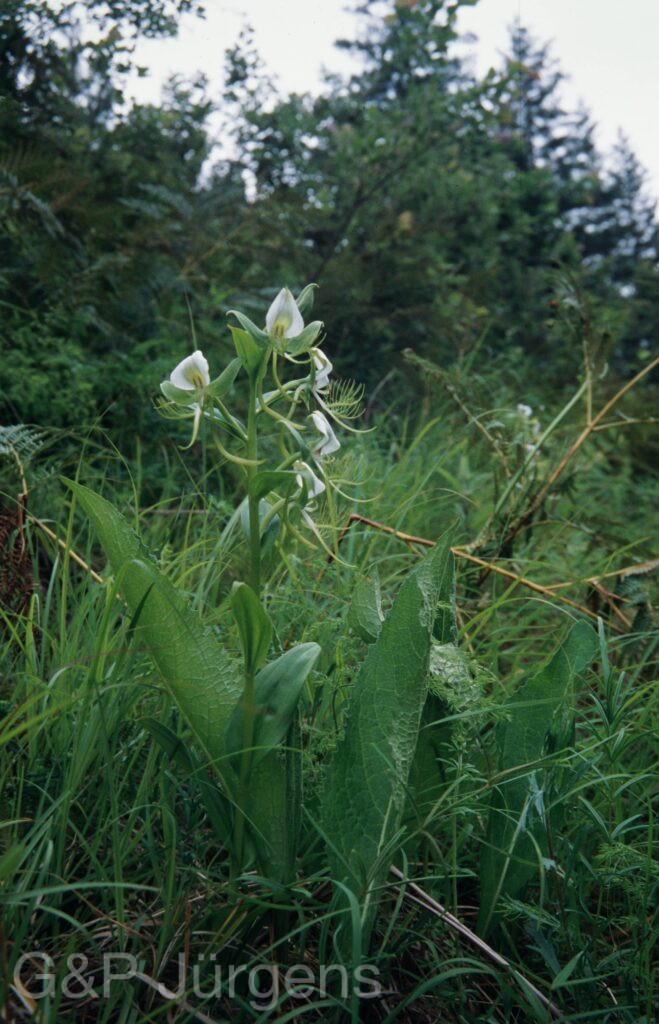
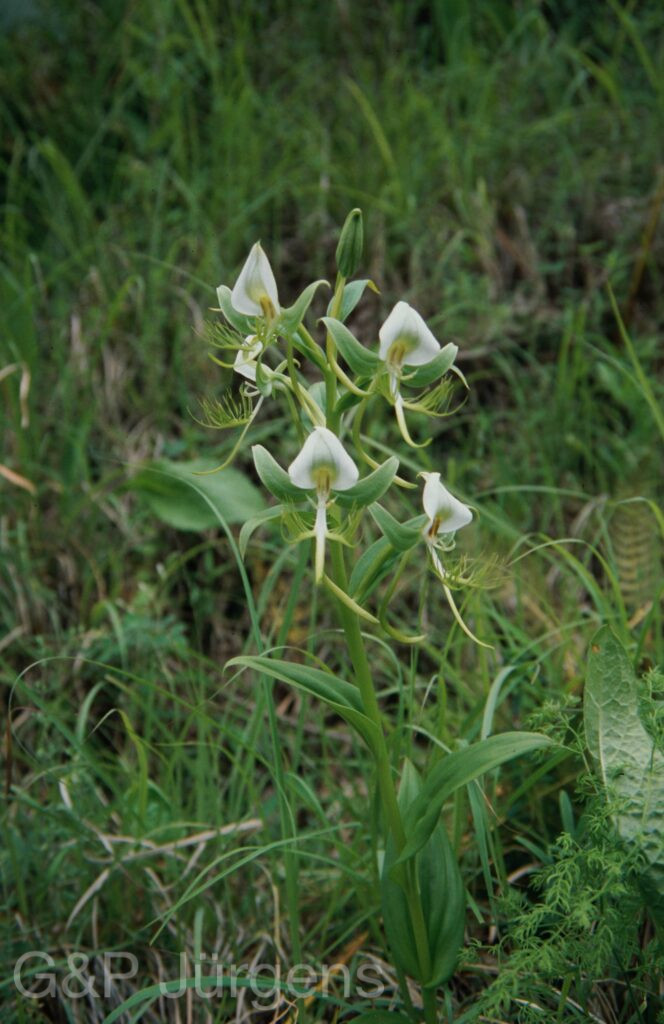
D.Don

Nepal 99 902 ergebnis
West-Nepal Sepka 2680m, July
Nepal 99 903 ergebnis
West-Nepal Sepka 2680m, July

Description

Habenaria pectinata is a terrestrial orchid of the Himalaya and adjacent China, distributed from India and Nepal through Bhutan into south-western China, with records also from Japan. GBIF holds around 222 occurrences, concentrated in the central and eastern Himalaya and the Sino-Himalayan borderlands. It is a plant of temperate forest and forest margins, grassy slopes, clearings and humus-rich banks, typically between about 1500 and 3000 m, flowering during the summer monsoon. The population photographed in West-Nepal at Sepka (2680 m, July) is characteristic of its occurrence in cool, moist mid-elevation woodland and adjoining meadows, flowering as the rains advance.

The plant is a tuberous terrestrial herb arising from ovoid to oblong root-tubers, producing a single erect, leafy stem. The leaves are several, cauline, ovate-lanceolate to oblong, sheathing at the base and grading into bracts above. The inflorescence is a lax to fairly dense terminal raceme of green to greenish-white flowers. Each flower shows the characteristic Habenaria structure: a galeate dorsal sepal with spreading lateral sepals, narrow petals, and a deeply tripartite lip whose lateral lobes are conspicuously divided into slender comb-like (pectinate) segments, giving the epithet, with a long slender spur behind. The column bears widely separated viscidia and elongate caudicles adapted to moth pollination; the fruit is a ribbed dehiscent capsule releasing dust-like seeds.

The family name as supplied (Orchideaceae) is an orthographic variant of the correct Orchidaceae. Habenaria is a large pantropical genus, and H. pectinata, described by David Don, belongs to a Himalayan group with fringed or pectinate lip lobes whose delimitation from allied species requires care. As a fairly widespread terrestrial orchid it is not globally assessed as threatened, but like many ground orchids it is sensitive to forest disturbance, habitat loss and collection.

Author: D.Don · Sources: POWO (Kew), GBIF, Flora of China, Flora of Bhutan, Annotated Checklist of the Flowering Plants of Nepal, Orchids of Nepal, monograph of the genus Habenaria (Kraenzlin)

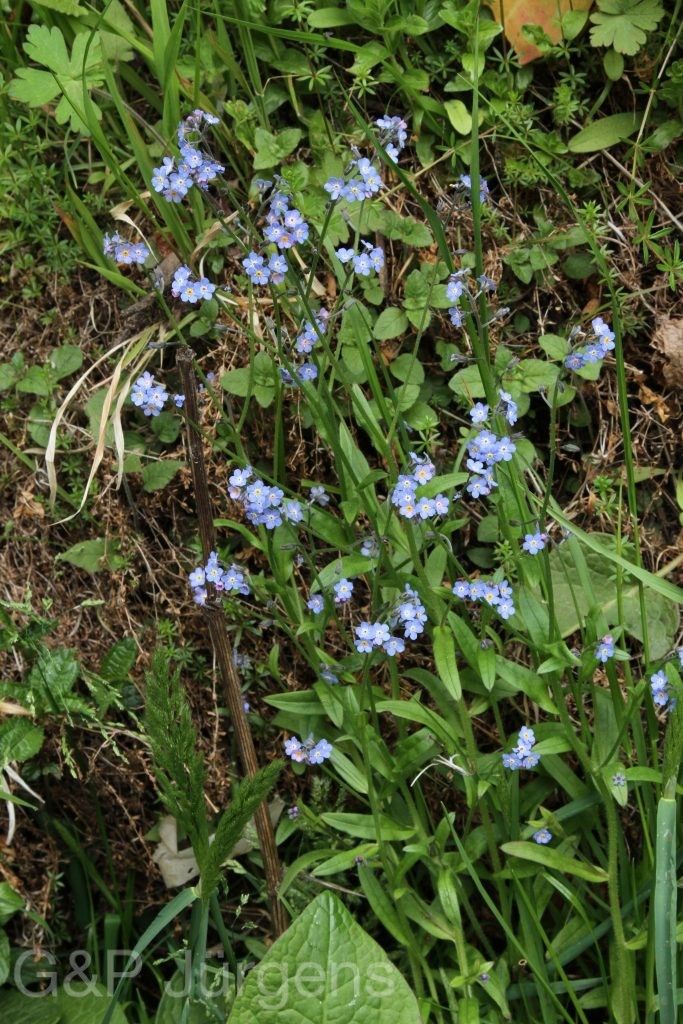
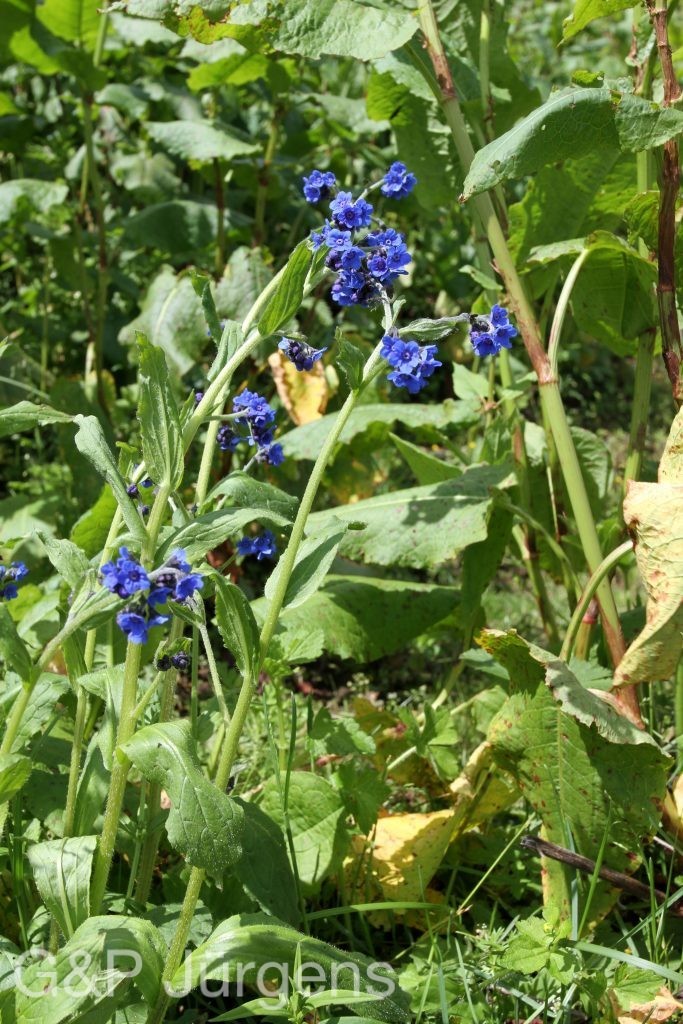
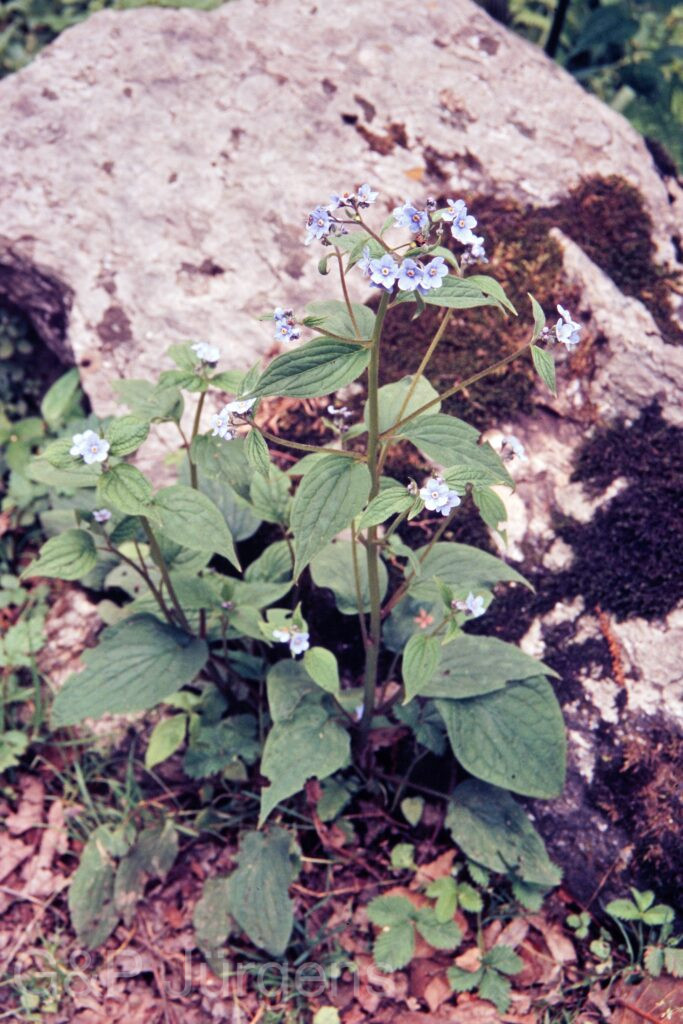
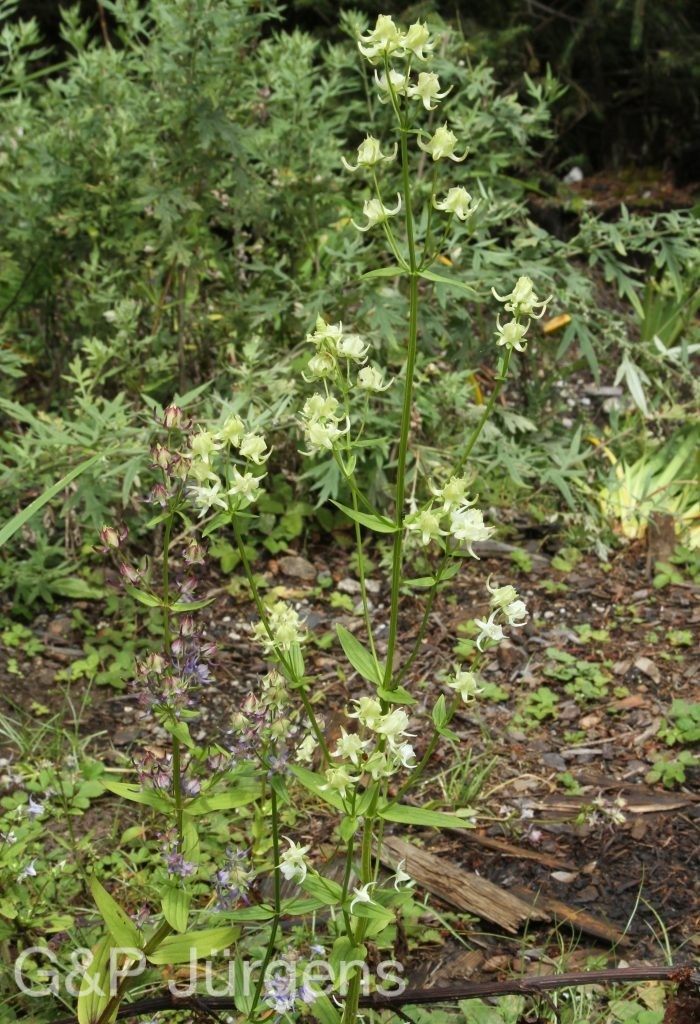
R.R.Mill

Bhutan2014 1055
Bhutan Takthsang 2900m, May
BhutanPG2011 766
Bhutan Chele-La, 3800m July

Description

Hackelia bhutanica is a forget-me-not relative of the eastern Himalaya, described from Bhutan and also recorded from India and Nepal, with a comparatively small number of occurrences (31 georeferenced records) consistent with a localised eastern Himalayan range. It grows on shaded banks, forest margins, open slopes and among rocks in the temperate to subalpine zones. The illustrated plants from Bhutan — at Takthsang around 2900 m in May and at Chele-La near 3800 m in July — span a broad altitudinal range and show the species flowering from late spring at lower elevations into mid-summer at higher ones, tracking the seasonal advance of conditions up the mountain.

The plant is an erect biennial or perennial herb, more or less roughly hairy throughout, with a leafy stem arising from a basal cluster of leaves. The leaves are alternate, narrowly lanceolate to oblong, entire and hispid. The flowers are borne in elongating, scorpioid (coiled) cymes typical of the Boraginaceae; each has a five-lobed calyx and a small, salver-shaped, blue corolla with a short tube and five spreading lobes closed at the throat by raised scales (fornices). The fruit characteristic of Hackelia consists of four nutlets whose margins bear glochidiate (barbed, hooked) prickles, an adaptation for dispersal by attachment to passing animals.

Hackelia is segregated from the closely allied Lappula and the broader stickseed group within Boraginaceae, distinguished largely by nutlet ornamentation; the species was described by R. R. Mill, a specialist in the Bhutanese and Himalayan flora. As a restricted eastern Himalayan endemic known from relatively few localities, H. bhutanica warrants attention from a conservation standpoint, its persistence depending on the maintenance of the temperate forest and open subalpine habitats it occupies.

Author: R.R.Mill · Sources: POWO (Kew), GBIF, Flora of Bhutan, Flora of China (Boraginaceae), Mill: revisionary studies of Himalayan Boraginaceae

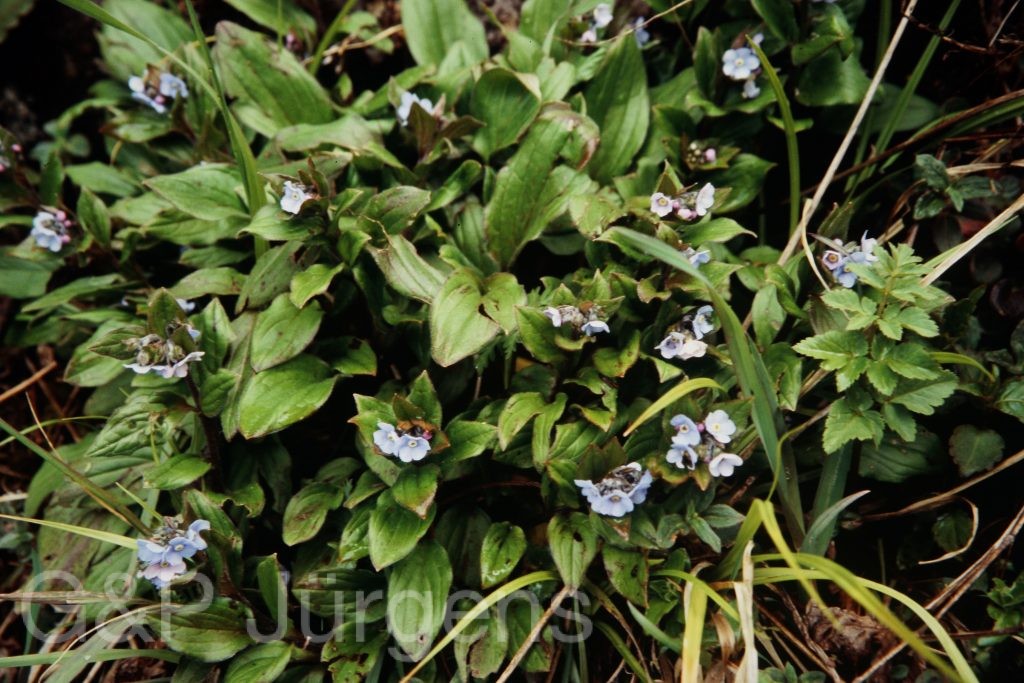
R.R.Mill

Bh09 180 P312
Bhutan Phajoding, 3600m June

Description

Hackelia obtusifolia is a Himalayan stickseed of restricted distribution, recorded from northern India, Bhutan and Nepal. GBIF documents only 14 occurrences across these three countries, indicating a localised and seldom-gathered species of the inner ranges. It grows on subalpine and alpine slopes, in open forest clearings, on rocky banks and among shrubberies on moist, humus-rich soils, broadly between about 3000 and 4000 m. The plant illustrated here was found in Bhutan at Phajoding at 3600 m in June, a high meadow and rhododendron-shrubland setting characteristic of its early-summer flowering in the eastern Himalaya.

The plant is an erect perennial herb with one or more branching, hispid stems arising from a woody rootstock. The leaves are alternate, the basal ones petiolate and the cauline ones sessile, oblong to obovate with an obtuse apex—the feature underlying the epithet—and clothed in stiff, appressed hairs. The inflorescence consists of lax, scorpioid cymes that elongate in fruit; the small flowers have a five-lobed calyx and a blue, rotate to shortly funnelform corolla with five conspicuous papillate scales (fornices) closing the throat. The fruit separates into four nutlets, each armed around the margin with glochidiate (barbed) prickles that effect epizoochorous dispersal.

Hackelia is distinguished within the tribe Cynoglosseae by its bordering of marginal glochids on the nutlets, contrasting with the wholly bristly nutlets of Cynoglossum. The barbed fruits cling readily to fur and clothing, an effective dispersal strategy in alpine grazing habitats. As a narrow Himalayan endemic known from very few collections, H. obtusifolia is poorly understood ecologically; its limited records suggest it warrants further survey, though its remote montane habitat affords some natural protection.

Author: R.R.Mill · Sources: POWO (Kew), GBIF, Flora of Bhutan, Flora of China, An Annotated Checklist of the Flowering Plants of Nepal, A Revision of the Asiatic Species of Hackelia (Boraginaceae)

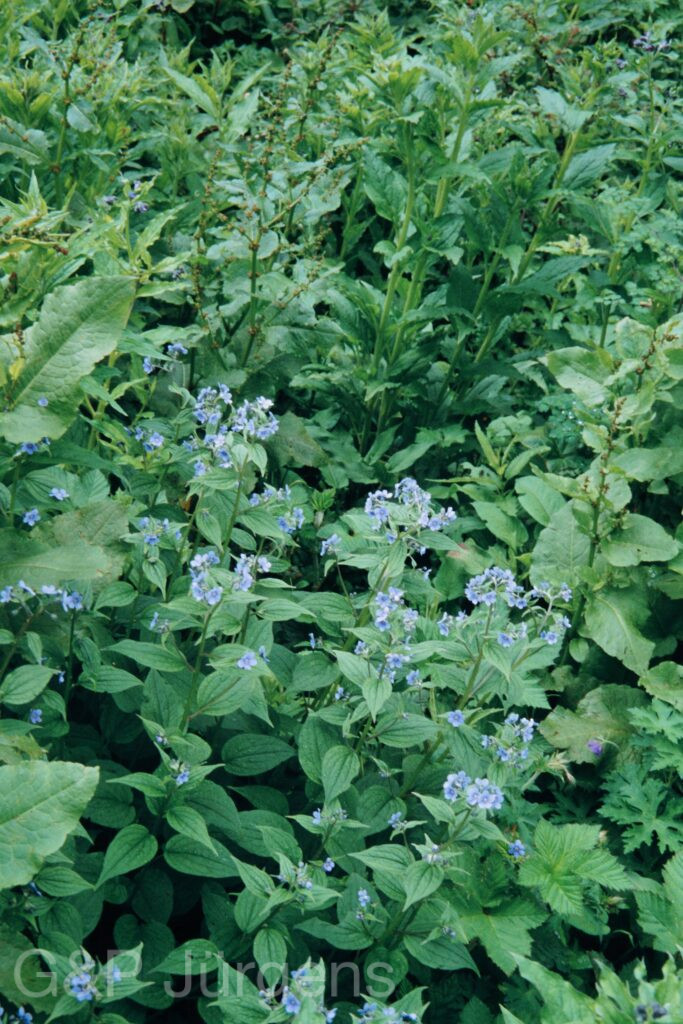
(Royle ex Benth.) C.E.C.Fisch.

Nepal 99 112 ergebnis
West-Nepal South of Rara-Lake 3600m, June
Garh 07 336 ergebnis
India Garhwal Mahji 2650m, June

Description

Hackelia uncinata (Royle ex Benth.) C.E.C.Fisch. is a perennial herb of the Himalaya and Central Asian mountains, with GBIF recording some 417 occurrences across China, India, Nepal, Pakistan, Bhutan, Myanmar, Mongolia and Russia. It grows in forest clearings, on shaded banks, among subalpine scrub and in moist meadow on the cooler slopes of the temperate to subalpine zone, flowering in early summer. The cited collections, from south of Rara Lake in west Nepal at 3600 m in June and from Mahji in Garhwal (Indian Himalaya) at 2650 m in June, illustrate its preference for partly shaded, humus-rich montane sites where it forms loose stands.

The plant produces erect to ascending, pubescent stems from a perennial rootstock, bearing alternate, ovate-lanceolate to elliptic leaves that are softly hairy, the lower ones petiolate and the upper sessile. The small flowers are arranged in lax, branched, scorpioid cymes; the corolla is rotate to shortly funnelform, pale blue to violet, with five lobes and prominent throat appendages (fornices). The diagnostic feature, reflected in the epithet uncinata, lies in the four nutlets, whose margins bear a row of glochidiate (hooked, barbed) prickles that catch on fur and clothing, effecting epizoochorous dispersal.

Hackelia, segregated from Lappula and the broader stickseed assemblage, is distinguished by nutlet ornamentation and is centred on the temperate mountains of Asia and the Americas. The hooked nutlets are an effective adaptation for animal-mediated dispersal across open montane terrain. The species is widespread and not of conservation concern, occurring frequently in both natural and lightly disturbed habitats throughout its broad Himalayan and Central Asian range.

Author: (Royle ex Benth.) C.E.C.Fisch. · Sources: POWO (Kew), GBIF, Flora of Nepal, Flora of China, Boraginaceae of the Western Himalaya, Brand monograph on Hackelia and Lappula

D.Don

Bhutan2012 18
Bhutan Shele-La, 3600m September
Bhutan2012 52
Bhutan Shele-La, 3600m September

Description

Halenia elliptica is a widespread Asian gentian-relative ranging across the Himalaya and the mountains of central and eastern Asia, recorded from China, India, Nepal, Bhutan, Myanmar, Kazakhstan, Mongolia, Russia and Taiwan (CN, IN, NP, BT, MM, KZ, MN, RU, TW, with further records), and one of the most abundantly collected species treated here, with about 4437 occurrences. It grows in moist alpine and subalpine meadows, on grassy slopes, forest clearings, streamsides and open disturbed ground over a wide altitudinal span. The plant illustrated was found at Shele-La in Bhutan at 3600 m in September, an elevation and late-season flowering typical of its appearance in the autumn alpine turf and roadside banks of the high passes.

It is an erect, glabrous annual or biennial with a four-angled, often branched stem. The leaves are opposite, sessile or shortly petiolate, elliptic to ovate-lanceolate with three to five prominent longitudinal veins. The flowers are borne in terminal and axillary cymes; the most distinctive feature is the corolla, which is four-lobed and blue to purplish, each lobe bearing at its base a slender, backward-projecting nectar spur, so that the open flower carries four divergent spurs, the character that defines the genus. The four stamens alternate with the lobes, and the superior, bicarpellate ovary ripens into a many-seeded capsule.

Halenia (subfamily Gentianoideae, tribe Gentianeae of the Gentianaceae) is unusual within its family for the conspicuously spurred corolla, an adaptation offering nectar to long-tongued pollinating insects and a notable instance of nectar-spur evolution within the otherwise spurless gentians. The species is highly variable across its enormous range. As a common, weedy, broadly distributed colonist of disturbed montane habitats, H. elliptica is of no conservation concern, and it is also gathered for use in Tibetan and Chinese traditional medicine.

Author: D.Don · Sources: POWO (Kew), GBIF, Flora of Bhutan, Flora of China, Gentianaceae monograph (Halenia revision)