
(Roxb. ex Willd.) DC.
Description
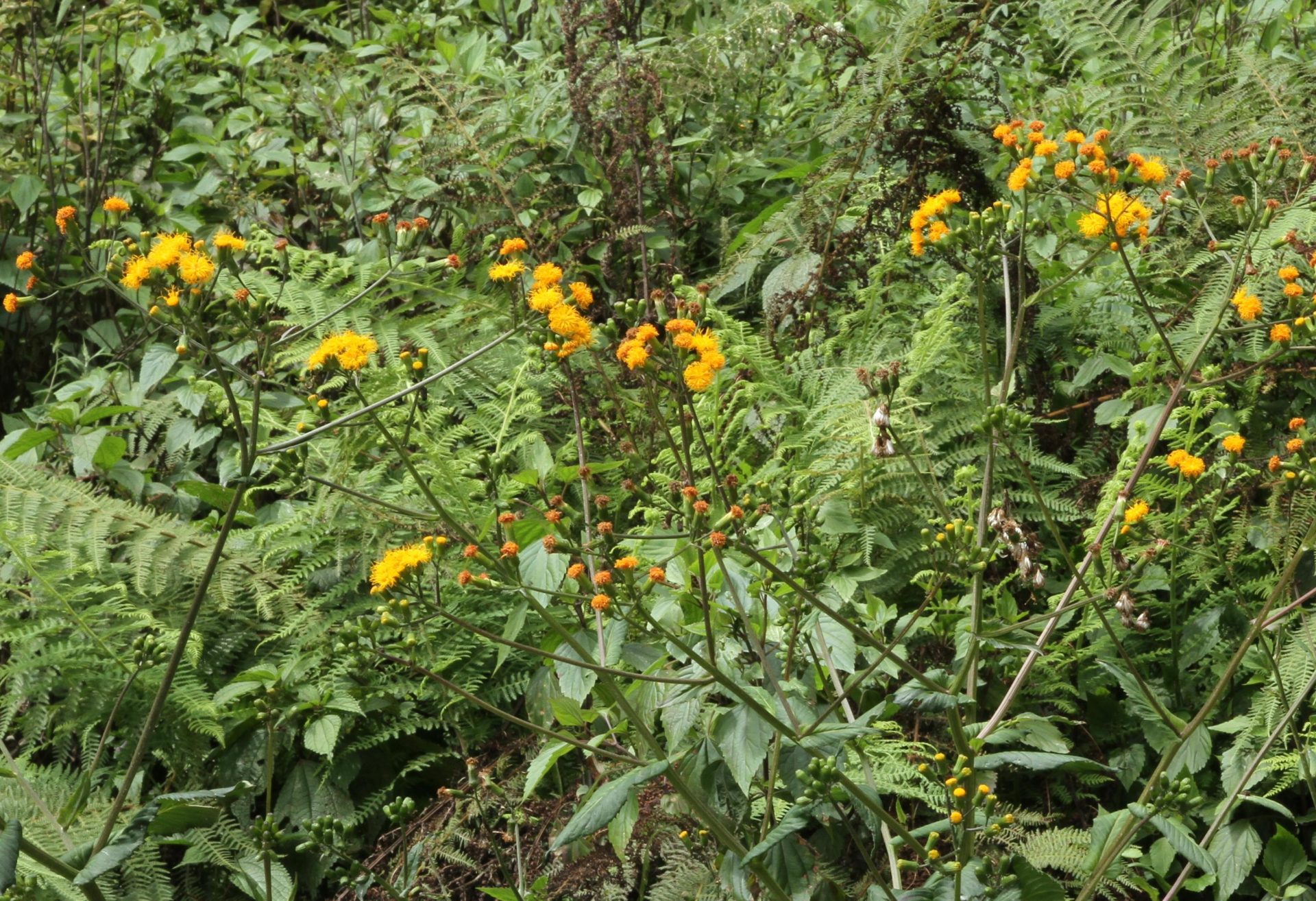
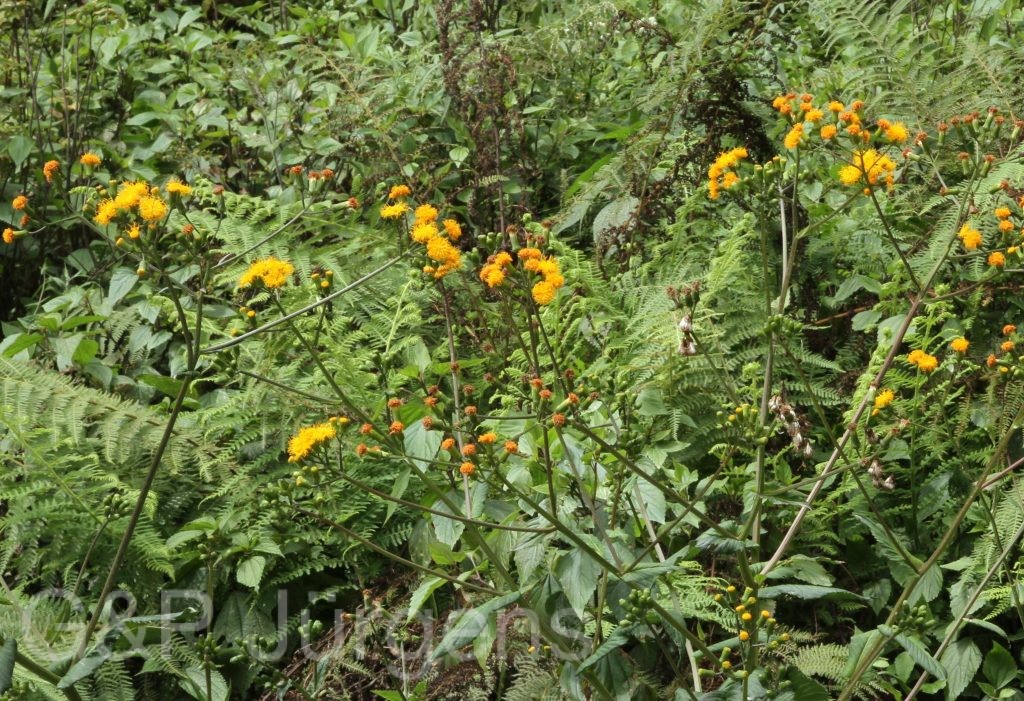
Gynura bicolor is a soft-stemmed composite of warm-temperate to subtropical Asia, native through China, Taiwan, Japan, India, Nepal, Thailand, Myanmar and Bhutan, and very widely cultivated and naturalised across the Pacific, Americas and elsewhere; GBIF lists over 600 occurrences reflecting both wild and grown plants. It occupies forest margins, moist shaded slopes, streamsides and disturbed ground, generally below about 2000 m. The photographed plant is from Pemagatse in Bhutan at 1800 m in October, growing in humid subtropical hill forest at the lower edge of the survey area.
The species is an erect to ascending perennial herb with fleshy, somewhat succulent, often purplish stems. The leaves are alternate, ovate to oblong-lanceolate, irregularly toothed to lyrately lobed, and strikingly bicolorous, green above and deep purple beneath, the source of the epithet. The capitula are discoid, lacking ray florets, and gathered in lax terminal corymbs; each head holds numerous orange to reddish tubular florets within a cylindrical involucre of narrow phyllaries, the long styles exserted with hairy, recurved branches. The fruit is a ribbed cypsela bearing a copious white pappus of fine bristles.
Gynura belongs to the tribe Senecioneae, and G. bicolor is well known as the edible "Okinawan spinach" or hong feng cai, grown as a leaf vegetable and used in traditional medicine, which accounts for its extensive cultivated distribution. It is of no conservation concern, being a vigorous, easily propagated plant tolerant of disturbance.
Author: (Roxb. ex Willd.) DC. · Sources: POWO (Kew), GBIF, Flora of China, Flora of Bhutan, Annotated Checklist of the Flowering Plants of Nepal, Revision of the Genus Gynura (Senecioneae)