Tag:

Bhutan

Flowers of Bhutan — 1326 plant species documented across the Bhutanese Himalaya, from dense broadleaf and conifer forests to alpine scrub and meadows. Bhutan’s largely intact wilderness shelters an exceptional diversity of orchids, rhododendrons, primulas and Himalayan poppies, many of them regional endemics. Each species page includes a botanical description, distribution, habitat and flowering time, with the original photograph and its recorded altitude and locality.

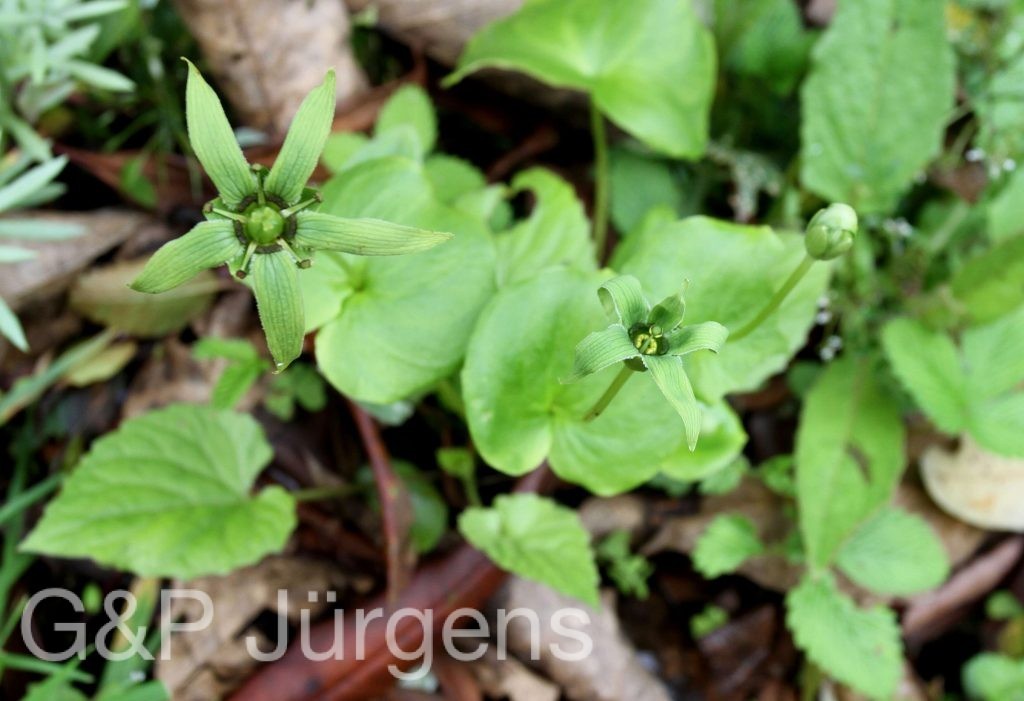
Franch.

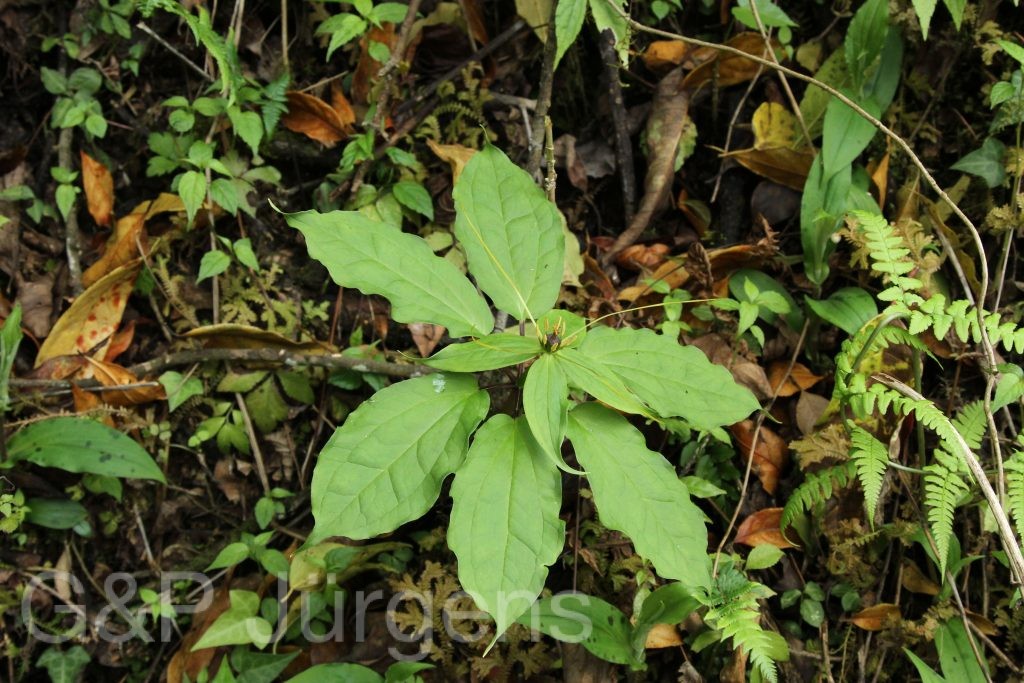
Bhutan2014 469
Bhutan Tongsa 2000m, May
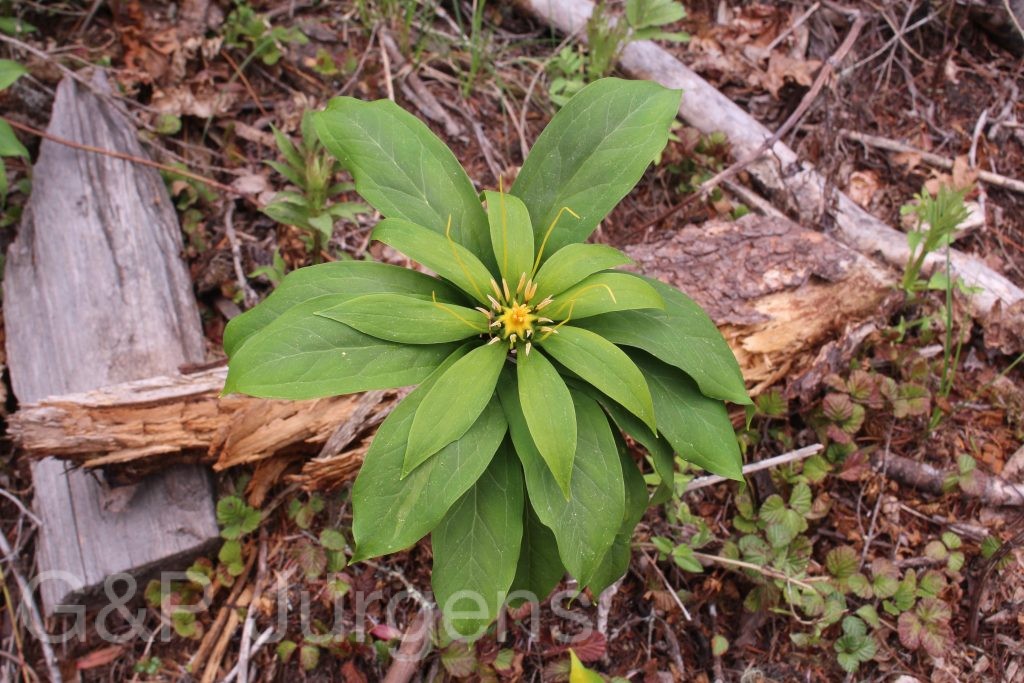
Bhutan2014 586
Bhutan Phobjika 3100m, May

Description

Paris thibetica is a rhizomatous woodland herb of the eastern Himalaya and Sino-Himalayan region, recorded from China, Nepal, India, Bhutan and Myanmar, the Norwegian (NO) datum representing cultivated or herbarium material. Its roughly 281 georeferenced collections concentrate in the temperate forests of the Tibet-Himalaya borderlands. It grows in shaded, moist, humus-rich broadleaved and mixed forest, on banks and in damp ravines beneath the canopy. The photographed plants from Bhutan at Tongsa (2000 m) and Phobjika (3100 m), both in May, demonstrate its broad altitudinal range across the temperate belt and its spring flowering as the rhizome resumes growth after winter.

It is an erect perennial arising from a thick, creeping rhizome that produces a single unbranched stem. At the stem apex is a single whorl of typically four or more leaves, ovate-lanceolate to oblanceolate, with the netted-reticulate venation characteristic of the genus. From the centre of the whorl rises a solitary terminal flower on a slender pedicel. The perianth is in two distinct whorls: the outer of green, leaf-like sepals and the inner of very narrow, filiform to thread-like yellowish-green petals. Numerous stamens with elongate connectives surround a globose ovary crowned by spreading styles. The fruit is a capsule that opens to expose seeds borne in a fleshy, often reddish aril.

The genus Paris (herb-Paris) is placed in the Melanthiaceae (formerly Trilliaceae) and is centred on the temperate Sino-Himalayan mountains, where it is taxonomically intricate and much studied. Several species, including members of the Paris polyphylla complex to which P. thibetica is allied, are valued in traditional medicine for their steroidal saponins, exposing wild populations to harvesting pressure. Slow-growing and habitat-specific, herb-Paris species are increasingly of conservation concern owing to forest loss and over-collection.

Author: Franch. · Sources: POWO (Kew), GBIF, Flora of China Vol. 24, Flora of Bhutan Vol. 3, Flora of Nepal, Li's The Genus Paris (Trilliaceae)
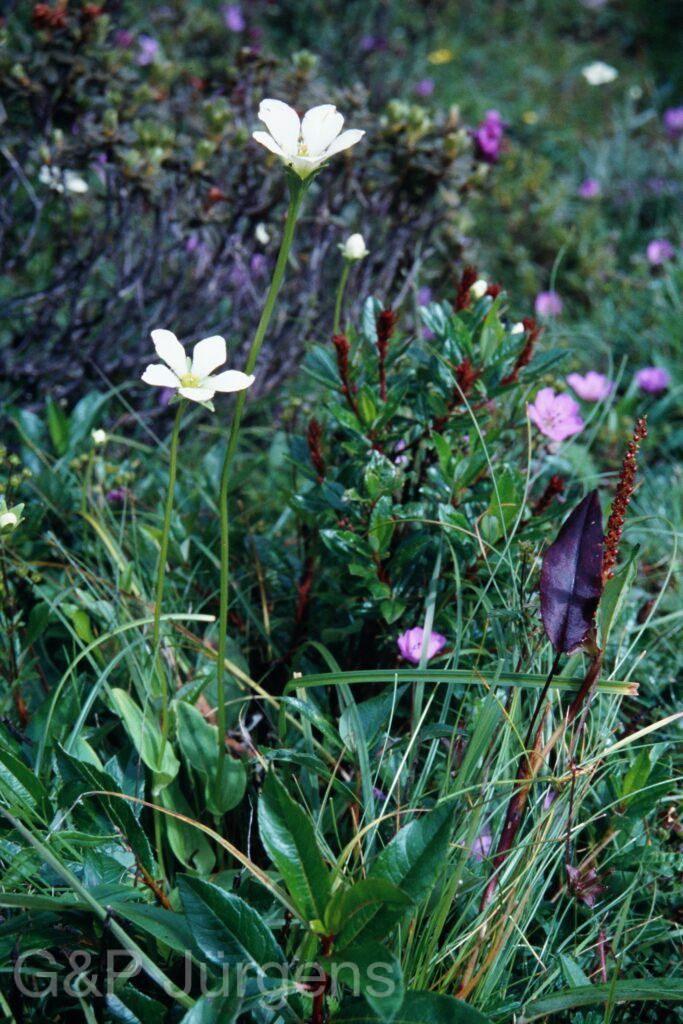
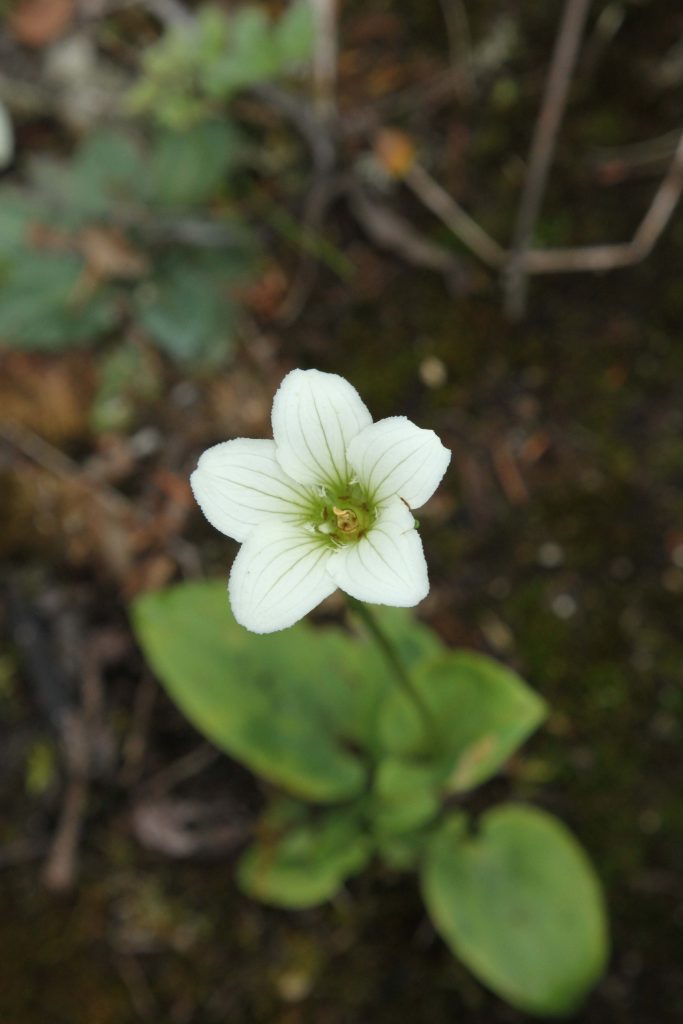
W.E.Evans

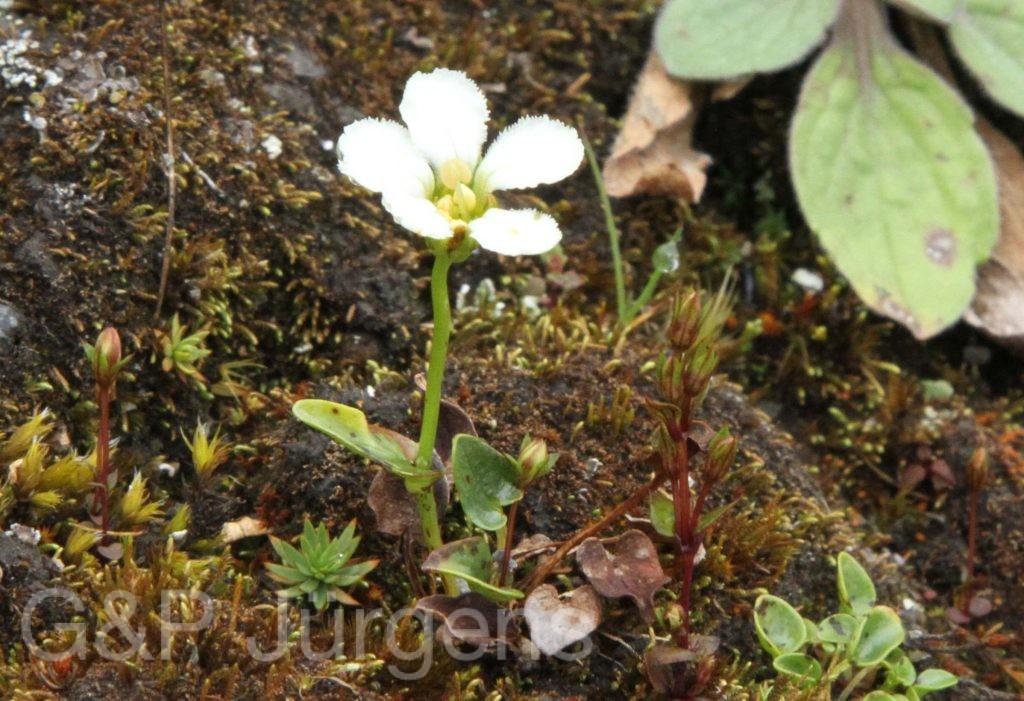
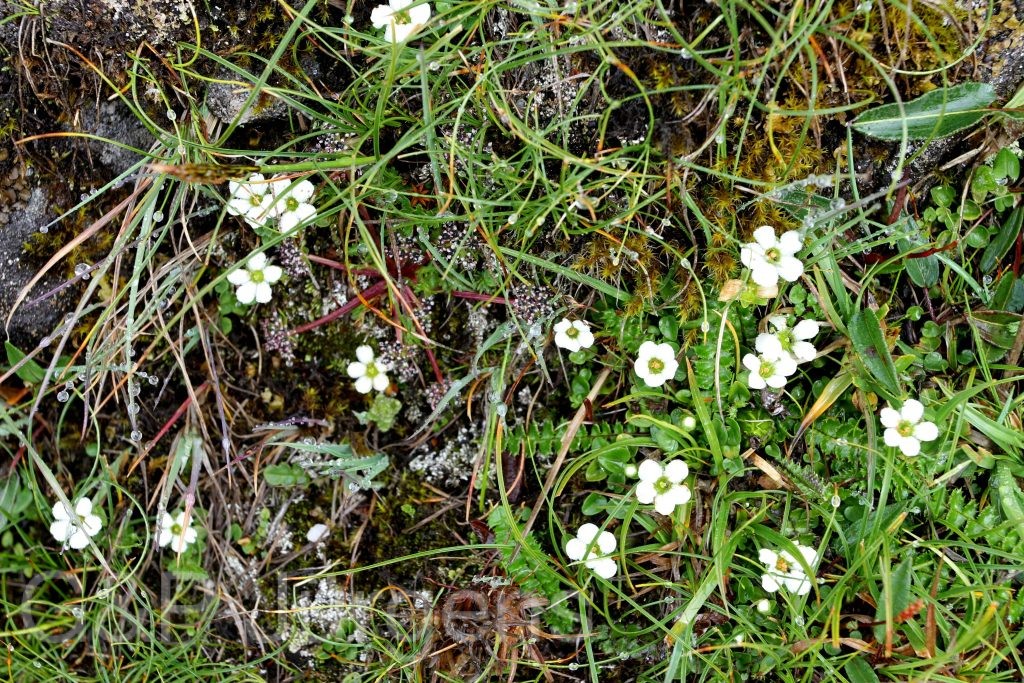
Bhutan2012 67
Bhutan Shele-La, 3800m September

Description

Parnassia cooperi is an alpine perennial herb of the eastern Himalaya, known from a small set of 12 GBIF occurrences in China, Bhutan and India. It inhabits moist alpine meadows, seepage slopes, streamsides and damp grassy turf in the upper temperate to alpine zone, generally between about 3500 and 4300 m. The plant recorded on the Shele-La in Bhutan at 3800 m in September represents its typical high-elevation habitat, flowering late in the season on cool, humid, well-watered ground where snowmelt and monsoon moisture persist.

The species is a slender, glabrous, rosette-forming herb arising from a short rhizome. The basal leaves are long-petiolate with ovate to cordate, entire blades, while each erect, unbranched flowering stem bears a single sessile or clasping cauline leaf below the solitary terminal flower. The flower has five free, white petals, frequently veined, and alternates fertile stamens with conspicuous fringed or gland-tipped staminodes, the latter a defining feature of the genus. The superior to half-inferior ovary ripens into a capsule that dehisces into valves, releasing numerous small seeds.

Though traditionally placed in its own family Parnassiaceae or in Saxifragaceae, Parnassia is here listed under Celastraceae, reflecting molecular evidence that nests the Parnassia-Lepuropetalon lineage within an expanded Celastrales. Parnassia cooperi is a narrow-range eastern Himalayan endemic whose restricted distribution and specialised wetland-alpine habitat make it potentially vulnerable to grazing pressure and climatic shifts, warranting monitoring despite its current data-poor conservation status.

Author: W.E.Evans · Sources: POWO (Kew), GBIF, Flora of China Vol. 8, Flora of Bhutan Vol. 1, Flora of Nepal, Flora of Pakistan, Wu's monograph of Parnassia

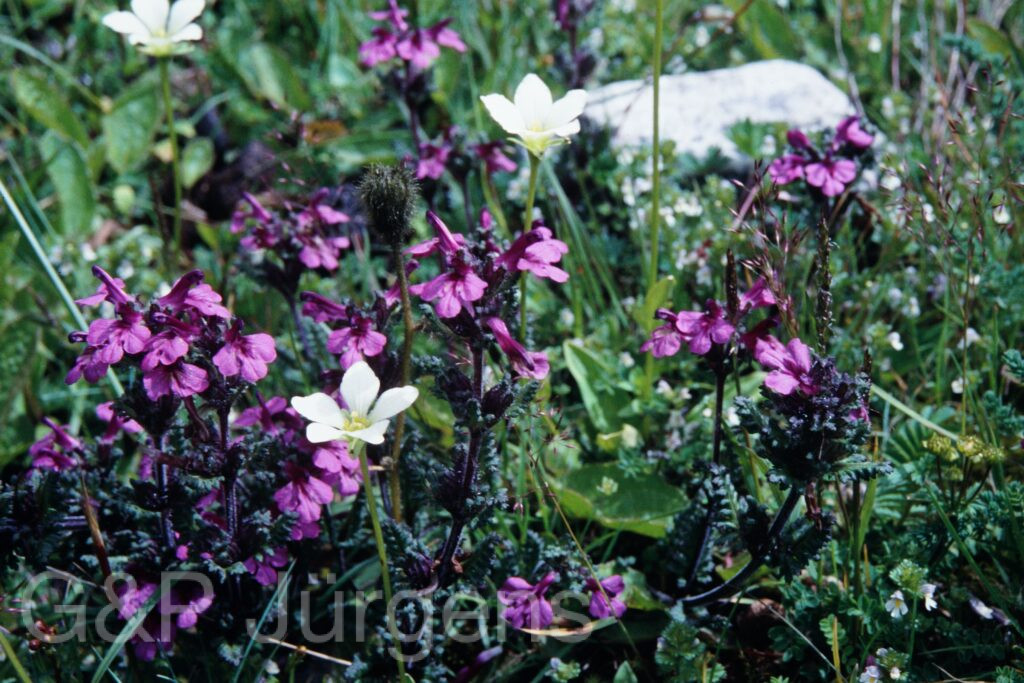
Franch

BhutanPG2011 548
Bhutan Ludlow-Sherriff-Trail Dem-Tso, 4650m June

Description

Parnassia delavayi is an alpine perennial herb of the eastern Himalaya and southwestern China, recorded by GBIF from China, Bhutan and India across roughly 1128 occurrences. It is a plant of cold, moist alpine habitats, growing in wet meadows, marshy turf, streamsides, seepage zones and damp grassy slopes within the alpine belt. The photographed individual was found in Bhutan along the Ludlow-Sherriff Trail near Dem-Tso at 4650 m in June, a high glacial-lake margin that exemplifies the species' affinity for saturated, peaty alpine ground.

It forms tufted perennials arising from a short rhizome, with basal leaves that are long-petiolate and cordate-ovate to reniform with an entire margin. The flowering stem is erect and bears a single, sessile or clasping cauline leaf below the solitary terminal flower. Each flower has five free, white petals, often delicately veined, alternating with five green sepals. Characteristic of the grass-of-Parnassus group are the conspicuous fimbriate staminodes positioned opposite the petals and dissected into gland-tipped filaments, which alternate with five fertile stamens surrounding a superior ovary; the fruit is a loculicidal capsule containing many small winged seeds.

GBIF accepts the name. Though long placed in Saxifragaceae or its own family Parnassiaceae, Parnassia is now embedded within Celastraceae on molecular grounds, the family label given here reflecting that modern circumscription. The elaborate fringed staminodes function as nectar-mimicking attractants for fly and small-bee pollinators. With a wide montane range in remote alpine terrain, P. delavayi faces no significant conservation threat.

Author: Franch · Sources: POWO (Kew), GBIF, Flora of China, Flora of Bhutan, monograph of Parnassia

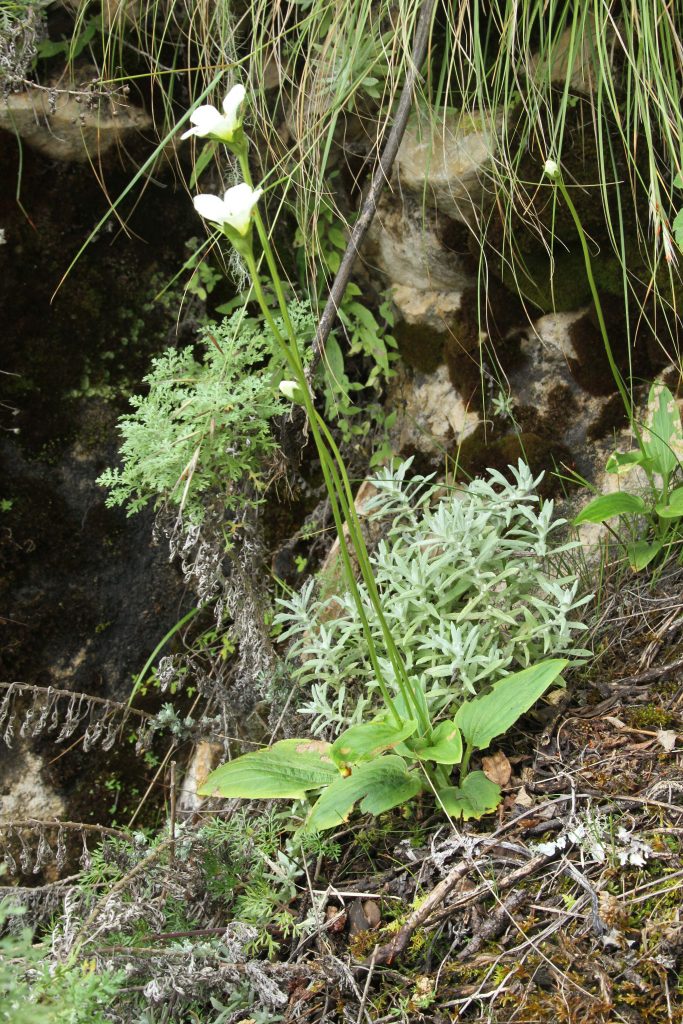
Hand.-Mazz.

BhutanPG2011 706 01 01
Bhutan Pele-La, 3000m July

Description

Parnassia longipetala is a perennial herb of the eastern Himalaya and adjacent China; GBIF data, comprising around 85 occurrences, attribute the species principally to China (notably south-western provinces and Xizang), with field records extending into Bhutan. It is a plant of moist alpine and subalpine habitats, growing in wet meadows, grassy seepages, streamsides and among rocks where the substrate remains damp through the growing season. The population photographed at Pele-La in central Bhutan (3000 m, July) is characteristic of its occurrence in the cool, humid pastures and flushes of the eastern Himalaya, flowering during the monsoon-fed summer.

The plant forms a small rosette from a short rootstock, the basal leaves long-petiolate with ovate to cordate, entire blades. The flowering stem is erect, usually bearing a single sessile or shortly clasping cauline leaf below the solitary terminal flower. The flower has five green sepals and five free, white petals; in this species the petals are conspicuously long, narrowed and often fringed or attenuate, giving the epithet. Alternating with the fertile stamens are the characteristic Parnassia staminodes, divided into gland-tipped filaments. The superior to half-inferior ovary develops into a capsule splitting into valves and releasing numerous small seeds.

The family placement given here (Celastraceae) follows the broad APG circumscription, under which Parnassia and its allies (formerly Parnassiaceae) are treated within an enlarged Celastraceae; older floras place the genus in its own family. P. longipetala, described by Handel-Mazzetti, is distinguished within the Himalayan Parnassia complex by its elongate petals and staminode form. Given its restricted documented range and specialised wetland-meadow habitat, the species warrants attention, as such high-elevation flush communities are vulnerable to grazing, drainage and climatic change.

Author: Hand.-Mazz. · Sources: POWO (Kew), GBIF, Flora of China, Flora of Bhutan, Annotated Checklist of the Flowering Plants of Nepal, monograph of the genus Parnassia (Wu & Gu)

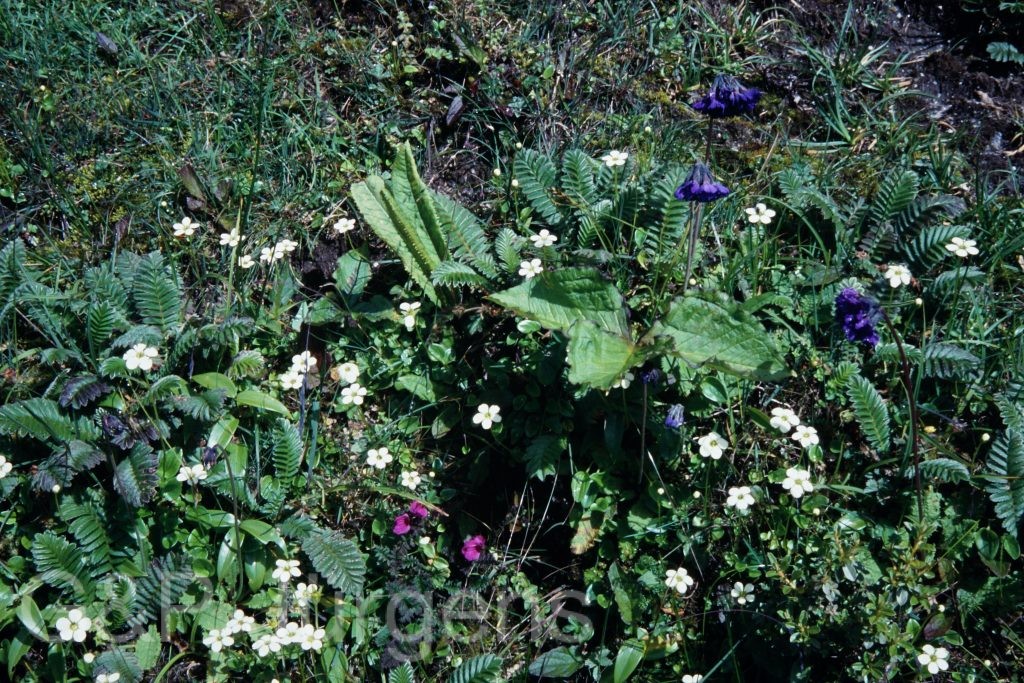
Wall. ex Royle

Sikkim2003 258 P353
Sikkim Dzongri 4200m August
Sikkim2003 261 P360
Sikkim Dzongri 4200m August

Description

Parnassia nubicola Wall. ex Royle is a perennial herb of moist alpine habitats distributed along the Himalaya and into adjoining Central Asia, recorded from China, India, Nepal, Pakistan, Afghanistan and Bhutan, with around 182 georeferenced occurrences clustered in the high Sino-Himalayan ranges. It favours wet alpine meadows, marshy turf, seepage slopes, streamsides and the moist margins of snowmelt flushes, where soils remain saturated through the growing season. The photographed plants from Dzongri in Sikkim at about 4,200 m in August and from the Shele-La in Bhutan at about 4,000 m in September show its preference for the upper subalpine to alpine zone, where it flowers in late summer.

It grows from a short rhizome as a rosette of long-petioled basal leaves with ovate to cordate, entire blades. The flowering stems are erect and bear usually a single clasping, sessile cauline leaf below the solitary terminal flower. Each flower has five green sepals and five white petals conspicuously veined with green or yellowish lines. Between the fertile stamens lie five fringed staminodes divided into numerous gland-tipped filaments, a hallmark of the genus; the superior ovary ripens into a capsule splitting into four valves to release many small seeds.

The family attribution to Celastraceae follows recent molecular classifications, in which Parnassia (formerly placed in Saxifragaceae or its own Parnassiaceae) is treated within an expanded Celastraceae. The conspicuous nectar-secreting staminodes are associated with generalist insect pollination. Widespread and locally common across its broad range, P. nubicola is not considered threatened, though wetland alpine populations are sensitive to drainage, trampling and grazing.

Author: Wall. ex Royle · Sources: POWO (Kew), Flora of China Vol. 8, Flora of Bhutan Vol. 1, GBIF, Simmons: Celastraceae (in Kubitzki, 2004)

Wall.

Sikkim2003 111 P151
Sikkim below Dzongri 3950m 08.2003

Description

Parnassia pusilla is a diminutive grass-of-Parnassus distributed through the central and eastern Himalaya, recorded from China, Nepal, India, Bhutan and Myanmar and represented by some 177 georeferenced occurrences. It is a plant of cold, wet, open high-elevation ground, characteristically inhabiting alpine seepages, marshy meadows, dripping rock ledges and the gravelly margins of snowmelt streams where the substrate remains saturated through summer. The specimen photographed below Dzongri in Sikkim at about 3950 m in August illustrates its strong affinity for the upper alpine flush zone, where it flowers during the brief monsoon-fed growing season among low cushion vegetation and short turf.

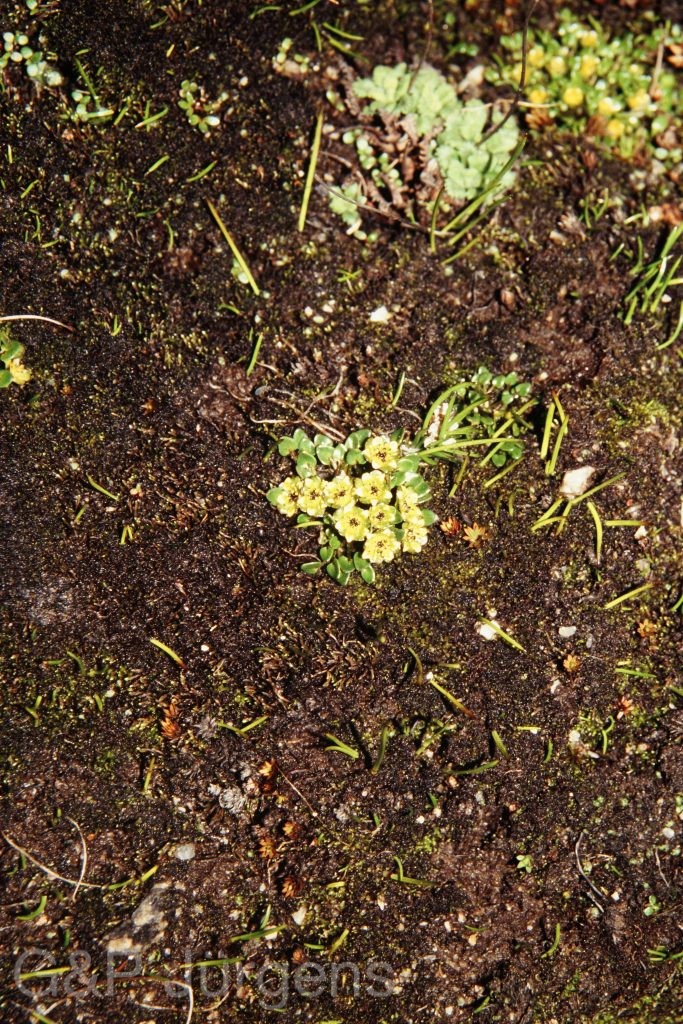
It is a small, glabrous perennial herb arising from a short rootstock, forming a basal rosette from which slender, single-flowered scapes emerge. The basal leaves are long-petiolate with ovate to cordate blades, while each flowering stem bears a single sessile, clasping cauline leaf below the flower. The solitary flower is regular and pentamerous, with five free white petals that are conspicuously veined. Characteristic of the genus, alternating with the fertile stamens are five fringed staminodes, each dissected into gland-tipped filaments that serve as pseudonectaries to attract pollinators. The superior ovary develops into a capsule that splits to release numerous small seeds.

Despite its placement here under Celastraceae, Parnassia is morphologically distinctive, and the family circumscription reflects modern molecular treatments that subsume the former Parnassiaceae within an enlarged Celastraceae. The elaborate gland-tipped staminodes are a notable adaptation for insect pollination, offering visual and possibly olfactory rewards without true nectar. As a specialist of high-altitude wetlands, P. pusilla is sensitive to drainage, trampling by livestock and the desiccation of alpine seeps, so it serves as a useful indicator of intact high-mountain mire habitat.

Author: Wall. · Sources: POWO (Kew), GBIF, Flora of China Vol. 8, Flora of Bhutan Vol. 1, Flora of Nepal, Wu Phylogeny and Biogeography of the Genus Parnassia

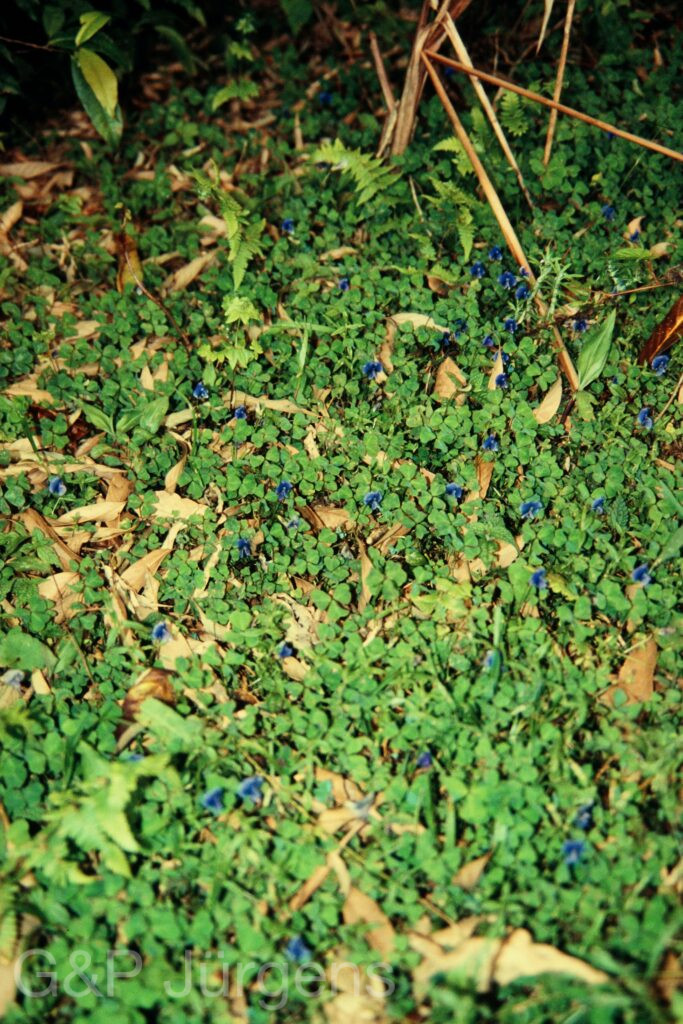
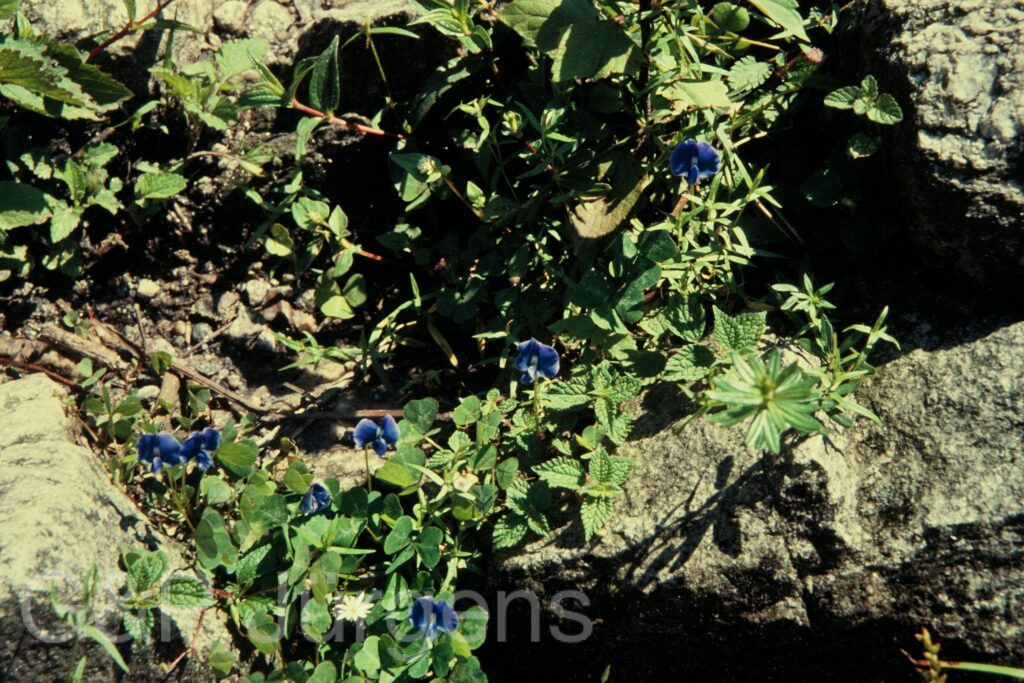
Buch.-Ham. ex D.Don

Nepal 97 497 G979
Nepal Arun-Valley 1750m May
Nepal 97 336 P666
Nepal Arun-Valley 1750m May
Nepal 1994 58 ergebnis
Ost-Nepal Bhalukhob 
1900m April

Description

Parochetus communis, the shamrock pea, is a creeping perennial legume with a remarkably wide Afro-Asian montane distribution. GBIF documents around 1730 occurrences spanning the Himalaya (Nepal, India, Bhutan, China), Southeast Asia (Myanmar, Thailand, Vietnam, Malaysia, Indonesia, Sri Lanka), the East African highlands (Ethiopia, Kenya, Tanzania, Uganda, Rwanda, Burundi, DR Congo, Malawi) and naturalised in New Zealand. It grows in moist grassland, forest clearings, streambanks, terrace edges and shaded turf, generally between 1500 and 3000 m. The photographed plants are from eastern Nepal at Bhalukhob (1900 m, April) and the Arun Valley (1750 m, May), where it carpets damp banks in spring.

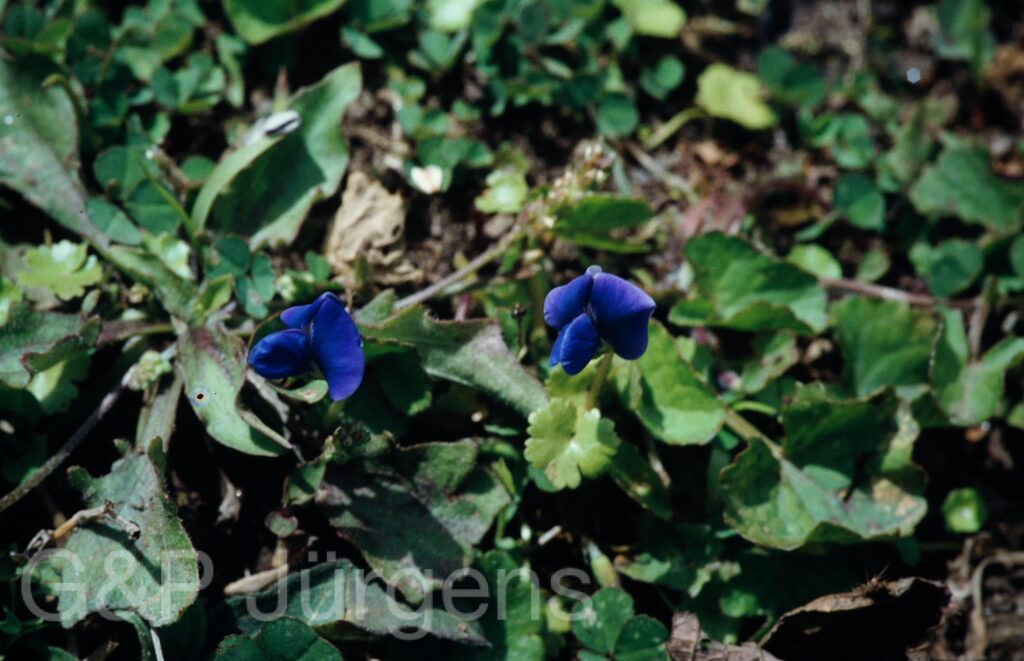
The plant forms prostrate, rooting stems that spread into loose mats and root at the nodes. The leaves are trifoliolate and clover-like, the obcordate leaflets often marked with a darker band, borne on slender petioles with small stipules. The flowers are solitary or paired in the leaf axils, papilionaceous with a standard, wing and keel; the corolla is a vivid cobalt to gentian-blue, occasionally with paler markings, exceeding the tubular calyx. The fruit is a slender, linear-oblong legume that dehisces to release several small seeds.

Parochetus (Fabaceae, subfam. Faboideae) is a small genus historically treated as monotypic until the segregation of the African P. africanus, leaving Asian material under P. communis. GBIF treats the name as accepted. Its disjunct, sky-island range across Asian and African mountains makes it a classic subject in studies of tropical-alpine biogeography. Widespread and adaptable, it is of least concern and is also cultivated as an ornamental groundcover.

Author: Buch.-Ham. ex D.Don · Sources: POWO (Kew), GBIF, Flora of China, Annotated Checklist of the Flowering Plants of Nepal, Polhill studies of Papilionoid legumes

W.W.Sm.

Bh09 155 G277
Bhutan Jimilangtso, 4100m June

Description

Paroxygraphis sikkimensis is a rare alpine member of the buttercup family endemic to the Eastern Himalaya, recorded from Nepal, Sikkim and adjacent India, Bhutan and southern Tibet (China), with GBIF documenting only 24 occurrences across NP, IN, BT and CN. It inhabits open alpine turf, moist meadows and damp gravelly slopes near the upper limit of vegetation, generally between about 3800 and 4500 m. The photographed plant was found in Bhutan near Jimilangtso (Jimilang Tsho) at around 4100 m, flowering in June at the start of the brief alpine growing season.

The plant is a small, low perennial herb forming a basal rosette of leaves from a slender rootstock, with short, few-flowered stems. The leaves are simple, spathulate to obovate, entire or shallowly toothed toward the apex, and somewhat fleshy. The flowers are solitary or few, with a calyx of sepals and a corolla of small white to yellowish petals each bearing a basal nectary, surrounding numerous free stamens and an apocarpous gynoecium of many separate carpels. The fruit is a head of achenes, each tipped with a short style, in the manner of the closely allied genus Ranunculus.

Paroxygraphis is a small, segregate genus erected by W.W. Smith and traditionally placed near Oxygraphis and Ranunculus within the Ranunculeae; molecular studies have prompted discussion of its relationships and possible inclusion in a broadly circumscribed Ranunculus. Its very restricted range, low number of recorded occurrences and specialised high-alpine habitat make P. sikkimensis a taxon of biogeographic interest and potential conservation concern, though it has not been formally assessed.

Author: W.W.Sm. · Sources: POWO (Kew), GBIF, Flora of Bhutan, Annotated Checklist of the Flowering Plants of Nepal, Flora of China (Ranunculaceae)

L.

Bhutan2015 523
Bhutan Wangdi 1800m, October

Description

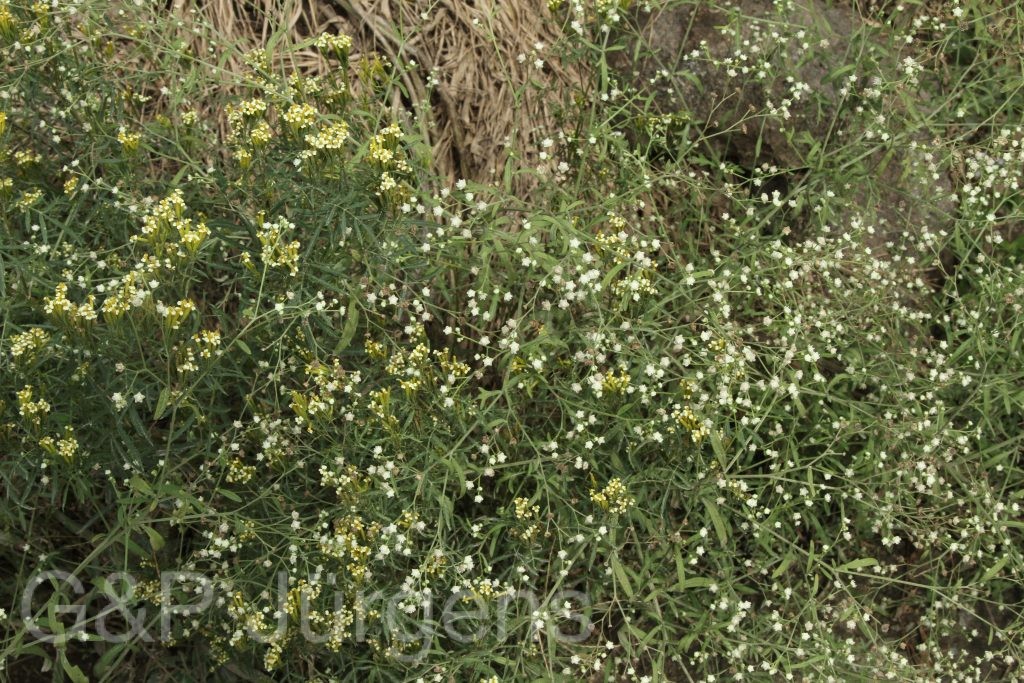
Parthenium hysterophorus is a neotropical annual of Central American and Caribbean origin that has become one of the world's most aggressive invasive weeds, GBIF recording nearly 39,000 occurrences spanning the Americas, Africa, the Middle East, South Asia and Australasia. It colonises waste ground, roadsides, overgrazed pasture, field margins and other disturbed, open habitats from the lowlands to mid-elevations, thriving on a wide range of soils. In the Eastern Himalaya it has spread along valley roads and settlements, the figured plant from Wangdi in central Bhutan at about 1800 m, photographed in October, documenting its ongoing upward and eastward expansion into mountain agricultural landscapes.

It is an erect, much-branched annual herb with longitudinally grooved, pubescent stems. The lower leaves are deeply bipinnatisect and form a basal rosette, while the upper leaves become smaller and less divided; all are softly hairy and bear glandular trichomes. The numerous small, whitish capitula are arranged in lax terminal panicles, each head containing five short, female ray florets and many functionally male disc florets. The involucre is shallow with two series of phyllaries. At maturity each ray achene falls together with two adjacent sterile disc florets and subtending bracts as a wedge-shaped dispersal unit bearing two small scale-like pappus elements.

A member of tribe Heliantheae, Parthenium hysterophorus is notorious for its prolific seed output, allelopathic suppression of neighbouring vegetation, and production of the sesquiterpene lactone parthenin, which causes contact dermatitis and respiratory allergy in humans and is toxic to livestock. Its invasion degrades rangeland and crops across the tropics and is the target of biological control using host-specific beetles and rusts. In the Himalayan region it is regarded as a serious emerging threat to biodiversity and pastoral livelihoods rather than a species of conservation concern.

Author: L. · Sources: POWO (Kew), GBIF, Flora of Bhutan, Flora of China, CABI Invasive Species Compendium, Navie's monograph of Parthenium hysterophorus

Sims

Bh2008 493 G762
Bhutan Samtengang, 2200m April

Description

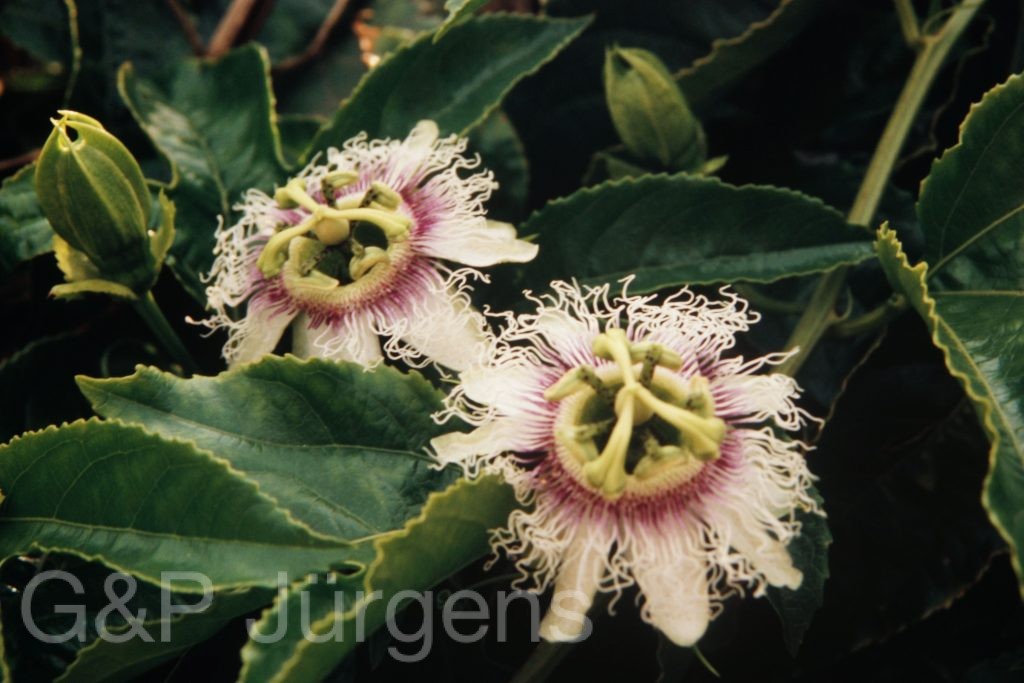
Passiflora edulis, the passion fruit, is a climbing vine native to subtropical South America (its core GBIF records cluster in Brazil, Argentina, Colombia, Ecuador and Peru) but now pantropically cultivated and naturalised, with records spanning Australia, the United States, South Africa, India and China. In the Himalaya it occurs as an introduced and cultivated plant, and the photographed individual from Samtengang in Bhutan at 2200 m, flowering in April, reflects this cultivated status in warm-temperate hill country rather than a native occurrence. It thrives in disturbed ground, hedges, plantation margins and gardens, scrambling over supports in frost-free to mildly temperate conditions.

It is a woody, evergreen, tendril-climbing perennial vine with deeply three-lobed, glossy, serrate leaves bearing axillary tendrils by which it ascends. The solitary, axillary flowers are large and intricate, with five sepals and five petals subtending a conspicuous corona of long, wavy filaments, white above and banded purple toward the base. The androgynophore raises five stamens and a tricarpellate ovary with three styles above the corona, the whole structure famously interpreted as emblematic of the Passion. The fruit is a globose to ovoid berry, purple or yellow at maturity, with a tough leathery rind enclosing numerous arillate seeds in fragrant, juicy, edible pulp.

Passiflora is a large, predominantly Neotropical genus celebrated for its elaborate, often bee-, bird- or bat-pollinated flowers and for hosting specialised heliconiine butterfly larvae on its cyanogenic foliage. P. edulis is one of the most economically important species, grown commercially for its fruit, and exists in distinct purple-fruited and yellow-fruited forms. Vigorous and readily naturalising, it is regarded as a weedy invader in some warm regions, though in the Himalayan context it remains a cultivated introduction.

Author: Sims · Sources: POWO (Kew), GBIF, Flora of China Vol. 13, Flora of Bhutan Vol. 2, Flora of Nepal, Killip's The American Species of Passifloraceae