
L.
Description
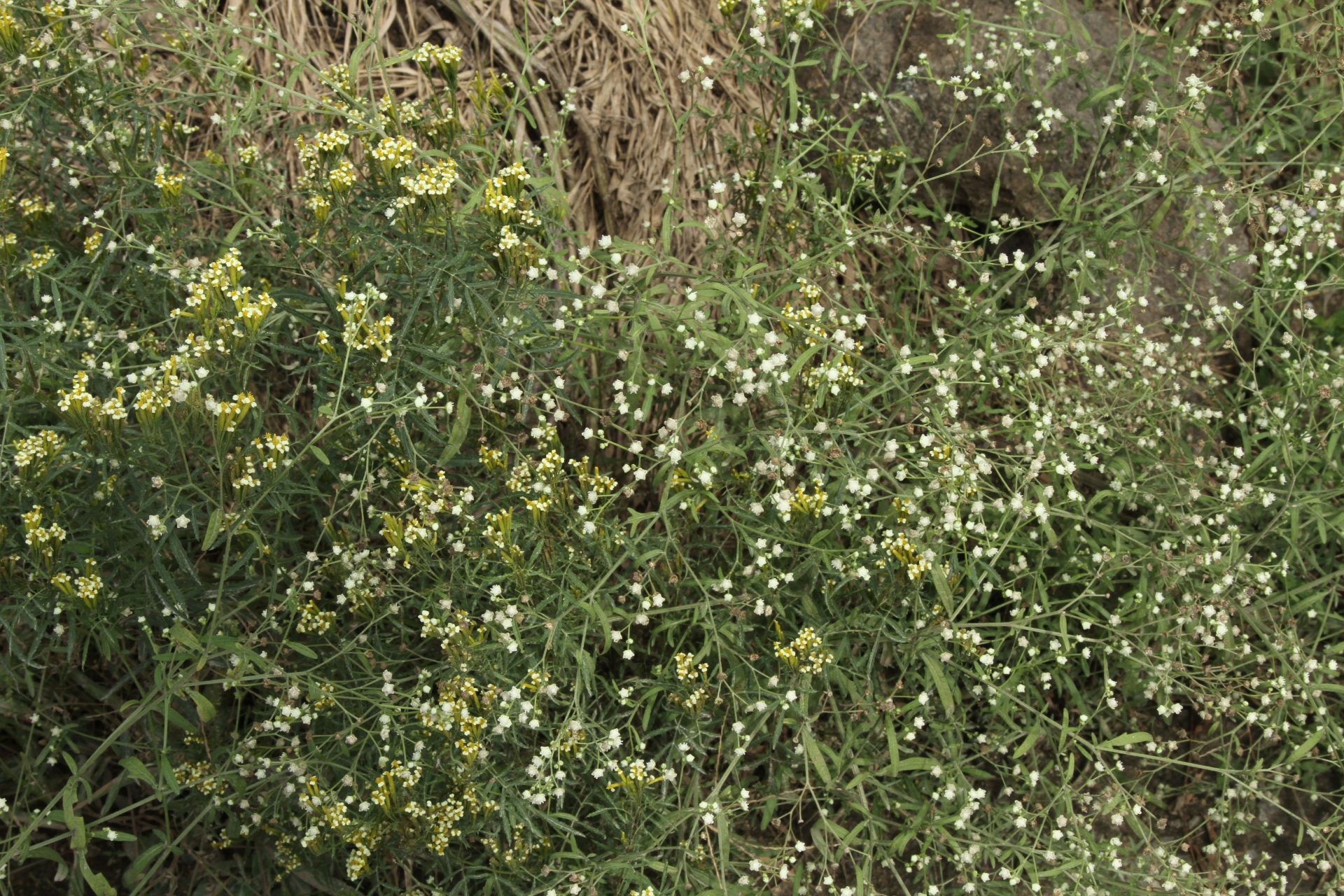
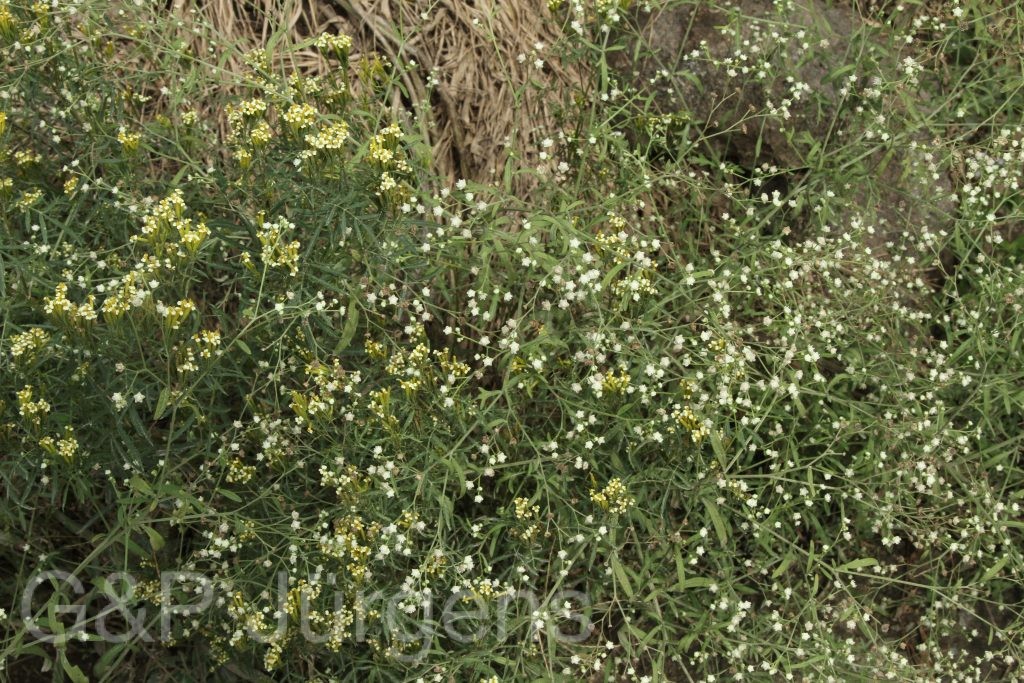
Parthenium hysterophorus is a neotropical annual of Central American and Caribbean origin that has become one of the world's most aggressive invasive weeds, GBIF recording nearly 39,000 occurrences spanning the Americas, Africa, the Middle East, South Asia and Australasia. It colonises waste ground, roadsides, overgrazed pasture, field margins and other disturbed, open habitats from the lowlands to mid-elevations, thriving on a wide range of soils. In the Eastern Himalaya it has spread along valley roads and settlements, the figured plant from Wangdi in central Bhutan at about 1800 m, photographed in October, documenting its ongoing upward and eastward expansion into mountain agricultural landscapes.
It is an erect, much-branched annual herb with longitudinally grooved, pubescent stems. The lower leaves are deeply bipinnatisect and form a basal rosette, while the upper leaves become smaller and less divided; all are softly hairy and bear glandular trichomes. The numerous small, whitish capitula are arranged in lax terminal panicles, each head containing five short, female ray florets and many functionally male disc florets. The involucre is shallow with two series of phyllaries. At maturity each ray achene falls together with two adjacent sterile disc florets and subtending bracts as a wedge-shaped dispersal unit bearing two small scale-like pappus elements.
A member of tribe Heliantheae, Parthenium hysterophorus is notorious for its prolific seed output, allelopathic suppression of neighbouring vegetation, and production of the sesquiterpene lactone parthenin, which causes contact dermatitis and respiratory allergy in humans and is toxic to livestock. Its invasion degrades rangeland and crops across the tropics and is the target of biological control using host-specific beetles and rusts. In the Himalayan region it is regarded as a serious emerging threat to biodiversity and pastoral livelihoods rather than a species of conservation concern.
Author: L. · Sources: POWO (Kew), GBIF, Flora of Bhutan, Flora of China, CABI Invasive Species Compendium, Navie's monograph of Parthenium hysterophorus