Tag:

Nepal

Flowers of Nepal — 1313 wild plant species documented from the Nepalese Himalaya, from subtropical foothills to high alpine meadows above 4,000 m. Nepal’s dramatic elevation gradient makes it one of the richest botanical regions on Earth, home to rhododendrons, primulas, gentians and the famed blue poppies (Meconopsis). Every entry gives a botanical description, native distribution, habitat and flowering season, alongside the original field photograph and the location where it was taken.

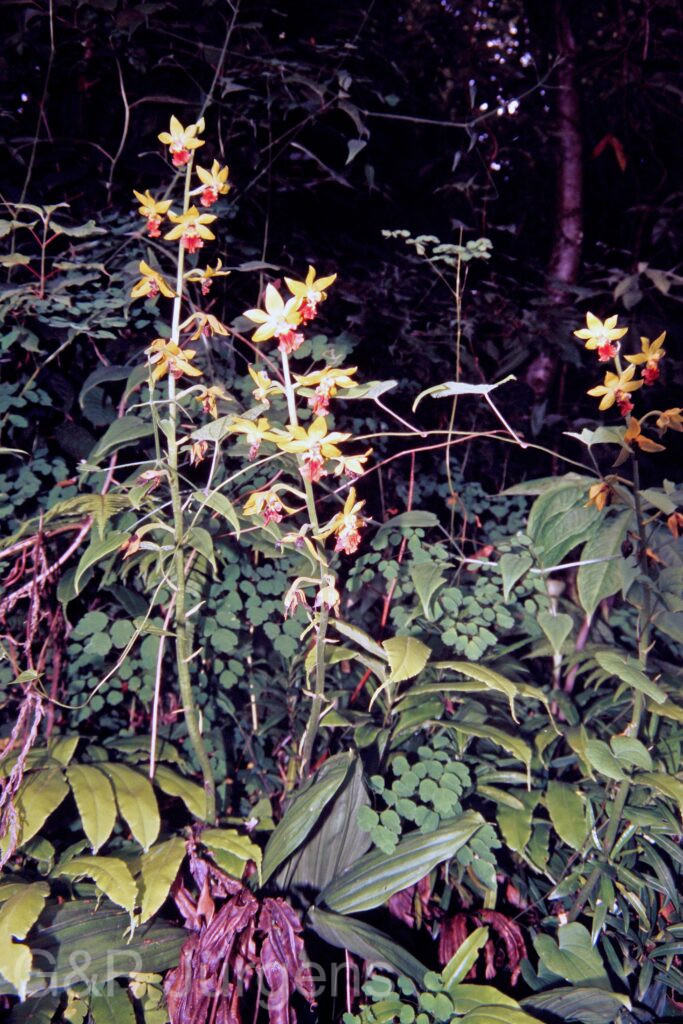
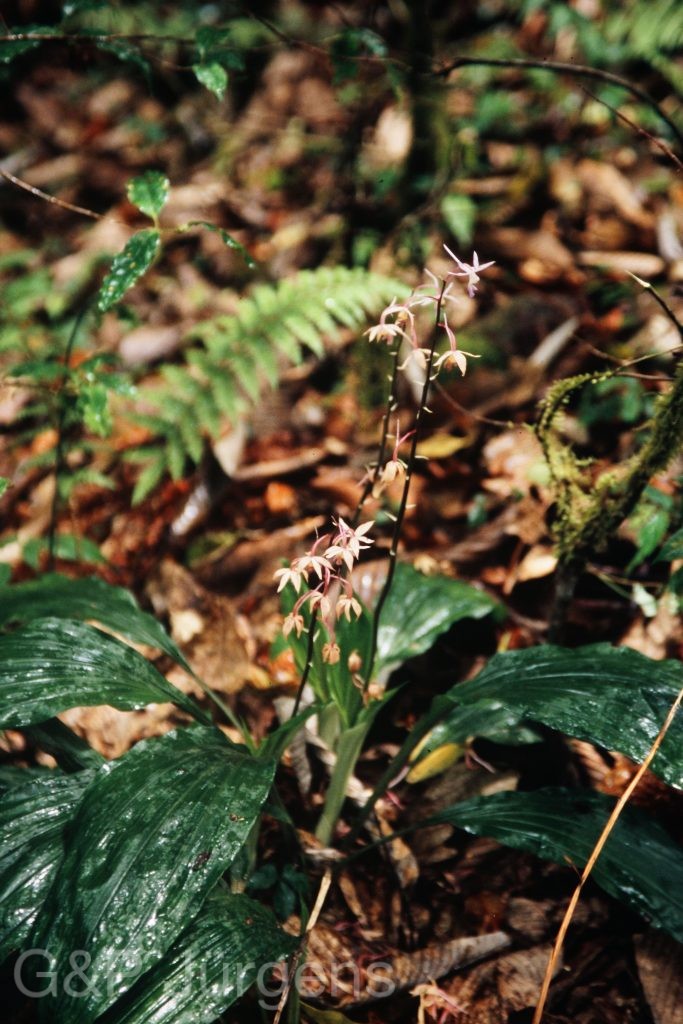
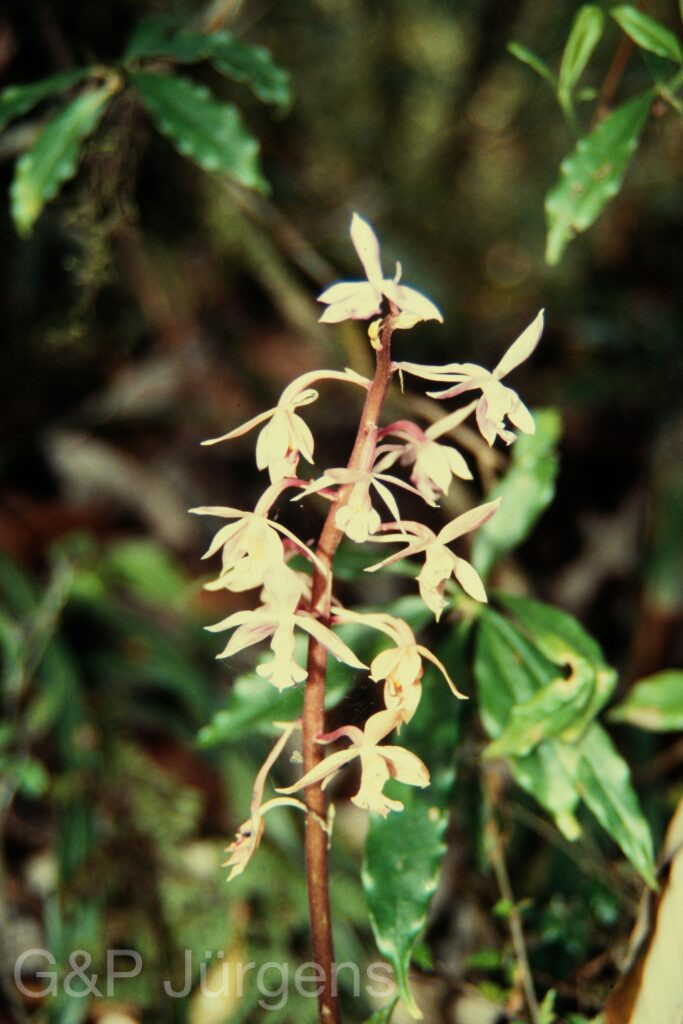
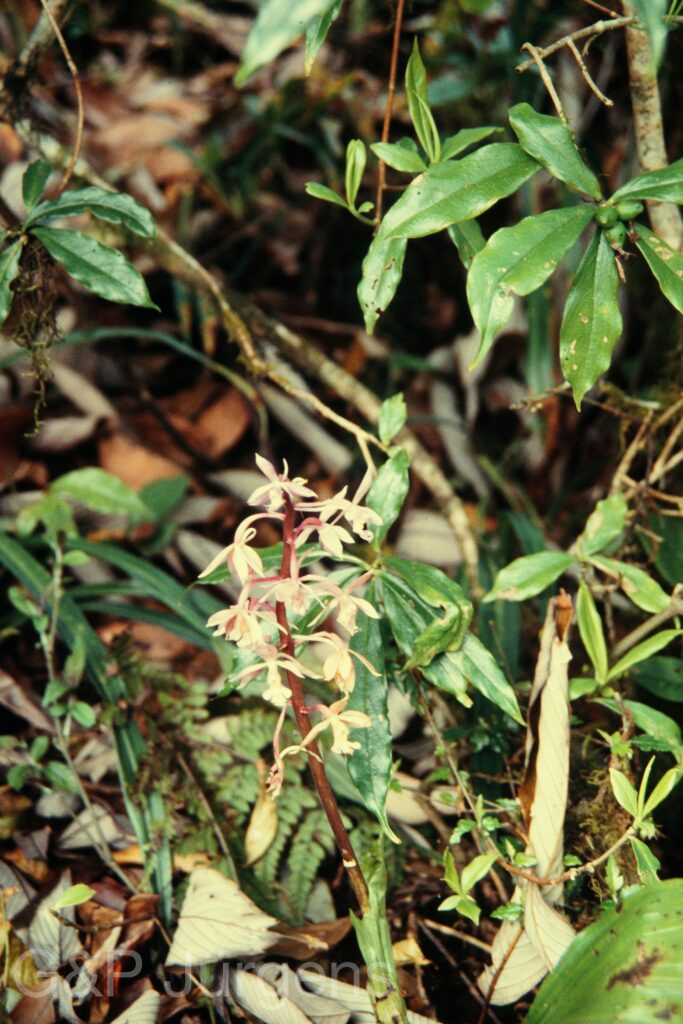
Lindl.

Bh2008 531 P809 1
Bhutan Chongsakha, 1900m April

Description

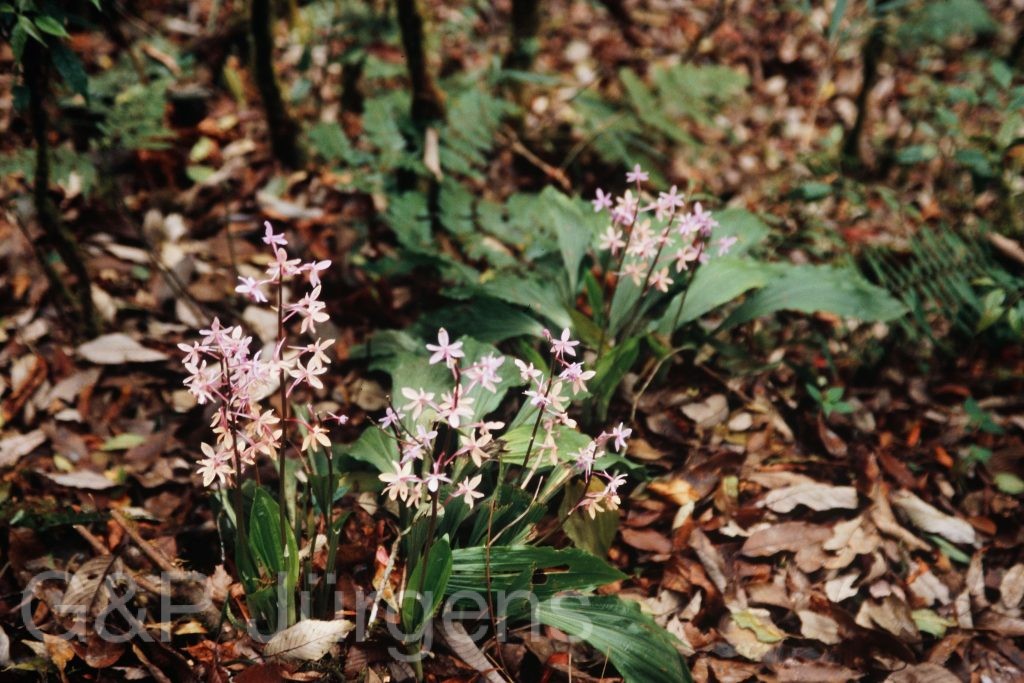
Calanthe plantaginea is one of the most widespread and conspicuous terrestrial orchids of the Himalayan montane forest zone. Its range extends from Pakistan through the entire Himalayan arc (Nepal, India, Bhutan) into Myanmar and southern China. GBIF documents over 110 occurrences. The species grows in the understory of broadleaved and mixed forests, in moist leaf litter and humus, at elevations of 1,000–3,000 m.

The plant produces reduced pseudobulbs hidden by persistent leaf sheaths. Leaves are 3–5, large, broadly elliptic, 15–40 cm long, prominently plicate, resembling plantain leaves — hence the epithet 'plantaginea'. The inflorescence is a stout, erect raceme 20–40 cm tall, bearing 10–20 showy flowers. Flowers are 3–4 cm across, the largest among Himalayan Calanthe, and range from pale pink to deep rose-pink, occasionally white. The lip is trilobed, the mid-lobe deeply bifid, with a prominent callus of 3–5 raised, yellow lamellae. The spur is slender, 1.5–2 cm long. Flowering occurs from March to May, typically before full canopy closure.

Calanthe plantaginea is arguably the most recognisable spring-flowering orchid in the Himalayan mid-altitude forests. Its large, brightly coloured flowers and broad leaves make it conspicuous even to non-specialists. It is often the first orchid to flower in the understory after winter.

Author: Lindl. · Sources: POWO (Kew), Flora of Bhutan Vol. 3, Flora of Nepal Checklist, GBIF, Pearce & Cribb: The Orchids of Bhutan (2002)
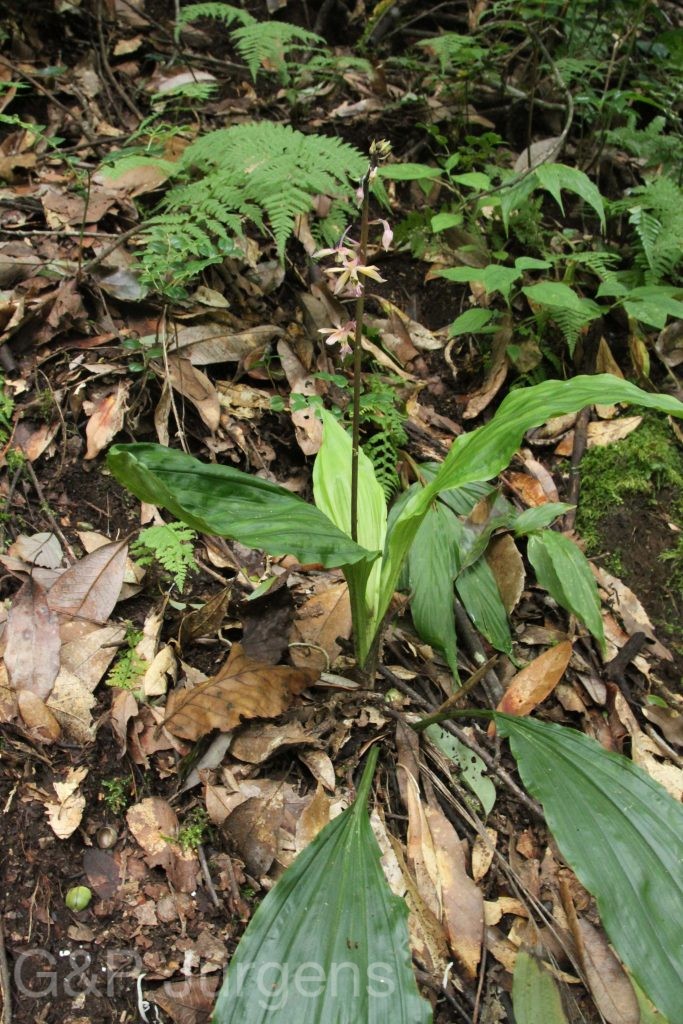
Lindl.

Bhutan2012 448
Bhutan Wangdi 2500m, September

Description

Calanthe sylvatica is a terrestrial orchid with one of the widest distributions in the genus, spanning from tropical and subtropical Africa (East Africa, Madagascar, Réunion, Comoros) to South and Southeast Asia (India, Bhutan, Nepal, Myanmar, China, Thailand, Vietnam). This pantropical range is reflected in GBIF's over 2,700 documented occurrences. In the Himalayas, it grows in the understory of humid broadleaved forests at 500–2,800 m elevation.

The plant is an evergreen species with inconspicuous pseudobulbs concealed by leaf sheaths. Leaves are 3–5, elliptic-lanceolate, 20–40 cm long, plicate, dark green. The inflorescence is an erect raceme 30–60 cm tall, bearing 10–30 flowers. Flowers are 2.5–3.5 cm across, typically deep violet to lilac-purple, though colour varies across the vast range from white to pink to deep purple. The lip is trilobed with a violet mid-lobe and a yellow callus with raised lamellae. The spur is slender, 1.5–2.5 cm long. In the Himalayas, flowering occurs from August to October.

The remarkable biogeographical range of Calanthe sylvatica — bridging Africa and Asia — has made it a subject of interest in orchid phylogeography. The Himalayan populations belong to the Asian lineage, and some taxonomists treat them as a distinct variety or subspecies. The species is adaptable and locally common in suitable habitats.

Author: Lindl. · Sources: POWO (Kew), Flora of Bhutan Vol. 3, GBIF, Cribb & Hermans: Field Guide to the Orchids of Madagascar (2009)

Lindl.

Bh09 214 G369
Bhutan Dochu-La, 3000m June
Bh09 215 G361
Bhutan Dochu-La, 3000m June
Nepal 99 190 ergebnis
West-Nepal Lara-Lake 3000m, June
Garh 07 91 ergebnis
India Garhwal Trijugi Narayan 2500m, June

Description

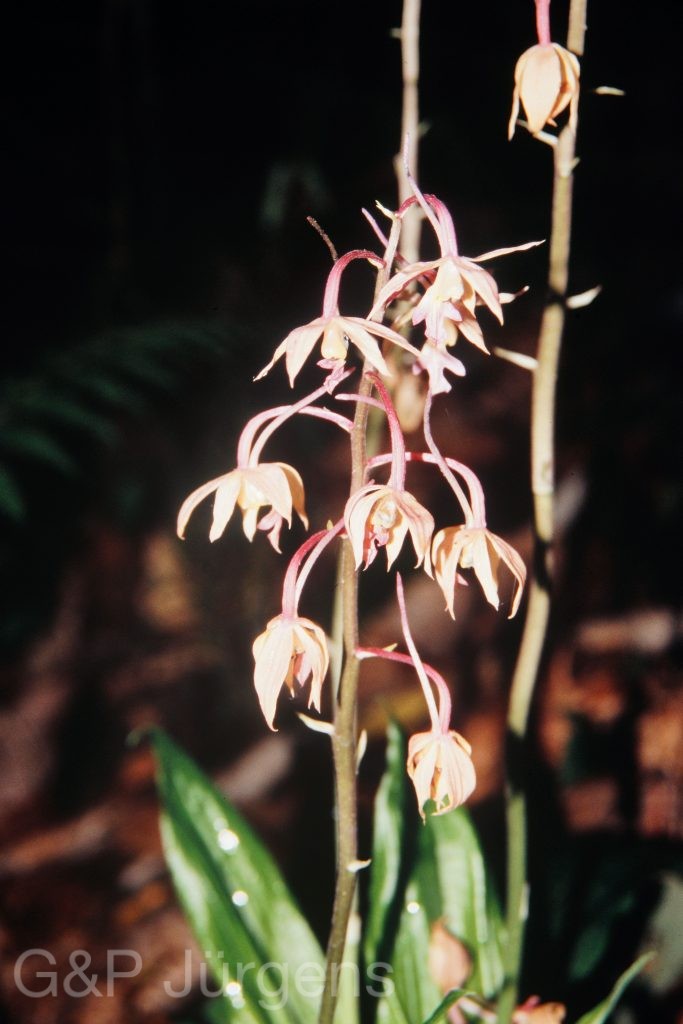
Calanthe tricarinata is a distinctive terrestrial orchid widely distributed from the western Himalayas (Pakistan, northwest India) through Nepal, Bhutan, and Myanmar to China, Taiwan, and Japan. With over 1,000 documented GBIF occurrences, it is one of the better-known Himalayan Calanthe species. It inhabits cool, moist montane forests and subalpine Rhododendron scrub at 1,500–3,500 m elevation.

The plant is an evergreen species with short, stout pseudobulbs. Leaves are 3–5, broadly elliptic, 20–35 cm long, plicate, and persist through winter. The inflorescence is an erect raceme 25–40 cm tall, bearing 8–15 flowers. The flowers are unmistakable: 3–4 cm across, with olive-green to yellowish-green sepals and petals, contrasting strikingly with the large, pendent, reddish-brown to maroon lip. The lip is deeply trilobed, the mid-lobe bifid, with three prominent parallel keels (carinae) on the disc — the diagnostic feature reflected in the name 'tricarinata'. The spur is short, 5–8 mm. Flowering occurs from May to July.

Calanthe tricarinata is readily identified by its unique green-and-brown colour combination, unlike any other Himalayan orchid. The species was photographed at the Dochu-La pass (3,000 m) in Bhutan, also recorded from the Lara Lake area of western Nepal and Garhwal (India) — documenting its broad Himalayan distribution.

Author: Lindl. · Sources: POWO (Kew), Flora of Bhutan Vol. 3, Flora of Nepal Checklist, GBIF, Pearce & Cribb: The Orchids of Bhutan (2002)

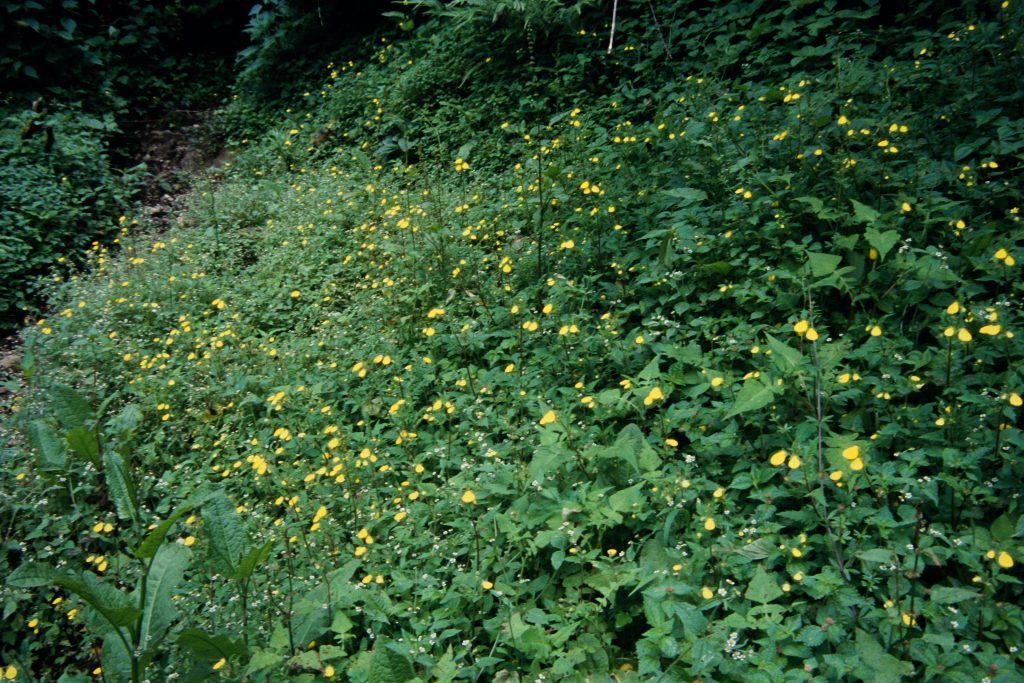
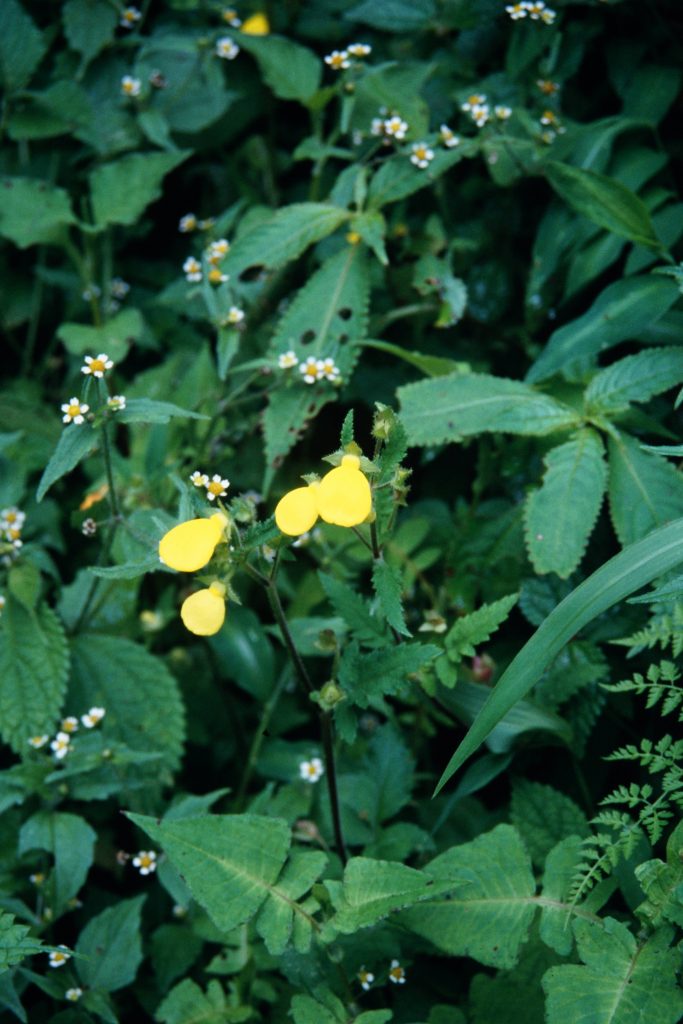
Ruiz & Pav.

Sikkim2003 57 G76 ergebnis
Sikkim above Yoksam 2750m 08.2003
Sikkim2003 58 P78 ergebnis
Sikkim above Yoksam 2750m 08.2003

Description

Calceolaria tripartita is a Neotropical annual herb native to the Andean region of South and Central America, its GBIF distribution centred on Ecuador, Peru, Bolivia, Colombia, Brazil and adjacent countries, but it has become a widespread weed of warm-temperate uplands and is now naturalised in New Zealand, Australia, Sri Lanka, Indonesia and parts of the Himalaya. It colonises moist, disturbed ground, streamsides, cultivated land, ditches and roadside banks. The photographed plant from above Yoksam in Sikkim at around 2750 m, recorded in August, documents this naturalised Himalayan occurrence, where the monsoon-moistened, disturbed montane habitat closely mirrors its native ecology.

The plant is a slender, erect, glandular-pubescent annual with branched, somewhat succulent stems. The leaves are opposite, the lower often pinnately three-parted (whence tripartita) into toothed segments, the upper smaller. The flowers are borne in lax terminal cymes and display the distinctive Calceolaria form: a strongly two-lipped, yellow, slipper- or pouch-shaped corolla, the small upper lip and the inflated, saccate lower lip enclosing the two stamens. The fruit is an ovoid, septicidal capsule releasing abundant minute, reticulate seeds well suited to wind and water dispersal.

The genus, the slipperworts, is now placed in its own family Calceolariaceae, formerly within the Scrophulariaceae. The pouched corolla is associated with specialised oil-collecting bee pollination in its native Andean range. As an aggressive colonist of disturbed ground, C. tripartita exemplifies a Neotropical weed that has crossed into Old World mountain systems through human agency; it is of no conservation concern and is, rather, regarded locally as an invasive.

Author: Ruiz & Pav. · Sources: POWO (Kew), GBIF, Flora of China Vol. 18, Flora of Nepal, A Revision of the Genus Calceolaria (Calceolariaceae), Flora of Ecuador

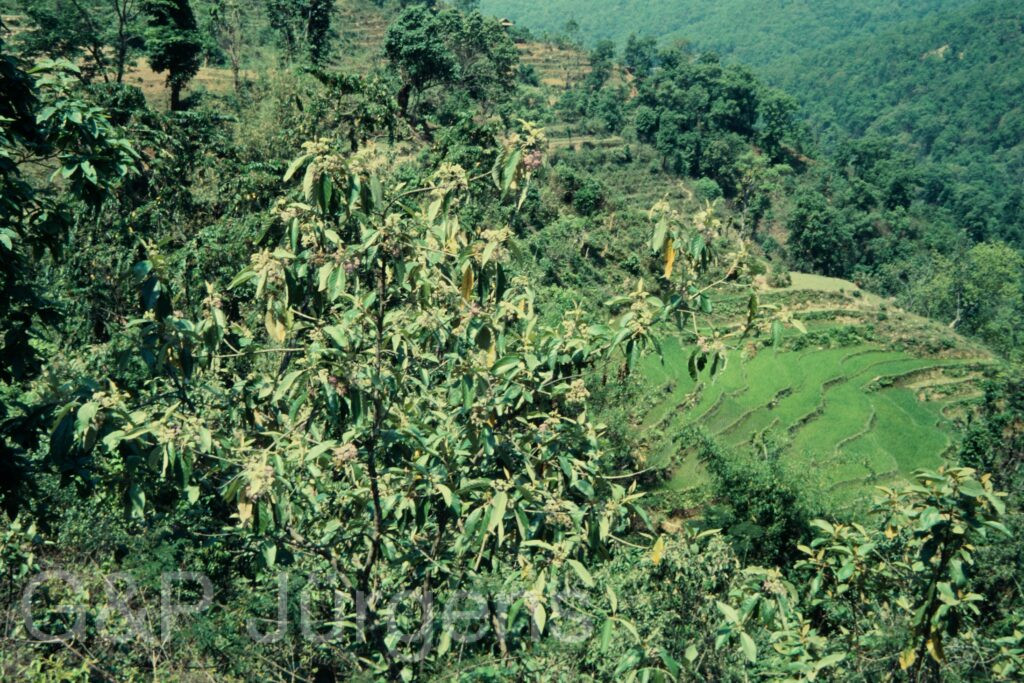
Roxb.

Nepal 97 566 P1099
Nepal Sabha-Khola 550m May
Nepal 97 567 P1100
Nepal Sabha-Khola 550m May

Description

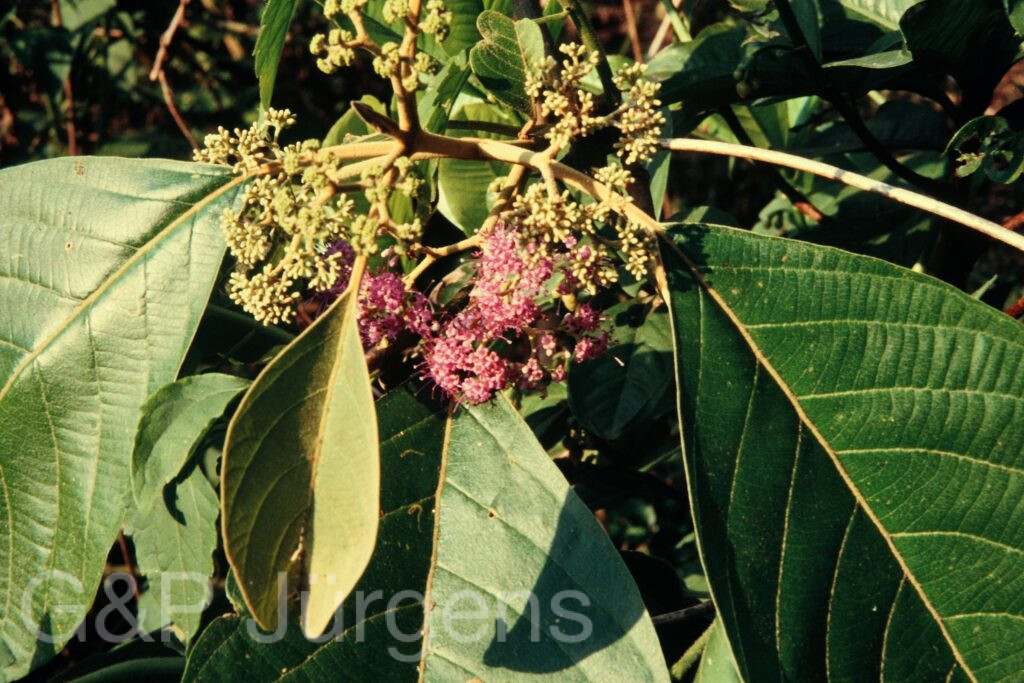
Callicarpa arborea is a tree of the Indo-Malesian tropics, distributed from the Himalayan foothills of Nepal, India, Bhutan and Bangladesh through Myanmar, Thailand, Indochina and southern China to the Malay Peninsula, the Indonesian archipelago, the Philippines and New Guinea; GBIF records nearly 1,200 occurrences. It is a characteristic component of secondary and disturbed lowland and lower-montane forest, forest margins and regrowth on cleared land, generally from near sea level to about 1,500 m. The plant photographed along the Sabha Khola in eastern Nepal at 550 m in May illustrates its occurrence in warm, humid subtropical foothill forest at the western limit of its range.

It is a small to medium-sized evergreen tree reaching 5-15 m, with young branchlets, petioles and inflorescences densely covered in a stellate, rusty- to grey-tomentose indumentum. The leaves are large, opposite, elliptic to oblong-lanceolate, 12-25 cm long, acuminate and entire, dark green and glabrescent above but conspicuously whitish- or brownish-tomentose beneath. The flowers are small and numerous, borne in dense, branched axillary cymes; the corolla is pinkish to purple, tubular with four short spreading lobes, and the four stamens are exserted. The fruit is a small globose drupe, ripening purplish to black and crowned by the persistent calyx, containing four pyrenes.

Callicarpa (now placed in Lamiaceae following the dismemberment of the traditional Verbenaceae) comprises some 140 species of pantropical and warm-temperate shrubs and trees, of which C. arborea is one of the largest and most arborescent. Its abundant insect-pollinated flowers and bird-dispersed drupes make it an effective coloniser of disturbed ground, and it is frequently encountered in successional forest. The tomentose foliage and bark have a long history of local medicinal and minor timber use across South and Southeast Asia. Widespread, common and ecologically adaptable, it is not regarded as threatened.

Author: Roxb. · Sources: POWO (Kew), GBIF, Flora of China, Flora of Bhutan, Annotated Checklist of the Flowering Plants of Nepal, revision of Callicarpa (Lamiaceae)

Hook.f. & Thomson

BhutanPG2011 448
Bhutan Ludlow-Sherriff-Trail Warrtlang-La, 4500m June
Sikkim2003 105 P143
Sikkim below Dzongri 3850m 08.2003
Nepal 2001 312 ergebnis ergebnis
Nepal (Gorkha) Kharka 3100m, May

Description

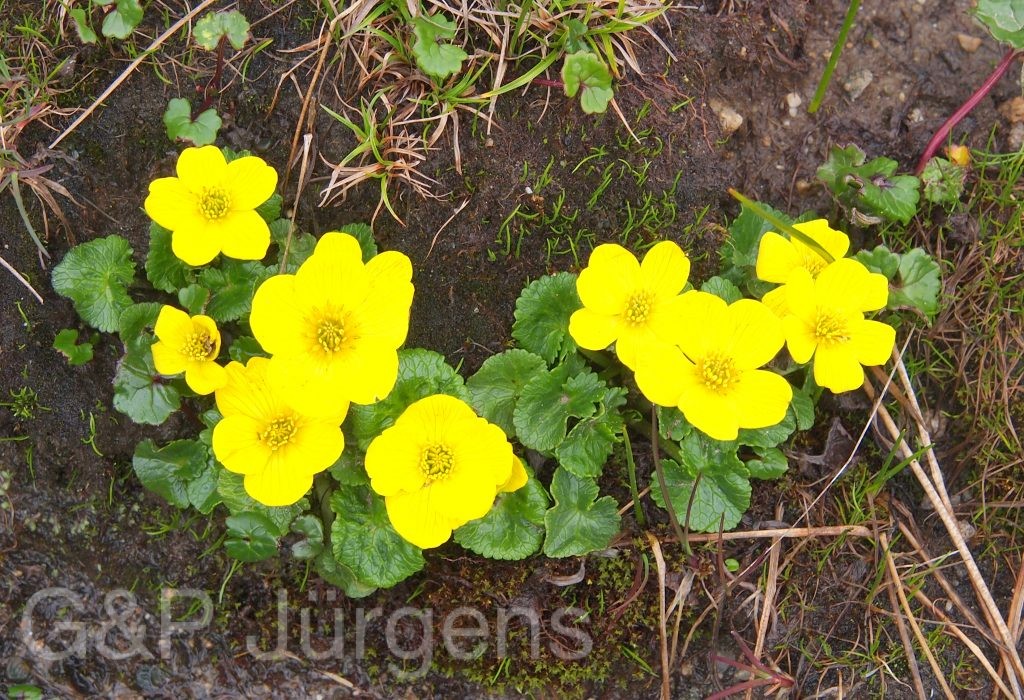
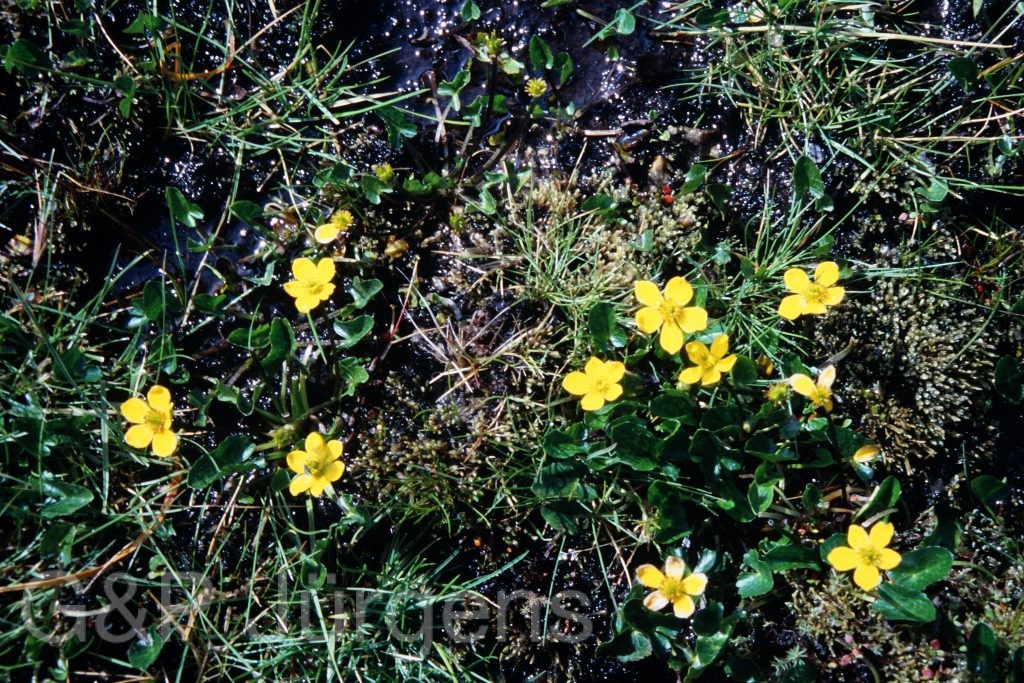
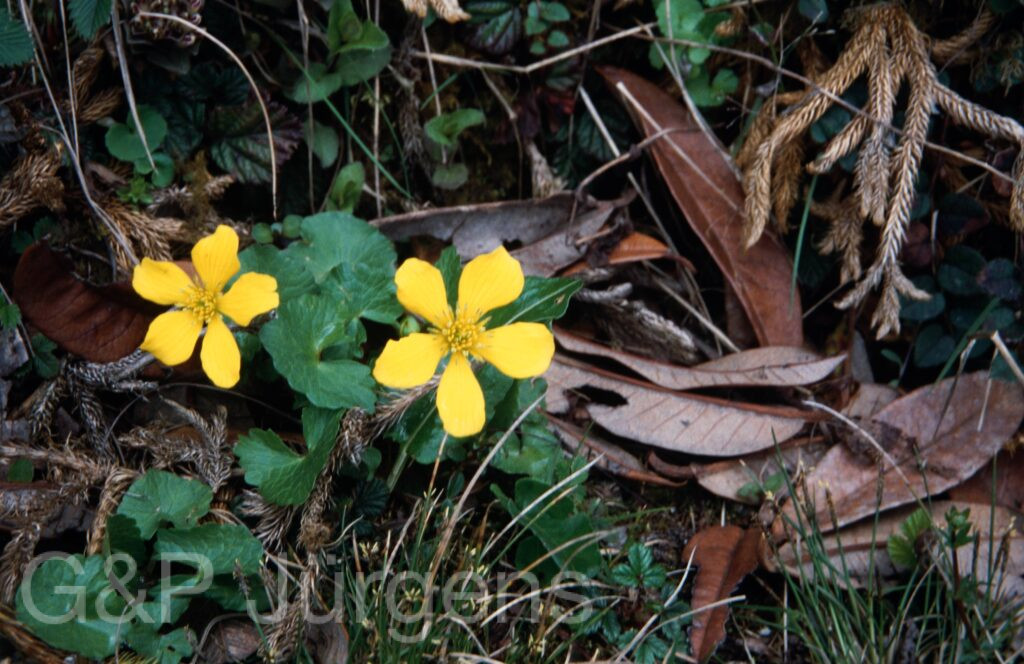
Caltha scaposa is a high-alpine marsh marigold of the Sino-Himalayan region, with records from China, India, Nepal, Bhutan and Myanmar and disjunct documentation in Korea and Mongolia; GBIF aggregates over 1,000 occurrences. It is a plant of wet alpine turf, snowmelt flushes, streamsides and moist gravelly meadows, typically between roughly 3,100 and 4,500 m. The collections illustrated span this gradient, from Warrtlang-La on the Ludlow-Sherriff trail in Bhutan at about 4,500 m in June, to the slopes below Dzongri in Sikkim near 3,850 m, and a comparatively low Gorkha station in Nepal at 3,100 m in May, where it flowers as the snow recedes.

It is a small, glabrous, somewhat fleshy perennial herb arising from a short, fibrous-rooted rhizome. The leaves are largely basal and long-petiolate, with cordate to reniform-orbicular blades bearing crenate margins and a deep cordate sinus. The flowering stem is scapose, as the epithet indicates, usually leafless and bearing a solitary terminal flower. The showy perianth consists of five to several petaloid, golden-yellow sepals, true petals being absent; the numerous stamens surround a cluster of free, sessile carpels. The fruit is an aggregate of spreading, beaked follicles dehiscing along the ventral suture.

Within Caltha, the scapose habit and solitary flower distinguish C. scaposa from the leafy-stemmed, multiflowered C. palustris group. As an obligate wetland species of the alpine zone, it indicates permanently moist soils and is pollinated chiefly by flies and early-season insects. Though locally common across a wide range and not presently considered threatened, its dependence on snowmelt hydrology makes populations sensitive to glacial retreat and altered precipitation in a warming Himalaya.

Author: Hook.f. & Thomson · Sources: POWO (Kew), GBIF, Flora of China, Flora of Bhutan, Annotated Checklist of the Flowering Plants of Nepal, Tamura's monograph of Ranunculaceae

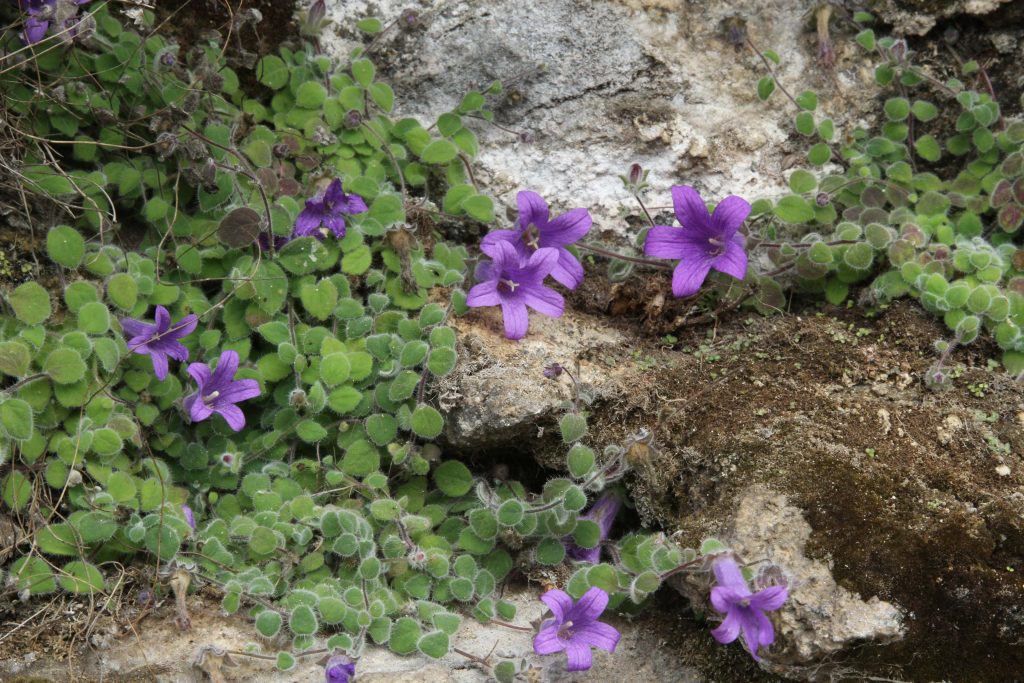
Wall. & DC.

Bhutan2012 269
Bhutan Shele-La, 4100m September

Description

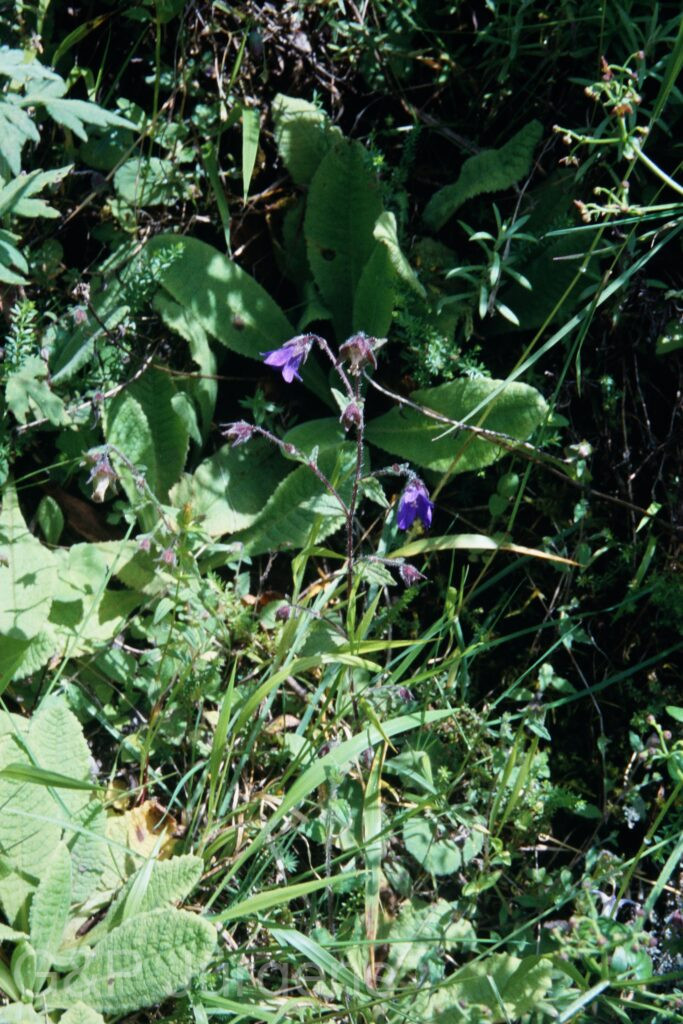
Campanula argyrotricha is a Himalayan bellflower ranging through India, Nepal, Bhutan, Pakistan and southern Tibet (China), with about 90 georeferenced records in GBIF. It is characteristic of the alpine zone, growing on open rocky slopes, screes, cliff ledges, moraine debris and short alpine meadows, generally between about 3500 and 4500 m. The plants illustrated were recorded at the Shele-La in Bhutan at around 4100 m in September, a typical late-season alpine setting where the species flowers as the monsoon recedes.

It is a low, tufted perennial herb whose epithet, meaning silvery-haired, refers to the conspicuous silvery-white indumentum clothing stems and foliage. From a slender rootstock arise several short, ascending or decumbent stems bearing small, ovate to oblong leaves with crenate to entire margins, often crowded near the base. The flowers are solitary or few, nodding to outward-facing, the broadly campanulate corolla blue to pale violet and divided to about the middle into spreading lobes; the calyx lobes are narrow and the whole exterior, including the reflexed appendages between the calyx teeth in related taxa, is silky-hairy. The fruit is a nodding capsule dehiscing by basal pores to shed numerous minute seeds.

Campanula in the Himalaya comprises numerous dwarf, hairy alpine species whose delimitation is often difficult, and C. argyrotricha is distinguished chiefly by its dense silvery vestiture and small nodding blue flowers. Such cushion-like, hairy alpines are well adapted to wind, drought and cold at high elevation. The species has not been formally assessed for conservation, but it appears locally frequent across a broad Himalayan range; like many high-altitude endemics it could be sensitive to grazing pressure and climate-driven upslope movement of vegetation zones.

Author: Wall. & DC. · Sources: POWO (Kew), GBIF, Flora of Bhutan, Flora of China, Annotated Checklist of the Flowering Plants of Nepal, Flora of Pakistan, Lammers Revision of Campanulaceae

Wall.

Nepal 95 392 P693 ergebnis
Nepal Bahanjyang 3800m October
Nepal 95 393 P694 ergebnis
Nepal Bahanjyang 3800m October

Description

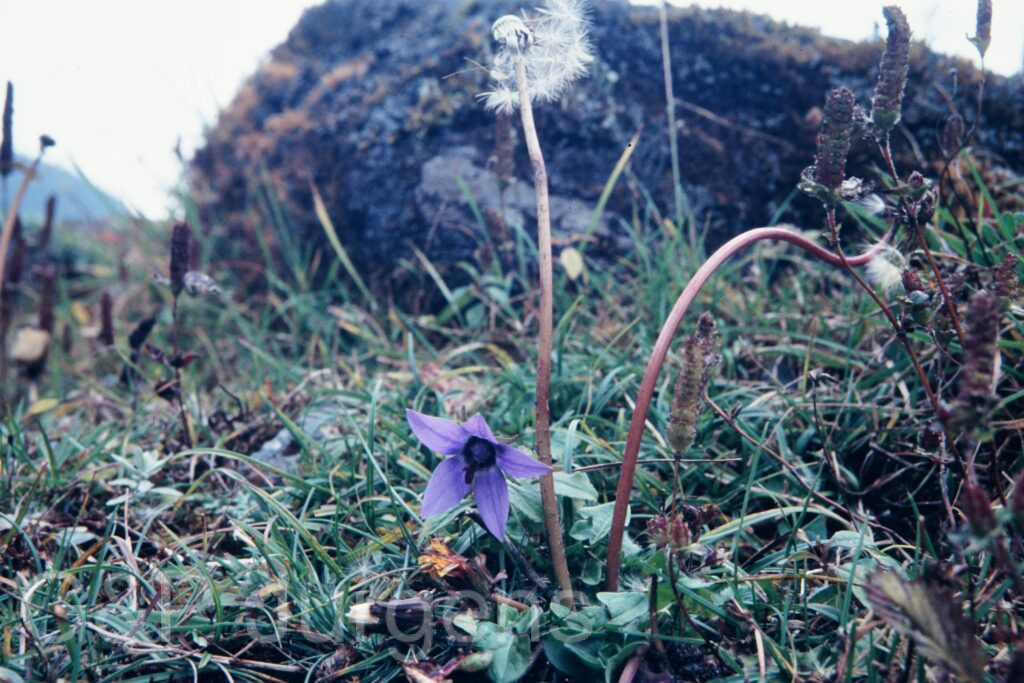
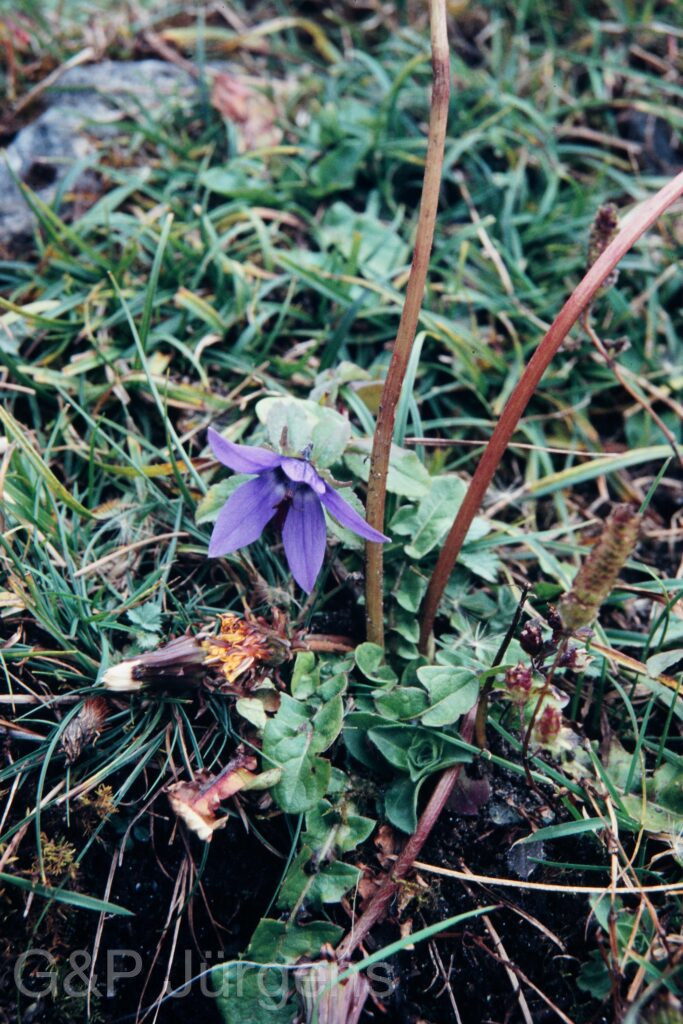
Campanula aristata Wall. is a slender alpine bellflower of the high Himalaya and Tibetan borderlands, ranging across China, India, Nepal, Pakistan and Bhutan, with about 557 occurrences in GBIF. It grows on open stony slopes, alpine turf, rock crevices and gravelly screes, characteristically at high elevations of roughly 3,000-5,000 m. The photographed plant comes from Bahanjyang in Nepal at 3,800 m, recorded in October, consistent with its occupation of the upper alpine zone where flowering and fruiting extend into the late season.

It is a small, slender, erect annual or short-lived perennial herb, typically only a few centimetres to about 20 cm tall, with a basal rosette of linear to oblanceolate leaves and narrow, sessile, entire cauline leaves. The flowers are solitary or few at the stem apex; the calyx is its most distinctive feature, with very long, narrow, awn-like (aristate) lobes that often equal or exceed the corolla, hence the epithet. The corolla is narrowly tubular to campanulate, pale blue to violet, with short erect lobes. The fruit is a capsule dehiscing by basal pores to shed numerous minute seeds.

Campanula (Campanulaceae) is a large, mainly Northern Hemisphere genus, with the Himalayan high-alpine species forming a distinctive group of dwarf, narrow-flowered herbs. C. aristata is readily recognised among them by its conspicuously elongate, bristle-like calyx lobes, an adaptation thought to aid in the wind-exposed alpine setting. Widespread across the Himalayan-Tibetan alpine belt and occupying abundant natural habitat, it is of no conservation concern.

Author: Wall. · Sources: POWO (Kew), GBIF, Flora of China, Flora of Pakistan, Annotated Checklist of the Flowering Plants of Nepal, Hooker Flora of British India, Campanulaceae revisionary studies

Wall.

Bhutan2012 188
Bhutan Haar-Valley, 3300m September
Bhutan2012 313
Bhutan Haar-Valley, 3300m September
Sikkim2003 381 P537
Sikkim Tista valley 3300m August

Description

Campanula pallida is a widespread Asian bellflower with an extensive GBIF record (over 68,000 occurrences) centred on China, India, Nepal, Pakistan, Bhutan and Afghanistan, with numerous further reports across the broader range from Myanmar and Thailand to scattered cultivated and recorded localities elsewhere. It is a plant of open, well-drained ground, frequenting grassy slopes, rocky banks, terrace margins, roadside cuttings and forest clearings in the temperate and subalpine zones, broadly between about 1500 and 3500 m. The plants illustrated from the Haa valley in Bhutan at 3300 m in September and the Tista valley in Sikkim at 3300 m in August reflect its long summer-to-autumn flowering across the eastern Himalaya.

The species is a perennial herb with slender, ascending to decumbent stems bearing scattered hairs and clear latex. The leaves are alternate, ovate to oblong-lanceolate, with a crenate to serrate margin, the lower leaves petiolate and the upper sessile. The flowers are nodding, borne singly or in a loose few-flowered inflorescence; the corolla is broadly campanulate, five-lobed and pale blue to lilac or sometimes whitish, with reflexed appendages between the calyx lobes. The five stamens have dilated filament bases, and the inferior ovary matures into a nodding capsule that dehisces by basal pores to shed numerous small seeds.

Campanula is a large and taxonomically difficult genus, and C. pallida belongs to a complex of variable Himalayan bellflowers in which flower size and indumentum vary geographically. The pendulous, protandrous flowers are pollinated principally by bees, and the pore-dehiscent capsule disperses seed by wind shaking. The species is abundant, ecologically tolerant and frequently associated with semi-disturbed ground, and it is of no conservation concern.

Author: Wall. · Sources: POWO (Kew), GBIF, Flora of China, Flora of Bhutan, Flora of Pakistan, Revision of the Asiatic Campanula (Kolakovsky)

Wall.

Bh2008 504 P773
Bhutan Chongsakha 1800m, May

Description

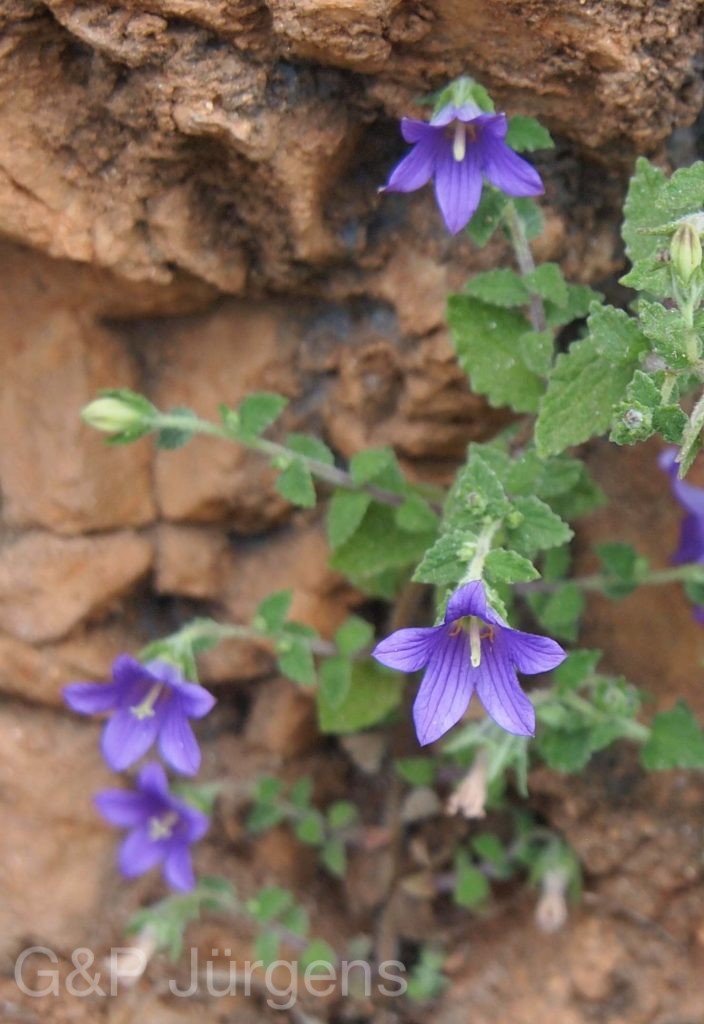
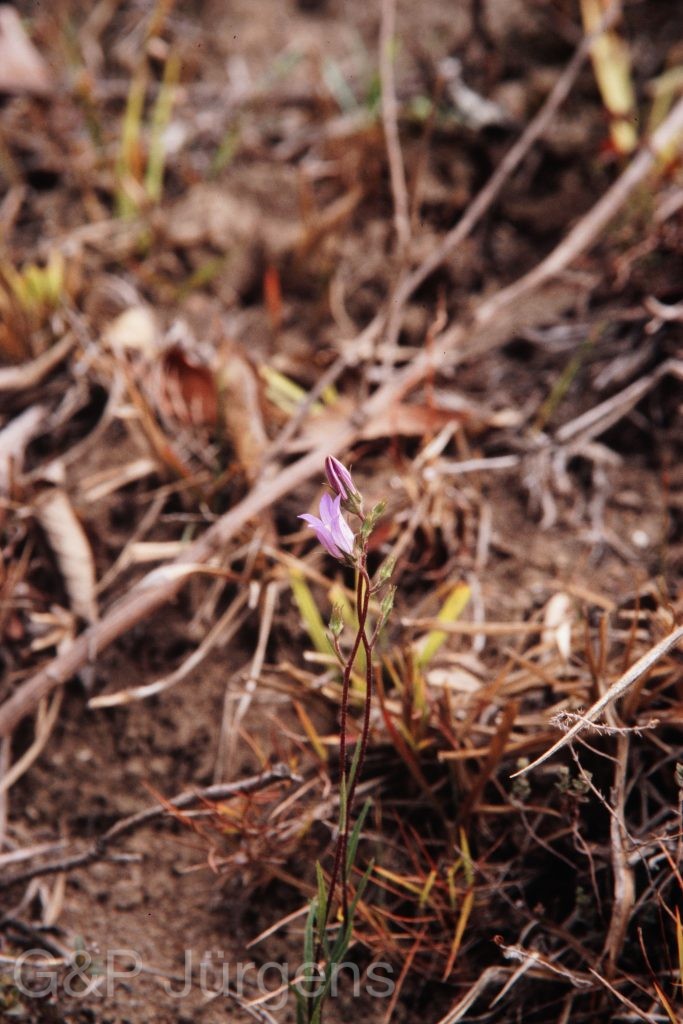
Campanula sylvatica Wall. is a Himalayan bellflower distributed along the temperate ranges from Pakistan and India through Nepal to Bhutan; the GBIF record of about 78 occurrences indicates a moderately frequent but regionally restricted endemic. As its epithet implies, it is a woodland and forest-margin herb of moist, shaded banks, clearings and grassy slopes in broad-leaved and mixed forest, broadly between 1500 and 3000 m. The photographed plant at Chongsakha in western Bhutan at about 1800 m, flowering in May, exemplifies its pre- to early-monsoon anthesis in the cool, humid mid-montane forest of the eastern Himalaya.

The species is an erect to ascending perennial or biennial herb with simple or sparingly branched, slender stems that are usually hispid or scabrid with stiff hairs. The leaves are alternate, ovate to lanceolate, toothed or crenate-serrate and shortly petiolate below, becoming sessile upward. The flowers are borne in a lax, leafy raceme or panicle, each nodding on a slender pedicel; the corolla is broadly campanulate, blue to violet-blue, divided to about a third into five spreading lobes, with a five-lobed calyx whose sinuses often bear reflexed appendages. The five stamens have dilated filament bases, and the inferior ovary ripens into a nodding capsule dehiscing by basal or lateral pores.

Campanula is a large, predominantly Holarctic genus, the Himalayan species forming a distinctive subtropical-to-temperate Asian element; C. sylvatica is recognised by its hispid stems and lax woodland inflorescence. It is taxonomically close to other Himalayan campanulas and has at times been confused in herbaria with allied forest taxa. As a fairly widespread endemic of relatively undisturbed forest, it is not formally assessed but may be locally affected by forest clearance; it has occasional value in rock and woodland gardens.

Author: Wall. · Sources: POWO (Kew), GBIF, Flora of Pakistan, Flora of Bhutan, Annotated Checklist of the Flowering Plants of Nepal, Lammers — World checklist and bibliography of Campanulaceae