Tag:

Nepal

Flowers of Nepal — 1313 wild plant species documented from the Nepalese Himalaya, from subtropical foothills to high alpine meadows above 4,000 m. Nepal’s dramatic elevation gradient makes it one of the richest botanical regions on Earth, home to rhododendrons, primulas, gentians and the famed blue poppies (Meconopsis). Every entry gives a botanical description, native distribution, habitat and flowering season, alongside the original field photograph and the location where it was taken.

Stapf.

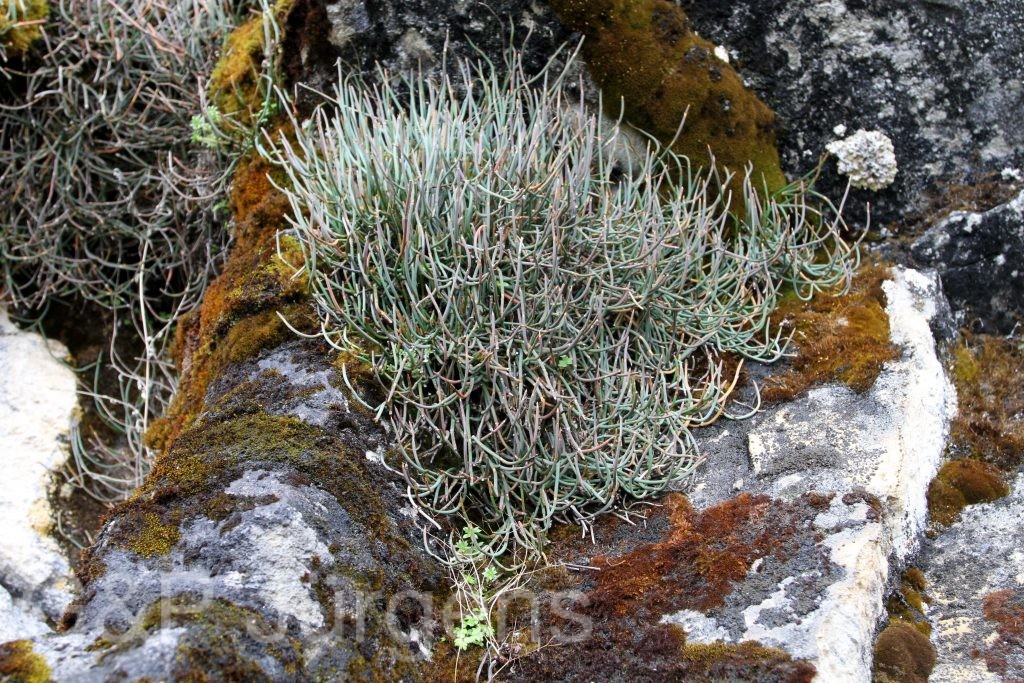
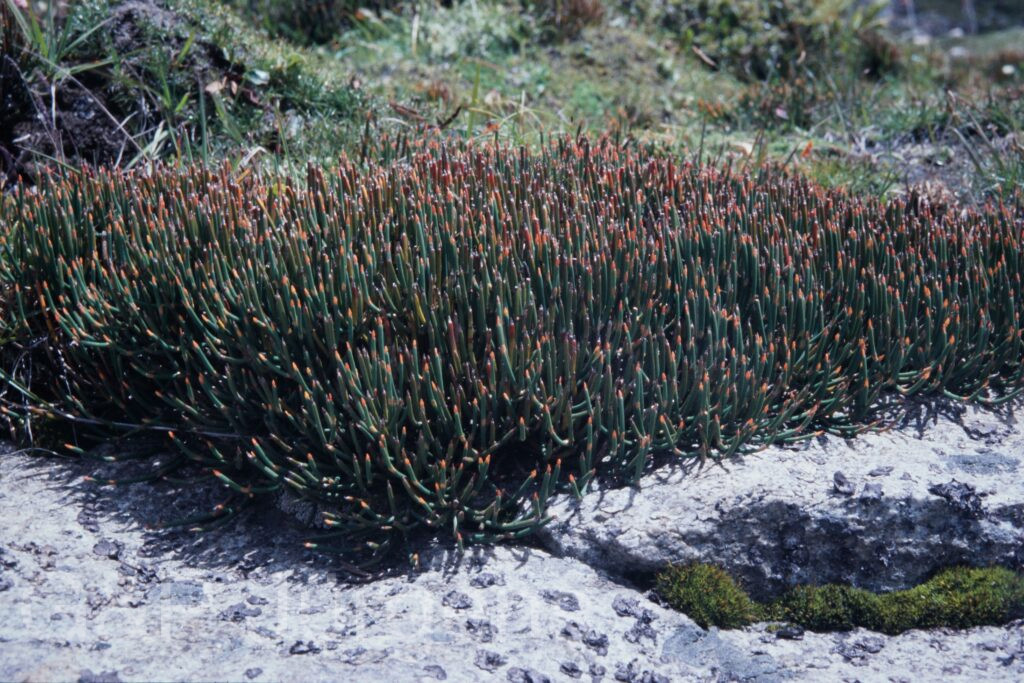
BhutanPG2011 338
Bhutan Jule-Tso 4250m, June
Bhutan2014 937
Bhutan Chele-La 4100m, May
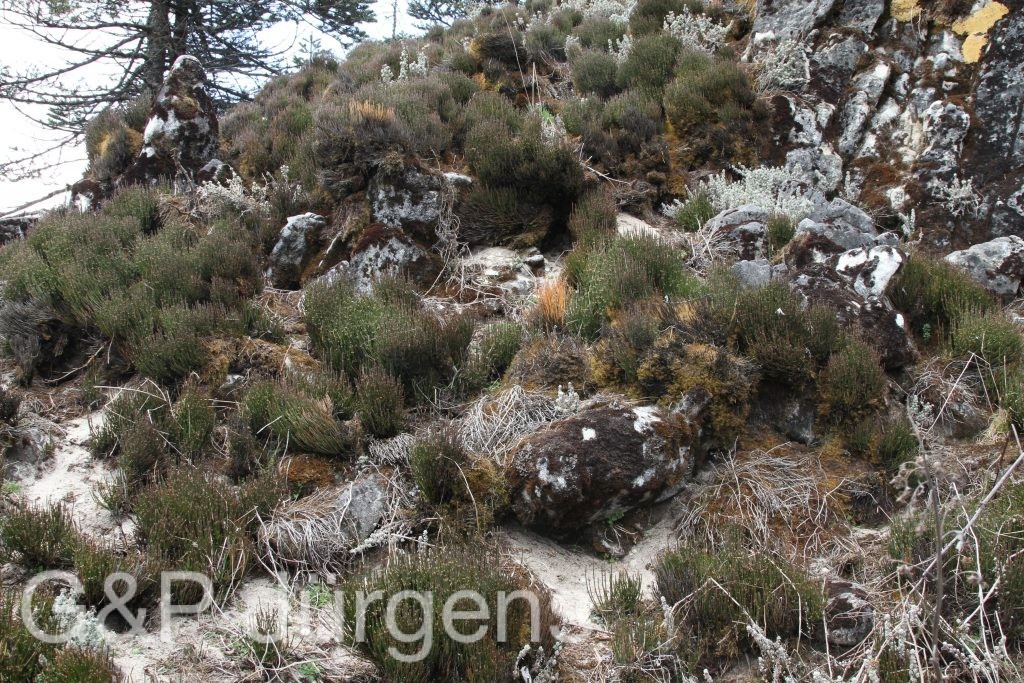
Sikkim2003 522 P727
Sikkim Yume Samdong 4700m August

Description

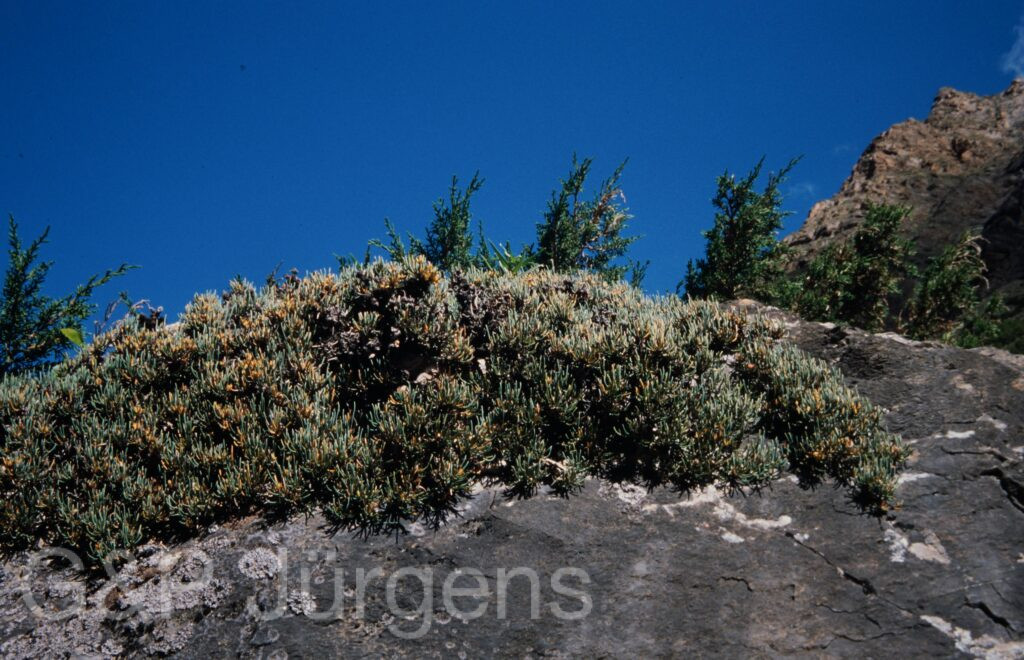
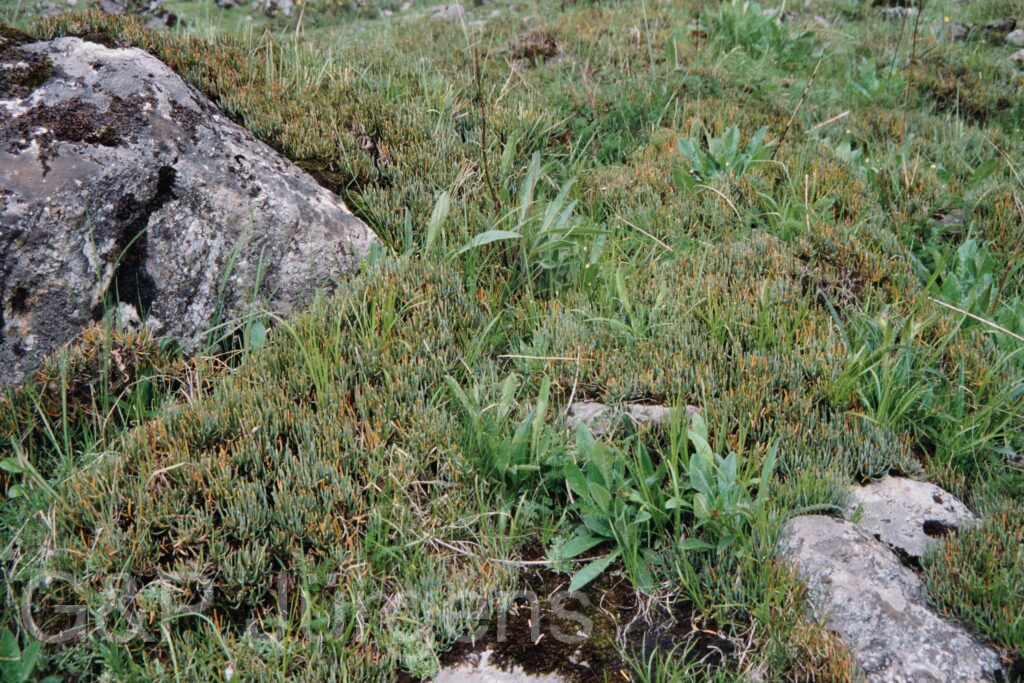
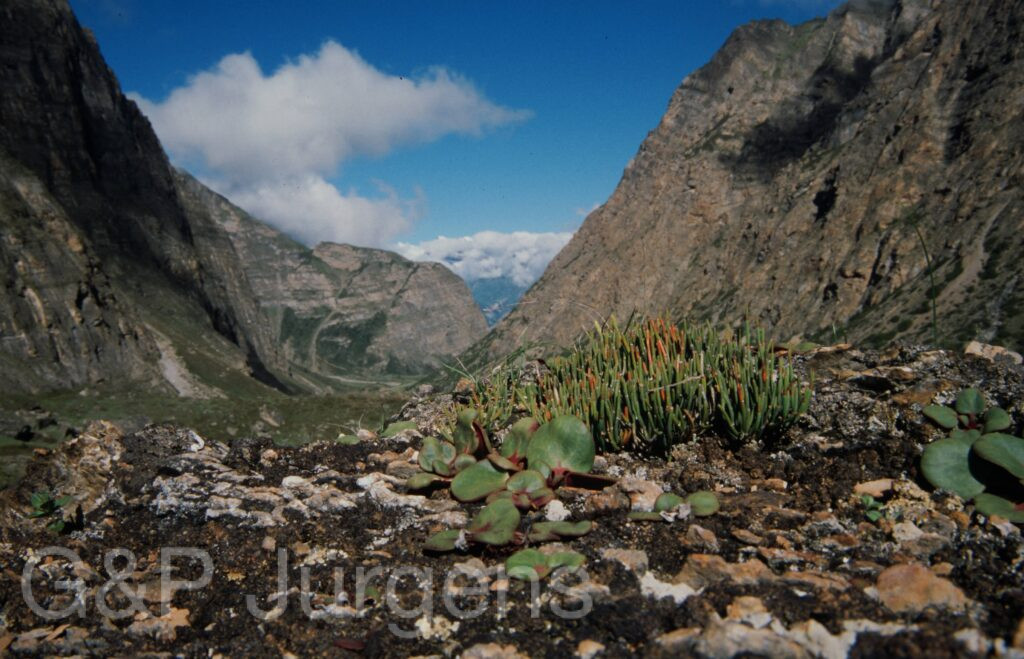
Ephedra gerardiana var. sikkimensis is a high-alpine gymnosperm shrublet of the Himalaya and Tibetan plateau margins, recorded from China, Bhutan, India and Nepal, with the species complex widely held in cultivation across Europe and North America. It is a plant of dry, exposed, stony alpine slopes, gravel flats, moraine and rocky pasture in the arid trans-Himalayan and high-alpine zone, characteristically between about 3500 and 5000 m. The cited collections from Jule-Tso (4250 m) and Chele-La (4100 m) in Bhutan and Yume Samdong in Sikkim at 4700 m exemplify its occurrence at the very upper limits of vascular plant growth, on wind-swept, well-drained, frost-exposed ground.

The plant is a low, densely tufted, mat-forming or cushion shrublet with slender, jointed, longitudinally grooved green branchlets that perform photosynthesis, the true leaves reduced to small connate scales at the nodes. Like all Ephedra it is dioecious and non-flowering: pollen is borne in small ovoid male strobili, while the female cones, after fertilisation, develop fleshy red, berry-like seed cones enclosing one or two seeds, an adaptation to bird dispersal in an otherwise austere environment.

The epithet sikkimensis denotes the type region in the eastern Himalaya, var. sikkimensis being a high-elevation segregate of the polymorphic E. gerardiana. Members of this genus are notable sources of ephedrine alkaloids and have a long history of medicinal and ritual use. As pioneers of stabilised scree and moraine, these dwarf shrubs are ecologically important in fragile alpine systems; though not currently threatened, harvesting and climate-driven habitat shifts warrant monitoring.

Author: Stapf. · Sources: POWO (Kew), GBIF, Flora of China Vol. 4, Flora of Bhutan Vol. 1, Flora of Nepal, A Monograph of the Genus Ephedra (Stapf)
Schrenk & C.A.Mey.

Nepal 99 527 ergebnis
West-Nepal Churta-Khola 3800m, June

Description

Ephedra intermedia Schrenk & C.A.Mey. is a gymnospermous, ephedroid shrub of the Ephedraceae, widely distributed across the arid mountains and steppes of Central Asia, ranging from China, Mongolia and Kazakhstan through Kyrgyzstan, Tajikistan, Turkmenistan, Uzbekistan, Afghanistan, Iran and Pakistan to the dry trans-Himalayan valleys of India and Nepal (GBIF: c. 1,587 occurrences). It is a xerophyte of stony slopes, dry riverbeds, gravelly steppe and arid montane scrub. The photographed plant from Churta-Khola in west Nepal at about 3,800 m, recorded in June, illustrates its occurrence in the high, dry inner-Himalayan rain-shadow zone.

The plant is a densely branched, erect to spreading shrub up to about 1 m tall, with rigid, jointed, longitudinally grooved green stems that carry out photosynthesis; the leaves are reduced to small membranous scales fused into sheaths at the nodes. As a gnetophyte it is non-flowering: the reproductive structures are unisexual cones, the plants generally dioecious. Male cones are clustered with stamens bearing pollen sacs, while the female cones, after fertilisation, develop fleshy red bracts surrounding the ovule, forming a berry-like, fleshy false fruit that is bird-dispersed.

Ephedra is the sole genus of Ephedraceae and one of three living genera of the Gnetales, of considerable interest in seed-plant phylogeny. Species of the genus, including E. intermedia, are a traditional source of the alkaloid ephedrine and have a long history of medicinal use ("ma huang"). The species is widespread and of least conservation concern, though it is locally harvested.

Author: Schrenk & C.A.Mey. · Sources: POWO (Kew), Flora of China Vol. 4, Flora of Pakistan, Flora of Nepal, GBIF, Freitag & Maier-Stolte: Ephedraceae monograph

Boiss.

Nepal 99 836 ergebnis
Nepal Baga-La Phedi 4000m, July
Nepal 99 840 ergebnis
Nepal Baga-La Phedi 4000m, July

Description

Ephedra pachyclada Boiss. is a xerophytic, gymnospermous shrub of the Ephedraceae ranging from the eastern Mediterranean and Arabia through Iran, Afghanistan and Pakistan to the western and central Himalaya. Its records extend across Egypt, Israel, Jordan, Saudi Arabia, Yemen, Oman, Iran, Afghanistan, Pakistan and into India and Nepal. The species is adapted to arid and semi-arid, sun-exposed habitats: dry rocky slopes, gravelly fans, cliff ledges and the stony soils of cold high-mountain deserts and the trans-Himalayan rain shadow. It occurs over a wide altitudinal span, and the population at Baga-La Phedi in Nepal, photographed at 4,000 m in July, exemplifies its occurrence in the cold, dry alpine zone.

The plant is a densely branched, often cushion-like or rigidly erect shrub with stout, jointed, longitudinally grooved green stems that perform photosynthesis in place of the reduced, scale-like leaves, which are paired and connate into small sheaths at the nodes. Like all Ephedra it is dioecious and wind- or insect-pollinated; the male cones bear clustered microsporangia, while the female cones produce ovules whose enveloping bracts become fleshy and red, forming a berry-like, succulent seed cone that aids in dispersal by birds.

Ephedra pachyclada is a taxonomically variable species, divided into several subspecies and forming part of a complex of robust Asian ephedras whose delimitation remains debated. The genus is renowned as a source of the alkaloids ephedrine and pseudoephedrine, giving it a long history of medicinal use, and several Asian species have been subject to harvesting pressure. As a hardy stabiliser of dry, eroding mountain slopes the species also has ecological value in fragile high-altitude desert ecosystems.

Author: Boiss. · Sources: POWO (Kew), GBIF, Flora of Pakistan, Flora Iranica, Freitag & Maier-Stolte: Revision of Ephedra in the Old World

Hausskn.

Sikkim2003 213 G297
Sikkim Dzongri 3900m, August

Description

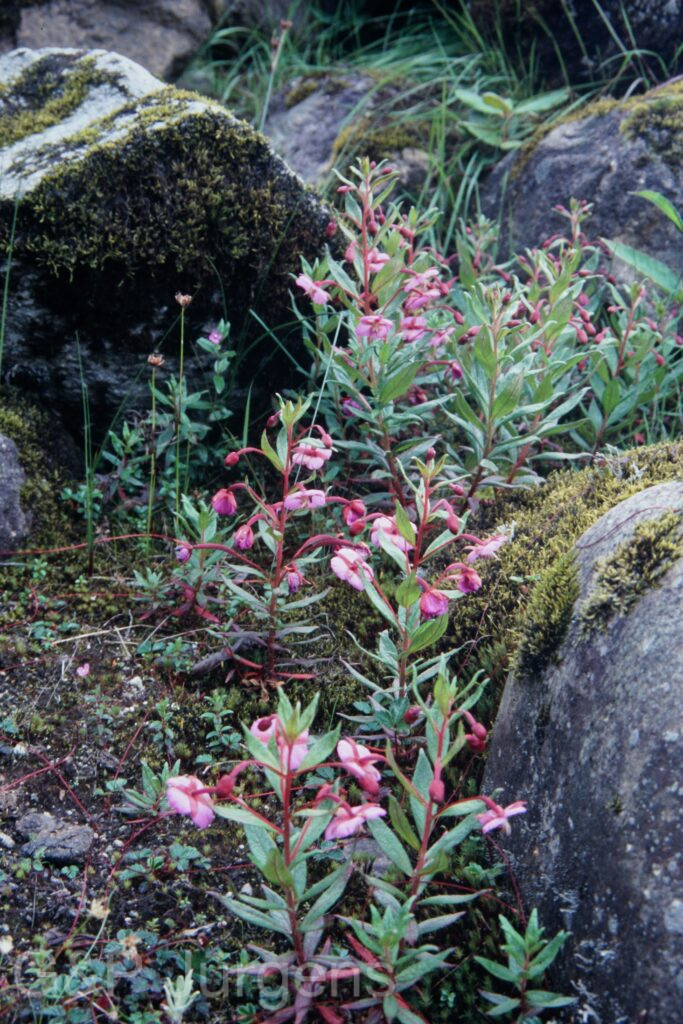
Epilobium conspersum is a perennial herb of the Sino-Himalayan and East Asian mountains, distributed through southwestern China, Nepal, northern India, Myanmar, Bhutan and Japan, with introduced records in the United States; GBIF documents about 134 occurrences. It is a plant of moist, open subalpine and alpine habitats such as stream banks, wet meadows and gravelly flushes, typically between about 3000 and 4200 m. The photographed plant was collected at Dzongri in western Sikkim at around 3900 m in August, on the cool, wet ground this willowherb favours during the monsoon. In GBIF the name carries the status SYNONYM, while Epilobium conspersum is here recognised as the accepted name for this Himalayan material.

The plant produces erect to ascending stems from a perennating base that overwinters by leafy rosettes or short turions. The leaves are opposite below and alternate above, sessile or shortly petiolate, lanceolate to ovate, with a toothed margin, the stems often finely hairy in lines. The flowers are borne in the upper leaf axils; as in the genus they have an inferior, elongate ovary, four notched pink to rose-purple petals, four sepals and eight stamens. The fruit is a long, slender, four-valved capsule that splits to release numerous seeds, each bearing a silky coma for wind dispersal.

Epilobium (Onagraceae) is a large temperate and cold-region genus in which the comose seeds and elongate capsular fruit are diagnostic. The Himalayan species form a taxonomically intricate group, and the synonymy reflected in the GBIF status underscores their nomenclatural complexity. Widespread along its moist alpine corridor, the species is not considered threatened.

Author: Hausskn. · Sources: POWO (Kew), GBIF, Flora of China Vol. 13, Flora of Bhutan Vol. 2, Flora of Nepal, Flora of Pakistan, Raven monograph of Old World Epilobium

(L.) Crantz

Nepal 99 880 ergebnis
West-Nepal Suli-Khola 3200m, July

Description

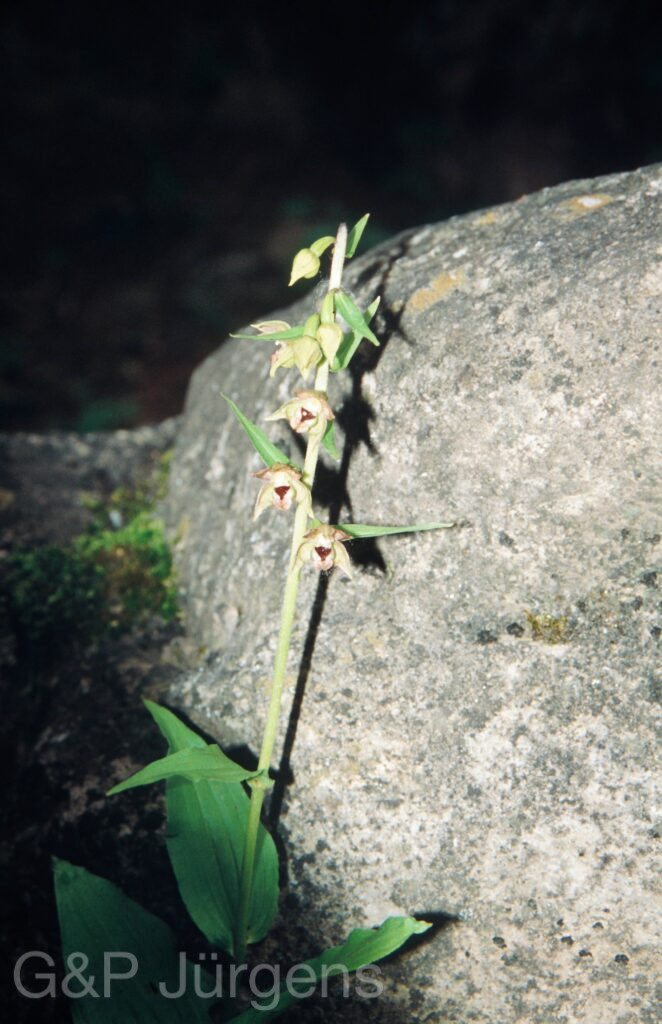
Epipactis helleborine, the broad-leaved helleborine, is among the most widespread terrestrial orchids in the world, native across Europe, North Africa and temperate Asia and naturalised extensively in North America. Its enormous GBIF dataset of over 378,000 occurrences spans France, the Netherlands, Germany, Britain, the United States, Canada and much of Eurasia, reflecting its tolerance of woodland, scrub, road verges and disturbed ground from the lowlands to the mountains. Within the Himalaya it ascends to high elevations, the material illustrated here coming from West Nepal at Suli-Khola at 3200 m in July, where it flowers in shaded summer pastures and forest edges on calcareous or humic soils.

The plant is a stout, leafy perennial herb growing from a short rhizome with numerous fleshy roots. The erect stem bears several broadly ovate to lanceolate, plicate, spirally arranged cauline leaves that diminish into bracts upward. The inflorescence is a one-sided, many-flowered raceme of nodding flowers; each flower has greenish to purplish ovate tepals and a distinctive two-part labellum comprising a cup-shaped hypochile holding nectar and a heart-shaped, recurved epichile bearing two basal bosses. The column is short, and pollination is typically effected by wasps; the fruit is a pendent, ribbed capsule releasing innumerable dust-like seeds.

Epipactis helleborine is taxonomically variable, encompassing numerous regional ecotypes and segregate microspecies, and is notable for its partial mycoheterotrophy, drawing carbon from ectomycorrhizal fungi which permits it to grow in deep shade. Its colonisation of urban and ruderal habitats has made it a successful adventive, and in parts of North America it is regarded as weedy. The species is of least conservation concern globally given its abundance and ecological adaptability.

Author: (L.) Crantz · Sources: POWO (Kew), GBIF, Flora Europaea, Genera Orchidacearum, The Genus Epipactis: A Monograph, Orchids of the Himalaya

Lindl.

Nepal 99 177 ergebnis
West-Nepal Lara-Lake 3000m, June

Description

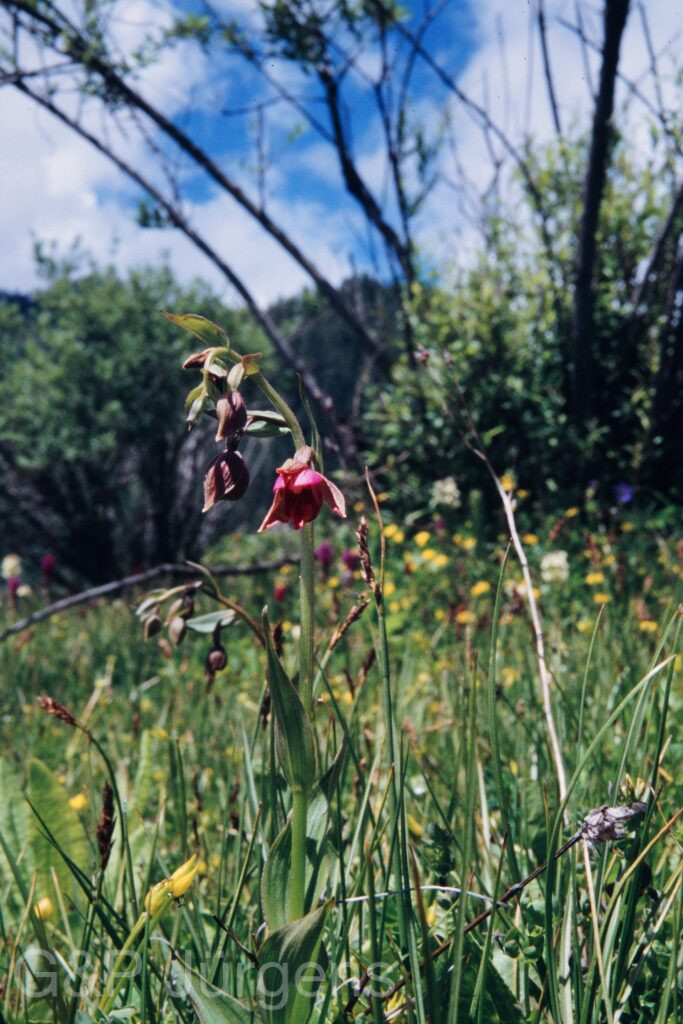
Epipactis royleana Lindl. is a terrestrial orchid of central and western Asia and the Himalaya, with GBIF documenting some 262 occurrences across Nepal, India, China, Pakistan, Afghanistan, Tajikistan, Kyrgyzstan, Uzbekistan, Bhutan, Myanmar and Russia, with scattered records farther afield. It typically grows in moist habitats such as streamsides, marshy meadows, seepage slopes and open coniferous woodland from the montane to subalpine zones, often between about 1500 and 3500 m. The plant photographed at Lara-Lake in West Nepal, at roughly 3000 m in June, illustrates its preference for the damp, lake-margin grasslands of the high Himalayan valleys.

The species is a rhizomatous perennial with erect, leafy stems arising from a short creeping rootstock. The leaves are alternate, ovate to lanceolate, sheathing at the base and prominently veined. The inflorescence is a lax, one-sided terminal raceme of several to many resupinate flowers; each flower has spreading, greenish to purplish-tinged sepals and petals, with a labellum divided into a cup-like basal hypochile and a triangular, often pinkish epichile. As in all Epipactis, the column bears a single anther and the pollinia are mealy, and the fruit is a pendulous, ridged capsule releasing dust-like seeds.

Epipactis is a Holarctic genus in which Himalayan and central Asian taxa form a distinct group; E. royleana is among the more widespread members, exhibiting considerable variation in flower colour across its range. Like other members of the genus it depends on mycorrhizal fungi for germination and early establishment, and its small seeds are wind-dispersed. The species is not currently regarded as threatened across its broad distribution, though, as a wetland-associated orchid, local populations are sensitive to drainage and habitat disturbance.

Author: Lindl. · Sources: POWO (Kew), GBIF, Flora of China, Flora of Pakistan, Flora of Nepal, Delforge Orchids of Europe and Asia

Wight ex Nees

Nepal1992 81 P114 ergebnis
Nepal Sokathum1650m, March 

Description

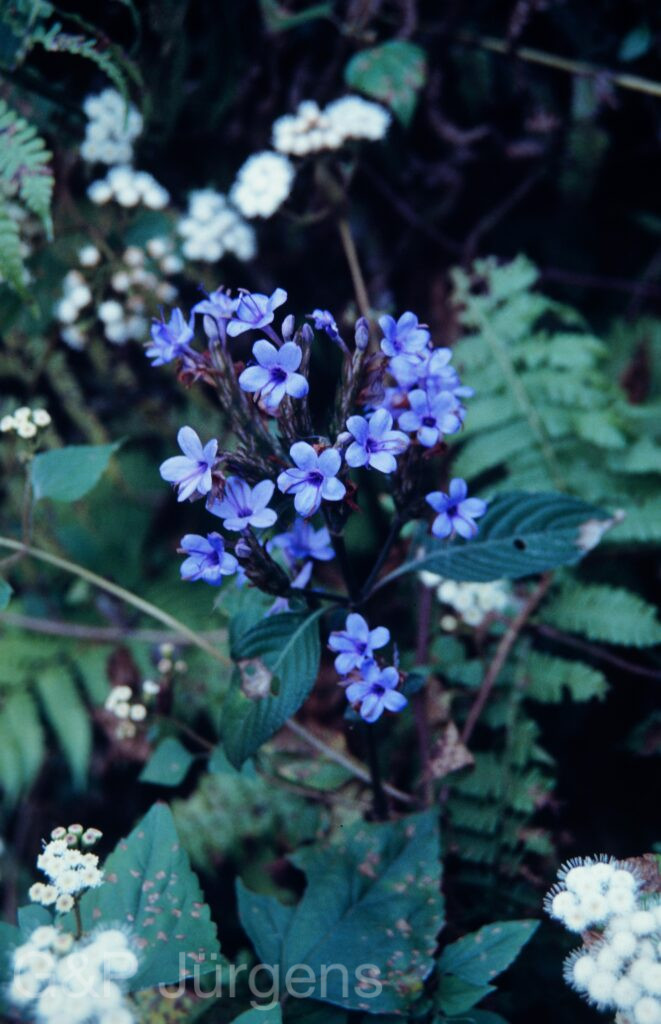
Eranthemum purpurascens is a subtropical understorey shrub of the Himalayan foothills and adjacent Indian subcontinent, recorded principally from India and Nepal, with cultivated and naturalised occurrences in China, Indonesia, Jamaica, the Dominican Republic and the United States reflecting its ornamental use. It grows in the shaded understorey of moist subtropical and lower temperate forest, along streambanks and shaded ravines, generally between about 600 and 1800 m. The photographed plant from Sokathum, Nepal, at roughly 1650 m and flowering in March, exemplifies its early-spring blooming in warm, sheltered hill forest before the onset of the monsoon.

The plant is an erect, soft-wooded shrub with quadrangular, often swollen-nodal stems. The leaves are opposite, ovate to elliptic, acuminate, entire to obscurely crenate, and frequently bear cystoliths visible as fine streaks on the lamina. The flowers are borne in dense terminal and axillary spikes subtended by conspicuous, often purple-tinged bracts. Each flower has a slender corolla tube expanding into a spreading five-lobed limb of pale blue to violet, with two exserted stamens; the fruit is a clavate, explosively dehiscent capsule bearing seeds on hooked retinacula typical of the Acanthaceae.

The epithet purpurascens refers to the purplish bracts and flushed foliage. Eranthemum is a tropical Asian genus allied to Pseuderanthemum and Daedalacanthus, several members of which, including this species, are cultivated for their winter and spring colour. The conspicuous bracts and tubular blue corollas are adapted to insect pollination, while the cystolith-bearing leaves are a diagnostic family feature. The species is locally common and not regarded as threatened.

Author: Wight ex Nees · Sources: POWO (Kew), GBIF, Flora of China Vol. 19, Flora of Bhutan Vol. 2, Flora of Nepal, Acanthaceae of the Indian Subcontinent

King & Pantl.

Bhutan2014 175
Bhutan Trashiyangtse 2000m, May

Description

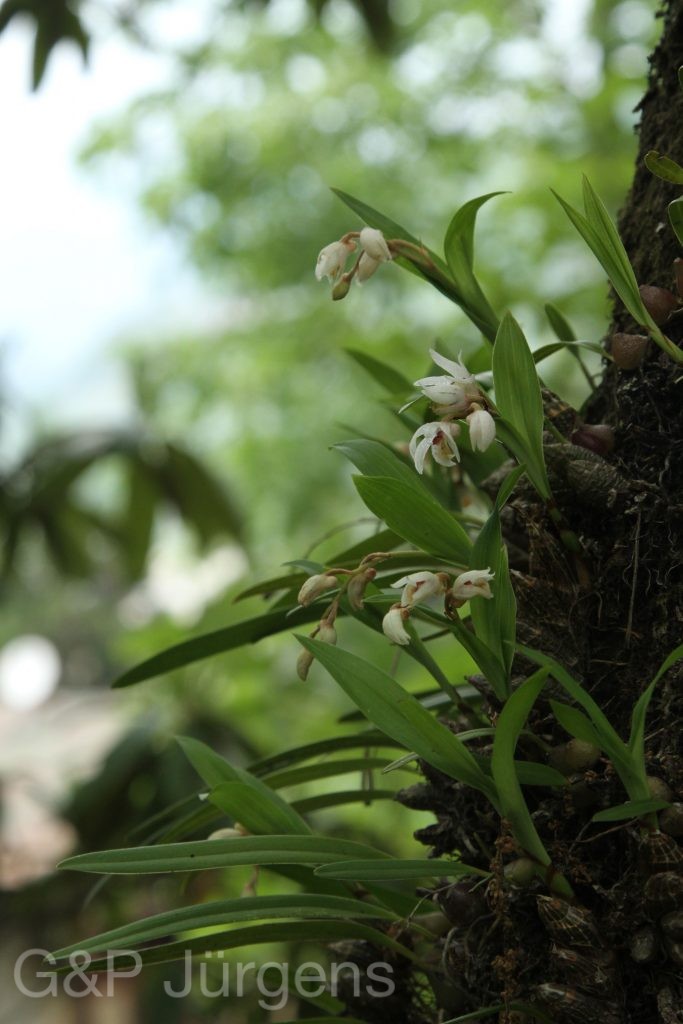
Eria clausa King & Pantl. is an epiphytic orchid of the subtribe Eriinae (Orchidaceae), distributed through the eastern Himalaya and adjacent regions. GBIF records (78 occurrences) document its presence in China, Vietnam, India, Nepal, Bhutan, and New Guinea, indicating a broadly Sino-Himalayan to Southeast Asian range. The species was photographed at Trashiyangtse in Bhutan at 2,000 m in May, a setting typical of its occurrence in humid, mossy broad-leaved and mixed evergreen forests, where it grows on tree trunks and branches at montane elevations between roughly 1,500 and 2,500 m.

The plant produces clustered, fleshy pseudobulbs from a short rhizome, each bearing a few coriaceous, oblong to lanceolate leaves at the apex. The inflorescence is a short, few- to several-flowered raceme arising near the pseudobulb apex; the flowers are small, whitish to pale yellow, and remain only partly opening, a feature reflected in the epithet "clausa" (closed). The lip is trilobed and the column is short and footed, conforming to the structural plan of the Eria alliance.

The genus Eria has been substantially redefined following molecular work, with many former species transferred to segregate genera; the placement of clausa should therefore be read against this ongoing reorganisation of the Eriinae. As an epiphyte dependent on intact, humid forest canopy, the species is sensitive to logging and forest degradation, and like all orchids it is listed under CITES Appendix II, regulating international trade.

Author: King & Pantl. · Sources: POWO (Kew), Flora of China Vol. 25, Flora of Bhutan Vol. 3, GBIF, Pearce & Cribb: The Orchids of Bhutan (2002)

(Buch.-Ham. ex D.Don) Benth. ex C.B.Clarke

Nepal 97 284 G577
Nepal Chamtrug 2550m May
Nepal 97 284 G577
Nepal Chamtrug 2550m May

Description

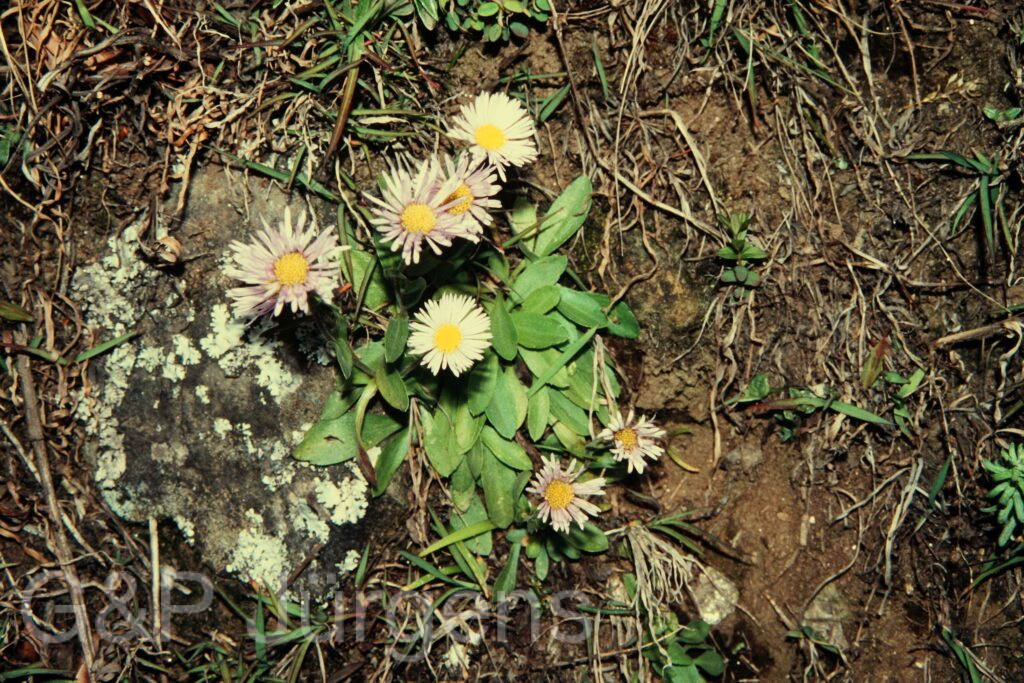
Erigeron bellidioides is a small fleabane of the Western and Central Himalaya, with verified GBIF occurrences confined to Pakistan, Nepal and India. It is a plant of open grassy slopes, forest clearings, banks and stony pastures through the temperate zone, generally between about 1800 and 3000 m. The material photographed at Chamtrug in central Nepal at around 2550 m in May illustrates its flowering at the onset of the growing season in just such open montane grassland, where it forms low, daisy-like tufts among the sward.

The species is a low perennial or short-lived herb forming a basal rosette of obovate to spathulate, entire or slightly toothed leaves that, as the epithet bellidioides suggests, recall those of a daisy (Bellis). The stems are slender, sparingly leafy and finely hairy, each typically bearing a solitary terminal capitulum. The involucre is hemispherical with narrow, hairy phyllaria in a few rows; the head carries numerous slender, thread-like ray florets that are white, pink or pale lilac surrounding a disc of yellow tubular florets. The fruit is a small flattened achene crowned by a pappus of fine bristles that facilitates wind dispersal.

Within Erigeron, a large genus easily confused with related Aster, this species is distinguished by its rosette habit, narrow many-rayed heads and Himalayan distribution; it was transferred to the genus by C.B. Clarke from a Buchanan-Hamilton and Don basionym. Ecologically it behaves as a pioneer of open and disturbed ground and provides a nectar and pollen source for generalist insects. It is widespread and locally common in suitable grassland and is not regarded as being of conservation concern.

Author: (Buch.-Ham. ex D.Don) Benth. ex C.B.Clarke · Sources: POWO (Kew), GBIF, Flora of Pakistan, Annotated Checklist of the Flowering Plants of Nepal, Flora of British India

DC.

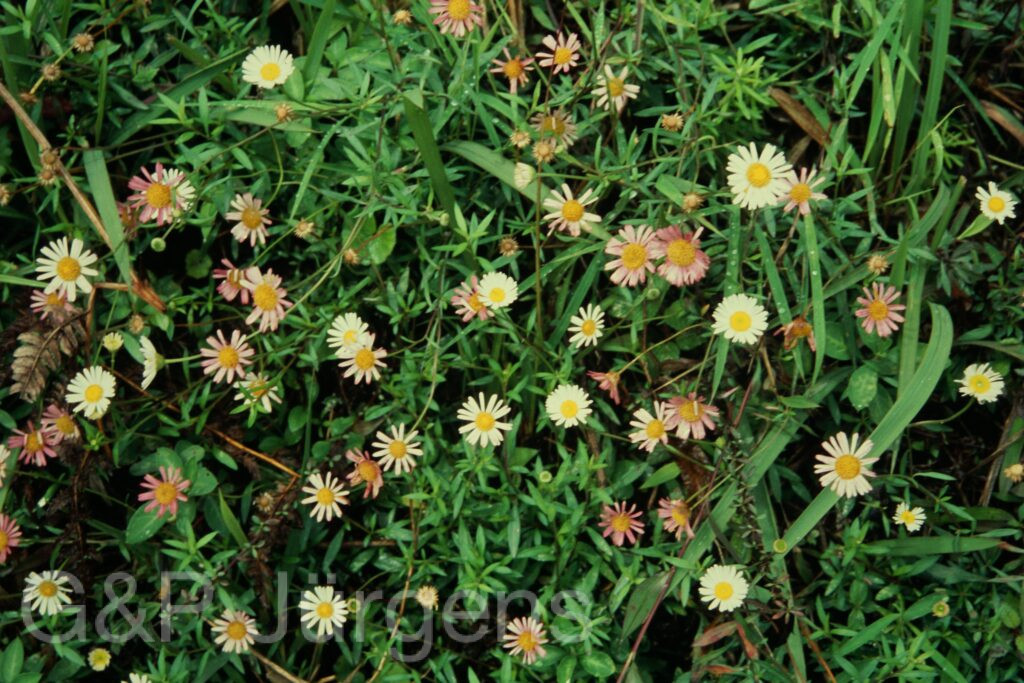
Sikkim2004 3 G4
Sikkim West-Bengal, Sambon 1750m April
Sikkim2004 4 P5
Sikkim West-Bengal, Sambon 1750m April

Description

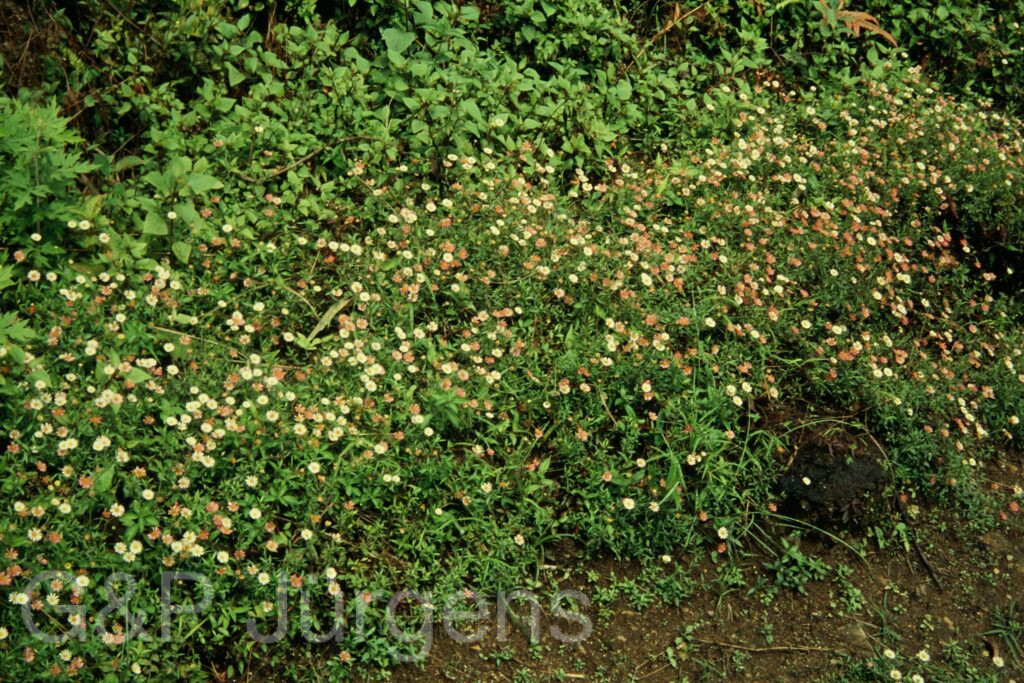
Erigeron karvinskianus, the Mexican fleabane, is a sprawling daisy native to Mexico and Central America but now naturalised across much of the temperate and subtropical world. GBIF documents it from Britain, France, the Netherlands, Spain, Italy, the United States, Mexico, New Zealand, Australia, South Africa, Japan and India, among many others, with over 67,000 occurrences reflecting its status as a cosmopolitan introduced species. It colonises walls, rocky banks, paths, terraces and disturbed slopes from sea level to about 2500 m. The plant illustrated was photographed near Sambon in the Sikkim/West Bengal hills at 1750 m in April, where it has become established as a garden escape along walls and roadsides.

It is a slender, much-branched, mat-forming perennial with wiry, decumbent to ascending stems. The lower leaves are oblanceolate and few-toothed or trilobed, the upper entire and reduced. The numerous small capitula are borne on slender peduncles; each head has a single series of narrow ray florets that open white and age through pink to purplish-red, so that a plant simultaneously bears flowers of several hues, surrounding a central disc of yellow tubular florets. The fruit is a small ribbed achene crowned by a pappus of fine bristles that facilitates wind dispersal.

A member of tribe Astereae, E. karvinskianus is valued horticulturally for its long, profuse flowering and self-seeding habit, the very trait underlying its weediness. In parts of Australia, New Zealand and South Africa it is regarded as an invasive environmental weed escaping gardens to colonise native rock and cliff habitats. In the Himalaya it is a naturalised alien rather than an indigenous element, of no conservation interest but of some invasion-ecology concern.

Author: DC. · Sources: POWO (Kew), GBIF, Flora of China, Flora of North America, Annotated Checklist of the Flowering Plants of Nepal, Erigeron (Asteraceae: Astereae) systematic monograph