
(L.) Crantz
Description
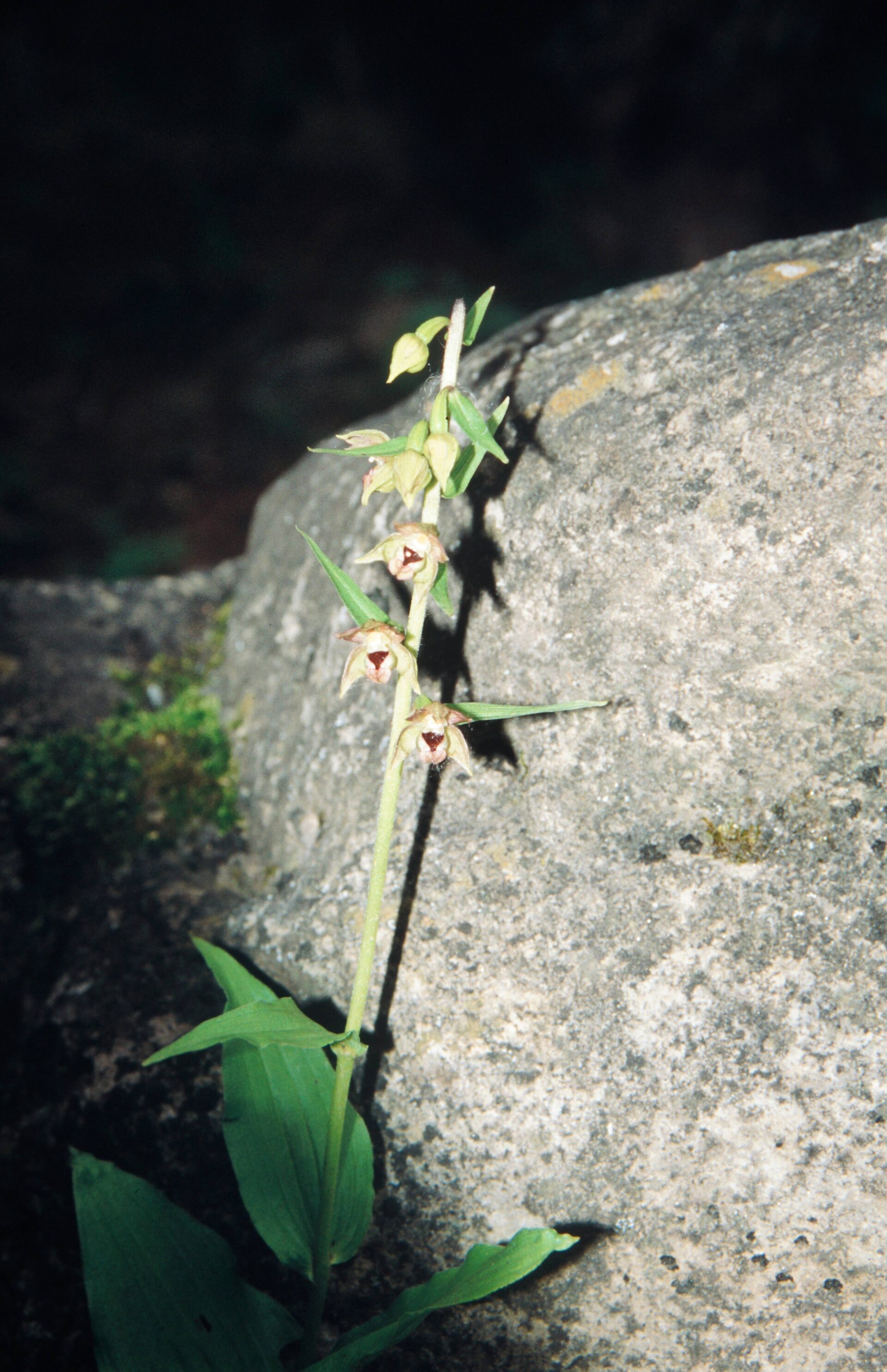
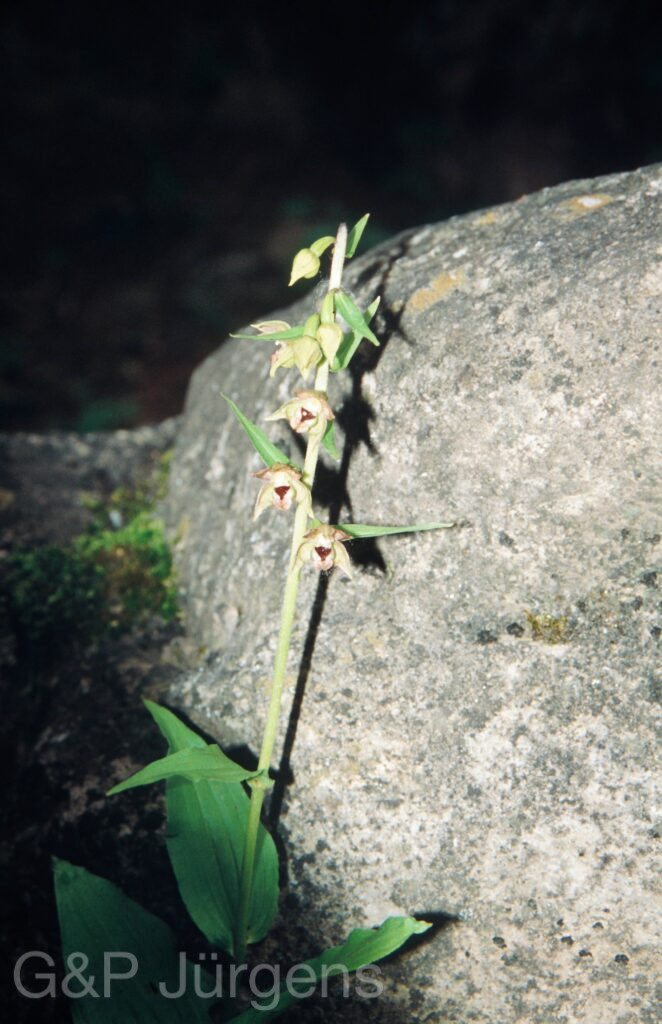
Epipactis helleborine, the broad-leaved helleborine, is among the most widespread terrestrial orchids in the world, native across Europe, North Africa and temperate Asia and naturalised extensively in North America. Its enormous GBIF dataset of over 378,000 occurrences spans France, the Netherlands, Germany, Britain, the United States, Canada and much of Eurasia, reflecting its tolerance of woodland, scrub, road verges and disturbed ground from the lowlands to the mountains. Within the Himalaya it ascends to high elevations, the material illustrated here coming from West Nepal at Suli-Khola at 3200 m in July, where it flowers in shaded summer pastures and forest edges on calcareous or humic soils.
The plant is a stout, leafy perennial herb growing from a short rhizome with numerous fleshy roots. The erect stem bears several broadly ovate to lanceolate, plicate, spirally arranged cauline leaves that diminish into bracts upward. The inflorescence is a one-sided, many-flowered raceme of nodding flowers; each flower has greenish to purplish ovate tepals and a distinctive two-part labellum comprising a cup-shaped hypochile holding nectar and a heart-shaped, recurved epichile bearing two basal bosses. The column is short, and pollination is typically effected by wasps; the fruit is a pendent, ribbed capsule releasing innumerable dust-like seeds.
Epipactis helleborine is taxonomically variable, encompassing numerous regional ecotypes and segregate microspecies, and is notable for its partial mycoheterotrophy, drawing carbon from ectomycorrhizal fungi which permits it to grow in deep shade. Its colonisation of urban and ruderal habitats has made it a successful adventive, and in parts of North America it is regarded as weedy. The species is of least conservation concern globally given its abundance and ecological adaptability.
Author: (L.) Crantz · Sources: POWO (Kew), GBIF, Flora Europaea, Genera Orchidacearum, The Genus Epipactis: A Monograph, Orchids of the Himalaya