Tag:

Nepal

Flowers of Nepal — 1313 wild plant species documented from the Nepalese Himalaya, from subtropical foothills to high alpine meadows above 4,000 m. Nepal’s dramatic elevation gradient makes it one of the richest botanical regions on Earth, home to rhododendrons, primulas, gentians and the famed blue poppies (Meconopsis). Every entry gives a botanical description, native distribution, habitat and flowering season, alongside the original field photograph and the location where it was taken.

(Lindl. ex DC.) Benth. & Hook.f.

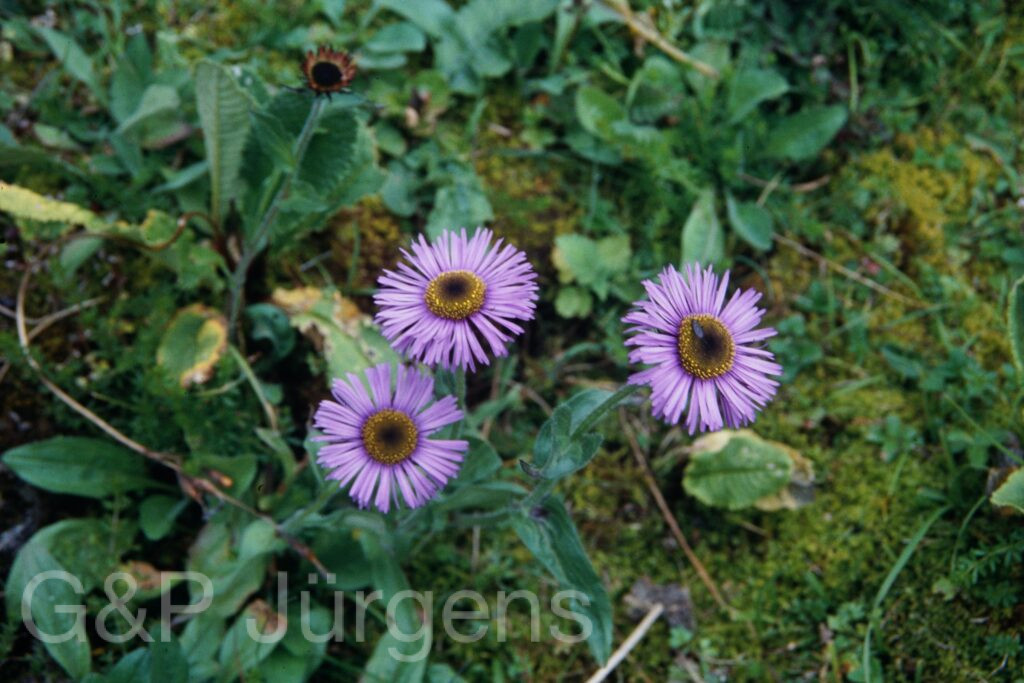
BhutanPG2011 371
Bhutan Dur-Tso, 4000m June
Sikkim2003 429 G596
Sikkim Chopta Valley 4100m August

Description

Erigeron multiradiatus (Lindl. ex DC.) Benth. & Hook.f. is a Himalayan and Sino-Himalayan fleabane distributed through China, Nepal, India, Pakistan, Afghanistan and Bhutan, with around 1400 georeferenced occurrences in GBIF. It is a plant of alpine and subalpine meadows, open grassy slopes, rocky ground and forest clearings, generally between about 2700 and 4500 m. The collections from Dur-Tso at 4000 m in June and the Chopta valley in Sikkim at 4100 m in August are characteristic of its high-altitude summer flowering across the central and eastern Himalaya.

It is a tufted perennial herb arising from a short rhizome, with erect, simple or sparingly branched stems bearing spreading hairs. The basal leaves are oblanceolate to spatulate, narrowed to a petiole and entire to slightly toothed, forming a rosette; the cauline leaves are smaller, sessile and clasping. The solitary or few terminal capitula are large and showy, with an involucre of narrow, hairy, somewhat purplish phyllaries; the numerous, very fine ray florets, alluded to in the epithet multiradiatus, are pinkish-purple to violet and surround a central disc of yellow tubular florets. The fruit is a small, compressed, hairy cypsela topped by a double pappus of fine bristles.

Erigeron is a large, taxonomically intricate genus, and the densely many-rayed alpine Himalayan species form a distinctive assemblage within it, recognised by their broad showy heads and high-elevation habitat. A widespread and locally common alpine herb, E. multiradiatus is of no particular conservation concern, though it is valued horticulturally and in regional traditional medicine.

Author: (Lindl. ex DC.) Benth. & Hook.f. · Sources: POWO (Kew), GBIF, Flora of China, Flora of Bhutan, Grierson & Long Flora of Bhutan Compositae account
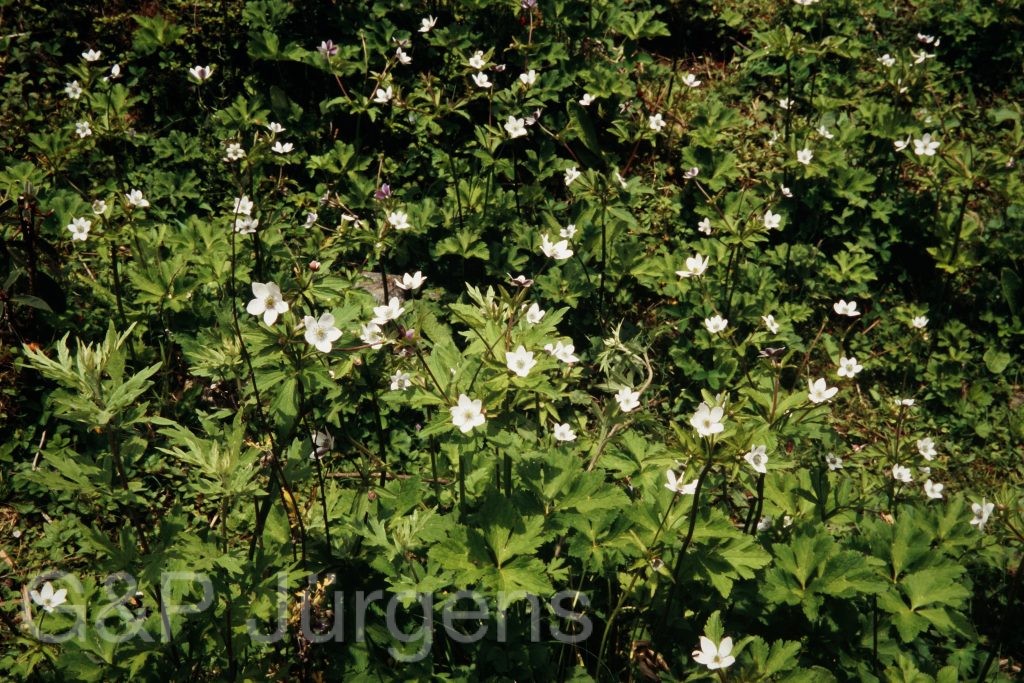
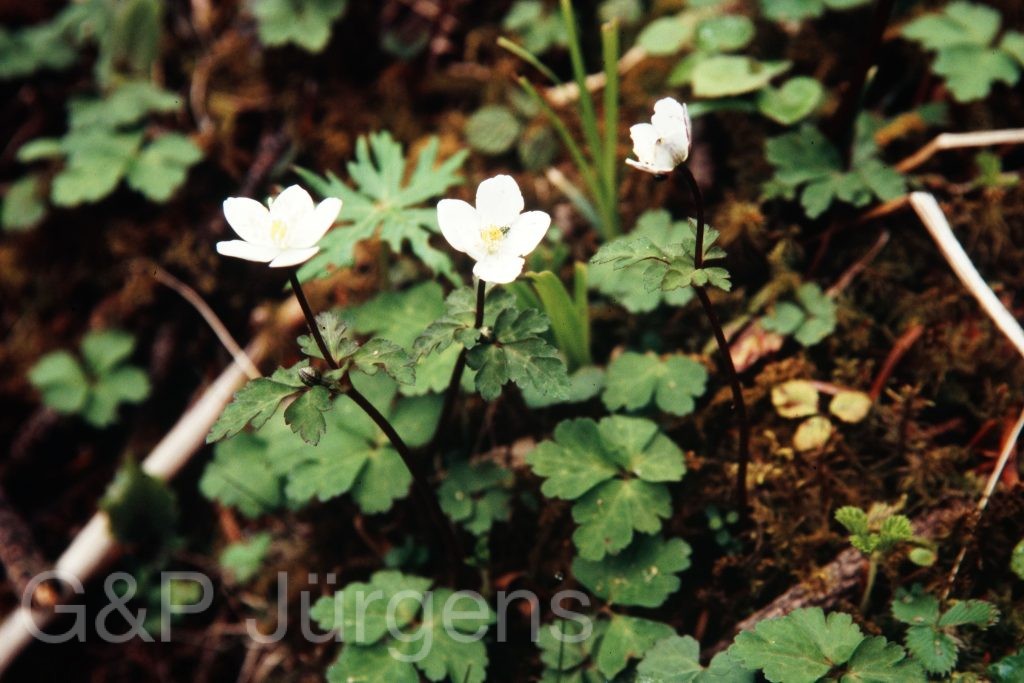
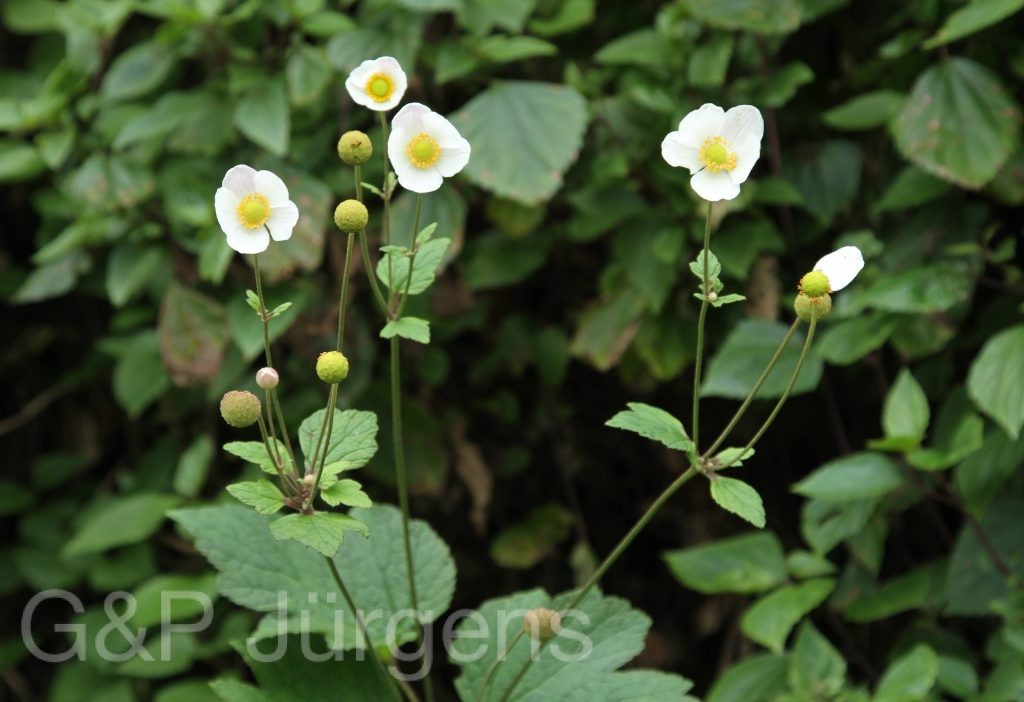
(Buch.-Ham. ex DC.) Christenh. & Byng

Bh09 197 P337
Bhutan above Thimphu, 3000m June
Bh09 68 P118
Bhutan above Thimphu, 3000m June
Nepal 99 169 ergebnis
West-Nepal South of Tara-Lake 3000m, June

Description

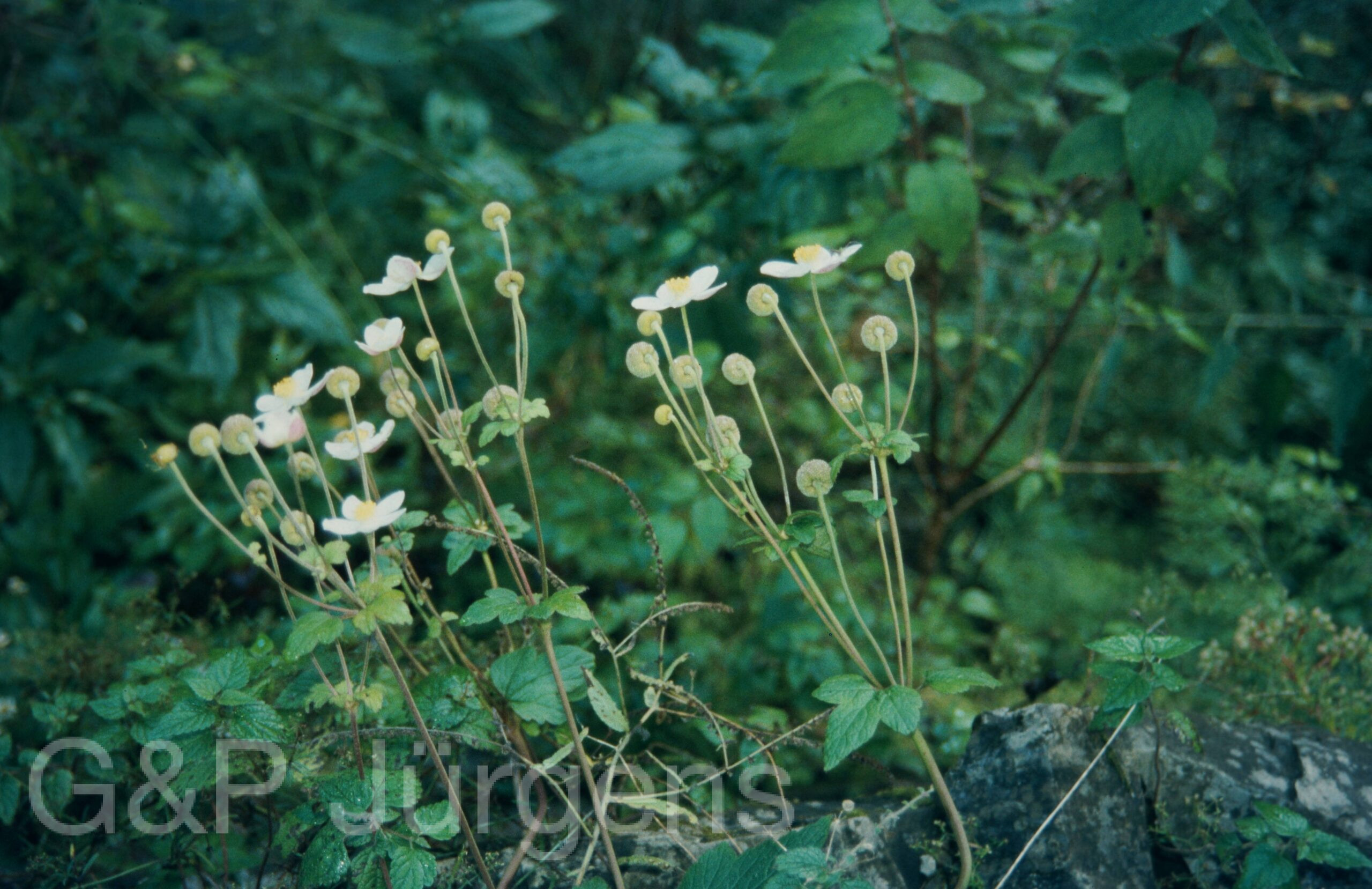
Eriocapitella rivularis (formerly Anemone rivularis) is a widely distributed montane herb of the Sino-Himalayan region. GBIF records span China, Nepal, India, Bhutan, Myanmar and Pakistan, extending to Sri Lanka, with introduced or cultivated occurrences in Europe, Japan and North America, totalling close to 2000 georeferenced collections. It favours moist alpine and subalpine meadows, stream banks, open slopes and forest margins, generally between 2000 and 4200 m. The populations illustrated here were photographed above Thimphu in Bhutan and south of Tara-Lake in West Nepal, both at around 3000 m and flowering in June, typical of its early-summer phenology in the central Himalaya.

It is an erect perennial 20-80 cm tall arising from a stout rootstock, the stems and petioles clothed in spreading white hairs. Basal leaves are long-petiolate and palmately 3-5-lobed, the segments coarsely toothed and bristly. The inflorescence is a lax cyme subtended by a leafy involucre of sessile bracts. Flowers are showy, with 5-6 white petaloid sepals often tinged bluish on the reverse and numerous stamens bearing conspicuous blue-violet anthers; true petals are absent. The fruit is an aggregate of flattened, narrowly winged achenes terminating in a slender hooked beak that aids epizoochorous dispersal.

The transfer to the segregate genus Eriocapitella reflects molecular work resolving the paraphyly of Anemone sensu lato. Pharmacologically it is notable as a source of triterpenoid saponins and is used in Himalayan folk medicine. Its broad ecological amplitude, abundant achene production and wind-aided dispersal render it locally common and of no conservation concern, a characteristic component of grazed Himalayan pasture.

Author: (Buch.-Ham. ex DC.) Christenh. & Byng · Sources: POWO (Kew), GBIF, Flora of China, Flora of Bhutan, Annotated Checklist of the Flowering Plants of Nepal, Monograph of the genus Anemone (Ranunculaceae)

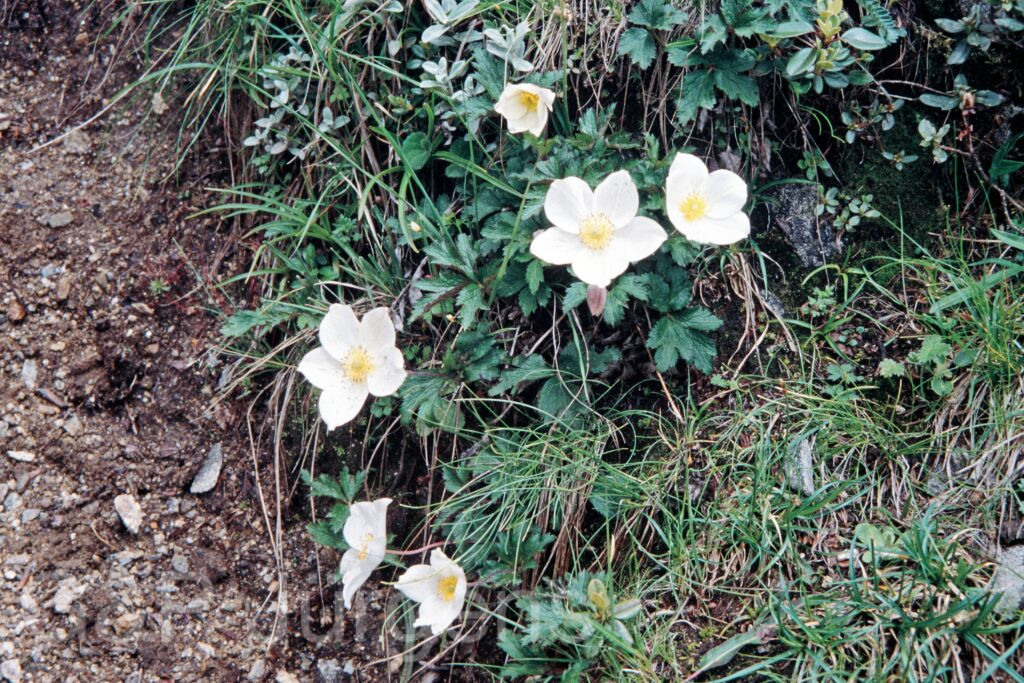
(Cambess.) Christenh. & Byng

BhutanPG2011 207
Bhutan Tsochenchen, 3500m June
BhutanPG2011 586
Bhutan Ludlow-Sherriff-Trail Miluthang, 4450m July
Nepal 99 130 ergebnis
West-Nepal South of Rara-Lake 3800m, June
Nepal 99 529 ergebnis
West-Nepal South of Rara-Lake 3800m, June

Description

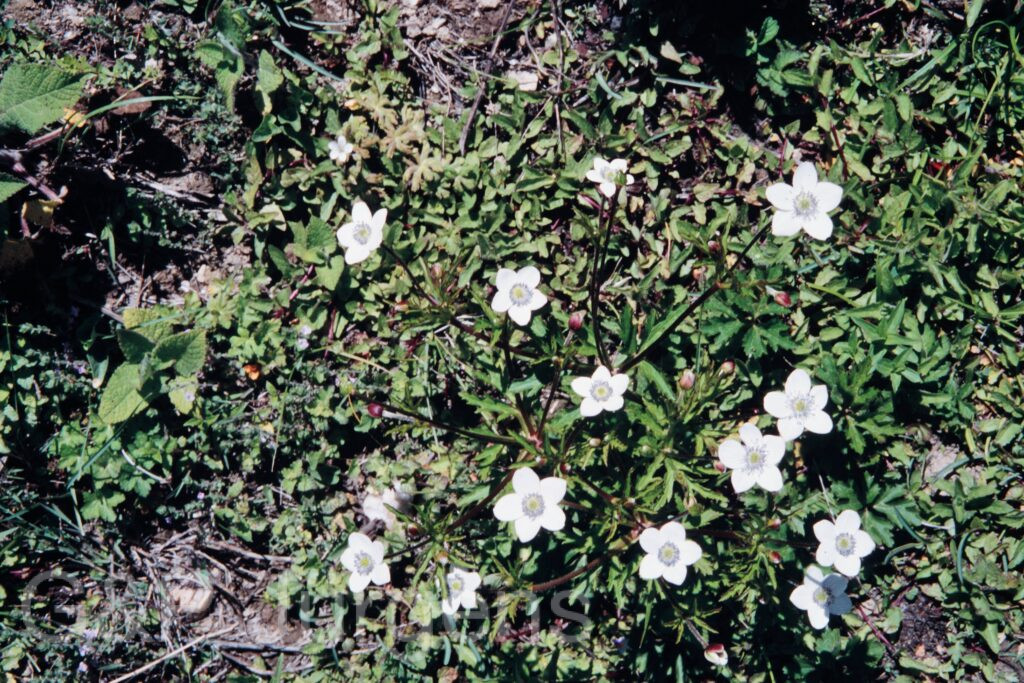
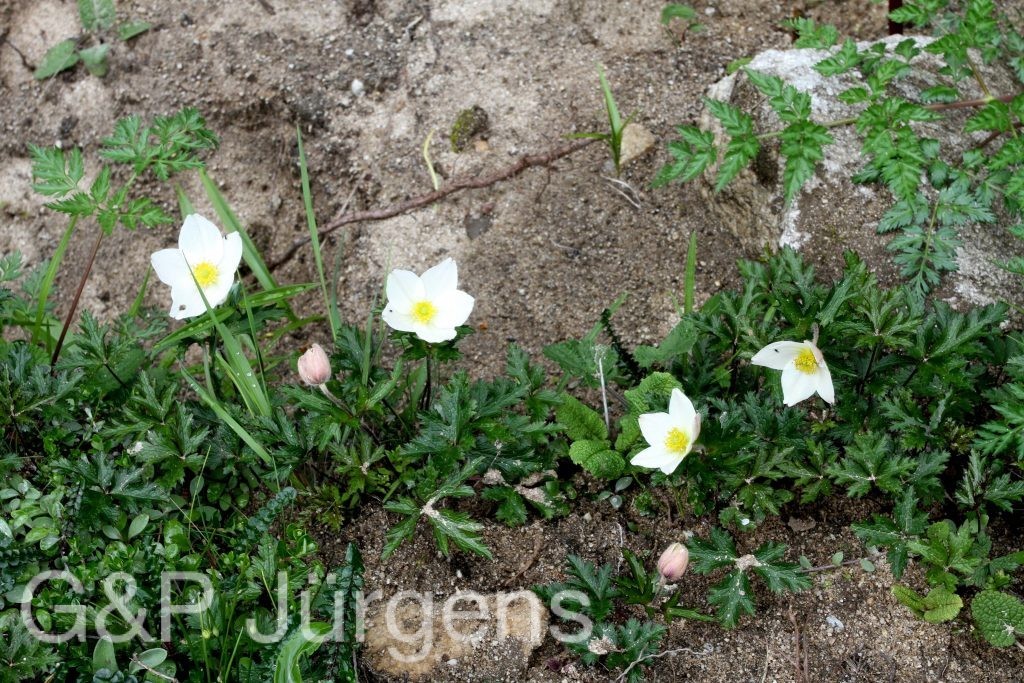
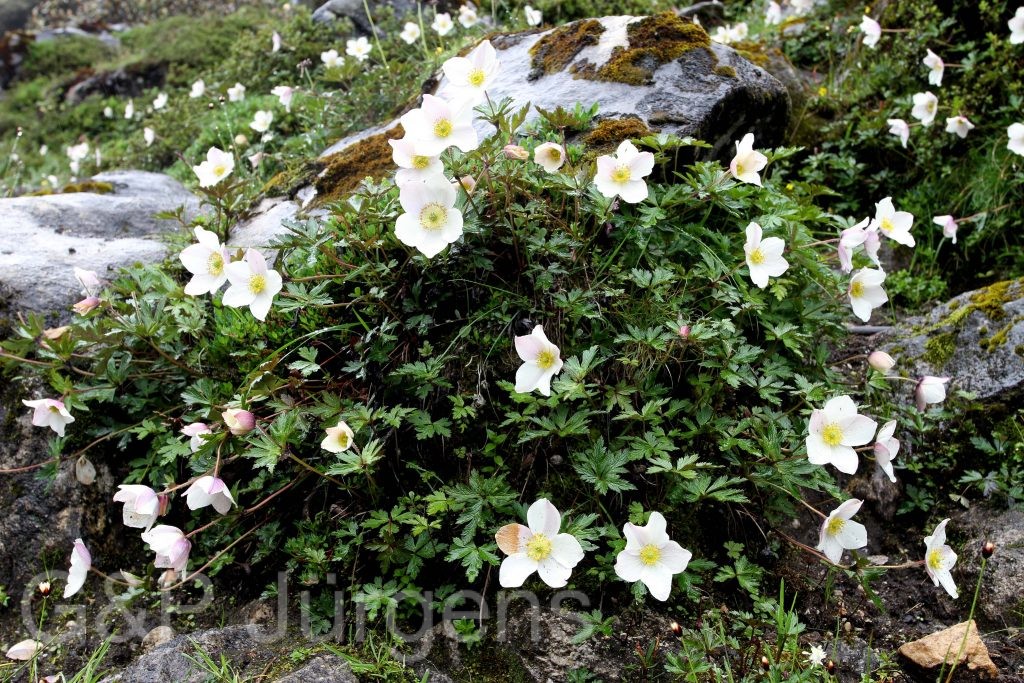
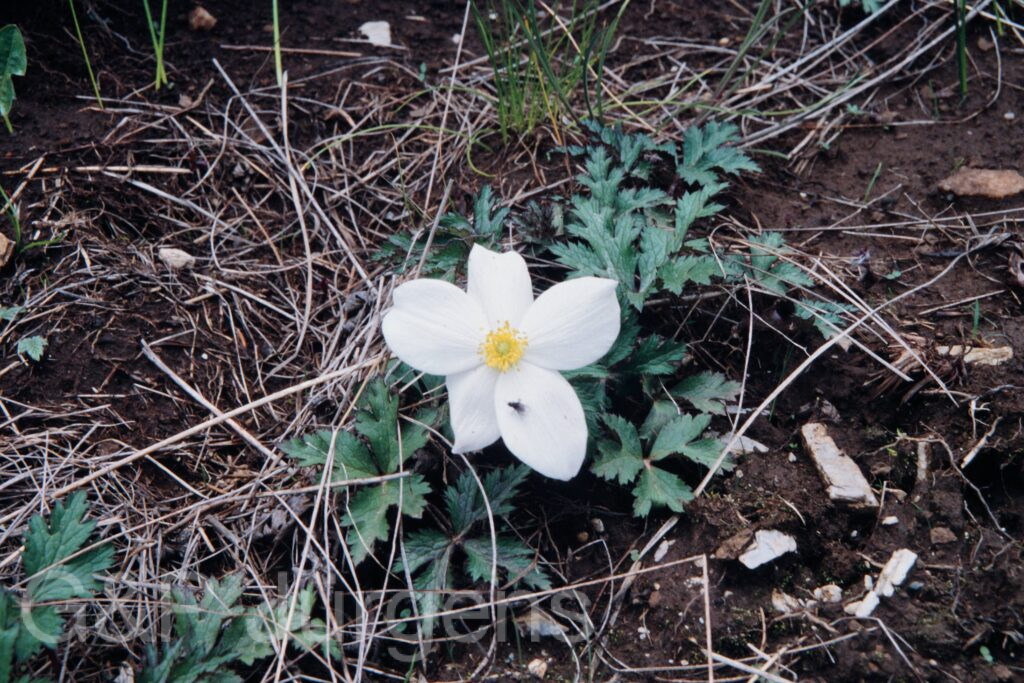
Eriocapitella rupicola, formerly Anemone rupicola, is a Himalayan and Sino-Himalayan herb distributed from Pakistan through Nepal, India and Bhutan into China, with around 507 GBIF occurrences. It grows in alpine and subalpine habitats, on rocky slopes, cliff ledges, open meadows, stony pastures and among boulders, often in well-drained sites in the upper subalpine to alpine zone. The images document it widely in the range: Bhutan at Tsochenchen around 3500 m in June and along the Ludlow-Sherriff Trail at Miluthang near 4450 m in July, and West Nepal south of Rara Lake at about 3800 m in June, where its white blooms open through the early summer.

It is a perennial herb arising from a stout rootstock, with basal leaves that are ternately to palmately divided into toothed, deeply cut segments, hairy on the surfaces. The flowering stems are erect and bear an involucre of stalked, leaf-like bracts below the flowers. The flowers are solitary or few, comparatively large and showy, with several (commonly five) petaloid white sepals, often flushed pink or bluish on the reverse, and numerous stamens surrounding a head of carpels. The fruit is a head of densely woolly, long-hairy achenes, the indumentum aiding wind dispersal.

The species has been transferred to Eriocapitella, a segregate genus carved from the broadly circumscribed Anemone on molecular and morphological grounds by Christenhusz and Byng; POWO accepts this placement, with Anemone rupicola as a synonym. The woolly achene heads (the basis of the generic name) are characteristic. The showy white flowers attract generalist alpine insect pollinators. Widespread across the Himalaya, it is common and of least conservation concern.

Author: (Cambess.) Christenh. & Byng · Sources: POWO (Kew), GBIF, Flora of China, Flora of Bhutan, Flora of Nepal, Christenhusz & Byng revision of Anemone s.l.

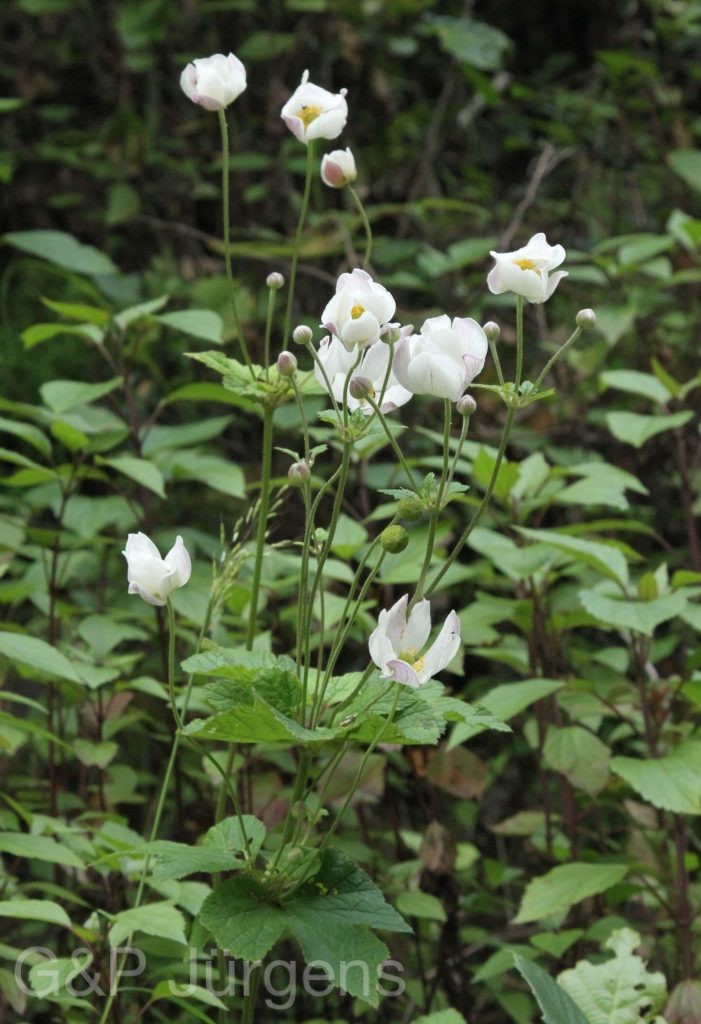
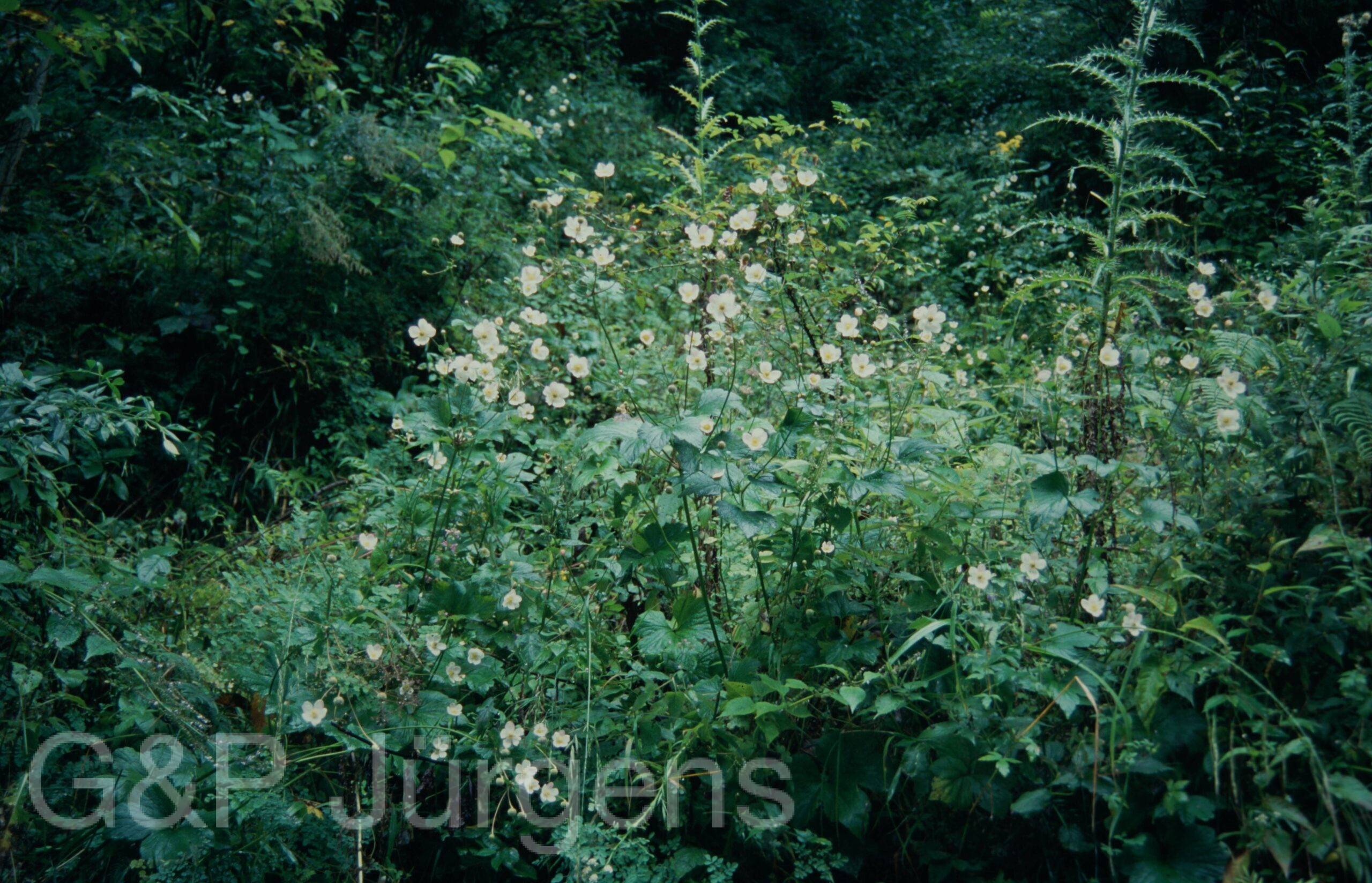
(Buch.-Ham. ex DC.) Nakai

Bhutan2012 1325
Bhutan Pemagatse 1900m, October
Bhutan2012 447
Bhutan Wangdi 2500m, September

Description

Eriocapitella vitifolia (formerly Anemone vitifolia) is a robust perennial herb widespread across the Himalaya and East Asia, recorded from China, Nepal, India, Bhutan, Taiwan, Myanmar, Pakistan and beyond, with nearly 2000 georeferenced occurrences in GBIF reflecting both its native range and ornamental cultivation. It favours forest margins, open slopes, shrubberies and disturbed banks, mainly in the warm- to cool-temperate belt between about 1500 and 3000 m. The plants illustrated were photographed in Bhutan at Pemagatse (1900 m) and Wangdi (2500 m) and in the Indian Garhwal at Sitel (1850 m), flowering from September into October.

The species arises from a stout, woody rootstock and produces long-petiolate basal leaves with broadly cordate-ovate, vine-like (vitifolia, grape-leaved) blades that are shallowly three- to five-lobed, toothed, and densely white-tomentose beneath. Tall, branching flowering scapes bear cymose clusters of showy flowers, each with five to many petaloid sepals (true petals absent) that are white to pale pink, surrounding a central mass of numerous yellow stamens and a domed cluster of carpels. The fruiting head is globose and conspicuously woolly, the densely hairy achenes being adapted for wind dispersal, a feature reflected in the generic name.

Eriocapitella was segregated from Anemone (Ranunculaceae) on molecular and morphological grounds, comprising the woolly-fruited Asian anemones, and E. vitifolia is one of its most familiar Himalayan representatives. It is widely grown in temperate gardens and is an ancestral parent of the cultivated Japanese anemones, explaining scattered records in Europe, North America and southern Africa. Containing acrid ranunculaceous compounds, it is avoided by grazers and, common and adaptable, is of no conservation concern.

Author: (Buch.-Ham. ex DC.) Nakai · Sources: POWO (Kew), GBIF, Flora of China, Flora of Bhutan, Annotated Checklist of the Flowering Plants of Nepal, Hoot et al. Phylogeny of Anemone and Allies

(Hedge) Ryding

Nepal 99 751 ergebnis
West-Nepal Poksundo-Lake 3650m, July

Description

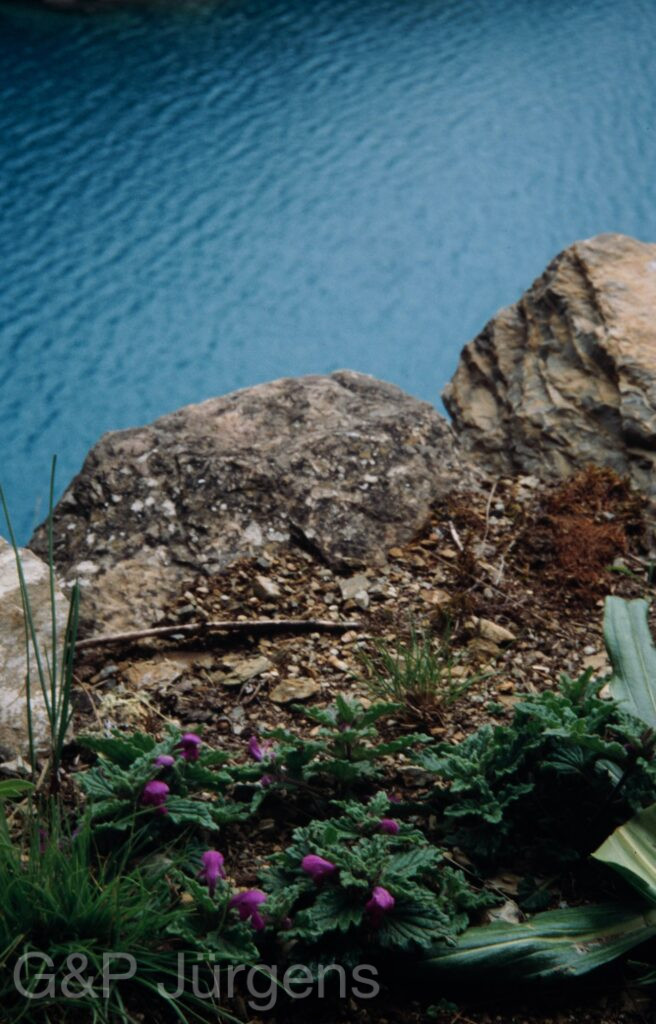
Eriophyton tuberosum is a high-alpine Himalayan labiate with a narrow distribution, GBIF holding only about 46 occurrences from Nepal, India and China. It is a plant of the alpine and subnival zones, occurring on open turf, scree margins, moist rocky slopes and stream-side flushes generally between about 3300 and 4300 m, enduring intense insolation, short growing seasons and cold nights. The population photographed beside Phoksundo (Poksundo) Lake in West Nepal at 3650 m, flowering in July at the height of the monsoon growing season, is typical of its restricted occurrence in cool, moist, high-elevation meadow and rock habitats of the western and central Himalaya.

It is a low perennial herb arising from a swollen tuberous rootstock, as the epithet indicates, with short, ascending to decumbent stems. The leaves are opposite and decussate, ovate to rounded, crenate, and—like many members of this alpine assemblage—somewhat fleshy and often woolly or villous, an adaptation to the harsh climate. The flowers are borne in axillary whorls toward the stem apex; each has a tubular, toothed calyx and a two-lipped corolla in shades of pink, purple or violet, with four didynamous stamens beneath the upper lip. The fruit comprises four smooth nutlets in the persistent calyx.

Transferred by Ryding to Eriophyton from Hedge's original placement, this species reflects a modern recircumscription absorbing several small Himalayan genera (notably Alajja) into an expanded Eriophyton of woolly alpine mints. Its very low occurrence count and narrow high-altitude band make it a regional endemic of conservation interest, sensitive to grazing and alpine warming, and a nectar source for high-altitude bumblebees.

Author: (Hedge) Ryding · Sources: POWO (Kew), GBIF, Flora of China, Annotated Checklist of the Flowering Plants of Nepal, Ryding revision of Eriophyton (Lamiaceae)

Benth.

Sikkim2003 319 P458
Sikkim Saniti-Lake 4300m August
Sikkim2003 322 P457
Sikkim Saniti-Lake 4300m August

Description

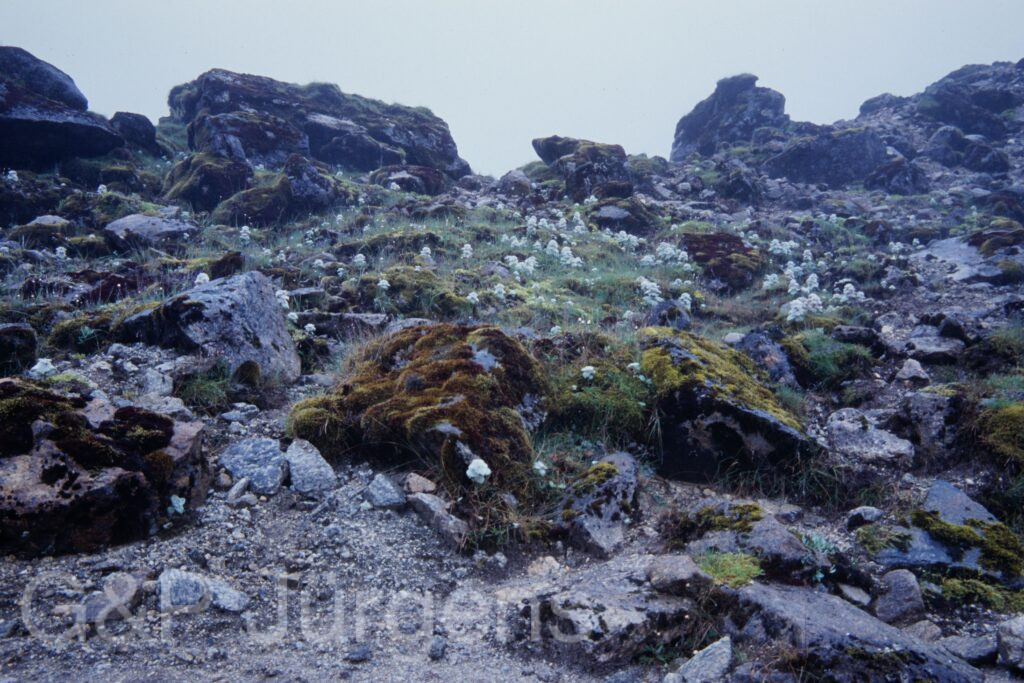
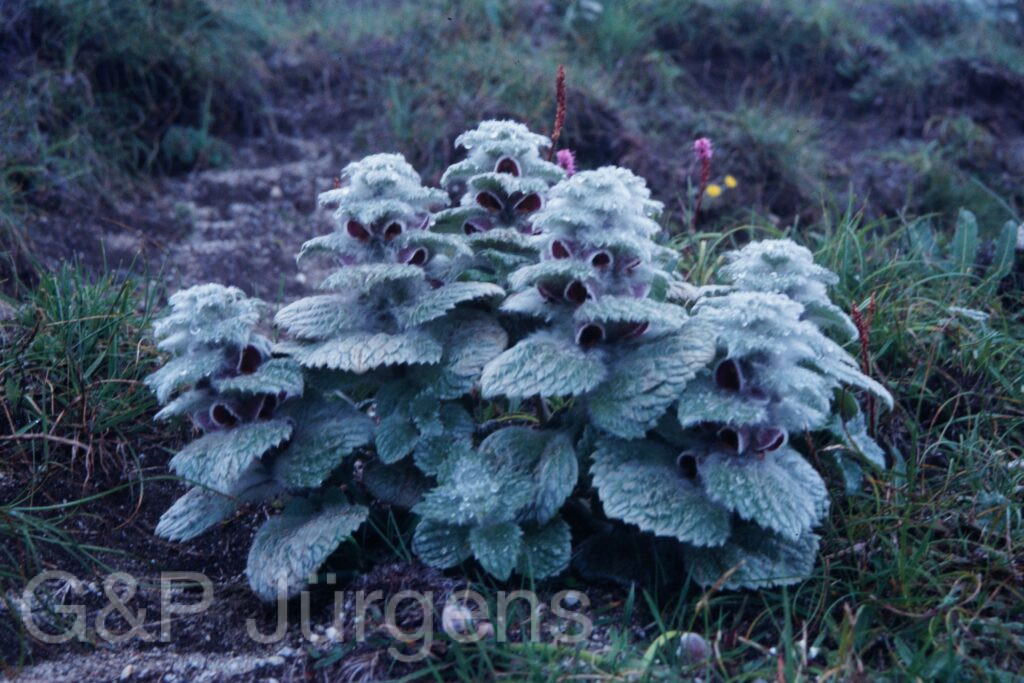
Eriophyton wallichii is a high-alpine perennial of the central and eastern Himalaya and the Tibetan Plateau, recorded from China, Nepal, India, Bhutan and Afghanistan, with some 605 georeferenced occurrences documented in GBIF. It is a characteristic plant of open screes, moraines and frost-heaved gravels of the upper alpine and subnival zones, typically between 3500 and 5000 m, where the growing season is brief. The photograph from the Saniti Lake area of Sikkim at about 4300 m in August captures the species in its preferred scree habitat at the height of the short montane summer.

The plant forms a stout, deeply buried rhizome from which arise short, ascending stems almost entirely concealed by the foliage. The most conspicuous feature is the dense covering of long, silky white woolly hairs that envelop the upper leaves, an adaptation buffering the flowers against cold and excessive radiation. The leaves are opposite, broadly ovate to suborbicular, becoming progressively larger and more densely lanate upward, where the uppermost pairs form a protective bracteal cup. The bilabiate flowers are borne in the axils of these terminal leaves, with a tubular calyx and a pink to purplish corolla whose lower lip is spreading; the fruit comprises four smooth nutlets enclosed within the persistent calyx.

The genus Eriophyton sensu lato (incorporating elements formerly placed in Alajja and Stachyopsis) is a small, distinctly Sino-Himalayan group of the Lamiaceae adapted to the harshest alpine environments. The pronounced indumentum exemplifies the convergent woolliness seen in unrelated subnival cushion and scree plants such as Saussurea and Soroseris. Long valued in Tibetan and Himalayan ethnomedicine, E. wallichii remains locally frequent across its broad range and is not presently considered threatened, though its specialised scree habitat is sensitive to glacial retreat and shifting alpine climates.

Author: Benth. · Sources: POWO (Kew), GBIF, Flora of China, Flora of Bhutan, Annotated Checklist of the Flowering Plants of Nepal, Harley et al. Labiatae in The Families and Genera of Vascular Plants

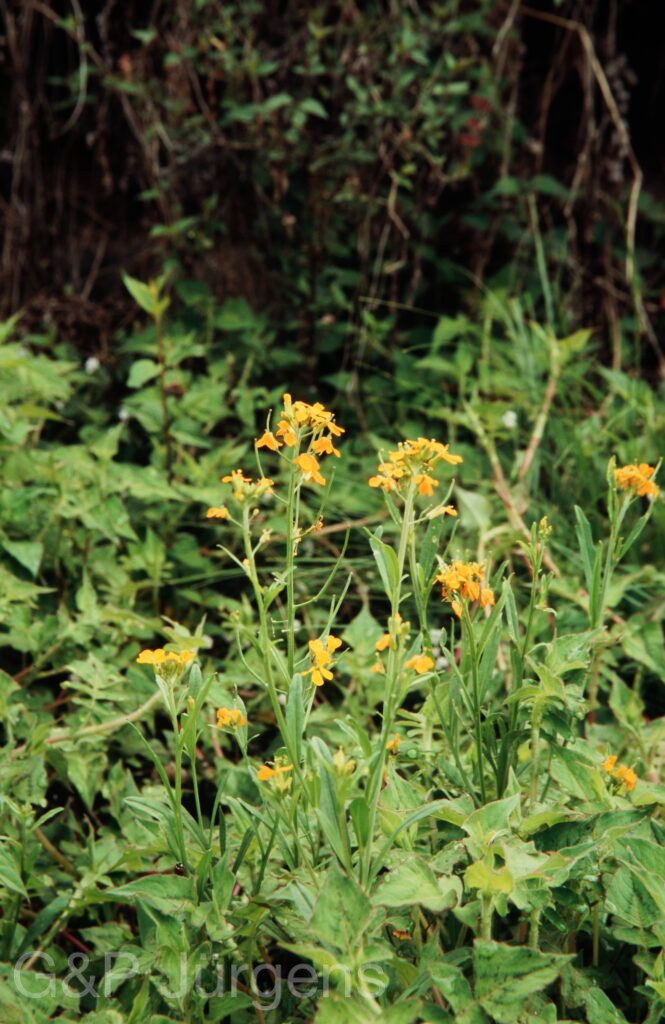
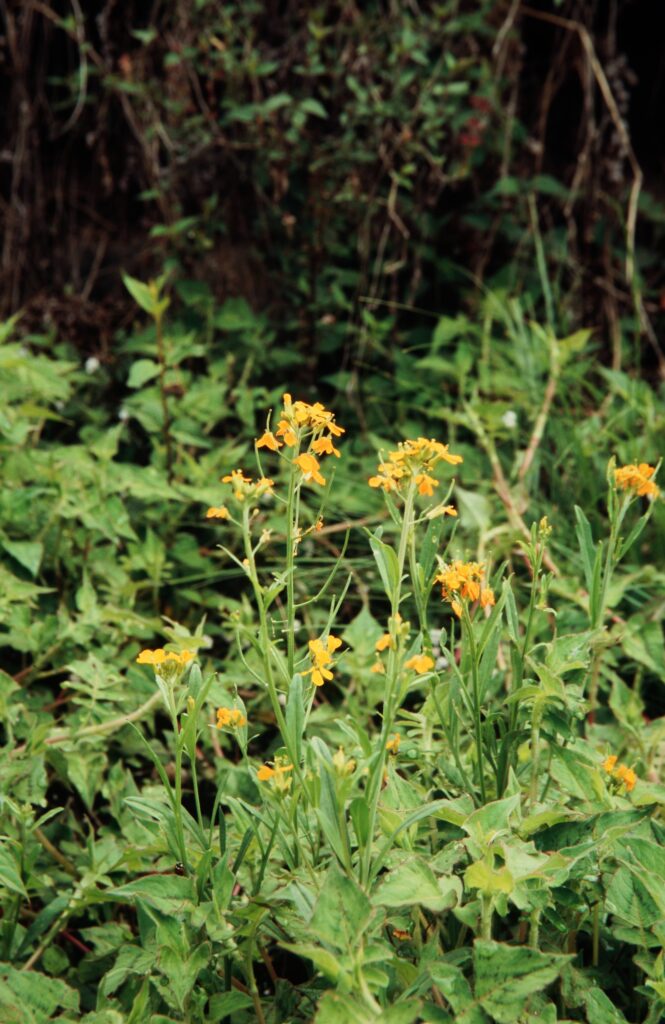
Monnet

Nepal 2009 88 ergebnis
Nepal Helambu Bolgoau 2050, May

Description

Erysimum benthamii is a Himalayan crucifer recorded from China, Nepal, Bhutan and India, with over 230 georeferenced occurrences spanning the central and eastern Himalaya. It favours open, sunny situations on dry banks, stony slopes, forest clearings and disturbed ground in the temperate and subalpine zones. The plant illustrated from Helambu at Bolgaon (about 2050 m) in Nepal in May reflects its typical mid-elevation habitat, where it flowers in spring on well-drained, often rocky or gravelly soils along trails and open hillsides.

It is an erect biennial or short-lived perennial herb covered, like most members of the genus, in appressed medifixed (malpighiaceous) two- to several-branched hairs that give the foliage a greyish cast. The stem is simple or branched above and bears narrowly lanceolate to linear, entire or remotely denticulate leaves. The flowers are arranged in elongating terminal racemes; the four sepals are erect, and the four clawed petals are bright yellow to orange-yellow in the cruciform arrangement typical of Brassicaceae. The fruit is a long, slender, four-angled silique held more or less erect on a short pedicel, splitting at maturity to release two rows of small seeds.

Erysimum is a large Holarctic genus whose Himalayan representatives are taxonomically intricate, distinguished by trichome branching, fruit shape and indumentum density; E. benthamii is set apart by these vegetative and silique characters. The presence of an indeterminate-country record (coded ZZ) reflects imprecise georeferencing rather than any disjunct range. Widespread and tolerant of disturbance, the species is of least conservation concern.

Author: Monnet · Sources: POWO (Kew), GBIF, Flora of Nepal, Flora of China, Flora of Bhutan, Polatschek's revisions of Erysimum

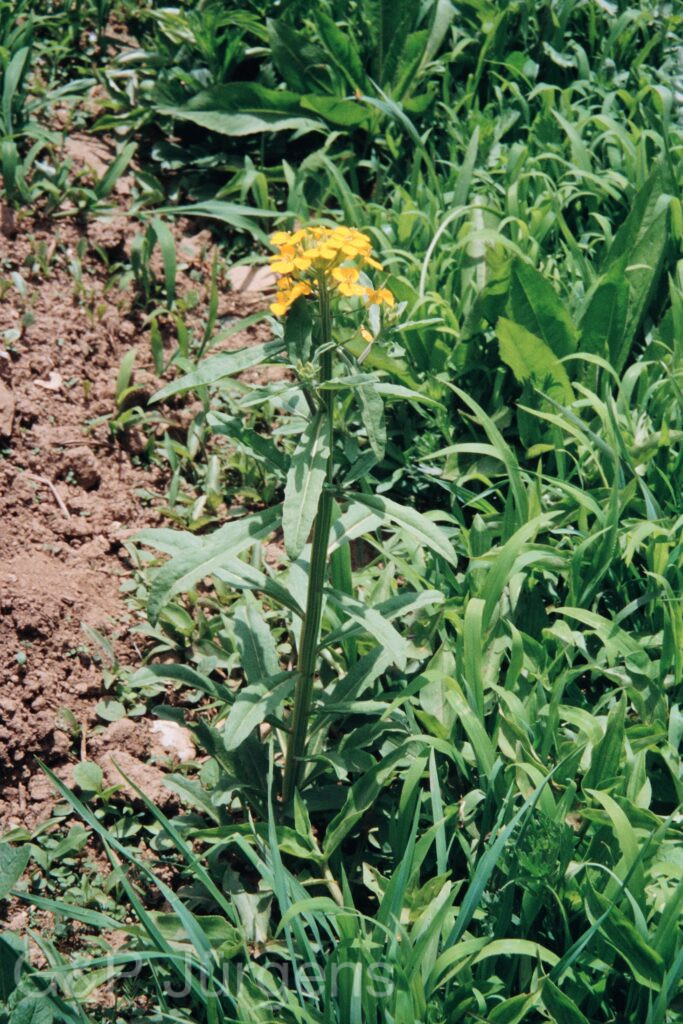
Hook.f. & Thomson

Nepal 2009 88 ergebnis
Nepal Samthang 2410m, May

Description

Erysimum pachycarpum is a Himalayan wallflower distributed across Nepal, Bhutan, northern India, and extending into southwestern China (Tibet, Yunnan). GBIF documents 39 occurrences from these countries. The species inhabits dry rocky slopes, open scrubland, disturbed ground along trails, and stony riverbanks in the warm to cool temperate zone, at elevations from approximately 1,800 to 3,500 m. The photograph from Samthang in Nepal at 2,410 m, taken in May, shows the species at a mid-elevation site during its spring flowering period.
The plant is a biennial or short-lived perennial herb, 20–60 cm tall, with erect, usually unbranched stems covered in appressed, medifixed (malpighian) trichomes characteristic of the genus. Basal leaves are oblanceolate, 3–8 cm long, with entire to sinuate-dentate margins, forming a rosette that may wither at flowering; cauline leaves are narrowly lanceolate, sessile, progressively smaller upward. The inflorescence is a dense, terminal raceme that elongates considerably in fruit. Flowers are tetramerous with yellow petals, 8–12 mm long, spatulate, clawed. Stamens six, tetradynamous. The silique is stout and thick-walled — hence the epithet pachycarpum (thick-fruited) — erect to slightly spreading, 3–6 cm long, quadrangular in cross-section, densely covered with appressed trichomes. Seeds are oblong, narrowly winged.
Erysimum pachycarpum is distinguished from other Himalayan Erysimum species primarily by its robust, thickened siliques and relatively large flowers. The genus Erysimum is taxonomically challenging due to frequent hybridisation and subtle morphological boundaries between species, and molecular studies are ongoing to resolve relationships within the Himalayan clade. The species is not currently assessed as threatened and appears locally common in suitable open, dry habitats across its range.

Author: Hook.f. & Thomson · Sources: POWO (Kew), GBIF, Flora of China Vol. 8, Grierson & Long: Flora of Bhutan Vol. 1

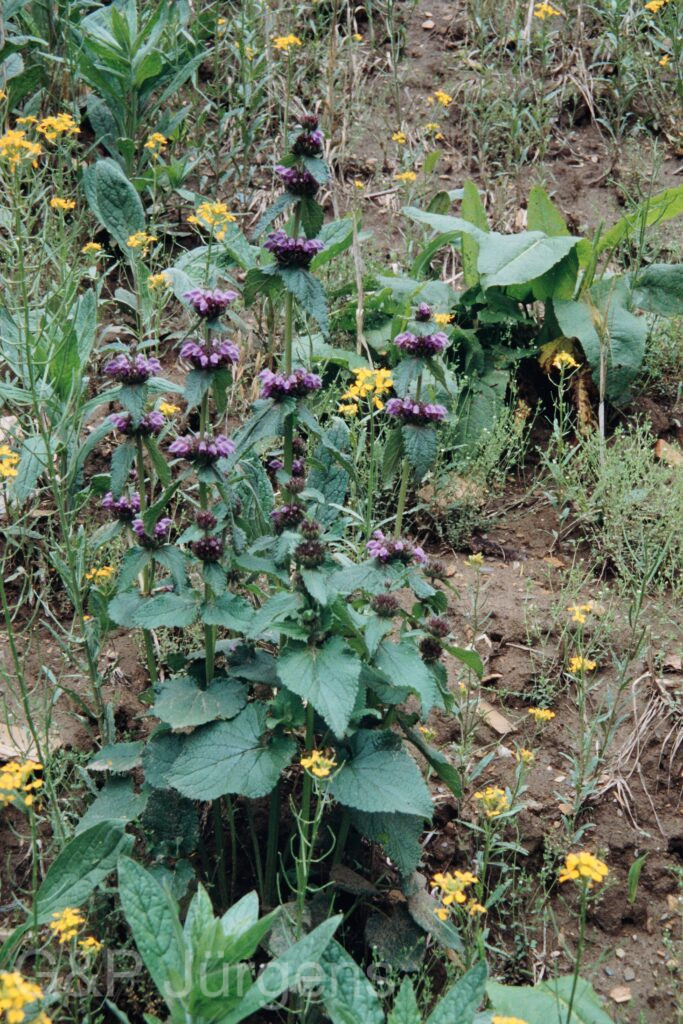
D.Don

Nepal 99 423 ergebnis
Nepal Talphi 2830m, July
Nepal 99 72 ergebnis
Nepal Chauta-valley, 2800m, July

Description

Erysimum robustum is a Himalayan wallflower distributed through Nepal, northern India and SW China (Xizang and Yunnan), as reflected in the GBIF country records (NP, IN, CN) and some 89 occurrences. The plants illustrated here were photographed in western Nepal at Talphi (c. 2,830 m) and in the Chauta valley (c. 2,800 m) in July. It is a montane to subalpine species favouring open, well-drained sites: stony pastures, dry slopes, roadside banks and the margins of cultivation, generally between 2,500 and 3,800 m, where it forms conspicuous yellow-flowered stands during the summer monsoon. The GBIF backbone treats the name as a synonym, but it is here regarded as the accepted name Erysimum robustum following regional floristic usage.

It is a biennial or short-lived perennial herb with an erect, robust, often branched stem clothed, like the rest of the plant, in appressed two- to several-rayed malpighiaceous hairs that give a greyish cast. The leaves are linear to oblanceolate, entire to remotely denticulate, the lower ones petiolate and the upper sessile. The inflorescence is an elongating ebracteate raceme of bright yellow flowers with four clawed petals in the cruciferous pattern and tetradynamous stamens. The fruit is a long, narrow, four-angled siliqua, somewhat torulose and ascending on a stout pedicel, containing a single row of oblong seeds in each locule.

The genus Erysimum is taxonomically difficult owing to extensive variation in indumentum and habit, and several Himalayan entities have been variously lumped or split; trichome branching patterns and siliqua characters remain the most reliable diagnostic features. As a widespread, weedy-tolerant species of disturbed montane ground, E. robustum is not of conservation concern and can act as an early colonist of bare slopes.

Author: D.Don · Sources: POWO (Kew), Flora of China Vol. 8, Flora of Nepal, GBIF, Polatschek: Revision der Gattung Erysimum

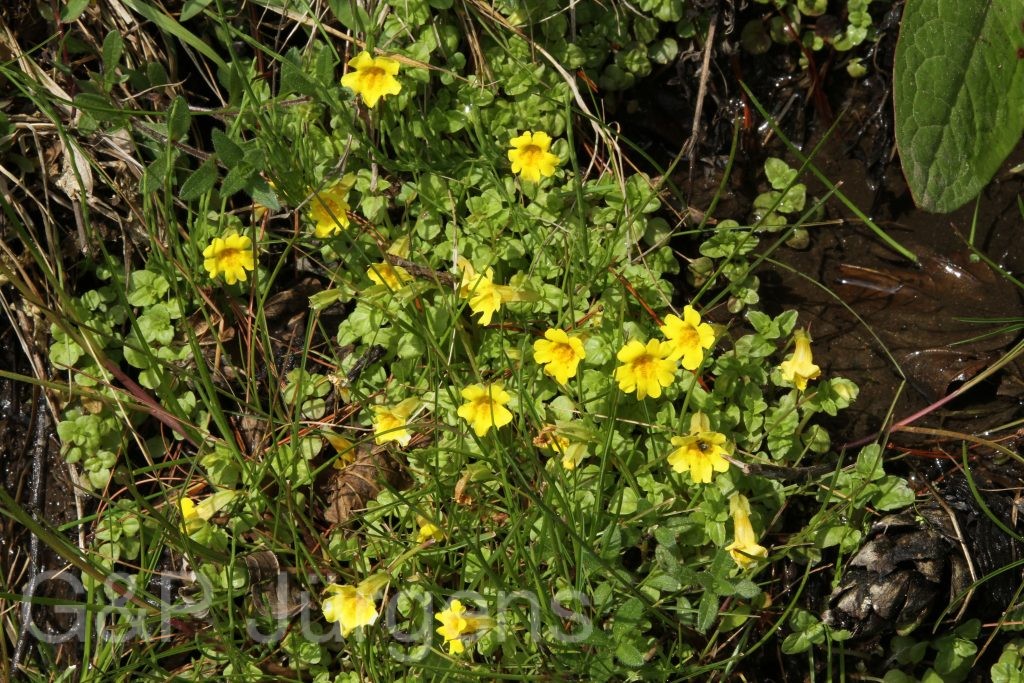
(Benth.) G.L.Nesom

Bhutan2014 855
Bhutan Thimphu 2600m, May

Description

Erythranthe nepalensis is a small wetland herb of temperate East and South Asia, recorded from Japan, China, Korea, Taiwan, Nepal, Bhutan, India, Myanmar, Pakistan and Bhutan, with around 2199 georeferenced occurrences in GBIF. It grows in damp, open ground: stream banks, ditch margins, wet meadows, seepages, rice-field bunds and moist rock crevices from the foothills into the temperate montane zone. The photographed plant from Thimphu in Bhutan at 2600 m in May is characteristic of such cool, moist Himalayan habitats, where it flowers in spring along watercourses and on dripping banks.

It is a slender annual or short-lived perennial herb with weak, decumbent to ascending, often rooting stems forming low mats. The leaves are opposite, small, ovate to broadly ovate, palmately veined, with a few shallow teeth and short petioles. The flowers are solitary in the leaf axils on slender pedicels; the calyx is tubular-campanulate and angled-ribbed, with short triangular lobes, and the corolla is bilabiate and yellow, the throat marked with reddish-brown to purplish spots and the lower lip prominent. There are four didynamous stamens, and the fruit is an oblong capsule enclosed by the persistent ribbed calyx, releasing numerous tiny seeds.

Formerly placed in Mimulus (as Mimulus tenellus var. nepalensis), the species was transferred to Erythranthe by G.L. Nesom following the molecular recircumscription that divided the old Mimulus among several genera and moved them from Scrophulariaceae to Phrymaceae. The spotted, bilabiate yellow flowers are adapted to bee pollination, and the plant's affinity for moist, disturbed ground allows ready local colonisation. Common and widespread across its range, it is of no particular conservation concern.

Author: (Benth.) G.L.Nesom · Sources: POWO (Kew), GBIF, Flora of China Vol. 18, Flora of Bhutan Vol. 2, Flora of Nepal, Taxonomy of Erythranthe (Phrymaceae) (Nesom)