Tag:

Nepal

Flowers of Nepal — 1313 wild plant species documented from the Nepalese Himalaya, from subtropical foothills to high alpine meadows above 4,000 m. Nepal’s dramatic elevation gradient makes it one of the richest botanical regions on Earth, home to rhododendrons, primulas, gentians and the famed blue poppies (Meconopsis). Every entry gives a botanical description, native distribution, habitat and flowering season, alongside the original field photograph and the location where it was taken.

Mucuna macrocarpa

by GP Jürgens

Wall.

Nepal 1994 57 ergebnis
Ost-Nepal Bhalukhob 
1800m April
Nepal 1994 55 ergebnis
Ost-Nepal Bhalukhob 
1800m April

Description

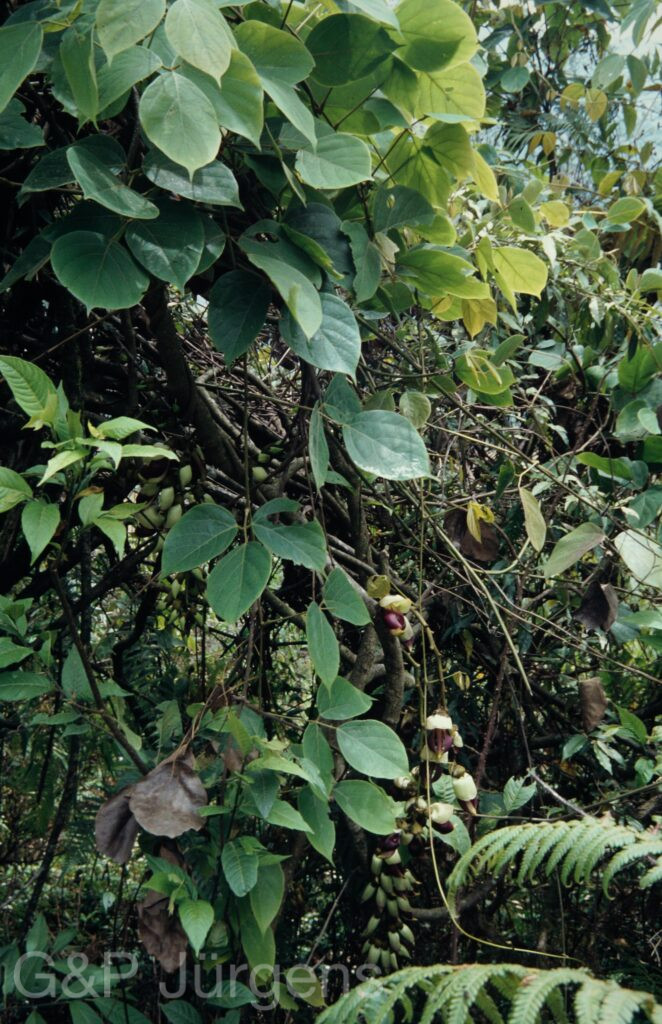
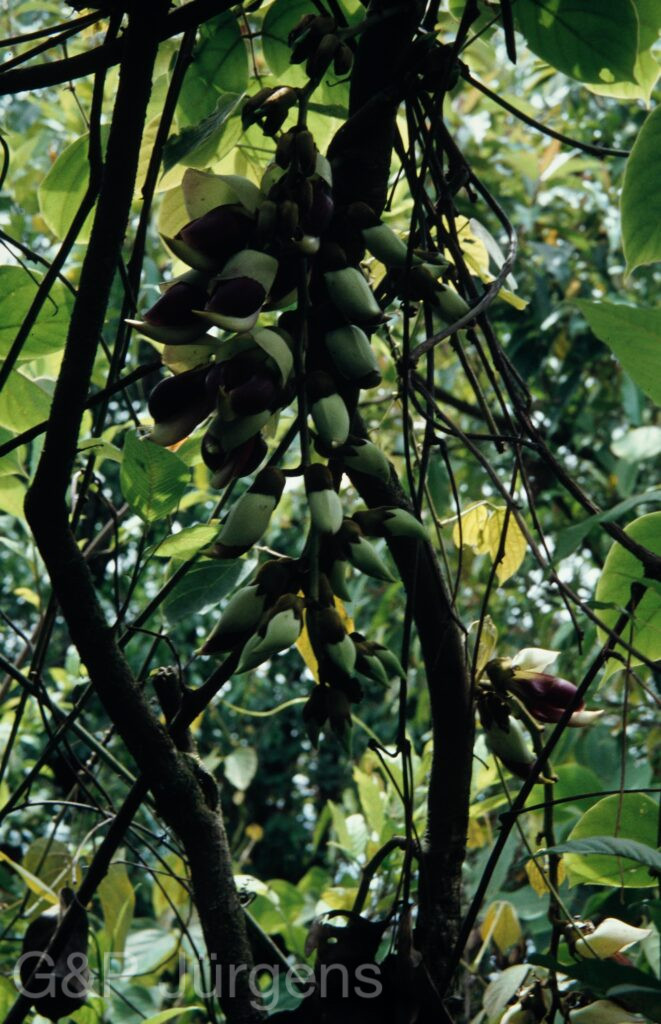
Mucuna macrocarpa is a large woody climber of subtropical and tropical Asia, ranging from Taiwan, Japan and China through Thailand, Laos, Myanmar, India, Vietnam, Nepal, Malaysia and Bhutan; GBIF records some 2100 occurrences, making it by far the best-documented species in this set. It scrambles through warm broadleaved and evergreen forest, along forest edges and ravine slopes at lower montane elevations. The photographed plant grows at Bhalukhob in East Nepal at about 1800 m, flowering in April, in humid subtropical hill forest.

It is a robust, perennial liana with stout woody stems and trifoliolate leaves bearing large, broadly ovate to elliptic leaflets. The pendent, cauliflorous to ramiflorous inflorescences carry showy papilionaceous flowers with a dark, often deep purple to maroon or greenish keel and standard, the keel curved and enclosing the stamens and style. The fruit is a large, woody, oblong pod, broad and often flattened, conspicuously ribbed or winged and clothed in irritant hairs, enclosing several hard, disc-shaped seeds.

The species is accepted. Mucuna is noted for explosive, mechanically triggered flowers adapted to vertebrate pollination: in this and related species the keel snaps open under the manipulation of nectar-feeding bats and, locally, other mammals or large birds, a celebrated case of chiropterophily. The stinging pod hairs deter herbivores, while the buoyant seeds are reported to disperse by water. Its wide range and frequency indicate a secure conservation status across monsoon Asia.

Author: Wall. · Sources: POWO (Kew), GBIF, Flora of China, Flora of Bhutan, Wilmot-Dear's revisions of Asian Mucuna (Leguminosae)
(G.Brückn.

Bhutan2012 426
Bhutan Wangdi 2700m, September

Description

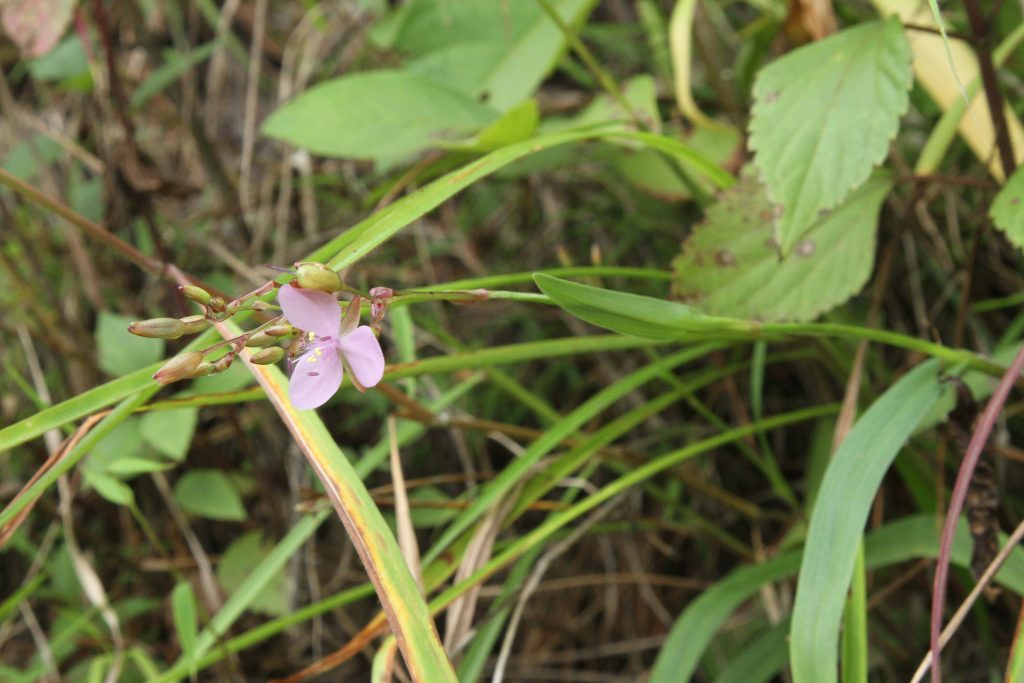
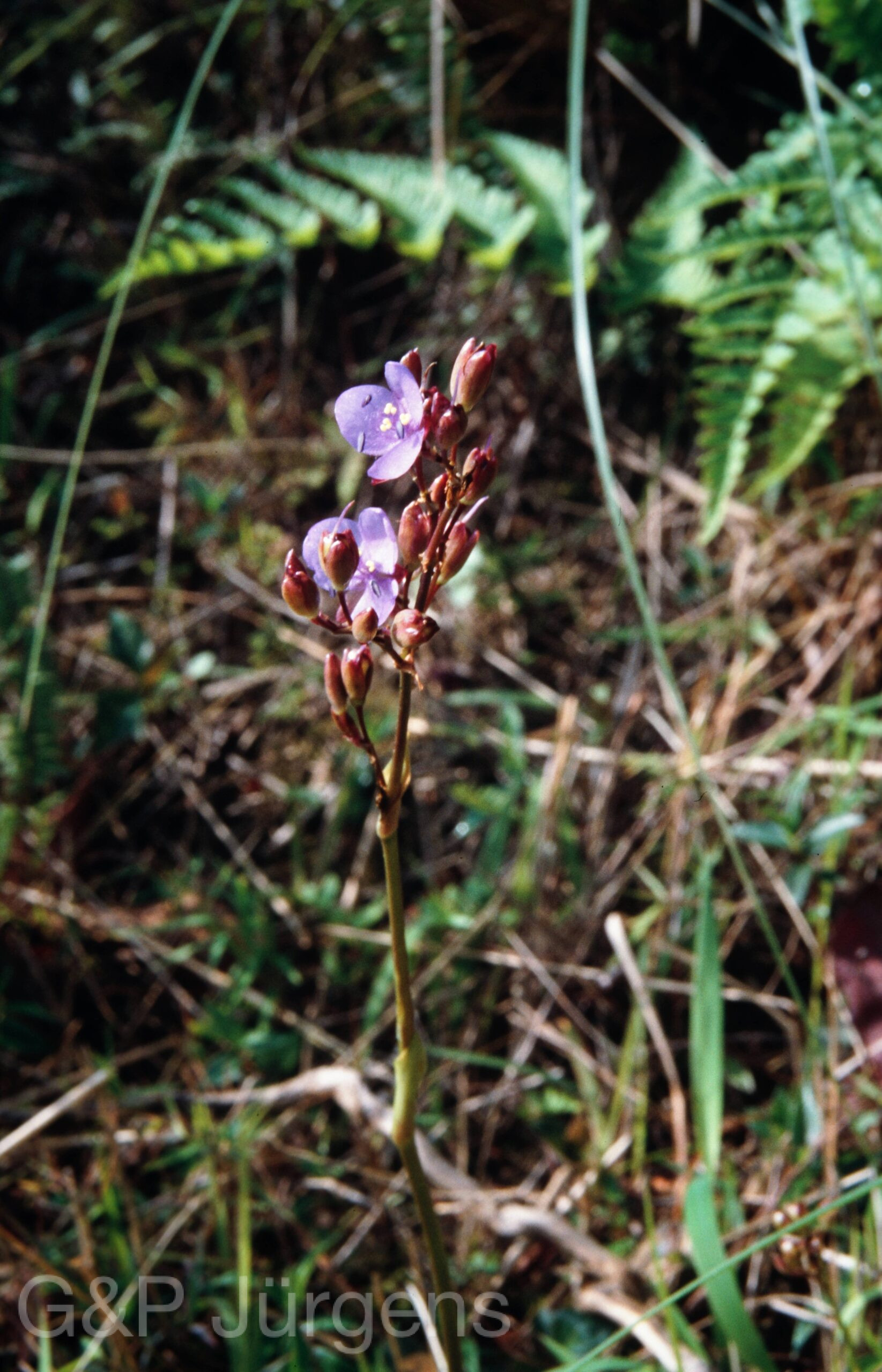
Murdannia divergens (G.Brückn.) Faden ex D.Y.Hong is a dayflower relative widely distributed across tropical and subtropical Asia, recorded by GBIF from China, India, Taiwan, Nepal, Myanmar, Thailand, Vietnam, Bhutan and Laos, with over 500 occurrences. It grows in damp grassland, open forest, scrub, marshy ground and along streamsides, lowland to montane. The Bhutanese material from Wangdi at 2700 m in September reflects its occurrence well into the temperate zone and its late-monsoon flowering, when soil moisture supports the succulent growth typical of the family.

It is a perennial or sometimes annual herb with fleshy roots and ascending to decumbent stems rooting at the lower nodes. The leaves are alternate, linear to linear-lanceolate, sheathing at the base in the manner of the Commelinaceae, with parallel venation. The inflorescence is a terminal, often divergently branched (as the epithet suggests) thyrse, the flowers actinomorphic with three free, ephemeral blue to violet or pinkish-mauve petals and bearded stamens with staminodes, typically three fertile. Each flower lasts a single day; the fruit is a small three-locular loculicidal capsule releasing few rugose seeds.

Murdannia, segregated from Aneilema and Commelina, comprises herbs of seasonally wet ground, and M. divergens belongs to its montane-adapted members. Its day-lasting flowers are pollinated by small bees and hoverflies attracted to the stamen hairs and pollen-presenting anthers. The wide Asian range and ecological flexibility of the species make it common in seasonally moist habitats; it is not threatened, though its dependence on wetland margins links local abundance to monsoon hydrology.

Author: (G.Brückn. · Sources: POWO (Kew), GBIF, Flora of China Vol. 24, Flora of Bhutan Vol. 3, Flora of Nepal, Faden revisions of Asian Commelinaceae

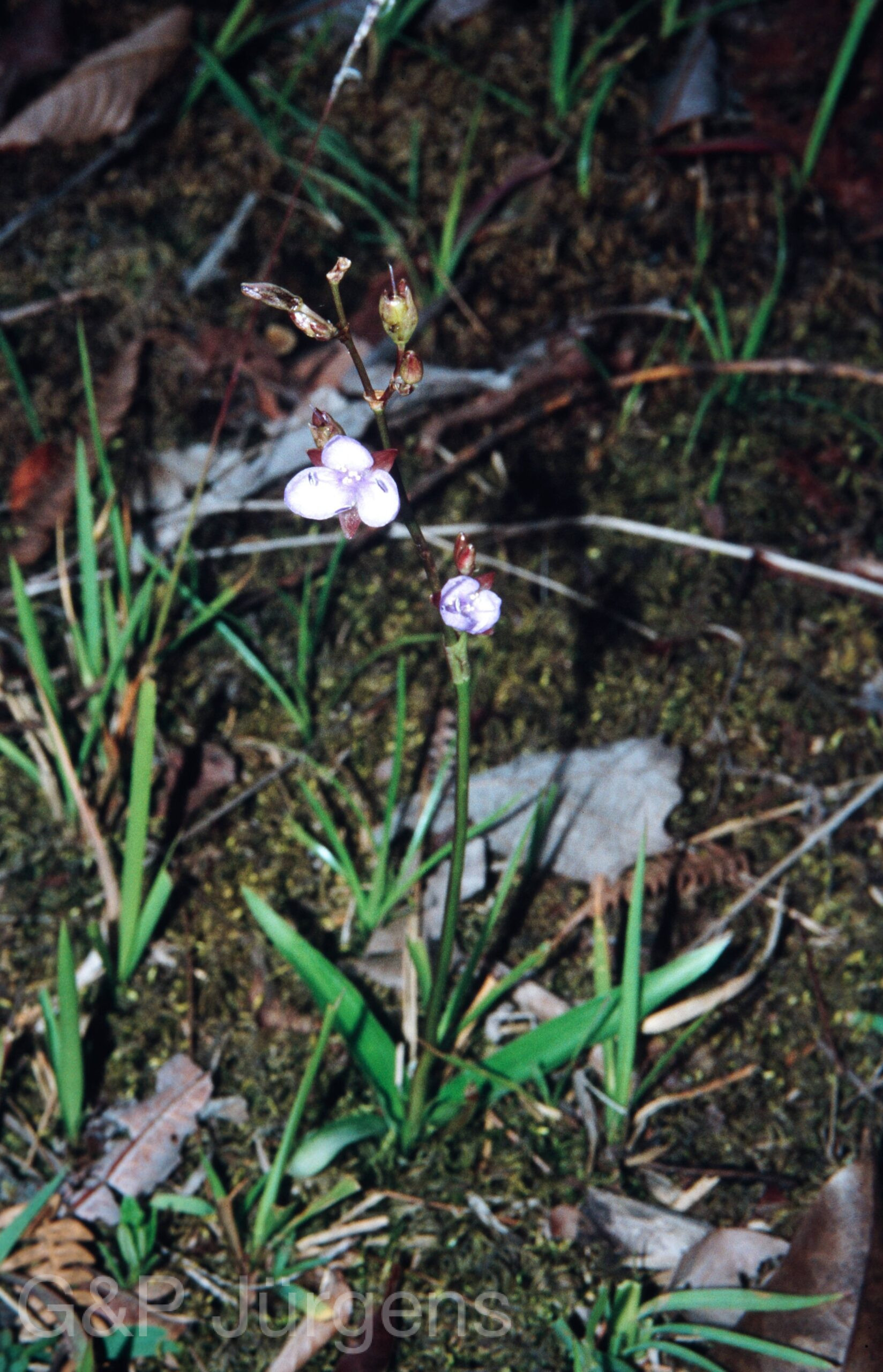
(Stokes) Faden

Description

Murdannia edulis is a tuberous-rooted dayflower relative distributed across tropical and subtropical Asia, from the Himalaya (Nepal, Bhutan, northeast India) through southern China, Taiwan, Myanmar, Thailand and Indochina to Malesia, the Philippines and New Guinea. It grows in open grassland, scrub, forest margins and seasonally moist banks, often on disturbed or cultivated ground, principally at low to mid elevations. The plant recorded at Mulabari in the Gorkha district of Nepal at 1,340 m in May represents its presence in the warm subtropical foothill zone, where it emerges and flowers with the onset of the pre-monsoon rains.

The plant is a perennial herb arising from a cluster of fleshy, fusiform, fascicled tuberous roots that store water and nutrients. The leaves are mostly radical, linear to lanceolate, sheathing at the base and arranged in a basal tuft, with parallel venation typical of the family. The inflorescence is a scapose, terminal panicle of cincinni bearing ephemeral, actinomorphic flowers with three free, pink to pale blue or mauve petals and conspicuous bearded staminodes accompanying the fertile stamens. The fruit is a small, loculicidal, ellipsoid capsule containing few angular seeds.

The genus Murdannia, segregated from Aneilema and Commelina, is distinguished by its enantiostylous, regular flowers and characteristic stamen arrangement; M. edulis was transferred to the genus by Faden, its basionym attributed to Stokes. As the epithet indicates, the starchy tuberous roots are edible and have been used as a famine or supplementary food across its range. The species is widespread, weedy and adaptable, and is of no conservation concern.

Author: (Stokes) Faden · Sources: POWO (Kew), Flora of China Vol. 24, Flora of Nepal, GBIF, Faden: Commelinaceae systematics

(L.) Spreng.

Bhutan2014 150
Bhutan Trashigang 2000m, May
Bhutan2014 236
Bhutan Trashigang 2000m, May

Description

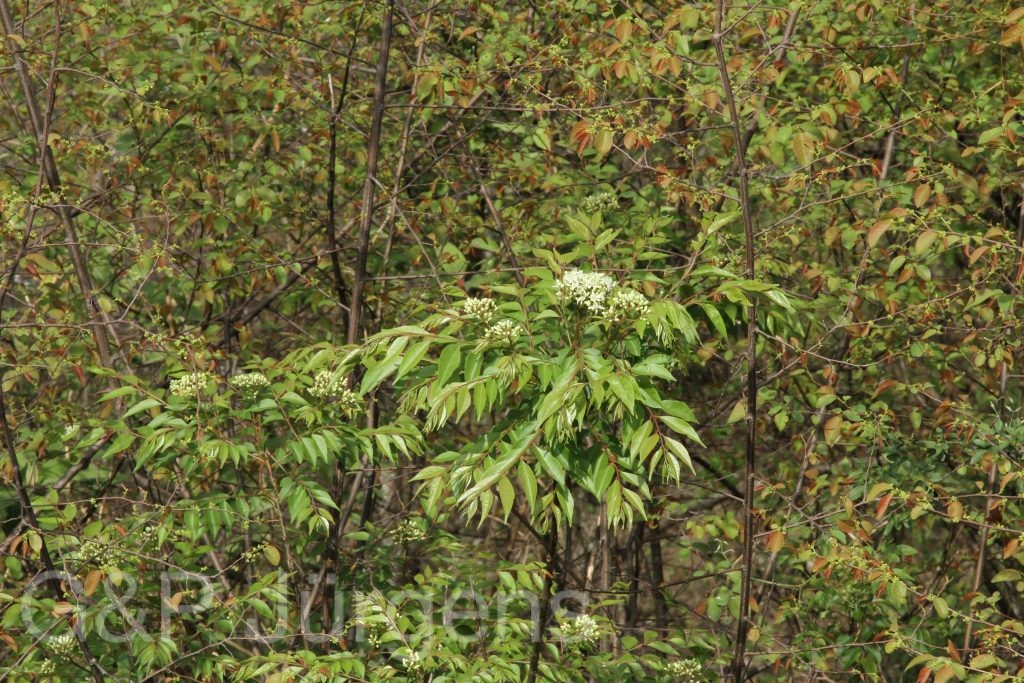
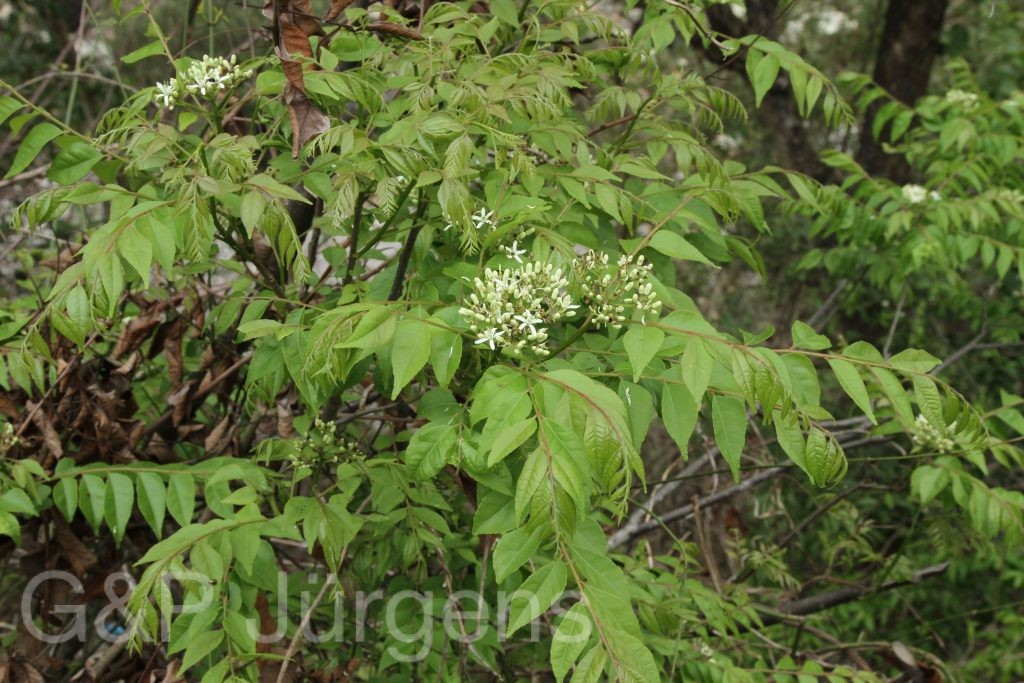
Murraya koenigii, the curry-leaf tree, is native to the Indian subcontinent and Indo-China and is now pantropically cultivated and naturalised, reflected in its very wide GBIF distribution spanning India, Sri Lanka, Nepal, Bhutan, China, Southeast Asia, Australia, Africa and the Americas. In its native range it grows in subtropical deciduous and semi-evergreen forest, scrub, forest margins and as an escape near settlements, from the plains up to about 1600 m, occasionally higher. The photographed plant from Trashigang in eastern Bhutan, at roughly 2000 m and flowering in May, sits near the upper limit of its altitudinal range in warm, sheltered hill forest.

The species is a small, aromatic, much-branched shrub or tree with thin grey to brownish bark. The leaves are alternate, imparipinnate, with numerous ovate-lanceolate, oblique-based, crenulate leaflets that are strongly aromatic when crushed and gland-dotted, as throughout the Rutaceae. The flowers are borne in terminal corymbose panicles, small, white, fragrant and bisexual, with five petals, ten stamens and a superior ovary. The fruit is a small ellipsoid to ovoid berry ripening from green through red to glossy black, with thin sweetish pulp and usually one or two seeds; the seeds are notably recalcitrant.

The genus commemorates the Swedish physician J. A. Murray, and the species epithet honours Johann Gerhard König. The plant is of great economic and culinary importance, its leaves indispensable in South Asian cuisine, and it is widely valued in traditional medicine. Its gland-dotted, essential-oil-rich foliage typifies the Rutaceae, and bird-dispersed berries account for its frequent escape and naturalisation; it is abundant and of no conservation concern.

Author: (L.) Spreng. · Sources: POWO (Kew), GBIF, Flora of China Vol. 11, Flora of Bhutan Vol. 1, Flora of Nepal, A Monograph of the Genus Murraya (Rutaceae)

Vahl

Bh09 388 P615
Bhutan Punaka-Chju 1600m, June
Nepal 2001 468 ergebnis ergebnis
Nepal (Gorkha) Gunda 1700m, May

Description

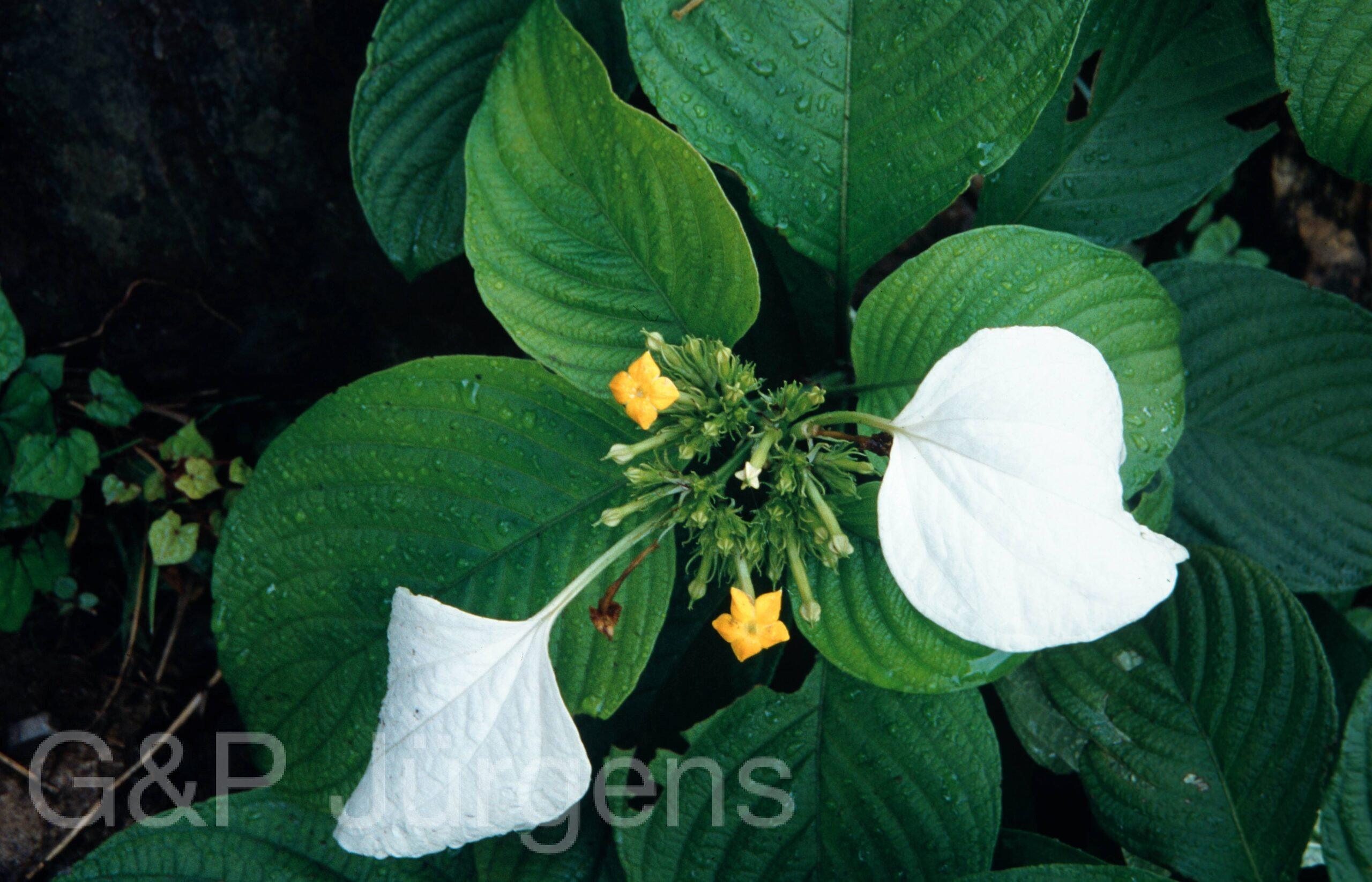
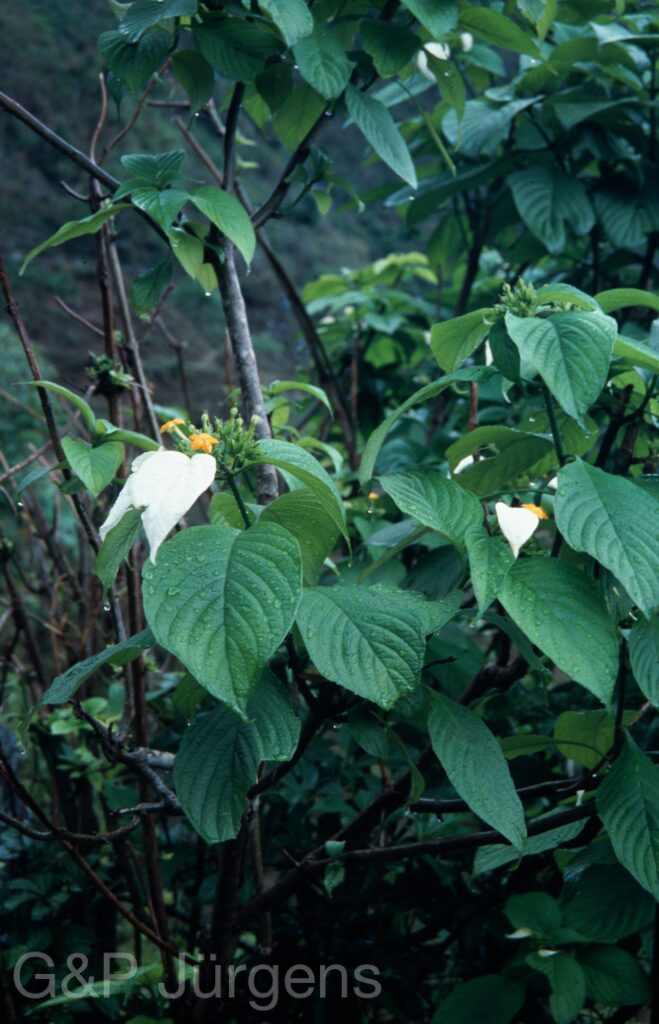
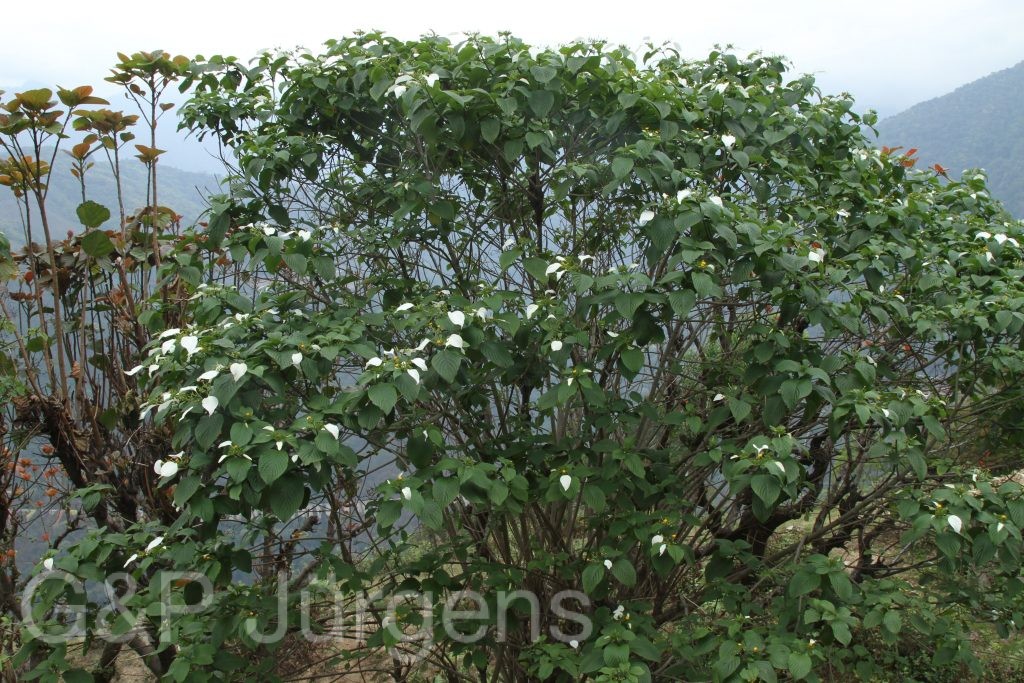
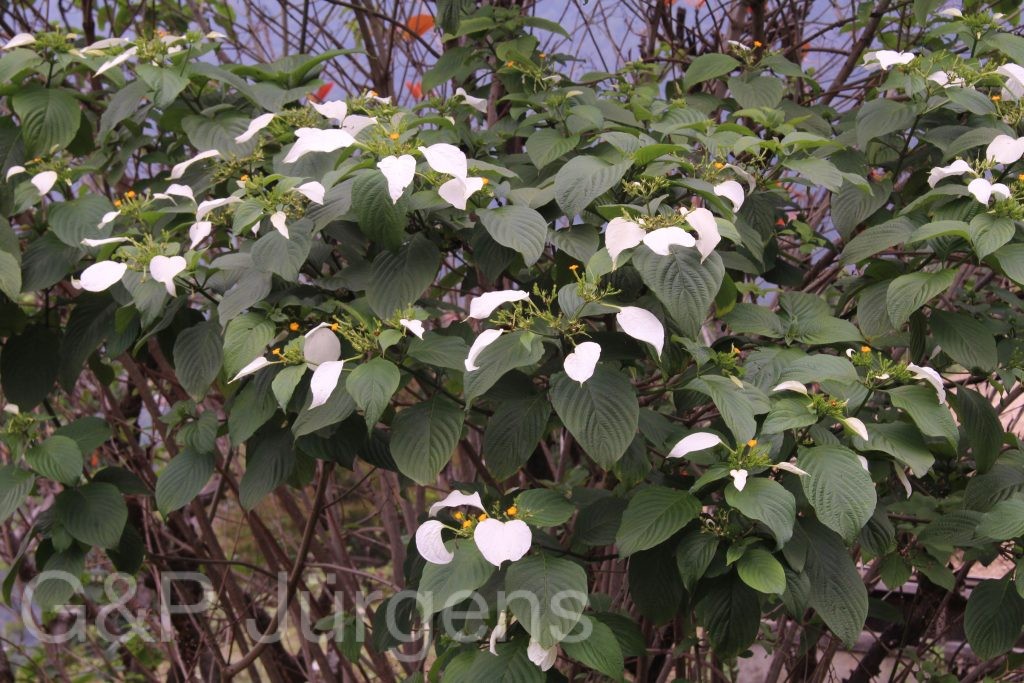
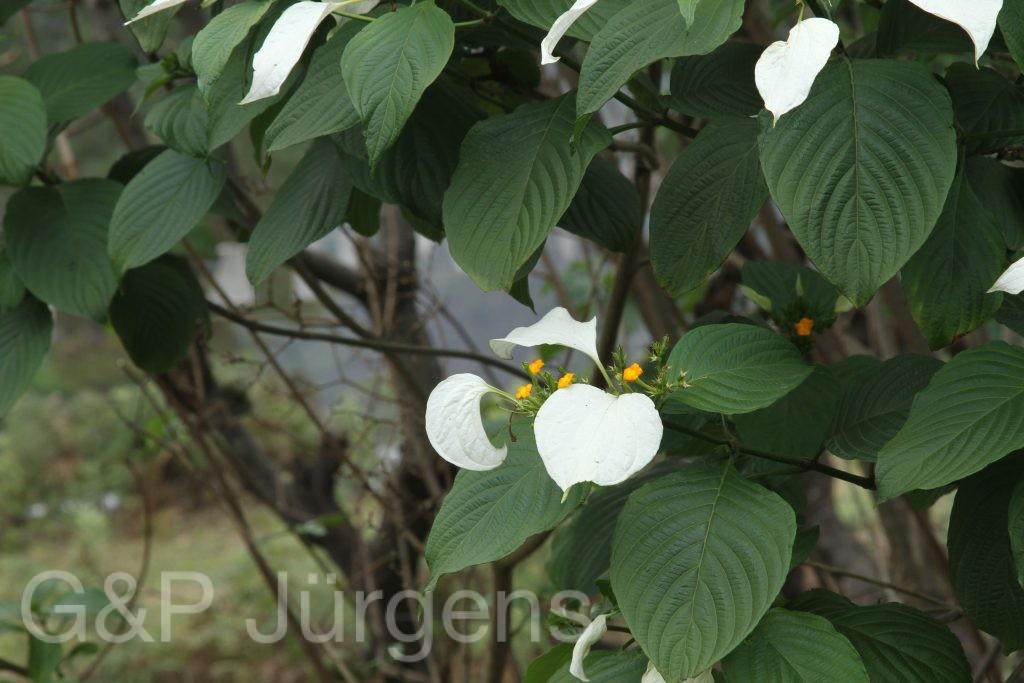
Mussaenda glabra is a widely distributed tropical to subtropical shrub or scrambling liana of Southeast Asia and the eastern Himalaya, documented from numerous countries including India, China, Myanmar, Thailand, Vietnam, Malaysia, Indonesia and Nepal across some 355 GBIF occurrences. The illustrated material was gathered at Punaka-Chu in Bhutan at 1600 m in June and at Gunda in Gorkha, Nepal at 1700 m in May. It grows in moist broad-leaved forest, along streamsides, thickets and forest margins from the lowlands up to about 1800 m, thriving in warm, humid, partly shaded situations.

It is an evergreen shrub or woody climber with terete, often pubescent young branches. The leaves are opposite, ovate to elliptic, entire, acuminate at the apex, with interpetiolar stipules characteristic of the Rubiaceae. The inflorescence is a terminal cyme bearing tubular flowers with a five-lobed orange-yellow corolla; the diagnostic feature is the enlargement of a single calyx lobe in some flowers into a large, conspicuous, white, leaf-like petaloid bract (semaphyll) that advertises the inflorescence to pollinators. The fruit is a fleshy berry containing numerous minute seeds.

The genus Mussaenda is renowned for these showy expanded calyx lobes, an adaptation enhancing pollinator attraction in the shaded understory and a feature widely exploited in horticulture. The fleshy berries are dispersed by birds. With its broad range spanning continental and insular Asia, the species is of least concern, being common across much of its distribution, though dependent on the persistence of intact lowland and submontane forest.

Author: Vahl · Sources: POWO (Kew), GBIF, Flora of China, Flora of Bhutan, Flora of Nepal, Jayaweera – The Genus Mussaenda (Rubiaceae) revision

Hook.f.

Bhutan2014 279
Bhutan Trithangebe near a farmhouse 700m, May
Bhutan2014 281
Bhutan Trithangebe near a farmhouse 700m, May
Bhutan2014 282
Bhutan Trithangebe near a farmhouse 700m, May

Description

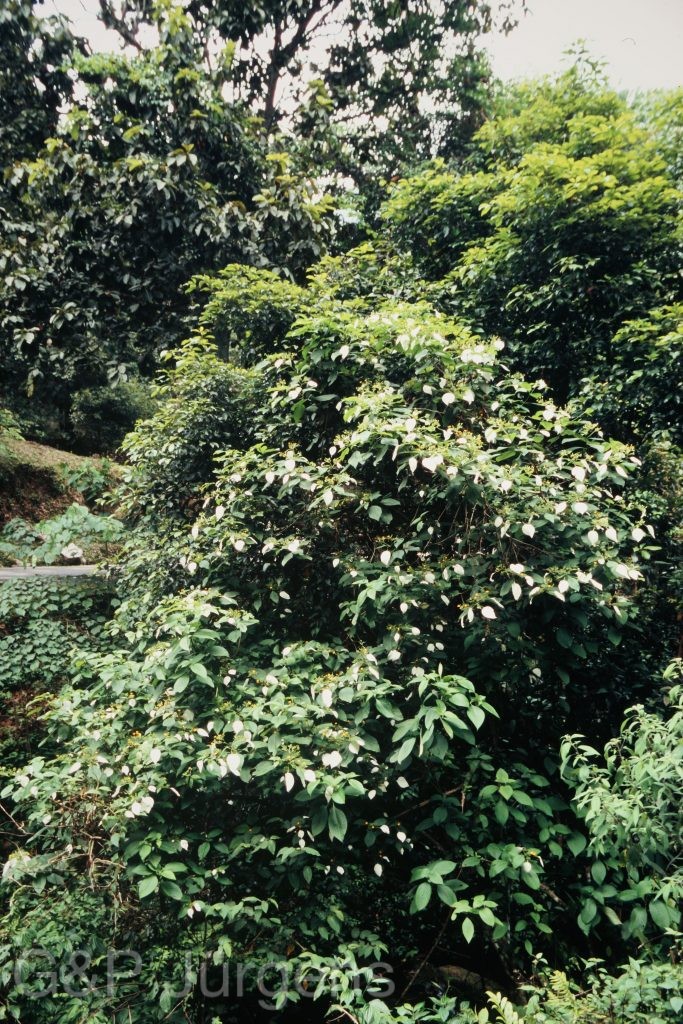
Mussaenda roxburghii is a shrub of the eastern Himalayan and Indo-Burmese lowlands and foothills, ranging across India, Nepal, Bhutan, Bangladesh and Myanmar; GBIF logs some 145 occurrences including a few cultivated records farther afield. It grows in warm subtropical hill forest, along forest margins, stream banks, roadside thickets and clearings, generally from near sea level to about 1500 m. The photographed individual grows in Bhutan at Trithangebe beside a farmhouse at around 700 m in May, a typical habitat for this species, which thrives in the humid pre-monsoon warmth of the lower hills near villages.

The species is an erect to scrambling shrub with terete, finely pubescent young branches. The leaves are opposite, ovate to elliptic, acuminate, entire and softly hairy beneath, with interpetiolar stipules. The inflorescence is a terminal corymbose cyme of numerous small flowers; its most striking feature is the enlargement of a single calyx lobe of certain flowers into a large, white, leaf-like petaloid bract advertising the inflorescence. The fertile flowers have a narrowly tubular orange to yellow corolla with five spreading lobes and a hairy throat. The fruit is a small fleshy berry crowned by the persistent calyx and containing minute seeds.

Mussaenda roxburghii Hook.f. exemplifies the genus's showy semaphylls, the expanded white calyx lobes that aid pollinator attraction and recur across tropical Rubiaceae. Widespread and locally common through the Indo-Himalayan foothills, it is not regarded as threatened and persists in secondary vegetation. Related Himalayan congeners such as M. treutleri are sometimes confused with it, and the group remains a focus of regional taxonomic study.

Author: Hook.f. · Sources: POWO (Kew), GBIF, Flora of Bhutan, Flora of British India, taxonomic revisions of Mussaenda (Rubiaceae)

(D.Don) S.C.Chen & J.J.Wood

Nepal 97 408 P789
Nepal Tashigaon 3000m May

Description

Mycaranthes floribunda is a widespread epiphytic orchid of tropical and subtropical Asia, recorded from India, Nepal, Bhutan, Bangladesh, Myanmar, Thailand, Laos, Cambodia, Vietnam and southern China. With some 182 georeferenced collections in GBIF, it is among the more frequently encountered species of its genus. In the eastern Himalaya it ascends into the temperate zone, as shown by material gathered near Tashigaon in eastern Nepal at around 3000 m in May. It grows chiefly as an epiphyte on the trunks and boughs of trees in humid broad-leaved and mixed evergreen forest, favouring mossy, shaded situations with reliable atmospheric moisture, and occasionally occurs lithophytically on shaded rock.

The plant forms clustered, slender, cane-like pseudostems arising from a short rhizome and clothed in persistent leaf bases. The leaves are several, distichous, narrowly elliptic to lanceolate, coriaceous and acute, articulated to sheathing bases. Inflorescences are lateral or terminal, erect to arching racemes bearing numerous small, densely arranged flowers, the axis and ovaries often furnished with fine mealy or hairy indument. The flowers are pale, the sepals ovate-lanceolate with a short mentum formed at the column foot, the petals narrower, and the trilobed labellum bearing low keels or calli on the disc. The fruit is a small ellipsoid capsule.

The species was originally described by D. Don and was transferred to Mycaranthes by S.C. Chen and J.J. Wood, reflecting the segregation of this lineage from the broadly circumscribed genus Eria, a realignment supported by molecular phylogenetic analyses of the Eriinae. Its wide elevational and geographic amplitude and tolerance of disturbed forest margins render it relatively secure across much of its range, though continuing deforestation locally reduces suitable epiphytic habitat.

Author: (D.Don) S.C.Chen & J.J.Wood · Sources: POWO (Kew), GBIF, Flora of Bhutan, Flora of China, Genera Orchidacearum

Hoffm.

Garh 07 196 ergebnis
India Garhwal Panwali 3250m, June
Garh 07 391 ergebnis
India Garhwal Kia-Kutti 3950m, June

Description

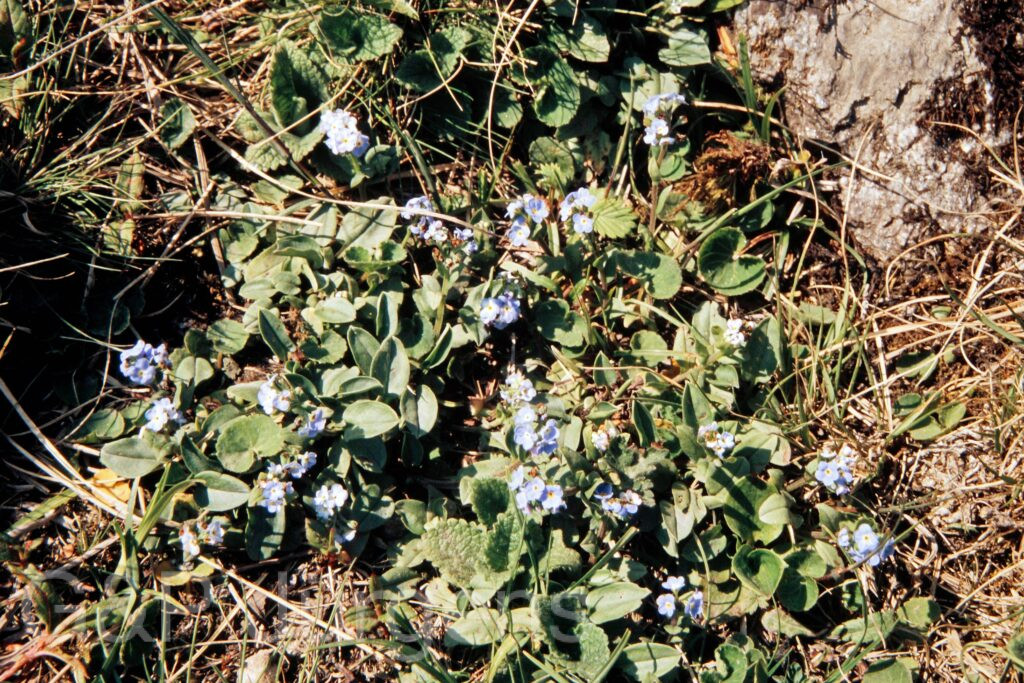
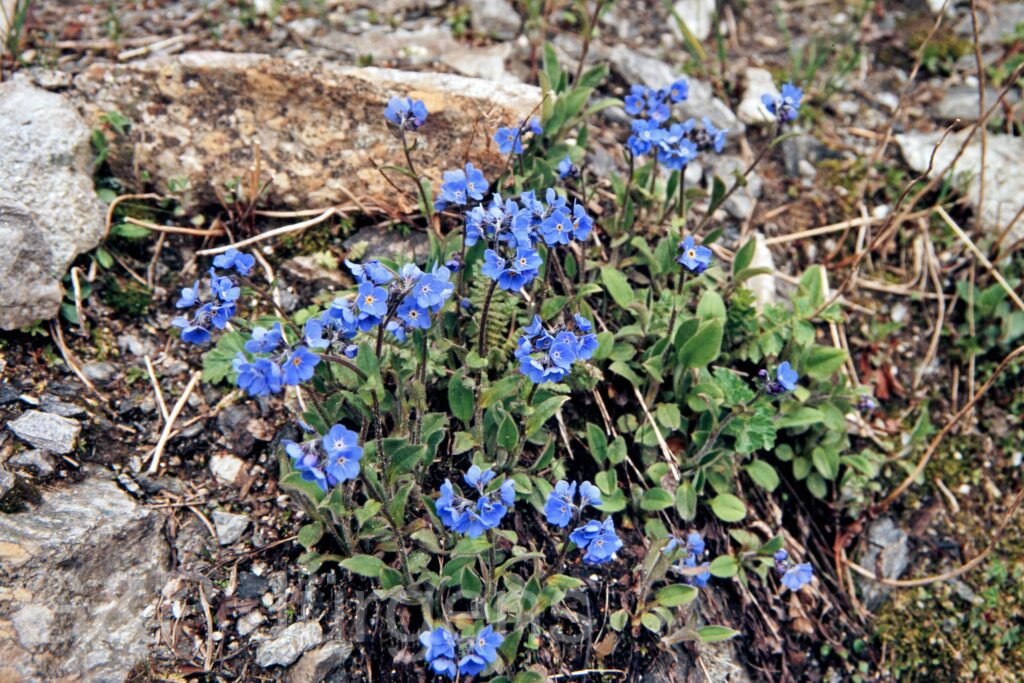
Myosotis sylvatica, the wood forget-me-not, is a widespread temperate herb whose native core lies across Europe and western Asia, with very large GBIF representation (over 171,000 records) from Britain, Germany, France, Scandinavia and the Alpine countries, plus naturalised populations in North America, Australia and New Zealand. In the western Himalaya it occurs as a montane element, as shown by the Garhwal collections at Panwali around 3250 m and Kia-Kutti near 3950 m, both in June. There it grows in moist meadows, along streamsides and on grassy alpine slopes, favouring cool, humus-rich soils with reliable seasonal moisture.

The plant is a softly hairy biennial or short-lived perennial forming a basal rosette from which arise erect to ascending leafy stems. The lower leaves are oblanceolate and stalked, the upper sessile and oblong. The inflorescence is the characteristic scorpioid cyme of the genus, uncoiling as the flowers open. Each flower has a five-lobed hairy calyx and a salverform corolla with a short tube and flat, usually sky-blue limb of five rounded lobes, the throat closed by yellow scales. The gynoecium develops into four smooth, shining, dark nutlets seated on the persistent calyx.

Myosotis is a taxonomically intricate genus in which M. sylvatica is distinguished from the annual field forget-me-nots by its larger, flat-faced flowers and from M. scorpioides by its drier habitats and hooked-haired calyx. Widely grown as a cottage-garden ornamental, it self-seeds freely and has escaped cultivation across several continents. The species is globally secure and of least concern, its abundance contrasting with the restricted ranges of many Himalayan congeners.

Author: Hoffm. · Sources: POWO (Kew), GBIF, Flora of China Vol. 16, Flora of Pakistan, Flora of Nepal, Flora Europaea (Tutin et al.)

Less.

Garw 2005 77
India Garhwal Auli-Gaushon 3100m, October

Description

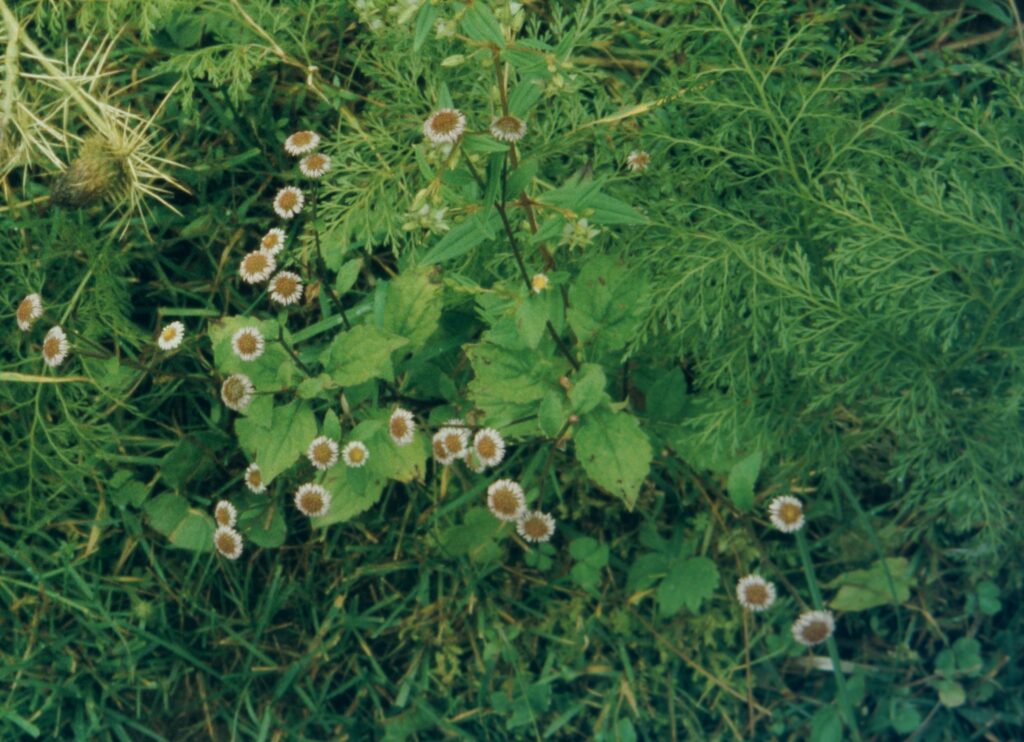
Myriactis nepalensis is an annual or short-lived perennial herb in the daisy family, widespread across the Himalayas from Pakistan through Nepal, India (Sikkim, Garhwal), and Bhutan to southwest China. It thrives in moist forest margins, shady banks, and disturbed ground at 1,500–3,500 m elevation.

The plant grows 15–60 cm tall with erect, branching stems. Leaves are alternate, ovate to broadly lanceolate, coarsely toothed, and softly hairy. The small flower heads (5–8 mm across) are borne in loose terminal clusters, with white ray florets surrounding yellow disc florets. Flowering occurs from August to November.

Often overlooked due to its small flower heads, Myriactis nepalensis plays an important ecological role as a late-season nectar source for pollinators at high elevations.

Author: Less. · Sources: POWO (Kew), Flora of Nepal Checklist, GBIF

W.W. Sm.

Sikkim2011 227
Sikkim Yumthang-Chu 3600m, September
Sikkim2004 285 P498
Sikkim/India Dzongri 3900m May

Description

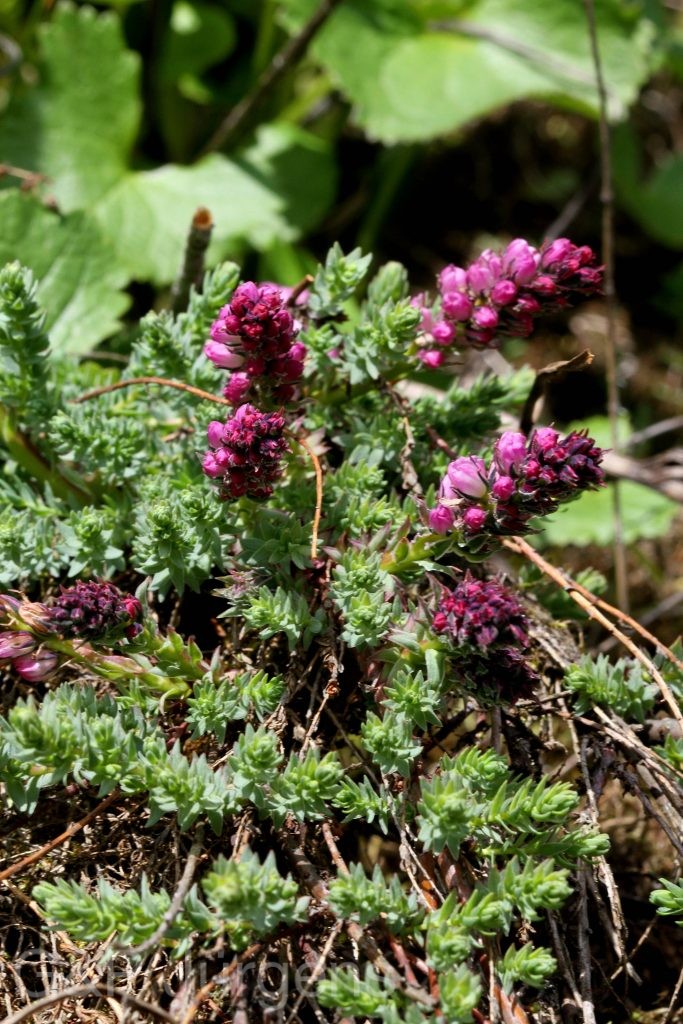
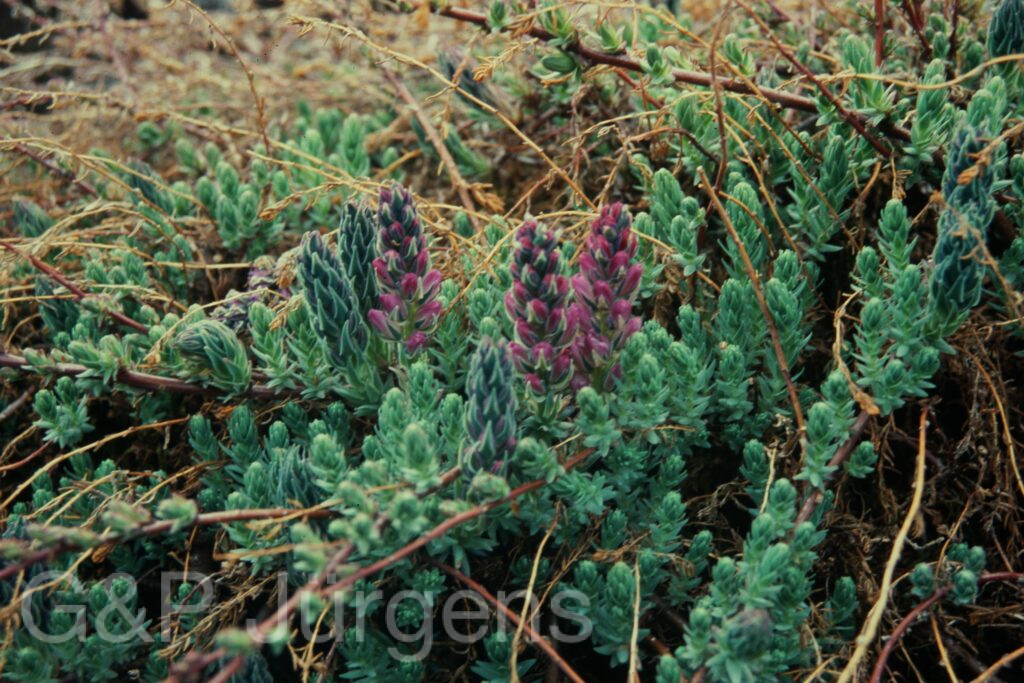
Myricaria rosea W.W.Sm. is a tamarisk-like shrub of the Tamaricaceae native to the eastern and central Himalaya and adjacent China. GBIF records, numbering 268 occurrences, place it in China, Nepal, India, Bhutan and Myanmar. The species is a riparian specialist of high-altitude valleys, colonising gravel bars, glacial outwash, moraine and the sandy margins of mountain streams, generally between 3,300 and 4,300 m. The illustrated plants from the Yumthang-Chu in Sikkim at 3,600 m in September and from Dzongri at 3,900 m in May span its flowering and fruiting seasons in the alpine and subalpine riverine zone.

The plant is a low, much-branched, decumbent to erect shrub with slender, reddish-brown, flexible branchlets. The leaves are small, sessile, scale-like to narrowly lanceolate, glaucous and densely overlapping along the twigs, an adaptation to the dry, exposed habitat. The flowers are borne in dense, terminal, spike-like racemes; each has five rose-pink to purplish petals, a five-parted calyx, and ten stamens whose filaments are connate at the base into a tube, a key character separating Myricaria from the related Tamarix. The fruit is a narrowly conical capsule splitting into three valves to release numerous tiny seeds, each crowned with a tuft of long, basally awned hairs that aids wind and water dispersal.

Myricaria comprises a small group of Central Asian and Sino-Himalayan shrubs of disturbed, unstable riparian and glacial substrates, and M. rosea is one of the distinctly pink-flowered eastern Himalayan members. Ecologically these shrubs are important pioneer colonisers that stabilise braided river gravels and moraine, providing early successional cover; their dependence on natural flood and sediment regimes makes them sensitive to hydrological alteration of high mountain rivers.

Author: W.W. Sm. · Sources: POWO (Kew), GBIF, Flora of China Vol. 13, Flora of Bhutan Vol. 2, Flora of Nepal, Zhang & Zhang: A taxonomic revision of Myricaria (Tamaricaceae)