
(L.) Spreng.
Description
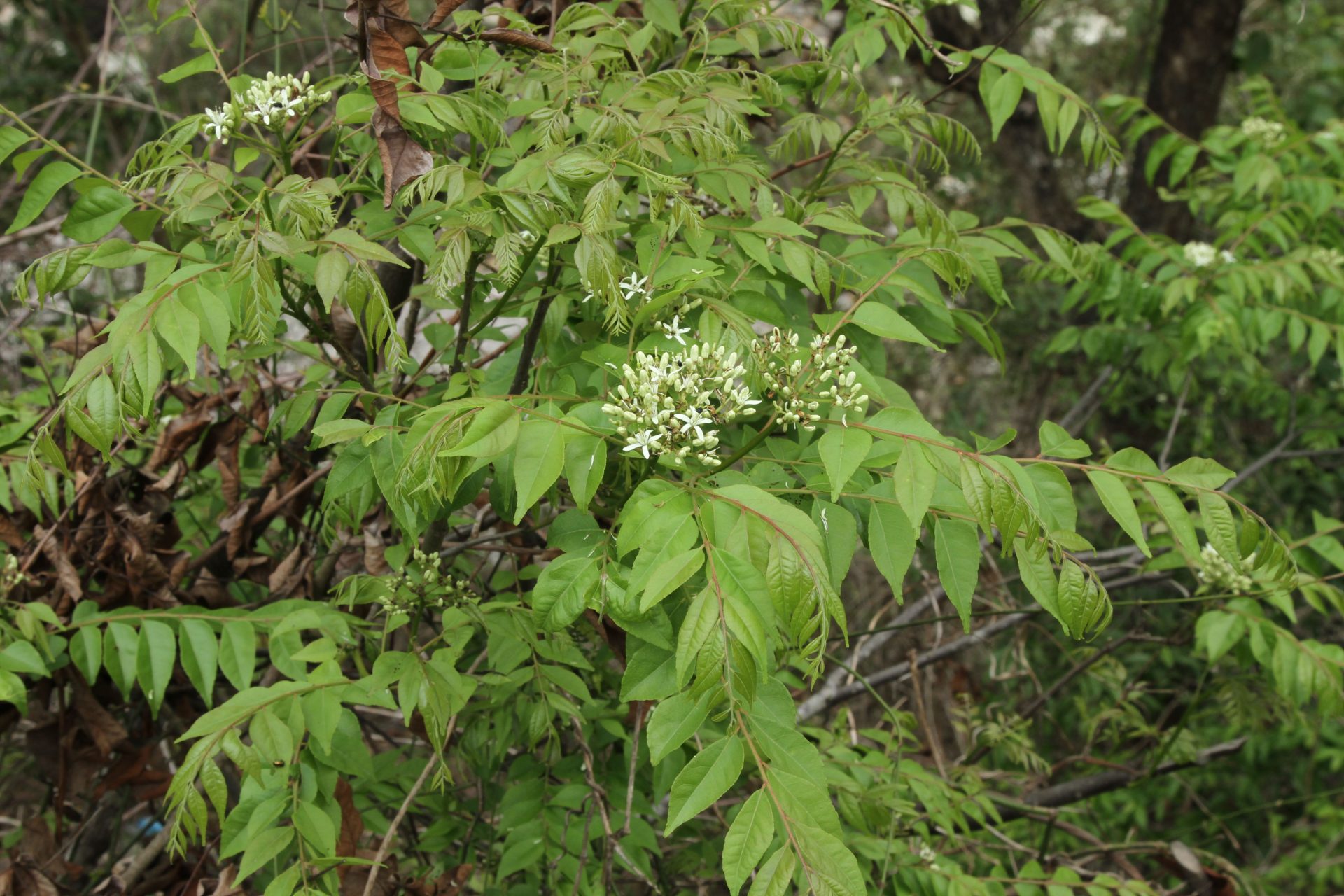
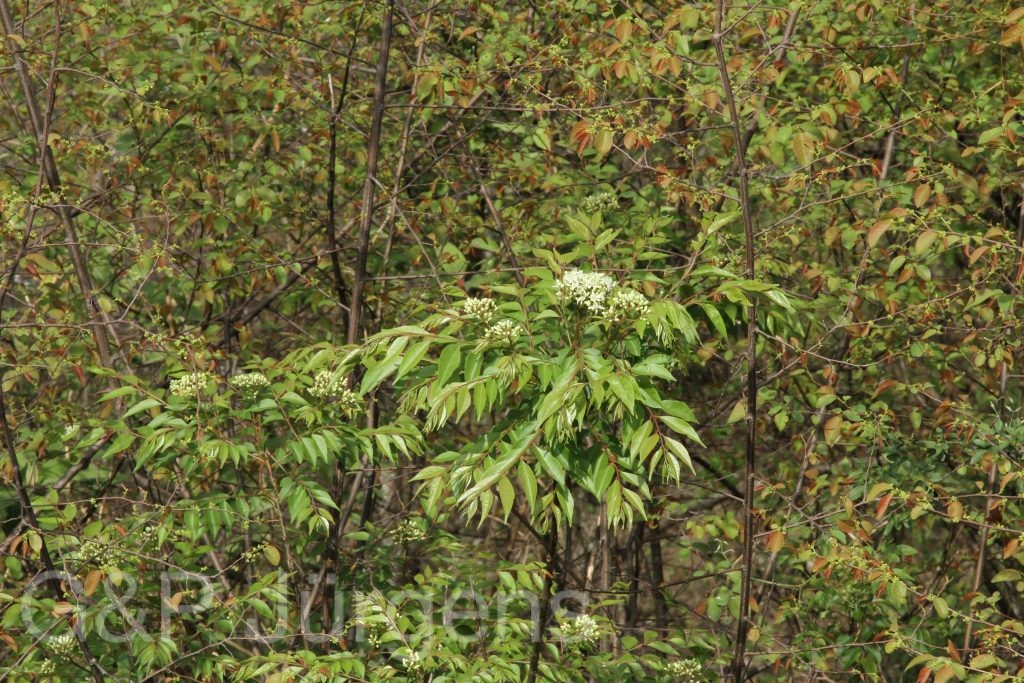
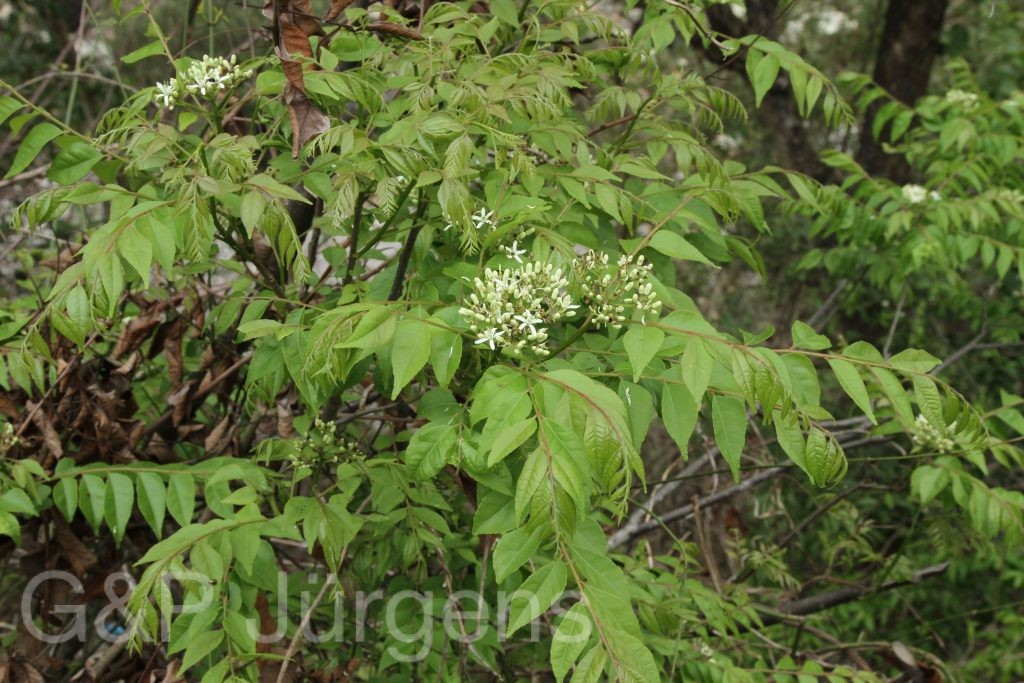
Murraya koenigii, the curry-leaf tree, is native to the Indian subcontinent and Indo-China and is now pantropically cultivated and naturalised, reflected in its very wide GBIF distribution spanning India, Sri Lanka, Nepal, Bhutan, China, Southeast Asia, Australia, Africa and the Americas. In its native range it grows in subtropical deciduous and semi-evergreen forest, scrub, forest margins and as an escape near settlements, from the plains up to about 1600 m, occasionally higher. The photographed plant from Trashigang in eastern Bhutan, at roughly 2000 m and flowering in May, sits near the upper limit of its altitudinal range in warm, sheltered hill forest.
The species is a small, aromatic, much-branched shrub or tree with thin grey to brownish bark. The leaves are alternate, imparipinnate, with numerous ovate-lanceolate, oblique-based, crenulate leaflets that are strongly aromatic when crushed and gland-dotted, as throughout the Rutaceae. The flowers are borne in terminal corymbose panicles, small, white, fragrant and bisexual, with five petals, ten stamens and a superior ovary. The fruit is a small ellipsoid to ovoid berry ripening from green through red to glossy black, with thin sweetish pulp and usually one or two seeds; the seeds are notably recalcitrant.
The genus commemorates the Swedish physician J. A. Murray, and the species epithet honours Johann Gerhard König. The plant is of great economic and culinary importance, its leaves indispensable in South Asian cuisine, and it is widely valued in traditional medicine. Its gland-dotted, essential-oil-rich foliage typifies the Rutaceae, and bird-dispersed berries account for its frequent escape and naturalisation; it is abundant and of no conservation concern.
Author: (L.) Spreng. · Sources: POWO (Kew), GBIF, Flora of China Vol. 11, Flora of Bhutan Vol. 1, Flora of Nepal, A Monograph of the Genus Murraya (Rutaceae)