
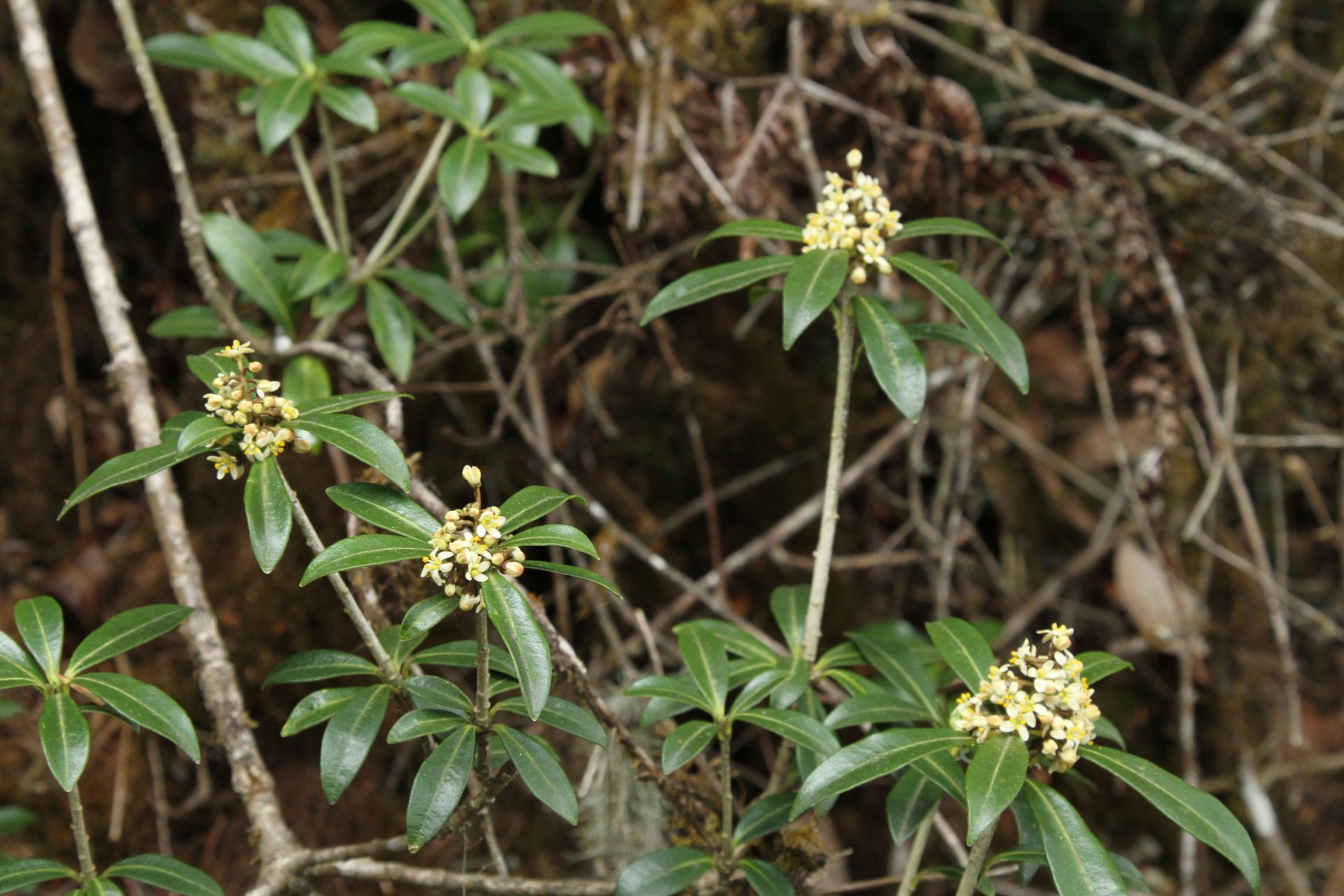
C.C. Huang
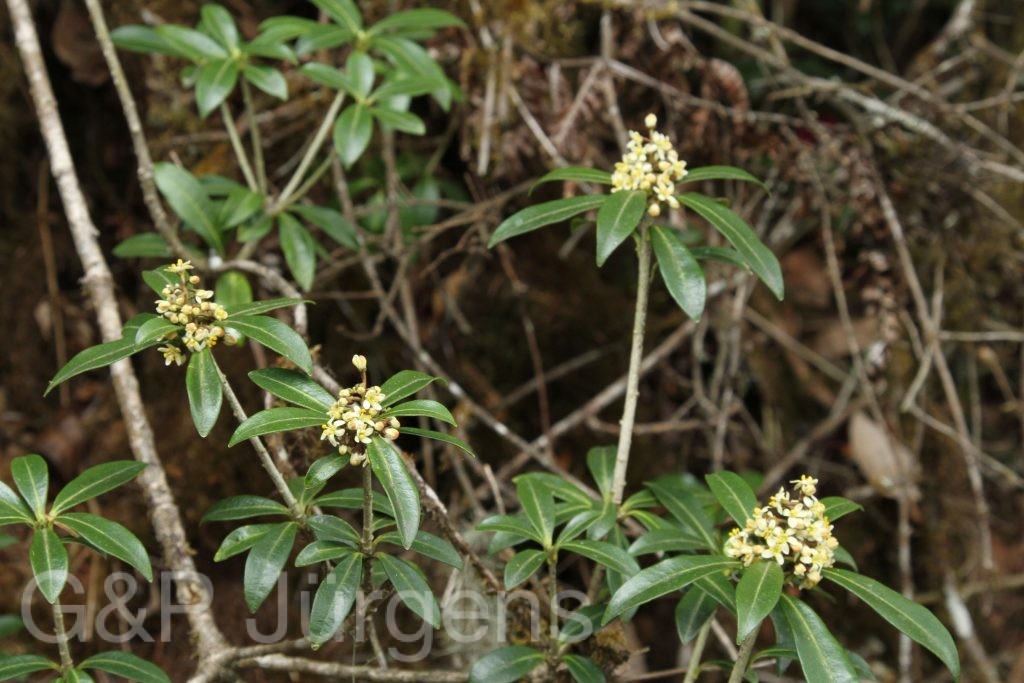
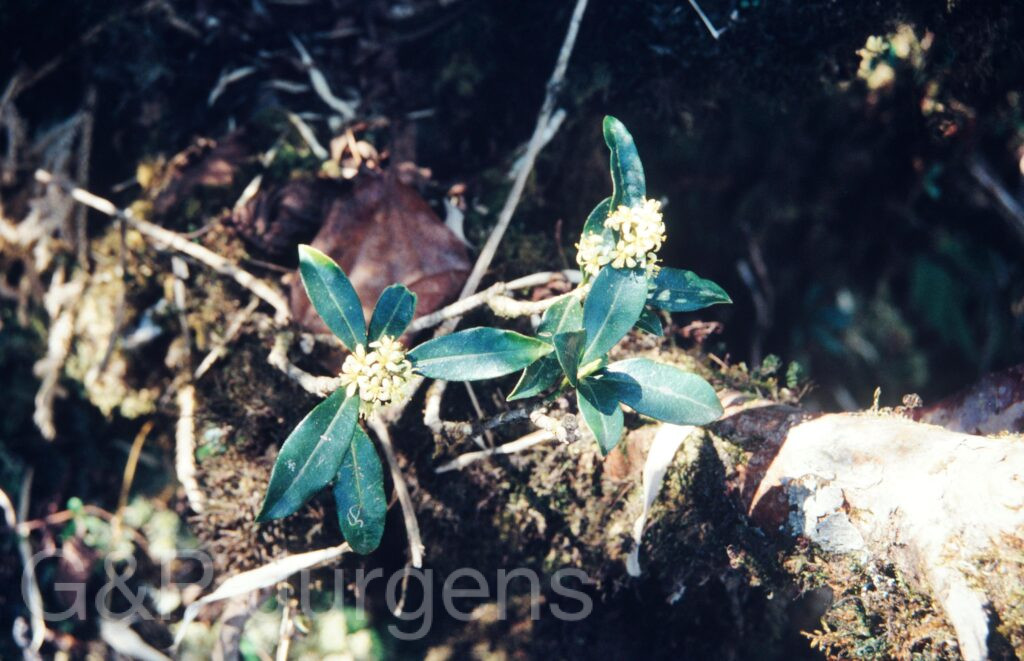
3000m April
Description
Skimmia multinervia is an evergreen shrub of the eastern Himalaya and adjacent China, with GBIF records (about 294) confined to China and Bhutan but its wider native range extending along the Himalaya into Nepal and northeastern India. It occupies the cool, humid montane and subalpine forest zone, as shown by collections at Phobjika in Bhutan around 2400 m in May and on the Jaljale Himal in eastern Nepal near 3000 m in April. There it grows in the shaded understorey of broad-leaved and conifer forest, among rhododendrons and on mossy slopes, favouring moist, organic-rich, well-drained soils.
The plant is a compact, much-branched aromatic shrub whose foliage releases a pungent citrus scent when crushed, owing to the translucent oil glands typical of Rutaceae. The leaves are alternate, often crowded toward the branch tips, elliptic to oblanceolate, leathery and entire, with the numerous lateral veins to which the epithet refers. The species is functionally dioecious, bearing small whitish to cream flowers in terminal panicles with four to five petals; male and female plants must grow together for fruit to set. The fruit is a fleshy, bright red drupe persisting through the colder months and dispersed by birds.
Skimmia is a small Asian genus within the citrus family, distinguished by its evergreen aromatic habit, dioecy and red drupaceous fruits; its species, including S. multinervia, are valued in temperate horticulture for winter colour. As a forest-understorey shrub dependent on intact, moist montane woodland, it is sensitive to forest clearance and grazing, though across its range it remains locally frequent and is not regarded as globally threatened.
Author: C.C. Huang · Sources: POWO (Kew), GBIF, Flora of China Vol. 11, Flora of Bhutan Vol. 1, Flora of Nepal, A Monograph of the Genus Skimmia (Rutaceae)