
L.
Description
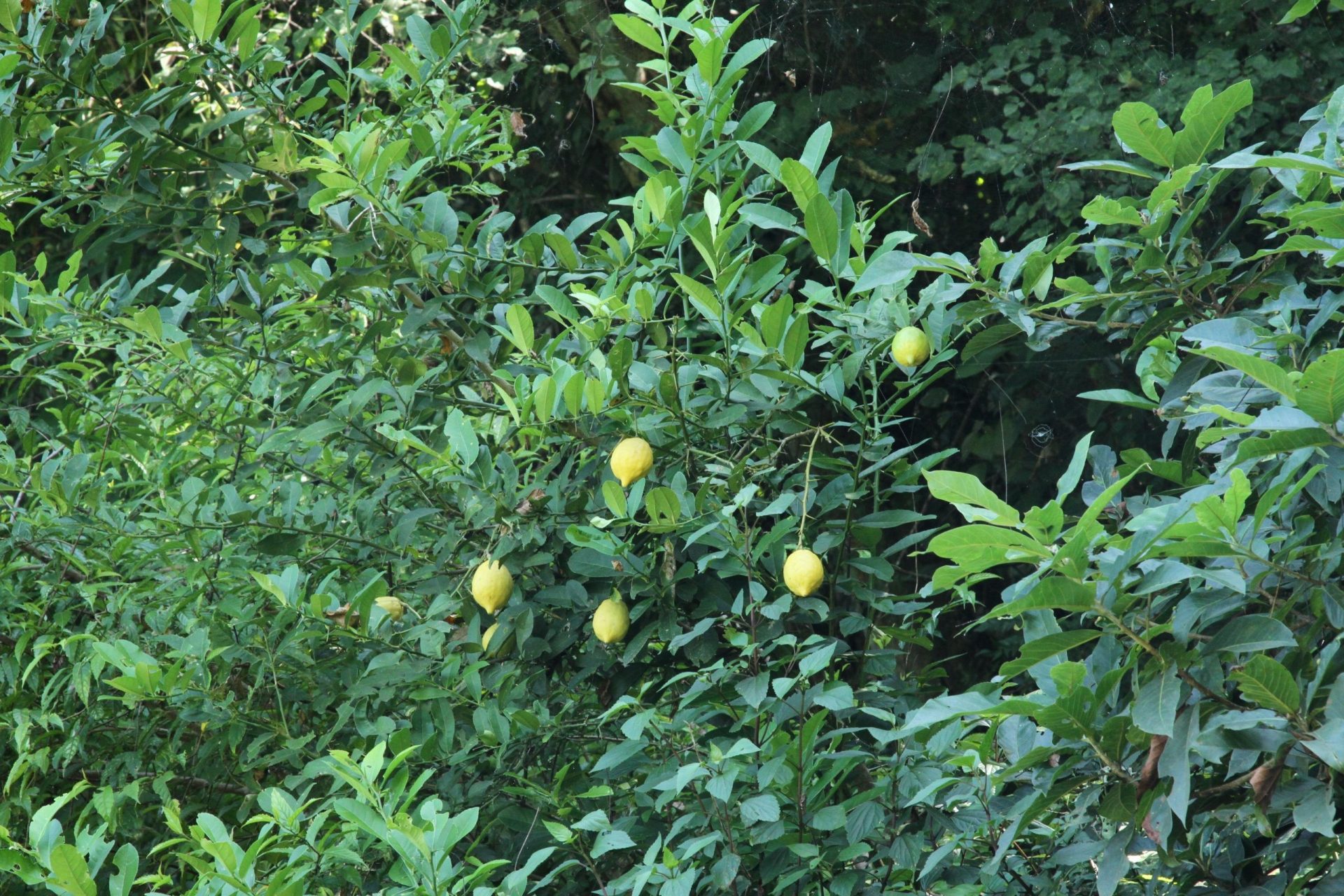
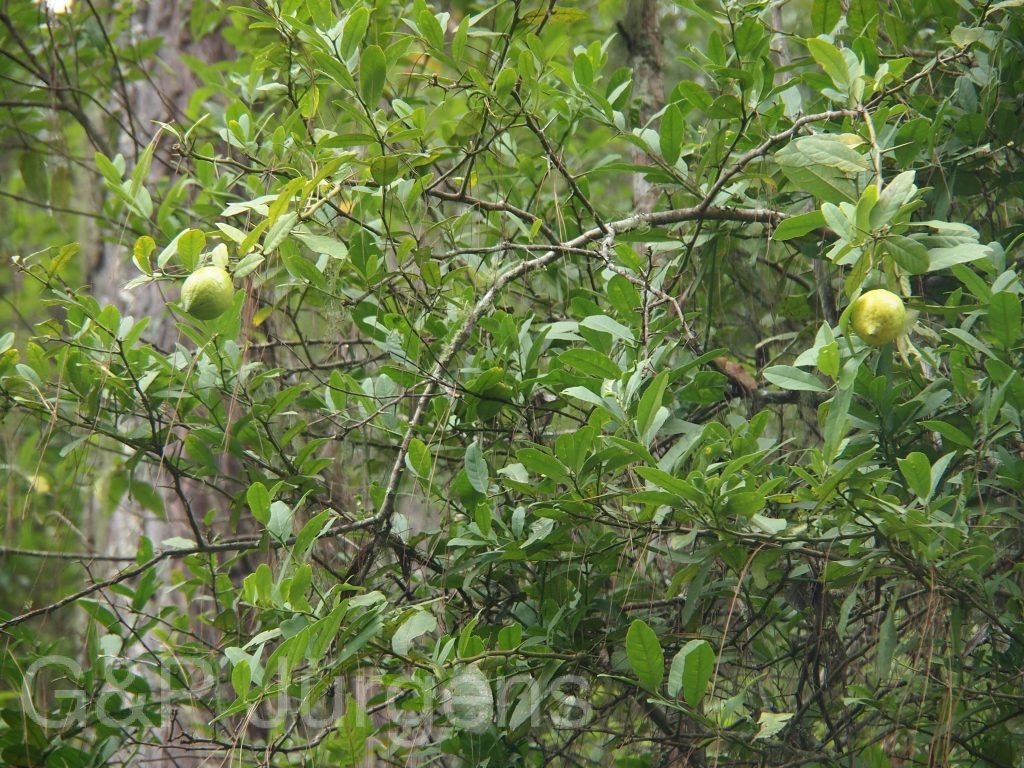
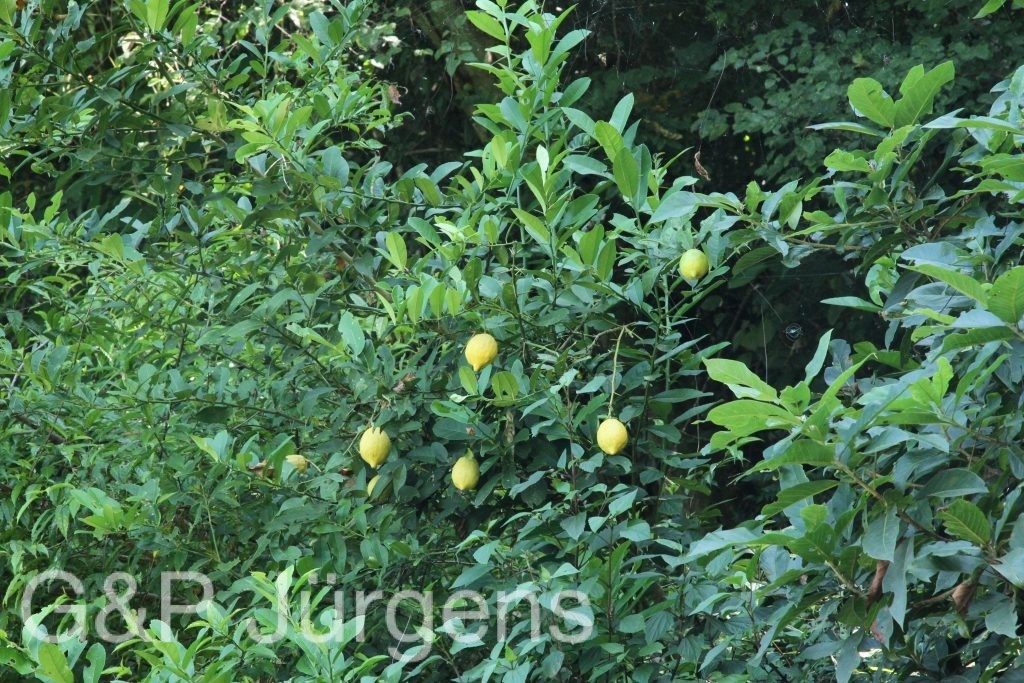
Citrus medica, the citron, is one of the foundational species of the cultivated citrus complex, thought to have originated in the foothills of the eastern Himalaya and northeastern India and now grown throughout the tropics and warm temperate zones; GBIF records (over 2200) span India, China, the Americas, Southeast Asia, the Mediterranean and Pacific islands, largely reflecting cultivation and naturalisation. In the Himalayan region it occurs in subtropical valleys and around settlements, in forest margins and cultivated ground, generally below about 1500 m. The photographed plant from Zhemgang in Bhutan (1300 m, October) is consistent with this warm, mid-elevation distribution.
The plant is a small, straggling shrub or small tree with stiff, angular twigs bearing stout axillary spines. The leaves are simple (a unifoliolate compound leaf), elliptic to ovate-oblong, crenate-margined, leathery, gland-dotted and aromatic, with the petiole only narrowly winged or wingless. The flowers are often tinged purple or pink in bud, fragrant, with four or five petals and numerous stamens. The fruit is a very large, ellipsoid to oblong hesperidium with a thick, fragrant, warty or rugose rind and a comparatively small, scant, acidic pulp; in some forms the fruit is deeply divided into finger-like segments (the "Buddha's hand" cultivar).
Together with the pummelo (C. maxima) and mandarin (C. reticulata), the citron is one of the three ancestral taxa from which most cultivated citrus hybrids derive, making it of central importance to citrus phylogeny and breeding. It is of great cultural and economic value—its rind is candied (succade) and the fruit is used ceremonially (the etrog in Jewish ritual). As a long-domesticated crop it is not of conservation concern, though wild Himalayan germplasm is a valuable genetic resource.
Author: L. · Sources: POWO (Kew), GBIF, Flora of China (Rutaceae), Flora of Bhutan, The Citrus Industry (Swingle & Reece)