
W.W. Sm.
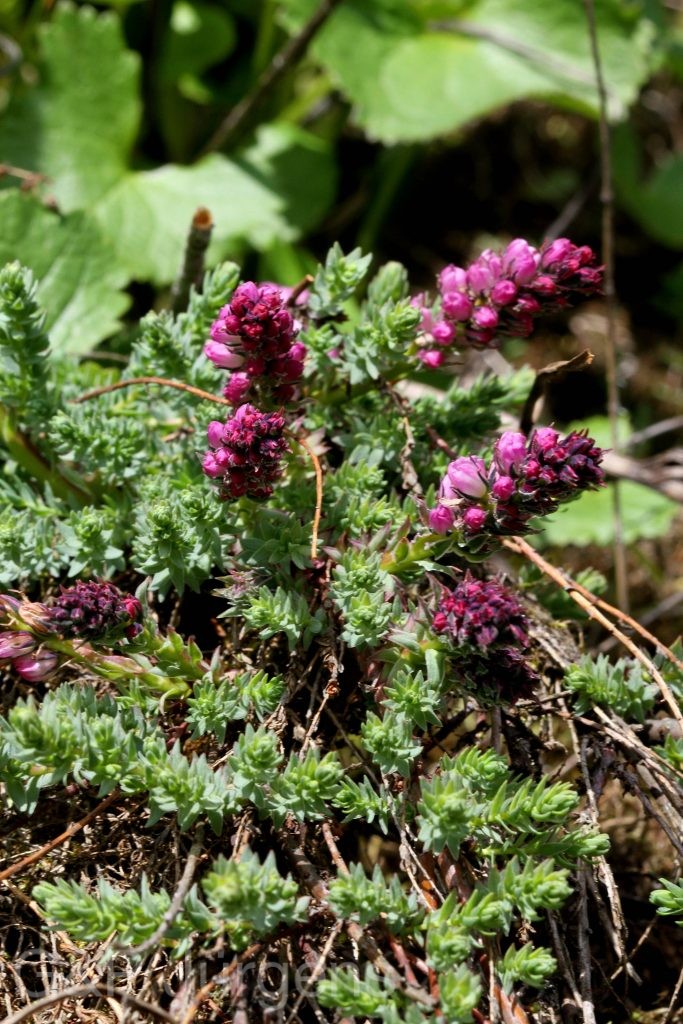
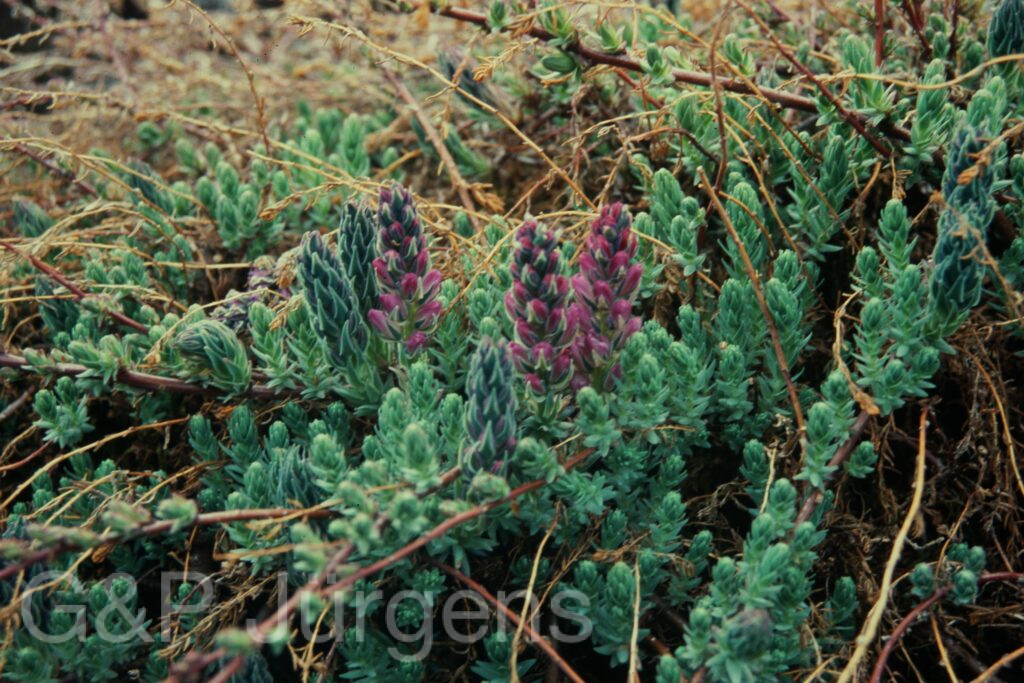
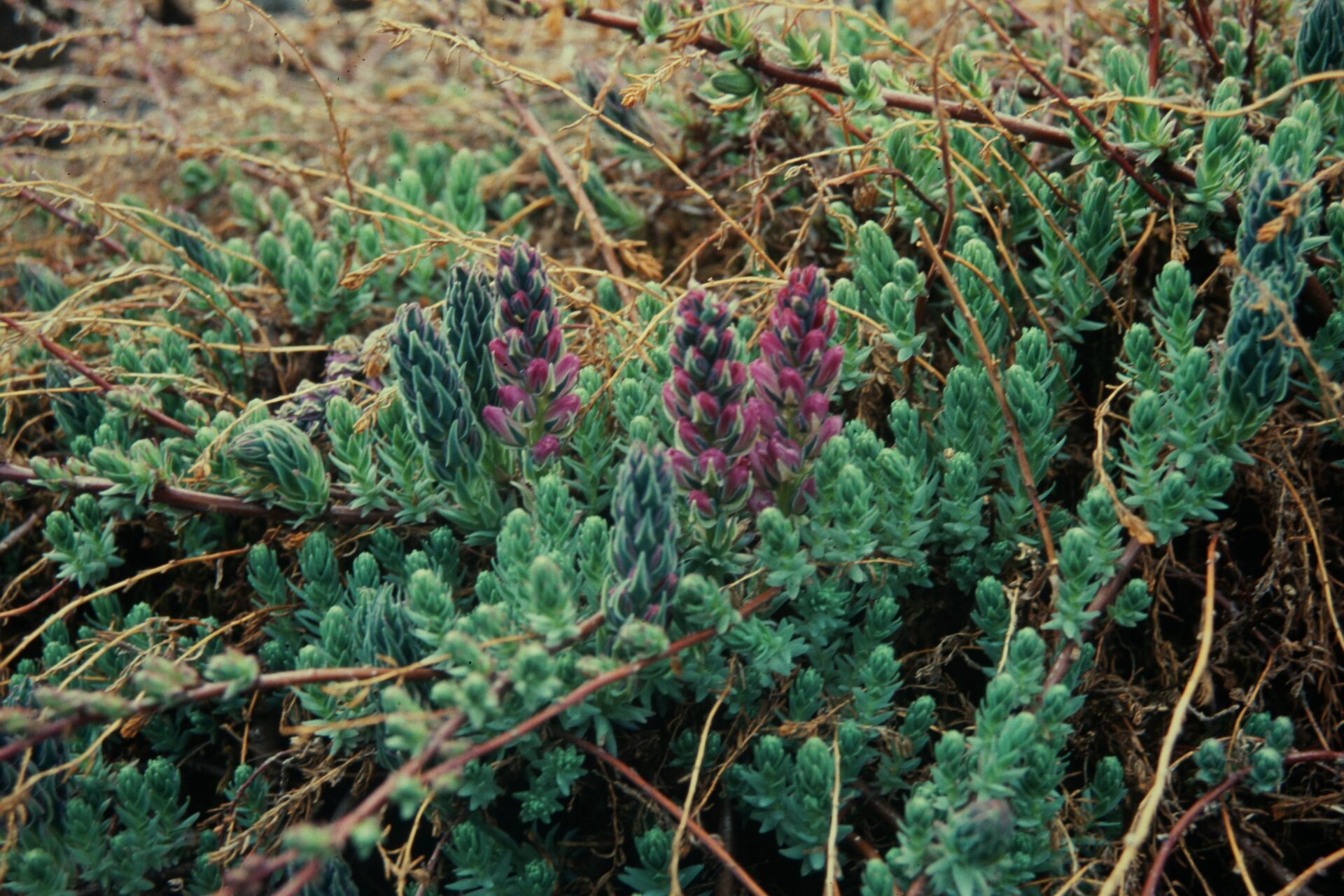
Description
Myricaria rosea W.W.Sm. is a tamarisk-like shrub of the Tamaricaceae native to the eastern and central Himalaya and adjacent China. GBIF records, numbering 268 occurrences, place it in China, Nepal, India, Bhutan and Myanmar. The species is a riparian specialist of high-altitude valleys, colonising gravel bars, glacial outwash, moraine and the sandy margins of mountain streams, generally between 3,300 and 4,300 m. The illustrated plants from the Yumthang-Chu in Sikkim at 3,600 m in September and from Dzongri at 3,900 m in May span its flowering and fruiting seasons in the alpine and subalpine riverine zone.
The plant is a low, much-branched, decumbent to erect shrub with slender, reddish-brown, flexible branchlets. The leaves are small, sessile, scale-like to narrowly lanceolate, glaucous and densely overlapping along the twigs, an adaptation to the dry, exposed habitat. The flowers are borne in dense, terminal, spike-like racemes; each has five rose-pink to purplish petals, a five-parted calyx, and ten stamens whose filaments are connate at the base into a tube, a key character separating Myricaria from the related Tamarix. The fruit is a narrowly conical capsule splitting into three valves to release numerous tiny seeds, each crowned with a tuft of long, basally awned hairs that aids wind and water dispersal.
Myricaria comprises a small group of Central Asian and Sino-Himalayan shrubs of disturbed, unstable riparian and glacial substrates, and M. rosea is one of the distinctly pink-flowered eastern Himalayan members. Ecologically these shrubs are important pioneer colonisers that stabilise braided river gravels and moraine, providing early successional cover; their dependence on natural flood and sediment regimes makes them sensitive to hydrological alteration of high mountain rivers.
Author: W.W. Sm. · Sources: POWO (Kew), GBIF, Flora of China Vol. 13, Flora of Bhutan Vol. 2, Flora of Nepal, Zhang & Zhang: A taxonomic revision of Myricaria (Tamaricaceae)