
Grierson & D.G. Long
Description
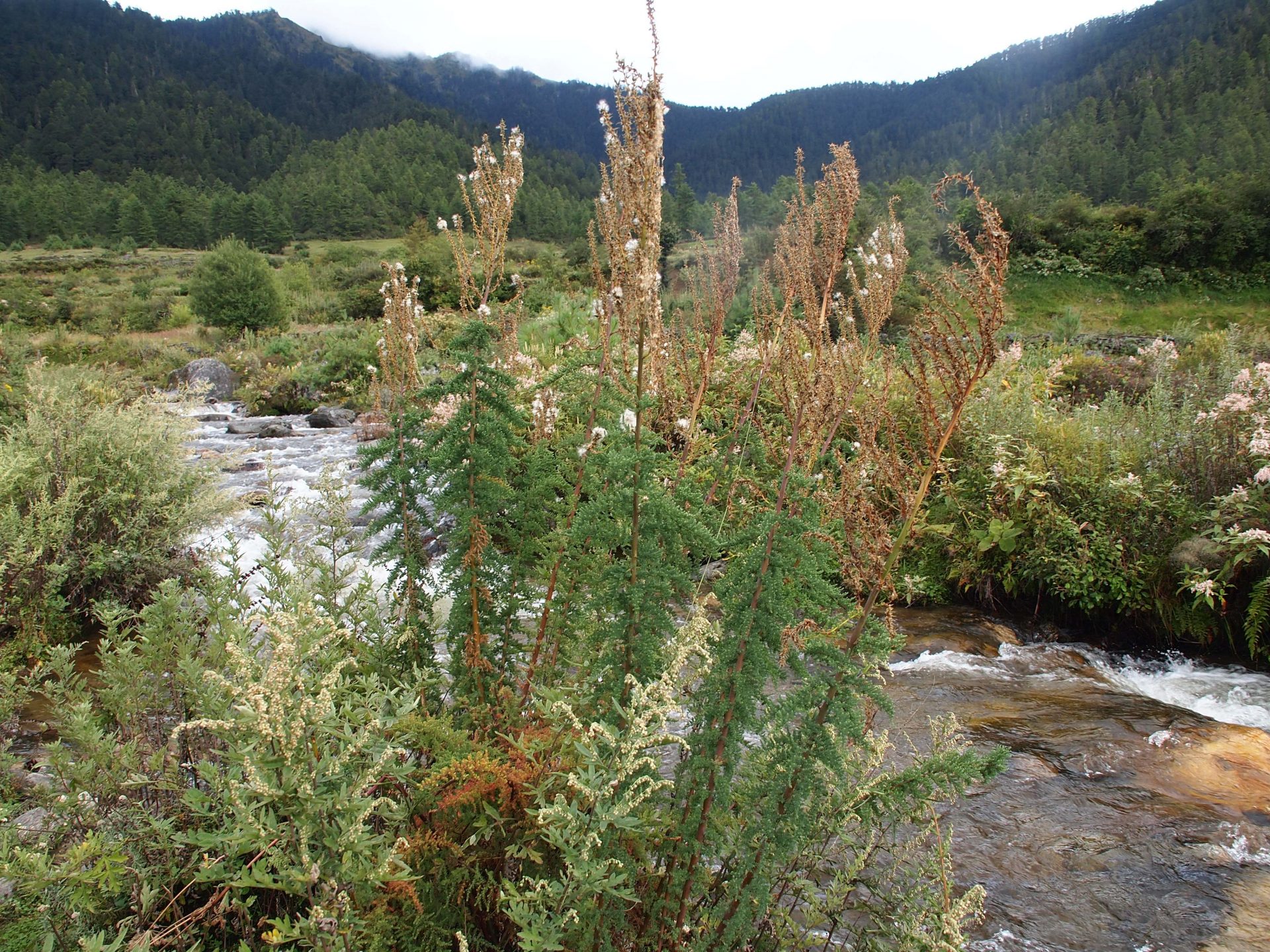
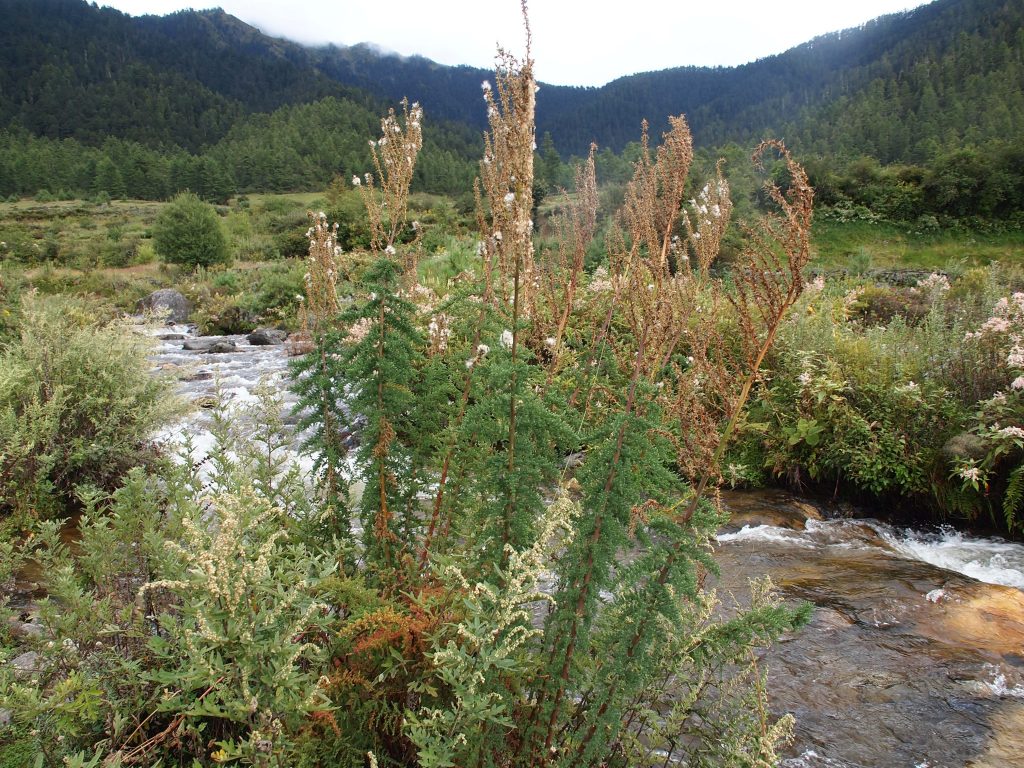
Myricaria albiflora Grierson & D.G. Long is a narrowly distributed shrub of the Tamaricaceae, known only from the eastern Himalaya in Bhutan and immediately adjacent India, where GBIF holds just 13 georeferenced records, underscoring its restricted range and rarity. Like other members of the genus it is a riparian specialist, colonising open gravel and shingle bars, sandy braided riverbeds, moraine and the stony margins of high mountain streams, habitats that are periodically disturbed by flooding and ice. The photographed plant from the Haa valley in western Bhutan at about 3,000 m in September lies within its subalpine river-valley habitat, where it flowers and fruits in the latter part of the growing season.
It is a low, much-branched deciduous shrub with slender reddish wand-like branchlets densely clothed in small, sessile, scale-like to narrowly lanceolate leaves arranged in spirals, giving the twigs a tamarisk-like, heath-like aspect. The flowers are borne in dense terminal racemes; each has five sepals and, distinctively for this species, five white (rather than the usual pink to purplish) petals, with the filaments of the stamens connate below into a tube. The superior ovary matures into a slender three-valved capsule releasing numerous minute seeds tipped with a tuft of long white hairs (a coma) that aids wind dispersal.
The genus Myricaria comprises riverine shrubs of Eurasian mountains closely allied to Tamarix, distinguished by their partly fused stamens and comose seeds. M. albiflora was described as a Bhutanese endemic for the Flora of Bhutan and is defined chiefly by its white flowers. Given its very small known range and dependence on dynamic riverine habitats vulnerable to hydrological change, dam construction and gravel extraction, it warrants careful monitoring, though it has not been formally assessed.
Author: Grierson & D.G. Long · Sources: POWO (Kew), Flora of Bhutan Vol. 2, Flora of China Vol. 13, GBIF, Zhang & Zhang: Revision of Myricaria (Tamaricaceae) (2003)