Tag:

Subalpine (2500-3500 m)

Royle ex Kunth

Bh2008 333 P513
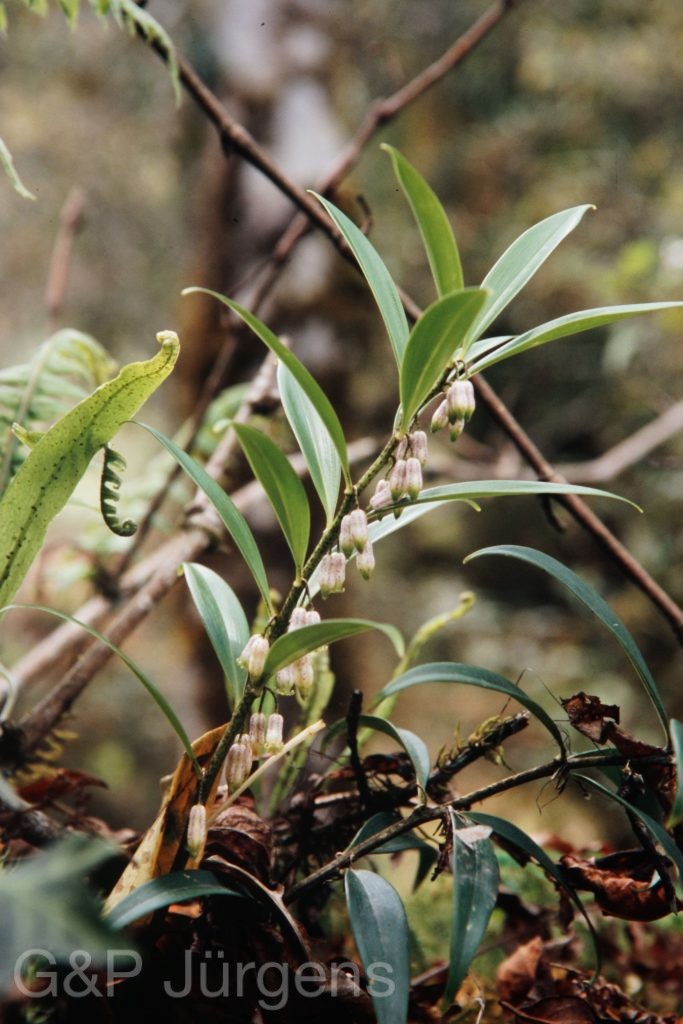
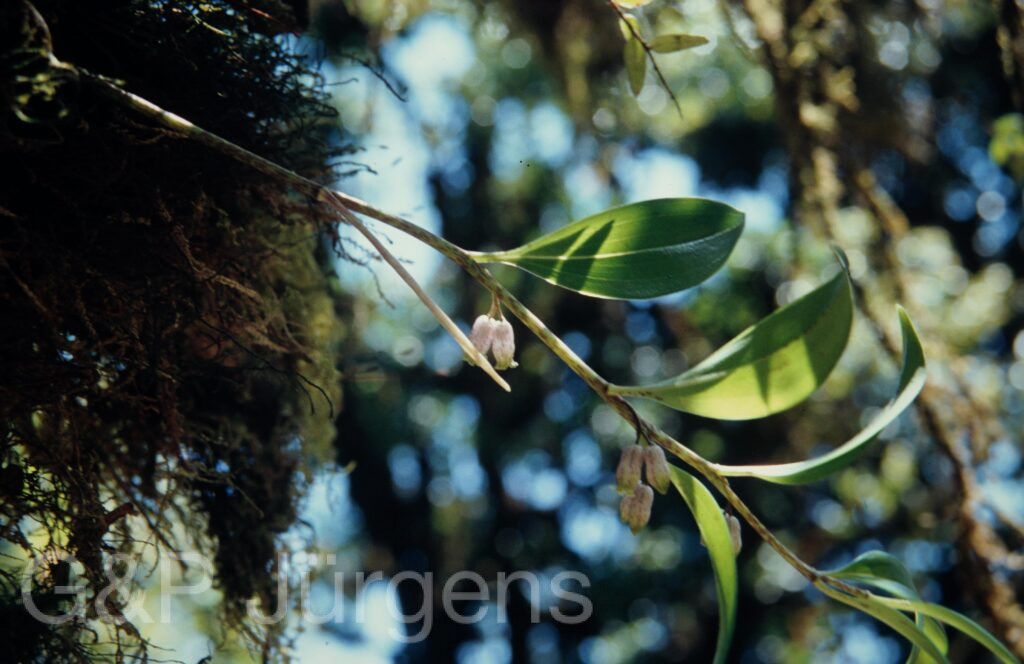
Bhutan Phobjika 2700m, April
Nepal 1994 59 ergebnis
Ost-Nepal Bhalukhob 
1900m April

Description

Polygonatum punctatum is a Sino-Himalayan Solomon's seal distributed through China, Nepal, India, Bhutan, Myanmar, Thailand, Vietnam and Laos, with over 450 georeferenced occurrences and additional records from cultivation. It is a plant of cool, shaded temperate forest, mossy banks, rock ledges and humus-rich slopes, where it often grows as a lithophyte or epiphyte. The populations documented at Phobjikha in Bhutan at about 2700 m and at Bhalukhob in eastern Nepal at about 1900 m, both in April, reflect its montane forest habitat, emerging and flowering in spring.

The species grows from a creeping, knotted rhizome that produces an arching to pendent leafy stem. The leaves are alternate, sometimes appearing sub-opposite, ovate to lanceolate and acuminate, often somewhat leathery. Slender axillary inflorescences bear one to several tubular flowers; the perianth is fused into a narrow cylindrical tube, greenish-white and frequently marked with purple dots or spots (the punctate patterning evoked by the epithet), with six short lobes and included stamens. The fruit is a small globose berry, dark purple to blackish when ripe, containing a few seeds.

Within Asparagaceae (formerly Convallariaceae or Liliaceae sensu lato), Polygonatum is a Northern Hemisphere genus whose East Asian and Himalayan species are taxonomically intricate, separated by leaf arrangement, flower number, perianth markings and rhizome form. The frequently epiphytic or saxicolous habit of P. punctatum is unusual within the largely terrestrial genus. Widespread and locally common, it is not regarded as threatened, though several Himalayan congeners are harvested for the medicinal rhizome.

Author: Royle ex Kunth · Sources: POWO (Kew), GBIF, Flora of Bhutan, Flora of Nepal, Flora of China, Jeffrey's revision of Polygonatum

Wall. ex Meisn.

Bh09 277 P456
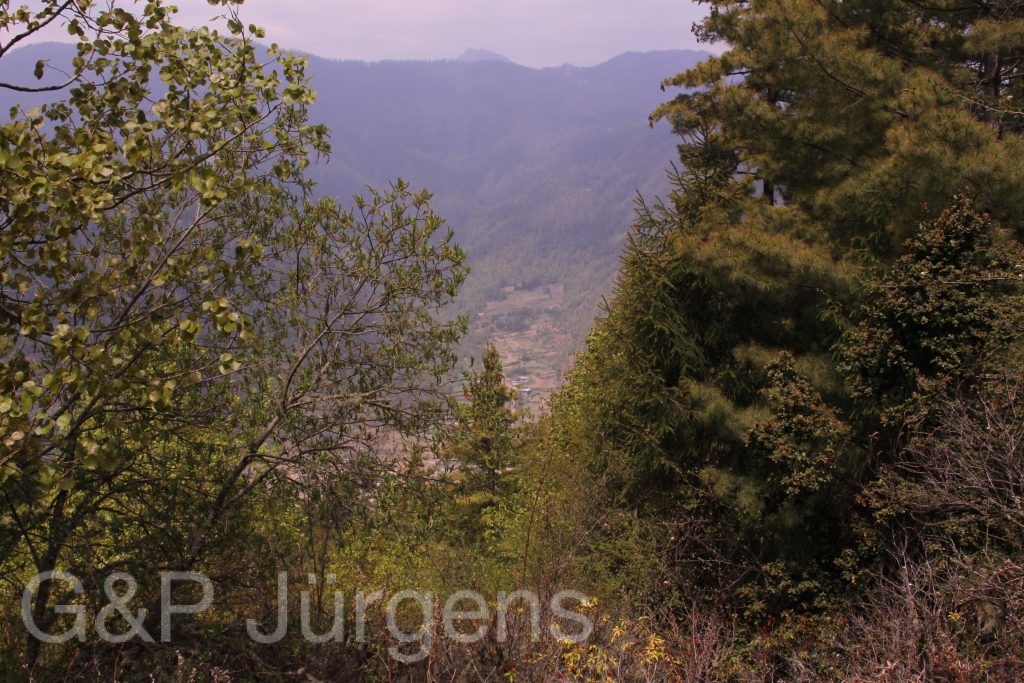
Bhutan Phobjika 2800m, June

Description

Polygonum filicaule is a small Himalayan and East Asian knotweed ranging from the Himalaya through southern China to Taiwan and Japan; GBIF lists around 358 occurrences across China, India, Pakistan, Japan and Taiwan. It inhabits cool, moist temperate sites, growing in damp turf, moss carpets, stream banks, marshy meadows and seepage zones, often as a prostrate component of open subalpine grassland. The accompanying photograph from Phobjika in Bhutan at about 2800 m in early June shows the species at the start of its flowering season in the broad, marshy glacial valley floors for which that locality is well known. Under POWO this name is treated as a synonym, the accepted name being Persicaria filicaulis.

It is a delicate, creeping, mat-forming perennial herb with thread-like (filiform), much-branched stems that root at the lower nodes, the epithet filicaule alluding to these slender stems. The ochreae are membranous, tubular and shortly ciliate, sheathing the nodes. Leaves are small, ovate to oblong-lanceolate, shortly petiolate or subsessile, with entire margins and often a fine pubescence. Flowers are minute and few, borne in short, lax terminal or axillary clusters; the perianth is five-parted, white to pink, persistent and enclosing the fruit. The achene is small, trigonous, dark brown and lustrous.

The species belongs to a group of diminutive, mat-forming Asian polygonums now widely placed in Persicaria, distinguished from robust upright knotweeds by their creeping habit and reduced inflorescences. As a wetland and seepage specialist it contributes to high-altitude turf communities and is well adapted to grazed, trampled and seasonally waterlogged ground. It is not considered threatened, being widespread and tolerant of disturbance, though dependent on the persistence of moist montane grassland.

Author: Wall. ex Meisn. · Sources: POWO (Kew), GBIF, Flora of Bhutan, Flora of China (Polygonaceae), Hara & Williams Enumeration of the Flowering Plants of Nepal

Populus tremula

by GP Jürgens

L.

Bhutan2014 957
Bhutan Chele-La 3400m, May
Bhutan2014 958
Bhutan Chele-La 3400m, May

Description

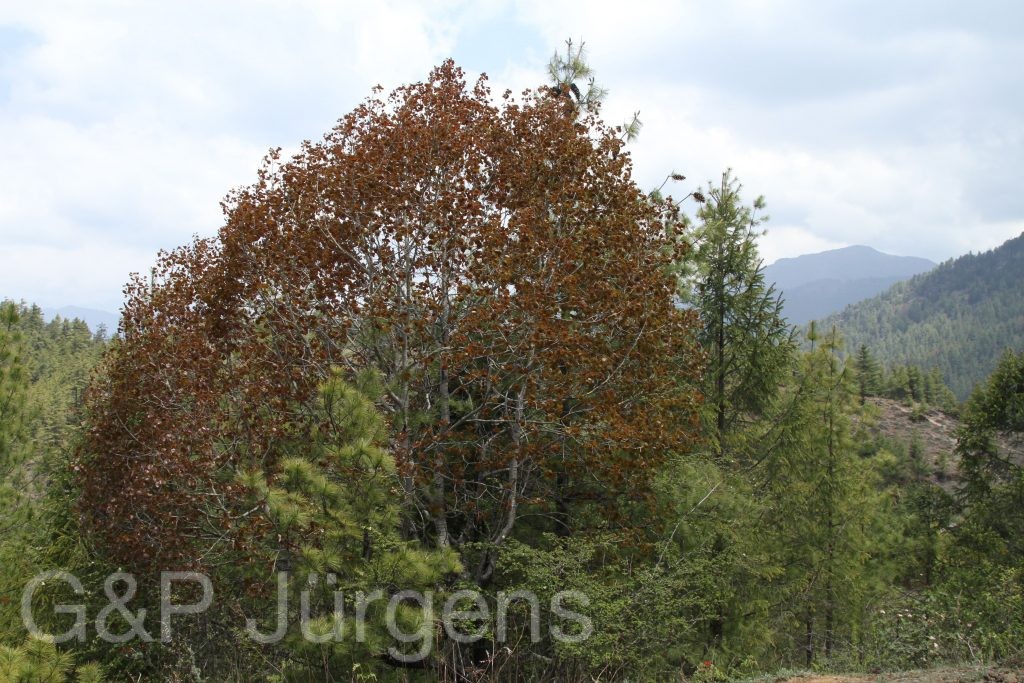
Populus tremula, the Eurasian aspen, is among the most widely distributed trees of the Northern Hemisphere, ranging across virtually all of Europe and temperate Asia, as the vast GBIF dataset of over 779,000 records from Sweden, France, Germany, Britain, Russia, China and beyond attests. In the Himalaya it reaches its southern Asian limit as a high-montane element, and the photographed tree from Bhutan's Chele-La at 3400 m in May represents this elevated outpost. It is a pioneer of disturbed ground, forest clearings, burnt areas, screes and woodland margins, tolerant of a wide range of soils and climates from boreal lowland to subalpine slopes, where it often forms clonal stands by root suckering.

It is a deciduous tree with smooth, greenish-grey bark, becoming furrowed at the base of old trunks. The alternate leaves are nearly orbicular to broadly ovate with a crenate to sinuate margin, borne on long, conspicuously laterally flattened petioles that allow the foliage to flutter in the slightest breeze, the trait giving the tree both its epithet tremula ("trembling") and its English name. Juvenile and sucker leaves are larger and more triangular. Like all poplars it is dioecious, the flowers borne in pendulous catkins that appear before the leaves; each flower subtended by a fringed bract, the males with numerous stamens, the females with a one-celled ovary. The fruit is a small capsule releasing cottony, plumed seeds dispersed by wind.

Aspen is a keystone pioneer species of immense ecological importance, supporting rich communities of insects, fungi and lichens and frequently forming genetically uniform clonal groves that can persist for centuries. Within Salicaceae it belongs to section Populus (the aspens and white poplars). Its presence in the eastern Himalaya illustrates the trans-Eurasian continuity of temperate forest floras; the species is of least conservation concern and is widely exploited for timber, pulp and matchwood.

Author: L. · Sources: POWO (Kew), GBIF, Flora of China Vol. 4, Flora of Bhutan Vol. 1, Flora of Pakistan, Eckenwalder's Conifers and Salicaceae Treatments

Lodd, G.Lodd. & W.Lodd

Nepal 99 110 ergebnis
West-Nepal South of Rara-Lake 3600m, June
Garw 2005 48 ergebnis ergebnis
India Garhwal Valley of flowers 3350m, September

Description

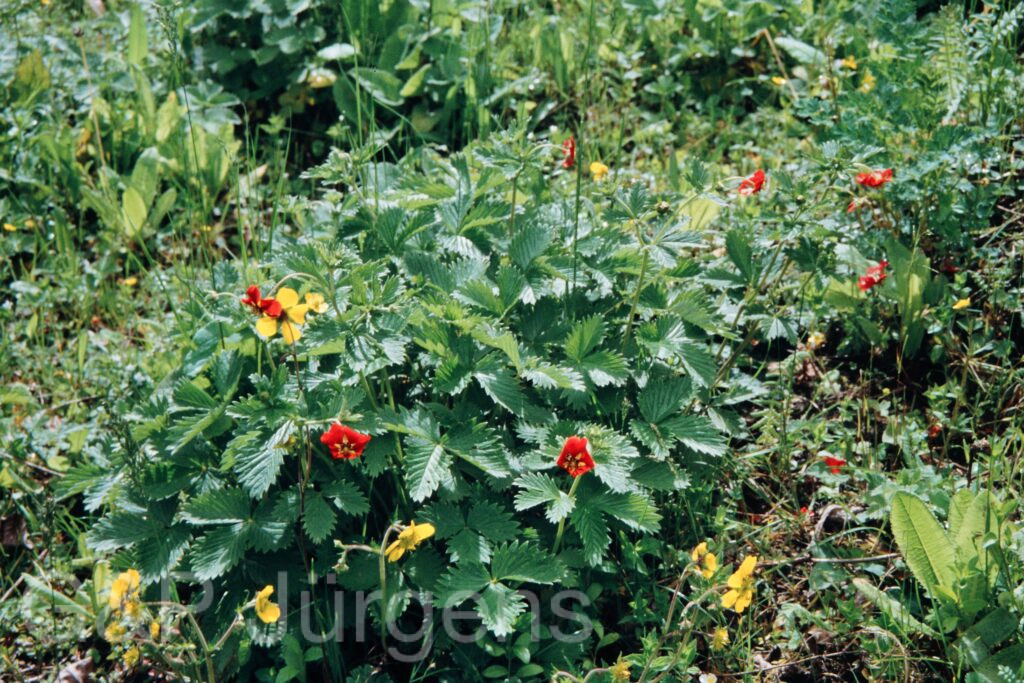
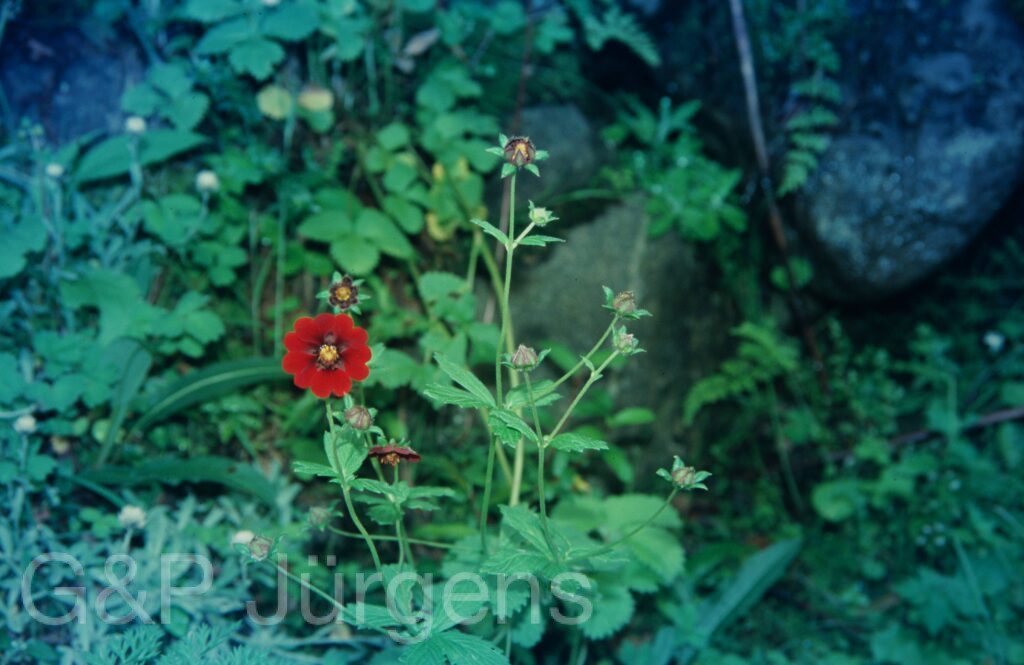
Potentilla atrosanguinea is a Himalayan alpine herb ranging from Pakistan through the western and central Himalaya into Nepal. GBIF documents about 450 occurrences, drawing on native populations in India, Nepal and Pakistan plus numerous cultivated and naturalised records across Europe and North America. It grows in alpine and subalpine meadows, open grassy slopes and rocky ground, typically between about 2500 and 4000 m. The photographed plants come from West Nepal south of Rara Lake at roughly 3600 m in June and the Valley of Flowers in Garhwal, India, at about 3350 m in September, both species-rich high-meadow settings.

The species is a tufted perennial arising from a stout, woody rootstock. The basal leaves are long-petioled and pinnately or digitately compound, with three to five obovate, coarsely toothed leaflets that are green above and densely white-tomentose beneath. The stems are erect, branched and silky-hairy, bearing reduced cauline leaves. The flowers are borne in lax cymes and are showy, with five spreading petals ranging from deep blood-red and orange to occasionally yellow, an epicalyx alternating with the calyx lobes, and numerous stamens. The fruit is an aggregate of small dry achenes on a dry receptacle.

GBIF flags the recorded name as a SYNONYM, with Potentilla atrosanguinea as the accepted name. The species is variable in flower colour and leaf division, and several varieties and segregates have been recognised. Its richly coloured forms have entered horticulture and underlie garden hybrids. Widespread and common across its native alpine range, it is of no conservation concern and is an important component of Himalayan meadow communities.

Author: Lodd, G.Lodd. & W.Lodd · Sources: POWO (Kew), GBIF, Flora of Nepal, Flora Simlensis, Th. Wolf: Monographie der Gattung Potentilla

Trevir.

Bh09 289 P475
Bhutan Tongsa, 2300m June
Garw 2005 284 ergebnis
India Garhwal Kunol 2650m, September

Description

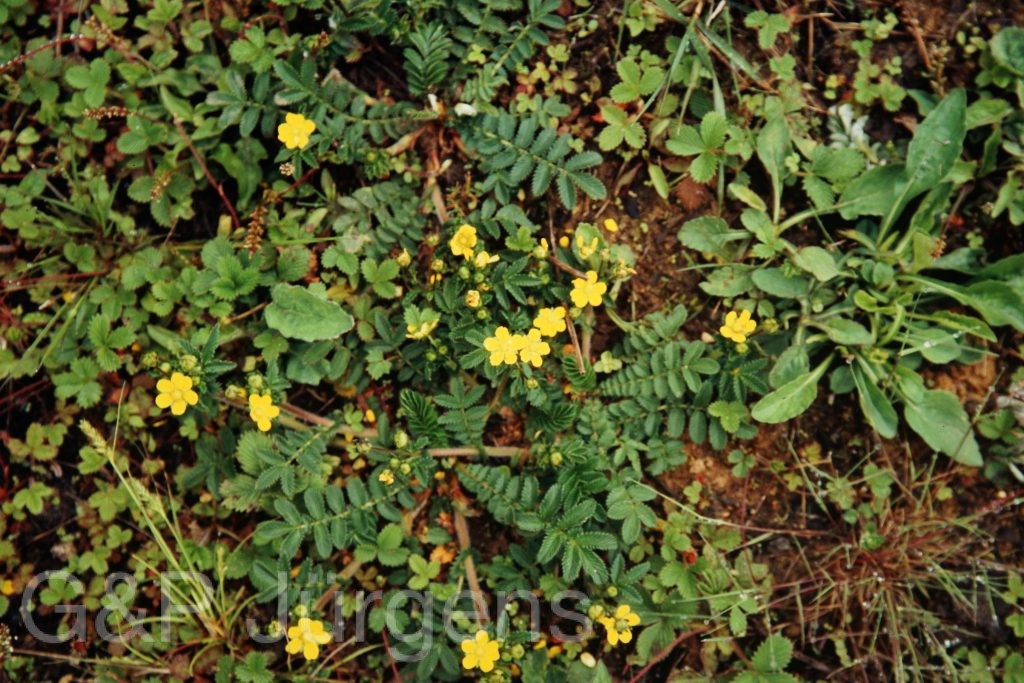
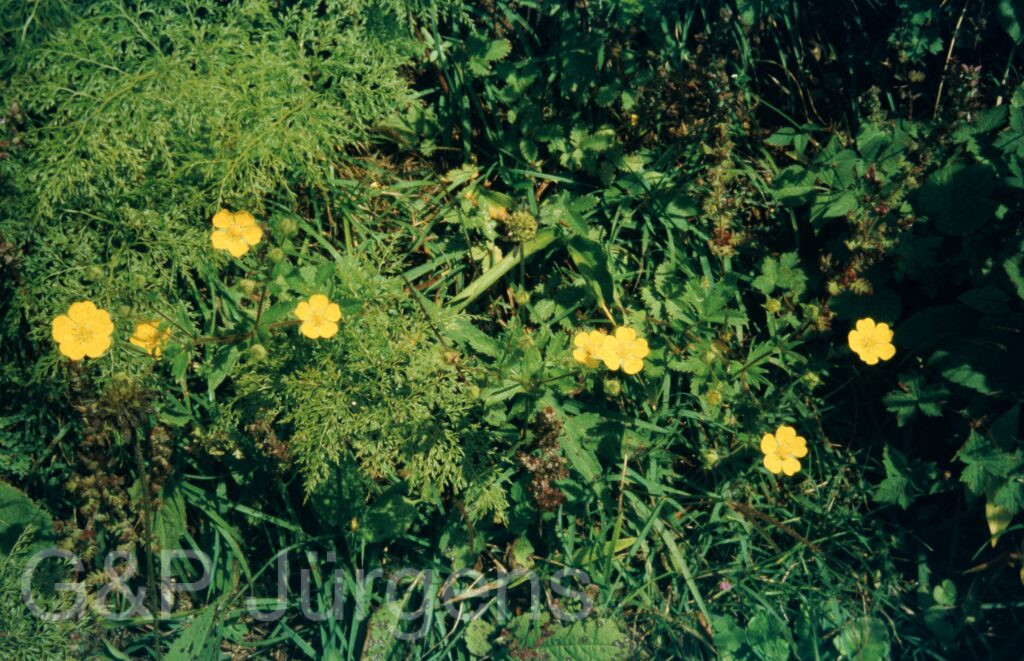
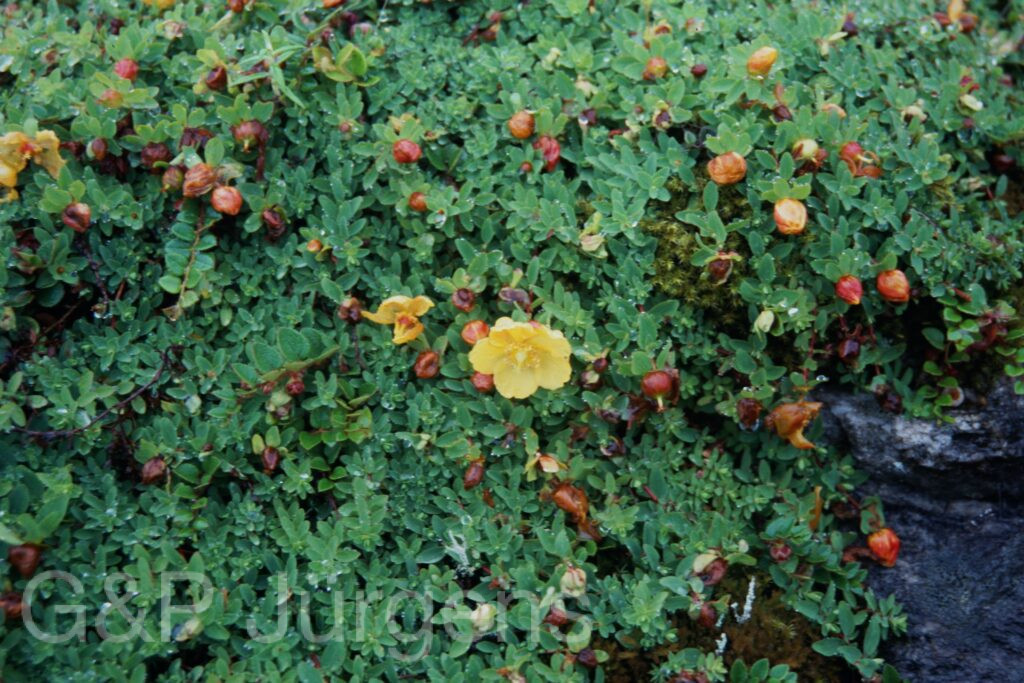
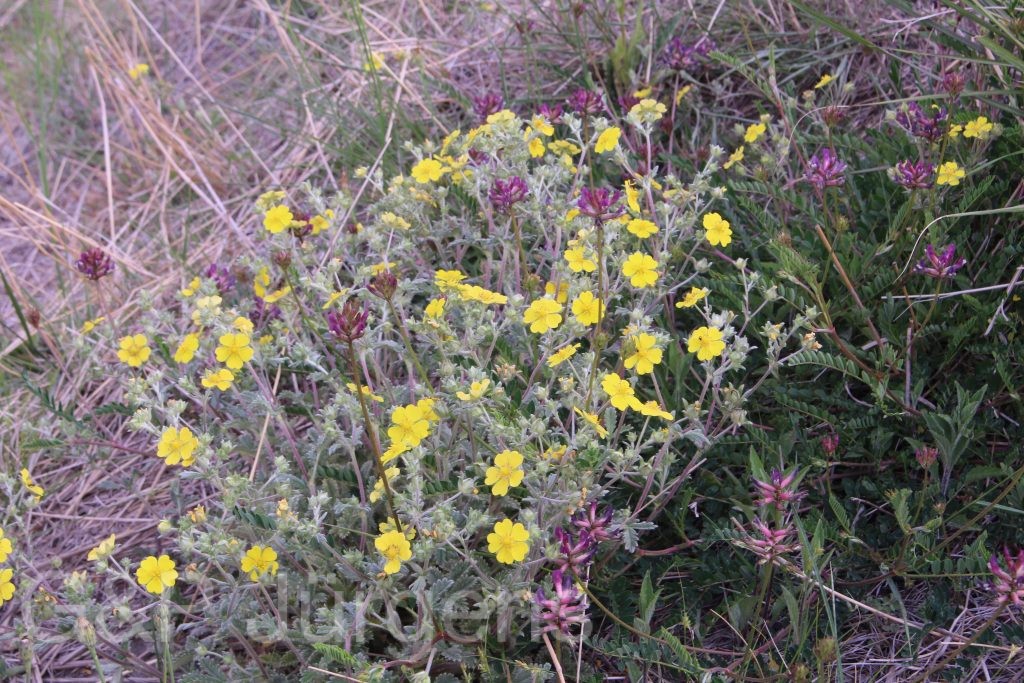
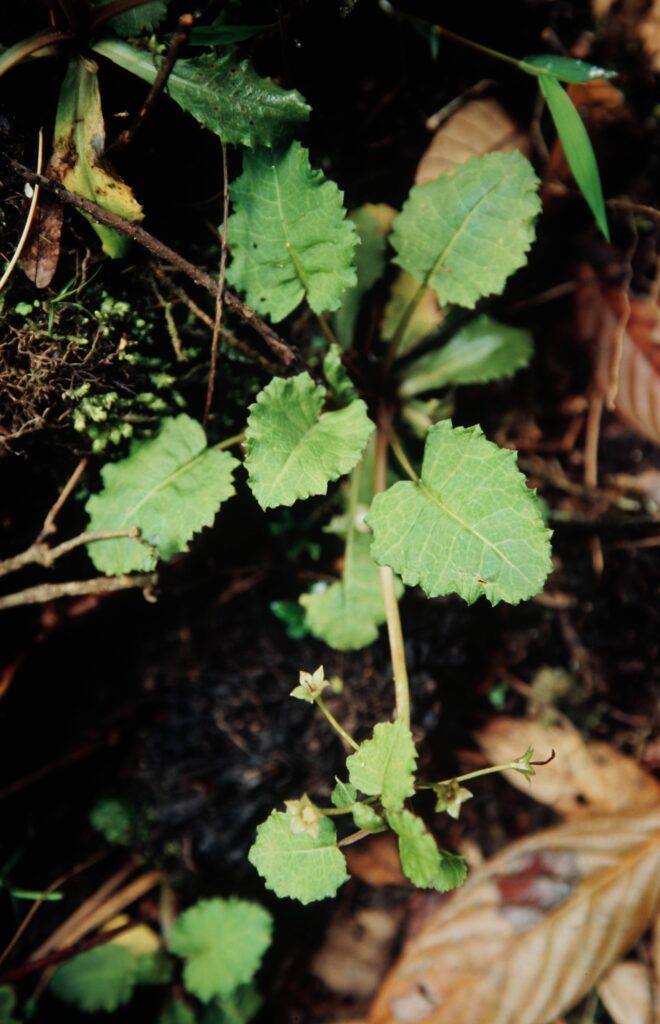
Potentilla lineata is a widespread Asian cinquefoil ranging across the Himalaya and into China, Myanmar and Vietnam, well represented in GBIF with around 519 records from China, Nepal, India, Bhutan, Pakistan and beyond. In GBIF the queried name is treated as a synonym, with Potentilla lineata itself given as the accepted name. It occupies open grassy slopes, forest clearings, banks, pastures and disturbed roadsides through the temperate and subalpine belts, roughly 1500 to 3500 m. The collections cited from Tongsa in Bhutan at 2300 m in June and from Kunol in the Garhwal Himalaya at 2650 m in September show its long flowering season across the monsoon.

It is a perennial herb with a woody rootstock producing erect to ascending, often silky-hairy stems. The leaves are pinnate or digitately compound with toothed, oblong to obovate leaflets that are typically green and appressed-hairy above and densely silvery- or white-tomentose beneath, the strongly impressed venation giving rise to the epithet lineata. The flowers are borne in lax terminal cymes; each has five yellow petals alternating with an epicalyx and five sepals, numerous stamens and many carpels seated on a hairy receptacle. The fruit is an aggregate of small dry achenes.

Potentilla is a large and taxonomically complex genus in which hybridisation and polyploidy blur species boundaries, and P. lineata has accordingly accumulated several synonyms. The silvery indumentum reduces water loss and reflects intense montane radiation. With its broad ecological tolerance and ready colonisation of disturbed ground, the species is common and of no conservation concern, functioning as a characteristic component of Himalayan grazing land and successional grassland.

Author: Trevir. · Sources: POWO (Kew), GBIF, Flora of China (Rosaceae), Flora of Bhutan, Annotated Checklist of the Flowering Plants of Nepal, Soják taxonomic studies of Potentilla

L.

Sikkim2003 475 G660
Sikkim Lachung Valley 3200m August

Description

Potentilla reptans, creeping cinquefoil, is an exceptionally widespread Eurasian and North African perennial, one of the commonest of all temperate herbs, with over 740,000 GBIF occurrences dominated by European records from France, Britain, the Netherlands, Germany, Scandinavia, Iberia and Russia, alongside its introduced range. It thrives in grassland, roadsides, meadows, lawns and disturbed moist ground from lowlands to montane elevations. In the Himalaya it occurs as a native or naturalised element, as documented in the Lachung Valley of Sikkim at 3200 m in August, where it grows along damp valley tracks and pasture edges during the monsoon.

It is a prostrate, stoloniferous perennial spreading by long slender runners that root at the nodes to form extensive mats. The leaves are long-petioled and palmately compound, usually with five obovate, coarsely toothed leaflets (hence "cinquefoil"), green and sparsely hairy. The flowers are solitary on slender axillary pedicels arising from the nodes, the corolla bright yellow with five broadly obcordate petals exceeding the epicalyx and calyx, surrounding numerous stamens and a dome of free carpels on a hairy receptacle. The fruit is an aggregate of small, dry, finely rugose achenes.

Potentilla is a large rosaceous genus and P. reptans is a model of clonal growth, reproducing efficiently by rooting stolons as well as by seed. Its open yellow flowers are visited by a broad range of generalist insects. As an aggressive colonist of disturbed ground it is of weedy rather than conservation significance and is among the most ecologically successful species in the genus.

Author: L. · Sources: POWO (Kew), GBIF, Flora Europaea, Flora of China, Flora of British India, Wolf monograph of Potentilla

Royle

Bhutan2014 1073
Bhutan Paro 2500m, May

Description

Potentilla saundersiana is a high-altitude cinquefoil of the central Asian and Himalayan mountains, distributed across China, Nepal, India, Bhutan and Pakistan, with GBIF recording about 1092 occurrences. It is a plant of dry alpine and subalpine habitats, frequenting stony slopes, gravelly meadows, open grassland and rock crevices over a wide elevational span, often from around 2500 up to well above 4500 m. The photographed material from near Paro in western Bhutan at 2500 m, flowering in May, lies toward the lower end of its range, where it grows on sunny, well-drained banks; the species more typically ascends into the high alpine turf and screes of the inner ranges.

It is a tufted perennial herb arising from a stout, branched, woody rootstock crowned by the persistent remains of old leaf bases. The leaves are mostly basal and digitately compound, with three to five obovate leaflets that are deeply incised or toothed, green above and densely white-tomentose beneath, giving the plant a characteristic silvery aspect. The flowering stems are slender and few-leaved, bearing a lax cyme of flowers. Each flower has an epicalyx and calyx of five segments each and five bright yellow, obcordate petals surrounding numerous stamens and a domed receptacle of many carpels. The fruit is an aggregate of small, dry, glabrous achenes seated on the dry receptacle.

Potentilla is a large and taxonomically complex genus in which polyploidy, apomixis and hybridisation blur species boundaries, and P. saundersiana itself is a variable aggregate within which several varieties have been recognised. Its dense leaf indumentum and cushion-forming habit are adaptations to the cold, dry, high-radiation conditions of the alpine zone. As a widespread and abundant component of Himalayan and Tibetan alpine grassland it is of no conservation concern, though it is a useful indicator of dry alpine and steppe habitats.

Author: Royle · Sources: POWO (Kew), GBIF, Flora of China, Flora of Bhutan, Flora of Pakistan, Wolf monograph of the genus Potentilla

Craib

Sikkim 2006 345 ergebnis
India West-Bengal, Tolung 2500m, May

Description

Primula bracteosa is a temperate to subalpine primrose of the eastern Himalaya, recorded from Bhutan, India and Nepal, with 51 georeferenced occurrences across this comparatively narrow range. It favours cool, shaded, moist situations such as mossy banks, damp rock ledges and the humus-rich floor of broadleaved and conifer forest. The plant photographed at Tolung in West Bengal, India, at 2500 m in May documents its spring flowering in the moist temperate forest belt, when the rosettes emerge and bloom early in the season following snowmelt and the first monsoon moisture.

The plant forms a basal rosette of obovate to spathulate leaves that are toothed to crenate along the margin, often farinose (mealy) beneath and tapering to a winged petiole. The flowers are borne in a terminal umbel atop a slender scape; as the epithet indicates, the umbel is subtended by conspicuous bracts. The individual flowers are salverform with a slender corolla tube and a spreading, notched-lobed limb, pink to rose-purple or lilac with a yellow or greenish eye. Like most Primula the species is typically heterostylous, with pin and thrum flower morphs promoting outcrossing. The fruit is a small capsule releasing numerous minute seeds.

Within the large and taxonomically complex genus Primula, P. bracteosa is placed in section Petiolares, a group of early-flowering, often farinose eastern-Himalayan primroses centred on Sikkim, Bhutan and adjacent regions. The section is prized but demanding in cultivation. Restricted to cool, humid montane forest, the species is locally frequent in suitable habitat but potentially vulnerable to forest disturbance and a warming climate.

Author: Craib · Sources: POWO (Kew), GBIF, Flora of Bhutan, Flora of China, The Genus Primula monograph (Richards), Flowers of the Himalaya (Polunin & Stainton)

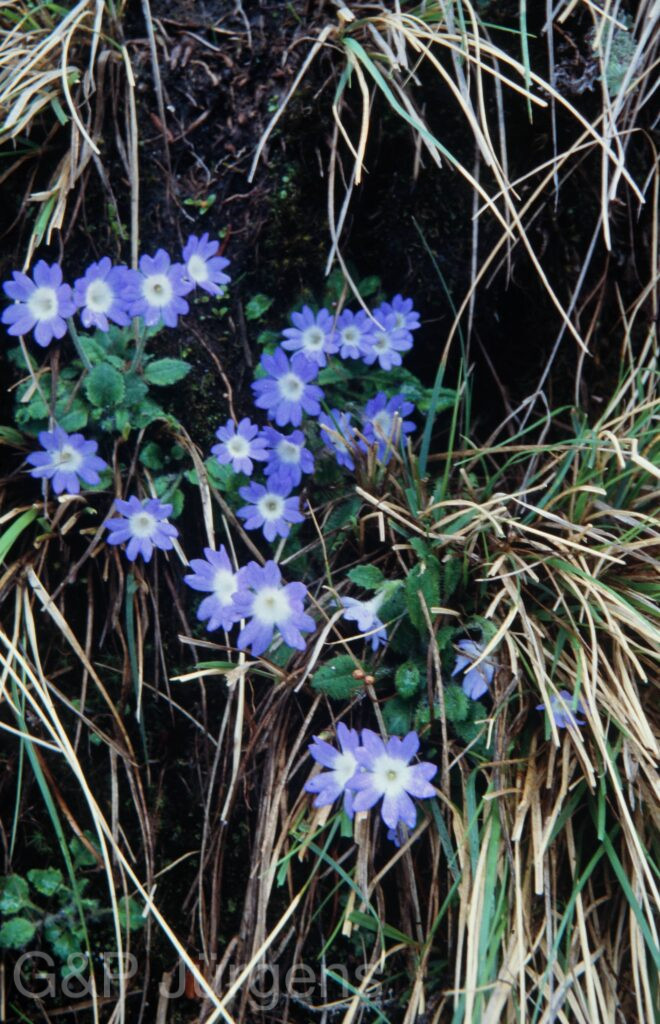
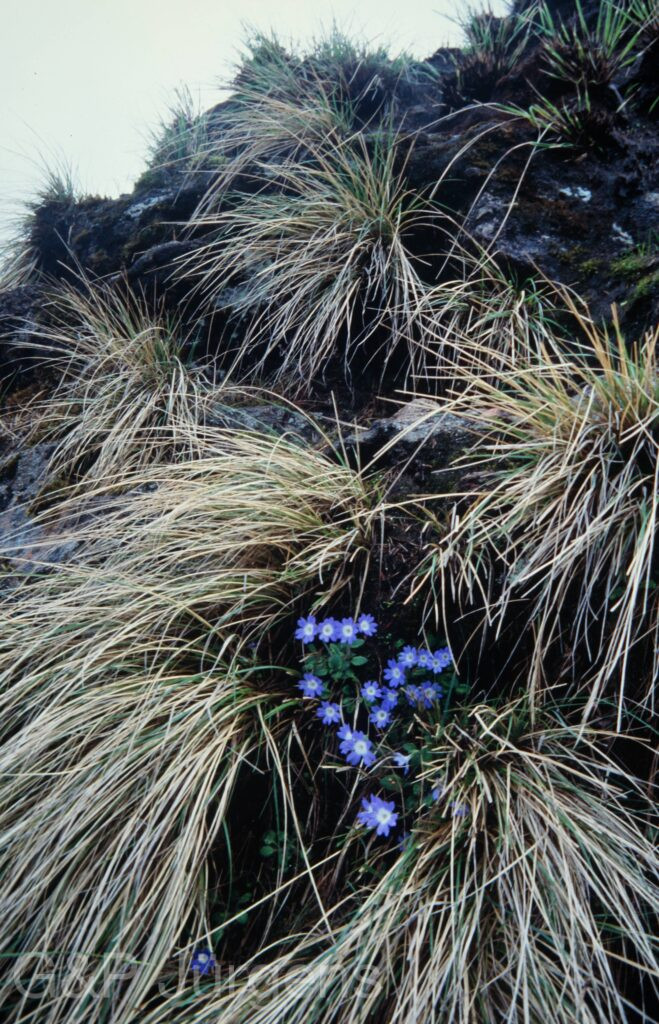
H.R.Fletcher

Nepal 2001 362 ergebnis ergebnis
Nepal (Gorkha) Rupina-La 3350m, May
Nepal 2001 361 ergebnis ergebnis
Nepal (Gorkha) Rupina-La 3350m, May

Description

Primula buryana var. purpurea is an alpine primrose found in central and eastern Nepal, growing in moist rocky crevices, moss-covered banks, and shaded cliff faces at 3,000–4,200 m elevation.

This compact perennial forms rosettes of small, rounded to spathulate leaves with a mealy (farinose) coating on the undersurface. The flowers are borne in umbels of 2–6 on slender scapes 5–15 cm tall. The variety purpurea is distinguished by its deep purple to violet-purple flowers with a contrasting yellow eye, differing from the type variety which has paler, lilac blooms.

Primula buryana belongs to the section Petiolares, a group of Himalayan primulas that are notoriously difficult to cultivate outside their native habitat due to their requirement for cool, humid conditions with excellent drainage.

Author: H.R.Fletcher · Sources: POWO (Kew), Flora of Nepal, Richards: Primula (2003)

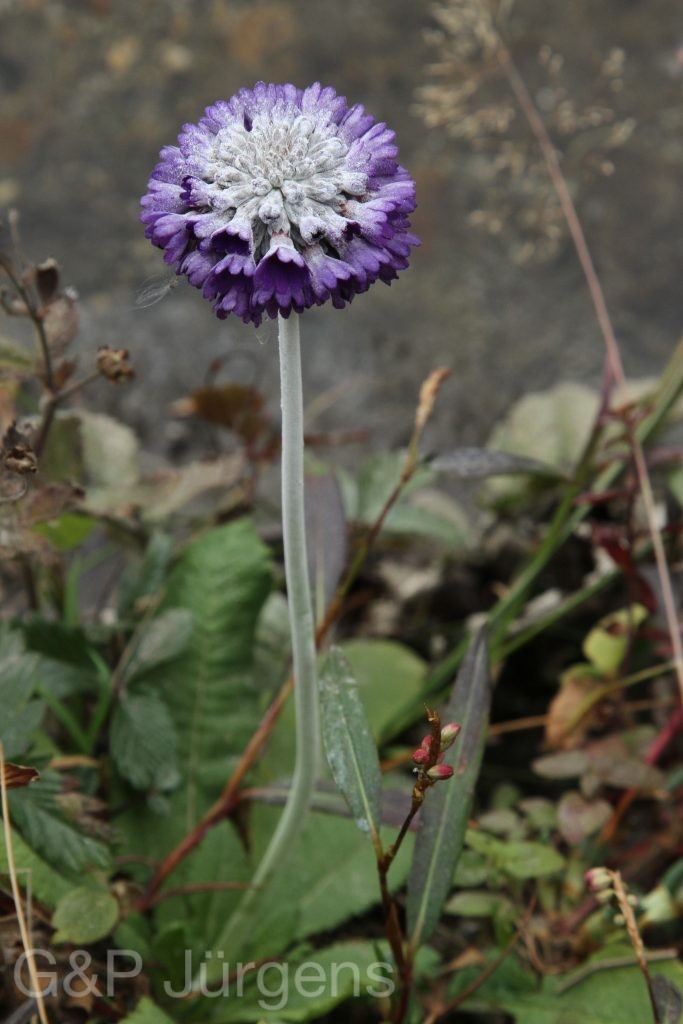
Hook.

Bhutan2015 372
Bhutan Tumching-La 4000m, October

Description

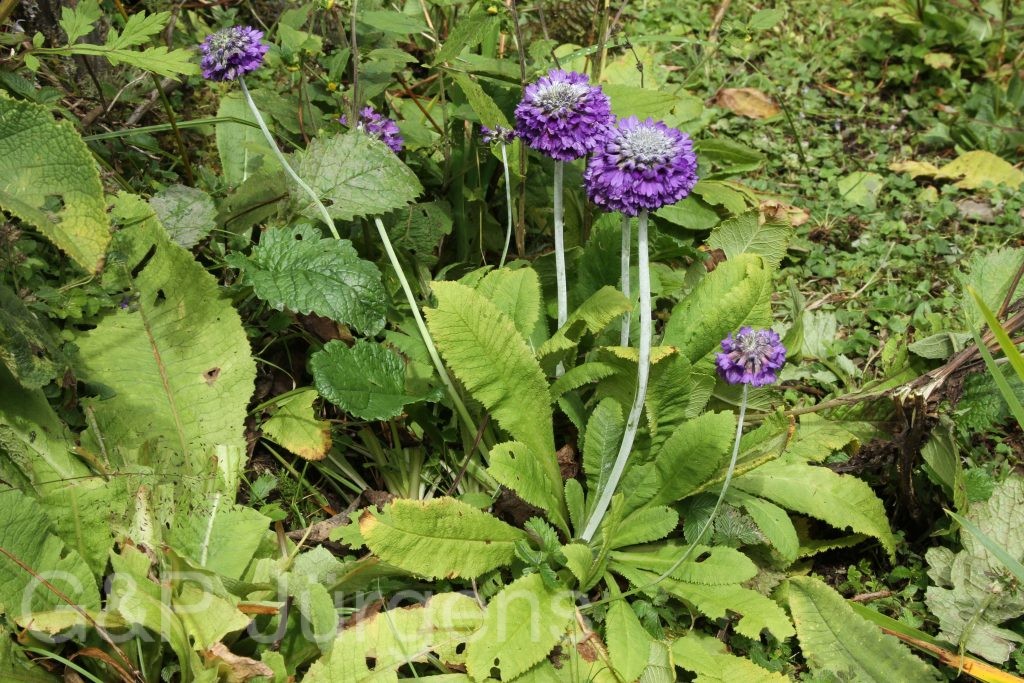
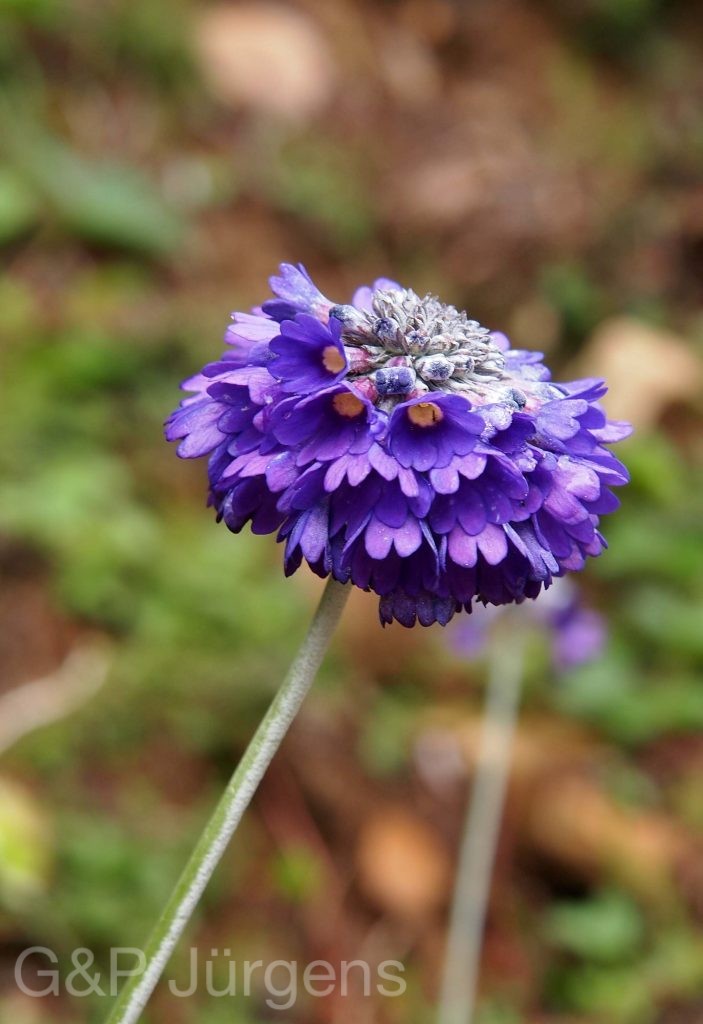
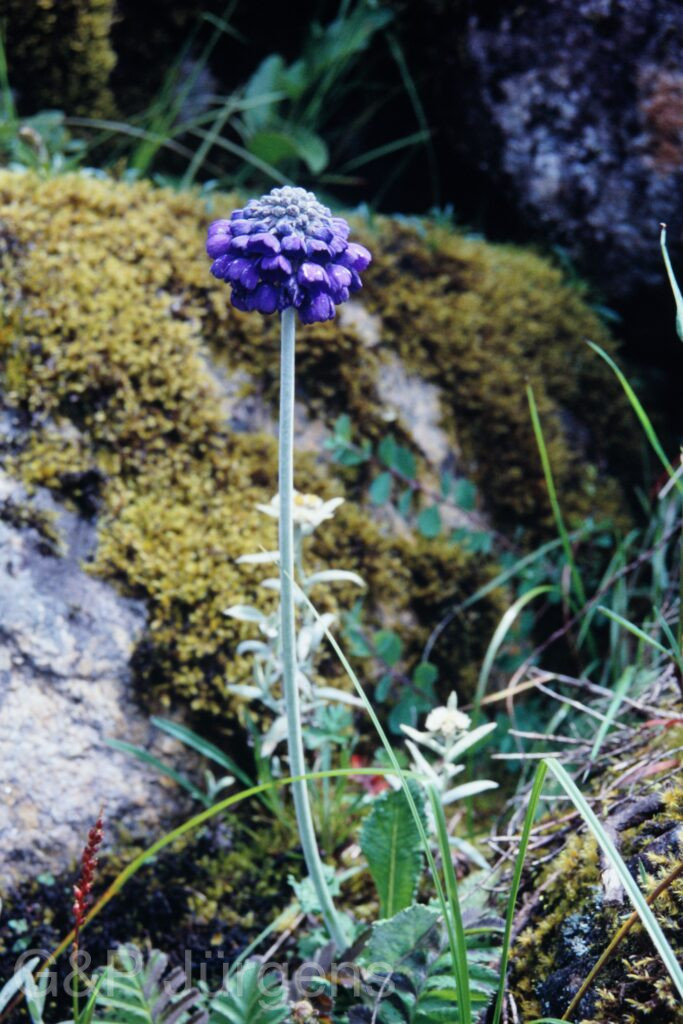
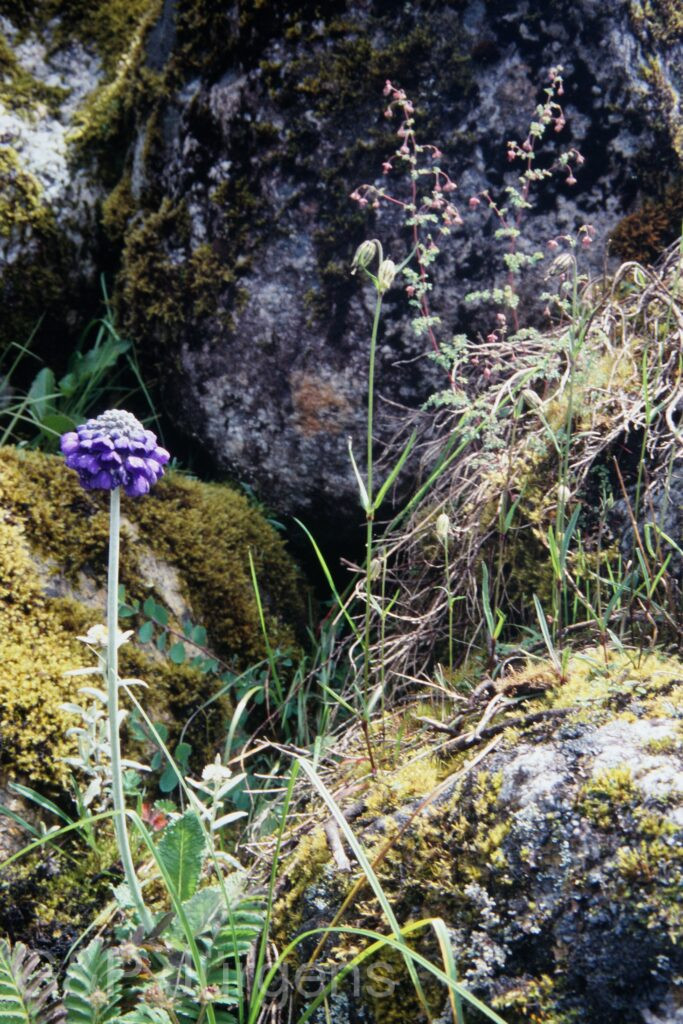
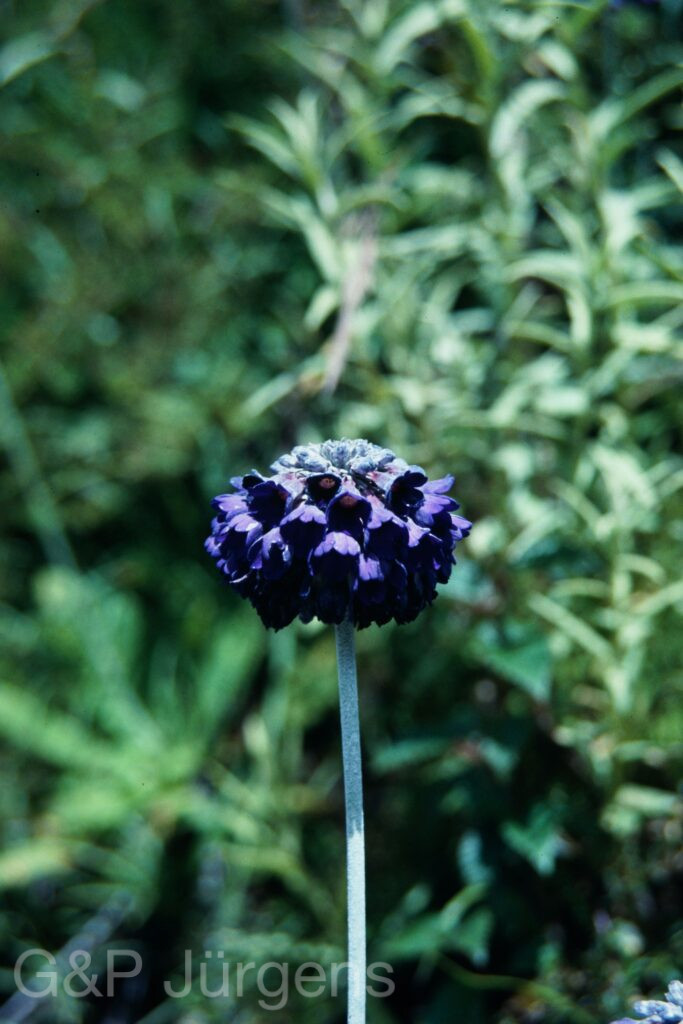
Primula capitata is an eastern Himalayan primrose distributed through Nepal, Sikkim and northern India, Bhutan and adjacent southern China and northern Myanmar, with around 476 GBIF records (additional entries from Europe, North America, Japan and Korea reflecting its cultivation). It is a plant of open, moist alpine and subalpine habitats, growing in damp meadows, on grassy slopes, streamsides and among rocks. The imaged populations at Tumching La (4000 m) and Shele La (3000 m) in Bhutan and at Dzongri in Sikkim (4100 m) span its typical elevational range and its notably late, monsoon-to-autumn flowering from August into October, when much of the alpine flora has already set seed.

The species forms a rosette of oblanceolate to spathulate leaves that are crenate to denticulate at the margin and densely white- or yellow-farinose beneath. From the rosette rises a stout, farinose scape bearing the diagnostic inflorescence: a dense, flat-topped to hemispherical capitate head of many small flowers, the lowermost opening first so that the head appears truncate. Each flower has a tubular calyx and a violet to deep blue-purple corolla with a short tube and small, spreading limb-lobes, the throat farinose. The plant is heterostylous. The fruit is a small capsule enclosed in the persistent calyx.

Primula capitata belongs to sect. Capitatae, a small group distinguished by their compact, drumstick-like heads of farinose flowers. Several subspecies and varieties have been recognised on the basis of leaf and farina characters and degree of late-season flowering. Its dependence on cool, moist alpine turf ties its distribution to the high monsoon-influenced ranges of the eastern Himalaya; it is locally common and not regarded as threatened, and is valued in cultivation as a hardy late-flowering rock-garden primula.

Author: Hook. · Sources: POWO (Kew), GBIF, Flora of Bhutan, Flora of China, Annotated Checklist of the Flowering Plants of Nepal, Richards' Primula (monograph)