
Royle ex Kunth
1900m April
Description
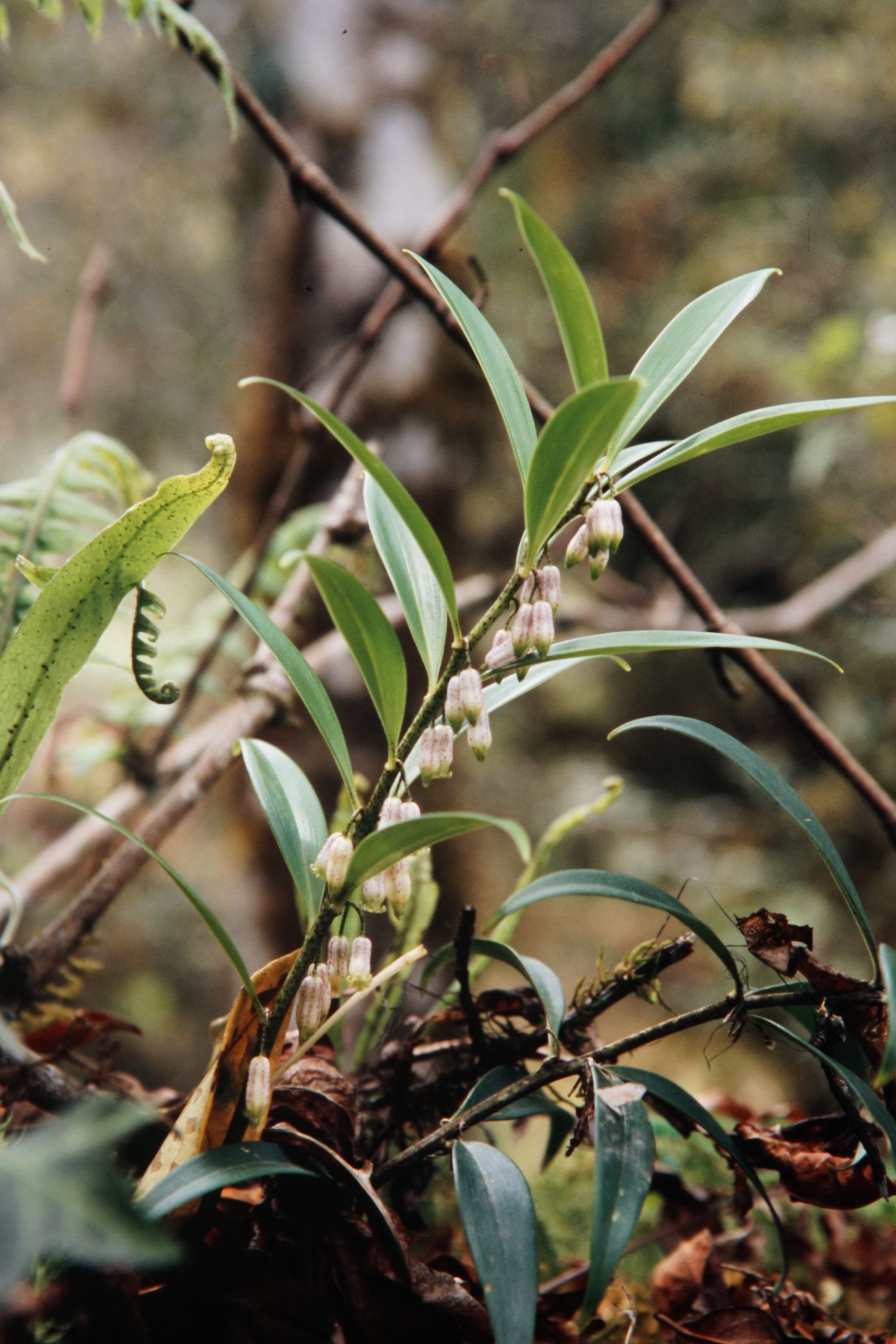
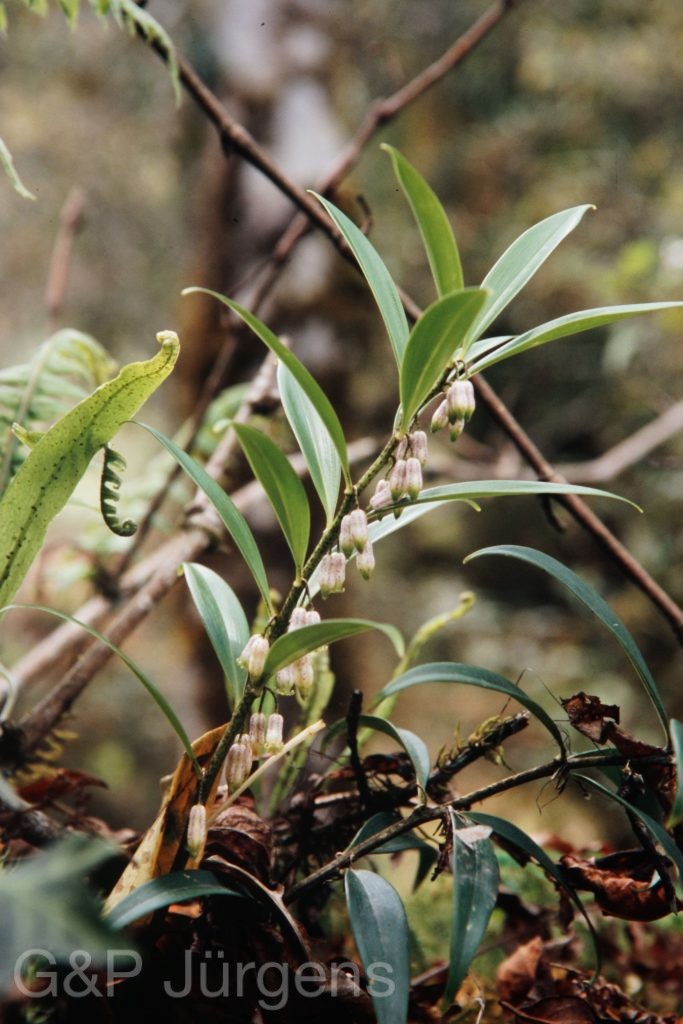
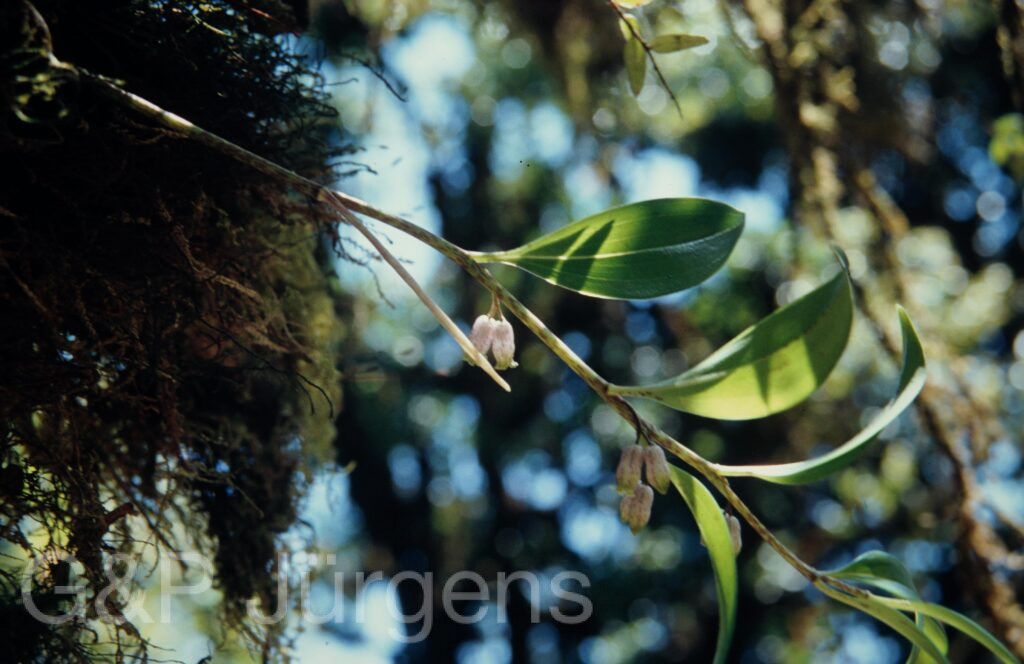
Polygonatum punctatum is a Sino-Himalayan Solomon's seal distributed through China, Nepal, India, Bhutan, Myanmar, Thailand, Vietnam and Laos, with over 450 georeferenced occurrences and additional records from cultivation. It is a plant of cool, shaded temperate forest, mossy banks, rock ledges and humus-rich slopes, where it often grows as a lithophyte or epiphyte. The populations documented at Phobjikha in Bhutan at about 2700 m and at Bhalukhob in eastern Nepal at about 1900 m, both in April, reflect its montane forest habitat, emerging and flowering in spring.
The species grows from a creeping, knotted rhizome that produces an arching to pendent leafy stem. The leaves are alternate, sometimes appearing sub-opposite, ovate to lanceolate and acuminate, often somewhat leathery. Slender axillary inflorescences bear one to several tubular flowers; the perianth is fused into a narrow cylindrical tube, greenish-white and frequently marked with purple dots or spots (the punctate patterning evoked by the epithet), with six short lobes and included stamens. The fruit is a small globose berry, dark purple to blackish when ripe, containing a few seeds.
Within Asparagaceae (formerly Convallariaceae or Liliaceae sensu lato), Polygonatum is a Northern Hemisphere genus whose East Asian and Himalayan species are taxonomically intricate, separated by leaf arrangement, flower number, perianth markings and rhizome form. The frequently epiphytic or saxicolous habit of P. punctatum is unusual within the largely terrestrial genus. Widespread and locally common, it is not regarded as threatened, though several Himalayan congeners are harvested for the medicinal rhizome.
Author: Royle ex Kunth · Sources: POWO (Kew), GBIF, Flora of Bhutan, Flora of Nepal, Flora of China, Jeffrey's revision of Polygonatum