
(Wall.) Royle

Description
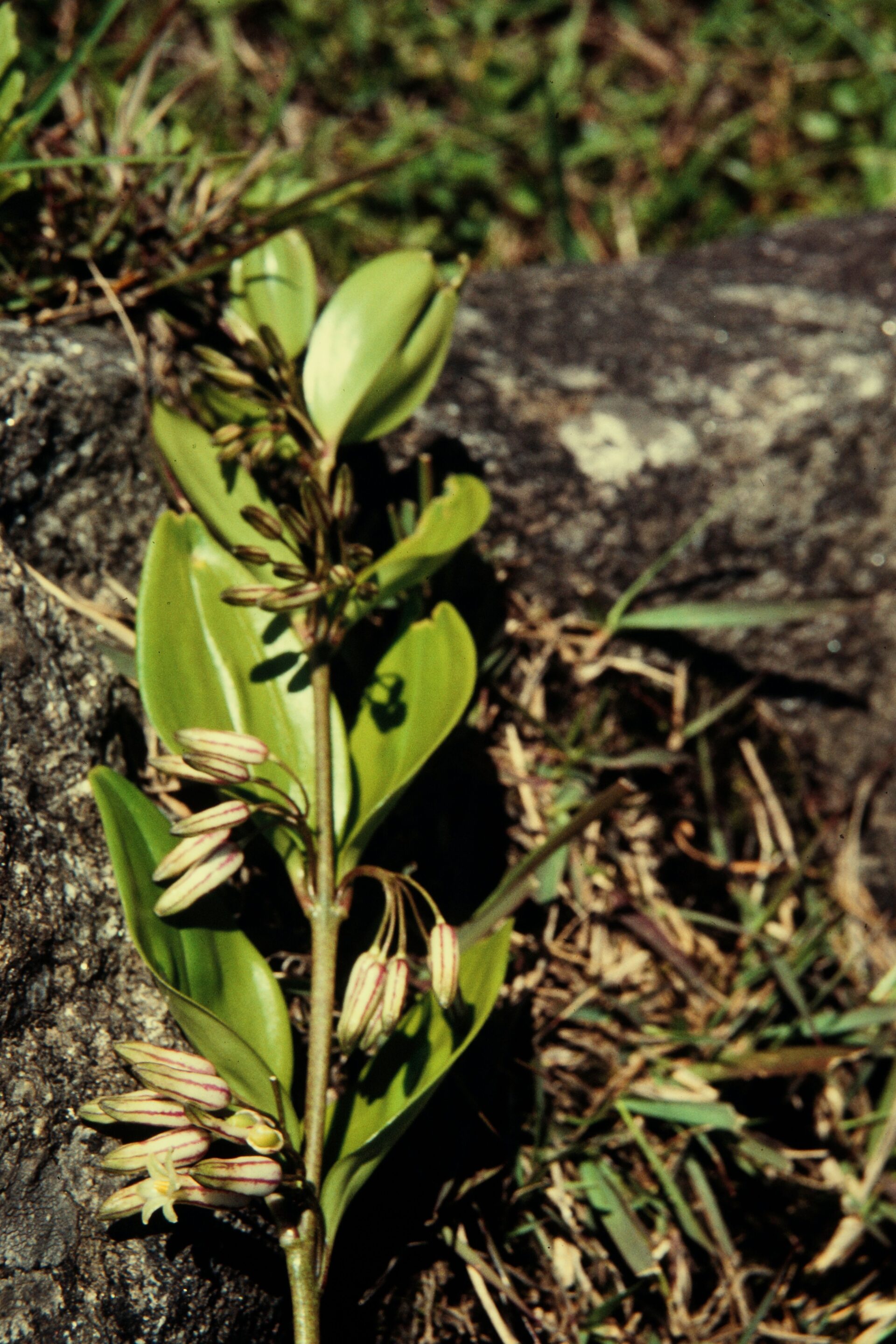
Polygonatum oppositifolium is a rhizomatous perennial herb of the Himalaya and adjacent mountains, ranging through India, Nepal, China, Bhutan and Myanmar, with around 184 georeferenced records concentrated along the southern Himalayan flank (several distant country codes reflect cultivation or data artefacts rather than wild populations). It grows in moist, shaded broad-leaved and mixed forest, on banks and among rocks in leaf-litter-rich soils at middle elevations. The photographed plant from the Arun Valley of eastern Nepal at about 2000 m, flowering in May, typifies its warm-temperate forest habitat.
The plant has a creeping, knotted, fleshy rhizome from which arises an arching to suberect stem. As the epithet indicates, the lanceolate to ovate-lanceolate leaves are predominantly opposite (occasionally whorled), sessile to shortly petiolate, acuminate and prominently veined. The flowers hang in short axillary cymes; each perianth is tubular and greenish-white, the six tepals fused into a cylindrical tube with short recurved lobes, enclosing six included stamens with filaments adnate to the tube. The fruit is a small globose berry, ripening dark blue to blackish and containing few seeds.
Polygonatum (Solomon's seal), placed in Asparagaceae subfamily Nolinoideae, is distinguished from related genera by its rhizome scars and tubular flowers. P. oppositifolium is notable within the Himalayan members for its opposite leaf arrangement. The pendent flowers are bumblebee-pollinated and the berries bird-dispersed. The rhizomes are gathered locally in traditional medicine; while not currently regarded as threatened, such harvesting and forest degradation warrant monitoring of wild stands.
Author: (Wall.) Royle · Sources: POWO (Kew), GBIF, Flora of China, Annotated Checklist of the Flowering Plants of Nepal, Flora of Bhutan, Jeffrey monograph of Polygonatum