
Baker
Description
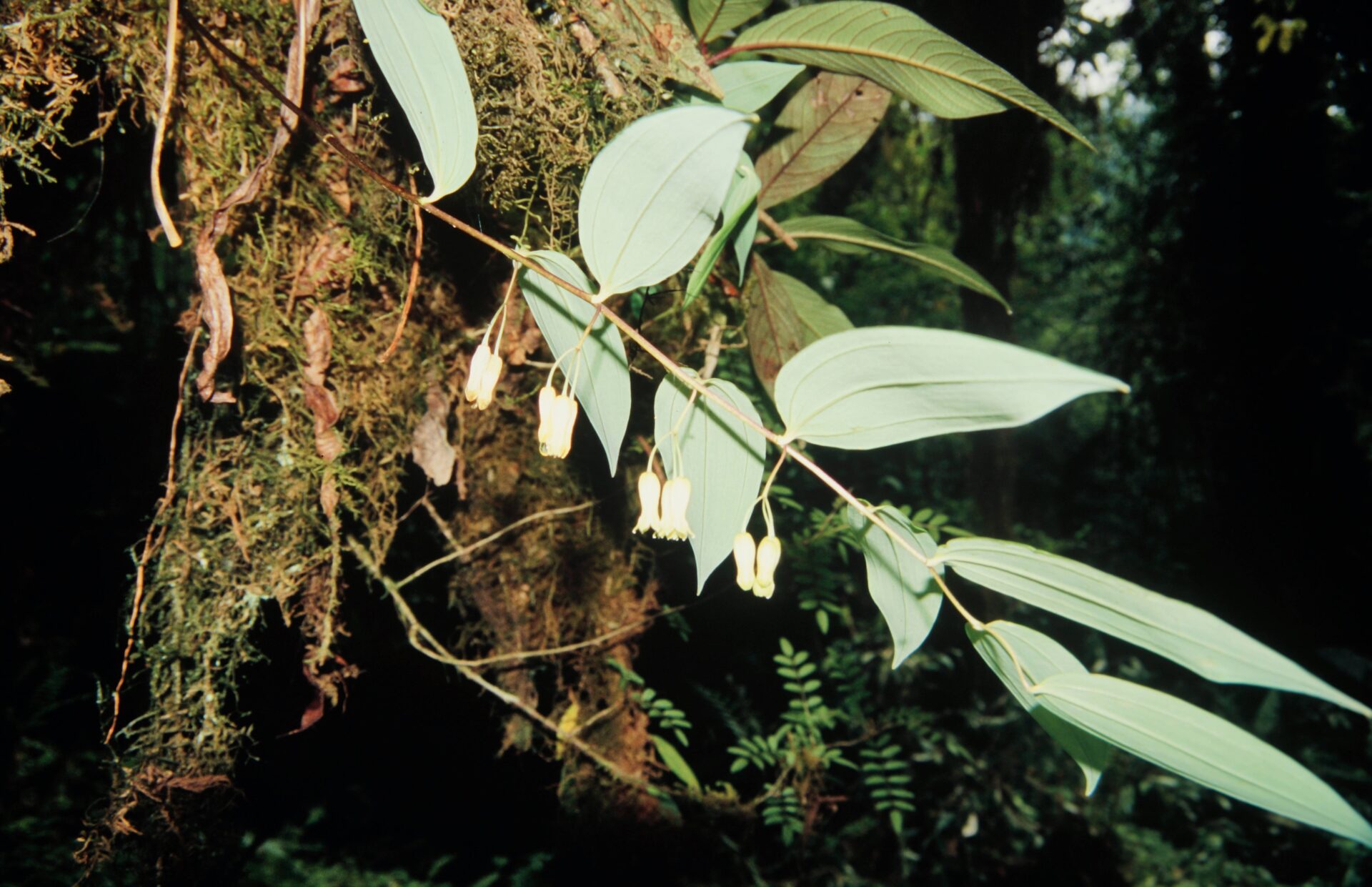
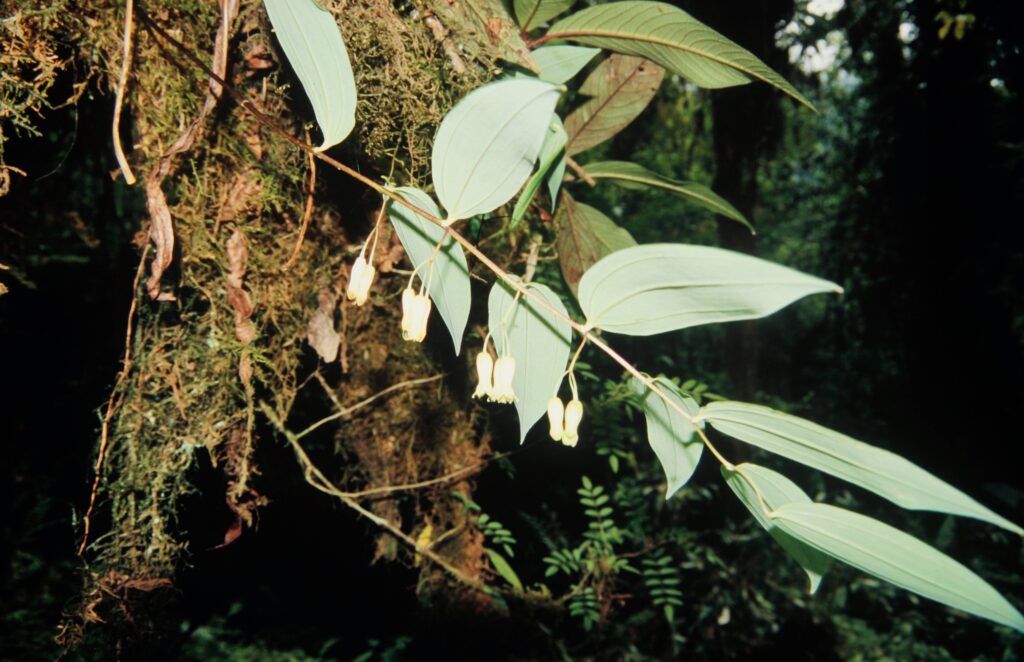
Polygonatum brevistylum is a rhizomatous perennial of the eastern Himalaya and adjacent ranges. GBIF documents it (some 27 occurrences) from Nepal, India, Bhutan and Myanmar, in moist temperate forest, forest margins, shrubberies and shaded banks. It grows in cool, humus-rich soils within the broadleaved and mixed conifer zone, generally between about 1,500 and 3,000 m. The photographed plant is from Chaana in West Bengal (Darjeeling–Sikkim Himalaya) at around 1,800 m, flowering in May, a representative low-montane station for the species as it sends up shoots in spring.
The plant has a stout, knotty, horizontally creeping rhizome from which arises an erect or arching stem. The leaves are alternate, ovate to elliptic and acuminate, glabrous, sessile or shortly petiolate. The flowers are pendent and borne in few-flowered axillary clusters; the perianth is tubular-campanulate, white to greenish-white, with six short lobes, and, as the epithet brevistylum signals, a notably short style. The fruit is a globose berry, ripening blue-black to purplish and containing several seeds.
Polygonatum (Solomon's-seal), now placed in Asparagaceae (formerly Convallariaceae or Liliaceae sensu lato), is taxonomically intricate in the Himalaya, where several closely allied rhizomatous species occur. The short style and the clustered axillary flowers are useful diagnostic characters separating P. brevistylum from sympatric congeners. Himalayan Polygonatum rhizomes are widely gathered for food and traditional medicine, so localised harvesting pressure may affect accessible populations.
Author: Baker · Sources: POWO (Kew), Flora of China Vol. 24, Flora of Bhutan Vol. 3, GBIF, Jeffrey: The Genus Polygonatum (Liliaceae) in Eastern Asia