Tag:

Summer

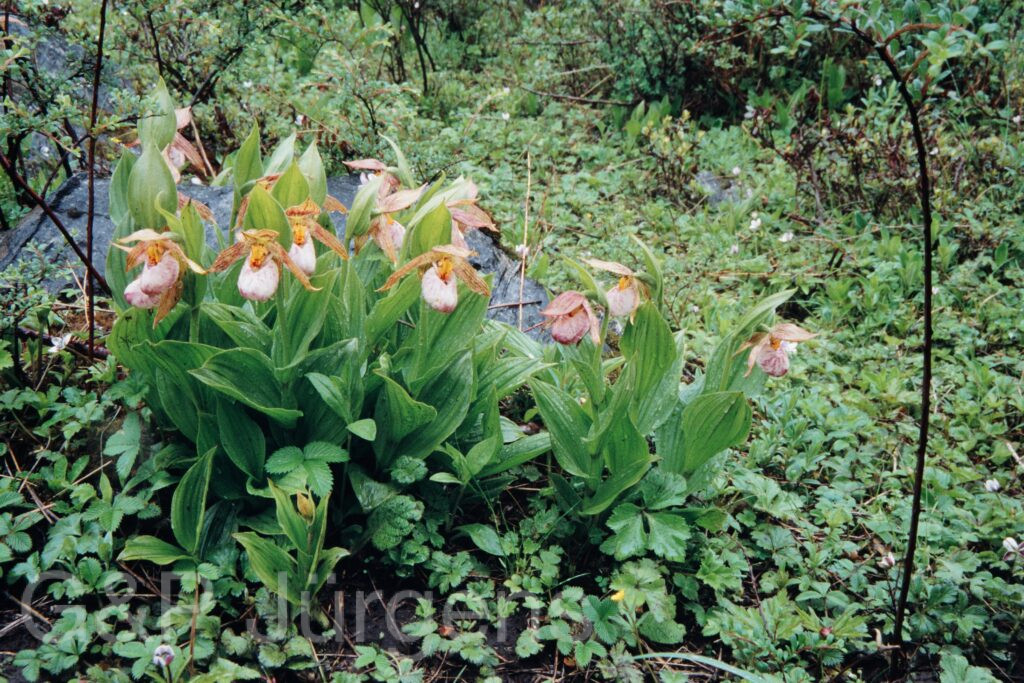
Rchb.f.

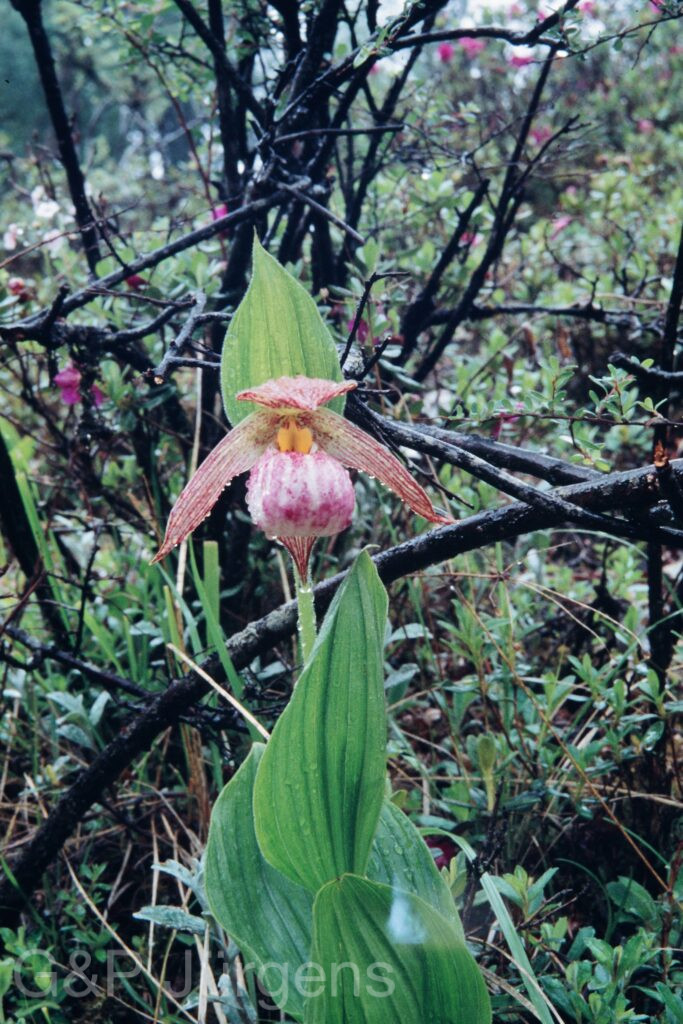
BhutanPG2011 228
Bhutan Tsochenchen, 3600m June

Description

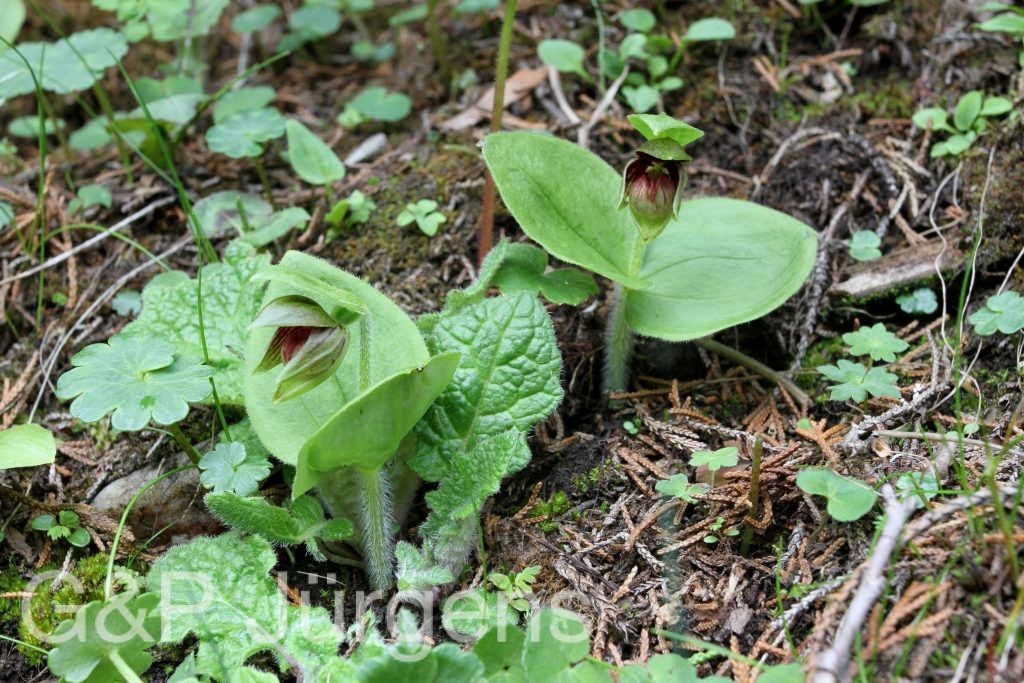
Cypripedium elegans Rchb.f. is a diminutive lady's-slipper orchid of the eastern Himalaya, recorded by GBIF from India, Nepal, Bhutan and China across some 59 occurrences. It is a plant of cool, humid high-altitude habitats, growing in mossy alpine and subalpine scrub, beneath Rhododendron and dwarf bamboo, and on shaded humus-rich banks, generally between about 3000 and 4000 m. The individual photographed at Tsochenchen in Bhutan at around 3600 m in June, early in the alpine season, reflects its preference for sheltered, perennially moist sites with deep leaf litter and a stable cool microclimate.

The plant arises from a short creeping rhizome and produces a slender, low erect stem bearing usually two broadly elliptic to ovate, plicate, prominently veined leaves that are held more or less opposite or subopposite near the top of the stem. The single nodding flower is small for the genus; the dorsal sepal and the synsepal (the fused lateral sepals) are ovate and the petals narrow, the whole pale yellowish-green to greenish, often faintly marked. The labellum is modified into the characteristic inflated, slipper-shaped pouch that traps and temporarily detains pollinating insects, which exit past the staminode and stigma, effecting pollination.

Cypripedium belongs to subfamily Cypripedioideae, the slipper orchids, marked by their two fertile anthers and saccate lip. Cypripedium elegans is one of the smallest and most delicate Himalayan members of the genus. It is uncommon, slow to establish, and like all Cypripedium it is highly sensitive to collection and habitat disturbance; the genus is listed on CITES Appendix II and several species are of conservation concern. Its restricted high-Himalayan range makes it a notable narrow-altitude alpine specialist.

Author: Rchb.f. · Sources: POWO (Kew), GBIF, Flora of Bhutan, Flora of China, Cribb monograph The Genus Cypripedium, Pearce and Cribb Orchids of Bhutan
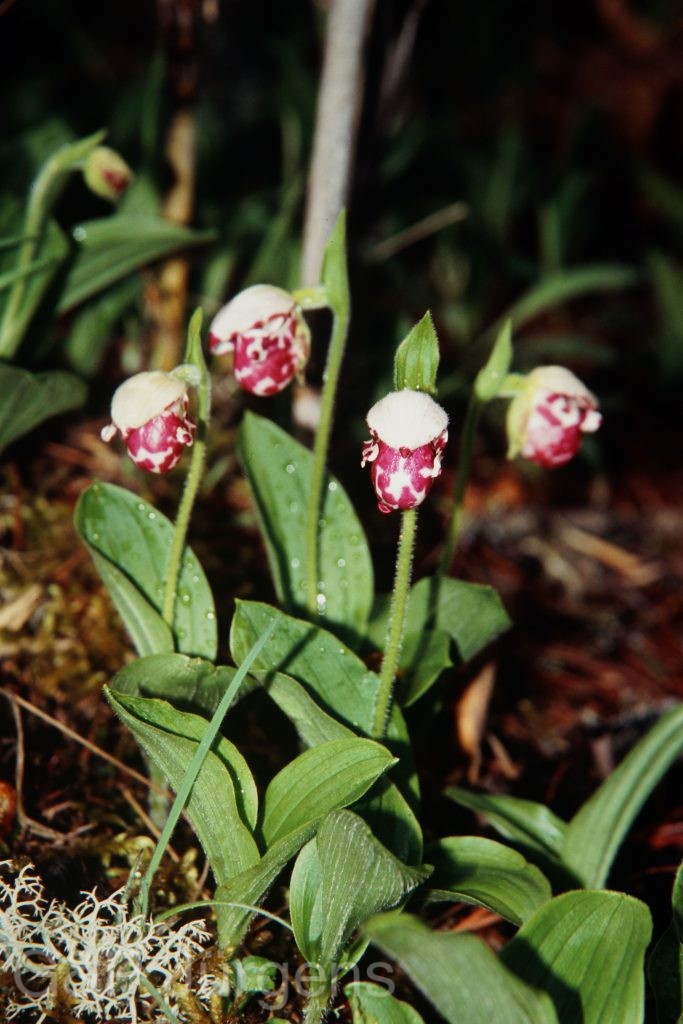
Sw.

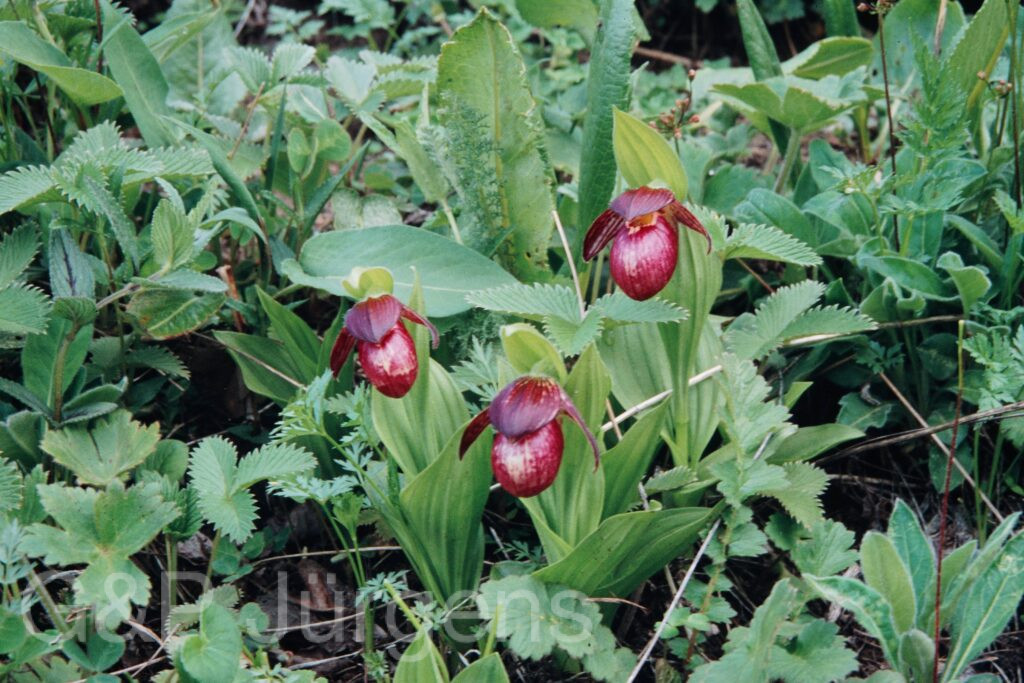
Bh09 317 P521
Bhutan Yetong-La, 3100m June

Description

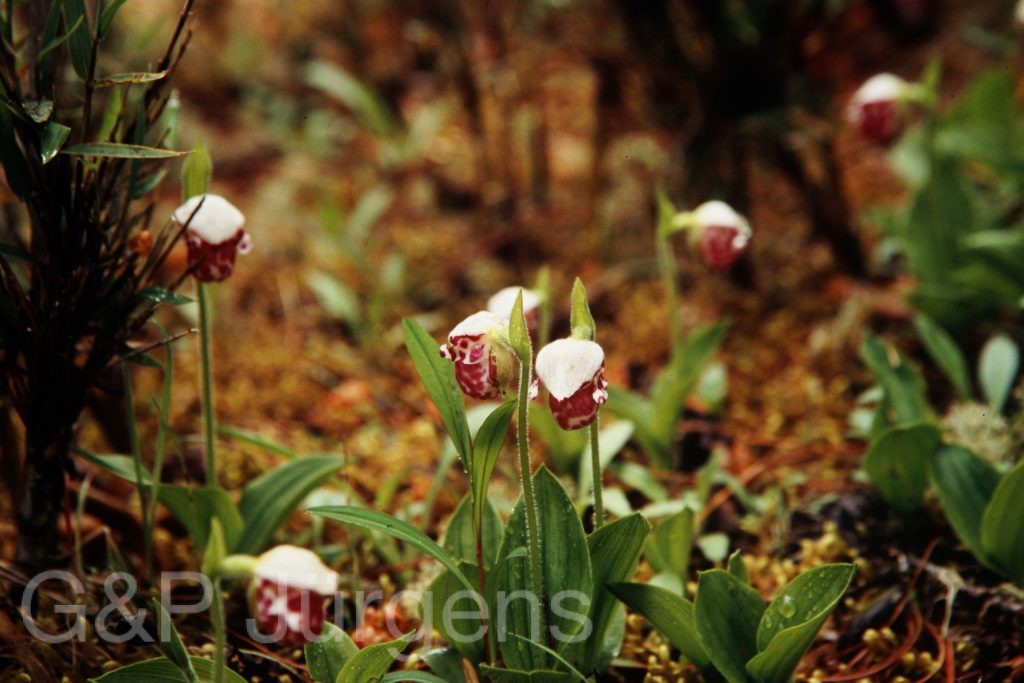
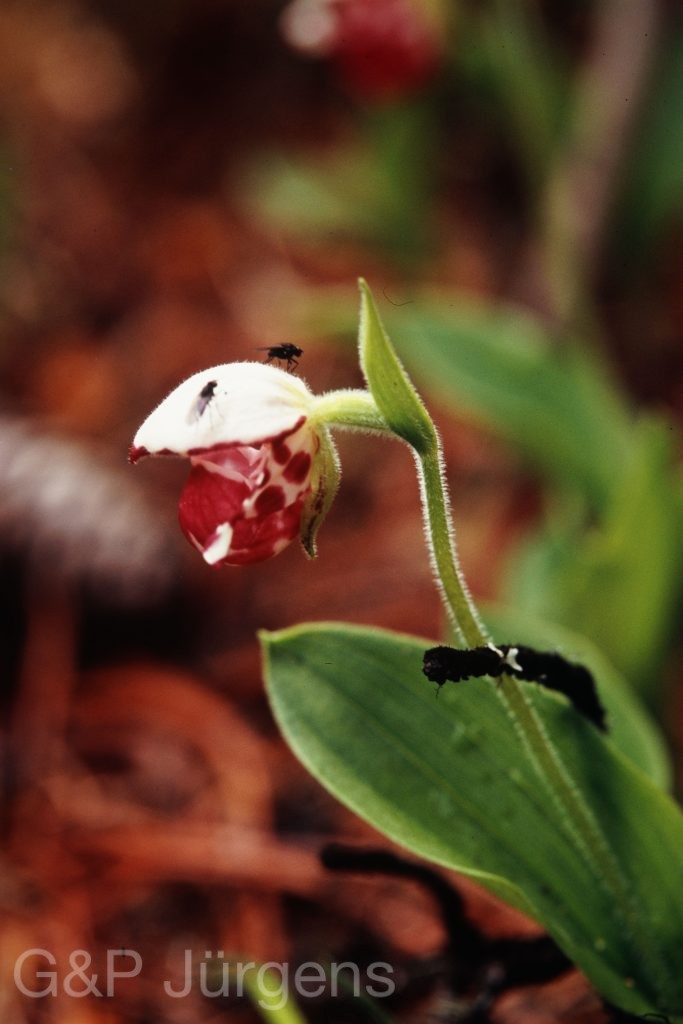
Cypripedium guttatum is a broadly circumboreal slipper orchid with one of the widest ranges in its genus, documented across Russia, China, Mongolia, Korea, Japan, Kazakhstan, Bhutan and into North America, the nearly 4900 records reflecting its extensive Eurasian-American boreal distribution. At the southern Himalayan limit of its range it ascends into cool montane forest, the images recording plants on the Yetong-La in Bhutan at about 3050 to 3100 m in June. It grows in coniferous and mixed woodland, forest margins, grassy clearings and on mossy, humus-rich or calcareous ground, typically in light shade with consistent soil moisture.

It is a small terrestrial orchid spreading by slender creeping rhizomes, often forming loose colonies. The erect stem bears usually two subopposite, broadly elliptic to ovate, plicate leaves with conspicuous parallel venation. A single terminal flower is produced; the characteristic inflated, pouch-shaped labellum and the sepals and petals are white boldly blotched and mottled with rose-purple to magenta, the lateral sepals being fused into a synsepal beneath the lip. As in all Cypripedium the column bears two fertile anthers and a shield-like staminode, and the flower offers no nectar reward, attracting small bee pollinators by deceit before the inferior ovary matures into a capsule of dust-like seeds.

The species is placed in section Trigonopedia of Cypripedium and is notable for its small stature and strikingly spotted bicoloured flower. Like other slipper orchids it depends on mycorrhizal fungi for seed germination and establishment, and reproduces both clonally via rhizomes and by minute wind-dispersed seed. Although its overall range is vast and it is locally abundant in parts of Siberia, populations at the range periphery, including the Himalaya, are sparse, and the species faces collection and habitat-loss pressures that warrant local conservation attention.

Author: Sw. · Sources: POWO (Kew), GBIF, Flora of China, Genera Orchidacearum (Cypripedioideae), Cribb monograph of the genus Cypripedium

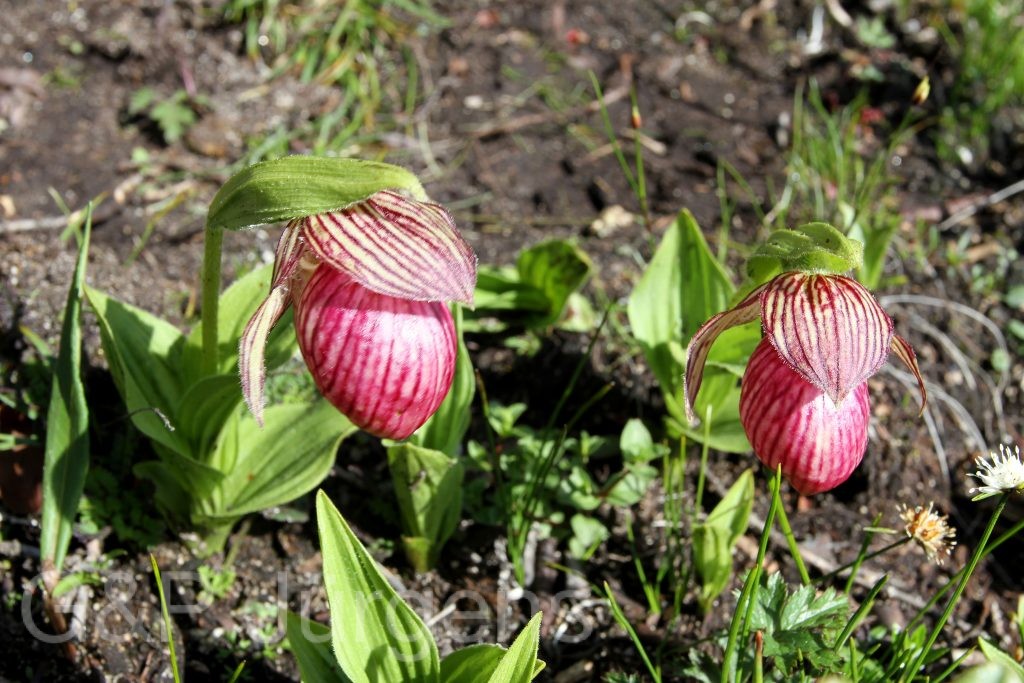
Rolfe ex. Hemsl.

BhutanPG2011 188
Bhutan Tsochenchen, 3600m June
BhutanPG2011 794
Bhutan Chele-La, 3850m July
Nepal 99 48 ergebnis
West-Nepal Nyor Gaad 2700m, June
Nepal 99 51 ergebnis
West-Nepal Nyor Gaad 2700m, June
Nepal 99 370 ergebnis
West-Nepal Nyor Gaad 2700m, June

Description

Cypripedium himalaicum is a terrestrial slipper orchid native to the eastern Himalayas, found in Bhutan, Nepal, Sikkim, and southern Tibet. It grows in alpine meadows and open forests at elevations of 3,000 to 4,500 m.

The plant reaches 15–35 cm in height, bearing one or two broadly elliptic leaves. The solitary flower is distinctive: the dorsal sepal is greenish-white with purple veins, the petals are narrow and twisted, and the lip forms a large inflated pouch, pale yellowish-green with purple spotting. Flowering occurs from May to July.

Cypripedium himalaicum is one of the highest-altitude slipper orchids in the world. It is classified as vulnerable due to habitat loss and overcollection. All Cypripedium species are listed under CITES Appendix II.

Author: Rolfe ex. Hemsl. · Sources: POWO (Kew), Flora of Bhutan, CITES Checklist

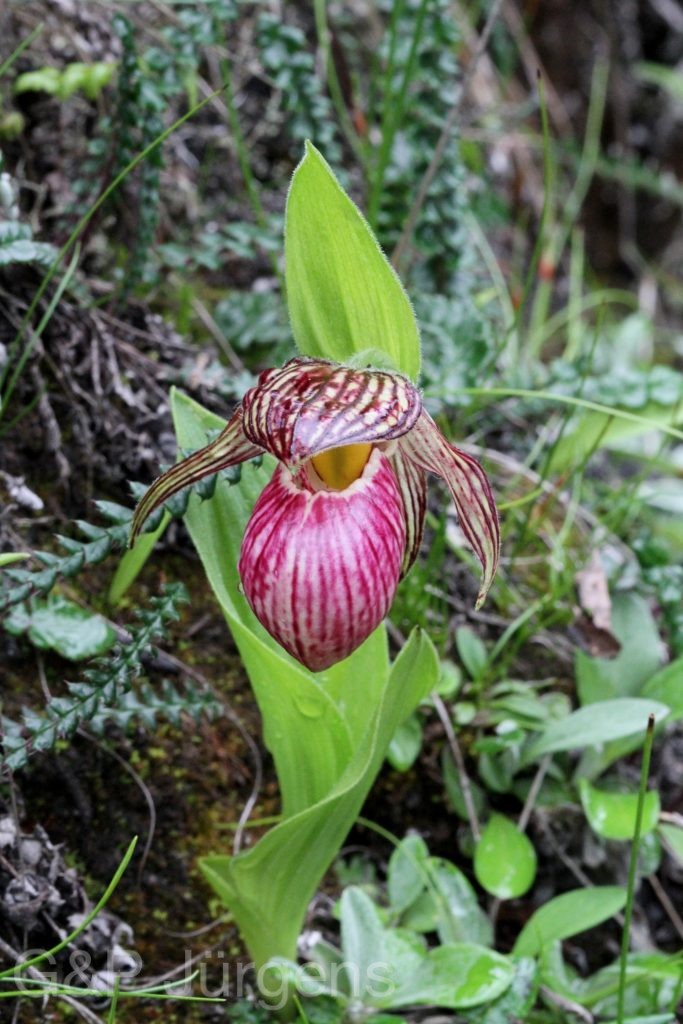
King ex Rolfe

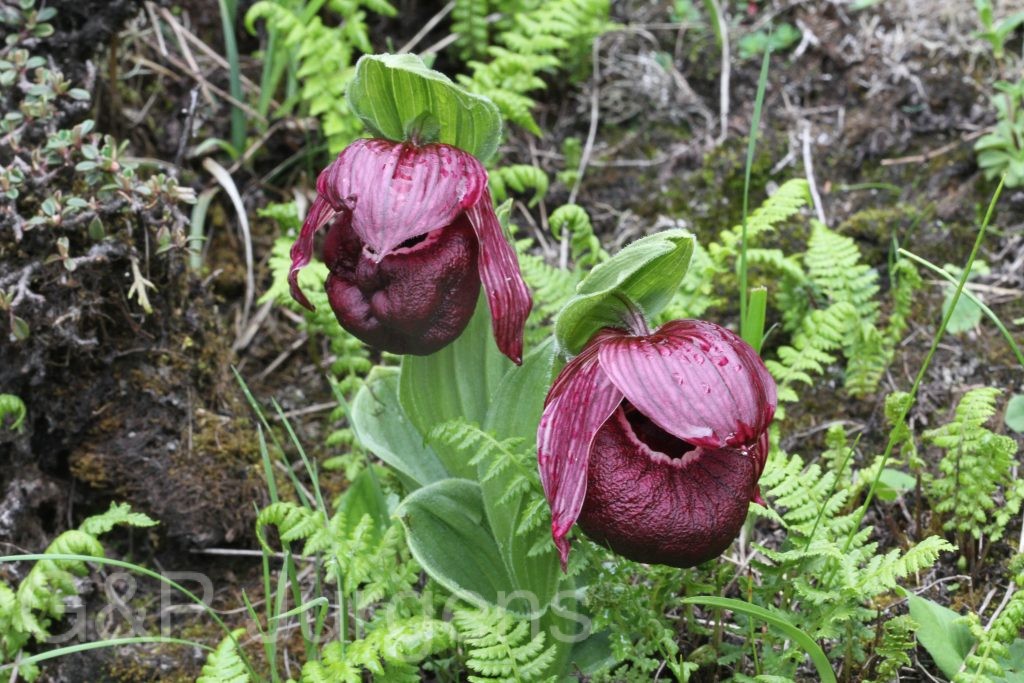
BhutanPG2011 177
Bhutan Tsochenchen, 3600m June

Description

Cypripedium tibeticum is a terrestrial slipper orchid of the high Sino-Himalaya, native to China, India and Bhutan and reaching the eastern Tibetan plateau, with several hundred recorded occurrences concentrated in the mountains of southwest China. It is a plant of subalpine and alpine habitats, growing in open coniferous and Rhododendron woodland, scrub margins, grassy slopes and damp meadows, generally between about 2300 and 4200 m. The individual shown at Tsochenchen in Bhutan at 3600 m in June illustrates its flowering in early summer in cool, humus-rich montane turf.

The plant is a perennial herb arising from a short, creeping rhizome with fleshy roots, producing erect stems each bearing usually three to four broadly elliptic to ovate, plicate leaves with prominent venation. The solitary, terminal flower is large and conspicuous, subtended by a leafy bract. The sepals and petals are deep purple to blackish-maroon, often paler-veined, the dorsal sepal broad and the lateral sepals fused into a synsepal beneath the lip. The defining feature is the large, inflated, pouch-like labellum, deep wine-purple and reticulately veined, which functions as a trap pollination chamber. The column bears a flat, sterile staminode, and the fruit is an erect capsule.

The species belongs to Cypripedium section Cypripedium, the temperate slipper orchids, and is among the most variable and widespread members in the Himalayan–Tibetan region, with several varieties described. Its showy flowers and deceptive food-mimic pollination by bees make it of pollination-biological interest. Heavily threatened by collection and habitat disturbance, it is listed on CITES Appendix II and is of genuine conservation concern across its range.

Author: King ex Rolfe · Sources: POWO (Kew), GBIF, Flora of China, The Orchids of Bhutan (Pearce & Cribb), Cribb The Genus Cypripedium, CITES Appendices

(Fedde.) Hand.-Mazz.

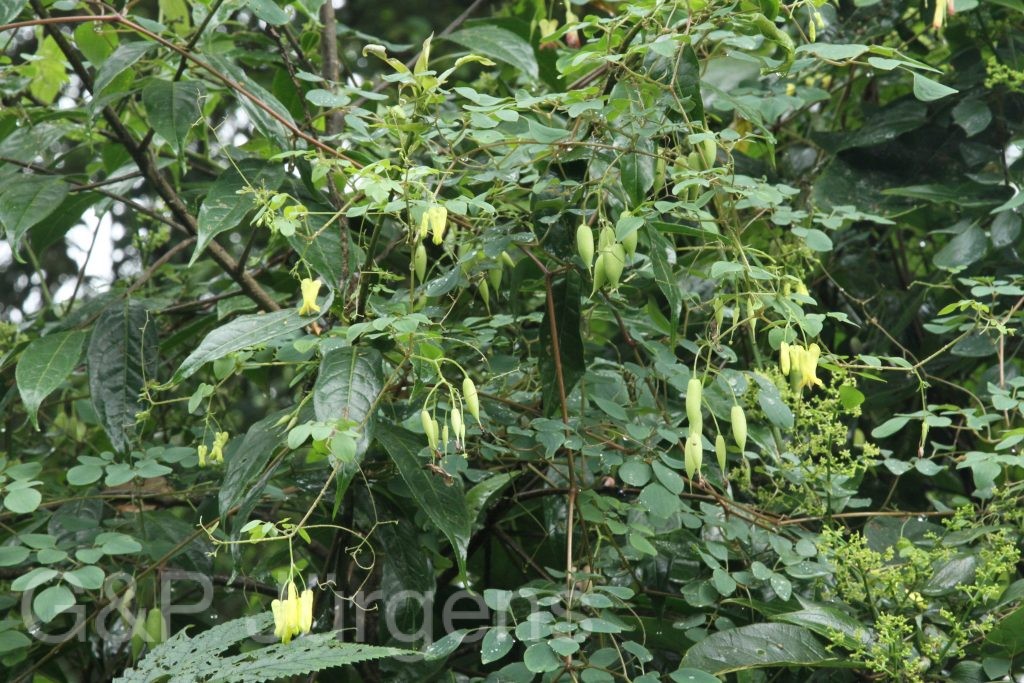
Bhutan2012 678
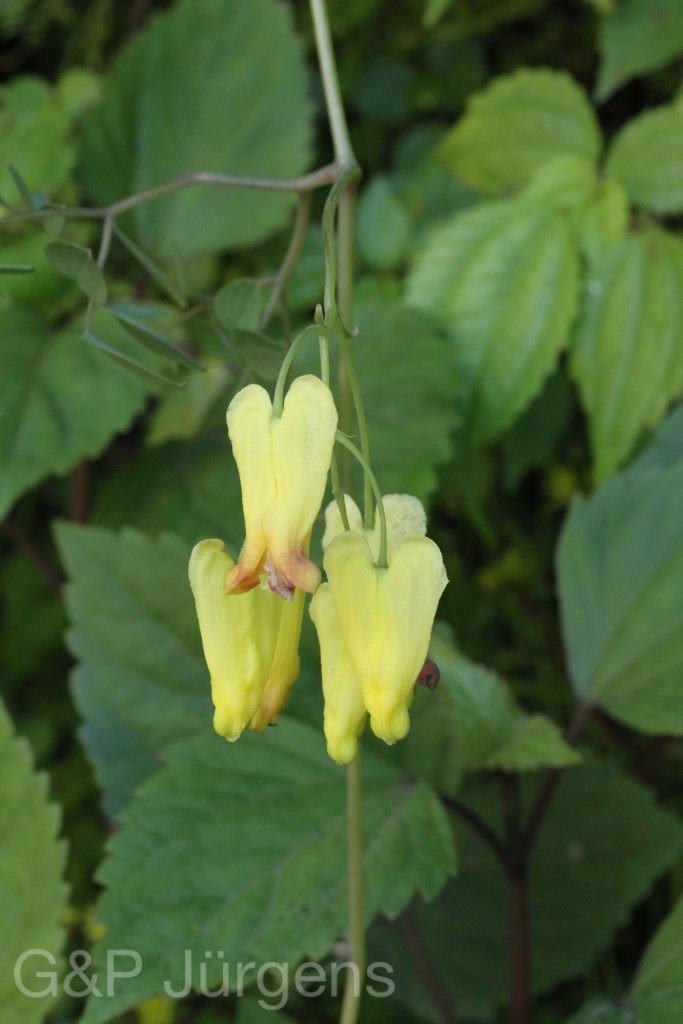
Bhuitan Tserang 1300m, June

Description

Dactylicapnos lichiangensis (Fedde) Hand.-Mazz. is a scandent herbaceous climber of the Fumarioideae, distributed across the eastern Himalaya and the Sino-Himalayan transition zone. GBIF records (136 occurrences) confirm its presence in southwest China (notably Yunnan, where the epithet references the Lijiang district) and Bhutan, where it ascends into the subtropical and warm-temperate belts. The species was photographed at Tserang in Bhutan at 1,300 m in June, a typical setting along moist forest margins, shaded ravines, and shrubby thickets where it scrambles over neighbouring vegetation. It favours humid, sheltered microhabitats on well-drained slopes between roughly 1,200 and 2,800 m.

The plant is a delicate, glabrous annual or short-lived perennial with slender, brittle, much-branched stems that climb by means of tendril-like terminations of the much-divided leaves. The foliage is biternately to triternately compound, the ultimate segments ovate to lanceolate, glaucous beneath. The pendent, few-flowered racemes bear distinctive yellow, heart-shaped flowers; the outer pair of petals is saccate at the base, forming a dorsal pouch characteristic of the genus, enclosing the inner petals. The fruit is a slender capsule containing several glossy black seeds, each typically bearing an elaiosome that promotes myrmecochorous dispersal.

Dactylicapnos was segregated from Dicentra on the basis of its climbing habit and tendrillar leaves, and lichiangensis sits within a cluster of yellow-flowered Sino-Himalayan species often confused in herbaria. Like many Fumarioideae it contains isoquinoline alkaloids of pharmacological interest. Although not formally assessed as threatened, its restricted distribution and dependence on intact forest-edge habitat make local populations sensitive to deforestation.

Author: (Fedde.) Hand.-Mazz. · Sources: POWO (Kew), Flora of China Vol. 7, Flora of Bhutan Vol. 1, GBIF, Lidén & Fukuhara: Taxonomy of Fumariaceae (1997)

(D.Don) Hutch.

Bhutan2012 477
Bhutan Pele-La 3300m, June

Description

Dactylicapnos scandens is a climbing fumitory of the Himalaya and adjacent China and Indochina, native across China, India, Nepal, Bhutan, Myanmar, Vietnam, Thailand and Sri Lanka; its more than 300 GBIF records include numerous cultivated and naturalised occurrences in Europe, North America and New Zealand, reflecting its popularity as an ornamental climber. It grows in moist temperate forest, thickets and shrubby clearings, scrambling over other vegetation, mostly between about 1500 and 3300 m. The plant shown from Pele-La in Bhutan at 3300 m, flowering in June, sits at the upper edge of this range in cool broadleaved and conifer forest.

It is a herbaceous to suffrutescent perennial climber with slender, much-branched stems clinging by means of branched, tendril-like leaflet tips. The leaves are alternate, two- to three-pinnately compound and glaucous, the ultimate segments small and ovate, the terminal portions modified into coiling tendrils. The flowers hang in pendulous racemes and are zygomorphic with two bilaterally symmetrical, spurred or saccate outer petals enclosing two inner petals, the whole corolla bright golden-yellow. The fruit is an elongate, several-seeded capsule that dehisces to release shining black seeds, each bearing an elaiosome.

Dactylicapnos was separated from Dicentra and Corydalis on the basis of its climbing habit, tendrillate leaves and capsular fruit. D. scandens, based on D. Don's Fumaria scandens and transferred by Hutchinson, is widespread and not threatened, and its toxic isoquinoline alkaloids have attracted pharmacological interest in traditional medicine.

Author: (D.Don) Hutch. · Sources: POWO (Kew), GBIF, Flora of Bhutan, Flora of China, Lidén & Fukuhara revision of Dactylicapnos

(D.Don) Soó

Nepal 99 109 ergebnis
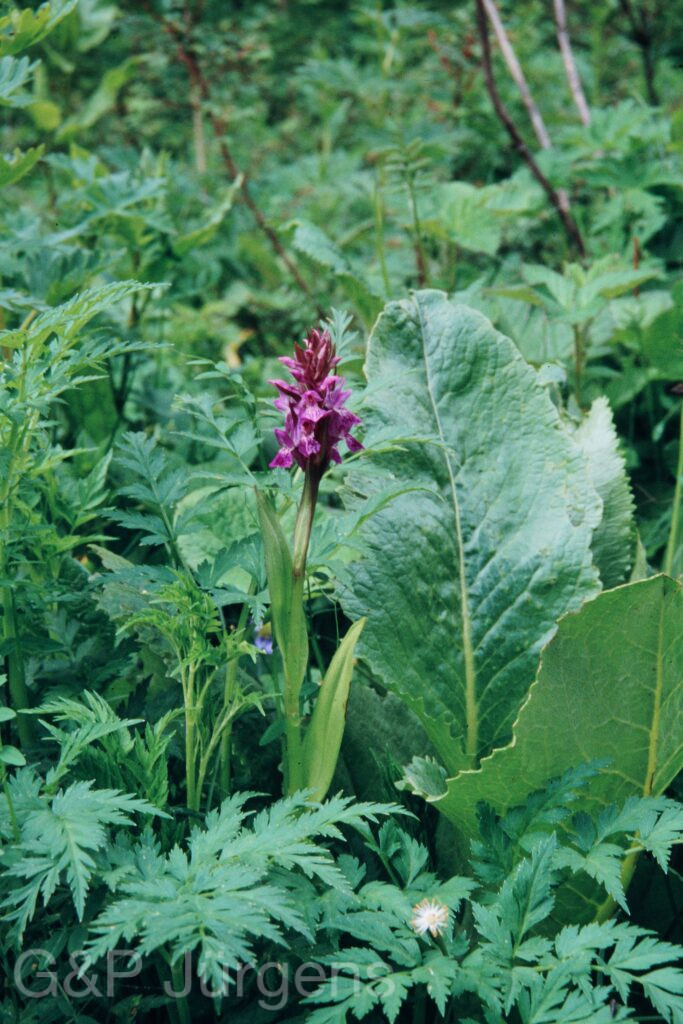
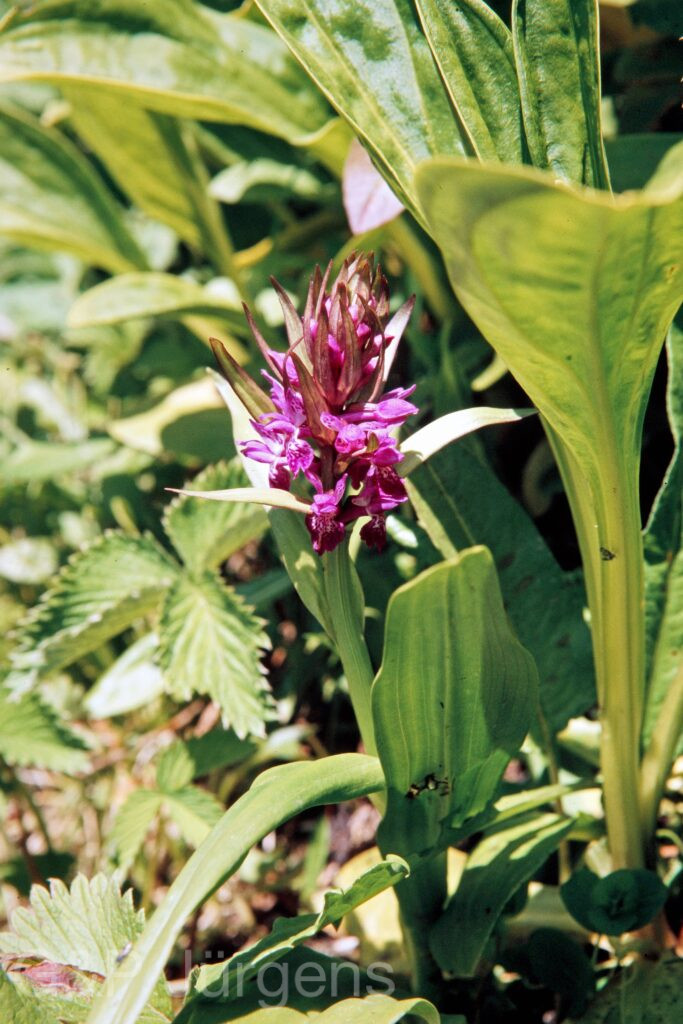
West-Nepal South of Rara-Lake 3600m, June
Garh 07 43 ergebnis
India Garhwal Nanu at Mandakini 2400m, June

Description

Dactylorhiza hatagirea (D.Don) Soó is a terrestrial marsh orchid of the Himalaya and Central Asia, recorded from Afghanistan, Pakistan, India, Nepal, Bhutan, China, Mongolia and Russia; the GBIF dataset of 311 occurrences reflects a wide but increasingly fragmented high-altitude range. It grows in moist alpine and subalpine meadows, marshy grassland, streamsides and damp slopes, broadly between 2500 and 4000 m. The photographed plants from south of Rara Lake in West Nepal at about 3600 m and from Nanu at the Mandakini in Garhwal, India, at about 2400 m, both flowering in June, exemplify its early-summer anthesis in cool, wet, open meadows across the western and central Himalaya.

The species is an erect, glabrous, tuberous perennial herb arising from palmately lobed, hand-shaped root-tubers — the digitate tubers giving both the generic name and the local trade name "Hatajari" or "Salampanja." The stem is stout and hollow, bearing several oblong-lanceolate, sheathing, usually unspotted leaves grading into bracts above. The inflorescence is a dense, many-flowered terminal spike of pink to purple-violet flowers; each has spreading sepals, a hooded arrangement of the upper segments, and a broad, three-lobed, darkly spotted labellum with a stout, descending spur. The column bears two pollinia, and the fruit is a ribbed, dehiscent capsule releasing minute, dust-like seeds.

Dactylorhiza (Orchidaceae, subtribe Orchidinae) is a north-temperate genus of tuberous marsh orchids defined by palmately divided tubers and spurred, lobed labella; D. hatagirea is its principal Himalayan representative. The dried tubers are intensively harvested for the salep trade and traditional medicine, and this over-collection, compounded by grazing and habitat loss, has driven steep population declines. It is consequently listed on CITES Appendix II and regarded as threatened and legally protected across much of its range, making it a priority for conservation and sustainable management.

Author: (D.Don) Soó · Sources: POWO (Kew), GBIF, Flora of China, Flora of Bhutan, Annotated Checklist of the Flowering Plants of Nepal, Pridgeon et al. — Genera Orchidacearum

Daphne bholua

by GP Jürgens

Buch.-Ham. ex D.Don

Sikkim2011 45
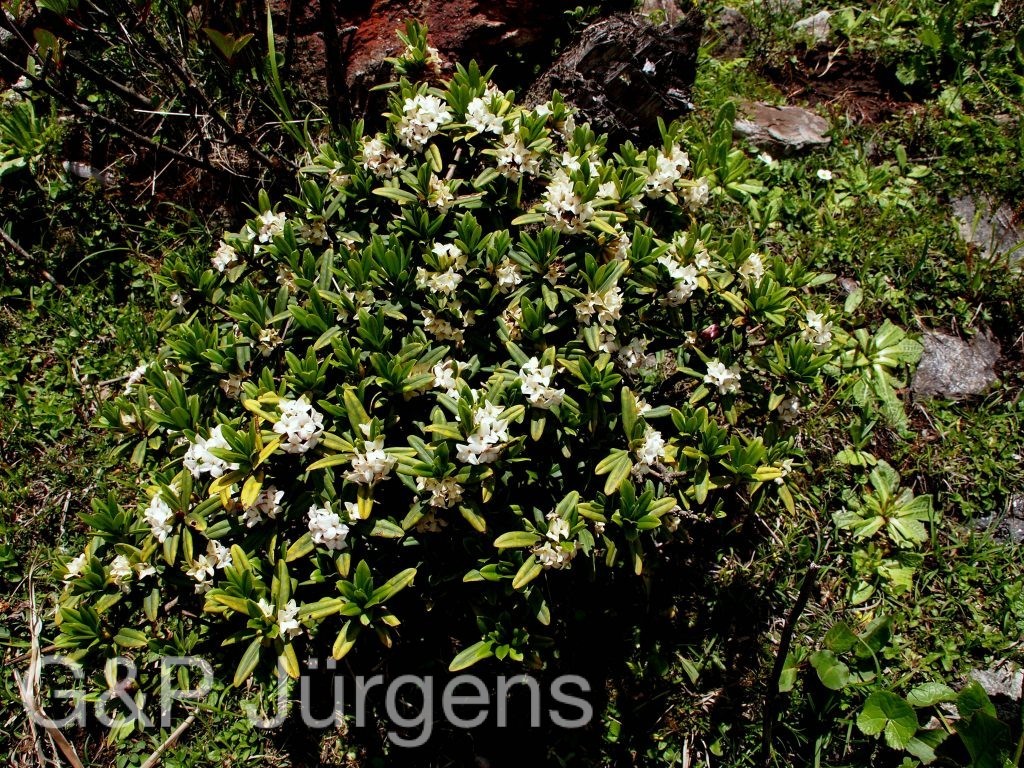
Sikkim Vista-valley 3750m, June
Sikkim2011 49
Sikkim Vista-valley 3750m, June

Description

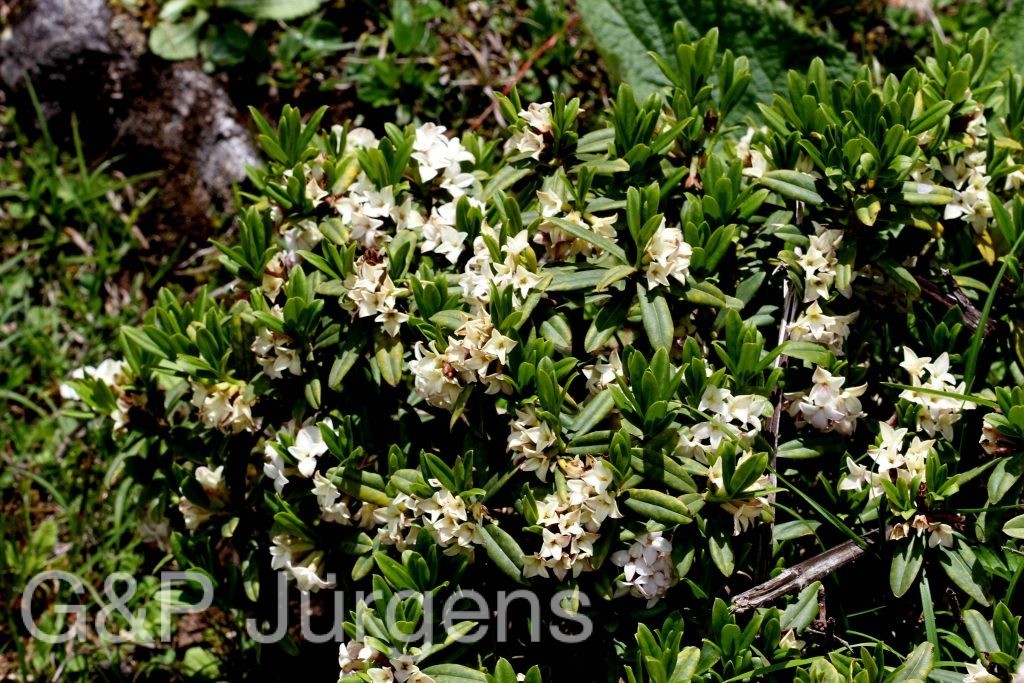
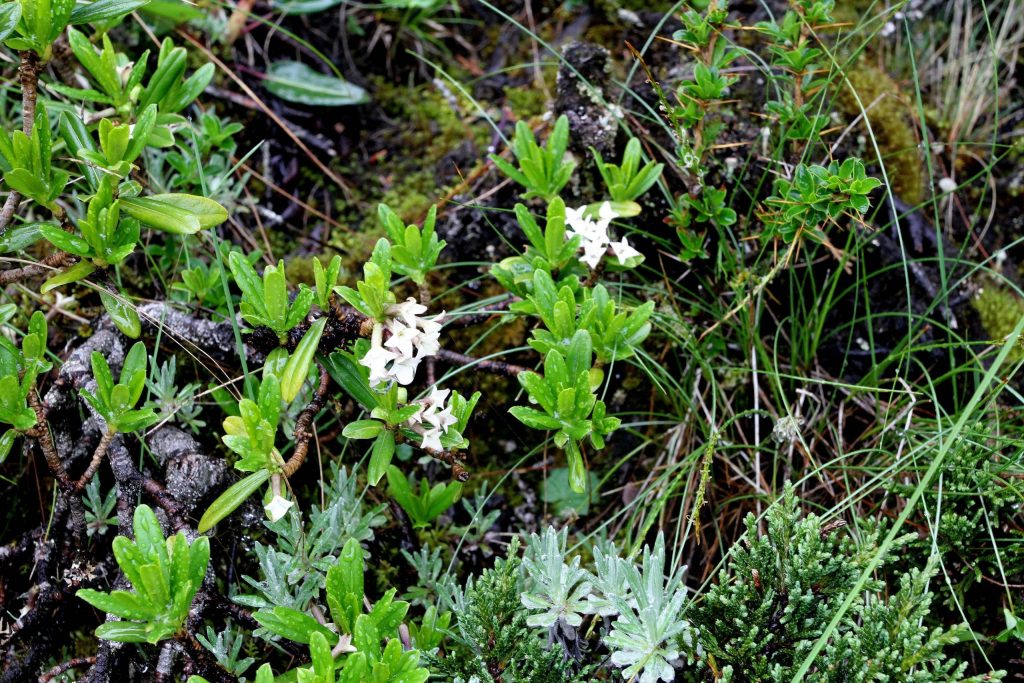
Daphne bholua is an evergreen to semi-deciduous shrub of the central and eastern Himalaya, distributed through Nepal, China, Bhutan and India, with around 758 georeferenced records; its appearance in numerous temperate countries reflects its extensive horticultural cultivation. In the wild it occupies temperate and subalpine forest, scrub and clearings, often in oak, rhododendron and conifer woodland and on open hillsides. The plant photographed in Sikkim's Vista valley at 3750 m, flowering in June, exemplifies its upper-elevation range, where it forms thickets on moist, well-drained slopes.

It grows as an erect shrub to about 2.5 m with tough, fibrous bark and densely leafy branches. The leaves are alternate, clustered toward the branch tips, oblong-lanceolate, leathery, glossy dark green above and entire-margined. The fragrant flowers are borne in dense terminal and subterminal clusters; each has no petals but a petaloid, salverform perianth tube, white within and flushed rose-purple outside, the four spreading lobes strongly scented. The fruit is a fleshy ovoid berry-like drupe, blackening when ripe.

Daphne bholua, described by Buchanan-Hamilton ex D. Don, is celebrated in horticulture for its intensely fragrant winter-to-spring flowers and has given rise to many cultivars. In its homeland the strong bast fibres of the bark are a principal source of traditional Nepali handmade paper (lokta). Like other Thymelaeaceae it contains acrid, toxic compounds. Although widespread and not formally threatened, intensive bark harvesting for paper-making places localised pressure on wild populations.

Author: Buch.-Ham. ex D.Don · Sources: POWO (Kew), GBIF, Flora of Bhutan, Annotated Checklist of the Flowering Plants of Nepal, Halda The Genus Daphne

Maxim.

BhutanPG2011 486 scaled
Bhutan Ludlow-Sherriff-Trail Warrtlang-La, 4350m June

Description

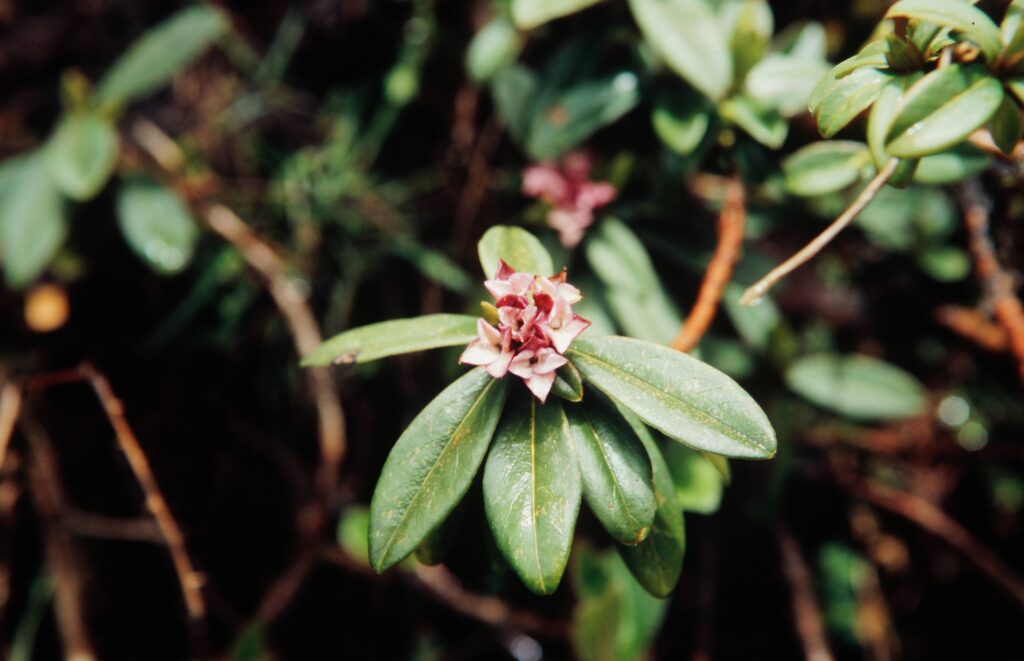
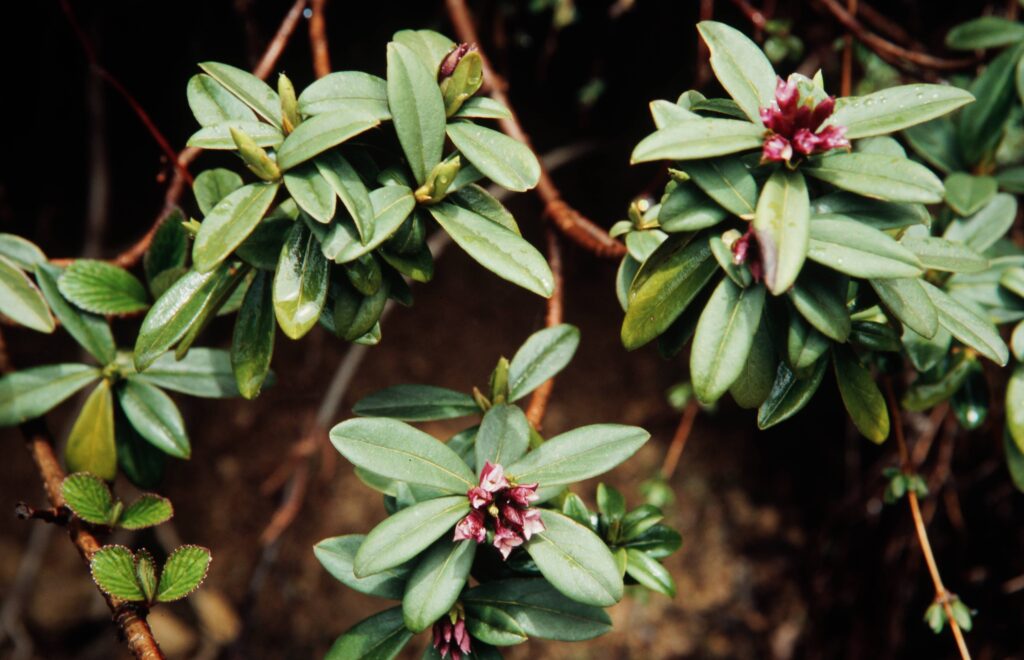
Daphne tangutica is distributed across a broad elevational and geographical range from the eastern Himalayas to central and western China, with the core of its distribution in Sichuan, Gansu, and Qinghai provinces. GBIF records over 1,150 occurrences, predominantly from China, with additional records from Bhutan, India, Nepal, and Pakistan. The species inhabits Rhododendron scrub, alpine meadows, rocky slopes, and open coniferous forest margins at 2,500–4,500 m elevation. Collections from Tamrong in West Bengal at 3,200 m and from the Warrtlang-La along the Ludlow–Sherriff Trail in Bhutan at 4,350 m demonstrate its remarkable altitudinal amplitude within the eastern Himalayan region.
Daphne tangutica is an evergreen shrub, typically 0.5–1.5 m tall, compact and densely branched. Leaves are alternate, clustered towards the branch tips, oblanceolate to elliptic, 3–8 cm long, coriaceous, dark glossy green above and paler beneath, with entire revolute margins. Flowers are borne in dense terminal clusters of 3–8, each flower with a tubular hypanthium 10–14 mm long, the four spreading lobes white internally and purplish-rose externally. The flowers are intensely fragrant. Stamens are eight, in two whorls, inserted on the hypanthium tube. The fruit is an ovoid drupe, 6–8 mm long, red at maturity, containing a single seed.
Daphne tangutica was described by Maximowicz in 1882 from material collected in Gansu. It is closely related to D. retusa, and the two species have been confused in herbaria; D. tangutica is generally distinguished by its longer, more lanceolate leaves and more elongate hypanthium tube. The occurrence at 4,350 m on the Warrtlang-La approaches the upper limit for any Daphne species in the Himalayas and attests to the species' tolerance of extreme alpine conditions. It has been widely introduced into horticulture in Europe and North America, prized for its fragrant spring flowers and compact evergreen habit.

Author: Maxim. · Sources: POWO (Kew), GBIF, Flora of China Vol. 13, Flora of Bhutan Vol. 2, Brickell & Mathew: Daphne — The Genus in the Wild and in Cultivation (1976)

K.Rosenth.

Bhutan2012 636
Bhutan Tserang 1660m, June

Description

Daphniphyllum chartaceum is an evergreen tree or large shrub of the eastern Himalaya and Indo-Burmese uplands, recorded by GBIF, with around 140 occurrences, from China, Nepal, India, Bhutan, Vietnam and Myanmar. It is a component of moist, broad-leaved evergreen and warm-temperate forest, growing on humid slopes, in ravines and along forest margins, typically between about 1500 and 2500 m. The photographed plant from Tserang in Bhutan, at roughly 1660 m and recorded in June, is representative of its mid-elevation, subtropical-to-warm-temperate forest habitat, where it occupies the understorey to mid-canopy of dense, evergreen Himalayan woodland under a humid, monsoon-influenced climate.

The species is a dioecious tree with smooth bark and stout twigs bearing leaves crowded toward the branch tips. The leaves are simple, alternate but often appearing pseudo-whorled, elliptic to oblong-lanceolate, leathery to chartaceous (papery, as the epithet indicates), entire-margined, with the lower surface usually glaucous and conspicuously papillose, and frequently reddish petioles. Being dioecious, male and female flowers are borne on separate trees in axillary racemes; the flowers are small and apetalous, the males with numerous stamens and the females with a unilocular to bilocular ovary, lacking showy perianth. The fruit is a small, ellipsoid, one-seeded drupe, bluish-black and often glaucous at maturity, borne in short axillary clusters.

Daphniphyllum is the sole genus of Daphniphyllaceae, an isolated family of eastern and southern Asia of considerable phylogenetic interest, placed near Saxifragales and noted for its distinctive Daphniphyllum alkaloids. D. chartaceum is distinguished within the genus by its papery, glaucous-papillose leaves and has been associated with the variable D. himalense complex, with which it shares its montane Himalayan range. The fleshy drupes are dispersed by birds, and the dioecious breeding system enforces outcrossing. The species is reasonably widespread across the eastern Himalaya and Indo-Burma and is not regarded as threatened, though, like many evergreen forest trees of the region, local populations are sensitive to deforestation and land-use change.

Author: K.Rosenth. · Sources: POWO (Kew), GBIF, Flora of China Vol. 11, Flora of Bhutan Vol. 1, Flora of Nepal, Flora of Pakistan, Huang's monograph of Daphniphyllum