Tag:

Summer

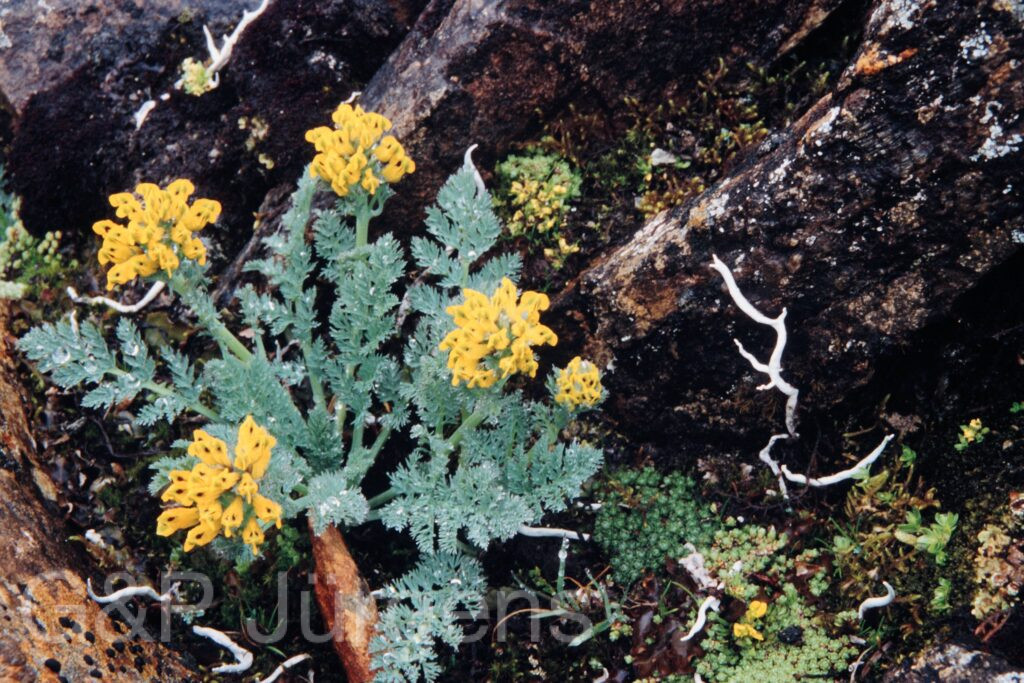
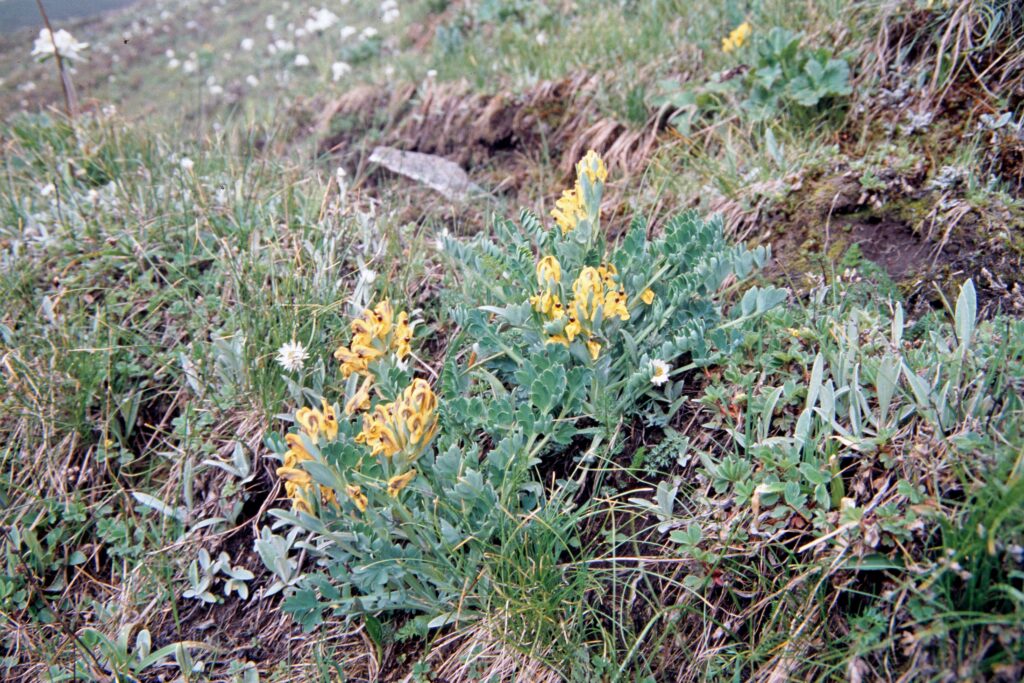
Wall.

Nepal 99 267 ergebnis
West-Nepal Loccu 3500m, June
Garw 2005 340 ergebnis
India Garhwal Baganathi 4150m, September

Description

Corydalis govaniana is a western and central Himalayan fumitory recorded from India, Nepal, Pakistan and Afghanistan among its roughly 204 occurrences, a distribution centred on the moist temperate and subalpine zones of the inner Himalayan ranges. It grows on shaded forest floors, among rocks, along stream banks and in alpine meadows and scrub where soils are humus-rich and reliably moist. The cited stations span a useful altitudinal range, from Loccu in West Nepal at about 3500 m flowering in June to Baganathi in Garhwal, India, at around 4150 m flowering in September, illustrating its occupancy of the temperate-to-alpine belt and a flowering season that tracks the monsoon up the slope.

It is a perennial herb arising from a fleshy tuberous or stout fibrous rootstock, with erect to ascending, somewhat glaucous stems. The leaves are alternate and several times pinnately or ternately divided into small, often glaucous, ultimate segments, giving a delicate, ferny aspect. The flowers are borne in terminal racemes and are strongly zygomorphic, each with four petals in two dissimilar whorls; the outer upper petal is prolonged backward into a slender nectar spur, and the colour is yellow, the inner petals often tipped darker. The diandrous androecium has the stamens in two bundles typical of the genus, and the fruit is a slender, dehiscent capsule splitting to release seeds that commonly bear an oil-rich elaiosome.

Corydalis, now placed in Papaveraceae (subfamily Fumarioideae, the segregate Fumariaceae of older treatments), reaches great diversity in the Himalaya and western China, where yellow-flowered species like C. govaniana, an old Wallich name, form a recognisable group distinguished by spur length, bract dissection and tuber form. The elaiosome-bearing seeds are dispersed by ants, a syndrome widespread in the genus. Widely distributed through the western Himalaya and frequent in suitable montane habitat, the species is of no particular conservation concern, though several Himalayan Corydalis are gathered for traditional medicine.

Author: Wall. · Sources: POWO (Kew), GBIF, Flora of Pakistan, Annotated Checklist of the Flowering Plants of Nepal, Flowers of the Himalaya, Lidén and Zetterlund's monograph of Corydalis
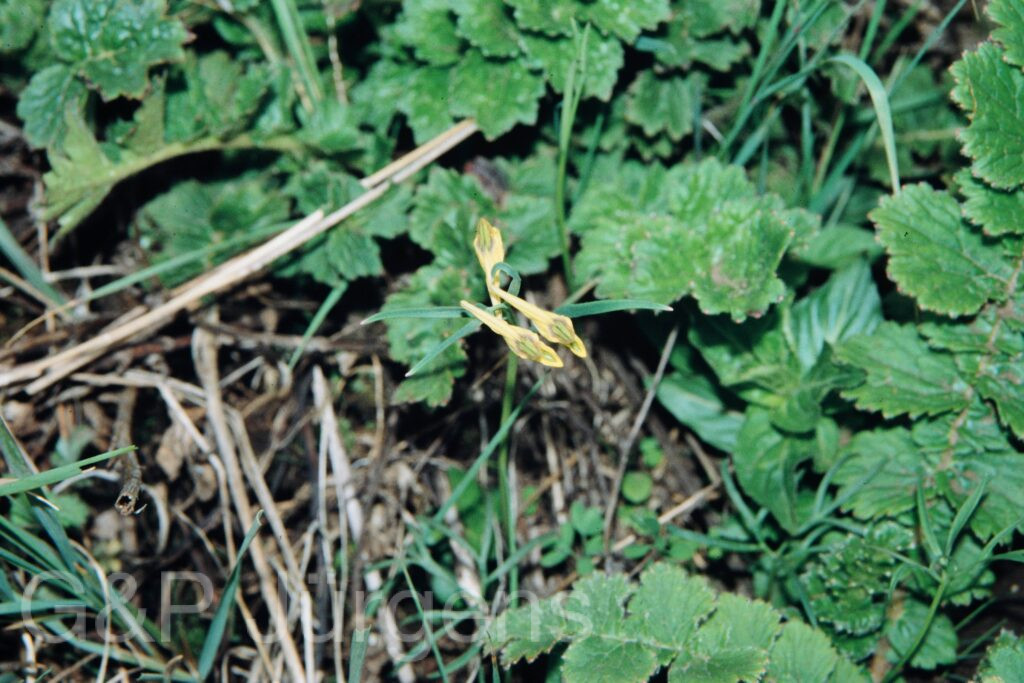
Prain

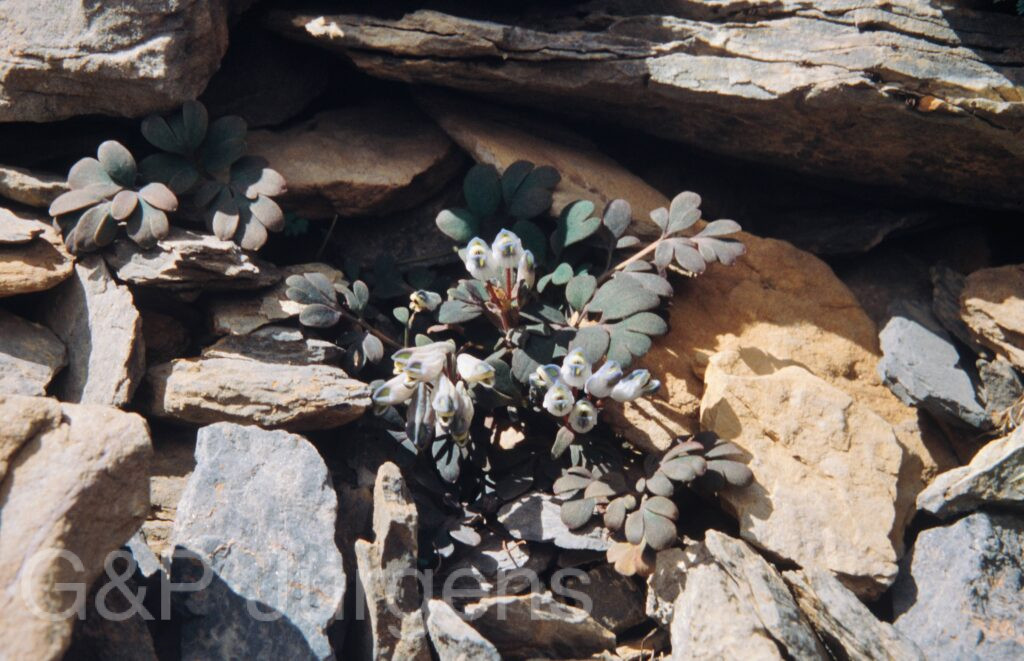
Nepal 99 291 ergebnis
Nepal Kalomura 4050m, June

Description

Corydalis hookeri is a high-alpine herb of the central and eastern Himalaya, recorded from Nepal, India, Bhutan and the adjacent Chinese provinces of the Tibetan plateau and Yunnan. GBIF aggregates roughly 111 georeferenced occurrences, a modest figure reflecting both its restricted alpine niche and the difficulty of access to its terrain. It occupies open stony slopes, moist screes, moraine debris and the margins of melting snow-beds, typically between 3500 and 4800 m. The photographed plant from Kalomura in Nepal at about 4050 m in June illustrates its characteristic flowering season, coinciding with the brief window following snowmelt when the short alpine summer permits rapid growth and anthesis on freshly exposed gravels.

The species is a small, glabrous, somewhat glaucous perennial arising from a slender tuberous or fibrous rootstock. The stems are weak, often decumbent to ascending and few-branched. Leaves are mostly basal and long-petiolate, the blades two- to three-ternately or pinnately dissected into narrow oblong to linear ultimate segments, imparting a delicate, finely divided aspect. The inflorescence is a lax few-flowered raceme subtended by entire or lobed bracts. Each zygomorphic flower bears four petals, the upper one prolonged backwards into a slender curved spur; the corolla is blue to purplish-blue, frequently with darker tips, an adaptation favouring bumblebee pollination at altitude. The fruit is a slender dehiscent capsule containing several small black shining seeds, often bearing an elaiosome.

Taxonomically the genus Corydalis is exceptionally species-rich in the Sino-Himalayan region, the principal centre of its global diversity, and C. hookeri belongs to one of the alpine blue-flowered assemblages whose delimitation has long challenged monographers. Its seeds are typically myrmecochorous, dispersed by ants attracted to the oily appendage, while the alkaloid-rich tissues characteristic of the genus deter herbivory. No specific conservation threat is documented and the plant appears locally frequent within suitable habitat, though high-altitude endemics of this kind remain potentially sensitive to glacial retreat and warming-driven upward shifts of the alpine zone.

Author: Prain · Sources: POWO (Kew), GBIF, Flora of China Vol. 7, Flora of Bhutan Vol. 1, Flora of Nepal, Lidén & Zetterlund Corydalis: A Gardener's Guide and a Monograph of the Tuberous Species

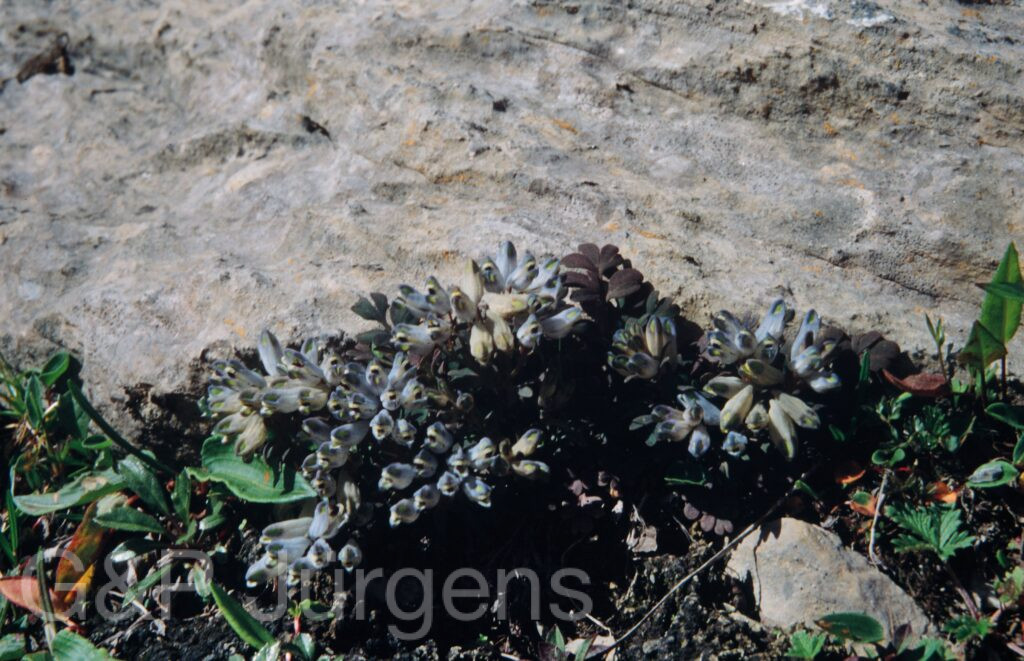
Hook.f. & Thomson

Nepal 99 795 ergebnis
West-Nepal Baga-La-Phedi 4500m, July
Nepal 99 794 ergebnis
West-Nepal Baga-La-Phedi 4500m, July

Description

Corydalis latiflora is a high-alpine perennial herb of the central and western Himalaya, recorded from Nepal, northern India and Bhutan with some extension into south-western China, a comparatively narrow distribution reflected in around 78 occurrence records. It grows on open screes, moraines, rocky alpine slopes and gravelly flats, typically between about 4000 and 4800 m, well above the treeline. The specimen photographed at Baga-La-Phedi in west Nepal at 4500 m in July illustrates its flowering during the short summer growing season of the high alpine zone.

The plant is a low, often glaucous perennial arising from a slender rootstock or small tuber, with a tuft of finely dissected, several-times divided leaves bearing narrow ultimate segments. The flowering stems carry few-flowered racemes of zygomorphic flowers subtended by leafy or divided bracts; each flower has two small outer petals and two inner petals, the upper outer petal prolonged backwards into a conspicuous spur, the corolla broad and blue to purplish-blue as the epithet latiflora ("broad-flowered") suggests. The fruit is a slender, dehiscent capsule (siliqua-like) opening to scatter small, shining seeds often bearing an elaiosome.

Corydalis (Papaveraceae, subfamily Fumarioideae) is an exceptionally large and taxonomically intricate genus, with a great radiation of blue-flowered alpine species across the Himalaya and Hengduan mountains. C. latiflora belongs to this assemblage of high-elevation specialists. The spurred flowers are pollinated by bumblebees and other long-tongued insects, and the elaiosome-bearing seeds are frequently ant-dispersed (myrmecochory). As a narrow-range alpine endemic, it is of biogeographic interest and potentially sensitive to climatic warming of its high-mountain habitat.

Author: Hook.f. & Thomson · Sources: POWO (Kew), GBIF, Flora of China, Flora of Bhutan, Annotated Checklist of the Flowering Plants of Nepal, Lidén & Zetterlund monograph of Corydalis

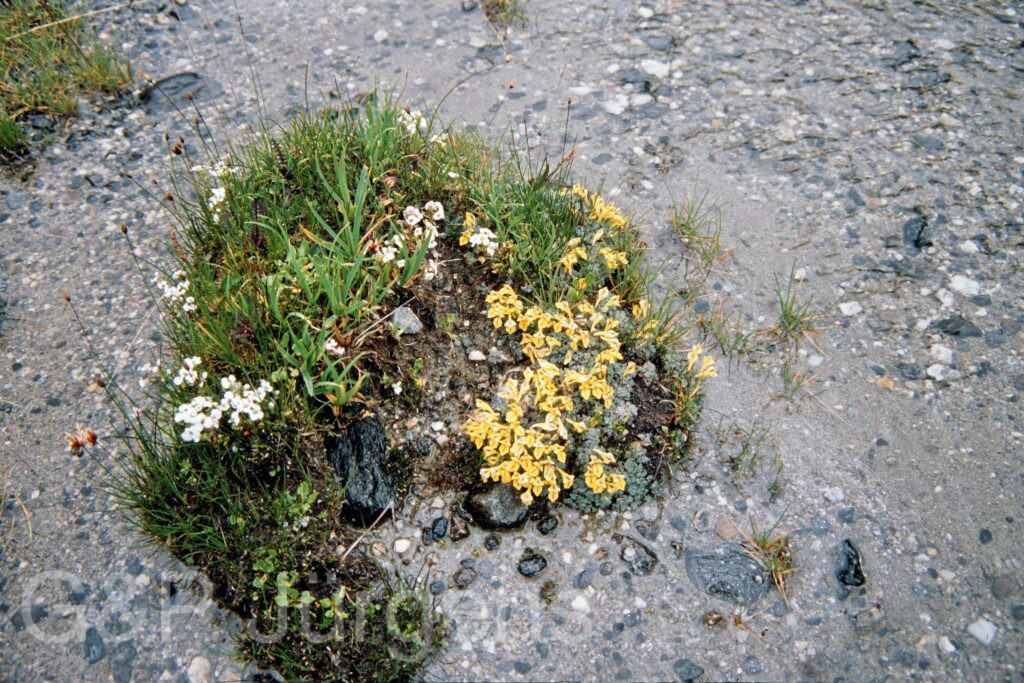
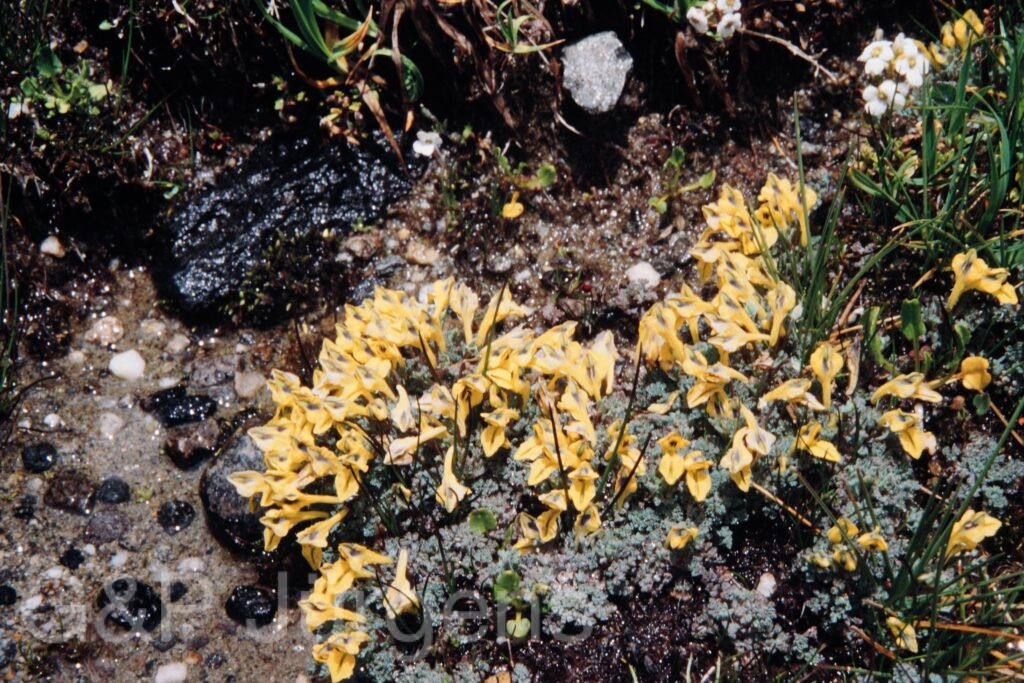
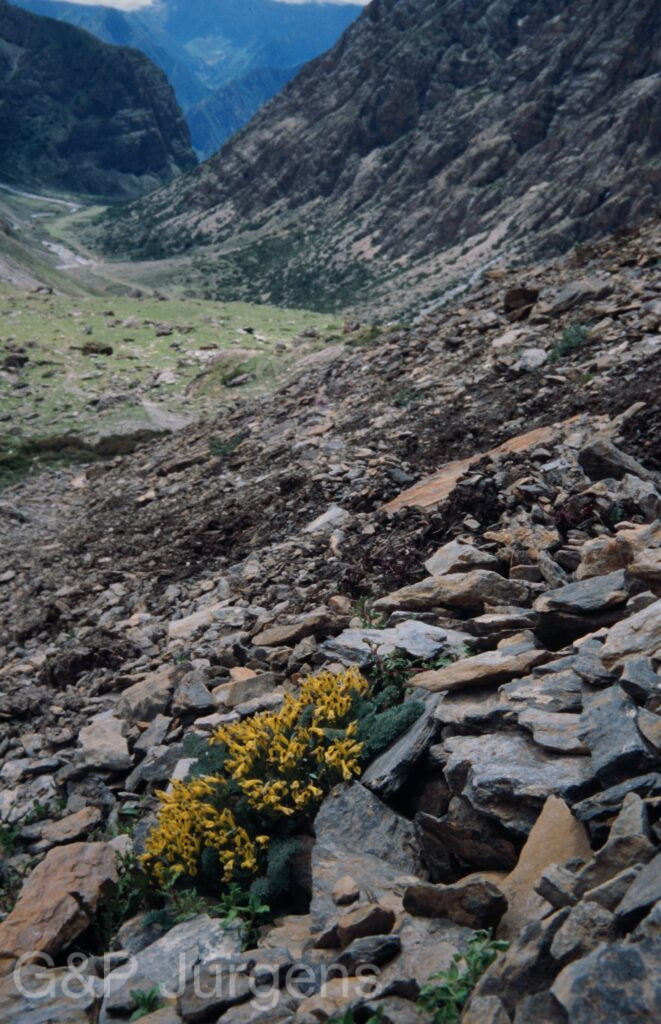
Ludlow & Stearn

Nepal 99 518 ergebnis
West-Nepal Churta-Khola 3800m, June
Nepal 99 520 ergebnis
West-Nepal Churta-Khola 3800m, June
Nepal 99 788 ergebnis
West-Nepal Baga-La-Phedi 4400m, July

Description

Corydalis megacalyx Ludlow & Stearn is a narrowly distributed Himalayan endemic known with certainty only from Nepal, where GBIF records just 37 occurrences. It is a plant of the subalpine and alpine zones, growing on damp rocky slopes, screes, moraine debris and stream banks where moisture from snowmelt is reliable. The photographed populations in West Nepal, at Churta-Khola around 3800 m in June and at Baga-La-Phedi near 4400 m in July, indicate a habitat band roughly between 3800 and 4400 m and a flowering period coinciding with the early monsoon thaw of the western Nepalese high country.

The species is a glabrous, somewhat fleshy perennial herb arising from a slender rootstock. Stems are ascending to erect, bearing alternate, glaucous leaves that are divided into rather broad, lobed segments. The inflorescence is a few- to several-flowered terminal raceme; the flowers are strongly zygomorphic, with a conspicuously enlarged calyx that gives the species its epithet megacalyx. Each blue to purplish-blue flower bears a single posterior spur and the crested outer petals typical of the genus. The fruit is an elongate dehiscent capsule containing small black seeds furnished with elaiosomes.

Within Corydalis, this species belongs to the blue-flowered Himalayan alpine assemblage and is distinguished by its prominent persistent calyx, an unusual feature in a genus where sepals are usually small and caducous. Like its relatives, it is pollinated by long-tongued insects able to access the spur and is dispersed by ants. Its restricted known range and low occurrence count make it a species of biogeographic interest and potential conservation concern, though its remote high-altitude habitat affords some protection from direct human pressures.

Author: Ludlow & Stearn · Sources: POWO (Kew), GBIF, Flora of Nepal, Flora of China, Lidén & Zetterlund monograph of Corydalis, Stearn studies of Himalayan Corydalis

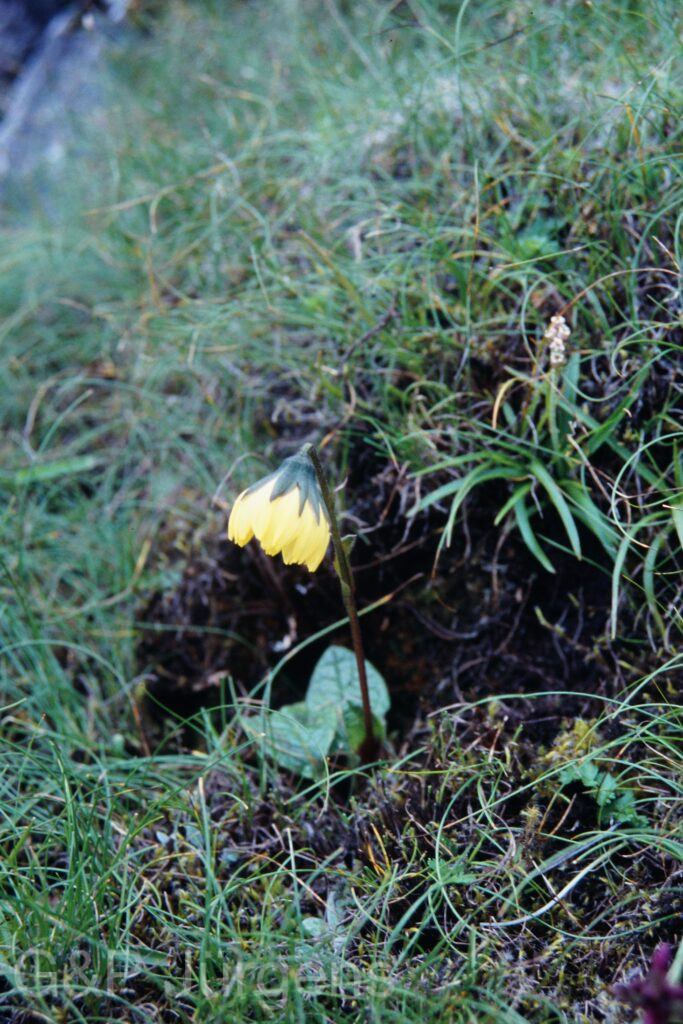
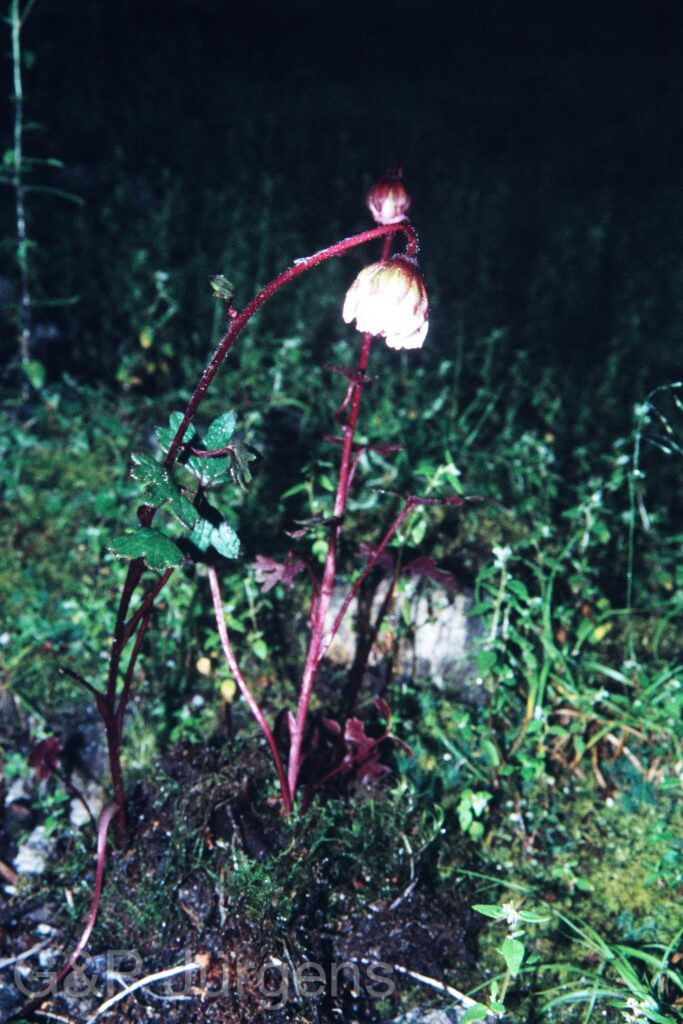
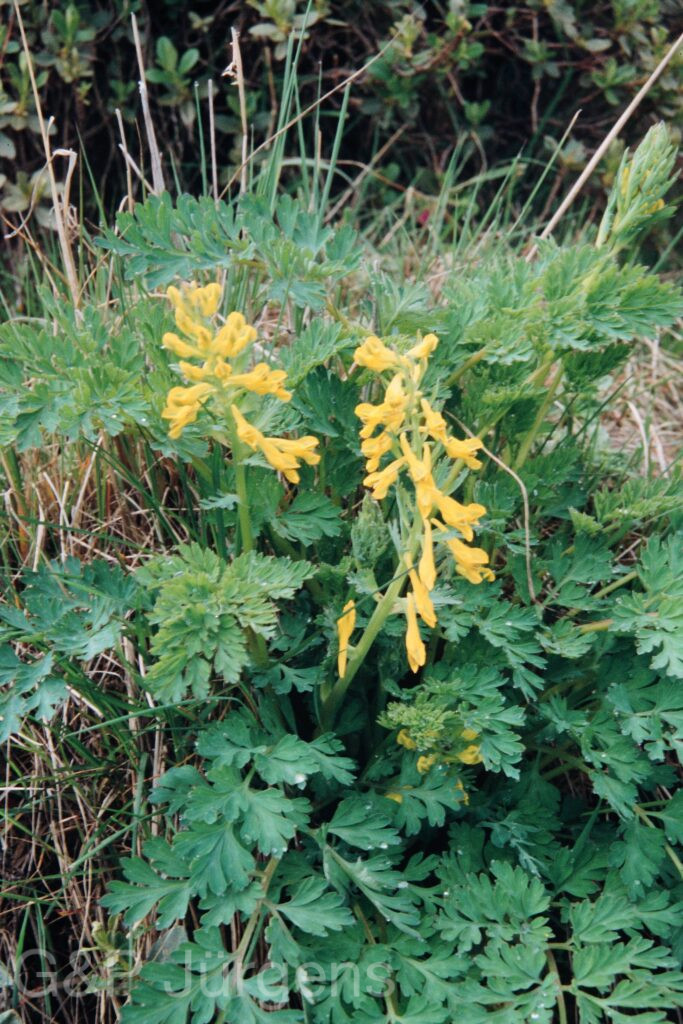
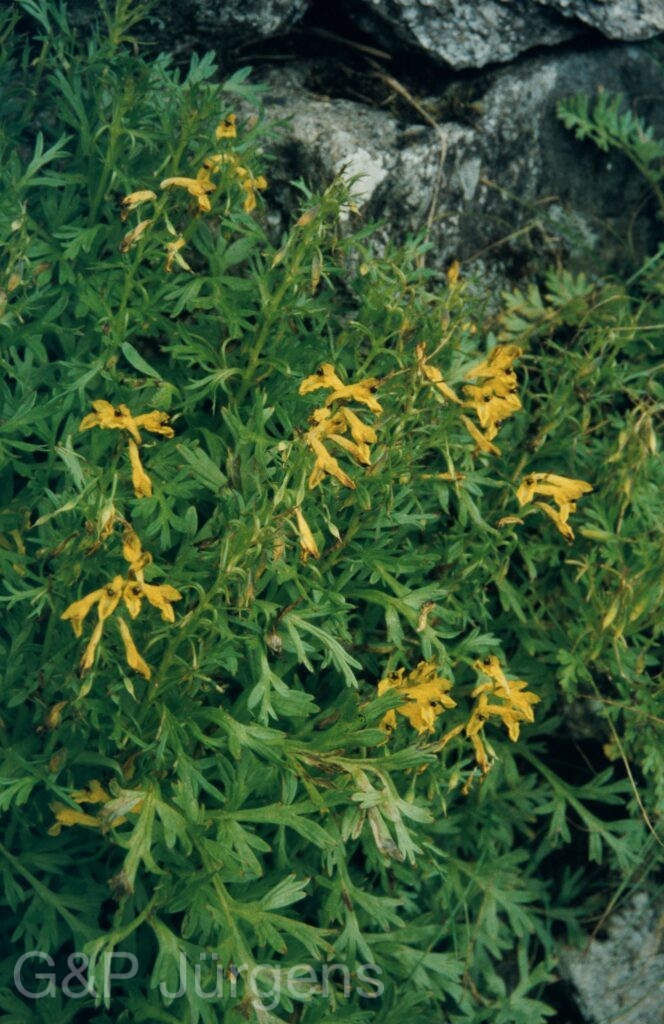
Wall.

Nepal 99 628 ergebnis
West-Nepal Kagmara-La 4950m, July

Description

Corydalis meifolia Wall. is a high-alpine herb distributed along the Himalaya and adjacent ranges, with GBIF documenting some 251 occurrences across India, Nepal, China, Bhutan and Pakistan, with outliers reaching Japan. It is a plant of the upper subalpine and alpine zones, typically growing between roughly 3500 and 5200 m on open, gravelly slopes, moraine flushes, screes and damp meadow margins where snowmelt persists. The photographed population at the Kagmara-La in West Nepal, at about 4950 m in July, exemplifies its preference for cold, well-drained substrates that thaw only briefly during the short montane summer.

The species is a glabrous, somewhat glaucous perennial arising from a slender taproot. Stems are erect to ascending, often several from the base, and the foliage is finely divided: the leaves are two- to three-pinnate with narrow, almost filiform ultimate segments, recalling the foliage of Meum (hence the epithet meifolia). The inflorescence is a dense terminal raceme of zygomorphic flowers; each flower is yellow, bearing the characteristic single posterior spur of the genus, with the outer petals expanded and crested. The fruit is a slender, dehiscent capsule containing small black seeds, typically each bearing an oil-rich elaiosome.

Within the large and taxonomically complex genus Corydalis, C. meifolia belongs to a Himalayan assemblage of yellow-flowered, finely dissected alpine species and is morphologically variable across its range, with several segregate taxa described. Like many high-elevation Papaveraceae it relies on insect pollination during the brief flowering window and on seed dispersal by ants attracted to the elaiosomes. The species remains locally frequent across its broad montane distribution and is not considered threatened, though populations are confined to the narrow, climatically sensitive alpine belt.

Author: Wall. · Sources: POWO (Kew), GBIF, Flora of China, Flora of Nepal, Flora of Bhutan, Lidén & Zetterlund monograph of Corydalis

Ludlow & Stearn

Nepal 99 135 ergebnis
West-Nepal South of Rara-Lake 3800m, June

Description

Corydalis pseudojuncea is a poorly collected high-Himalayan herb known from a narrow range across Nepal, northern India and adjacent south-western China (Tibet), with only 14 GBIF records reflecting both its restricted distribution and the remoteness of its habitat. It occupies open alpine and subalpine ground – stony slopes, moraine flats and seasonally moist gravels – in the inner ranges. The cited gathering from south of Rara Lake in West Nepal at 3800 m in June places it in the early-summer flowering flush of the western Nepalese alpine zone, where snowmelt briefly supports such ephemeral fumitories.

It is a slender, glabrous and somewhat glaucous perennial herb arising from a small tuber or fleshy rootstock, the rush-like ("juncea") aspect alluded to in its epithet given by the few, narrow, much-reduced leaves and the wiry erect stems. The leaves are finely dissected into linear segments. The flowers are borne in a lax terminal raceme, zygomorphic and spurred in the manner of the genus, the outer two petals one of which bears a long backward-pointing nectar spur, the inner pair connate over the stigma; the corolla is pale yellow to bluish. The fruit is a slender dehiscent capsule releasing few shining seeds.

Corydalis is an exceptionally large genus with a Sino-Himalayan diversity centre, and C. pseudojuncea, described by Ludlow and Stearn, belongs among the narrow-leaved alpine species. Its spurred flowers indicate long-tongued bee pollination. Given its rarity in collections and limited known range it warrants monitoring, though insufficient data exist for a formal threat assessment.

Author: Ludlow & Stearn · Sources: POWO (Kew), GBIF, Flora of China, Annotated Checklist of the Flowering Plants of Nepal, Flora of Bhutan, Lidén & Zetterlund monograph of Corydalis

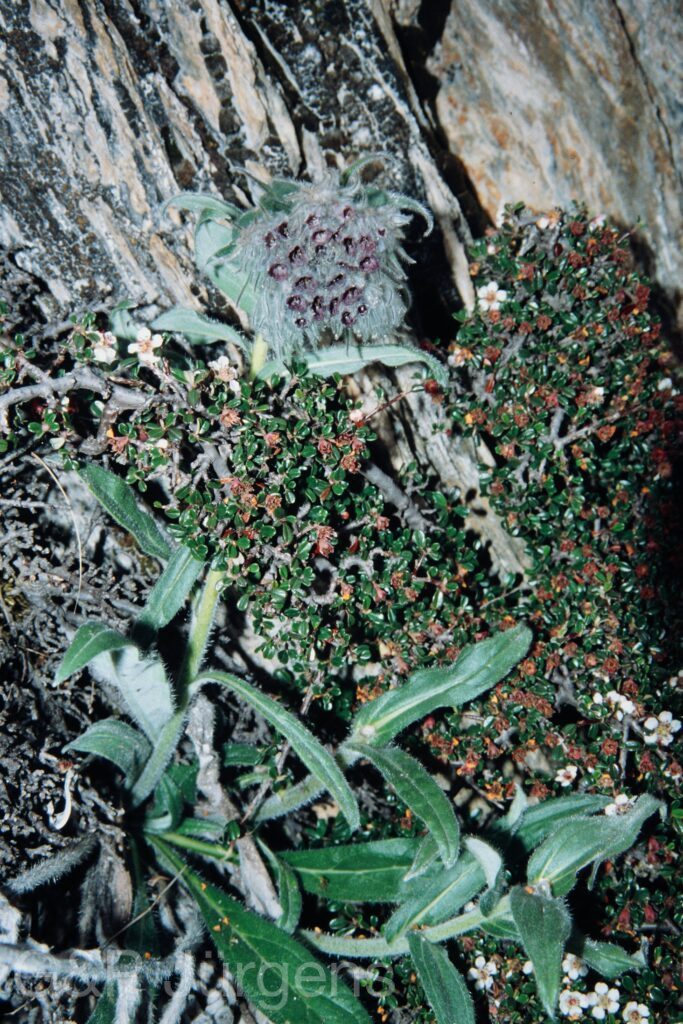
Bois

Nepal 99 148 ergebnis
West-Nepal South of Rara-Lake 3700m, June (also Onosma bracteata)

Description

Cotoneaster adpressus is a Sino-Himalayan dwarf shrub ranging from the western Himalaya through Nepal into western and central China. GBIF holds some 1972 occurrences, combining native records in China, Nepal and India with many naturalised or cultivated ones across Europe and North America, reflecting its horticultural use. It grows on open rocky slopes, screes and meadow margins, typically between about 1900 and 3700 m. The photographed plant grows in West Nepal south of Rara Lake at roughly 3700 m in June, on dry, sun-exposed terrain shared with Onosma bracteata.

The species is a low, deciduous, often prostrate shrub forming dense mats, with rigid spreading branches that root on contact. Young branchlets are strigose-pubescent, becoming glabrous and dark brown. The leaves are small, alternate, broadly elliptic to suborbicular, 5-15 mm long, often undulate-margined and mucronate or emarginate, dull green above and pubescent on the veins beneath. Flowers are solitary or paired, nearly sessile, with erect pinkish to white petals and a campanulate hypanthium. The fruit is a small globose red pome, usually with two pyrenes.

Cotoneaster is a taxonomically intricate genus in which apomixis and polyploidy generate numerous microspecies, and several Himalayan and Chinese varieties have been described. The dense ground-hugging habit, drought tolerance and showy autumn fruit have made this species a popular rock-garden and groundcover plant that escapes cultivation in temperate regions. Within its native range it is widespread, not threatened, and dispersed by frugivorous birds.

Author: Bois · Sources: POWO (Kew), GBIF, Flora of China, Flora of Nepal, Fryer & Hylmo: Cotoneasters – A Comprehensive Guide

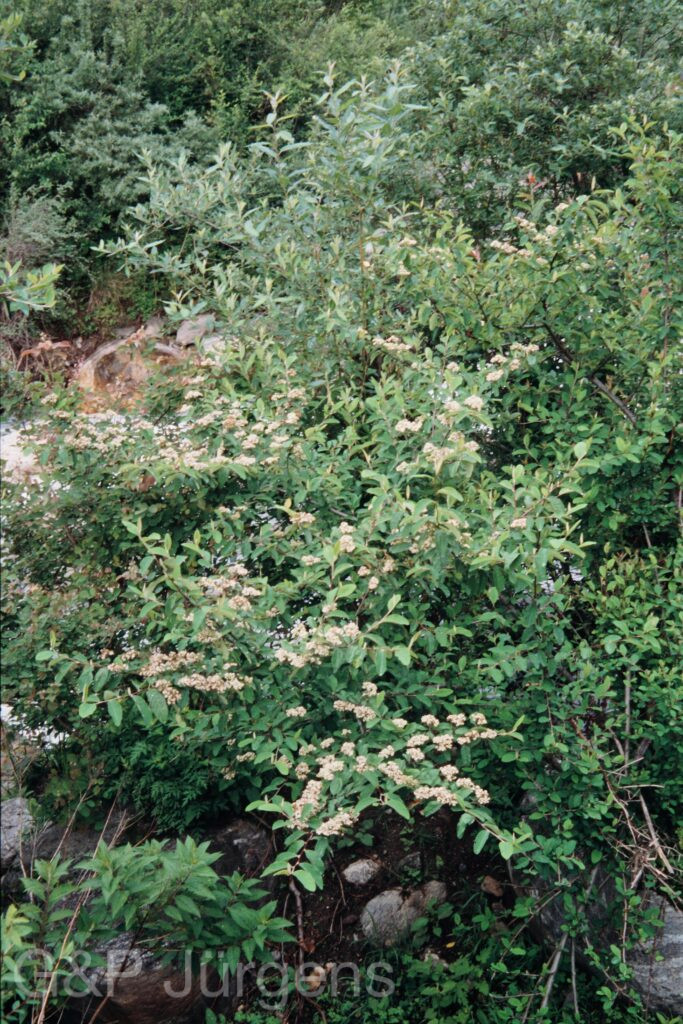
Wall. ex Lindl.

Nepal 99 567 ergebnis
West-Nepal Hurikot 2700m, June

Description

Cotoneaster frigidus is a large shrub or small tree native to the Himalaya, recorded from Nepal, India, Bhutan and China, with its many further records from Britain, New Zealand, the United States and continental Europe reflecting its long history in cultivation and naturalisation. In the wild it occupies open slopes, forest margins, scrub and ravines in the temperate Himalayan zone, typically between about 1800 and 3000 m. The plant photographed at Hurikot in West Nepal at 2700 m in June is a representative wild occurrence in the moist temperate hill forest belt, flowering as the summer monsoon approaches.

It is a vigorous, semi-deciduous shrub or small tree with arching, spreading branches and grey-brown bark. The leaves are alternate, elliptic to oblong, dark green and glabrous above and grey-tomentose beneath when young, with an entire margin and a short petiole. The small, white, five-petalled flowers are borne in dense, many-flowered, flat-topped corymbs and have numerous stamens and a half-inferior ovary. The fruit is a small, bright red, globose pome borne in heavy, conspicuous clusters that persist into winter, each containing usually two pyrenes.

Cotoneaster is a taxonomically intricate genus of the Rosaceae, subfamily Amygdaloideae (Maloideae), in which apomixis and hybridisation have generated many microspecies. Cotoneaster frigidus is among the largest-growing and most ornamental species and is the parent of widely grown garden hybrids such as the 'Cornubia' group; in parts of Britain and elsewhere it has escaped to become naturalised. Its abundant red pomes are eaten and dispersed by birds, while the nectar-rich flowers attract bees, making it ecologically valuable in both its native and introduced ranges.

Author: Wall. ex Lindl. · Sources: POWO (Kew), GBIF, Flora of China, Annotated Checklist of the Flowering Plants of Nepal, Flora of Bhutan, Fryer & Hylmö's Cotoneasters monograph

C.B.Clarke

Sikkim2003 312 P442
Sikkim Saniti-Lake 4300m August

Description

Cremanthodium oblongatum is an alpine herb of the eastern Himalaya and southern Tibetan Plateau, recorded from Nepal, China (Xizang), India and Bhutan, with 214 occurrences in GBIF (the German points reflecting cultivated or herbarium material). It grows on open alpine meadows, screes, rocky slopes and moist turf at high elevation, generally between 3600 and 5000 m. The plant photographed near Saniti Lake in Sikkim at about 4300 m in August is typical of the cold, humid, well-irrigated alpine grassland it occupies during the brief monsoon-driven flowering period high above the treeline.

The species is a perennial herb arising from a short rhizome with fibrous roots. The mostly basal leaves are long-petiolate with oblong to elliptic, entire or shallowly toothed blades, somewhat fleshy and often with a whitish or purplish cast. The flowering stem is erect, simple and bears one or few solitary, nodding (pendent) capitula, the nodding habit being a defining genus character. Each head has a hemispherical involucre of subequal, often dark purple-haired phyllaries, an outer ray of yellow ligulate female florets and a central disc of yellow tubular bisexual florets. The fruit is a glabrous cylindrical achene crowned by a pappus of fine whitish bristles.

Cremanthodium (tribe Senecioneae) is a Sino-Himalayan alpine genus closely allied to Ligularia and Parasenecio, distinguished by its characteristically nodding heads, an adaptation thought to shelter the florets from rain, cold and ultraviolet exposure at high altitude. Pollination is by alpine bumblebees and flies, and the plumed achenes are wind-dispersed. The species is locally frequent within its narrow alpine band and is not formally assessed as threatened, but its restriction to cold high-elevation habitats makes it potentially vulnerable to climate-driven warming and the upslope compression of the alpine zone.

Author: C.B.Clarke · Sources: POWO (Kew), GBIF, Flora of China, Flora of Bhutan, Good Revision of the Genus Cremanthodium

Benth.

Sikkim2003 335 G472
Sikkim Saniti-Lake 4100m August

Description

Cremanthodium palmatum is an alpine herb of the eastern Himalaya and adjacent Sino-Himalayan mountains, recorded in GBIF (about 330 occurrences) from China, India, Bhutan, Myanmar, Nepal and Taiwan. It inhabits moist alpine meadows, streamsides, seepage slopes and rocky turf, generally between 3500 and 4500 m, where late-summer monsoon moisture sustains lush herbaceous growth. The photographed population at Saniti Lake in Sikkim at 4100 m in August typifies its preferred high-elevation, snowmelt-fed habitat, flowering as the brief alpine summer reaches its peak.

It is a perennial with a short rhizome and fibrous roots, producing erect, somewhat glandular-hairy stems. The basal leaves are long-petiolate and palmately lobed or divided, the blade reniform to orbicular in outline with toothed segments, recalling the foliage of a buttercup; the stem leaves are reduced and sessile upwards. The capitula are usually solitary and nodding, characteristic of the genus, with broad campanulate involucres of subequal, often dark-margined bracts. The ray florets are yellow, ligulate and spreading, surrounding numerous yellow tubular disc florets; the fruit is a cylindrical, glabrous achene crowned by a pappus of fine white bristles.

Cremanthodium belongs to tribe Senecioneae of the Asteraceae and is closely allied to Ligularia and Parasenecio, distinguished by its predominantly nodding, solitary alpine capitula. The genus is centred on the Hengduan Shan and eastern Himalaya, where rapid diversification has accompanied uplift and glacial cycling, making C. palmatum part of a characteristic high-alpine endemic radiation. Restricted to specialised cold, wet habitats but locally frequent across its range, it is not regarded as globally threatened, though such alpine specialists are sensitive to climatic warming.

Author: Benth. · Sources: POWO (Kew), GBIF, Flora of China, Flora of Bhutan, Annotated Checklist of the Flowering Plants of Nepal, Good revision of Cremanthodium