
C.B.Clarke
Description
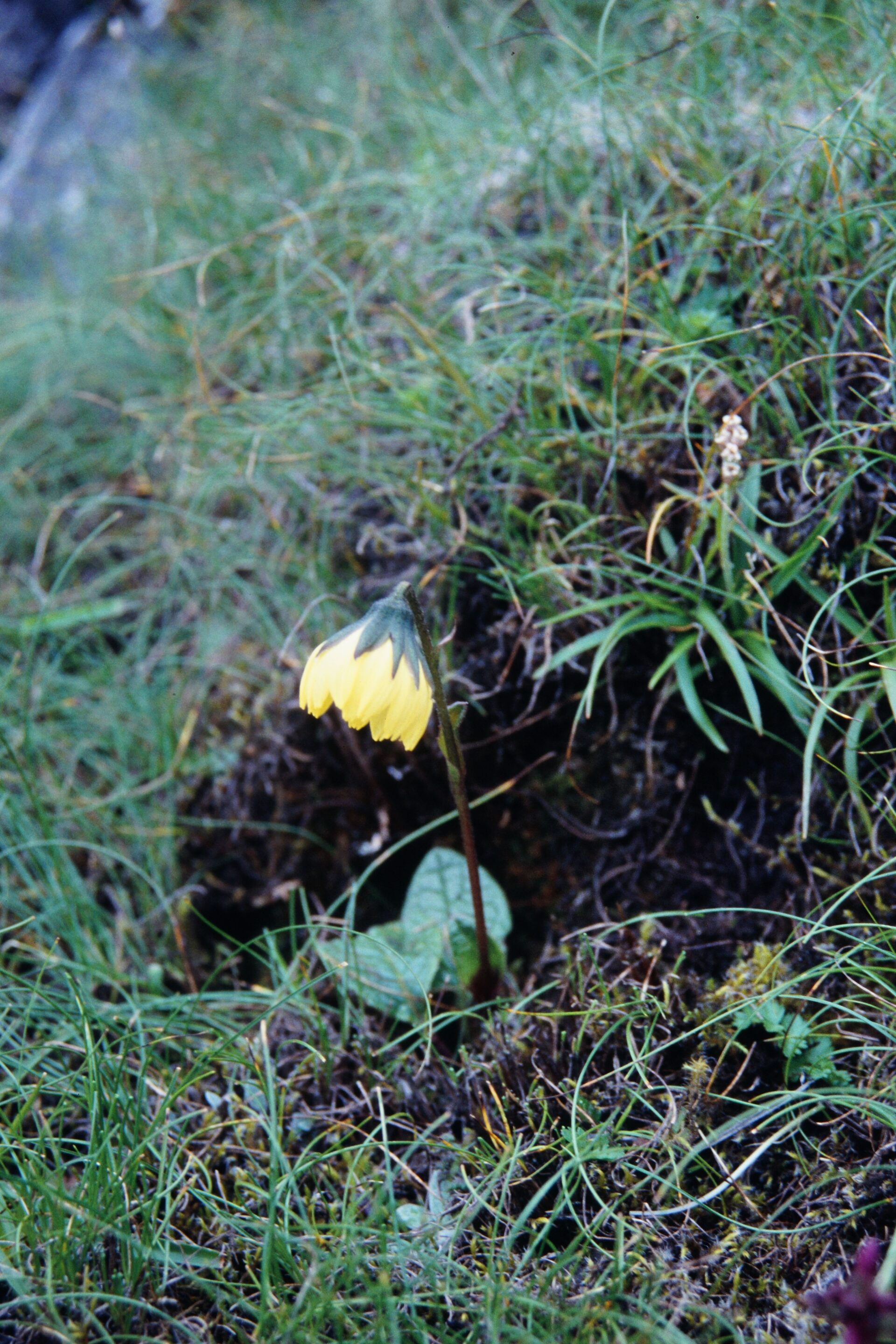
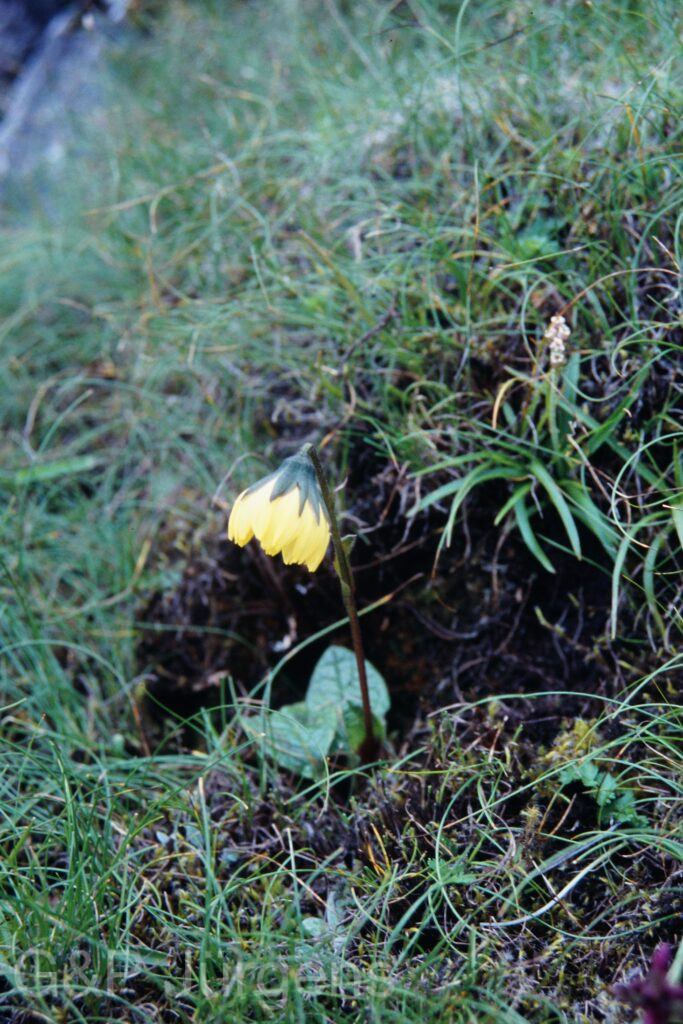
Cremanthodium oblongatum is an alpine herb of the eastern Himalaya and southern Tibetan Plateau, recorded from Nepal, China (Xizang), India and Bhutan, with 214 occurrences in GBIF (the German points reflecting cultivated or herbarium material). It grows on open alpine meadows, screes, rocky slopes and moist turf at high elevation, generally between 3600 and 5000 m. The plant photographed near Saniti Lake in Sikkim at about 4300 m in August is typical of the cold, humid, well-irrigated alpine grassland it occupies during the brief monsoon-driven flowering period high above the treeline.
The species is a perennial herb arising from a short rhizome with fibrous roots. The mostly basal leaves are long-petiolate with oblong to elliptic, entire or shallowly toothed blades, somewhat fleshy and often with a whitish or purplish cast. The flowering stem is erect, simple and bears one or few solitary, nodding (pendent) capitula, the nodding habit being a defining genus character. Each head has a hemispherical involucre of subequal, often dark purple-haired phyllaries, an outer ray of yellow ligulate female florets and a central disc of yellow tubular bisexual florets. The fruit is a glabrous cylindrical achene crowned by a pappus of fine whitish bristles.
Cremanthodium (tribe Senecioneae) is a Sino-Himalayan alpine genus closely allied to Ligularia and Parasenecio, distinguished by its characteristically nodding heads, an adaptation thought to shelter the florets from rain, cold and ultraviolet exposure at high altitude. Pollination is by alpine bumblebees and flies, and the plumed achenes are wind-dispersed. The species is locally frequent within its narrow alpine band and is not formally assessed as threatened, but its restriction to cold high-elevation habitats makes it potentially vulnerable to climate-driven warming and the upslope compression of the alpine zone.
Author: C.B.Clarke · Sources: POWO (Kew), GBIF, Flora of China, Flora of Bhutan, Good Revision of the Genus Cremanthodium