
Bois
Description
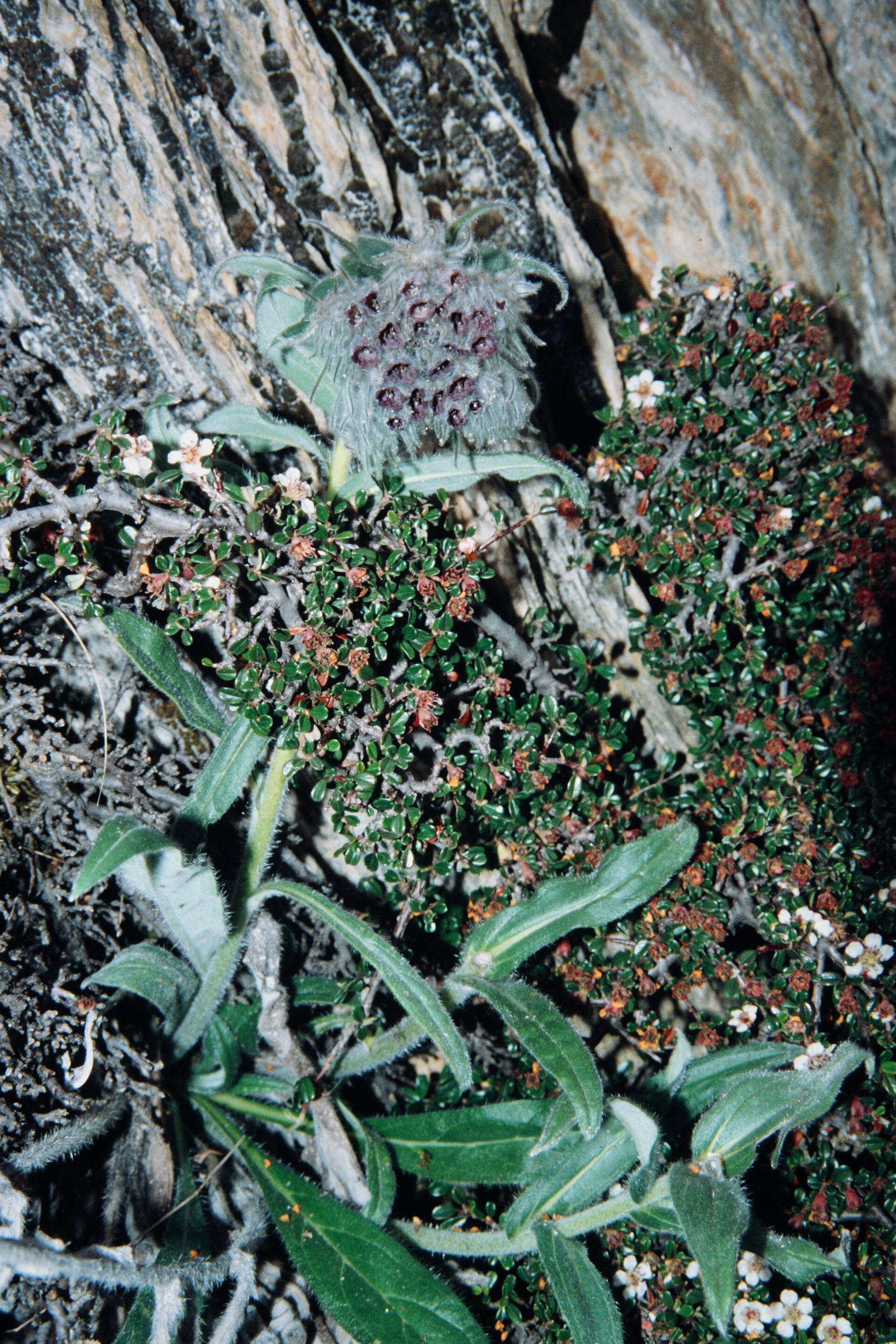
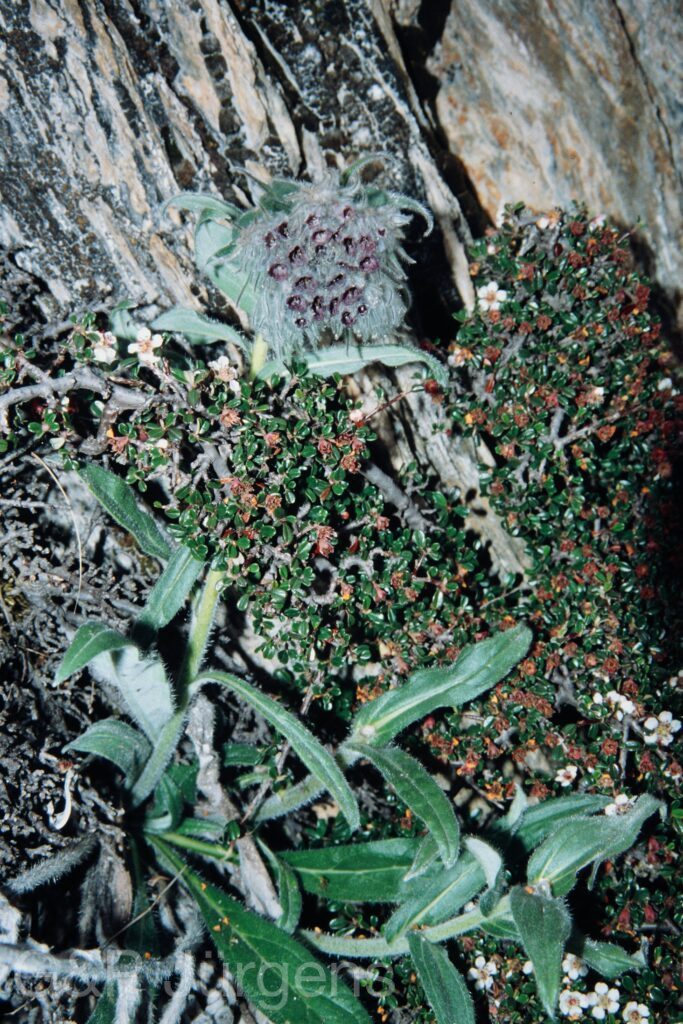
Cotoneaster adpressus is a Sino-Himalayan dwarf shrub ranging from the western Himalaya through Nepal into western and central China. GBIF holds some 1972 occurrences, combining native records in China, Nepal and India with many naturalised or cultivated ones across Europe and North America, reflecting its horticultural use. It grows on open rocky slopes, screes and meadow margins, typically between about 1900 and 3700 m. The photographed plant grows in West Nepal south of Rara Lake at roughly 3700 m in June, on dry, sun-exposed terrain shared with Onosma bracteata.
The species is a low, deciduous, often prostrate shrub forming dense mats, with rigid spreading branches that root on contact. Young branchlets are strigose-pubescent, becoming glabrous and dark brown. The leaves are small, alternate, broadly elliptic to suborbicular, 5-15 mm long, often undulate-margined and mucronate or emarginate, dull green above and pubescent on the veins beneath. Flowers are solitary or paired, nearly sessile, with erect pinkish to white petals and a campanulate hypanthium. The fruit is a small globose red pome, usually with two pyrenes.
Cotoneaster is a taxonomically intricate genus in which apomixis and polyploidy generate numerous microspecies, and several Himalayan and Chinese varieties have been described. The dense ground-hugging habit, drought tolerance and showy autumn fruit have made this species a popular rock-garden and groundcover plant that escapes cultivation in temperate regions. Within its native range it is widespread, not threatened, and dispersed by frugivorous birds.
Author: Bois · Sources: POWO (Kew), GBIF, Flora of China, Flora of Nepal, Fryer & Hylmo: Cotoneasters – A Comprehensive Guide